Loading themes...
Explore the best books about France theme.

Michel de Montaigne, often called ‘the first modern man’, was one of the most influential figures of the Renaissance, singlehandedly responsible for popularizing the essay as a literary form. In 1571, Montaigne retired from ‘the slavery of the court and of public duties’ to his estates in order to devote himself to reflection, reading and writing. The result was 20 years of observations distilled into what he called ‘essais’, and an instant bestseller. How to get on with people, how to deal with violence, how to bring up children, how to live? These questions obsessed the nobleman and philosopher whose free-roaming explorations of his own thoughts and experiences were unlike anything written before. Wise but questioning, witty and idiosyncratic, and incredibly modern in outlook, Montaigne’s thoughts are still relatable 400 years after his death. An exclusive selection of his best essays chosen by acclaimed Montaigne biographer Sarah Bakewell showing the vast variety and originality of his work. Bakewell has also provided a comprehensive and insightful introduction on the man, his life, his work and his everlasting influence.
"Solennels parmi les couples sans amour, ils dansaient, d'eux seuls préoccupés, goûtaient l'un à l'autre, soigneux, profonds, perdus. Béate d'être tenue et guidée, elle ignorait le monde, écoutait le bonheur dans ses veines, parfois s'admirant dans les hautes glaces des murs, élégante, émouvante, exceptionnelle, femme aimée, parfois reculant la tête pour mieux le voir qui lui murmurait des merveilles point toujours comprises, car elle le regardait trop, mais toujours de toute son âme approuvées, qui lui murmurait qu'ils étaient amoureux, et elle avait alors un impalpable rire tremblé, voilà, oui, c'était cela, amoureux, et il lui murmurait qu'il se mourait de baiser et bénir les longs cils recourbés, mais non pas ici, plus tard, lorsqu'ils seraient seuls, et alors elle murmurait qu'ils avaient toute la vie, et soudain elle avait peur de lui avoir déplu, trop sûre d'elle, mais non, ô bonheur, il lui souriait et contre lui la gardait et murmurait que tous les soirs ils se verraient."Ariane devant son seigneur, son maître, son aimé Solal, tous deux entourés d'une foule de comparses : ce roman n'est rien de moins que le chef-d'œuvre de la littérature amoureuse de notre époque.Grand Prix de l'Académie Française 1968.

EDITION INTEGRALE EXCEPTIONNELLE Avec Atlantic Editions, plongez dans la lecture d'un des plus grands chefs-d'oeuvre de la litterature Francaise dans une tres belle edition brochee.Seduisant, intelligent et ambitieux, Julien Sorel, fils de charpentier, est determine a depasser ses origines provinciales modestes. Realisant rapidement que le succes ne peut etre atteint que par l'adoption du code subtil de l'hypocrisie par lequel la societe opere, il accede au sommet de la hierarchie sociale en agissant par interet personnel et tromperies. Mais il n'est pas satisfait de son sort - il reve de devenir une sorte de nouveau Napoleon Bonaparte et meprise les gens de la haute societe. Son ambition demesuree le pousse a courtiser Mme de Renal, epouse devouee et naive du maire de Verrieres, et a conquerir Mathilde, fille altiere et passionnee du marquis de la Mole. Mais le temperament fier et ombrageux de Julien lui fera commettre l'irreparable et le menera a sa perte.Le Rouge et le Noir, d'abord paru en 1830, est un portrait satirique de la societe Francaise sous la Restauration, rongee par la corruption et la cupidite. Ce chef-d'oeuvre, noir par son realisme, et teinte du rouge de la passion et du crime, temoigne de l'immense talent litteraire de l'auteur.Henri Beyle, connu sous le pseudonyme de Stendhal (1783-1842), est l'un des plus grands ecrivains Francais. Il a marque la litterature par la profondeur de ses analyses psychologiques, son souci du realisme et de la recherche de la Verite, ses portraits de jeunes gens aux aspirations romantiques, et par la force de son style.Ce chef-d'oeuvre, incontournable et intemporel, ravira les lecteurs de tous ages.Dans la meme collection brochee de l'editeur Atlantic Editions, retrouvez un autre chef-d'oeuvre de Stendhal: La Chartreuse de Parme

Exupery was a prize-winning novelist, professional mail pilot, airborne adventurer, war correspondent, commercial test pilot, and the author of a popular children's book The Little Prince. Wind, Sand, and Stars more than all the others is a synthesis of his skill as a writer and his life as a flier. It is a collage of anecdotes, speculations and peotic reflections the earth and its inhabitants as seen from the air, all glued together by one basic them: that the airplane has broght man into confrontation with the elemnets of the univeerse, and thus has given him a new perspective on his own nature.

In his new work, Michel Houellebecq combines erotic provocation with a terrifying vision of a world teetering between satiety and fanaticism, to create one of the most shocking, hypnotic, and intelligent novels in years.In his early forties, Michel Renault skims through his days with as little human contact as possible. But following his father’s death he takes a group holiday to Thailand where he meets a travel agent—the shyly compelling Valérie—who begins to bring this half-dead man to life with sex of escalating intensity and audacity. Arcing with dreamlike swiftness from Paris to Pattaya Beach and from sex clubs to a terrorist massacre, Platform is a brilliant, apocalyptic masterpiece by a man who is widely regarded as one of the world’s most original and daring writers.

How is it that the law enforcer itself does not have to keep the law? How is it that the law permits the state to lawfully engage in actions which, if undertaken by individuals, would land them in jail? These are among the most intriguing issues in political and economic philosophy. More specifically, the problem of law that itself violates law is an insurmountable conundrum of all statist philosophies. The problem has never been discussed so profoundly and passionately as in this essay by Frederic Bastiat from 1850. The essay might have been written today. It applies in ever way to our own time, which is precisely why so many people credit this one essay for showing them the light of liberty. Bastiat's essay here is timeless because applies whenever and wherever the state assumes unto itself different rules and different laws from that by which it expects other people to live. And so we have this legendary essay, written in a white heat against the lead

How to get on well with people, how to deal with violence, how to adjust to losing someone you love--such questions arise in most people's lives. They are all versions of a bigger question: how do you live? How do you do the good or honourable thing, while flourishing and feeling happy? This question obsessed Renaissance writers, none more than Michel Eyquem de Montaigne (1533-92), perhaps the first truly modern individual. A nobleman, public official, and wine-grower, he wrote free-roaming explorations of his thought and experience, unlike anything written before. He called them 'essays', meaning 'attempts' or 'tries'. Into them he put whatever was in his head: his tastes in wine and food, his childhood memories, the way his dog's ears twitched when dreaming, as well as the appalling events of the religious civil wars raging around him. The Essays was an instant bestseller, and more than four hundred years later, Montaigne's honesty and charm still draw people to him. Readers come to him in search of companionship, wisdom and entertainment--and in search of themselves. This book, a spirited and singular biography (and the first full life of Montaigne in English for nearly fifty years), relates the story of his life by way of the questions he posed and the answers he explored. It traces his bizarre upbringing (made to speak only Latin), youthful career and sexual adventures, travels, and friendships with the scholar and poet Etienne de La Boétie and with his adopted 'daughter', Marie de Gournay. And as we read, we also meet his readers--who for centuries have found in Montaigne an inexhaustible source of answers to the haunting question, 'how to live?'

Découvrez ou redécouvrez A la recherche du temps perdu, de Marcel Proust, dans cette nouvelle édition enrichie. — CONTENU DU LIVRE — Vous trouverez dans ce livre électronique, l’intégralité de l’œuvre A la recherche du temps perdu de Proust : - Les 7 livres - Du côté de chez Swann - A l’ombre des jeunes filles en fleurs - Le côté de Guermantes - Sodome et Gomorrhe - La prisonnière - Albertine disparue - Le temps retrouvé — BONUS — - L’histoire d’A la recherche du temps perdu - La biographie détaillée de Marcel Proust - Le portrait en image de Marcel Proust Le livre a été entièrement adapté et optimisé pour être lu sur tous les supports : - Navigation ergonomique et intuitive - Table des matières détaillée et fonctionnelle - Images d’illustrations adaptées - Compatible Kindle, Tablette, Smartphone et Ordinateur (PC et Mac) — A PROPOS DE L’EDITEUR — Les Editions Vattolo sont spécialisées dans l’édition et la réédition de livres au format numérique. Une équipe de passionnés au service de lecteurs exigeants, pour vous offrir la meilleure expérience de lecture de livres électroniques, au prix le plus bas possible !

Banni de la communauté juive à 23 ans pour hérésie, Baruch Spinoza décide de consacrer sa vie à la philosophie. Son objectif ? Découvrir un bien véritable qui lui « procurerait pour l’éternité la jouissance d’une joie suprême et incessante. » Au cours des vingt années qui lui restent à vivre, Spinoza édifie une œuvre révolutionnaire. Comment cet homme a-t-il pu, en plein XVIIe siècle, être le précurseur des Lumières et de nos démocraties modernes ? Le pionnier d’une lecture historique et critique de la Bible ? Le fondateur de la psychologie des profondeurs ? L’initiateur de la philologie, de la sociologie, et de l’éthologie ? Et surtout, l’inventeur d’une philosophie fondée sur le désir et la joie, qui bouleverse notre conception de Dieu, de la morale et du bonheur ? A bien des égards, Spinoza est non seulement très en avance sur son temps, mais aussi sur le nôtre. C’est ce que j’appelle le « miracle » Spinoza.F. L.

John Pocock's edition of Burke's Reflections is two classics in Burke's Reflections and Pocock's reflections on Burke and the eighteenth century.

An alternative cover edition for this ISBN can be found hereThrown in prison for a crime he has not committed, Edmond Dantes is confined to the grim fortress of If. There he learns of a great hoard of treasure hidden on the Isle of Monte Cristo and becomes determined not only to escape but to unearth the treasure and use it to plot the destruction of the three men responsible for his incarceration. A huge popular success when it was first serialized in the 1840s, Dumas was inspired by a real-life case of wrongful imprisonment when writing his epic tale of suffering and retribution.

A powerful and impassioned historical account of the largest successful revolt by enslaved people in the Haitian Revolution of 1791–1803“One of the seminal texts about the history of slavery and abolition.... Provocative and empowering.” — The New York Times Book ReviewThe Black Jacobins, by Trinidadian historian C. L. R. James, was the first major analysis of the uprising that began in the wake of the storming of the Bastille in France and became the model for liberation movements from Africa to Cuba. It is the story of the French colony of San Domingo, a place where the brutality of plantation owners toward enslaved people was horrifyingly severe.And it is the story of a charismatic and barely literate enslaved person named Toussaint L’Ouverture, who successfully led the Black people of San Domingo against successive invasions by overwhelming French, Spanish, and English forces—and in the process helped form the first independent post-colonial nation in the Caribbean.With a new introduction (2023) by Professor David Scott.

Un grand classique de la littérature alpine enfin réimprimé dans sa version illustrée à l'occasion des 25 ans de Guérin. Lionel Terray signe la plus admirable et la plus sincère autobiographie d'alpiniste.Préface de Jean-Christophe Rufin.

Both an exploration of character and a reflection on the meaning of history, Memoirs of Hadrian has received international acclaim since its first publication in France in 1951. In it, Marguerite Yourcenar reimagines the Emperor Hadrian's arduous boyhood, his triumphs and reversals, and finally, as emperor, his gradual reordering of a war-torn world, writing with the imaginative insight of a great writer of the twentieth century while crafting a prose style as elegant and precise as those of the Latin stylists of Hadrian's own era.

When an unidentified “monster” threatens international shipping, French oceanographer Pierre Aronnax and his unflappable assistant Conseil join an expedition organized by the US Navy to hunt down and destroy the menace. After months of fruitless searching, they finally grapple with their quarry, but Aronnax, Conseil, and the brash Canadian harpooner Ned Land are thrown overboard in the attack, only to find that the “monster” is actually a futuristic submarine, the Nautilus, commanded by a shadowy, mystical, preternaturally imposing man who calls himself Captain Nemo. Thus begins a journey of 20,000 leagues—nearly 50,000 miles—that will take Captain Nemo, his crew, and these three adventurers on a journey of discovery through undersea forests, coral graveyards, miles-deep trenches, and even the sunken ruins of Atlantis. Jules Verne’s novel of undersea exploration has been captivating readers ever since its first publication in 1870, and Frederick Paul Walter’s reader-friendly, scientifically meticulous translation of this visionary science fiction classic is complete and unabridged down to the smallest substantive detail.

One night in the reform club, Phileas Fogg bets his companions that he can travel across the globe in just eighty days. Breaking the well-established routine of his daily life, he immediately sets off for Dover with his astonished valet Passepartout. Passing through exotic lands and dangerous locations, they seize whatever transportation is at hand—whether train or elephant—overcoming set-backs and always racing against the clock.

Richard Howard's exuberant and definitive rendition of Stendhal's stirring tale has brought about the rediscovery of this classic by modern readers. Stendhal narrates a young aristocrat's adventures in Napoleon's army and in the court of Parma, illuminating in the process the whole cloth of European history. As Balzac wrote, "Never before have the hearts of princes, ministers, courtiers, and women been depicted like this...one sees perfection in every detail."With beautiful illustrations by Robert Andrew Parker.

Louis-Ferdinand Celine's revulsion and anger at what he considered the idiocy and hypocrisy of society explodes from nearly every page of this novel. Filled with slang and obscenities and written in raw, colloquial language, Journey to the End of the Night is a literary symphony of violence, cruelty and obscene nihilism. This book shocked most critics when it was first published in France in 1932, but quickly became a success with the reading public in Europe, and later in America where it was first published by New Directions in 1952. The story of the improbable yet convincingly described travels of the petit-bourgeois (and largely autobiographical) antihero, Bardamu, from the trenches of World War I, to the African jungle, to New York and Detroit, and finally to life as a failed doctor in Paris, takes the readers by the scruff and hurtles them toward the novel's inevitable, sad conclusion.

Dans un archipel du Pacifique Sud ignoré des géographes, l'île des Gauchers abrite une population où les droitiers ne sont plus que l'exception. Mais là n'est pas le plus important. Cette minuscule société, fondée par des utopistes français en 1885, s'est donné pour but de répondre à une colossale question : comment fait-on pour aimer ? Sur cette terre australe, le couple a cessé d'être un enfer. C'est l'endroit du monde où l'on trouve, entre les hommes et les femmes, les rapports les plus tendres.Voilà ce que vient chercher, dans l'île des Gauchers, lord Jeremy Cigogne. À trente-huit ans, cet aristocrate anglais enrage de n'avoir jamais su convertir sa passion pour sa femme Emily en amour véritable. À trop vouloir demeurer son amant, il n'a pas su devenir un époux.Dans cette réalité à l'envers où tout est à l'endroit, Cigogne et Emily se délivrent non sans mal de leurs habitudes et tentent l'aventure de se combler en suivant les coutumes et les rites étonnants du petit peuple des Gauchers.

A Versailles, souvent je tends l'oreille, rêvant de retrouver une amitié, une conversation quotidienne et qui dura trente-cinq ans. Entre Louis XIV et André Le Nôtre. Le monarque le plus puissant à qui tout doit céder, même le temps. Et l'homme de la terre, le saisonnier, celui qui reste du côté de la nature, même s'il la force comme personne avant lui. "Ensemble ils ont écrit le plus grand livre du monde - mille hectares -, le roman du Soleil incarné. La seule histoire occidentale qui impressionnait Quianlong, l'empereur de Chine, le créateur du jardin de la Transparence parfaite.

The great maritime state of Orsenna has long been lulled by settled peace and prosperity. It is three hundred years since it was actively at war with its traditional enemy two days' sail across the water, the savage land of Farghestan - a slumbering but by no means extinct volcano. The narrator of this story, Aldo, a world-weary young aristocrat, is posted to the coast of Syrtes, where the Admiralty keeps the seas constantly patrolled to defend the demarcation between the two powers still officially at war. His duties are to be the eyes and ears of the Signory, to report back any rumours of interest to the State. Goaded, however, by his mistress, Vanessa Aldobrandi, he takes a patrol boat across the boundary to within cannon-shot of the Farghestani coastal batteries. The age-old undeclared truce is no more than a boil ripe to be lanced.

Candide is the story of a gentle man who, though pummeled and slapped in every direction by fate, clings desperately to the belief that he lives in "the best of all possible worlds." On the surface a witty, bantering tale, this eighteenth-century classic is actually a savage, satiric thrust at the philosophical optimism that proclaims that all disaster and human suffering is part of a benevolent cosmic plan. Fast, funny, often outrageous, the French philosopher's immortal narrative takes Candide around the world to discover that — contrary to the teachings of his distinguished tutor Dr. Pangloss — all is not always for the best. Alive with wit, brilliance, and graceful storytelling, Candide has become Voltaire's most celebrated work.

Named one of the "100 Best Books of the Decade" by The Times of London "Oh my human brothers, let me tell you how it happened." A former Nazi officer, Dr. Maximilien Aue has reinvented himself, many years after the war, as a middle-class family man and factory owner in France. An intellectual steeped in philosophy, literature, and classical music, he is also a cold-blooded assassin and the consummate bureaucrat. Through the eyes of this cultivated yet monstrous man we experience in disturbingly precise detail the horrors of the Second World War and the Nazi genocide of the Jews. Eichmann, Himmler, Göring, Speer, Heydrich, Höss—even Hitler himself—play a role in Max's story. An intense and hallucinatory historical epic, The Kindly Ones is also a morally challenging read. It holds a mirror up to humanity—and the reader cannot look away.

Blaise Pascal, the precociously brilliant contemporary of Descartes, was a gifted mathematician and physicist, but it is his unfinished apologia for the Christian religion upon which his reputation now rests. The Penseés is a collection of philosohical fragments, notes and essays in which Pascal explores the contradictions of human nature in pscyhological, social, metaphysical and - above all - theological terms. Mankind emerges from Pascal's analysis as a wretched and desolate creature within an impersonal universe, but who can be transformed through faith in God's grace.

Victor Hugo's tale of injustice, heroism and love follows the fortunes of Jean Valjean, an escaped convict determined to put his criminal past behind him. But his attempts to become a respected member of the community are constantly put under threat: by his own conscience, when, owing to a case of mistaken identity, another man is arrested in his place; and by the relentless investigations of the dogged Inspector Javert. It is not simply for himself that Valjean must stay free, however, for he has sworn to protect the baby daughter of Fantine, driven to prostitution by poverty.

384pages. poche. Broché.

In his Confessions Jean-Jacques Rousseau tells the story of his life, from the formative experience of his humble childhood in Geneva, through the achievement of international fame as novelist and philosopher in Paris, to his wanderings as an exile, persecuted by governments and alienated fromthe world of modern civilization. In trying to explain who he was and how he came to be the object of others' admiration and abuse, Rousseau analyses with unique insight the relationship between an elusive but essential inner self and the variety of social identities he was led to adopt. The bookvividly illustrates the mixture of moods and motives that underlie the writing of defiance and vulnerability, self-exploration and denial, passion, puzzlement, and detachment. Above all, Confessions is Rousseau's search, through every resource of language, to convey what he despairsof putting into the personal quality of one's own existence.

By far the most widely used translation in North American college classrooms, Donald A. Cress's translation from the French of the Adam and Tannery critical edition is prized for its accuracy, elegance, and economy. The translation featured in the Third Edition has been thoroughly revised from the 1979 First Edition and includes page references to the critical edition for ease of comparison.

Marie-Laure lives in Paris near the Museum of Natural History, where her father works. When she is twelve, the Nazis occupy Paris and father and daughter flee to the walled citadel of Saint-Malo, where Marie-Laure's reclusive great uncle lives in a tall house by the sea. With them they carry what might be the museum's most valuable and dangerous jewel. In a mining town in Germany, Werner Pfennig, an orphan, grows up with his younger sister, enchanted by a crude radio they find that brings them news and stories from places they have never seen or imagined. Werner becomes an expert at building and fixing these crucial new instruments and is enlisted to use his talent to track down the resistance. Deftly interweaving the lives of Marie-Laure and Werner, Doerr illuminates the ways, against all odds, people try to be good to one another. From the highly acclaimed, multiple award-winning Anthony Doerr, the stunningly beautiful instant New York Times bestseller about a blind French girl and a German boy whose paths collide in occupied France as both try to survive the devastation of World War II. An alternate cover for this ISBN can be found here

Just before dawn on a Sunday morning, three teenage boys go surfing. While driving home exhausted, the boys are involved in a fatal car accident on a deserted road. Two of the boys are wearing seat belts; one goes through the windshield. The doctors declare him brain-dead shortly after arriving at the hospital, but his heart is still beating.The Heart takes place over the twenty-four hours surrounding the resulting heart transplant, as life is taken from a young man and given to a woman close to death. In gorgeous, ruminative prose, it examines the deepest feelings of everyone involved as they navigate decisions of life and death.As stylistically audacious as it is emotionally explosive, The Heart mesmerized readers in France, where it has been hailed as the breakthrough work of a new literary star. With the precision of a surgeon and the language of a poet, de Kerangal has made a major contribution to both medicine and literature with an epic tale of grief, hope, and survival.

« Le soleil se levait à peine quand Hermès sortit du ventre de sa mère. Il s’étira, bâilla et sauta aussitôt sur ses pieds. Puis il courut à l’entrée de la grotte où il venait de naître pour admirer le monde. « Comme c’est beau ! » murmura-t-il. »C’est par ces mots que débute Le feuilleton d’Hermès, jeune dieu de la mythologie grecque qui découvre le monde à la manière d’un enfant. Ce livre, animé du souffle des mythes fondateurs, nous convie à une lecture vagabonde : celle par laquelle nous suivons les mille et un rebondissements d’une histoire dont notre héros est le fil conducteur.Renouant avec l’oralité des premiers récits, cette histoire peut être lue à voix haute, et partagée en famille ou en classe. Mise à la portée de tous, elle offre des réponses, souvent fabuleuses, aux questions que chaque être humain se pose. Elle se veut promesse de rencontres, d’écoute et de dialogue entre petits et grands.

A huge bestseller in Europe, Frederic Lenoir’s Happiness is an exciting journey that examines how history’s greatest philosophers and religious figures have answered life’s most fundamental What is happiness and how do I achieve it?From the ancient Greeks on—from Aristotle, Plato, and Chuang Tzu to the Buddha, Jesus, and Muhammad; from Voltaire, Spinoza, and Schopenhauer to Kant, Freud, and even modern neuroscientists—Lenoir considers the idea that true and lasting happiness is indeed possible.In clear language, Lenoir concisely surveys what the greatest thinkers of all time have had to say on the subject, and, with charming prose, raises provocative · Do we have a duty to be happy?· Is there a connection between individual and collective happiness?· Is happiness contagious?· Is there a difference between pleasure and happiness?· Can unhappiness and happiness coexist?· Does our happiness depend on our luck? Understanding how civilization’s best minds have answered those questions, Lenoir suggests, not only makes for a fascinating reading experience, but also provides a way for us to see us how happiness, that most elusive of feelings, is attainable in our own lives.

Throughout history, some books have changed the world. They have transformed the way we see ourselves—and each other. They have inspired debate, dissent, war and revolution. They have enlightened, outraged, provoked and comforted. They have enriched lives—and destroyed them. Now Penguin brings you the works of the great thinkers, pioneers, radicals and visionaries whose ideas shook civilization and helped make us who we are. Inspired by the myth of a man condemned to ceaselessly push a rock up a mountain and watch it roll back to the valley below, The Myth of Sisyphus transformed twentieth-century philosophy with its impassioned argument for the value of life in a world without religious meaning.

Août 1992. Une vallée perdue quelque part dans l’Est, des hauts-fourneaux qui ne brûlent plus, un lac, un après-midi de canicule. Anthony a quatorze ans, et avec son cousin, pour tuer l’ennui, il décide de voler un canoë et d’aller voir ce qui se passe de l’autre côté, sur la fameuse plage des culs-nus. Au bout, ce sera pour Anthony le premier amour, le premier été, celui qui décide de toute la suite. Ce sera le drame de la vie qui commence.Avec ce livre, Nicolas Mathieu écrit le roman d’une vallée, d’une époque, de l’adolescence, le récit politique d’une jeunesse qui doit trouver sa voie dans un monde qui meurt. Quatre étés, quatre moments, de Smells Like Teen Spirit à la Coupe du monde 98, pour raconter des vies à toute vitesse dans cette France de l’entre-deux, des villes moyennes et des zones pavillonnaires, de la cambrousse et des ZAC bétonnées. La France du Picon et de Johnny Hallyday, des fêtes foraines et d’Intervilles, des hommes usés au travail et des amoureuses fanées à vingt ans. Un pays loin des comptoirs de la mondialisation, pris entre la nostalgie et le déclin, la décence et la rage.

Avril 1999. Mount Pleasant, une paisible bourgade du New Hampshire, est bouleversée par un meurtre. Le corps d'une jeune femme, Alaska Sanders, est retrouvé au bord d'un lac. L'enquête est rapidement bouclée, la police obtenant les aveux du coupable et de son complice.Onze ans plus tard, l'affaire rebondit. Le sergent Perry Gahalowood, de la police d'État du New Hampshire, persuadé d'avoir élucidé le crime à l'époque, reçoit une troublante lettre anonyme. Et s'il avait suivi une fausse piste ?L'aide de son ami l'écrivain Marcus Goldman, qui vient de remporter un immense succès avec La Vérité sur l'Affaire Harry Quebert, inspiré de leur expérience commune, ne sera pas de trop pour découvrir la vérité.

Emmanuel Faber, le patron visionnaire écarté de Danone, partage sa passion de la montagne et ses engagements pour l'avenir." Nous sommes au pied de la montagne. Nous avons dix ans pour ouvrir une nouvelle voie et nous y engager tous ensemble. "Passée sa brutale éviction de Danone, Emmanuel Faber se pose dans un refuge des Alpes. Il raconte comment la montagne et l'escalade ont dessiné son itinéraire : l'orage en Oisans dans l'enfance, les falaises du Vercors à l'adolescence, seul dans la tempête une nuit d'hiver à ski, en collectif pour l'ouverture d'une nouvelle voie sur le granite corse. Il partage son expérience hors du commun de patron activiste et livre sa vision des enjeux d'aujourd'hui et demain.Un appel vibrant à la prise de conscience et à l'action.

Nueve segundos. A eso ha quedado reducida nuestra capacidad de atención en el mundo contemporá somos una sociedad incapaz de mantener la concentración más allá de la excitación inmediata del último tweet. Pero nuestra distracción endémica, auténtica plaga de la sociedad moderna, es resultado de la imposición dirigida de un modelo de negocio, un capitalismo digital que ha encontrado en la red la posibilidad de un mercado en perpetuo crecimiento, una economía de la atención cimentada sobre la destrucción de nuestra concentración, sobre el fomento de nuestra continua ansia de novedades, de imágenes, de estímulos, de 'likes'. La buena noticia es que esto quiere decir que no se trata de una nueva condición humana. No somos desatentos, nos han hecho así. Y por eso mismo podemos dejar de serlo.

El 2 de julio de 2022, dos delincuentes se disponen a robar en una importante joyería de Ginebra. Un incidente que dista mucho de ser un vulgar atraco. Veinte días antes, en una lujosa urbanización a orillas del lago Lemán, Sophie Braun se prepara para celebrar su cuadragésimo cumpleaños. La vida le sonríe: vive con su familia en una mansión rodeada de bosques, pero su idílico mundo está a punto de tambalearse. Su marido anda enredado en sus pequeños secretos. Su vecino, un policía de reputación irreprochable, se ha obsesionado con ella y la espía hasta en los detalles más íntimos. Y un misterioso merodeador le hace un regalo que pone su vida en peligro. Serán necesarios varios viajes al pasado, lejos de Ginebra, para hallar el origen de esta intriga diabólica de la que nadie saldrá indemne.

Es víspera de Navidad y la visita de la clase de Joséphine al zoo ha sido una catástrofe. Nadie sabe qué ha pasado exactamente y los padres de la niña están dispuestos a descubrirlo. Mientras la investigación avanza, comprendemos poco a poco que una catástrofe nunca llega sola, que las apariencias engañan y que los acontecimientos pueden tomar un giro que nadie imagina.La muy catastrófica visita al zoo nos mantiene en vilo hasta el final; es una novela divertida y emocionante, repleta de guiños sobre nuestra sociedad, sobre la democracia, la educación inclusiva, el rol de los padres y de los maestros.«De las cosas que me cuentan los lectores, lo que más me emociona son las lecturas compartidas en familia, entre amigos o en los clubes de lectura. Por eso he intentado escribir un libro que pudieran leer y compartir todos los lectores, sean como sean y estén donde estén, de 7 a 120 años. Con vuestros hijos, vuestra pareja, vuestros padres, vuestros vecinos o vuestros compañeros de trabajo. Un libro con el que os entren ganas de leer y de que lean otros, sin distinciones. Y que nos permita reencontrarnos».Joël Dicker

Set on the French Riviera in the late 1920s, Tender Is the Night is the tragic romance of the young actress Rosemary Hoyt and the stylish American couple Dick and Nicole Diver. A brilliant young psychiatrist at the time of his marriage, Dick is both husband and doctor to Nicole, whose wealth goads him into a lifestyle not his own, and whose growing strength highlights Dick's harrowing demise. A profound study of the romantic concept of character, Tender Is the Night is lyrical, expansive, and hauntingly evocative.

A splendid introduction to the philosophy of existentialism.In Essays in Existentialism, Jean-Paul Sartre (1905-1980), the leading French exponent of existential philosophy, wrote a book that open many doors to the mind. Sartre challenged his readers to think beyond the meaning of their everyday thoughts and beliefs. His essays on nothingness, on the emotions, and on the image—including “The Problem of Nothingness,” “The Role of the Image in Mental Life,” and “Essays in Aesthetics”—contain the essentials of his metaphysical speculations.An introductory essay by Professor Jean Wahl clarifies the origins of Sartre’s humanistic, religious, and aesthetic ideas.Essays in Existentialism challanges and encourages us to alter how we think about the choices that we make: to live “authentically” we must be concious of our freedom to choose and concerned with the effect our choice will have on all others. It is an essential text for any student of philosophy.

Learn all the French argot (slang), dirty words, and necessary tools of communication your teachers left out of their lesson plans with this essential survival guide to understanding everyday French.Deliciously saucy and full of wit Merde! is a practical guide for understanding French, as it really is spoken. This real-life resource is for anyone who remembers thumbing through English/French dictionaries for such words as "toilet paper" and "damn," as well as for the far more interesting, titillating terms that would never be used in polite conversation. But real French isn't spoken with the intent of being polite... With epithets for every occasion, a range of colorful idioms, and a wealth of come-ons and put-downs, this is the only language book you'll need to prepare for a trip to the city of lights.

In this dazzling new vision of the ever-fascinating queen, a dynamic young historian reveals how Marie Antoinette's bold attempts to reshape royal fashion changed the future of FranceMarie Antoinette has always stood as an icon of supreme style, but surprisingly none of her biographers have paid sustained attention to her clothes. In Queen of Fashion, Caroline Weber shows how Marie Antoinette developed her reputation for fashionable excess, and explains through lively, illuminating new research the political controversies that her clothing provoked. Weber surveys Marie Antoinette's "Revolution in Dress," covering each phase of the queen's tumultuous life, beginning with the young girl, struggling to survive Versailles's rigid traditions of royal glamour (twelve-foot-wide hoopskirts, whalebone corsets that crushed her organs). As queen, Marie Antoinette used stunning, often extreme costumes to project an image of power and wage war against her enemies. Gradually, however, she began to lose her hold on the French when she started to adopt "unqueenly" outfits (the provocative chemise) that, surprisingly, would be adopted by the revolutionaries who executed her. Weber's queen is sublime, human, and surprising: a sometimes courageous monarch unwilling to allow others to determine her destiny. The paradox of her tragic story, according to Weber, is that fashion--the vehicle she used to secure her triumphs--was also the means of her undoing. Weber's book is not only a stylish and original addition to Marie Antoinette scholarship, but also a moving, revelatory reinterpretation of one of history's most controversial figures.

Αυτή η συλλογή αποτελείται από τέσσερα κείμενα που γράφτηκαν το 1936 και το 1937 κι εκδόθηκαν το 1950."Οι γάμοι στην Τιπαζά": Ένας νεαρός, παιδί «ενός λαού γεννημένου από τον ήλιο και τη θάλασσα», τραγουδά τη χαρά του για τη ζωή και την υπερηφάνεια του που μπορεί ν' αγαπά απεριόριστα."Ο άνεμος στην Τζεμιλά": Στον τραγικό διάκοσμο μιας νεκρής πολιτείας που τη σαρώνει ο άνεμος, ο συγγραφέας εκφράζει «τη συνειδητή βεβαιότητά του ενός ανέλπιδου θανάτου». Μα ακόμα κι η φρίκη αυτού του θανάτου δεν θα τον αποσπάσει από τους στοχασμούς του."Το καλοκαίρι στο Αλγέρι": Ψυχολογική περιγραφή μιας πόλης χωρίς παρελθόν, που αγνοεί την έννοια της αρετής, μα που έχει την ηθική της και που οι άνθρωποί της βρίσκουν «καθ’ όλη τη διάρκεια της νιότης τους μια ζωή στα μέτρα της ομορφιάς τους»."Η έρημος": Ο συγγραφέας ανακαλύπτει ότι η συμφωνία που ενώνει έναν άνθρωπο με τη ζωή του, σ' έναν κόσμο που η ομορφιά του θα χαθεί, είναι «η διπλή συνείδηση της επιθυμίας του να διαρκέσει και της μοίρας του να πεθάνει».

A magisterial mappa mundi of the terrain that Pierre Hadot has so productively worked for decades, this ambitious work revises our view of ancient philosophy―and in doing so, proposes that we change the way we see philosophy itself. Hadot takes ancient philosophy out of its customary realm of names, dates, and arid abstractions and plants it squarely in the thick of life. Through a meticulous historical reading, he shows how the various schools, trends, and ideas of ancient Greek and Roman philosophy all tended toward one to provide a means for achieving happiness in this life, by transforming the individual’s mode of perceiving and being in the world.Most pressing for Hadot is the question of how the ancients conceived of philosophy. He argues in great detail, systematically covering the ideas of the earliest Greek thinkers, Hellenistic philosophy, and late antiquity, that ancient philosophers were concerned not just to develop philosophical theories, but to practice philosophy as a way of life―a way of life to be suggested, illuminated, and justified by their philosophical “discourse.” For the ancients, philosophical theory and the philosophical way of life were inseparably linked.What Is Ancient Philosophy? also explains why this connection broke down, most conspicuously in the case of academic, professional philosophers, especially under the influence of Christianity. Finally, Hadot turns to the question of whether and how this connection might be reestablished. Even as it brings ancient thoughts and thinkers to life, this invigorating work provides direction for those who wish to improve their lives by means of genuine philosophical thought.

First published in France in 1963, this is the first publication in English of the author's analysis of Dostoevsky's themes, revealing Girard's combination of mimetic-literary and religious approaches. No index. Annotation c. by Book News, Inc., Portland, Or.

Nous sommes en Afrique Equatoriale Française (A.E.F., aujourd'hui le Tchad), dans les années cinquante, alors qu'apparaissent timidement les premiers signes avant-coureurs de la décolonisation et que l'administration française vit ses dernières heures de tranquillité. Une tranquillité qui serait parfaite sans l'agitation suscitée par un dénommé Morel et son acharnement à protéger les éléphants, massacrés par milliers pour l'ivoire de leurs défenses, et sous couvert d'éviter les dégradations qu'ils causent aux plantations...

In a small village in the Sologne, Fifteen-year-old François Seurel narrates the story of his relationship with seventeen-year-old Augustin Meaulnes. Impulsive, reckless and heroic, Meaulnes embodies the romantic ideal, the search for the unobtainable, and the mysterious world between childhood and adulthood.

Just thirty, with a well-paid job, depression and no love life, the narrator and anti-hero par excellence of this grim, funny, and clever novel smokes four packs of cigarettes a day and writes weird animal stories in his spare time.Houellebecq's debut novel is painfully realistic portrayal of the vanishing freedom of a world governed by science and by the empty rituals of daily life.

The Collected Stories of Colette beings together in one volume for the first time in any language the comprehensive collection of short stories by the novelist known worldwide as Colette, and now acknowledged, with Proust, as the most original French narrative writer of the first half of our century. of the one hundred stories gathered here, thirty-one appear for the first time in English and another twenty-nine have been newly translated for this volume.

À la suite d'une explosion, sans doute nucléaire, qui a selon toute vraisemblance ravagé la Terre entière, Emmanuel Comte et ses six compagnons font du château de Malevil, dont la profonde cave leur a permis de survivre, la base de départ de leurs efforts de reconstruction de la civilisation, qui passera également par l'affrontement avec d'autres groupes de survivants, que ce soient des bandes errantes ou des groupes structurés nomades ou sédentaires.La qualification de science-fiction peut être considérée comme exagérée, concernant ce roman, puisque seule la situation de départ (la destruction de la civilisation humaine par une explosion d'origine inconnue) rejoint le thème post-apocalyptique, alors très populaire en science-fiction. Tout le reste du roman raconte comment un groupe de survivants miraculés relève le défi de la reconstruction d'une société humaine. De ce point de vue, on peut dire que le roman relève du genre de la robinsonade.De nombreux thèmes sont abordés dans ce roman : la religion, la politique, la place des femmes dans la société, le monde rural, le rôle du chef, certes sous l'angle d'une mini-communauté mais qui renvoient à notre société.

‘This is the original game of thrones’ George R.R. MartinFrom the publishers that brought you A Game of Thrones comes the series that inspired George R.R. Martin’s epic work.“Accursed! Accursed! You shall be accursed to the thirteenth generation!”The Iron King – Philip the Fair – is as cold and silent, as handsome and unblinking as a statue. He governs his realm with an iron hand, but he cannot rule his own family: his sons are weak and their wives adulterous; while his red-blooded daughter Isabella is unhappily married to an English king who prefers the company of men.A web of scandal, murder and intrigue is weaving itself around the Iron King; but his downfall will come from an unexpected quarter. Bent on the persecution of the rich and powerful Knights Templar, Philip sentences Grand Master Jacques Molay to be burned at the stake, thus drawing down upon himself a curse that will destroy his entire dynasty...

Ugo, Manu, and Fabio grew up together on the mean streets of Marseilles, where friendship means everything. They promised to stay true to one another and swore that nothing would break their bond. But people and circumstances change. Ugo and Manu have been drawn into the criminal underworld of Europe's toughest, most violent and vibrant city. When Manu is murdered and Ugo returns from abroad to avenge his friend's death, only to be killed himself, it is left to the third in this trio, Detective Fabio Montale, to ensure justice is done. Despite warnings from both his colleagues in law enforcement and his acquaintances in the underworld, Montale cannot forget the promise he once made Manu and Ugo. He's going to find their killer even if it means going too far.In Izzo's novels, Marseilles is explosive, tragic, breathtakingly beautiful and deadly. Asked to explain the astounding success of his now legendary Marseilles triology, Izzo credits his beloved native city: "Essentially, I think I have been rewarded for having depicted the real beauty of Marseilles, its gusto, its passion for life, and the ability of its inhabitants to drink life down to the last drop." Fabio Montale is the perfect protagonist in this city of melancholy beauty. A disenchanted cop with an inimitable talent for living who turns his back on a police force marred by corruption and racism and, in the name of friendship, takes the fight against the mafia into his own hands.

Mad Love has been acknowledged an undisputed classic of the surrealist movement since its first publication in France in 1937. Its adulation of love as both mystery and revelation places it in the most abiding of literary traditions, but its stormy history and technical difficulty have prevented it from being translated into English until now. "There has never been any forbidden fruit. Only temptation is divine," writes André Breton, leader of the surrealists in Paris in the 1920s and '30s. Mad Love is dedicated to defying "the widespread opinion that love wears out, like the diamond, in its own dust." Celebrating breton's own love and lover, the book unveils the marvelous in everyday encounters and the hidden depths of ordinary things.

Manifestoes of Surrealism is a book by André Breton, describing the aims, meaning, and political position of the Surrealist movement.The translators of this edition were finalists of the 1970 National Book Awards in the category of translation.

« Qui n'a jamais rêvé de devenir un objet ? Mieux même, un objet d'admiration ?Tel est le pacte que scellent un artiste excentrique et un jeune homme désespéré. Le premier, avide de scandale, propose au second, avide d'exister, de le transformer en oeuvre d'art. Après tout, il n'a rien à y perdre, sinon la liberté. »Parce qu'il se sent médiocre et inexistant, un jeune homme sur le point de se suicider accepte l'accord que lui propose un artiste mégalomane : celui-ci lui achète son âme et son corps pour en faire une sculpture vivante, sublime ou monstrueuse, et une marchandise planétaire.Cette fable excentrique, inquiétante et comique nous entraîne dans un monde rongé par le narcissisme, le culte du simulacre et de l'apparence, le totalitarisme de l'image : le nôtre.

En 1970 Michel Foucault sucedió a Jean Hyppolite en el Collége de France, donde se hizo cargo de la cátedra de historia de los sistemas de pensamiento. El orden del discurso fue su lección inaugural del curso. Preocupado siempre por las complejas relaciones entre el saber y el origen del poder, Foucault resumió en este texto el núcleo de sus investigaciones y adelantó todo un programa futuro de trabajo. A través de un minucioso análisis de las variadas formas de acceso (o de las prohibiciones y tabúes) a la palabra, de la marginalidad de determinados discursos (la locura, la delincuencia) o la controvertida voluntad de verdad de la cultura occidental, este opúsculo consigue poner de manifiesto la inquietante fragilidad de categorías filosóficas aparentemente sacrosantas, como las del sujeto, conciencia e historia.

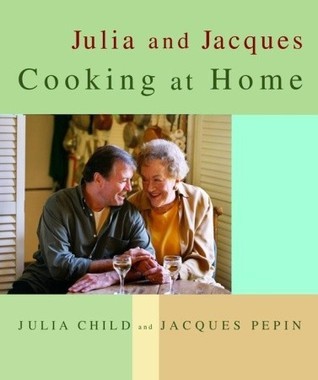
Two legendary cooks invite us into their kitchen and show us the basics of good home cooking.Julia Child and Jacques Pépin are synonymous with good food, and in these pages they demonstrate techniques (on which they don’t always agree), discuss ingredients, improvise, balance flavors to round out a meal, and conjure up new dishes from leftovers. Center stage are carefully spelled-out recipes flanked by Julia’s and Jacques’s comments—the accumulated wisdom of two lifetimes of honing their cooking skills. Nothing is written in stone, they imply. And that is one of the most important lessons for every good cook.So sharpen your knives and join in the fun as you learn to make: • Appetizers: from traditional and instant gravlax to your own sausage in brioche and a country pâté• Soups: from New England chicken chowder and onion soup gratinée to Mediterranean seafood stew and that creamy essence of mussels, billi-bi• Eggs: omelets and “tortillas”; scrambled, poached, and coddled eggs; eggs as a liaison for sauces and as the puffing power for soufflés• Salads and Sandwiches: basic green and near-Niçoise salads; a crusty round seafood-stuffed bread, a lobster roll, and a pan bagnat• Potatoes: baked, mashed, hash-browned, scalloped, souffléd, and French-fried• Vegetables: the favorites from artichokes to tomatoes, blanched, steamed, sautéed, braised, glazed, and gratinéed• Fish: familiar varieties whole and filleted (with step-by-step instructions for preparing your own), steamed en papillote, grilled, seared, roasted, and poached, plus a classic sole meunière and the essentials of lobster cookery• Poultry: the perfect roast chicken (Julia’s way and Jacques’s way); holiday turkey, Julia’s deconstructed and Jacques’s galantine; their two novel approaches to duck• Meat: the right technique for each cut of meat (along with lessons in cutting up), from steaks and hamburger to boeuf bourguignon and roast leg of lamb • Desserts: crème caramel, profiteroles, chocolate roulade, free-form apple tart—as you make them you’ll learn all the important building blocks for handling dough, cooking custards, preparing fillings and frostings• And much, much more . . .Throughout this richly illustrated book you’ll see Julia’s and Jacques’s hands at work, and you’ll sense the pleasure the two are having cooking together, tasting, exchanging ideas, and raising a glass to savor the fruits of their labor. Again and again they demonstrate that cooking is endlessly fascinating and challenging and, while ultimately personal, it is a joy to be shared.

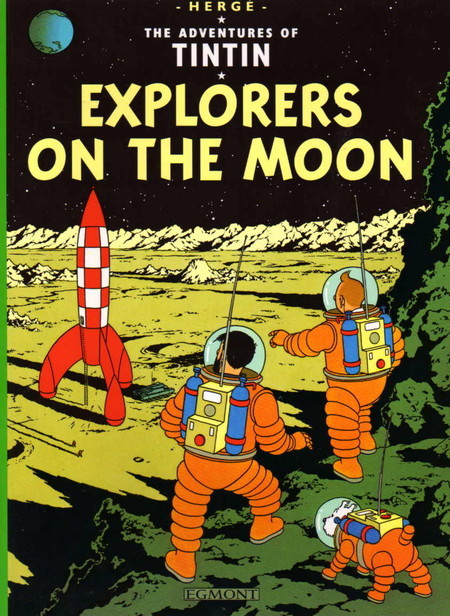
The first manned rocked, bound for the Moon, has just launched from the Sprodj Atomic Research Centre in Syldavia. On board are Tintin, Snowy, Captain Haddock, Professor Calculus, and the engineer Frank Wolff.At the Centre, intense efforts are being made to establish radio contact with the rocket's passengers out in space. Tintin and his friends have fainted from the acceleration on launching. Their recovery is anxiously awaited. The wireless masts stand sentinel in the night sky, but they receive no message.

Gaspard Sauvage, dit le Zèbre, refuse de croire au déclin des passions. Bien que notaire de province, condition qui ne porte guère aux extravagances, le Zèbre est de ces irréguliers qui vivent au rythme de leurs humeurs fantasques. Quinze ans après avoir épousé Camille, il décide de ressusciter l'ardeur des premiers temps de leur liaison. Insensiblement, la ferveur de leurs étreintes s'est muée en une complicité de vieux époux. Cette déconfiture désole Gaspard. Loin de se résigner, il part à la reconquête de sa femme. Grâce à des procédés cocasses et à des stratagèmes rocambolesques, il redeviendra celui qu'il n'aurait jamais dû cesser d'être : l'Amant de Camille, l'homme de ses rêves. Même la mort pour lui n'est pas un obstacle.

On her own at 18, Miss Liberté will not be satisfied with a small bit of happiness. Her love must be perfect. Enter Horace, the headmaster of a college, married to a professional woman, his dreams farther and farther out of reach.

"Refreshingly broad-brush in its approach...this history provides the big picture."—The Christian Science Monitor. Written from a consciously anti-enthnocentric approach, this fascinating work is a survey of the civilizations of the modern world in terms of the broad sweep and continuities of history, rather than the "event-based" technique of most other texts.ContentsList of mapsTranslator´s introductionBy way of prefaceIntroduction: History and the present dayI. A HISTORY OF CIVILIZATIONS1. Changing vocabulary2. The study of civilization involves all social sciences3. The continuity of civilizationsII. CIVILIZATIONS OUTSIDE EUROPEPart I. Islam and the Muslim World4. History5. Geography6. The greatness and decline of Islam7. The revival of Islam todayPart II: Africa8. The past9. Black Africa: Today and tomorrowPart III: The Far East10. An introduction to the Far East11. The China of the past12. China yesterday and today13. India yesterday and today14. The maritime Far East15. JapanIII. EUROPEAN CIVILIZATIONSPart I: Europe16. Geography and freedom17. Christianity, humanism and scientific thought18. The industrialization of Europe19. Unity in EuropePart II: America20. Latin America, the other New World21. America par excellence: the United States22. Failures and difficulties: From yesterday to the present23. An English-speaking UniversePart III: The other Europe: Muscovy, Russia, the USSR and the CIS24. From the beginning to the October Revolution of 191725. The USSR after 1917Index

Rappelle-toi BarbaraIl pleuvait sans cesse sur Brest ce jour làEt tu marchais sourianteÉpanouie ravie ruisselanteSous la pluieRappelle-toi Barbara...Oh BarbaraQuelle connerie la guerreQu'es-tu devenue maintenantSous cette pluie de ferDe feu d'acier et de sangEt celui qui te serrait dans ses brasAmoureusementEst-il mort disparu ou bien encore vivant...

Everything in this book is fictional and everything is true,” wrote Victor Serge in the epigraph to Men in Prison . “I have attempted, through literary creation, to bring out the general meaning and human content of a personal experience.” The author of Men in Prison served five years in French penitentiaries (1912–1917) for the crime of “criminal association”—in fact for his courageous refusal to testify against his old comrades, the infamous “Tragic Bandits” of French anarchism. “While I was still in prison,” Serge later recalled, “fighting off tuberculosis, insanity, depression, the spiritual poverty of the men, the brutality of the regulations, I already saw one kind of justification of that infernal voyage in the possibility of describing it. Among the thousands who suffer and are crushed in prison—and how few men really know that prison!—I was perhaps the only one who could try one day to tell all… There is no novelist’s hero in this novel, unless that terrible machine, prison, is its real hero. It is not about ‘me,’ about a few men, but about men, all men crushed in that dark corner of society.” Ironically, Serge returned to writing upon his release from a GPU prison in Soviet Russia, where he was arrested as an anti-Stalinist subversive in 1928. He completed Men in Prison (and two other novels) in “semi-captivity” before he was rearrested and deported to the Gulag in 1933. Serge’s classic prison novel has been compared to Dostoyevsky’s House of the Dead , Koestler’s Spanish Testament , Genet’s Miracle of the Rose , and Solzhenitsyn’s One Day in the Life of Ivan Denisovitch both for its authenticity and its artistic achievement. This edition features a substantial new introduction by translator Richard Greeman, situating the work in Serge’s life and times.

A. J. P. Taylor was one of the most acclaimed and uncompromising historians of the twentieth century. In this clear, lively and now-classic account of the First World War, he tells the story of the conflict from the German advance in the West, through the Marne, Gallipoli, the Balkans and the War at Sea to the offensives of 1918 and the state of Europe after the war. Containing photographs and maps, this an essential history of the war that 'cut deep into the consciousness of modern man'.

At seventeen a survivor of a Nazi death camp, Reb Michael Klimrod devotes his life to the pursuit of power, wealth, and revenge.In 1950 he appeared in New York, a tall, gaunt twenty-two year-old with a false passport and not a penny in his pocket. Within six days he began his first company. Within six months he'd established fifty-eight more. Within ten years Reb Michael Klimrod would be a billionaire, an enigmatic genius dealing in real estate, gold mines, hotels, oil, and tankers in a bid to possess more money and power than anyone else in the world.Yet only a small, select group of men would know his real name, recognize his face. And not even they knew what he planned for the Nazis who had betrayed his youth ... for the woman he loved ... and for the entire unsuspecting earth.

'Her writing makes your mouth water.' -- Financial Times'Unique among the classics of gastronomic writing . . . a book about adult loss, survival, and love.' -- New York Review of BooksA classic of food writing that redefined the genre, The Gastronomical Me is a memoir of travel, love and loss, but above all hunger.In 1929 M.F.K. Fisher left America for France, where she tasted real French cooking for the first time. It inspired a prolific career as a food and travel writer. In The Gastronomical Me Fisher traces the development of her appetite, from her childhood in America to her arrival in Europe, where she embarked on a whole new way of eating, drinking, and living. She recounts unforgettable meals shared with an assortment of eccentric characters, set against a backdrop of mounting pre-war tensions.Here are meals as seductions, educations, diplomacies, and communions, in settings as diverse as a bedsit above a patisserie, a Swiss farm, and cruise liners across oceans. In prose convivial and confiding, Fisher illustrates the art of ordering well, the pleasures of dining alone, and how to eat so you always find nourishment, in both head and heart.'Many authors whisper, as though to a diary, or chat, as though to a friend, but Fisher communicates with the heady directness of a lover.' -- Bee Wilson, author of The Way We Eat Now'She is not just a great food writer. She is a great writer, full stop.' -- Rachel Cooke, Observer'The greatest food writer who has ever lived.' -- Simon Schama'Poet of the appetites.' -- John Updike'I do not know of anyone in the United States who writes better prose.' -- W.H. Auden

Based on Flaubert’s own youthful passion for an older woman, Sentimental Education was described by its author as “the moral history of the men of my generation.” It follows the amorous adventures of Frederic Moreau, a law student who, returning home to Normandy from Paris, notices Mme Arnoux, a slender, dark woman several years older than himself. It is the beginning of an infatuation that will last a lifetime. He befriends her husband, an influential businessman, and as their paths cross and re-cross over the years, Mme Arnoux remains the constant, unattainable love of Moreau’s life. Blending love story, historical authenticity, and satire, Sentimental Education is one of the great French novels of the nineteenth century.

This one thousand year history of the civilization of western Europe has already been recognized in France as a scholarly contribution of the highest order and as a popular classic. Jacques Le Goff has written a book which will not only be read by generations of students and historians, but which will delight and inform all those interested in the history of medieval Europe. Part one, Historical Evolution, is a narrative account of the entire period, from the barbarian settlement of Roman Europe in the fifth, sixth and seventh centuries to the war-torn crises of Christian Europe in the fourteenth and fifteenth centuries.Part two, Medieval Civilization, is analytical, concerned with the origins of early medieval ideas of culture and religion, the constraints of time and space in a pre-industrial world and the reconstruction of the lives and sensibilities of the people during this long period. Medieval Civilization combines the narrative and descriptive power characteristic of Anglo-Saxon scholarship with the sensitivity and insight of the French historical tradition.

An earlier edition of ISBN 0897331346 is available here.There were, and still are, great restaurants all over Europe, but the greater part of Blue Trout and Black Truffles is devoted to the eating places and vineyards of France. It is a vicarious experience to read about the culinary wonders of the notable establishments of another era that have become the last epicurean haven in this materialistic, mechanized world of fast-food chains and frozen-food dinners. Mr. Wechsberg reaches back to the twilight days of the Habsburg monarchy, when those splendid monuments to the haute cuisine in central Europe, Meissl and Schadn of Vienna and Gundel's of Budapest, were in their prime.

When Coca-Cola entered the French market with a hard-core bottom-line management style, they were met with boycotts in cafes and supermarkets. At the launch of Euro Disney in Paris, Mickey Mouse was greeted by angry protestors hurling tomatoes and eggs. As a culture, the French are fiercely independent yet romantic, conservative yet avant-garde, rational yet emotional.Written for anyone interested in or interacting with the French, Au Contraire!: Figuring Out the French unearths the often-invisible cultural forces that govern behavior. Gilles Asselin and Ruth Mastron draw upon their own experiences as consultants and trainers, as well as that of expatriate students and professionals, to offer the best and most useful analysis and advice on French-American intercultural relations. Going beyond the obvious, this bilingual and bicultural author team explores what lies behind what we the assumptions, attitudes, patterns of thought and beliefs that make the French so.French.In a global world filled with multinational mergers and international partnerships, Au Contraire! provides context and perspective on what happens when Americans and the French come together at work, at home, and in any social setting, touching on issues like education, play, friendship, romance and politics. They highlight the dynamics of working and managing across the French and American cultural divide with an in-depth case study of how pharmaceutical giant Rhone-Poulenc Rorer overcame challenges by fostering cross-cultural teamwork. With a quick and useful guide to social etiquette and professional guidelines for managers working in the United States and in France, Au Contraire! provides critical tools to develop creative and appropriate responses to any situation, based on a deep understanding of the unique dynamics of these two cultures.

Few works of political and cultural theory have been as enduringly provocative as Guy Debord's The Society of the Spectacle. From its publication amid the social upheavals of the 1960s up to the present, the volatile theses of this book have decisively transformed debates on the shape of modernity, capitalism and everyday life in the late twentieth century. Now finally available in a superb English translation approved by the author, Debord's text remains as crucial as ever for understanding the contemporary effects of power, which are increasingly inseparable from the new virtual worlds of our rapidly changing image/information culture.

Biographie de Felix Kersten.À la veille de la Seconde Guerre mondiale, Felix Kersten est spécialisé dans les massages thérapeutiques. Parmi sa clientèle huppée figurent les grands d'Europe. Pris entre les principes qui constituent les fondements de sa profession et ses convictions, le docteur Kersten consent à examiner Himmler, le puissant chef de la Gestapo. Affligé d'intolérables douleurs d'estomac, celui-ci en fait bientôt son médecin personnel. C'est le début d'une étonnante lutte, Felix Kersten utilisant la confiance du fanatique bourreau pour arracher des milliers de victimes à l'enfer. Joseph Kessel nous raconte l'incroyable histoire du docteur Kersten et lève le voile sur un épisode méconnu du XXe siècle.

"My work is like a diary," Picasso once told John Richardson. "To understand it, you have to see how it mirrors my life." Richardson, who lived near the artist in Provence for ten years and became a trusted friend, was able to observe and record this phenomenon at first hand. Later, Picasso's widow continued to give Richardson access to the artist's studios and storerooms. This close personal friendship and the privilege of working in hitherto inaccessible archives make Richardson uniquely qualified to write the artist's life, rescuing his renown from sensationalist legend and specialist pleading and analyzing anew the traumas and obsessions that triggered his explosive genius.Richardson is the first biographer to make sense of the myriad contradictions that leave so many statements about Picasso's nature equally true in reverse. The artist's ambivalence is one of the author's central themes. At last we are able to see how his courage and terror misogyny and tenderness, generosity and thrift, superstition and skepticism, cynicism and sentiment, are reflected in the conflicts and paradoxes in his work.Richardson's eye is finely attuned to the complexities of Picasso's art, and his extensive knowledge of cultural history enables him to show how Picasso plundered the art of the past, the imaginations of his poet friends, the beliefs of mystics and magi, to create a revolutionary new synthesis. The author's evocation of Picasso's ferocious ego, demonic loves and hates and black fears is the more absorbing for its terse and lively prose and freedom from jargon.This first volume of Richardson's prodigiously detailed and documented four-volume study takes Picasso to the age of twenty-five. It reveals how the adolescent Picasso struggled, through determination and study, to escape the shadow of his father's artistic failures. It describes his precocious success in Barcelona and Paris and the period of rejection and despair that followed. We watch Picasso transform the prostitutes of the Saint-Lazare prison into Blue period madonnas and, later, the performers of the Montmartre circuses into Rose period harlequins. Volume I culminates in Picasso's dawning perception of himself as the messiah of the modern movement.Some nine hundred illustrations, many of them unfamiliar, enable the reader to follow Picasso's mesmerizing development in images as well as words.

This is the delightfully warm and enjoyable story of an old Parisian named Armand, who relished his solitary life. Children, he said, were like starlings, and one was better off without them.But the children who lived under the bridge recognized a true friend when they met one, even if the friend seemed a trifle unwilling at the start. And it did not take Armand very long to realize that he had gotten himself ready-made family; one that he loved with all his heart, and one for whom he would have to find a better home than the bridge.Armand and the children's adventures around Paris -- complete with gypsies and a Santa Claus -- make a story which children will treasure.

This scarce antiquarian book is a selection from Kessinger Publishing's Legacy Reprint Series. Due to its age, it may contain imperfections such as marks, notations, marginalia and flawed pages. Because we believe this work is culturally important, we have made it available as part of our commitment to protecting, preserving, and promoting the world's literature. Kessinger Publishing is the place to find hundreds of thousands of rare and hard-to-find books with something of interest for everyone!

"Le jour où mon père est mort, le 30 juillet 1980, la réalité a cessé de me passionner. J'avais quinze ans, je m'en remets à peine. Pour moi, il a été tour à tour mon clown, Hamlet, d'Artagnan, Mickey et mon trapéziste préféré ; mais il fut surtout l'homme le plus vivant que j'ai connu.Pascal Jardin, dit le Zubial par ses enfants, n'accepta jamais de se laisser gouverner par ses peurs. Le Zubial avait le talent de vivre l'invivable, comme si chaque instant devait être le dernier. L'improbable était son ordinaire, le contradictoire son domaine.S'ennuyait-il au cours d'un dîner ? Il le déclarait aussitôt et quittait la table, en baisant la main de la maîtresse de maison. Désirait-il une femme mariée ? Il ne craignait pas d'en faire part à son époux, en public, et d'escalader la façade du domicile conjugal le soir même pour tenter de l'enlever.S'il écrivit des romans et plus de cent films, cet homme dramatiquement libre fut avant tout un amant. Son véritable métier était d'aimer les femmes, et la sienne en particulier.Ce livre n'est pas un recueil de souvenirs mais un livre de retrouvailles. Le Zubial est l'homme que j'ai le plus aimé. Il m'a légué une certaine idée de l'amour, tant de rêves et de questions immenses que, parfois, il m'arrive de me prendre pour un héritier."Alexandre Jardin.

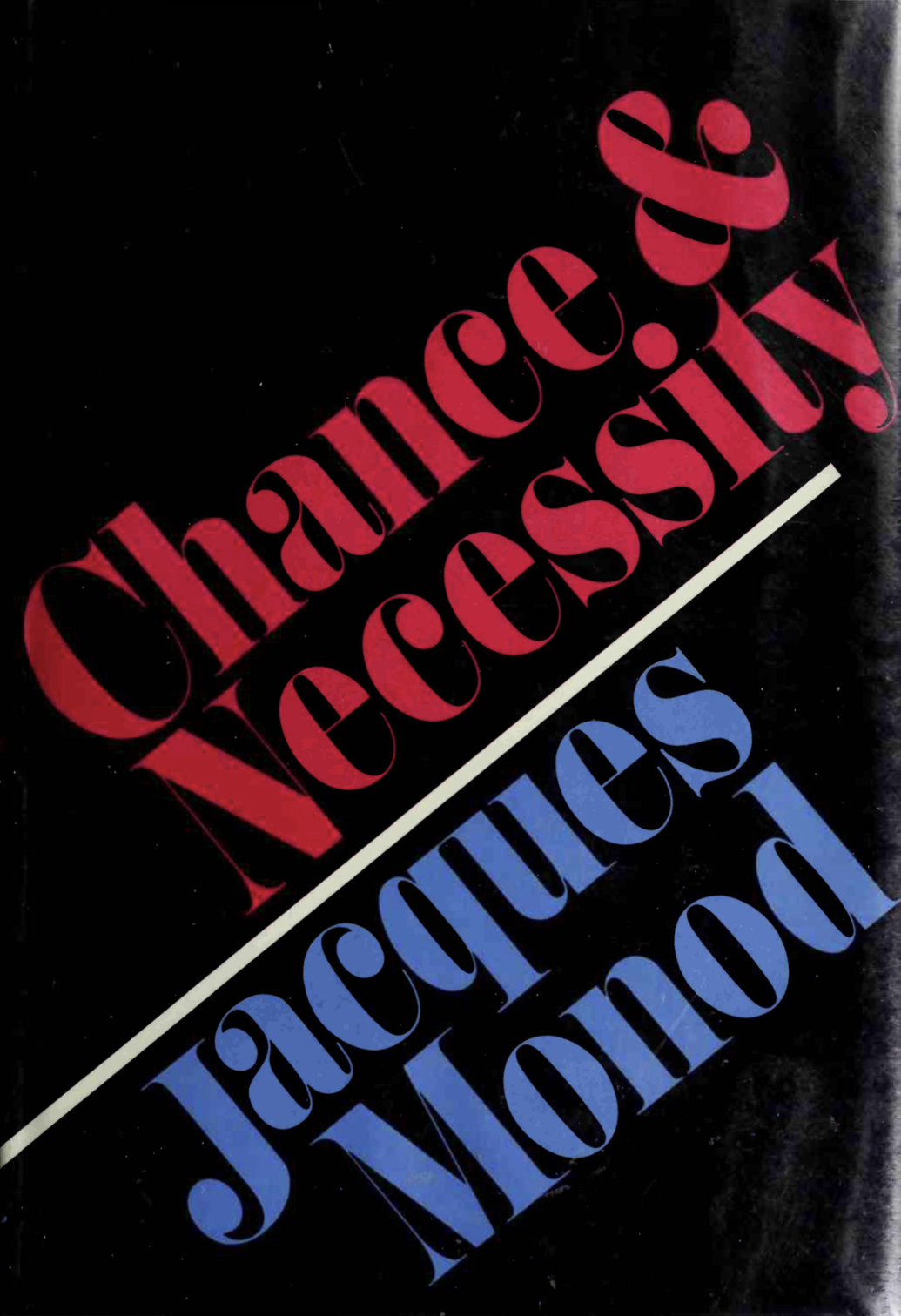
This radical book by Nobel laureate Monod is an important intellectual event. Chance and Necessity is a philosophical statement whose intention is to sweep away as both false and dangerous the animist conception of man that has dominated virtually all Western worldviews from primitive cultures to those of dialectical materialists. He bases his argument on the evidence of modern biology, which indisputably shows, that man is the product of chance genetic mutation. With the unrelenting logic of the scientist, he draws upon what we now know (and can theorize) of genetic structure to suggest an new way of looking at ourselves. He argues that objective scientific knowledge, the only reliable knowledge, denies the concepts of destiny or evolutionary purpose that underlie traditional philosophies. He contends that the persistence of those concepts is responsible for the intensifying schizophrenia of a world that accepts, and lives by, the fruits of science while refusing to face its moral implications. Dismissing as "animist" not only Plato, Hegel, Bergson and Teilhard de Chardin but Spencer and Marx as well, he calls for a new ethic that will recognize the distinction between objective knowledge and the realm of values--an ethic of knowledge that can, perhaps, save us from our deepening spiritual malaise, from the new age of darkness he sees coming.PrefaceOf strange objects Vitalisms and animisms Maxwell's demons Microscopic cyberneticsMolecular ontogenesis Invariance and perturbationsEvolution The frontiers The kingdom and the darknessAppendixes

In the high Alpine valley of La Grande Chartreuse, Roy Andries de Groot discovered by accident a charming and unpretentious little inn, L’Auberge de L’Atre Fleuri. Impressed by the devotion of its owners — les Mesdemoiselles Artraud and Girard — to perpetuating the tradition of supreme country dining, Mr. de Groot returned to the inn to record their recipes for natural country soups, heavy winter stews, roasted meats, pâtes, terrines, and fruity and spirituous desserts — the best of French cooking.Superb food, fine wine, and the perfect blending of both into a series of menus for memorable lunches and dinners, together with the unique French Alpine recipes that build each meal — these are the ingredients of this remarkable book, now considered a classic.

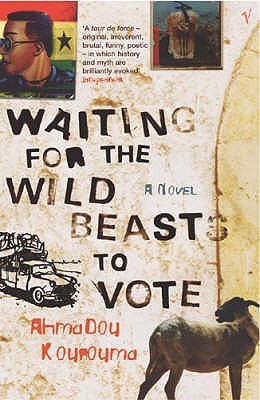
Ahmadou Kourouma's remarkable novel is narrated by Bingo, a West African sora - storyteller and king's fool. Over the course of five nights he tells the life story of Koyaga, President and Dictator of the Gulf Coast. Orphaned at the age of seven, Koyaga grows up to be a terrible hunter; he fights mythical beasts, and is a shape-shifter, capable of changing himself into beasts and birds. He fights in the French colonial armies, in Vietnam and Algeria, but on his return he mounts a coup and becomes ruler and dictator of the Gulf Coast. For thirty years he runs a corrupt but 'clean' state, surviving repeated assassination attempts and gaining support and investment from abroad. But when the 'First World' decides it no longer want to support dictatorships and call for democracy, he needs another ruse to maintain himself in power...Part magic, part history, part savage satire, Waiting for the Wild Beasts to Vote is nothing less than a history of post-colonial Africa itself.

In December 1995, Jean-Dominique Bauby, the forty-three-year-old editor of French Elle, suffered a massive stroke that left him completely and permanently paralyzed, a victim of "locked-in syndrome." Where once he had been renowned for his gregariousness and wit, Bauby now found himself imprisoned in an inert body, able to communicate only by blinking his left eye. The miracle is that in doing so he was able to compose this stunningly eloquent memoir, which was published two days before Bauby's death in 1996 and went on to become a number-one bestseller across Europe.The second miracle is that The Diving Bell and the Butterfly is less a record of affliction than it is a celebration of the liberating power of consciousness. In a voice that is by turns wistful and mischievous, angry and sardonic, Bauby tells us what it is like to spend a day with his children; to imagine lying in bed beside his lover; to conjure up the flavor of delectable meals even as he is fed by tube. Most of all, this triumphant book allows us to follow the flight of an indomitable spirit and to share its exultation at its own survival.

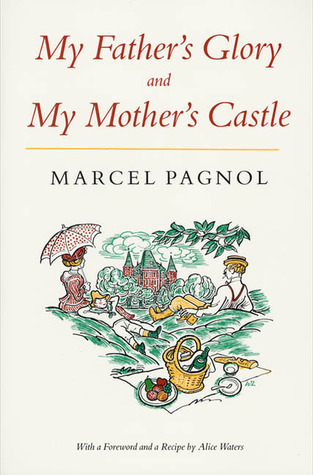
Bathed in the warm clarity of the summer sun in Provence, Marcel Pagnol's childhood memories celebrate a time of rare beauty and delight.Called by Jean Renoir "the leading film artist of his age," Pagnol is best known for such films as The Baker's Wife, Harvest, Fanny, and Topaze, as well as the screen adaptations of his novels Jean de Florette and Manon of the Springs (North Point, 1988). But he never forgot the magic of his Provencal childhood, and when he set his memories to paper late in life the result was a great new success. My Father's Glory and My Mother's Castle appeared on the scene like a fresh breeze, captivating readers with its sweet enchantments. Pagnol recalls his days hunting and fishing in the hill country, his jaunts about Marseilles, his schoolboy diversions, and above all his his anticlerical father and sanctimonious uncle, his mild and beautiful mother, and many others. This bright and lively book sparkles with the charm and magic that were Marcel Pagnol's own.

Cette histoire est vraie, mais elle s'est passée il y a bien longtemps, quand vos grands-parents étaient encore des enfants...A cette époque, des charrettes et des fiacres roulaient dans les rues, et quand une auto arrivait, on l'entendait venir de bien loin... Alors les chevaux prenaient le mors aux dents, et les gens couraient s'abriter sous les portes cochères... C'est pour vous dire que le monde change vite... Mais il y a une chose qui ne changera jamais : c'est l'amour des enfants pour leur mère, et j'ai écrit ce livre pour apprendre aux petites filles comment leurs fils les aimeront un jour...

"The Eighteenth Brumaire of Louis Bonaparte" is one of Karl Marx' most profound and most brilliant monographs. It may be considered the best work extant on the philosophy of history. On the 18th Brumaire (Nov. 9th), the post-revolutionary development of affairs in France enabled the first Napoleon to take a step that led with inevitable certainty to the imperial throne. The circumstance that fifty and odd years later similar events aided his nephew, Louis Bonaparte, to take a similar step with a similar result, gives the name to this work-"The Eighteenth Brumaire of Louis Bonaparte."

Originally published in 1958 and now available for the first time in paperback, this classic of modern military history tells the exciting true story of the fall of St. L", the first major objective of the invading American armies in Normandy in June of 1944. Although St. L" was intended to be taken within days of the landing, stubborn German resistance postponed the town's fall until July 18. The author describes the bloody action that took place in the thirty days in between as he led his battalion dubbed "The Indestructible Clay Pigeons" through the daunting combat.

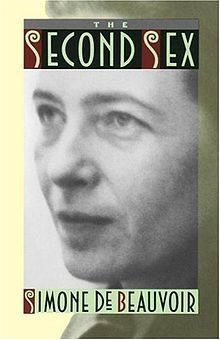
Newly translated and unabridged in English for the first time, Simone de Beauvoir's masterwork is a powerful analysis of the Western notion of "woman," and a groundbreaking exploration of inequality and otherness. This long-awaited new edition reinstates significant portions of the original French text that were cut in the first English translation. Vital and groundbreaking, Beauvoir's pioneering and impressive text remains as pertinent today as it was back then, and will continue to provoke and inspire generations of men and women to come.

"Je me souviens du moins d'une grande fille magnifique qui avait dansé tout l'après-midi. Elle portait un collier de jasmin sur sa robe bleue collante, que la sueur mouillait depuis les reins jusqu'aux jambes. Elle riait en dansant et renversait la tête. Quand elle passait près des tables, elle laissait après elle une odeur mêlée de fleurs et de chair."

Another edition of ISBN 086547236X can be found here.New Yorker writer A.J. Liebling recalls his Parisian apprenticeship in the fine art of eating in this charming memoir.No writer has written more enthusiastically about food than A. J. Liebling. Between Meals: An Appetite for Paris, the great New Yorker writer's last book, is a wholly appealing account of his éducation sentimentale in French cuisine during 1926 and 1927, when American expatriates like Ernest Hemingway and Gertrude Stein made café life the stuff of legends. A native New Yorker who had gone abroad to study, Liebling shunned his coursework and applied himself instead to the fine art of eating – or “feeding,” as he called it. The neighborhood restaurants of the Left Bank became his homes away from home, the fragrant wines his constant companions, the rich French dishes a test of his formidable appetite. is a classic account of the pleasures of good eating, and a matchless evocation of a now-vanished Paris.

The fall of Metternich in the revolutions which swept Europe in 1848 heralded an era of unprecedented nationalism, which culminated in the collapse of the Habsburg, Romanov, and Hohenzollern dynasties at the of the First World War. In the intervening seventy years which are the subject of this book, the boundaries of Europe changed dramatically from those established at Vienna in 1815: Cavour championed the cause of Risorgimento in Italy; Bismarck brought about the unification of Germany; while the Great Powers scrambled for a place in the sun in Africa.In this, one of his most enduring works, A.J.P. Taylor shows how the changing balance of power determined the course of European history, during this, the last age when Europe was the centre of world history. Throughout, Taylor's narrative is so vivid that the book is as much a work of literature as a contribution to historical scholarship.

Juliette est une jeune militante écologiste, fragile et idéaliste. Elle participe à une opération commando pour libérer des animaux de laboratoire. Cette action apparemment innocente va l'entraîner au coeur d'un complot sans précédent qui, au nom de la planète, prend ni plus ni moins pour cible l'espèce humaine.L'agence de renseignements privée « Providence », aux États-Unis, est chargée de l'affaire. Elle recrute deux anciens agents, Paul et Kerry, qui ont quitté les services secrets pour reprendre des études, l'un de médecine, et l'autre de psychologie. Leur enquête va les plonger dans l'univers terrifiant de l'écologie radicale et de ceux qui la manipulent. Car la défense de l'environnement n'a pas partout le visage sympathique qu'on lui connaît chez nous. La recherche d'un Paradis perdu, la nostalgie d'un temps où l'homme était en harmonie avec la nature peuvent conduire au fanatisme le plus meurtrier.Du Cap-Vert à la Pologne, du Colorado jusqu'aux métropoles brésiliennes, Le Parfum d'Adam est un thriller planétaire haletant. Mais ce roman d'aventures est aussi un voyage littéraire, où l'on retrouve les portraits, les paysages et l'humour qui ont fait le succès de L'Abyssin ou de Rouge Brésil.

"Still a joy to read." — Mathematical Gazette This classic by the famous mathematician defines the basic methodology and psychology of scientific discovery, particularly regarding mathematics and mathematical physics. Drawing on examples from many fields, it explains how scientists analyze and choose their working facts, and it explores the nature of experimentation, theory, and the mind. 1914 edition.

Set against the backdrop of French colonial Vietnam, The Lover reveals the intimacies and intricacies of a clandestine romance between a pubescent girl from a financially strapped French family and an older, wealthy Chinese-Vietnamese man.

This collection includes: How Wang-fo was Saved, Marko's Smile, The Milk of Death, The Last Love of Princess Genji, The Man Who Loved the Nereids, Our Lady of the Swallows, Aphrodissia; the Widow, Kali Beheaded, The End of Marko Kraljevic, The Sadness of Cornelius Berg, and a Postscript by the Author.

John Richardson draws on the same combination of lively writing, critical astuteness, exhaustive research, and personal experience which made a bestseller out of the first volume and vividly recreates the artist's life and work during the crucial decade of 1907-17 - a period during which Pablo Picasso and Georges Braque invented Cubism and to that extent engendered modernism. Richardson has had unique access to untapped sources and unpublished material. By harnessing biography to art history, he has managed to crack the code of cubism more successfully than any of his predecessors. And by bringing a fresh light to bear on the artist's often too sensationalised private life, he has succeeded in coming up with a totally new view of this paradoxical man of his paradoxical work. Never before has Picasso's prodigious technique, his incisive vision and not least his sardonic humour been analysed with such clarity.

Chéri, together with The Last of Chéri, is a classic story of a love affair between a very young man and a charming older woman. The amour between Fred Peloux, the beautiful gigolo known as Chéri, and the courtesan Léa de Lonval tenderly depicts the devotion that stems from desire, and is an honest account of the most human preoccupations of youth and middle age. With compassionate insight Colette paints a full-length double portrait using an impressionistic style all her own."A wonderful subject [treated with] intelligence, mastery, and understanding of the least-admitted secrets of the flesh." ― André Gide