
Jonathan Littell
A bi-lingual (English / French) writer living in Barcelona. He is a dual citizen of the United States and France and is of Jewish background. His first novel written in French, Les Bienveillantes , won two major French awards. His father is the writer Robert Littell, also resident in France and who authored numerous spy novels.
26 Books Written

«En fait, j'aurais tout aussi bien pu ne pas écrire. Après tout, ce n'est pas une obligation. Depuis la guerre, je suis resté un homme discret ; grâce à Dieu, je n'ai jamais eu besoin, comme certains de mes anciens collègues, d'écrire mes Mémoires à fin de justification, car je n'ai rien à justifier, ni dans un but lucratif, car je gagne assez bien ma vie comme ça. Je ne regrette rien : j'ai fait mon travail, voilà tout ; quant à mes histoires de famille, que je raconterai peut-être aussi, elles ne concernent que moi ; et pour le reste, vers la fin, j'ai sans doute forcé la limite, mais là je n'étais plus tout à fait moi-même, je vacillais, le monde entier basculait, je ne fus pas le seul à perdre la tête, reconnaissez-le. Malgré mes travers, et ils ont été nombreux, je suis resté de ceux qui pensent que les seules choses indispensables à la vie humaine sont l'air, le manger, le boire et l'excrétion, et la recherche de la vérité. Le reste est facultatif.» Avec cette somme qui s'inscrit aussi bien sous l'égide d'Eschyle que dans la lignée de Vie et destin de Vassili Grossman, Jonathan Littell nous fait revivre les horreurs de la Seconde Guerre mondiale du côté des bourreaux, tout en nous montrant un homme comme rarement on l'avait fait : l'épopée d'un être emporté dans la traversée de lui-même et de l'Histoire.Édition revue par l'auteur

A blistering firsthand account of the conflict in Homs by the internationally acclaimed author of The Kindly Ones“We fight for our religion, for our women, for our land, and lastly to save our skin. As for them, they’re only fighting to save their skin.”In 2012, Jonathan Littell traveled to the heart of the Syrian uprising, smuggled in by the Free Syrian Army to the historic city of Homs. For three weeks, he watched as neighborhoods were bombed and innocent civilians murdered. His notes on what he saw on the ground speak directly of horrors that continue today in the ongoing civil war.Amid the chaos, Littell bears witness to the lives and the hopes of freedom fighters, of families caught within the conflict, as well as of the doctors who attempt to save both innocents and combatants who come under fire. As government forces encircle the city, Littell charts the first stirrings of the fundamentalist movement that would soon hijack the revolution.Littell’s notebooks were originally the raw material for the articles he wrote upon his return for the French daily Le Monde . Published nearly immediately afterward in France, Syrian Notebooks has come to form an incomparable close-up account of a war that still grips the Middle East—a classic of war reportage.

Een spiegelpaleis van wrede excessenEen man, een vrouw, een kind. Een badkuip, een gang, een tuin, een hotelkamer. Een deurklink, een fotoboek, een sprei, een Da Vinci, een pianoconcert van Mozart. Sardientjes, roggebrood, wijn. Dit alles en meer komt steeds – maar steeds anders – terug in de zeven hoofdstukken die deze verontrustende en hallucinante roman beslaat. Maar elk hoofdstuk begint in een zwembad. Een naamloze ikfiguur, soms van fluïde (gender)identiteit, komt uit het water, rent eenmaal aangekleed gedesoriënteerd door een eindeloos gangenstelsel, opent een deur (in elke scène een andere) en duikt aan het eind van elk hoofdstuk weer in het water.

What is a place? A place where things happened, horrible things, the traces of which have been erased? Ukraine, for a long time, has been filled with these 'inconvenient places' which embarrass everyone, no matter which side of post-Soviet memorial politics they stand crimes of Stalinism, crimes of Nazism, crimes of nationalists, crimes of Russians; the killings follow one after -another on this battered territory which aspires only to a form of peace and normality. With the photographer Antoine d'Agata, before the full-scale Russian invasion of Ukraine, Jonathan Littell began to survey Babyn Yar, the site of the 1941 massacre of the Jews of Kyiv, and the traces left on the landscape. The war came to interrupt their work. It resumed quite quickly in another form, in another place, the small sub-urban town of Bucha, which became infamous after the discovery of the atrocities perpetrated there by the Russian occupying forces. Again, a place where things happened; again, a place whose traces we erase as quickly as possible. How then to write, how to photograph when, there is literally nothing to see – or almost nothing?

"La Tchétchénie, c'est comme 1937, 1938", me déclare dans son petit bureau moscovite un des dirigeants de Memorial, la plus grande association russe des Droits de l'homme. On achève un vaste programme de construction, les gens reçoivent des logements, il y a des parcs où les enfants jouent, des spectacles, des concerts, tout a l'air normal et... la nuit, des gens disparaissent." C'est ce même homme qui m'a décrit la "tchétchénisation", nom donné à la décision prise par Vladimir Poutine en 2002 d'installer un pouvoir tchétchène prorusse fort, principalement composé d'anciens rebelles, dirigé par l'ex-mufti indépendantiste Akhmad- Khadzhi Kadyrov, comme le "transfert du pouvoir de mener des violences illégales des structures fédérales aux structures locales". Et il était d'accord que cette "tchétchénisation" avait entraîné un réel changement: "Les violences ne sont pas moins cruelles, mais elles sont plus sélectives."

Le sec et l'humide est une étude linguistique, critique et psychanalytique, consacrée à un livre du fasciste belge Léon Degrelle (1912-1994) intitulé " La Campagne de Russie ", récit des batailles de la Légion Wallonie sur le front de l'Est auxquelles il participa de 1941 à 1945. Texte bref et illustré avec précision, commencé pendant la phase de documentation qui a précédé l'écriture des Bienveillantes, Le sec et l'humide nous entraîne dans l'atelier de Littell en nous dévoilant un peu de sa manière très personnelle de travailler et exploiter ses sources.

Francis Bacon is one of the iconic figures of modern art. Jonathan Littell, the author of the controversial novel The Kindly Ones, helps us to understand what we experience when we stand before a Bacon painting. A populist art critic in the tradition of Robert Hughes and Simon Schama, Littell reveals the life behind the art—Bacon's Irish childhood, his obsession with Velázquez, and the catastrophe of his lover George Dyer's suicide, inspiring his most famous triptych. Always in the background is the author himself: haunting a Bacon exhibition at the Prado, tracking down Bacon's sources, sitting in a café and thinking about how we see. In this gemlike meditation on one of the greatest artists of the twentieth century, Littell has made art criticism a living story.


The Prix Goncourt winning author of the scandalous The Kindly Ones returns with four new novellas that offer startlingly fresh depictions of age-old obsessions: sex and love, desiring and gazing, and the memories that take a lifetime to process. In The Fata Morgana Books, Littell crafts unique narrative voices by letting sensual feelings take the fore, whether the slippery promise of silk underwear, the dizzy intensity of abstract art, the languid torpor of a French beach, the shock of a bull’s goring horn, or the warmth of a fondled breast. The connections between events are left obscure, yet these novellas are as striking as a gust of frigid air, presenting a skewed reality in which the reader is drawn forward to figure out who, or what, is telling the story, and why. Narrated by what may be hermaphrodites or ghosts, wanders or wonders, Littell’s masterful, effortless sentences carry these stories that illuminate the shadowy depths of solitude, reflection, longing, and lust."In Quarters" is a Proustian ghost story, or maybe a memory, or a dream. Narrated by a man who may or may not exist, it follows him through a sprawling mansion where he cares for a sick child, though he has forgotten whether or not the boy is his, while stealing food from other's plates and having sex with a beautiful young woman. When he travels to a provincial city, the young woman reappears—or does she? Repeated brushes with shadowy men with umbrellas offer a hint of menace that forms the backbone of this strange tale."Story About Nothing" follows a man who cannot remember his birthday "or even the sign under which I was born" as he experiences transgenderism, a pornographic tape given to him by a mysterious stranger, and a Hemingway-esque series of bullfights under the hot Spanish sun. As Littell takes his narrator through a series of affairs, each more ephemeral then the last, it becomes clear that this is a story about the transience of sex, the way that desire evaporates in satiation and then reappears when two strangers share a long look over a strong drink. Anchored by striking images—a lime sorbet, children diving off of high rocks—Littell's tale becomes a trip through desire that is not soon forgotten.Commanding in spite of their vagueness, beguilingly easy to read but full of depth and mystery, these novellas explore the in-between spaces: between thoughts, between bodies, between hungers and their satisfactions, between eyes and the things they look at.

Enthält: einen langen und einen kurzen Brief des Autors an seine Übersetzer; Claude Lanzmann im Gespr. mit Jürg Altwegg; der Autor im Gespr. mit Pierre Nora; Florence Mercier-Leca: Die „Wohlgesinnten“ und die griechische Tragöde. Eine makabre Wiederaufnahme der Orestie; Judith N. Klein: Das „Wesen des großen Wahnsinns“ begreifen? Und mehrere Organigramme, von Littell verf., über die Struktur der SS u. ä.

In this powerful fictional memoir, a former Nazi official tells the story of his life and the times through which he lived. Through his eyes, we experience the horrors of the Second World War and the Holocaust in vivid detail from the disturbing point of view of the executioner rather than the victim.

Poutine est un homme qui au XXIe siècle mène une guerre du XXe pour atteindre des objectifs du XIXe. »La polémique est un genre dont je me méfie vivement, et que je pratique avec parcimonie. Je n’ai jamais pensé que le fait d’avoir écrit des livres, d’être considéré, d’une certaine manière, comme une personne publique, donnait le droit d’exprimer ses opinions à tout vent. Mais parfois l’on n’a pas le choix ; parfois, le silence équivaut à la complicité. Lorsqu’un pays en agresse un autre, comme la Russie a agressé l’Ukraine ce 24 février 2022, se taire serait faire le jeu de l’agresseur, serait trahir l’agressé. Cela vaut d’autant plus lorsqu’on a passé des années dans les deux pays, lorsqu’on y a des amis, des deux côtés. Pour les uns, comme pour les autres, il importe de choisir son camp.J.L.

In this powerful fictional memoir, a former Nazi official tells the story of his life and the times through which he lived. Through his eyes, we experience the horrors of the Second World War and the Holocaust in vivid detail from the disturbing point of view of the executioner rather than the victim.
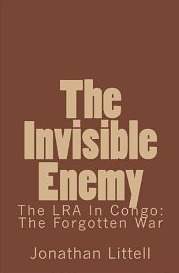
In remote villages of the Congo, the children of more than 1,000 families have been taken by armed members of the Lord's Resistance Army (LRA) and made to become slaves and "wives." In The Invisible Enemy, Jonathan Littell--war correspondent and author of the novel The Kindly Ones--investigates the panic, disbelief, and powerlessness faced by the effected families. He journeys to jungle and savannah villages where the LRA hides, interviewing children who escaped, government officials who help the victims, and military officers who lead the anti-LRA operations. Haunted with images of terror, Littell's history of the LRA's atrocious campaign nevertheless offers powerful psychological portraits, richly described landscapes, strategic details of both sides' operations.

Der Roman "Die Wohlgesinnten" ist die fiktive Autobiografie des SS-Offiziers Maximilian Aue, Sohn eines deutschen Vaters und einer französischen Mutter, promovierter Jurist und frühes NSDAP-Mitglied. Es sind die beklemmenden und verstörenden Erinnerungen an die Schauplätze des Zweiten Weltkriegs und an das Grauen der Judenvernichtung, an die Einsatzkommandos und Massenhinrichtungen in der Ukraine und im Kaukasus, an Babi Jar, den Kessel von Stalingrad, Auschwitz und Krakau, das besetzte Paris und das kriegszerstörte Berlin, an die Begegnungen mit Himmler, an Abendessen mit Eichmann, an Heydrich, Höß und Speer.Hören Sie in dieser Folge (1 von 34): "Ihr Menschenbrüder, lasst mich euch erzählen, wie es gewesen ist. Für das, was ich getan habe, gab es immer Gründe, ob gute oder schlechte, weiß ich nicht, auf jeden Fall aber menschliche Gründe. Die, die töten, sind Menschen wie die, die getötet werden, das ist die schreckliche Wahrheit."Die dramatische Lesung des 1.350 Seiten langen Epos "Die Wohlgesinnten" mit dem Schauspieler Stephan Benson findet bis 12. Juli 2009 jeden Sonntag im Jüdischen Salon am Grindel in Hamburg statt. Als Livemitschnitt aufgenommen, erscheint sie in insgesamt vier Teilen exklusiv als Download bei Audible.Ein ausführliches Glossar zu den vom Autor benutzten Abkürzungen und Erläuterungen zu den Organisationen des nationalsozialistischen Systems, sowie eine Konkordanz der Dienstgrade der SS, Wehrmacht und der Polizei wird Ihnen nach dem Kauf in Ihrer Bibliothek als Download zur Verfügung gestellt.Der Autor:Jonathan Littell, 1967 in New York geboren, ist in Frankreich aufgewachsen, wo er 1985 das Abitur machte. Anschließend studierte er an der Yale Universiy (USA). Zwischen 1993 und 2001 arbeitete er für die humanitäre Organisation"Aktion gegen den Hunger" (ACF) in Bosnien und Afghanistan, im Kongo und in Tschetschenien. "Die Wohlgesinnten" ist sein erstes literarisches Werk. 2006 erhielt er dafür den GRAND PRIX DU ROMOAN FRANÇAIS der Académie Française und den PRIX GONCOURT.Der Sprecher:Stephan Benson, geboren 1964, gilt als einer der besten deutschen Sprecher. Als Schauspieler arbeitete er an renommierten Bühnen wie dem Thalia Theater Hamburg und dem Schauspielhaus Zürich; im Kanon der Krimi-Reihen und TV-Movies ist Benson ebenso zu sehen wie in ambitionierten Film- und Theaterproduktionen.


Questo racconto, come dice il titolo stesso, non vuole avere una trama o un soggetto preciso ma semplicemente testimoniare uno stralcio di vita dell’autore. Un momento qualunque. L’autore passa da un sensuale bagno al mare, alla visione ipnotica di un film pornografico, dallo spettacolo sanguinario della corrida, all’incontro con una donna bella e sfuggente. Il sesso e l’allusione ad una sessualità originale e intensa emergono costantemente in queste righe. “Mi piaceva anche uscire così, con quella biancheria di pizzo sotto i vestiti: mi dava una sensazione strana, leggera e ondeggiante, come se entrambi i sessi passeggiassero insieme nel mio corpo per la città.”.

estudi. Composició instrumental destinada a l?aprenentatge tècnic. Es concentra en la superació d?una dificultat concreta a base d?aillar-la, abordant-la de manera raonada, sistemàtica i repetitiva per vèncer-la i dominar-la. Es distingeix del simple exercici en el fet que deixa expressar la creativitat artística. Cristophe Hardy, Les mots de la musique

BESCHREIBUNGDer Roman "Die Wohlgesinnten" ist die fiktive Autobiografie des SS-Offiziers Maximilian Aue, Sohn eines deutschen Vaters und einer französischen Mutter, promovierter Jurist und frühes NSDAP-Mitglied. Es sind die beklemmenden und verstörenden Erinnerungen an die Schauplätze des Zweiten Weltkriegs und an das Grauen der Judenvernichtung, an die Einsatzkommandos und Massenhinrichtungen in der Ukraine und im Kaukasus, an Babi Jar, den Kessel von Stalingrad, Auschwitz und Krakau, das besetzte Paris und das kriegszerstörte Berlin, an die Begegnungen mit Himmler, an Abendessen mit Eichmann, an Heydrich, Höß und Speer.Hören Sie hier Teil 2 (Folgen 9 bis 17 ):Die dramatische Lesung des 1.350 Seiten langen Epos "Die Wohlgesinnten" mit dem Schauspieler Stephan Benson findet bis 12. Juli 2009 jeden Sonntag im Jüdischen Salon am Grindel in Hamburg statt. Als Livemitschnitt aufgenommen, erscheint sie in insgesamt vier Teilen exklusiv als Download bei Audible.Ein ausführliches Glossar zu den vom Autor benutzten Abkürzungen und Erläuterungen zu den Organisationen des nationalsozialistischen Systems, sowie eine Konkordanz der Dienstgrade der SS, Wehrmacht und der Polizei wird Ihnen nach dem Kauf in Ihrer Bibliothek als Download zur Verfügung gestellt.Der Autor:Jonathan Littell, 1967 in New York geboren, ist in Frankreich aufgewachsen, wo er 1985 das Abitur machte. Anschließend studierte er an der Yale Universiy (USA). Zwischen 1993 und 2001 arbeitete er für die humanitäre Organisation"Aktion gegen den Hunger" (ACF) in Bosnien und Afghanistan, im Kongo und in Tschetschenien. "Die Wohlgesinnten" ist sein erstes literarisches Werk. 2006 erhielt er dafür den GRAND PRIX DU ROMOAN FRANÇAIS der Académie Française und den PRIX GONCOURT.Der Sprecher:Stephan Benson, geboren 1964, gilt als einer der besten deutschen Sprecher. Als Schauspieler arbeitete er an renommierten Bühnen wie dem Thalia Theater Hamburg und dem Schauspielhaus Zürich; im Kanon der Krimi-Reihen und TV-Movies ist Benson ebenso zu sehen wie in ambitionierten Film- und Theaterproduktionen.

Der Roman "Die Wohlgesinnten" ist die fiktive Autobiografie des SS-Offiziers Maximilian Aue, Sohn eines deutschen Vaters und einer französischen Mutter, promovierter Jurist und frühes NSDAP-Mitglied. Es sind die beklemmenden und verstörenden Erinnerungen an die Schauplätze des Zweiten Weltkriegs und an das Grauen der Judenvernichtung, an die Einsatzkommandos und Massenhinrichtungen in der Ukraine und im Kaukasus, an Babi Jar, den Kessel von Stalingrad, Auschwitz und Krakau, das besetzte Paris und das kriegszerstörte Berlin, an die Begegnungen mit Himmler, an Abendessen mit Eichmann, an Heydrich, Höß und Speer.Hören Sie hier Teil 4 (Folgen 26 bis 34):Die dramatische Lesung des 1.350 Seiten langen Epos "Die Wohlgesinnten" mit dem Schauspieler Stephan Benson findet bis 12. Juli 2009 jeden Sonntag im Jüdischen Salon am Grindel in Hamburg statt. Als Livemitschnitt aufgenommen, erscheint sie in insgesamt vier Teilen exklusiv als Download bei Audible.Ein ausführliches Glossar zu den vom Autor benutzten Abkürzungen und Erläuterungen zu den Organisationen des nationalsozialistischen Systems, sowie eine Konkordanz der Dienstgrade der SS, Wehrmacht und der Polizei wird Ihnen nach dem Kauf in Ihrer Bibliothek als Download zur Verfügung gestellt.Der Autor:Jonathan Littell, 1967 in New York geboren, ist in Frankreich aufgewachsen, wo er 1985 das Abitur machte. Anschließend studierte er an der Yale Universiy (USA). Zwischen 1993 und 2001 arbeitete er für die humanitäre Organisation"Aktion gegen den Hunger" (ACF) in Bosnien und Afghanistan, im Kongo und in Tschetschenien. "Die Wohlgesinnten" ist sein erstes literarisches Werk. 2006 erhielt er dafür den GRAND PRIX DU ROMOAN FRANÇAIS der Académie Française und den PRIX GONCOURT.Der Sprecher:Stephan Benson, geboren 1964, gilt als einer der besten deutschen Sprecher. Als Schauspieler arbeitete er an renommierten Bühnen wie dem Thalia Theater Hamburg und dem Schauspielhaus Zürich; im Kanon der Krimi-Reihen und TV-Movies ist Benson ebenso zu sehen wie in ambitionierten Film- und Theaterproduktionen.

Der Roman "Die Wohlgesinnten" ist die fiktive Autobiografie des SS-Offiziers Maximilian Aue, Sohn eines deutschen Vaters und einer französischen Mutter, promovierter Jurist und frühes NSDAP-Mitglied. Es sind die beklemmenden und verstörenden Erinnerungen an die Schauplätze des Zweiten Weltkriegs und an das Grauen der Judenvernichtung, an die Einsatzkommandos und Massenhinrichtungen in der Ukraine und im Kaukasus, an Babi Jar, den Kessel von Stalingrad, Auschwitz und Krakau, das besetzte Paris und das kriegszerstörte Berlin, an die Begegnungen mit Himmler, an Abendessen mit Eichmann, an Heydrich, Höß und Speer.Hören Sie hier Teil 3 (Folgen 18 bis 25):Die dramatische Lesung des 1.350 Seiten langen Epos "Die Wohlgesinnten" mit dem Schauspieler Stephan Benson findet bis 12. Juli 2009 jeden Sonntag im Jüdischen Salon am Grindel in Hamburg statt. Als Livemitschnitt aufgenommen, erscheint sie in insgesamt vier Teilen exklusiv als Download bei Audible.Ein ausführliches Glossar zu den vom Autor benutzten Abkürzungen und Erläuterungen zu den Organisationen des nationalsozialistischen Systems, sowie eine Konkordanz der Dienstgrade der SS, Wehrmacht und der Polizei wird Ihnen nach dem Kauf in Ihrer Bibliothek als Download zur Verfügung gestellt.Der Autor:Jonathan Littell, 1967 in New York geboren, ist in Frankreich aufgewachsen, wo er 1985 das Abitur machte. Anschließend studierte er an der Yale Universiy (USA). Zwischen 1993 und 2001 arbeitete er für die humanitäre Organisation"Aktion gegen den Hunger" (ACF) in Bosnien und Afghanistan, im Kongo und in Tschetschenien. "Die Wohlgesinnten" ist sein erstes literarisches Werk. 2006 erhielt er dafür den GRAND PRIX DU ROMOAN FRANÇAIS der Académie Française und den PRIX GONCOURT.Der Sprecher:Stephan Benson, geboren 1964, gilt als einer der besten deutschen Sprecher. Als Schauspieler arbeitete er an renommierten Bühnen wie dem Thalia Theater Hamburg und dem Schauspielhaus Zürich; im Kanon der Krimi-Reihen und TV-Movies ist Benson ebenso zu sehen wie in ambitionierten Film- und Theaterproduktionen.

Американо-французький письменник Джонатан Літтел — добре відомий автор всесвітніх бестселерів, лавреат Гонкурівської премії, чиї твори було перекладено більш ніж 40 мовами. Літтел був спостерігачем і дослідником злочинів путінського режиму в Росії, Чечні, Грузії та Сирії. Від початку повномасштабного вторгнення він відгукнувся на російську агресію низкою статей, де висловив беззастережну солідарність із героїчною боротьбою українців і наполегливо закликав західних лідерів надати Україні зброю, достатню для перемоги. До збірки цих статей додано відкритий лист автора у російський концтабір до українського режисера та правозахисника Олега Сенцова, а також дві розмови Літтела з українськими інтелектуалами Володимиром Єрмоленком і Тетяною Огарковою.

An introduction to "The Kindly Ones" including author interviews and reviews.

L’ambiguïté apparaît chez Jonathan Littell comme une profession de foi : le verbe construit un labyrinthe au jeu de miroirs infini, une chorégraphie à la nonchalance tragique où le mot, si minutieux soit-il, ne décrit toujours que les contours d’une brume. Nous en sommes quitte pour une plongée vertigineuse dans un imaginaire sans illusion.

The Kindly Ones: A Novel
by Jonathan Littell
A literary prize-winner that has been an explosive bestseller all over the world, Jonathan Littell’s The Kindly Ones offers a profound and gripping experience of the horrors of World War II and the Holocaust.

Die Wohlgesinnten
by Jonathan Littell
Der Roman "Die Wohlgesinnten" ist die fiktive Autobiografie des SS-Offiziers Maximilian Aue, Sohn eines deutschen Vaters und einer französischen Mutter, promovierter Jurist und frühes NSDAP-Mitglied. Es sind die beklemmenden und verstörenden Erinnerungen an die Schauplätze des Zweiten Weltkriegs und an das Grauen der Judenvernichtung, an die Einsatzkommandos und Massenhinrichtungen in der Ukraine und im Kaukasus, an Babi Jar, den Kessel von Stalingrad, Auschwitz und Krakau, das besetzte Paris und das kriegszerstörte Berlin, an die Begegnungen mit Himmler, an Abendessen mit Eichmann, an Heydrich, Höß und Speer. Hören Sie in dieser Folge (12 von 34): "Finita la commedia." Zitat aus dem "Stalingrad? Keine Ahnung. Das hier ist die Armee Hoth." - "Mir wurde gesagt, ich solle mich hier melden, dann würde ich zu einem der Flugplätze gebracht." - "Die Flugplätze liegen am anderen Ufer des Don. Erkundigen Sie sich bei der Armee." Ein weiterer Feldgendarm ließ mich einen Lkw besteigen, der zum AOK fuhr. Dort fand ich endlich einen Generalstäbler, der einigermaßen Bescheid "Flüge nach Stalingrad gehen von Tazinskaja ab."