
Voltaire
Complete works (1880) : https://archive.org/details/oeuvresco... In 1694, Age of Enlightenment leader Francois-Marie Arouet, known as Voltaire, was born in Paris. Jesuit-educated, he began writing clever verses by the age of 12. He launched a lifelong, successful playwriting career in 1718, interrupted by imprisonment in the Bastille. Upon a second imprisonment, in which Francois adopted the pen name Voltaire, he was released after agreeing to move to London. There he wrote Lettres philosophiques (1733), which galvanized French reform. The book also satirized the religious teachings of Rene Descartes and Blaise Pascal, including Pascal's famed "wager" on God. Voltaire wrote: "The interest I have in believing a thing is not a proof of the existence of that thing." Voltaire's French publisher was sent to the Bastille and Voltaire had to escape from Paris again, as judges sentenced the book to be "torn and burned in the Palace." Voltaire spent a calm 16 years with his deistic mistress, Madame du Chatelet, in Lorraine. He met the 27 year old married mother when he was 39. In his memoirs, he wrote: "I found, in 1733, a young woman who thought as I did, and decided to spend several years in the country, cultivating her mind." He dedicated Traite de metaphysique to her. In it the Deist candidly rejected immortality and questioned belief in God. It was not published until the 1780s. Voltaire continued writing amusing but meaty philosophical plays and histories. After the earthquake that leveled Lisbon in 1755, in which 15,000 people perished and another 15,000 were wounded, Voltaire wrote Poème sur le désastre de Lisbonne (Poem on the Lisbon Disaster): "But how conceive a God supremely good/ Who heaps his favours on the sons he loves,/ Yet scatters evil with as large a hand?" Voltaire purchased a chateau in Geneva, where, among other works, he wrote Candide (1759). To avoid Calvinist persecution, Voltaire moved across the border to Ferney, where the wealthy writer lived for 18 years until his death. Voltaire began to openly challenge Christianity, calling it "the infamous thing." He wrote Frederick the Great: "Christianity is the most ridiculous, the most absurd, and bloody religion that has ever infected the world." Voltaire ended every letter to friends with "Ecrasez l'infame" (crush the infamy — the Christian religion). His pamphlet, The Sermon on the Fifty (1762) went after transubstantiation, miracles, biblical contradictions, the Jewish religion, and the Christian God. Voltaire wrote that a true god "surely cannot have been born of a girl, nor died on the gibbet, nor be eaten in a piece of dough," or inspired "books, filled with contradictions, madness, and horror." He also published excerpts of Testament of the Abbe Meslier, by an atheist priest, in Holland, which advanced the Enlightenment. Voltaire's Philosophical Dictionary was published in 1764 without his name. Although the first edition immediately sold out, Geneva officials, followed by Dutch and Parisian, had the books burned. It was published in 1769 as two large volumes. Voltaire campaigned fiercely against civil atrocities in the name of religion, writing pamphlets and commentaries about the barbaric execution of a Huguenot trader, who was first broken at the wheel, then burned at the stake, in 1762. Voltaire's campaign for justice and restitution ended with a posthumous retrial in 1765, during which 40 Parisian judges declared the defendant innocent. Voltaire urgently tried to save the life of Chevalier de la Barre, a 19 year old sentenced to death for blasphemy for failing to remove his hat during a religious procession. In 1766, Chevalier was beheaded after being tortured, then his body was burned, along with a copy of Voltaire's Philosophical Dictionary. Voltaire's statue at the Pantheon was melted down during Nazi occupation. D. 1778. Voltaire (1694-1778), pseudónimo de François-
30 Books Written
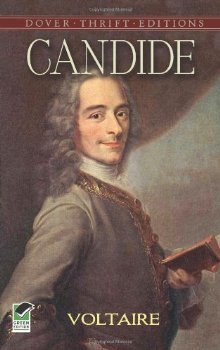
Candide is the story of a gentle man who, though pummeled and slapped in every direction by fate, clings desperately to the belief that he lives in "the best of all possible worlds." On the surface a witty, bantering tale, this eighteenth-century classic is actually a savage, satiric thrust at the philosophical optimism that proclaims that all disaster and human suffering is part of a benevolent cosmic plan. Fast, funny, often outrageous, the French philosopher's immortal narrative takes Candide around the world to discover that — contrary to the teachings of his distinguished tutor Dr. Pangloss — all is not always for the best. Alive with wit, brilliance, and graceful storytelling, Candide has become Voltaire's most celebrated work.

" Qu'il est dangereux de se mettre à la fenêtre et qu'il est difficile d'être heureux dans cette vie ! " Ainsi soupire Zadig, jeune Babylonien, devenu favori du roi et promis à une enviable destinée. Pour être tombé amoureux de la reine Astarté, le voilà obligé de fuir, rendu à la condition d'esclave, victime des brigands, des fanatiques religieux, en butte aux pires catastrophes... Mais à travers ce cheminement capricieux, la Providence veille et l'homme est à sa place. C'est aussi ce que découvre cet habitant de Sirius qui, à l'aide d'un rayon de soleil, parcourt la Voie lactée. Quelle surprise en effet pour Micromégas de voir que l'homme, si petit et si misérable qu'il soit, tient son rôle dans l'univers grâce à son esprit... Désinvoltes et primesautiers, deux contes qui charment et enchantent...

Micromegas is an inhabitant of the star Sirius, 120,000 feet tall and accompanied by a dwarf from Saturn who is 6000 feet tall. During a grand tour of the universe they visit Earth in 1737 and, using makeshift microscopes, they detect a boating party of tiny human philosophers.

" Je vous offre la traduction d'un livre d'un ancien sage, qui, ayant le bonheur de n'avoir rien à faire, eut celui de s'amuser à écrire l'histoire de Zadig : ouvrage qui dit plus qu'il ne semble dire. Je vous prie de le lire et d'en juger ". Sadi écrit ici à la sultane Sheraa et Voltaire s'adresse à nous...Marchons donc sur les traces de Zadig, partageons ses aventures et découvrons le monde par ses yeux. Avec lui, regardons nos coutumes et nos institutions ; interrogeons-nous sur le sens de notre existence.

Candide is the most famous of Voltaire's "philosophical tales," in which he combined witty improbabilities with the sanest of good sense. First published in 1759, it was an instant bestseller and has come to be regarded as one of the key texts of the Enlightenment. What Candide does for chivalric romance, the other tales in this selection--Micromegas, Zadig, The Ingenu, and The White Bull--do for science fiction, the Oriental tale, the sentimental novel, and the Old Testament. The most extensive one-volume selection currently available, this new edition includes a new verse translation of the story Voltaire based on Chaucer's The Wife of Bath's Tale: What Pleases the Ladies and opens with a revised introduction that reflects recent critical debates, including a new section on Candide.

Un jeune Huron d’ascendance bretonne débarque à Saint-Malo en 1689. Il découvre un coin de province française, retrouve une famille, reçoit le baptême, s’illustre par un fait d’armes contre les Anglais et, pour finir, tombe amoureux de la belle et dévote Mlle de Saint-Yves. Pour obtenir sa main, il doit revenir de la Cour avec un brevet d’officier. Il gagne donc Versailles. Mais ses éclats naïfs le conduisent à la Bastille...

A collection of short stories, including "Candide," "Zadig," and "Memnon" reveals the author's perspective of society in his time, ethics, faith, legal justice, and love.

Candido è un uomo cresciuto con l'idea di un mondo perfetto e giusto, costretto dalla vita a scoprire infinite cause di ingiustizia e di infelicità che lo obbligano a profondi ripensamenti. L'ingenuo è invece l'occasione per riflettere sul rapporto tra la natura e la civiltà, sull'esistenza dell'altro, sullo scontro morale e il vivere civile.

After his three-year exile to England (1726-9) following imprisonment in the Bastille for his satirical writings, Voltaire wrote a series of letters offering the French public a panoramic view of English culture. He was full of enthusiasm and freedom - as opposed to the tyrannical feudal society of his homeland. Letters on England discusses English religious sects, politics, scientists and writers with great admiration, yet the clever Voltaire also flattered his French readers with humorous references to the old-fashioned clothes and speech of the Quakers and to antics in the House of Commons. At first banned in France, this intriguing and often comic account of a culture viewed through foreign eyes was to prove highly influential in shaping French attitudes to England.Leonard Tancock's translation brilliantly captures Voltaire's ironic tone, and is accompanied by an introduction discussing his depiction of England and the events that led to his exile. This edition also includes notes, new further reading and chronology, and an appendix on Voltaire's verse translation of English works.

"قد أختلف معك في الرأي ولكني على استعداد لأن أموت دفاعاً عن رأيك".لم تكن عبارة فولتير هذه محض قولة عارضة في متون مؤلفاته التي ناهزت المئة كتاب، بين شعر ومسرحية ونثر وفلسفة، بل كانت خلاصة رسالته الفكرية والحياتية التي كانت بمثابة سيف رفعه طيلة حياته في وجه "الوحش الضاري"، الذي كان يقصد به التعصب الديني ومنطق محاكم التفتيش.هذا الوحش، الذي كان لا يزال يعمِل أنيابه في المجتمعات الأوروبية في القرنين السابع عشر والثامن عشر، هو نفسه الوحش الذي ينهش بعض مجتمعاتنا العربية والإسلامية إلى الآن ويتهددها بالتمزق والدمار. ولم تستطع أوروبا القضاء عليه إلا بإعلاء حرية الاعتقاد وبتكريس التسامح الديني وقبول الآخر المختلف دينياّ أو طائفياً.كان الفضل في هذا لعصر التنوير، الذي صنعه مثقفون روّاد، كان من أشهرهم وأجرئهم فولتير الذي لم يتوان يوما عن خوض أي معركة مهما كانت طاحنة دفاعا عن قيم التنوير وحقوق العقل والتسامح. وهذا الكتاب هو تتويج لواحدة من كبرى معاركه. ففولتير الذي ينتمي من حيث أصله العائلي إلى الأغلبية الكاثوليكية في فرنسا يقف في هذا الكتاب مدافعا شرسا وجريئا عن أسرة بروتستانتية اضطهِدت بسبب انتمائها المذهبي ودفعت ثمناً للتعصب أباً أعدم بالدولاب وابناً سُجن وأمّاً نُفيدت.هذا الكتاب الذي نشره فولتير عام 1763 يحتفظ براهنيته كاملة، ولاسيما بالنسبة إلى عالمنا العربي والإسلامي الذي لا يزال يصارع، واليوم أكثر من أي وقت سبق، للخروج من القرون الوسطى ومنطق القرون الوسطى.

Voltaire's Philosophical Dictionary is a series of short essays, hortatory and propagandist, over an enormously wide range of subjects.It was deliberately planned as a revolutionary book and was duly denounced on all sides and described as 'a deplorable monument of the extent to which inteligence and erudition can be abused'. The subjects treated include Abraham, Angel and Anthropophages; Baptism, Beauty and Beasts; Fables, Fraud and Fanaticism; Metempsychosis, Miracles and Moses; all of them exposed to Voltaire's lucid scrutiny, his elegant irony and his passionate love of reason and justice.

The Princess of Babylon is a rarely published philosophical tale that Voltaire (Francois Marie Arouet, 1694-1778) wrote in 1768. --- The story focuses on Amazan, a handsome, unknown shepherd, and Formosanta, the Princess of Babylon, whose love and jealousy drive them to travel the world. During their travels, Voltaire, by using metaphors and adventurous scenes, confronts the protagonists and the reader with basic Enlightenment values.

One of Voltaire's earliest tales, Zadig is set in the exotic East and is told in the comic spirit of Candide; L'Ingenu, written after Candide, is a darker tale in which an American Indian records his impressions of France

Satirist, novelist, poet, dramatist, historian, moralist, critic, courtier and correspondent, champion of reason and fanatical adversary of fanaticism, a darling of kings with the unfortunate habit of turning them into enemies, François Arouet de Voltaire is one of the few writers to have imposed his name on an entire epoch. It is entirely appropriate that the French Enlightenment is also known as "the age of Voltaire." And if that age ended with a revolution, Voltaire was nothing if not a subversive. His abiding motto was "Écrasez l'infame": "Crush infamy."This encyclopedic anthology acquaints us with Voltaire's mercurial range of expression as well as with the steadfastness of his vision, which might be called the religion of reason. It includes his sardonic comedies Candide and Zadig; the tales "Micromegas" and 'Story of a Good Brahmin"; more than seventy articles from the Philosophical Dictionary that offer heretical definitions of subjects from Adultery to Tyranny; letters written to such correspondents as Frederick the Great and Jean-Jacques Rousseau; selections from The English Letters and Essay on the Manners and Spirit of Nations, and the long poem "The Lisbon Earthquake." The whole is rounded out with an Introduction by Ben Ray Redman, which distills Voltaire's prodigious oeuvre while summing up the grand picaresque adventure of his life.Cover design by Melissa JacobyPortrait of Voltaire after N. de Largilliere, 1718.Collection Musee Carnavalet, Paris. Photograph: Art ResourceDescription from back coverContentsEditor's introductionSome dates in the life of VoltaireBrief bibliography of works VoltairePhilosophical dictionarySelectionsMiscellanyCandideZadigMicromegasStory of a good BrahminLetters - To Frederick the great - Miscellaneous letters - Selections from the English lettersEssay on the manners and spirit of nations: RecapitulationLisbon earthquake - Author's preface - Lisbon earthquake

The story of Candide, a naive youth, who is conscripted, shipwrecked, robbed, and tortured by the Inquisition without losing his will to live is accompanied by imaginary letters on various themes

The works presented in this volume, in a new English translation, are among the most important and characteristic texts of the Enlightenment, and bring together all three aspects of Voltaire: the writer, the doer and the philosophe. Originating in Voltaire's campaign to exonerate Jean Calas, they are works of polemical brilliance, informed by his deism and humanism and by Enlightenment values and ideals more generally. The issues that they raise, concerning questions of tolerance and human dignity, are still highly relevant to our own times.

I romanzi di Voltaire sono accomunati da un filo quello di un processo di formazione del protagonista che si compie attraverso molteplici esperienze, prima fra tutte quella della diversità. Tutti gli eroi di Voltaire sono grandi viaggiatori, per necessità o per curiosità, e tutti sono disponibili all'osservazione etnologica e alle discussioni filosofiche, politiche o metafisiche. Quest'esperienza suscita la ciò che di cui all'inizio si era sicuri non appare più certo, cadono alcune preclusioni, gli orizzonti si allargano, il giudizio si fa più duttile e complesso, si afferma l'idea della relatività di ogni norma e giudizio e lo scetticismo, morale e metafisico, sostituisce il dogmatismo iniziale.


Qui es-tu ? d’où viens-tu ? que fais-tu ? que deviendras-tu ? C’est une question qu’on doit faire à tous les êtres de l’univers, mais à laquelle nul ne nous répond. Je demande aux plantes quelle vertu les fait croître, et comment le même terrain produit des fruits si divers. Ces êtres insensibles et muets, quoique enrichis d’une faculté divine, me laissent à mon ignorance et à mes vaincs conjectures.

François-Marie Arouet (1694-1778), Voltaire, fue educado por jesuitas, pero a los pocos años ya militaba en la libertina y elegante Sociedad del Templo. En Inglaterra conoció el espíritu científico y de tolerancia. Problemas políticos, huidas y enfrentamientos, cartas, sátiras y publicaciones jalonaron toda su vida. Los cuentos de Voltaire (y este volumen reúne tres de los mejores) son portadores de tesis filosóficas o políticas, pero el vehículo literario resulta de una singular frescura y modernidad, muy en consonancia con los valores (tolerancia, pacifismo, antimilitarismo) que encarnan.

Throughout history, some books have changed the world. They have transformed the way we see ourselves - and each other. They have inspired debate, dissent, war and revolution. They have enlightened, outraged, provoked and comforted. They have enriched lives - and destroyed them. Now Penguin brings you the works of the great thinkers, pioneers, radicals and visionaries whose ideas shook civilization and helped make us who we are.Voltaire's short, radical and iconoclastic essays on philosophical ideas from angels to idolatry, miracles to wickedness, make wry observations about human beliefs, and mock hypocrisy and extravagant piety - his call to his fellow men to act with reason and see through the lies they are fed by their leaders has provided inspiration to freethinkers everywhere.

Something between a tale and a polemic, these "fables of reason" are feats of narrative compression and contain much of Voltaire's best and funniest writing. From ribald tales of adultery to conversations between cosmic travellers, the stories in this collection pose moral, philosophical and social questions. Reader and protagonist alike find their assumptions challenged as Voltaire mingles rationality and fantasy.

Socrates, written by Voltaire, the famous French philosopher in the mid 17th Century, is a play in three acts concerned with Socrates and the events just before his death during his trial. It is heavy with satire, specifically at government authority and organized religion, which later influenced the American and French revolutions. This excellent and modern English translation is by Voltaire scholar William F. Fleming.

231pages. poche. Broché. " De fait, le conte voltairien gravite toujours, le plus élégamment du monde, autour d'un problè science, destinée, sagesse, optimisme, civilisation. Au centre, violemment mis en lumière, et tout prêt à faire ses expériences, le héros, esprit à la fois neuf et avisé, dont l'originalité est de toujours venir d'ailleurs. Jacques Van den Heuvel (1958

Le Monde comme il va est un conte philosophique de Voltaire. Publié en 1746, ce conte est un reflet de la société de Voltaire à son époque. Ituriel est un des génies qui président l'empire du monde et confie une mission au Scythe Babouc, le personnage principal. Babouc doit observer Persépolis (Persépolis est en réalité Paris) et ses habitants accusés de tous les maux afin de décider si Ituriel doit ou non détruire cette ville.

This work has been selected by scholars as being culturally important, and is part of the knowledge base of civilization as we know it. This work was reproduced from the original artifact, and remains as true to the original work as possible. Therefore, you will see the original copyright references, library stamps (as most of these works have been housed in our most important libraries around the world), and other notations in the work.This work is in the public domain in the United States of America, and possibly other nations. Within the United States, you may freely copy and distribute this work, as no entity (individual or corporate) has a copyright on the body of the work.As a reproduction of a historical artifact, this work may contain missing or blurred pages, poor pictures, errant marks, etc. Scholars believe, and we concur, that this work is important enough to be preserved, reproduced, and made generally available to the public. We appreciate your support of the preservation process, and thank you for being an important part of keeping this knowledge alive and relevant.

This work has been selected by scholars as being culturally important and is part of the knowledge base of civilization as we know it.This work is in the public domain in the United States of America, and possibly other nations. Within the United States, you may freely copy and distribute this work, as no entity (individual or corporate) has a copyright on the body of the work.Scholars believe, and we concur, that this work is important enough to be preserved, reproduced, and made generally available to the public. To ensure a quality reading experience, this work has been proofread and republished using a format that seamlessly blends the original graphical elements with text in an easy-to-read typeface.We appreciate your support of the preservation process, and thank you for being an important part of keeping this knowledge alive and relevant.

David Wootton's scalpel-sharp translation of Candide features a brilliant Introduction, a map of Candide's travels, and a selection of those writings of Voltaire, Leibniz, Pope & Rousseau crucial for fully appreciating this eighteenth-century satiric masterpiece that even today retains its celebrated bite.

Zadig ou la Destinée - Le Monde comme il va - Memnon ou la Sagesse humaine - Lettre d'un Turc sur les fakirs et sur son ami Bababec - Micromégas - Songe de Platon - Les Deux Consolés - Histoire des voyages de Scarmentado - Candide ou l'Optimisme - Histoire d'un bon bramin - Le Blanc et le Noir - Jeannot et Colin - Pot-pourri - Petite Digression - Aventure indienne - L'Ingénu - L'Homme aux quarante écus - La Princesse de Babylone - Les Lettres d'Amabed - Le Taureau blanc - Le Crocheteur borgne - Éloge historique de la raison - Histoire de Jenni ou l'Athée et le Sage - Les oreilles du comte de Chesterfied et le chapelain Goudman - Aventure de la mémoire - Cosi-Sancta

Jeannot et Colin est un conte philosophique au même titre que Candide, il raconte l'histoire de deux jeunes garçons d'origine assez modestes qui sont séparés, l'un dont le père s'est enrichi rapidement incarne le nouveau riche, Jeannot, l'autre le bon sens populaire, Colin. Leur opposition et leur histoire permet à l'auteur de dégager une morale.