
Jean-Jacques Rousseau
Genevan philosopher and writer Jean Jacques Rousseau held that society usually corrupts the essentially good individual; his works include The Social Contract and Émile (both 1762). This important figure in the history contributed to political and moral psychology and influenced later thinkers. Own firmly negative view saw the post-hoc rationalizers of self-interest, apologists for various forms of tyranny, as playing a role in the modern alienation from natural impulse of humanity to compassion. The concern to find a way of preserving human freedom in a world of increasingly dependence for the satisfaction of their needs dominates work. This concerns a material dimension and a more important psychological dimensions. Rousseau a fact that in the modern world, humans come to derive their very sense of self from the opinions as corrosive of freedom and destructive of authenticity. In maturity, he principally explores the first political route, aimed at constructing institutions that allow for the co-existence of equal sovereign citizens in a community; the second route to achieving and protecting freedom, a project for child development and education, fosters autonomy and avoids the development of the most destructive forms of self-interest. Rousseau thinks or the possible co-existence of humans in relations of equality and freedom despite his consistent and overwhelming pessimism that humanity will escape from a dystopia of alienation, oppression, and unfreedom. In addition to contributions, Rousseau acted as a composer, a music theorist, the pioneer of modern autobiography, a novelist, and a botanist. Appreciation of the wonders of nature and his stress on the importance of emotion made Rousseau an influence on and anticipator of the romantic movement. To a very large extent, the interests and concerns that mark his work also inform these other activities, and contributions of Rousseau in ostensibly other fields often serve to illuminate his commitments and arguments.
30 Books Written

Widely regarded as the first modern autobiography, The Confessions is an astonishing work of acute psychological insight. Jean-Jacques Rousseau (1712-78) argued passionately against the inequality he believed to be intrinsic to civilized society. In his Confessions he relives the first fifty-three years of his radical life with vivid immediacy - from his earliest years, where we can see the source of his belief in the innocence of childhood, through the development of his philosophical and political ideas, his struggle against the French authorities and exile from France following the publication of Émile. Depicting a life of adventure, persecution, paranoia, and brilliant achievement, The Confessions is a landmark work by one of the greatest thinkers of the Enlightenment, which was a direct influence upon the work of Proust, Goethe and Tolstoy among others.

With splendid new translations, these four major works offer a superlative introduction to a great social philosopher whose ideas helped spark a revolution that has still not ended. Can individual freedom and social stability be reconciled?What is the function of government?What are the benefits and liabilities of civilization?What is the original nature of man, and how can he most fully realize his potential? These were the questions that Jean-Jacques Rousseau investigated in works that helped set the stage for the French Revolution and have since stood as eloquent expressions of revolutionary views, not only in politics but also in such areas as personal lifestyles and educational practices. Rousseau’s concepts of the natural goodness of man, the corrupting influence of social institutions, and the right and the power of the people to overthrow their oppressors and create new and more responsive forms of government and society are as richly relevant today as they were in eighteenth-century France.The Social ContractDiscourse on InequalityDiscourse on the Arts and Sciences“The Creed of a Savoyard Priest” (from Emile )

"Man is born free; and everywhere he is in chains."These are the famous opening words of a treatise that has not ceased to stir vigorous debate since its first publication in 1762. Rejecting the view that anyone has a natural right to wield authority over others, Rousseau argues instead for a pact, or ‘social contract’, that should exist between all the citizens of a state and that should be the source of sovereign power. From this fundamental premise, he goes on to consider issues of liberty and law, freedom and justice, arriving at a view of society that has seemed to some a blueprint for totalitarianism, to others a declaration of democratic principles.
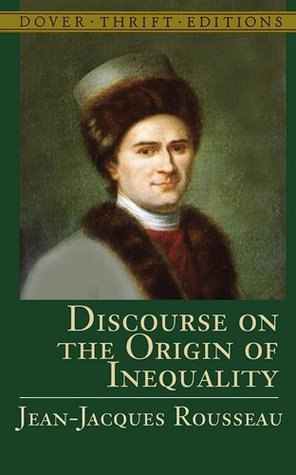
If humans are benevolent by nature, how do societies become corrupt? And how do governments founded upon the defense of individual rights degenerate into tyranny? These are the questions addressed by Jean-Jacques Rousseau's Discourse on the Origin of Inequality, a strikingly original inquiry into much-explored issues of 18th-century (and subsequent) philosophy: human nature and the best form of government.Rousseau takes an innovative approach by introducing a "hypothetical history" that presents a theoretical view of people in a pre-social condition and the ensuing effects of civilization. In his sweeping account of humanity's social and political development, the author develops a theory of human evolution that prefigures Darwinian thought and encompasses aspects of ethics, sociology, and epistemology. He concludes that people are inevitably corrupt as a result of both natural (or physical) inequalities and moral (or political) inequalities.One of the most influential works of the Enlightenment, the Discourse on the Origin of Inequality offers a thought-provoking account of society's origins and a keen criticism of unequal modern political institutions.
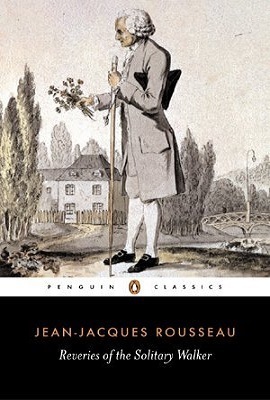
The struggle between Rousseau's yearning for solitude and his need for society is the central theme of the Reveries.In the two years before his death in 1778, Jean-Jacques Rousseau composed the ten meditations of Reveries of the Solitary Walker. Combining philosophical argument with amusing anecdotes and lyrical desriptive passages, they record the great French writer's sense of isolation and alienation from a world which he felt had rejected his work. As he wanders around Paris, gazing at plants and day-dreaming, Rousseau looks back over his life in order to justify his actions and to elaborate on his ideal of a well-structured society fit for the noble and solitary natural man.

The basic political writings of Rousseau , including * Discourse on the Sciences and the Arts * Discourse on the Origin of Inequality * Discourse on Political Economy * On the Social Contract'The publication of these excellent translations is a happy occasion for teachers of courses in political philosophy and the history of political theory....'--Raymon M. Lemos, Teaching Philosophy'The single most comprehensive, reliable and economical collection ofRousseaus explicitly political writings.'--Michael Franz, Loyola College

The definitive translation of Rousseau’s Emile , a foundational text in the philosophy of education Widely hailed as the most accessible and authoritative edition of Jean-Jacques Rousseau’s Emile, or On Education , this acclaimed translation by bestselling author Alan Bloom elevates what Rousseau considered to be the “best and most important” of his published writing into something a prescription, fresh and dazzling, for the education of autonomous, responsible—and truly democratic—human beings. Initially published in 1763 at the height of the Enlightenment, Emile articulates Rousseau’s philosophy of education through the novelistic device of a fictional tutor’s encounters with his pupil from infancy to adolescence, illustrating how ideal citizens can be raised to survive in a corrupt society. In addition to his translation of this classic of Enlightenment philosophy, Bloom offers an incisive introduction that connects the structure and themes of Rousseau’s book to timeless questions about teaching children which have persisted in the field of education, helping readers understand how to implement the philosopher’s broader insights into the possibilities—and limitations—of human nature.

لم أختر اعتباطًا النص الذي يحمل في الأصل عنوان ” عقيدة قس من جبال السافوا ” لنقله إلى العربية. يخضع هذا الاحتيار لخطةٍ نقدية ذكرتها في مناسبات عدة . سبق لي أن قلت أن الفكر الغربي لم يقترب من تمثل الفكر الإسلامي إلا مرة واحدة ، وذلك أواسط القرن الثامن عشر الميلادي ، قبل ذلك التاريخ كان الحاجزُ المعتقدَ الديني وبعده كان المانع سدَّ الاستعمار. ما الفائدة إذن لنا ، قراء العربية من نقل نص جان – جاك روسو ؟ المفيد بالنسبة لنا هو القايام بتجربة ذهنية معينة تساعدنا على فهم كتاب روسو وكتابات إسلامية شبيهة به.فيرسم روسو لنفسه هنا ، عقيدة بسيطة ، بينة ، صادقة ، توفق بين العقل والوجدان ، تضمن للفرد الطمأنينة وللمجتمع الوحدة والاستقرار.رابط التحميل http://www.4shared.com/office/jtY5XYb...

Inspired by ancient Greek city states, Rousseau searched for a way which states of his day could be equally representative Holding men in wretched subservience, feudalism–alongside religion–was a powerful force in the eighteenth century. Self-serving monarchic social systems, which collectively reduced common people to servitude, were now attacked by Enlightenment philosophers, of whom Rouseau was a leading light.His masterpiece, The Social Contract, profoundly influenced the subsequent development of society and remains provocative in a modern age of continuing widespread vested interest. This is the most comprehensive paperback edition available, with introduction, notes, index and chronology of Rousseau's life and times.

An elegant translation of one of the most popular novels of its time. Rousseau's great epistolary novel, Julie, or the New Heloise, has been virtually unavailable in English since 1810. In it, Rousseau reconceptualized the relationship of the individual to the collective and articulated a new moral paradigm. The story follows the fates and smoldering passions of Julie d'Etange and St. Preux, a one-time lover who re-enters Julie's life at the invitation of her unsuspecting husband, M. de Wolmar. The complex tones of this work made it a commercial success and a continental sensation when it first appeared in 1761, and its embodiment of Rousseau's system of thought, in which feelings and intellect are intertwined, redefined the function and form of fiction for decades. As the characters negotiate a complex maze of passion and virtue, their purity of soul and honest morality reveal, as Rousseau writes in his preface, "the subtleties of heart of which this work is full." A comprehensive introduction and careful annotations make this novel accessible to contemporary readers, both as an embodiment of Rousseau's philosophy and as a portrayal of the tension and power inherent in domestic life.
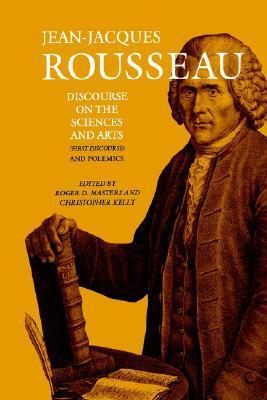
Discourse on the Sciences and Arts (First Discourse) and Polemics demonstrates the continued relevance of Rousseau's thought. Where his critics argue for correction of the excesses and corruptions of knowledge and the sciences as sufficient, Rousseau attacks the social and political effects of the dominant forms of scientific knowledge.This second volume in the series (The Collected Writings of Rousseau) contains the entire First Discourse, contemporary attacks on it, and Rousseau's replies to his critics; it concludes with Rousseau's summary of the debate in his preface to Narcissus.

As one of the most respected translations of this key work of 18th-century philosophy, this edition of First and Second Discourses contains abundant notes that range from simple explanations to speculative interpretations.

The work of Jean-Jacques Rousseau is presented in two volumes, which together form the most comprehensive anthology of Rousseau's political writings in English. Volume I contains the earlier writings such as the First and Second Discourses. The American and French Revolutions were profoundly affected by Rousseau's writing, thus illustrating the scope of his influence. Volume II contains the later writings such as the Social Contract. The Social Contract was publicly condemned on publication causing Rousseau to flee. In exile he wrote both autobiographical and political works. These volumes contain comprehensive introductions, chronologies, and guides to further reading, and will enable students to fully understand the writings of one of the world's greatest thinkers.

Volume II contains the later writings such as the Social Contract. The Social Contract was publicly condemned on publication causing Rousseau to flee. In exile he wrote both autobiographical and political works.

Jean-Jacques Rousseau (1712-1778): Bilimler ve Sanatlar Üstüne Söylev'den Toplum Sözleşmesi'ne ve Emile'e, İnsanlar Arasında Eşitsizliğin Kaynağı'ndan İtiraflar'a, insanlık tarihinde çığır açan Aydınlanma düşüncesinin en önemli Romantik düşünür-yazarıdır. Melodi ve Müziksel Taklit ile İlişki İçinde Dillerin Kökeni Üzerine Deneme ise, Rousseau'nun ilk ses olarak kabul ettiği "doğanın çığlığı"ndan jestlerin diline, sözcüklerin ortaya çıkışına ve "dünyanın adlandırılması"na doğru uzanan bir süreçte dillerin kökenini müzik ve melodi ile ilişkilerine de değinerek anlatıyor. Ömer B. Albayrak (1976): İstanbul Bilgi Üniversitesi Fen-Edebiyat Fakültesi'nde araştırma görevlisi. Boğaziçi Üniversitesi Felsefe Bölümü'nü bitirdikten sonra Galatasaray Üniversitesi'nde yüksek lisansını yaptı. Galatasaray Üniversitesi ve Paris X-Nanterre Üniversitesi'nde doktorasını hazırlıyor.

The Social Contract, a Discourse on the Origin of Inequality, and a Discourse on Political Economy
by Jean-Jacques Rousseau
Rating: 3.9 ⭐
Each piece is fully annotated. Backgrounds includes a sketch of Rousseau s life, selections from his Confessions, and comments on Rousseau s work and character from such illustrious contemporaries and early critics as Voltaire, Hume, Boswell and Johnson, Paine, Kant, and Proudhon. Commentaries includes assessments of Rousseau s political thought by a wide variety of scholars and critics including Judith Shklar, Robert Nisbet, Simone Weil, and Benjamin R. Barber."

'No true Democracy has ever existed, nor ever will exist.'In this selection from The Social Contract, Rousseau asserts that a state's only legitimate political authority comes from its people.One of 46 new books in the bestselling Little Black Classics series, to celebrate the first ever Penguin Classic in 1946. Each book gives readers a taste of the Classics' huge range and diversity, with works from around the world and across the centuries - including fables, decadence, heartbreak, tall tales, satire, ghosts, battles and elephants.

This volume combines Rousseau's essay on the origin of diverse languages with Herder's essay on the genesis of the faculty of speech. Rousseau's essay is important to semiotics and critical theory, as it plays a central role in Jacques Derrida's book Of Grammatology, and both essays are valuable historical and philosophical documents.

A revolutionary and controversial work, this book is a classic of political theory and a key source of democratic ideals. Rousseau's concepts of "the general will" as a way for individuals' self-interest to unite for a common good, and the individual's submission to government by contract, stand at the heart of democracy. A must-read book for all who care about the foundations of liberty. Newly designed and typeset in a modern 5.5-by-8.5-inch format by Waking Lion Press.

«Je sentis avant de penser : c'est le sort commun de l'humanité. Je l'éprouvai plus qu'un autre. J'ignore ce que je fis jusqu'à cinq ou six ans ; je ne sais comment j'appris à lire ; je ne me souviens que de mes premières lectures et de leur effet sur moi : c'est le temps d'où je date sans interruption la conscience de moi-même. Ma mère avait laissé des romans. Nous nous mîmes à les lire après souper, mon père et moi. Il n'était question d'abord que de m'exercer à la lecture par des livres amusants ; mais bientôt l'intérêt devint si vif, que nous lisions tour à tour sans relâche, et passions les nuits à cette occupation. Nous ne pouvions jamais quitter qu'à la fin du volume. Quelquefois mon père, entendant le matin les hirondelles, disait tout honteux : «Allons nous coucher ; je suis plus enfant que toi.»

عزيزى القـارئ :إذا أردت أن تعرف قيمـة هـذا الكنـز الأدبى الخالد الذى توافيك به ( مطبوعات كتابى ) اليوم ، فإليك ما كتبه عنه المفكر المطلع الأستاذ ( سلامة موسى ) فى عدد 19 نوفمبر عام 1955م من جريدة ( أخبار اليوم ) ، إذ قال :واعترافات جان جاك روسو من الكتب التى يجب أن تترجم إلى لغتنا قبل 100 أو 150 سنة ..

This excellent translation makes available a classic work central to one of the most interesting controversies of the eighteenth the quarrel between Rousseau and Voltaire. Besides containing some of the most sensitive literary criticism ever written (especially of Molière), the book is an excellent introduction to the principles of classical political thought. It demonstrates the paradoxes of Rousseau's thought and clearly displays the temperament that led him to repudiate the hopes of the Enlightenment.

A lively new translation of Rousseau's best-known work, accompanied by additional political writings "Man is born free, and everywhere he is in chains" are the famous opening words of Jean-Jacques Rousseau's Social Contract, a work of political philosophy that has stirred vigorous debate ever since its publication in 1762. Rejecting the view that anyone has a natural right to sovereignty, Rousseau argues instead for a pact—a "social contract"—that should exist among all the citizens of a state and that should be the source of governing power. From this premise, he goes on to consider issues of liberty and justice, arriving at a view of society that has seemed to some a blueprint for totalitarianism, to others a declaration of democratic principles.

O Contrato Social ou Princípios de Direito Político causou furor desde sua publicação, em 1762, e eternizou-se como um dos principais textos fundadores do Estado moderno. Nele, o filósofo iluminista, romancista, teórico e compositor suíço Jean-Jacques Rousseau (1712-1778) em meio a uma Europa majoritariamente monarquista, defensora da legitimação sobrenatural dos governantes lança e defende a novidade de que o poder político de uma sociedade está no povo e só dele ema na. Estavam plantados os conceitos do povo soberano e da igualdade de direitos entre os homens. Nesta que é a sua principal obra política, da qual virtualmente todas as sociedades modernas são de alguma forma tributárias, Rousseau não apenas dá ao povo o que lhe é de direito, mas chama-o à responsabilidade pelo seu destino. "Assim que alguém diz dos assuntos do Estado "que me importa? ", deve-se contar que o Estado está perdido."

« Après le dîner nous fîmes une économie. Au lieu de prendre le café qui nous restait du déjeuner, nous le gardâmes pour le goûter avec de la crème et des gâteaux qu'elles avaient apportés ; et pour tenir notre appétit en haleine, nous allâmes dans le verger achever notre dessert avec des cerises. Je montai sur l'arbre, et je leur jetais des bouquets dont elles me rendaient les noyaux à travers les branches. Une fois, Mlle Galley, avançant son tablier et reculant la tête, se présentait si bien, et je visai si juste, que je lui fis tomber un bouquet dans le sein : et de rire. Je me disais en moi-même : Que mes lèvres ne sont-elles des cerises ! Comme je les jetterais ainsi de bon cœur. »

The book narrates the ups and downs of Rousseau and follows his life from streets to stardom. It provides a deep insight into the personality of the philosopher and the vision that got him exiled and persecuted. It relates his pride in his individual existence. The assortment of events and emotions presented here is timeless.

The Works of Jean-Jacques Rousseau: The Social Contract, Confessions, Emile, and Other Essays
by Jean-Jacques Rousseau
Rating: 4.1 ⭐
This collection of Enlightenment Philosopher Jean-Jacques Rousseau includes his most influential THE SOCIAL CONTRACT, CONFESSIONS, EMILE, and includes several other essays of A DISCOURSE ON POLITICAL ECONOMY, INEQUALITY AMONG MEN, CONSIDERATIONS FOR THE GOVERNMENT OF POLAND, and A CONSTITUTIONAL PROJECT FOR CORSICA. Rousseau was a major Swiss philosopher, writer, and composer of the eighteenth-century Enlightenment, whose political philosophy influenced the French Revolution and the development of modern political and educational thought.This ebook is DRM free and includes an active table of contents.

Penguin 60 excerpt from 'Reveries of a Solitary Walker'.

On the Social Contract: with Geneva Manuscript and Political Economy
by Jean-Jacques Rousseau
Rating: 3.9 ⭐
Complete with interpretive and biographical information and clarificaion on many previously obscure references in the text, this critical edition of Rousseau's On the Social Contract also contains translations of Political Economy and the Geneva Manuscript.

Rousseau, personaje excéntrico y rebelde, fue un pensador contradictorio e inclasificable, cuyo legado ha sido reclamado y repudiado al mismo tiempo por las tres ideologías que han dominado el pensamiento político moderno: liberalismo, socialismo y nacionalismo. He aquí la versión manga de su obra capital, libro de cabecera de los revolucionarios de 1789 y de figuras posteriores como Simón Bolívar y Fidel Castro.«El hombre ha nacido libre, pero por doquier se encuentra encadenado […] tan pronto como pueda sacudirse el yugo, [el pueblo] obrará mucho mejor si así lo hace; pues al recobrar su libertad basándose en el mismo derecho por el que le fue arrebatada, prueba que está legitimado a disfrutar de ella.»