
Guy Debord
Guy Ernest Debord was a French theorist, writer, filmmaker, hypergraphist and founding member of the groups Lettrist International and Situationist International. In broad terms, Debord's theories attempted to account for the spiritually debilitating modernization of the private and public spheres of everyday life by economic forces during the post-WWII modernization of Europe. Alienation, Debord postulated, could be accounted for by the invasive forces of the 'spectacle'—"a social relation between people that is mediated by images." Central to this school of thought was the claim that alienation is more than an emotive description or an aspect of individual psychology; rather, it is a consequence of the mercantile form of social organization which has reached its climax in capitalism. Debord committed suicide, shooting himself in the heart at his property on November 30, 1994.
29 Books Written

Few works of political and cultural theory have been as enduringly provocative as Guy Debord's The Society of the Spectacle. From its publication amid the social upheavals of the 1960s up to the present, the volatile theses of this book have decisively transformed debates on the shape of modernity, capitalism and everyday life in the late twentieth century. Now finally available in a superb English translation approved by the author, Debord's text remains as crucial as ever for understanding the contemporary effects of power, which are increasingly inseparable from the new virtual worlds of our rapidly changing image/information culture.

This is a seminal text in cultural theory and an essential pocket handbook for situationists wherever they may be.

“I have written less than most writers. But I have drunk far more than most drinkers. All my life I have seen only troubled times, extreme divisions in society, and immense destruction; I have joined in these troubles. My method will be very simple. I will tell of what I have loved; and, in this light, everything else will become evident... Over the years, more than half the people I knew well had sojourned one or several times in the prisons of various countries; many, no doubt, for political reasons, but all the same a greater number for common law offenses or crimes. So I met mainly rebels or the poor. Our only manifestations, which remained rather rare and bried in the first years, were meant to be completely unacceptable; at first, especially by their form and, later, as they acquired depth, especially by their content. They were not accepted.” –Guy DebordGuy Debord, as founding and pivotal figure of the Situationist International, pursued one of the twentieth century’s most arch and exciting assaults on modern life. His 1967 Society of the Spectacle (followed, twenty years later, by Comments on the Society of the Spectacle ) was a fierce critique of late-capitalist culture and became the signal text for those involved in the political events of May 1968 and beyond.Panegyric is Debord’s audacious autobiography, and here for the first time in English is the second, beautifully illustrated volume published together with the spare and classical text of the first. A rare combination of poetry and precision, it tells of something even a life that refused to adjust to the dominant malignancies of its time.

A Sick Planet , written in 1971, is an extremely prescient polemic on global environmental degradation.


Guy Debord (1931–1994) was the most influential member of the Situationist International, the avant-garde group that triggered the May 1968 revolt in France. While Debord’s written work (including The Society of the Spectacle ) is some of the most notorious in the world of political and cultural radicality, deemed “the cornerstone cliché of postmodernism,” his films have until now remained tantalizingly inaccessible. Ken Knabb’s translation of Debord’s Complete Cinematic Works accompanies the long-awaited English versions of these films, which will be coming soon to the United States. The scripts are illustrated with 62 stills, and Debord’s own annotations help elucidate the subtleties of these astonishing works, unparalleled in cinematic history.

A book length rant, and a confrontational stance against the French media with regards to the 1984 murder of Debord's friend, financial supporter, and film and literary impressario, Gerard Lebovici. First time in English, and its about time. "A fascinating document. This is a passionate Debord, sometimes self-aggrandizing, sometimes reflective, and always illuminating." [Sadie Plant]

Correspondence: The Foundation of the Situationist International 6/57-8/60
by Guy Debord
Rating: 4.0 ⭐
Letters by writer, filmmaker, and cultural revolutionary Guy Debord conjure a vivid picture of the dynamic first years of the Situationist International movement. Yesterday, the police interrogated me at length about the journal and other Situationist organizations. It was only a beginning. This is, I think, one of the principal threats that came up quickly during the the police want to consider the S.I. as an association to bring about the destruction of France.—from CorrespondenceThis volume traces the dynamic first years of the Situationist International movement—a cultural avant-garde that continues to inspire new generations of artists, theorists, and writers more than half a century later. Debord's letters—published here for the first time in English—provide a fascinating insider's view of just how this seemingly disorganized group drifting around a newly consumerized Paris became one of the most defining cultural movements of the twentieth century. Circumstances, personalities, and ambitions all come into play as the group develops its strategy of anarchic, conceptual, but highly political “intervention.” Brilliantly conceived, this collection of letters offers the best available introduction to the Situationist International movement by detailing, through original documents, how the group formed and defined its cultural to bring about, “by any means possible, even artistic,” a complete transformation of personal life within the Society of the Spectacle.
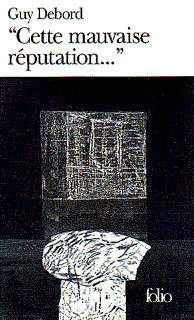
«Spécialistes homologués par des autorités inconnues, ou simples supplétifs, les experts révèlent et commentent de très haut toutes mes sottes erreurs, détestables talents, grandes infamies, mauvaises intentions...»

"The specialists of the cinema said that its revolutionary politics were bad; the politicians among all the left-wing illusionists said that it was bad cinema. But when one is at once a revolutionary and a filmmaker, one may easily demonstrate that their general bitterness derives from the obvious fact that the film in question is the exact critique of the society which they do not know how to combat; and a first example of the cinema which they do not know how to make." Guy Debord, on his film 'Society Of The Spectacle'] Presented for the first time in English, this volume includes the full texts of Debord's first 5 films, with an introduction explaining, amongst other things, why Debord is determined that the films should never again be shown.


Ги Дебор вместе с единомышленниками разрабатывает сугубо позитивную, радикализирующую поиски современной ему архитектуры программу, которая остается поразительно актуальной и сегодня. Ее основные термины пронизаны духом дематериализации: это психогеография - переосмысление общего представления о городе исходя из того, что его составляют принципиально временные, изменчивые, перетекающие друг в друга атмосферы, порождаемые взаимодействием всех элементов городской среды и чувств живущих в ней людей; дрейф - практика обнаружения этих атмосфер, прокладки новых маршрутов по воле чувств и желаний дрейфующих, а также фиксации этих маршрутов в новой картографии; конструирование или строительство ситуаций (Дебор учитывает оба значения этого слова: местоположение и стечение обстоятельств) - временных и изменчивых, подобно атмосферам, но гораздо более емких, чем прежде, зданий новой архитектуры, возводимых из столь же новых материалов - желаний и чувств. Наиболее последовательно эта программа изложена в "Отчете о конструировании ситуаций…" (1957), который послужил манифестом образованного в том же году Ситуационистского интернационала. (Алексей Шестаков)

Rapport sur la construction des situations suivi de, Les situationnistes et les nouvelles formes d'action dans la politique ou l'art
by Guy Debord
Rating: 3.6 ⭐
"Nous pensons d'abord qu'il faut changer le monde. Nous voulons le changement le plus libérateur de la société et de la vie où nous nous trouvons enfermés. Nous savons que ce changement est possible par des actions appropriées. " Par ces mots prononcés en 1957, Guy Debord fonde l'Internationale situationniste.Né à Paris en 1931, Guy Debord a écrit La Société du spectacle et réalisé des films. Il a dirigé la revue de l'IS.

"A separação trabalho-lazer foi derrotada quando o trabalho se tornou tão massivamente improdutivo e inepto (no derrogatório “terceiro setor”), e o lazer se tornou uma atividade econômica tediosa e fatigante. As desigualdades diante da cultura foram abolidas em praticamente toda parte e para quase todo mundo com o novo analfabetismo"Em junho de 1987, Guy Debord redigiu o verbete "Abolir" para a Encyclopédie des Nuisances, uma publicação periódica em 15 fascículos vigorando entre novembro de 1984 e abril de 1992. A enciclopédia se sitava na linha da Internacional Situacionista, ainda que de modo crítico, e havia sido anunciada em 1979, com o desafio de manter viva a linguagem crítica e a memória histórica. "Abolir" é uma ferramenta atemporal posta em papel por Debord, impressa pela primeira vez pela sobinfluencia.A edição conta com posfácio de Erick Corrêa, doutor em Ciências Sociais, co-organizador de "68: como incendiar um país" (2018) e "Insurgência Viral: autodefesa sanitária e despostismo ocidental (2020), ambos editados pela editora Veneta para a elementar Coleção Baderna. Também possui artigos e traduções publicadas em jornais e revistas do Brasil, como Angelus Novus, Kalagatos, Sopro e Passa Palavra; e do exterior, como Punkto, Mapa, Flauta de Luz, Lundimatin, Brooklyn Rail.

"Toute ma vie, je n'ai vu que des temps troublés, d'extrêmes déchirements dans la société, et d'immenses destructions ; j'ai pris part à ces troubles. De telles circonstances suffiraient sans doute à empêcher le plus transparent de mes actes ou de mes raisonnements d'être jamais approuvé universellement. Mais en outre plusieurs d'entre eux, je le crois bien, peuvent avoir été mal compris." Guy Debord

After Guy Debord’s seminal Society of the Spectacle, this new compendium brings together eight other important situationist works. Ivan Chtcheglov opens proceedings via his Formulary for a New Urbanism (1953), with it’s quasi-mythical demand that resonated down through generations: “The hacienda must be built”, followed by two brief but illuminating pieces from Asger Jorn, who’s sandpaper book cover later turned up under the same Factory Records roof as Manchesters’ own Hacienda, on the Durrtti Column’s "Return of the Durrutti Column" ( the title itself lifted from Andre Bertrand's détourned pro-situ comic strip). Debord’s The Decline and Fall of the Spectacle-Commodity Economy-was an immediate, razor sharp response to the LA/Watts Riots of 1965, it’s analysis of the relationship between the rioter and the meaningless, unaffordable commodities they loot or destroy resonating heavily today. Tunisian situationist Mustapha Khayati contributes Address to Revolutionaries of Algeria and of All Countries and the game changing “On the Poverty of Student Life”, the match that arguably lit the fires of May 68’. Raoul Vaneigem's The Revolution of Everyday Life finishes things off in defiant fashion : “. You’re f*%@g Around With Us? — Not For Long!”

Filosofia para indignados es una seleccion de textos de la Internacional Situacionista, escritos por Guy Debord; figura decisiva en la IS. Las ideas situacionistas debian abrir nuevas lineas de ofensiva al movimiento revolucionario frente a las viejas defensas de la sociedad de clases. El arte y la poesia eran para ellos el laboratorio de una revolucion de la que se dedicaron a trabajar ante todo el "detonador" que iba a permitir un etallido de espontaneidad revolucionaria en 1968.


French

Guy Debord nos ha legado un pensamiento enormemente rico y combativo. Sin duda, es difícil encontrar algún pensador con la capacidad de Debord de dar cuenta de los movimientos del capitalismo de posguerra y que haya depositado tantas energías en intentar superarlo. Sus lúcidos análisis sobre la naciente sociedad de consumo, la crítica de la vida cotidiana, la descomposición de las vanguardias artísticas y la crítica marxista de los movimientos revolucionarios se aúnan articulando una filosofía original que nos interpela a un cambio revolucionario que ha de transformar la vida en su conjunto. Los textos de esta antología pretenden rescatar los mejores escritos de Debord, desde su juventud a su madurez, de tal forma que puedan servir al lector como una aproximación fiel a la totalidad de su pensamiento.


PSICOGEOGRAFÍA, ARQUITECTURA Y URBANISMO [Próxima aparición]

"Το αληθινό επαναστατικό πρόβλημα είναι το πρόβλημα του ελεύθερου χρόνου. Οι οικονομικές απαγορεύσεις και οι ηθικές τους απόρροιες θα καταστραφούν και θα ξεπεραστούν σύντομα. Η οργάνωση του ελεύθερου χρόνου, η οργάνωση της ελευθερίας ενός πλήθους, ολοένα και λιγότερο εξαναγκασμένου στη συνεχή εργασία, αποτελεί ήδη μια αναγκαιότητα για το καπιταλιστικό κράτος και τους μαρξιστές διαδόχους του...". "Ακόμα και τα ωραιότερα διανοητικά παιχνίδια μας είναι αδιάφορα. Η πολιτική οικονομία, ο έρωτας και η πολεοδομία αποτελούν μέσα που πρέπει να κατέχουμε για την επίλυση ενός προβλήματος που είναι, πρώτ' απ' όλα, ηθικής τάξεως...". "Η Λετριστική Διεθνής προτίθεται να εγκαθιδρύσει μια συγκλονιστική κατασκευή της ζωής... Πειραματιζόμαστε με τις συμπεριφορές, τις σκηνογραφικές, αρχιτεκτονικές, πολεοδομικές και επικοινωνιακές μορφές που είναι ικανές να προκαλέσουν ελκυστικές καταστάσεις... Θα συμβάλλουμε στην καταστροφή αυτής της αστικής κοινωνίας, επιδιώκοντας την κριτική και την πλήρη ανατροπή της ιδέας της περί απολαύσεων...". (Από την παρουσίαση στο οπισθόφυλλο του βιβλίου)

Comme annoncé depuis le début de leur publication, ce dernier volume (augmenté d'un index des noms cités) - qui va de 1951 à la fondation de l'internationale situationniste en 1957 - précède chronologiquement les sept volumes déjà publiés de la Correspondance de Guy Debord. Ont été regroupés, en annexe, des rectificatifs, mais avant tout de nombreuses "lettres retrouvées" - le plus souvent d'ailleurs auprès de leurs propres destinataires ou ayants droit. Signalons que l'Etat français, qui s'est, depuis 2009, porté acquéreur de l'ensemble des "Archives Guy Debord", les a, de surcroît, classées au rang exceptionnel de Trésor national.

En 1988, Guy Debord fait paraître ses retentissants "Commentaires sur la société du spectacle," ou les quelques "conséquences pratiques," encore peu connues, qui résultent de ce déploiement rapide du spectacle durant les vingt dernières années viendront confirmer ses thèses de 1967, en disant ce qui est. De façon similaire, sa correspondance - qui avec ce volume arrive à son terme - montre, durant les sept années qui vont lui rester à vivre, que face à une nouvelle forme de notoriété il continue de juger et d'agir selon "ce qu'il est." Il décidera, le 30 novembre 1994, de franchir, à l'heure choisie, sa propre ligne d'arrivée;comme il avait décrété que l'année 1951 devait etre celle de son veritable point de depart. Car "la suite était déjà contenue dans le commencement de ce voyage."

Les situationnistes et les nouvelles formes d'action dans la politique ou l'art
by Guy Debord
Rating: 4.0 ⭐
Kniga statej Gi Debora "Situatsionisty i novye formy dejstvija v politike i iskusstve" vkljuchaet materialy s 1952 po 1985 god, raspolozhennye v khronologicheskom porjadke. Pervye stati i deklaratsii otnosjatsja ko vremeni suschestvovanija Lettristskogo internatsionala, kuda, krome Debora, vkhodili Zhil Volman, Serzh Berna, Zhan-Lui Bro i dr. Dalee idut stati perioda Situatsionistskogo internatsionala, obedinivshego v sebe khudozhnikov i politicheskikh aktivistov neskolkikh stran. Nakonets rjad statej Debora okhvatyvaet "postsituatsionistskij" period. Odnako, nesmotrja na takoe vremennoe delenie, chitatel mozhet prosledit protsess zarozhdenija i nepreryvnoj evoljutsii edinogo i tselnogo deborovskogo vzgljada na obschestvo, sovremennuju politiku i iskusstvo. Bolshinstvo tekstov, voshedshikh v novuju knigu etogo vydajuschegosja sotsialnogo filosofa,... Rekomenduem!

Book by Debord, Guy

Internacional Situacionista. Textos íntegros en castellano de la revista Internationale Situationniste (1958-1968). Vol. 1: La realización del arte
by Guy Debord
Rating: 3.7 ⭐