
Jean-Paul Sartre
Jean-Paul Charles Aymard Sartre was a French philosopher, playwright, novelist, screenwriter, political activist, biographer, and literary critic, considered a leading figure in 20th-century French philosophy and Marxism. Sartre was one of the key figures in the philosophy of existentialism (and phenomenology). His work has influenced sociology, critical theory, post-colonial theory, and literary studies. He was awarded the 1964 Nobel Prize in Literature despite attempting to refuse it, saying that he always declined official honors and that "a writer should not allow himself to be turned into an institution." Sartre held an open relationship with prominent feminist and fellow existentialist philosopher Simone de Beauvoir. Together, Sartre and de Beauvoir challenged the cultural and social assumptions and expectations of their upbringings, which they considered bourgeois, in both lifestyles and thought. The conflict between oppressive, spiritually destructive conformity (mauvaise foi, literally, 'bad faith') and an "authentic" way of "being" became the dominant theme of Sartre's early work, a theme embodied in his principal philosophical work Being and Nothingness (L'Être et le Néant, 1943). Sartre's introduction to his philosophy is his work Existentialism Is a Humanism (L'existentialisme est un humanisme, 1946), originally presented as a lecture.
30 Books Written

Foreword--Wade BaskinThe Ruins of Existenialism--Jean WahlThe Humanism of ExistentialismFreedom & ResponsibilityThe Desire to Be GodThe Problem of Nothingness The Origin of Negation Bad FaithThe Emotions: Outline of a Theory Psychology, Phenomenology & Phenomenological Psychology The Classical Theories The Psychoanalytic Theory A Sketch of Phenomenological Theory ConclusionThe Role of the Image in Mental Life The Synbol Symbolic Schemes & Illustrations of Thought Image & Thought Image & PerceptionWhat is Writing?Essays on Aesthetics The Venetian Pariah The Quest for the Absolute The Paintings of Giacometti The Mobiles of CalderBibliographyAcknowledgmentsIndex
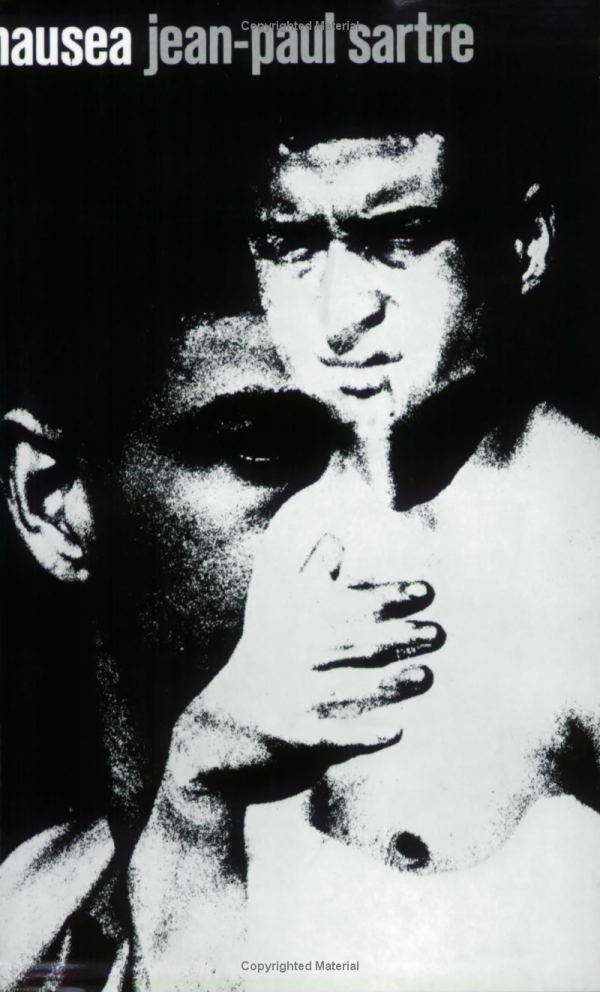
Nausea is the story of Antoine Roquentin, a French writer who is horrified at his own existence. In impressionistic, diary form he ruthlessly catalogues his every feeling and sensation about the world and people around him. His thoughts culminate in a pervasive, overpowering feeling of nausea which "spread at the bottom of the viscous puddle, at the bottom of our time, the time of purple suspenders and broken chair seats; it is made of wide, soft instants, spreading at the edge, like an oil stain." Roquentin's efforts to try and come to terms with his life, his philosophical and psychological struggles, give Sartre the opportunity to dramatize the tenets of his Existentialist creed.The introduction for this edition of Nausea by Hayden Carruth gives background on Sartre's life and major works, a summary of the principal themes of Existentialist philosophy, and a critical analysis of the novel itself.

Jean-Paul Sartre, the great French existentialist, displays his mastery of drama in NO EXIT, an unforgettable portrayal of hell.The play is a depiction of the afterlife in which three deceased characters are punished by being locked into a room together for all eternity. It is the source of Sartre's especially famous and often misinterpreted quotation "L'enfer, c'est les autres" or "Hell is other people", a reference to Sartre's ideas about the Look and the perpetual ontological struggle of being caused to see oneself as an object in the world of another consciousness.

It was to correct common misconceptions about his thought that Jean-Paul Sartre, the most dominent European intellectual of the post-World War II decades, accepted an invitation to speak on October 29, 1945, at the Club Maintenant in Paris. The unstated objective of his lecture (“Existentialism Is a Humanism”) was to expound his philosophy as a form of “existentialism,” a term much bandied about at the time. Sartre asserted that existentialism was essentially a doctrine for philosophers, though, ironically, he was about to make it accessible to a general audience. The published text of his lecture quickly became one of the bibles of existentialism and made Sartre an international celebrity.The idea of freedom occupies the center of Sartre’s doctrine. Man, born into an empty, godless universe, is nothing to begin with. He creates his essence—his self, his being—through the choices he freely makes (“existence precedes essence”). Were it not for the contingency of his death, he would never end. Choosing to be this or that is to affirm the value of what we choose. In choosing, therefore, we commit not only ourselves but all of mankind.This book presents a new English translation of Sartre’s 1945 lecture and his analysis of Camus’s The Stranger, along with a discussion of these works by acclaimed Sartre biographer Annie Cohen-Solal. This edition is a translation of the 1996 French edition, which includes Arlette Elkaïm-Sartre’s introduction and a Q&A with Sartre about his lecture.

O Ser e o Nada (1943), escrito durante a ocupação nazi, é um dos textos fundamentais do século XX. O livro que marcou como nenhum outro uma época a braços com o desmoronamento de uma civilização é ao mesmo tempo a bíblia do existencialismo e o último grande sistema filosófico.Para Sartre, o sentido das nossas vidas não é predeterminado nem por Deus nem pela natureza, não há nenhuma essência que preceda a existê o que nos define não é dado a priori, mas decorre das escolhas que fizermos. Primeiro existimos, e só depois nos definimos. Não existe natureza humana à qual tenhamos irresistivelmente de estamos condenados a ser livres e somos os únicos responsáveis pelos nossos destinos.No âmago destas posições, está a conceção sartriana de consciência, influenciada pela fenomenologia de Husserl e pela ontologia de Heidegger. Como a consciência é sempre consciência de alguma coisa, ela própria não é nada enquanto não visa algo fora de si. O ser-para-si, a consciência humana, caracteriza-se por ser permanente projeção para o exterior. Daí os conceitos filosóficos de angústia e de «má-fé», ilustrada pelo famoso exemplo do empregado de mesa, e a problemática relação com os demais, tipificada na investigação sobre o desejo sexual e o «olhar» do Outro.

In these four plays, Jean-Paul Sartre, the great existentialist novelist and philosopher, displays his mastery of drama. NO EXIT is an unforgettable portrayal of hell. THE FLIES is a modern reworking of the Electra-Orestes story. DIRTY HANDS is about a young intellectual torn between theory and praxis. THE RESPECTFUL PROSTITUTE is an attack on American racism.
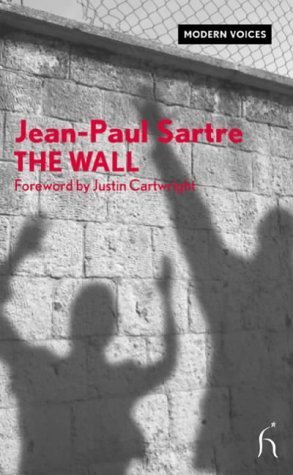
One of Sartre’s greatest existentialist works of fiction, The Wall contains the only five short stories he ever wrote. Set during the Spanish Civil War, the title story crystallizes the famous philosopher’s existentialism. 'The Wall', the lead story in this collection, introduces three political prisoners on the night prior to their execution. Through the gaze of an impartial doctor―seemingly there for the men's solace―their mental descent is charted in exquisite, often harrowing detail. And as the morning draws inexorably closer, the men cross the psychological wall between life and death, long before the first shot rings out. This brilliant snapshot of life in anguish is the perfect introduction to a collection of stories where the neurosis of the modern world is mirrored in the lives of the people that inhabit it . This is an unexpurgated edition translated from the French by Lloyd Alexander.

The Age of Reason is set in 1938 and tells of Mathieu, a French professor of philosophy who is obsessed with the idea of freedom. As the shadows of the Second World War draw closer -- even as his personal life is complicated by his mistress's pregnancy -- his search for a way to remain free becomes more and more intense.

«Garcin : - Le bronze... (Il le caresse.) Eh bien, voici le moment. Le bronze est là, je le contemple et je com prends que je suis en enfer. Je vous dis que tout était prévu. Ils avaient prévu que je me tiendrais devant cette cheminée, pressant ma main sur ce bronze, avec tous ces regards sur moi. Tous ces regards qui me mangent... (Il se retourne brusquement.) Ha ! vous n'êtes que deux ? Je vous croyais beaucoup plus nombreuses. (Il rit.) Alors, c'est ça l'enfer. Je n'aurais jamais cru... Vous vous rappelez : le soufre, le bûcher, le gril... Ah ! quelle plaisanterie. Pas besoin de gril : l'enfer, c'est les Autres.»

«J'ai commencé ma vie comme je la finirai sans doute : au milieu des livres. Dans le bureau de mon grand-père, il y en avait partout ; défense était de les faire épousseter sauf une fois l'an, avant la rentrée d'octobre. Je ne savais pas encore lire que, déjà, je les révérais, ces pierres levées : droites ou penchées, serrées comme des briques sur les rayons de la bibliothèque ou noblement espacées en allées de menhirs, je sentais que la prospérité de notre famille en dépendait...»

« Comme tu tiens à ta pureté, mon petit gars ! Comme tu as peur de te salir les mains. Eh bien, reste pur ! A quoi cela servira-t-il et pourquoi viens-tu parmi nous ? La pureté, c'est une idée de fakir et de moine. Vous autres, les intellectuels, les anarchistes bourgeois, vous en tirez prétexte pour ne rien faire. Ne rien faire, rester immobile, serrer les coudes contre le corps, porter des gants. Moi j'ai les mains sales. Jusqu'aux coudes. Je la ai plongées dans la merde et dans le sang. »Créée en 1948 au théâtre Antoine par François Périer et André Luguet, Les Mains sales, pièce sur l'engagement politique, est une des œuvres théâtrales les plus retentissantes de l'auteur de Huis clos, des Mouches, de La Putain respectueuse, des Séquestrés d'Altona, du Diable et le bon Dieu.

- Il m'a empoisonnée ?- Eh oui, madame.- Mais pourquoi ? pourquoi ?- Vous le gêniez, répond la vieille dame. Il a eu votre dot. Maintenant il lui faut celle de votre sœur.Ève joint les mains dans un geste d'impuissance et murmure, accablée :- Et Lucette est amoureuse de lui !La vieille dame prend alors une mine de circonstance :- Toutes mes condoléances... Mais voulez-vous me donner une signature ?Machinalement, Ève se lève, se penche sur le registre et signe.- Parfait, conclut la vieille dame. Vous voilà morte officiellement.Ève hésite, puis s'informe :- Mais où faut-il que j'aille ?- Où vous voudrez. Les morts sont libres.

This rare and vintage book is a perfect addition to any bibliophile's collection

The Flies (French: Les Mouches) is a play by Jean-Paul Sartre, written in 1943. It is an adaptation of the Electra myth, previously used by the Greek playwrights Sophocles, Aeschylus and Euripides. The play recounts the story of Orestes and his sister Electra in their quest to avenge the death of their father Agamemnon, king of Argos, by killing their mother Clytemnestra and her husband Aegisthus, who had deposed and killed him.Sartre incorporates an existentialist theme into the play, having Electra and Orestes engaged in a battle with Zeus and his Furies, who are the gods of Argos and the centerpiece for self-abnegating religious rituals. This results in fear and a lack of autonomy for Zeus's worshippers, who live in constant shame of their humanity.
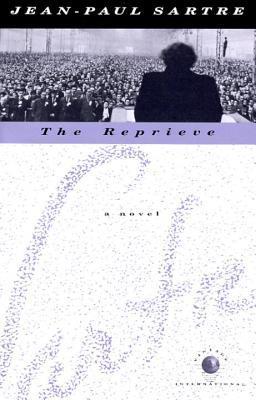
An extraordinary picture of life in France during the critical eight days before the signing of the fateful Munich Pact and the subsequent takeover of Czechoslovakia in September 1938. Translated from the French by Eric Sutton.

June 1940 was the summer of defeat for the French soldiers, deserted by their officers, utterly demoralized, awaiting the Armistice. Day by day, hour by hour, Iron in the Soul unfolds what men thought and felt and did as France fell. Men who shrugged, men who ran, men who fought and tragic men like Mathieu, who had dedicated his life to finding personal freedom, now overwhelmed by remorse and bitterness, who must learn to kill. Iron in the Soul, the third volume of Sartre's Roads to Freedom Trilogy, is a harrowing depiction of war, and what it means to lose.

Dans cette pièce de théâtre, c'est bien la question du choix qui se trouve au centre de la réflexion proposée, question du choix inévitablement corrélée à la question de la liberté, motif qui s'impose comme un véritable leitmotiv dans toute l'œuvre de Sartre. Le diable et le bon dieu est une pièce fortement empreinte par le thème de la cruauté, une cruauté qui se veut multiple. C'est ces diverses formes que peut prendre la cruauté que nous livre ici l'auteur. Il se demande comment la mise en évidence de la cruauté permet de servir sa propre réflexion.

هذه المسرحية تعد من أجمل مسرحيات سارتر فهي تتناول الشخصية الإنسانية من ناحية الأخلاق ..واختار سارتر شخصية البغي لأن البغاء هو أسوأ مايمكن أن يبتلى به المجتمع أو تمتهنه امرأة وسارتر هنا لا يقدم أدباً إباحياً ولكنه يثبت ربما لمن اتهم وجوديته بأنه ليس ضد الأخلاق بل هو مذهب فلسفي والمذهب الفلسفي لايمكن أبدا أن يكون إباحيا أو لا إخلاقيا لكن تبقى له وجهة نظره الخاصة التي تحترم في النظر للأمور..

Jean-Paul Sartre was one of the most important philosophical and political thinkers of the twentieth century. His writings had a potency that was irresistible to the intellectual scene that swept post-war Europe, and have left a vital inheritance to contemporary thought. The central tenet of the Existentialist movement which he helped to found, whereby God is replaced by an ethical self, proved hugely attractive to a generation that had seen the horrors of Nazism, and provoked a revolution in post-war thought and literature. In What is Literature? Sartre the novelist and Sartre the philosopher combine to address the phenomenon of literature, exploring why we read, and why we write.

With a new preface by Michael WalzerJean-Paul Sartre's book is a brilliant portrait of both anti-Semite and Jew, written by a non-Jew and from a non-Jewish point of view. Nothing of the anti-Semite either in his subtle form as a snob, or in his crude form as a gangster, escapes Sartre's sharp eye, and the whole problem of the Jew's relationship to the Gentile is examined in a concrete and living way, rather than in terms of sociological abstractions.

This is Sartre's masterly portrait of life seen from new and revealing angles, in which the human soul is stripped of all its civilized veneer, and layers of experience are peeled back with ferocious skill - to reveal the depths of the private oppressions, sensualities and neuroses of our time, and the overpowering evil to which modern man can descend. CONTENTS:Intimacy - The Wall - The Room - Erostratus - The Childhood of a Leader Translated by Lloyd Alexander
The Transcendence of the Ego: An Existentialist Theory of Consciousness
by Jean-Paul Sartre
Rating: 3.8 ⭐
First published in France in 1937, this important essay marked a turning point in Sartre's philosophical development. Before writing it, he had been closely allied with phenomenologists such as Husserl and Heidegger. Here, however, Sartre attacked Husserl's notion of a transcendental ego. The break with Husserl, in turn, facilitated Sartre's transition from phenomenology to the existentialist doctrines of his masterwork, Being and Nothingness, which was completed a few years later while the author was a prisoner of war.This student-friendly edition of The Transcendence of the Ego also includes an introduction and notes/annotations by the translators.

The Condemned of Altona is an act of judgment on the twentieth century, which might have been an admirable era (the closing lines tell us) if man had not been threatened by 'the cruel enemy who had sworn to destroy him, that hairless, evil, flesh-eating beast--man himself. 'All the characters in the play are defendants, trapped inside the frame of the proscenium as securely as Eichmann within his glass cage in Jerusalem; their judge is the past, and its verdict is without mercy. Two death penalties are imposed, and one sentence of solitary confinement for life. The stage, as so often in M. Sartre's hands, becomes a place of moral inquisition, at once a courtroom and a prison.
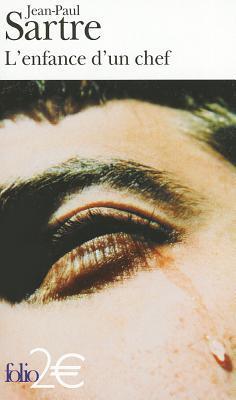
Fils de famille, Lucien Fleurier est à la recherche de lui-même : d'une enfance dorée et confortable aux révoltes de l'adolescence, de la bohème aux milieux d'extrême-droite, le jeune homme tente de connaître l'homme qui émerge en lui.Jean-Paul Sartre parodie le «roman d'apprentissage» dans le style dépouillé et magistralement maîtrisé qui efface l'écrivain au profit du seul dévoilement de l'homme dans le monde.--------------------------------------------------------"Le Mur" est un recueil de nouvelles publié en 1939 par Jean-Paul Sartre qui dédia ce livre à Olga Kosakiewicz. Le Mur est également le titre de la première nouvelle du recueil.Le recueil est composé de cinq nouvelles de 25 à 90 pages que Jean-Paul Sartre définit comme « cinq petites déroutes tragiques ou comiques » : Le Mur, La Chambre, Érostrate, Intimité, L'Enfance d'un chef.

"Meine Personen stellen sich die Frage, die auf der ganzen Welt so viele Menschen meiner Generation gequält hat: ´Wie würde ich mich bei Folter verhalten ?´" (Jean-Paul Sartre)

"Qu'est-ce que tu m'as fait ? Tu colles à moi comme mes dents à mes gencives. Je te vois partout, je vois ton ventre, ton sale ventre de chienne, je sens ta chaleur dans mes mains, j'ai ton odeur dans les narines. J'ai couru jusqu'ici, je ne savais pas si c'était pour te tuer ou pour te prendre de force. Maintenant, je sais. (Il la lâche brusquement.) Je ne peux pourtant pas me damner pour une putain."

مجموعه داستانهای کوتاه:دیوار - ژان پل سارترجلو قانون - فرانتس کافکاشغل و عرب - فرانتس کافکاکلاغ پیر - الکساندر لانژ کیلاندتمشک خاردار - آنتون چخوفمرداب حبشه - گاستون شروکور و برادرش - آرتور شنیتسلر

Sartre contemplates the human emotional experience by analyzing phenomenological psychology and existentialism In The Outline of a Theory, French philosopher Jean-Paul Sartre attempts to understand the role emotions play in the human psyche. Sartre analyzes fear, lust, anguish, and melancholy while asserting that human beings begin to develop emotional capabilities from a very early age, which helps them identify and understand the emotions’ names and qualities later in life.Helping to complete the circle of Sartre’s many theories on existentialism, this vital piece of literature is a must-have for the philosopher-in-training’s collection.

La Editorial Losada, que en diversas colecciones ha publicado la mayoría de los trabajos sartreanos, incorpora a Clásicos Losada (donde en otros volúmenes figuran ya sus obras narrativas y teatrales más conocidas) dos piezas maestras: A puerta cerrada, estrenada en el Vieux-Colombier el 27 de mayo de 1944, con una puesta en escena de Raymond Rouleau, y La puta respetuosa, que se estrenó el 8 de noviembre de 1946, bajo la dirección de Simone Berriau en el teatro Antoine (y dio lugar al film homónimo de Marcel Pagliero, 1952).

این سناریو در زمستان ۱۹۴۶ نوشته شدعنوان اصلی آن دست های آلوده بودنمایشنامه ای که عنوان کتاب حاضر را به خود گرفت، دو سال بعد به وجود آمد. محتوای این اثر هیچ اشتراکی با آن نمایشنامه ندارد