
Alexandre Dumas
This note regards Alexandre Dumas, père, the father of Alexandre Dumas, fils (son). For the son, see Alexandre Dumas fils. Alexandre Dumas père, born Alexandre Dumas Davy de la Pailleterie, was a towering figure of 19th-century French literature whose historical novels and adventure tales earned global renown. Best known for The Three Musketeers, The Count of Monte Cristo, and other swashbuckling epics, Dumas crafted stories filled with daring heroes, dramatic twists, and vivid historical backdrops. His works, often serialized and immensely popular with the public, helped shape the modern adventure genre and remain enduring staples of world literature. Dumas was the son of Thomas-Alexandre Dumas, a celebrated general in Revolutionary France and the highest-ranking man of African descent in a European army at the time. His father’s early death left the family in poverty, but Dumas’s upbringing was nonetheless marked by strong personal ambition and a deep admiration for his father’s achievements. He moved to Paris as a young man and began his literary career writing for the theatre, quickly rising to prominence in the Romantic movement with successful plays like Henri III et sa cour and Antony. In the 1840s, Dumas turned increasingly toward prose fiction, particularly serialized novels, which reached vast audiences through French newspapers. His collaboration with Auguste Maquet, a skilled plotter and historian, proved fruitful. While Maquet drafted outlines and conducted research, Dumas infused the narratives with flair, dialogue, and color. The result was a string of literary triumphs, including The Three Musketeers and The Count of Monte Cristo, both published in 1844. These novels exemplified Dumas’s flair for suspenseful pacing, memorable characters, and grand themes of justice, loyalty, and revenge. The D’Artagnan Romances—The Three Musketeers, Twenty Years After, and The Vicomte of Bragelonne—cemented his fame. They follow the adventures of the titular Gascon hero and his comrades Athos, Porthos, and Aramis, blending historical fact and fiction into richly imagined narratives. The Count of Monte Cristo offered a darker, more introspective tale of betrayal and retribution, with intricate plotting and a deeply philosophical core. Dumas was also active in journalism and theater. He founded the Théâtre Historique in Paris, which staged dramatizations of his own novels. A prolific and energetic writer, he is estimated to have written or co-written over 100,000 pages of fiction, plays, memoirs, travel books, and essays. He also had a strong interest in food and published a massive culinary encyclopedia, Le Grand Dictionnaire de cuisine, filled with recipes, anecdotes, and reflections on gastronomy. Despite his enormous success, Dumas was frequently plagued by financial troubles. He led a lavish lifestyle, building the ornate Château de Monte-Cristo near Paris, employing large staffs, and supporting many friends and relatives. His generosity and appetite for life often outpaced his income, leading to mounting debts. Still, his creative drive rarely waned. Dumas’s mixed-race background was a source of both pride and tension in his life. He was outspoken about his heritage and used his platform to address race and injustice. In his novel Georges, he explored issues of colonialism and identity through a Creole protagonist. Though he encountered racism, he refused to be silenced, famously replying to a racial insult by pointing to his ancestry and achievements with dignity and wit. Later in life, Dumas continued writing and traveling, spending time in Belgium, Italy, and Russia. He supported nationalist causes, particularly Italian unification, and even founded a newspaper to advocate for Giuseppe Garibaldi. Though his popularity waned somewhat in his final years, his literary legacy grew steadily. He wrote in a style that was accessible, entertaining, and emotionally reso
30 Books Written

Perhaps the greatest “cloak and sword” story ever written, The Three Musketeers, first published ion 1844, is a tale for all time. Pitting the heroic young d’Artagnan and his noble compatriots, Athos, Porthos, and Aramis against the master of intrigue, Cardinal Richelieu, and the quintessential wicked woman, Lady de Winter, Alexandre Dumas has created an enchanted France of swordplay, schemes and assignations. The era and the characters are based on historical fact, but the glittering romance and fast-paced action spring from a great writer’s incomparable imagination. From the perilous retrieval of the queens gift to her lover in time to foil Rechelieu’s plot to the melodramatic revelation of Lady de Winter’s true identity, The Three Musketeers is the unchallenged archetype for literary romance and a perennial delight for generations of readers.

1815 : Edmond Dantès est ce jeune marin à qui tout réussit. On lui promet le grade de capitaine ; il va pouvoir épouser sa fiancée. Mais, victime d’une machination, il est accusé d’être un conspirateur bonapartiste. Son bonheur et son ascension sociale sont brisés net. Dans les geôles du château d’If, au large de Marseille, s’amorce le roman de sa vengeance. Après quatorze années d’enfermement, Edmond Dantès n’aura de cesse de punir ceux qui l’ont trahi. Puisque sa vie lui a été volée, autant en rêver d’autres. Il est temps de se réinventer : le simple marin devient comte de Monte-Cristo.Entre liberté et justice, vengeance et métamorphose, voici le chef-d’œuvre du roman d’aventures.

The epic final novel starring the four greatest heroes of swashbuckling literature, The Man in the Iron Mask takes the musketeers on a thrilling adventure from the royal palace of Louis XIV to the dreaded dungeons of the Bastille.

'At this game, whoever does not kill is killed.'Twenty Years After (1845), the sequel to The Three Musketeers, is a supreme creation of suspense and heroic adventure.Two decades have passed since the musketeers triumphed over Cardinal Richelieu and Milady. Time has weakened their resolve, and dispersed their loyalties. But treasons and stratagems still cry out for justice: civil war endangers the throne of France, while in England Cromwell threatens to send Charles I to the scaffold. Dumas brings his immortal quartet out of retirement to cross swords with time, the malevolence of men, and the forces of history. But their greatest test is a titanic struggle with the son of Milady, who wears the face of Evil.

'To have discovered the black tulip, to have seen it for a moment... then to lose it, to lose it forever!' Cornelius von Baerle, a respectable tulip-grower, lives only to cultivate the elusive black tulip and win a magnificent prize for its creation. But after his powerful godfather is assassinated, the unwitting Cornelius becomes caught up in deadly political intrigue and is falsely accused of high treason by a bitter rival. Condemned to life imprisonment, his only comfort is Rosa, the jailer's beautiful daughter, and together they concoct a plan to grow the black tulip in secret. Dumas' last major historical novel is a tale of romantic love, jealousy and obsession, interweaving historical events surrounding the brutal murders of two Dutch statesman in 1672 with the phenomenon of tulipomania that gripped seventeenth-century Holland.

Tome I de II.« On fit encore quatre ou cinq pas en montant toujours, puis Dantès sentit qu'on le prenait par la tête et par les pieds et qu'on le balançait.« Une, dirent les fossoyeurs.- Deux.- Trois ! »En même temps, Dantès se sentit lancé, en effet, dans un vide énorme, traversant les airs comme un oiseau blessé, tombant, tombant toujours avec une épouvante qui lui glaçait le cœur. Quoique tiré en bas par quelque chose de pesant qui précipitait son vol rapide, il lui sembla que cette chute durait un siècle. Enfin, avec un bruit épouvantable, il entra comme une flèche dans une eau glacée qui lui fit pousser un cri, étouffé à l'instant même par l'immersion. Dantès avait été lancé dans la mer, au fond de laquelle l'entraînait un boulet de trente-six attaché à ses pieds.La mer est le cimetière du château d'If. »

The first volume of Alexandre Dumas' two-part interpretation of the story of Robin Hood, popularized for Nineteenth Century audiences by Sir Walter Scott's Ivanhoe, set in England in 1162-66.In this book, Dumas tells the story of Robin Hood's youth: how he is delivered by an unknown man to be raised by poor but honest foresters, his great skill as an archer, how he comes into conflict with the Baron [sic] of Nottingham, how he meets Friar Tuck, the Maid Marian, Little John, Will Scarlett, and others, how he is declared an outlaw by the King, and decamps, with his followers, into Sherwood Forest to wage war against the Baron.

Edmond Dantès, le commandant du Pharaon, fiancé à la belle Mercédès, a vu ses espérances brisées. Plus de vingt ans après son inique emprisonnement, de retour parmi les vivants, il est enfin prêt à accomplir sa vengeance, sans relâche ni pitié. De ses ennemis, il a tout appris. D'Europe en Orient, exhumant leurs crimes l'un après l'autre, il a retrouvé les comploteurs sans scrupule qui jurèrent sa perte. Le baron Danglars, ancien commis aux écritures devenu riche banquier. Monsieur de Villefort, substitut devenu procureur du roi. Le comte Fernand de Morcerf, désormais pair de France, et mari de Mercédès ! Sous le masque du comte de Monte-Cristo, Dantès a juré leur déshonneur, leur ruine et leur mort... Mais peut-il à bon droit se substituer à la divine Providence ? Ne serait-il pas plus grand justicier s'il était magnanime ? Telle est aussi la question que pose le livre le plus humain d'Alexandre Dumas.

During religious wars in France, Marguerite de Valois, a Catholic, marries Henry de Navarre, a Protestant and the future king

The Vicomte de Bragelonne opens an epic adventure which continues with Louise de La Valliere and reaches its climax in The Man in the Iron Mask. This new edition of the classic translation presents a key episode in the Musketeers saga, fully annotated and with an introduction by a leading Dumas scholar.

Louise de la Vallière is the middle section of The Vicomte de Bragelonne, or, Ten Years After . Against a tender love story, Dumas continues the suspense which began with The Vicomte de Bragelonne and will end with The Man in the Iron Mask . Set during the reign of Louis XIV and filled withbehind-the-scenes intrigue, the novel brings the aging Musketeers and d'Artagnan out of retirement to face an impending crisis within the royal court of France. This new edition of the classic English translation is richly annotated and places Dumas's invigorating tale in its historical andcultural context.

Alexandre Dumas was already a best-selling novelist when he wrote this historical romance, combining (as he claimed) the two essentials of life--"l'action et l'amour." The Man in the Iron Mask concludes the epic adventures of the three Musketeers, as Athos, Porthos, Aramis, and their friendD'Artagnan, once invincible, meet their destinies.

This antiquarian book contains Alexandre Dumas’s historical novel "Ten Years Later". Serialised between 1847 and 1850, this is the second instalment of the final episode in the d’Artagnan Romances. Set between 1660 and 1667, it chronicles Louis XIV’s metamorphosis from juvenile monarch to Sun King. A veritably thrilling romantic romp in seventeenth century France, “Ten Years Later” constitutes a must-read for fans of Dumas’s seminal work, and would make for a worthy addition to any collection. Alexandre Dumas (1802–1870) was a famous French writer. He is best remembered for his exciting romantic sagas, including "The Three Musketeers" and "The Count of Monte Cristo". Despite making a great deal of money from his writing, Dumas was almost perpetually penniless thanks to his decidedly extravagant lifestyle. His novels have been translated into nearly a hundred different languages, and have inspired over 200 motion pictures. Many of the earliest books, particularly those dating back to the 1900s and before, are now extremely scarce and increasingly expensive. We are republishing this antiquarian book in an affordable, modern, high-quality edition complete with a specially commissioned new biography of the author.

The nutcracker doll that mysterious Godfather Drosselmeyer gives to little Marie for Christmas is no ordinary toy. On Christmas Eve, at the clocks strike midnight, Marie watches as the Nutcracker and her entire cabinet of playthings come to life and boldly do battle against the malevolent Mouse King and his armies. But this is only the start: read on for a tale of enchantment and transformation, enter a world by turns fantastical and sinister, a kindom of dolls and spun-sugar palaces, and learn the true history of the brave little Nutcracker. Adapted from a dark fairy-tale by ETA Hoffmann, Alexandre Dumas' romance of childhood imagination inspired Tchaikovsky's world-famous ballet. Brilliantly adapted by translator Sarah Ardrizzone and illuminated by Kitty Arden, this is the perfect Christmas gift for readers of all ages.

"The Queen's Necklace" dramatizes an unsavory incident in the 1780s at the court of King Louis XVI of France involving the King's wife, Marie Antoinette. Her reputation was already tarnished by gossip and scandal, and her implication in a crime involving a stolen necklace became one of the major turning-points of public opinion against the monarchy, which eventually culminated in the French Revolution.

CELEBRATED CRIMES Vol I, Part 1: The BorgiasThere are dreadful -- perhaps scurrilous -- rumors about the Borgias of renaissance Italy, and here Dumas, author of such classics as THE THREE MUSKETEERS, in his Celebrated Crimes series, dishes up the dirt in all its ugly glory. This book was not written for children. Dumas has minced no words in describing the violent scenes of a violent time. In some instances facts appear distorted out of their true perspective, and in others the author makes unwarranted charges. The careful, mature reader -- for whom the books are intended -- will recognize and allow for this fact. From 1839 to 1841, Dumas, with the assistance of several friends, compiled Celebrated Crimes, an eight-volume collection of essays on famous criminals and crimes from European history. He featured Beatrice Cenci, Martin Guerre, Cesare and Lucrezia Borgia, as well as more recent events and criminals, including the cases of the alleged murderers Karl Ludwig Sand and Antoine FranCois Desrues, who were executed.

A major new translation of a forgotten classicParis, 1793, the onset of the Terror. Brave Republican Maurice rescues a mys-terious and beautiful woman from an angry mob and is unknowingly drawn into a secret Royalist plot—a plot revolving around the imprisoned Queen of France, Marie Antoinette, and her enigmatic and fearless champion, the Knight of Maison-Rouge. Full of surprising twists, breakneck adventure, conspiracies, swordplay, romance, and heroism, The Knight of Maison-Rouge is an exhilarating tale of selflessness, love, and honor under the shadow of the guillotine. Dumas here is at the very height of his powers, and with this first and only modern translation, readers can once again ride with the Knight of Maison-Rouge.From the Hardcover edition.

« Vous vous réveillerez dans un caveau où nul n'est descendu depuis vingt ans, et dans lequel, d'ici à vingt ans peut-être, nul ne descendra encore. N'ayez donc aucun espoir de secours, car il serait inutile. Vous trouverez du poison près de cette lettre : tout ce que je puis faire pour vous est de vous offrir une mort prompte et douce au lieu d'une agonie lente et douloureuse. Dans l'un et l'autre cas, et quelque parti que vous preniez, à compter de cette heure, vous êtes morte. »Pauline (1838) est un des premiers romans de Dumas, où Monte-Cristo se trouve en germe. C'est un livre qu'il a écrit seul, et qui se déroule de son temps. La fiction brode sur les thèmes du roman gothique, en « noir », nuit, cottage en ruine, sentes perdues, passages secrets, brigands impitoyables, héroïne enterrée vivante, substitution de cadavres.Pauline fait face à un bourreau mystérieux, « homme fatal ». C'est le roman d'une jeunesse déboussolée qui tente de se faire une place dans une société mesquine.
![كونت مونت كريستو #3 [Count of Monte Cristo, vol. 3]](https://m.media-amazon.com/images/S/compressed.photo.goodreads.com/books/1612881443i/57010837.jpg)
This work has been selected by scholars as being culturally important, and is part of the knowledge base of civilization as we know it. This work is in the "public domain in the United States of America, and possibly other nations. Within the United States, you may freely copy and distribute this work, as no entity (individual or corporate) has a copyright on the body of the work. Scholars believe, and we concur, that this work is important enough to be preserved, reproduced, and made generally available to the public. We appreciate your support of the preservation process, and thank you for being an important part of keeping this knowledge alive and relevant.

Dentro de la amplia obra de Alexandre Dumas (1802,1870), que sintonizó a la perfección con la sensibilidad de su época y utilizó los folletones por entregas para hacer llegar sus fábulas histórica alimentadas por "la acción y el amor" a las clases populares, sólo "El Conde de Montecristo" puede rivalizar en difusión y celebridad con LOS TRES MOSQUETEROS. En las adaptaciones cinematográficas o las ediciones mutiladas o abreviadas, el mito del espadachín ha prevalecido injustificadamente sobre otras aventuras de d'Artagnan, Athos, Aramis y Porthos que, sin embargo, ofrecen mayor interés, fondo tráfico y nervio narrativo. De otro lado, tanta importancia como d'Artagnan y sus compañeros tiene el personaje femenino de Milady, la heroína maldita de este relato animado por el mero gusto de contar, lleno de peripecias e intrigas, quita esencia del género de aventuras. Por lo demás, Dumas muestra su portentosa habilidad para combinar géneros y estolos, desde la novela de capa y espada hasta la novela negra y de misterio. Si bien el escenario histórico es la Francia del siglo XVIII, los valores que permean el relato cuadrarían mejor con la monarquía burguesa de Luis Felipe; antes que el honor y la caballerosidad son la astucia, el ansia de poder y de riqueza, la búsqueda del triunfo ("Todos para uno y uno para todos") y el medro de los impulsos que mueven a los protagonistas.

Another of the very finest of Dumas' historical romances. It was composed in collaboration with Auguste Maquet. It is often referred to as a sequel to "La Reine Margot," but it is not such save in that it follows fairly closely on the concluding year of the previous work, thus including many of the same historical characters. It concerns the troubled times of Henri III, and the League, the king's "mignons" and the death of the most famous among them as well as that of Bussy d'Amboise. the only character in all Dumas' gallery who may possibly rival in popularity and splendour of portrayal d'Artagnan, is here first met with : Chicot, the king's gentleman-jester. The period is 1578-79. It first appeared serially in "Le Constitutionnel," according to Dumas, in his preface to Grisier's "Armes et le Duel".
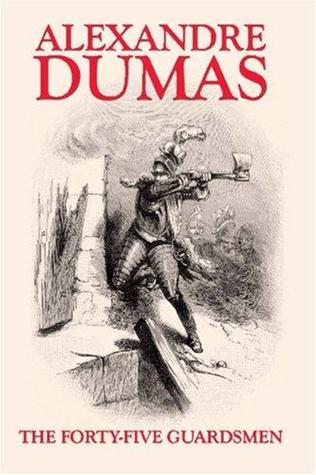
A true sequel to "La Dame de Monsoreau." It concerns the revenge of Diane de Méridor upon the Duc d'Anjou for his base betrayal of Bussy d'Amboise. Historically it commences with the execution of Salcède and the arrival of the Forty-Five at Paris, and deals with the Guise intrigues, the campaign of Anjou in Flanders and his death. Period 1584-85.Maquet was again the collaborator. During the fête held at Villers-Cotterets in 1902 the original MS. of this romance was exhibited, half being in the hand of Dumas père, and the remainder, the latter moiety, in that of his son, with a note signed by this latter to the effect that his father, being confined to his bed by sickness, had dictated it to the younger man. Yet in face of this it has been repeatedly affirmed that Maquet finished it alone.
![كونت مونت كريستو #2 [Count of Monte Cristo, vol. 2]](https://m.media-amazon.com/images/S/compressed.photo.goodreads.com/books/1612819904i/57002836.jpg)
A Juruá Editora, através de sua nova divisão - Juruá News - tem a honra de apresentar ao público brasileiro a tradução integral de um dos maiores clássicos da literatura O Conde de Monte Cristo. Trata-se de uma obra que versa sobre a conde nação e encarceramento de um inocente, motivados não por erro de justiça e sim, por conveniência de pessoas envolvidas no retorno de Napoleão da Ilha de Elba para recuperar o trono perdido. Durante uma década e meia, instruído em todas as ciências da época e tendo adquirido gostos e maneiras refinados através de estreito relacionamento com um companheiro de cárcere (abade de cultura enciclopédica), este homem mítico foge milagrosamente da prisão e reaparece em Paris, acobertado sob o manto de riquíssimo e poderoso nobre estrangeiro, com o firme objetivo de restaurar a sua justiça particular. Saídos da pena de Alexandre Dumas, desfilam no texto personagens de toda a alta sociedade parisiense - aristocratas e burgueses enriquecidos - que realizam grandes negócios, mantêm romances ocultos, todos movidos por múltiplas e intensas emoções humanas. Enfim, é com grande orgulho que concluímos esta magnífica empreitada editorial, certos de que, com o lançamento da presente obra, muito contribuímos para o desenvolvimento da cultura da nossa e das novas gerações.

Romanul Contele de Monte-Cristo prezintă viaţa şi aventurile unui biet tânăr marinar, pe nume Edmond Dantès, închis pe nedrept într-una dintre cele mai temute temniţe ale vremii, Castelul If. Acolo, acesta află despre marea comoară de pe insula Monte Cristo și devine determinat nu numai să scape și să dezgroape comoara, ci și să o folosească pentru planul de răzbunare ce vizează distrugerea celor trei persoane responsabile pentru incarcerarea sa. Arma sa nu este bogăţia, ci înţelepciunea şi tenacitatea. Povestea despre suferință și vendetta a lui Dumas, inspirată de un caz real de întemnițare nejustă, a devenit un succes instant, încă de la lansarea în anii 1840.

Terzo e ultimo romanzo del ciclo dei moschettieri, "Il Visconte di Bragelonne", tra l'epopea e il romanzo picaresco, il dramma e la commedia di costume, si svolge nella Francia 'radiosa' di Luigi XIV intorno alla metà del XVII secolo. I quattro moschettieri - d'Artagnan, Athos, Porthos e Aramis - ormai avanti negli anni, si ritrovano su sponde diverse, ma il vincolo saldo dell'amicizia non viene meno anche nei momenti di più forte intensità drammatica. Sullo sfondo, intrecciati con le loro vicende, si sviluppano avvenimenti importanti per la storia europea, a cominciare dal perfezionamento dello Stato assoluto in Francia e della restaurazione monarchica in Inghilterra, mentre fioriscono le avventure galanti all'ombra della corte francese e i molteplici amori del Re Sole. È famoso l'episodio della Maschera di Ferro, che si svolge lungo diversi capitoli dell'opera e di cui sono state fatte numerose versioni cinematografiche. Una vera e propria immersione culturale, perfino psicologica e antropologica nella vita di corte del diciasettesimo secolo, che il grande scrittore Robert L. Stevenson trovò ammirabile: "Quale romanzo possiede più natura umana, più buon senso, più allegria, più spirito, più abilità letteraria ammirevole e instancabile? Leggero come la panna montata, forte come la seta, genuino come un racconto paesano, mai noioso, quale romanzo ispira una più naturale e salubre moralità? Non è solo vero, ma amabile; non solo convince, ma incanta."

Au cœur des Carpathes, dans le sombre château de Brankovan, les princes Grégoriska et Kostaki, s'affrontent pour conquérir la belle Hedwige. Or, Kostaki est un vampire qui revient chaque nuit assouvir sa soif de sang auprès de la jeune femme devenue l'objet d'une lutte sans merci entre les deux frères.Une étrange histoire pleine de romantisme et de fantastique où l'angoisse le dispute au romanesque…

Alexandre Dumas weaves the compelling story of Siamese twins who are separated physically but never in spirit. When one of the brothers is murdered, the other leaves Corsica for Paris to avenge the killing. Dumas brings this thrilling tale to life with his fascinating descriptions of Italy and France and his powerful portrayal of the undying love of brother for brother. Newly designed and typeset in a modern 6-by-9-inch format by Waking Lion Press.

Grafas Montekristas (pr. Le Comte de Monte-Cristo) – Aleksandro Diuma (vyresniojo) nuotykių romanas. Kartu su romanu Trys muškietininkai, laikomas geriausiu autoriaus darbu ir dažnai įtraukiamas į visų laikų geriausių romanų sąrašus. Kūrinys buvo pabaigtas rašyti 1844 m. Kaip ir dauguma A.Diumos knygų, kurios buvo išplėstos pagal kitų autorių paruoštus siužetus, „Grafas Montekristas“ buvo parašytas bendradarbiaujant su Augustu Maketu (Auguste Maquet).

This collection opens with a first story that sets the scene for the other short stories. In fact, the work is presented as a single short story composed of multiple embedded narratives. The narrator, in the guise of Alexandre Dumas himself, is confronted with a mysterious murder case based on the story of a man who murdered his wife. The man claims that his wife spoke to him after having her head cut off by his hands. The narrator finds himself involved in the case, which leads to a dinner party where some of the strangest stories are told.

D'ARTAGNAN ROMANCES: The Three Musketeers, Twenty Years After, The Vicomte de Bragelonne, Ten Years Later, Louise de la Valliere, The Man in the Iron Mask ... Romances: FLT Classics Series Book 7)
by Alexandre Dumas
Rating: 4.6 ⭐
Перед Вами книга, содержащая знаменитую трилогию приключений мушкетеров Александра Дюма. Известный французский писатель XIX века прославился прежде всего романом «Три мушкетера» и двумя романами-продолжениями «Двадцать лет спустя» и «Виконт де Бражелон, или Десять лет спустя». В центре сюжета всех трех романов славные королевские мушкетеры - Атос, Арамис, Портос и Д'Артаньян. Александр Дюма – самый популярный французский писатель в мире, книгами которого зачитываются любители приключенческих историй и романтических развязок. В число известных произведений автора входят «Граф Монте-Кристо», «Графиня де Монсоро», «Две Дианы», «Черный тюльпан».