
M.F.K. Fisher
Mary Frances Kennedy Fisher was a prolific and well-respected writer, writing more than 20 books during her lifetime and also publishing two volumes of journals and correspondence shortly before her death in 1992. Her first book, Serve it Forth, was published in 1937. Her books deal primarily with food, considering it from many aspects: preparation, natural history, culture, and philosophy. Fisher believed that eating well was just one of the "arts of life" and explored the art of living as a secondary theme in her writing. Her style and pacing are noted elements of her short stories and essays.
30 Books Written

If one imagines M.F.K. Fisher's life as a large colorful painting, it is here, in The Gastronomical Me, that one sees the first lines and sketches upon which that life was based. In what is the most intimate of her five volumes of her "Art of Eating" series, the reader witnesses the beginnings of a writer who, with food as her metaphor, writes of the myriad hungers and satisfactions of the heart.
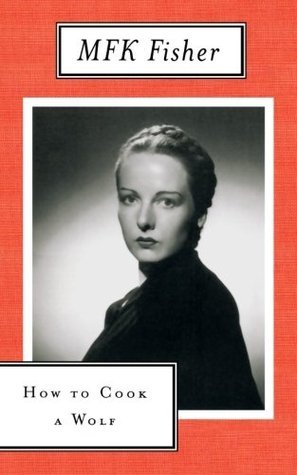
M.F.K. Fisher's guide to living happily even in trying times, which was first published during the Second World War in the days of ration cards; includes more than seventy recipes based on food staples and features sections such as "How to Keep Alive" and "How to Comfort Sorrow.".

M.F.K. Fisher, whom John Updike has called our "poet of the appetites," here pays tribute to that most delicate and enigmatic of foods---the oyster. As she tells of oysters found in stews, in soups, roasted, baked, fried, prepared à la Rockefeller or au naturel--and of the pearls sometimes found therein--Fisher describes her mother's joy at encountering oyster loaf in a girls' dorm in the 1890's, recalls her own initiation into the "strange cold succulence" of raw oysters as a young woman in Marseille and Dijon, and explores both the bivalve's famed aphrodisiac properties and its equally notorious gut-wrenching powers. Plumbing the "dreadful but exciting" life of the oyster, Fisher invites readers to share in the comforts and delights that this delicate edible evokes, and enchants us along the way with her characteristically wise and witty prose.

This book is the essence of M.F.K. Fisher, whose wit and fulsome opinions on food and those who produce it, comment upon it, and consume it are as apt today as they were several decades ago, when she composed them. Why did she choose food and hunger, she was asked, and she replied, 'When I write about hunger, I am really writing about love and the hunger for it, and warmth, and the love of it . . . and then the warmth and richness and fine reality of hunger satisfied.'Includes five of her most popular works:Serve It Forth (1937)Consider the Oyster (1941) How to Cook a Wolf (1942) The Gastronomical Me (1943) An Alphabet of Gourmets (1949)

In Serve It Forth , her first book, M. F. K. Fisher takes readers on an animated journey through culinary history, beginning with the honey-loving Greeks and the immoderate Romans. Fisher recalls a hunt for snails and truffles with one of the last adepts in that art and recounts how Catherine de Medici, lonely for home cooking, touched off a culinary revolution by bringing Italian chefs to France. Each essay makes clear the absolute firmness of Fisher's taste--contrarian and unique--and her skill at stirring memory and imagination into a potent brew.

In 1929, Mary Frances Kennedy Fisher arrived in Dijon, the provincial capital of Burgundy and the gastronomical capital of France, there to be initiated into the ways of love and life.Long Ago in France is Fisher's exquisitely evocative, deliciously candid memoir of her three-year stay in Dijon. It is a delightful journey backward - in the grandest of company - into a voluptuous, genteel world that has vanished forever.

In Alphabet for Gourmets , M.F.K. Fisher arranges a selection of her essays in a whimsical way that reveals the breadth and depth of her passion. From A for (dining) alone to Z for Zakuski, "a Russian hors d'oeuvre," Fisher alights on both longtime obsessions and idiosyncratic digressions. As usual, she liberates her readers from caution and slavish adherence to culinary tradition-- and salts her writings with a healthy dose of humor.

This volume brings together two delightful books— Map of Another Town and A Considerable Town —by one of our most beloved food and travel writers. In her inimitable style, here M.F.K. Fisher tells the stories—and reveals the secrets—of two quintessential French cities.Map of Another Town, Fisher’s memoir of the French provincial capital of Aix-en-Provence is, as the author tells us, “my picture, my map, of a place and therefore of myself,” and a vibrant and perceptive profile of the kinship between a person and a place. Then, in A Considerable Town, she scans the centuries to reveal the ancient sources that clarify the Marseille of today and the indestructible nature of its people, and in so doing weaves a delightful journey filtered through the senses of a profound writer.

This marvelous collection of autobiographical essays by the celebrated, much-adored M.F.K. Fisher covers her life, family, food, and adventures.

The author shares her kitchen philosophy and offers advice on preparing appetizers, soups, casseroles, and other dishes.

Whether the subject of her fancy is the lowly, unassuming potato or the love life of that aphrodisiac mollusk the oyster, Mary Frances Kennedy Fisher writes with a simplicity that belies the complexities of the life she often muses on. She is hailed as one of America's preeminent writers about gastronomy. But to limit her to that genre would be a disservice. She was passionate and well-traveled, and her narratives fill over two dozen highly acclaimed books. In this collection of some of her finest works, we learn that Fisher's palette was not only well trained in gastronomical masterpieces, but in life's best pleasures as well. Love in a Dish . . . and Other Culinary Delights is an instructional manual on how to live, eat, and love brought together by prolific researcher and culinary enthusiast Anne Zimmerman. With great care she has selected essays that sometimes forgive our lustful appetites, yet simultaneously celebrate them, as in "Once a Tramp, Always . . . " and "Love in a Dish," which guides us down the path to marital bliss via the family dining table. It is through this carefully chosen selection, which includes two essays never before collected in book form, that we encounter Fisher's bold passion for cuisine and an introduction to her idea of what constitutes the delicious life.

In these fifteen remarkable stories, M.F.K. Fisher, one of the most admired writers of our time, embraces the coming of old age. With a saint to guide us, she writes, perhaps we can accept in a loving way "the inevitable visits of a possibly nagging harpy like Sister Age" But in the stories, it is the human strength in the unavoidable encounter with the end of life that Fisher dramatizes so powerfully. Other themes—the importance of witnessing death, the marvelous resilience of the old, the passing of vanity—are all explored with insight, sympathy and, often, a sly wit.

Offers a selection of Fisher's writings from throughout her career, on topics ranging from food and travel to aging.

In Among Friends M. F. K. Fisher begins her recollections in Albion, Michigan, but they soon lead her to Whittier, California, where her family moved in 1912, when she was four. The "Friends" of the title range from the hobos who could count on food at the family’s back door to the businessmen who advertised in Father’s paper—but above all they are the Quakers who were the prominent group in Whittier. Mary Frances Kennedy found them unusual friends indeed, in the more than forty years that she lived in Whittier she was never invited inside a Friend’s house.Her portraits of her father, Rex—her mentor, himself the editor of the local newspaper—her mother, Edith, and the other members of her family are memorable and moving. Originally published in 1970, Among Friends provides a fascinating glimpse into the background and development of one of our most delightful and best-loved writers, Mary Frances Kennedy Fisher.

Chronicles an American mother's year abroad with her two daughters in Aix-en-Provence. Part memoir and part fiction, this adventure is presided over by an aloof and proprietary mongrel, the Boss Dog, who frequents the young family's favorite cafe.

When Robert Lescher died in 2012 an unpublished manuscript of M.F.K. Fisher’s was discovered neatly packed in the one of the literary agent’s signature red boxes. Inspired by Fisher’s affair with Dillwyn Parrish -- who was to become her second husband -- The Theoretical Foot is the master stylist’s first novel. In it she describes the life she all-too-briefly had with the man she’d ever after describe as the one great love of her life.It tells of a late-summer idyll at the Swiss farmhouse of Tim and Sara, where guests have gathered at ease on the terrace next to the burbling fountain in which baby lettuces are being washed, there to enjoy the food and wine served them by this stylish American couple.But all around these seemingly fortunate people, the forces of darkness are The year is 1939; World War Two approaches. And the paradise Tim and Sara have made is being besieged from within as Tim -- closely based on Parrish -- is about to suffer the first of the circulatory attacks that will cause him to lose his leg to amputation.

A Cordiall Water: A Garland of Odd and Old Receipts to Assuage the Ills of Man and Beast
by M.F.K. Fisher
Rating: 4.0 ⭐
First published in 1961, A Cordiall Water collects a charming mixed bag of nostrums, elixirs, restoratives, and fortifiers and intersperces them with autobiographical anecdotes from M. F. K. Fisher’s life in California, Provence, Mexico and Switzerland. These engaging recipes, "a perfect combination of superstition, instinct, and primitive knowledge" deal with commonplace ailments—sore throats, cures for cats, aging skin, fevers, PMS and hangovers. Ingredients of these extraordinary receipts are transformed into cures and preventatives told in the inimitable style of this master of the finely observed life.

The second volume of reminiscences by one of America's best-loved writers, now in paperback. The book reveals Fisher's "magnificent resilience, the comfort she took from daily writing, her marvelous powers of observation and humor, and, of course, her lifelong attractions to good food and drink."--San Francisco Chronicle.

The first volume of reminiscences by one of America's best-loved writers. "Vintage Fisher. . . . (Her diaries and stories) bathe her youth and beauty in a golden light like the stuff of Gustave Dore engravings, the light of a better place and a better time when people were still made out of heroics."--Washington Post Book World.To Begin --1. Native Truths (1908-1952) --2. On Coveting (1912) --3. Tree Change (1912-1929) --4. A Few Notes About Aunt Gwen (1912-1927) --5. The First Kitchen (1912-1920) --6. An Innocence of Semantics (1912-1915) --7. Grandmother's Nervous Stomach (1913-1920) --8. I Chose Chicken a la King (1914-1920) --9. Mother and "Miss E " (1914-1945) --10. A Sweet and Timeless Shudder (1915-1953) --11. The Old Woman (1915-1916) --12. Gracie (1915-1921) --13. My Family's Escape Hatch: A Reminiscence (1915-1926) --14. The Broken Chain (1920) --15. Consider the End (1920) --16. Hellfire and All That (1922) --17. The Jackstraws (1922) --18. Tally (1923, 1928-1953) --19. Ridicklus (1924) --20. Mirrors and Salamanders (1927) --21. Figures in a Private Landscape. I. Laguna, 1927: Journal. II. Uncle Evans (1927). III. Examination Books: Biology 9 (1927-1928). IV. Oxy (1928-1934).

‘A glowing memoir of Provence’ New York TimesM F K Fisher moved to Aix-en-Provence with her daughters after the Second World War.In Map of Another Town, she traces the history of this ancient and famous town, known for its tree-lined avenues, pretty fountains and ornate facades.Beyond the tourist sights, Fisher introduces us to its inhabitants: the waiters and landladies, down-and-outs and local characters - all recovering from the affects of the war in a drastically new France.A companion piece to The Gastronomical Me', in this memoir Fisher finds herself alone, older and with two small children to care for, while at the same time discovering a sense of belonging and acceptance.

In this stylish novel, M.F.K. Fisher follows the course of Jennie, a willful, wandering woman, a lovely enchantress calculating the havoc caused by her life of danger and license. Not Now but Now is Fisher's only novel. In it she traces the subtleties and nuances of a woman's mind. Controlled neither by others nor by time, Jennie moves through separate eras and beautifully drawn settings in San Francisco, Chicago, Lausanne, and Paris. "Fisher depicts with startlingly sharp strokes the discrepancy between the inner and outer Jennie, creating a remarkable character that illuminates Fisher's evident skill at fiction writing." (Publishers Weekly). REVIEW; "Her eye is so acute and her voice is so true, she invariably bewitches us." (Newsweek).

Like the savory, simple dishes she favored, M.F.K. Fisher's writing was often “short, stylish, concentrated in flavor, and varied in form,” writes Joan Reardon in her introduction to this eclectic, lively collection. Magazine writing launched and helped to sustain Fisher's long, illustrious career and in these fifty-seven pieces we experience again the inimitable voice of the woman widely known to have elevated food writing to a literary art.This book covers five decades of Fisher's writing for such notable and diverse publications as Gourmet, Bon Appetit, Ladies Home Journal, Atlantic Monthly, Harper's Bazaar, The New York Times, The New Yorker, and Vogue. But collected here also are articles nearly impossible to find from lesser-known, more ephemeral magazines. Essays on people, places, and of course food, mix here with delightful fiction to become a delectable feast.The bylines attempt to capture the contributor as “America's best-known writer on the sensuous, “Culinary Queen,” or “Food Sophisticate,” but it is impossible to categorize M. F. K. Fisher. As a writer and a woman, she was truly in a class of her own.

Along with To Begin Again and Stay Me, Oh Comfort Me, this anthology was the last project M.F.K. Fisher worked on before her death in 1992. Last House presents a frank, wry, and revealing portrait of Fisher's life, her loves, and herself. 304 pp.

Book by Fisher, M. F. K.

Discusses the cuisine of the provinces of France and provides many traditional recipes from these regions.Contents:[v.1] Main work. 208 pages.[v.2] Recipes: the cooking of provincial France. Recipe instructions by Geraldine Schremp. 112 pages.

This book is about feasting. It is a collection of excerpts-sentences, and paragraphs, and even pages-concerned with man's fundamental need to celebrate the high points of his life by eating and drinking. It is true that such a subject is note always connected, perforce, with the fine art of gastronomy, but still it is honest and intrinsically necessary in any human scheme, any plan for the future, any racial memory. -M.F.K. Fisher

The book highlights her strong sense of place - Fisher’s Celtic eye for detail - with a comparison of Aix-en-Provence, a university town, the site of an international music festival and the former capital of Provence, and Marseille, the port town.Fisher’s description of the sights and smells belonging to an Aix bakery shop window is her Platonic ideal of a bakery shop to be found anywhere in France, for example, with its “delicately layered” scents of “fresh eggs, fresh sweet butter, grated butter, vanilla beans, old kirsch and newly ground almonds.”Then, there is her portrayal of the sounds of Aix’s fountains mixed with the music of Mozart during the town’s festival, leaving her bedazzled. She would return again and again to stroll the narrow streets of Aix with two young daughters who “seemed to grow like water-flowers under the greening buds of the plane trees.”It is the quality of Fisher’s writing that inspired photographer Aileen Ah-Tye to look for her Provence. In a letter to Fisher, Aileen would report back from “The eels and the prickly rascasse were exotique to my San Francisco eyes, the smells as pungent as you can get, and . . . miracle of all miracles . . . the men and women on the docks were exactly as you described them.”Thus, began a collaboration that illustrates Fisher’s passion for life and all its sensual pleasures that nourish the soul.

For MFK Fisher, one of America's most-read and best-loved food writers, wine was a passion nurtured during her time in France and, later, California. This anthology, edited by acclaimed biographer Anne Zimmerman ( An Extravagant The Passionate Years of M.F.K. Fisher ), is the first ever to gather Fisher's finest writings on wine. In sparkling prose, Fisher reminisces about marvelous meals enjoyed and drinks savored; describes the many memorable restaurants that welcomed and even educated her; discuses rosés, sherry, chilled whites, and cocktails; and escorts readers from Dijon to Sonoma. Open a bottle, open the book, and linger over some of the best wine writing ever done.

"M.F.K. Fisher is to literary prose," wrote the Chicago Sun-Times , "what Laurence Olivier is to acting." From the Journals of M.F.K. Fisher combines into one volume three acclaimed collections of journals, correspondence, and short stories, the earliest piece written when Fisher was nineteen and the last composed shortly before her death in 1992, at age eighty-three."To Begin Again" gives us a portrait of Fisher's early years, from her family's migration to California in 1912 to her first marriage in 1929. Here she begins to learn about the art of "living well gastronomically" and acquires an appreciation for the nurturance of both body and soul. "Stay Me, Oh Comfort Me" presents a candid portrait of the most traumatic period of Fisher's life -- her divorce from her husband, her marriage to their friend Dillwyn Parrish, and Parrish's tragic illness and death. "Last House" offers a wry look at an artist grappling with old age and illness, and a poignant remembrance of the experiences that shaped her life's work.Filled with humor, wisdom, and beautifully crafted prose, this collection will introduce to a new generation the life and work of one of the most beloved writers of our era.
