
René Descartes
Meditations on First Philosophy (1641) and Principles of Philosophy (1644), main works of French mathematician and scientist René Descartes, considered the father of analytic geometry and the founder of modern rationalism, include the famous dictum "I think, therefore I am." A set of two perpendicular lines in a plane or three in space intersect at an origin in Cartesian coordinate system. Cartesian coordinate, a member of the set of numbers, distances, locates a point in this system. Cartesian coordinates describe all points of a Cartesian plane. From given sets, {X} and {Y}, one can construct Cartesian product, a set of all pairs of elements (x, y), such that x belongs to {X} and y belongs to {Y}. Cartesian philosophers include Antoine Arnauld. René Descartes, a writer, highly influenced society. People continue to study closely his writings and subsequently responded in the west. He of the key figures in the revolution also apparently influenced the named coordinate system, used in planes and algebra. Descartes frequently sets his views apart from those of his predecessors. In the opening section of the Passions of the Soul , a treatise on the early version of now commonly called emotions, he goes so far to assert that he writes on his topic "as if no one had written on these matters before." Many elements in late Aristotelianism, the revived Stoicism of the 16th century, or earlier like Saint Augustine of Hippo provide precedents. Naturally, he differs from the schools on two major points: He rejects corporeal substance into matter and form and any appeal to divine or natural ends in explaining natural phenomena. In his theology, he insists on the absolute freedom of act of creation of God. Baruch Spinoza and Baron Gottfried Wilhelm von Leibniz later advocated Descartes, a major figure in 17th century Continent, and the empiricist school of thought, consisting of Thomas Hobbes, John Locke, George Berkeley, and David Hume, opposed him. Leibniz and Descartes, all well versed like Spinoza, contributed greatly. Descartes, the crucial bridge with algebra, invented the coordinate system and calculus. Reflections of Descartes on mind and mechanism began the strain of western thought; much later, the invention of the electronic computer and the possibility of machine intelligence impelled this thought, which blossomed into the Turing test and related thought. His stated most in §7 of part I and in part IV of Discourse on the Method .
30 Books Written

Discours de la méthode: Pour bien conduire sa raison, et chercher la vérité dans les sciences
by René Descartes
Rating: 3.1 ⭐
• 2 recommendations ❤️
Yöntem Üzerine Konuşma bir cogito ergo sum (düşünüyorum öyleyse varım) manifestosudur.Descartes düşünmenin açık ve seçik ilkelerini aşama aşama saptamaya çalışırken yöntemsel bir kuşkuyla yola çıkar. Bu kuşku var olmak için zorunlu bir neden sayılmalıdır. Tıpkı Ben'in Tanrı karşısında, bedenin ise ruhlar aleminde konumlanması gibi var olmak için var olmanın çelişkisini bütünüyle anlamalıyız. Kuşku duymuyorsam zaten hiçbir şey üzerinde düşünmüyorum demektir. Eğer tüm düşünce kendinde ilkeliri bir araya getirmiş ise sonuçta varlığı yadsınamayacak bir düşünen özne ortaya çıkacaktır. böylelikle modern düşüncenin kendine sıklıkla referans skolastik bir dünyada yolunu tamamen ayıracaktıİlk kural, kesin olarak doğru olduğunu bilmedeğim hiçbir şeyi doğru kabul etmemektir; yani aceleci davranmaktan ve ön yargılardan özenle kaçınmak, yalnızca zihninmin açık ve seçik olarak gördüğü ve bir daha şüphe duyamayacağım şeyleri kendi yargılarıma dahil etmek.İkinci kural, ele aldığım her bir zorluğu mümkün olduğu kadar veya onu daha iyi anlamam için gerektiği kadar küçük parçalara ayırmaktır.Üçüncü kural, en basit ve bilinmesi en kolay şeylerden başlayarak, en karmaşık şeylere kadar kademeli olarak ilerleyerek, düşüncelerimi belli bir düzen içinde yönetmek; mbirbirini doğal olarak izlemeyen veya öncelemeyen şeyleri belli bir sıraya göre incelemek.Son ve dördüncü kural, her aşamada bütünlüklü hesaplamalar ve genel denetlemeler yapmak ve böylece herhangi bir şeyi unutmadığından emin olmak.
Rene Descartes has often been called the father of modern philosophy, and it is certainly true that his influence has pervaded western thought at least until the present century. The "Discourse" is the exposition of the famous "Method" by which this brilliant mathematician tried to apply mathematical methods to - and thus to discover mathematical certainties in - all fields of human inquiry. Starting from universal doubt he passes, via the celebrated phrase "cogito ergo sum" to the certainty of the existence of God and hence of the reality of created nature.This edition also includes the "Meditations" and the letter-preface to "The Principles of Philosophy".
Descartes's Meditations on First Philosophy , the fundamental and originating work of the modern era in Western philosophy, is presented here in Donald Cress's completely revised edition of his well-established translation, bringing this version even closer to Descartes's original, while maintaining its clear and accessible style.
Meditations on First Philosophy, with Selections from the Objections and Replies
by René Descartes
Rating: 3.8 ⭐
This authoritative translation by John Cottingham of the Meditations is taken from the much acclaimed three-volume Cambridge edition of the Philosophical Writings of Descartes. It is based on the best available texts and presents Descartes' central metaphysical writings in clear, readable modern English.

These two volumes provide a completely new translation of the philosophical works of Descartes, based on the best available Latin and French texts. They were intended to replace the only reasonably comprehensive selection of his works in English, by Haldane and Ross, first publsihed in 1911. All the works included in that edition are translated here, together with a number of additional texts crucial for an understanding of Cartesian philosophy, including important material from Descartes' scientific writings. The result should meet the widespread demand for an accurate and authoritative edition of Descartes' philosophical writings in clear and readable modern English.

Dans cette œuvre, Descartes se concentre sur la question des passions. Il s’agit donc d’un traité de philosophie morale, le dernier domaine de la philosophie abordé par Descartes. Celui-ci s’inscrit, avec cet ouvrage, dans la tradition de la réflexion philosophique sur les passions, tout en abordant ces dernières d’un point de vue physiologique novateur car précurseur de la neurophysiologie. Ce traité est aussi l’occasion pour Descartes d’éclaircir plusieurs problèmes qu’il avait posés dans ses précédents ouvrages. Ainsi, concernant le problème de l’interaction corps-esprit, il propose dans cet ouvrage des théories sur les « esprits-animaux » et le rôle selon lui central de la glande pinéale (ou épiphyse), établissant un lien entre les émotions humaines et la chimie du corps. Par ailleurs, concernant la théorie de l’action, Descartes présente une philosophie morale plus aboutie que les règles provisoires qu’il avait ébauchées dans les Discours de la méthode, et fondée sur la connaissance des lois physiologiques.

'I shall imagine myself as if I had no hands, no eyes, no flesh, no blood, no senses at all'Descartes was prepared to go to any lengths in his search for certainty – even to deny those things that seemed most self-evident. In his Meditations of 1641, and in the Objections and Replies that were included with the original publication, he set out to dismantle and then reconstruct the idea of the individual self and its existence. In doing so, Descartes developed a language of subjectivity that has lasted to this day and also took his first steps towards the view that would eventually be expressed in the epigram Cogito, ergo sum ('I think, therefore I am'), one of modern philosophy's most famous – and most fiercely controversial – claims.The first part of a two-volume edition of Descartes' works in Penguin Classics, this edition includes extensive selections from the Objections and Replies, Part One of The Principles of Philosophy, Comments on a Certain Manifesto and related correspondence from 1643 to 1649.

Based on the new and much acclaimed two volume Cambridge edition of The Philosophical Writings of Descartes by Cottingham, Stoothoff, and Murdoch, this anthology of essential texts contains the most important and widely studied of those writings, including the Discourse and Meditations and substantial extracts from the Regulae, Optics, Principles, Objections and Replies, Comments on a Broadsheet, and Passions of the Soul.

Rene Descartes discusses the basic rules he has devised to guide human thought toward better knowledge.

Descartes's Principles 0. / Philosophy is his longest and most ambitious work; it is the only work in which he attempted to actually deduce scientific knowledge from Cartesian metaphysics, as he repeatedly claimed was possible. Whatever the success of this attempt, there can be no doubt that it was enormously influential. Cartesian celestial mechanics held sway for well over a century, and some of the best minds of that period, including Leibniz, Malebranche, Euler, and the Bernoullis, attempted to modify and quantify the Cartesian theory of vortices into an acceptable alternative to Newton's theory of universal gravitation. Thus, the Principles is not only of inherent and historical interest philosophically but is also a seminal document in the history of science and of 17th Century thought. Principles of Philosophy was first published in Latin, in 1644. In 1647, a French translation, done by the Abbe Claude Picot and containing a great deal of additional material and a number of alterations in the original text, was published with Descartes's enthusiastic approval. Unlike some English translations of portions of the Principles, this translation uses the Latin text as its primary source; however, a good deal of additional material from Picot's translation has been included. There are several reasons for this. First, there is good evidence that Descartes himself was responsible for some of the additional material, including, of course, the Preface to the French translation.
‘It is not enough to have a good mind; it is more important to use it well’René Descartes was a central figure in the scientific revolution of the seventeenth century. In his Discourse on Method he outlined the contrast between mathematics and experimental sciences, and the extent to which each one can achieve certainty. Drawing on his own work in geometry, optics, astronomy and physiology, Descartes developed the hypothetical method that characterizes modern science, and this soon came to replace the traditional techniques derived from Aristotle. Many of Descartes’ most radical ideas – such as the disparity between our perceptions and the realities that cause them – have been highly influential in the development of modern philosophy.This edition sets the Discourse on Method in the wider context of Descartes’ work, with the Rules for Guiding One’s Intelligence in Searching for the Truth (1628), extracts from The World (1633) and selected letters from 1636–9. A companion volume, Meditations and Other Metaphysical Writings, is also published in Penguin Classics.

This book was converted from its physical edition to the digital format by a community of volunteers. You may find it for free on the web. Purchase of the Kindle edition includes wireless delivery.
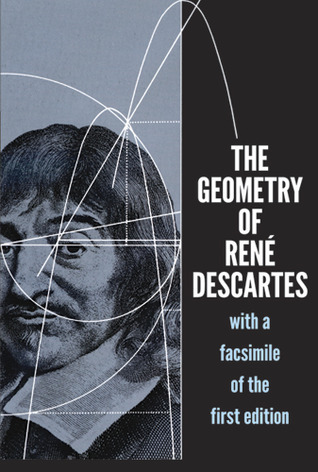
This is an unabridged republication of the definitive English translation of one of the very greatest classics of science. Originally published in 1637, it has been characterized as "the greatest single step ever made in the progress of the exact sciences" (John Stuart Mill); as a book which "remade geometry and made modern geometry possible" (Eric Temple Bell). It "revolutionized the entire conception of the object of mathematical science" (J. Hadamard).With this volume Descartes founded modern analytical geometry. Reducing geometry to algebra and analysis and, conversely, showing that analysis may be translated into geometry, it opened the way for modern mathematics. Descartes was the first to classify curves systematically and to demonstrate algebraic solution of geometric curves. His geometric interpretation of negative quantities led to later concepts of continuity and the theory of function. The third book contains important contributions to the theory of equations.This edition contains the entire definitive Smith-Latham translation of Descartes' three Problems the Construction of which Requires Only Straight Lines and Circles ; On the Nature of Curved Lines ; and On the Construction of Solid and Supersolid Problems . Interleaved page by page with the translation is a complete facsimile of the 1637 French text, together with all Descartes' original illustrations; 248 footnotes explain the text and add further bibliography.

This edition features reliable, accessible translations; useful editorial materials; and a straightforward presentation of the Objections and Replies, including the objections from Caterus, Arnauld, and Hobbes, accompanied by Descartes' replies, in their entirety. The letter serving as a reply to Gassendi--in which several of Descartes' associates present Gassendi's best arguments and Descartes' replies--conveys the highlights and important issues of their notoriously extended exchange. Roger Ariew's illuminating Introduction discusses the Meditations and the intellectual environment surrounding its reception.

=Seeking Truth by Natural Light

The works of Rene Descartes with an active table of contents.Works include:A Discourse on MethodPrinciples of Philosophy

Rene Descartes, the "father" of modern philosophy, is without doubt one of the greatest thinkers in history: his genius lies at the core of our contemporary intellectual identity. Breaking with the conventions of his own time and suffering persecution by the Church as a consequence, Descartes in his writings - most of which are philosophical classics - attempted to answer the central questions surrounding the self, God, free-will and knowledge, using the science of thought as opposed to received wisdom based on the tenets of faith. This edition, the most comprehensive one-volume selection of Descartes' works available in English, includes his great essay, "Discourse on Method".

La autora, curiosa e inquieta, atraída por infinidad de cosas, profundamente observadora y dueña de una pluma que corre tan fácil como amena, nos lega varias obras magistrales.


René Descartes was a French philosopher, mathematician, and writer. Descartes is often called the Father of Modern Philosophy, and much of early Western philosophy is a response to his writings. Descartes writing are still studied closely to this day. Descartes was also influential in mathematics; the Cartesian coordinate system — allowing reference to a point in space as a set of numbers, and allowing algebraic equations to be expressed as geometric shapes in a two-dimensional coordinate system (and conversely, shapes to be described as equations) — was named after him. Descartes was also one of the key figures in the Scientific Revolution and has been described as an example of genius. This collection contains four of his major • Rules For The Direction Of The Mind (1628) • Discourse On The Method (1637) • Meditations On First Philosophy (1641) • Principles Of Philosophy (1644) Audiobooks of the works Discourse On The Method and Meditations On First Philosophy are included free of charge. Simply follow the link at the end of the collection.

A superb text for teaching the philosophy of Descartes, this volume includes all his major works in their entirety, important selections from his lesser known writings, and key selections from his philosophical correspondence. The result is an anthology that enables the reader to understand the development of Descartes’s thought over his lifetime. Includes a biographical Introduction, chronology, bibliography, and index.

René Descartes nació el 31 de marzo de 1596, fue filósofo, científico, matemático y es considerado el fundador de la filosofía moderna.Aplicó a la filosofía el razonamiento inductivo y rechazó el pensamiento escolástico que dominaba la época, sosteniendo que no se podía establecer ninguna verdad hasta no conocer todas las razones para creerla. Al dudar, la persona está pensando, y al pensar está recorriendo el camino hacia entender. A partir de ahí planteó su más célebre legado: "Pienso, luego existo".
Discourse on Method, Meditations of First Philosophy & Principles of Philosophy
by René Descartes
Rating: 3.9 ⭐
With the celebrated words 'I think therefore I am', Descartes' compelling argument swept aside ancient and medieval traditions. He deduced that human beings consist of minds and bodies; that these are totally distinct 'substances'; that God exists and that He ensures we can trust the evidence of our senses.Ushering in the 'scientific revolution' of Galileo and Newton, Descartes' ideas have also set the agenda for debate ever since.By calling everything into doubt, Descartes laid the foundations of modern philosophy.

El curs de filosofia del nou batxillerat s'ha concebut com una història del pensament que inclou un recull ampli i complex de teories, interpretacions de món, reflexions sobre el coneixement, sobre la història, sobre el llenguatge, sobre la societat, sobre els motius de les accions humanes...Per això, a Atena trobareu obres senceres o fragments llargs de les obres dels autors que formen part dels programa: Plató, Descartes, Locke, J.S. Mill i Nietzsche.Els textos de cada perìode ( filosofia antigua, filosofia moderna i filosofia del segle XIX) van precedits d'una breu introducció, que constitueix a més una nota biobibliogràfica de cada autor. I, al final, una annex dóna indicacions sobre l'estructura de l'exercici i criteris generals d'avaluació de l'examen de Filosofia del Batxillerat a les proves d'accés a les universitats (PAU) de Catalunya.Esperem que les lectures d'aquest llibre no solament siguin una bona ajuda per preparar la prova de filosofia de l'examen de selectivitat, sinó que augmentin la capacitat crítica i el gust per la lectura de l'assaig filosófic.

In The Essential Descartes, the passion, precision, and deep humanity of this avant-garde 17th-century thinker are presented in a selection from his most profound writings, including his Discourse on Method, Meditations on First Philosophy, and Rules for the Direction of the Mind.

«¡Pienso, luego existo!»En la época de grandes cambios que fue la transición de la Edad Media a la Edad Moderna, Descartes dedicó todo su empeño a buscar un conocimiento certero, una forma para que cualquier persona pudiese, mediante el uso de la razón encontrar, la verdad. Con su método Descartes legó al mundo las bases del conocimiento moderno. Te ofrecemos una introducción a su filosofía ¡ahora en formato manga!«La razón es la propiedad mejor repartida entre los hombres, pues ninguno reclama más cantidad de ella, porque todos creen tener la suficiente.»

The Philosophical Writings of Descartes, Volume III: The Correspondence
by René Descartes
Rating: 4.2 ⭐
Volumes I and II provided a completely new translation of the philosophical works of Descartes, based on the best available Latin and French texts. Volume III contains 207 of Descartes' letters, over half of which have previously not been translated into English. It incorporates, in its entirety, Anthony Kenny's celebrated translation of selected philosophical letters, first published in 1970. In conjunction with Volumes I and II it is designed to meet the widespread demand for a comprehensive, authoritative and accurate edition of Descartes' philosophical writings in clear and readable modern English.

عندما شرع ديكارت في صياغة كتابه الشهير "العالم" كان قد حدد مسبقاً موقع هذا الكتاب بالضبط من فلسفته، لذلك قصره على المسائل الوجودية باعتبار أن المسائل المنهجية والمعرفية سبق بحثها في كتاب "القواعد". وفي فصل من فصول هذا الكتاب تبنى ديكارت طريقاً آخر لإقامة علم الفيزياء يختلف عن الإدراك الحسي، المشكوك في مصداقيته، فكيف يمكن تأسيس علم على معرفة غير يقينية؟ وبناءً على ذلك فإن دارسين كثراً لا يعتبرون ديكارت مؤسس الفلسفة الحديثة فحسب، بل وأيضاً أبا الفيزياء الحديثة. وفي هذا الكتاب يلقي الباحث الضوء على منهجية وفلسفة ديكارت من خلال كتابه "العالم" وذلك ضمن قسمين الدراسة التي جاءت في هذا لكتاب تضمن القسم الأول مقدمة تناول فيها الباحث ديكارت وفكره بصورة عامة: ديكارت في المرحلة الفكرية الأولى من حياته موقع كتابه "العالم" في فلسفته (المادة، الحركة، فرضية العالم الجديد) وأنهى ذلك القسم من الدراسة بتقويم عام لشخصية ديكارت ولأهميته كعالم، وخصص القسم الثاني لكتاب رينيه ديكارت "العالم" أو كتاب النور الذي فيه تجلت الفيزياء الديكارتية بأبهى صورها والذي مثل محطة مهمة على طريق العلم الحديث، حيث أنها كرست الانتقال بالفيزياء من عالم الكيفيات والمنطق الأرسطي غير المنتج للمعرفة إلى عالم الكم والقياس الرياضيين، قدمت باعتمادها مفهومي المادة والحركة (وقوانينها) في تفسير الظاهرات والحوادث الطبيعية، شرحاً وعلمياً أو وضعياً للكون ولظاهرته بعيدا عن الشروح "اللاهوتية" و "المتافيزيقية" للفيزياء القديمة، رفعت العلم الطبيعي إلى مستوى التعيين المطلق، بتصورها الكون تصوراً رياضياً، جعلت العلم الطبيعي علماً رياضياً في الأساس، وكرست مرة والى الأبد، هذه العلاقة الجوهرية التي تشد الفيزياء إلى


Introduction--Norman Kemp SmithRules for the Guidance of Our Native Powers1st Edition Title Page of the DiscourseDiscourse on MethodTheory of Vision as Expounded in the Dioptric1st Edition Title Page of the MeditationsMeditations on First PhilosophyLettersReplies to the Sixth ObjectionsThe Passions of the SoulThe Search After Truth extract