
Marguerite Duras
Marguerite Germaine Marie Donnadieu , known as Marguerite Duras, was a French novelist, playwright, screenwriter, essayist, and experimental filmmaker. Her script for the film Hiroshima mon amour (1959) earned her a nomination for Best Original Screenplay at the Academy Awards.
30 Books Written

« Dans L’Amant, Marguerite Duras reprend sur le ton de la confidence les images et les thèmes qui hantent toute son œuvre. Ses lecteurs vont pouvoir ensuite descendre ce grand fleuve aux lenteurs asiatiques et suivre la romancière danstous les méandres du delta, dans la moiteur des rizières, dans les secrets ombreux où elle a développé l’incantation répétitive et obsédante de ses livres, de ses films, de son théâtre. Au sens propre, Duras est ici remontée à ses sources, à sa “ scène fondamentale ” : ce moment où, vers 1930, sur un bac traversant un bras du Mékong, un Chinois richissime s’approche d’une petite Blanche de quinze ans qu’il va aimer. Il faut lire les plus beaux morceaux de L’Amant à haute voix. On percevra mieux ainsi le rythme, la scansion, la respiration intime de la prose, qui sont les subtils secrets de l’écrivain. Dès les premières lignes du récit éclatent l’art et le savoir-faire de Duras, ses libertés, ses défis, les conquêtes de trente années pour parvenir à écrire cette langue allégée, neutre, rapide et lancinante à la fois capable de saisir toutes les nuances, d’aller à la vitesse exacte de la pensée et des images. Un extrême réalisme (on voit le fleuve, on entend les cris de Cholon derrière les persiennes dans la garçonnière du Chinois), et en même temps une sorte de rêve éveillé, de vie rêvée, un cauchemar de vie : cette prose à nulle autre pareille est d’une formidable efficacité. À la fois la modernité, la vraie, et des singularités qui sont hors du temps, des styles, de la mode. »-- François Nourissier (Le Figaro Magazine, 20 octobre 1984)« L’histoire est sombre, à demi-muette, jamais encore racontée ni écrite, inavouable en quelque sorte. C’est l’histoire vraie, si l’expression a un sens, celle où les romans, le théâtre, les films sont venus puiser, les uns après les autres. La source donc, sans fond ni forme, insaisissable : cette histoire plus romanesque, pourrait-on dire, que toutes les fictions qui en sont dérivées, plus silencieuse, plus absolue, exemplaire.Au commencement, une fille de quinze ans et demi, presque une enfant, dans un bac sur le Mékong. Ou plutôt, au commencement, une photo qui n’a pas été prise, celle d’un moment décisif qui fonde une manière de vivre et d’écrire. Un tournant, dit-on ; ici, une traversée. La photo d’une petite blanche, pensionnaire à Saïgon, l’écrivain à quinze ans, passant d’une rive à l’autre du Mékong. Le corps est frêle, sinon chétif, les cheveux nattés, la tenue, insolite, mélange de pauvreté et d’extravagance : une robe informe, des chaussures de bal en lamé or et un chapeau d’homme, “ un feutre souple couleur bois de rose au large ruban noir. ” Sous ce chapeau, un visage enfantin et précoce “ voyant ”, prémonitoire de ce qui l’attend de l’autre côté du fleuve, la vie, la jouissance, “ l’expriment. ”Un homme est là, qui la regarde, fumant une cigarette près de sa limousine noire et de son chauffeur. II est riche, jeune. Il est chinois. Il sera L’Amant. Non pas “ un ”, parmi d’autres, ni même “ mon ”, mais “ le ”, par essence ; par définition et préfiguration. L’Amant, celui qui donne son titre au livre, comme si seule sa position était claire et désignée. Il est celui qui aime, qui donne le plaisir, qui voudrait se marier, dont le père interdit la passion ; celui qui prodigue l’argent que “ la petite ” attend de lui, qu’elle donne à sa mère en juste réparation de la ruine familiale. Elle, de son côté ne dit rien, elle ne sait pas, impuissante à qualifier ce qu’elle vit. Sans mots d’amour à l’égard de L’Amant ; muette auprès de sa famille qui ignorera la vraie nature de cette relation ; silencieuse dans la colonie blanche que son comportement scandalise. Toute entière donc du côté de cette mère et de ces frères murés dans un “ silence génial ” ; proche, déjà, de ces femmes de l’œuvre, absentes à elles-mêmes, traversées par la parole comme si elle leur était étrangère, suspendues dans l’attente, le ravissement, la folie : Lol. V. Stein, Anne-Marie Stretter, Alissa et les autres, figures contradictoires de l’ignorance et du savoir, du manque et de la puissance.Serait-ce donc parce que certains mots n’ont jamais été dits, empêchés par une passion ancienne et terrible pour la mère, qu’ils ont pris dans l’œuvre tant de force, qu’ils ont formé ces phrases détachées, posées comme des objets dans l’espace, flottant de cette manière souveraine, somnambulique, presque impersonnelle qui est la leur ? Phrases d’un poids si particulier, si matériel, qu’elles peuvent se substituer aux images d’un film. Sur l’écran noir de L’Homme atlantique, les mots seuls, parce que dans l’expérience fondamentale, eux seuls auront manquer.Ces mots, les voici dans L’Amant, retrouvés comme on le dit de sa langue. Non pas qu’il y soit dit ce qui ne peut pas l’être – je t’aime, ou, elle l’aime, selon cette oscillation entre la troisième et la première personne qui est un des propres du livre – mais parce...

El presente volumen contiene la totalidad del material literario de Marguerite Duras para la película de Alain Resnais, incluidas ciertas descripciones adicionales y fragmentos no incluidos finalmente. Una de las experiencias más singulares de la expresión artística de nuestro tiempo.

Eine Stadt am Meer, irgendwo. Eine Frau, Anne Desbaresdes, Gattin eines Fabrikanten, ist mit ihrem kleinen Jungen bei einer Klavierlehrerin, Schreie auf der Straße, im Café drunten hat ein Mann eine Frau erschossen, man sagt, sie habe es von ihm verlangt. Anne betritt das Café, sie kehrt in den folgenden Tagen immer wieder dahin zurück, unterhält sich, in kurzen Sätzen, mit einem Unbekannten über den Mord, über die beiden, wie es dazu kam. Die Grenzen zwischen dem fremden Schicksal und ihrem eigenen verfließen. In ihrer Beziehung zu dem Unbekannten scheint sich das Verhältnis der Ermordeten zu ihrem Mörder wiederholen zu wollen.

Lol Stein's comfortable married life is disrupted when she returns to her hometown and recalls how she was abandoned by a former fiance.

"Les barrages de la mère dans la plaine, c'était le grand malheur et la grande rigolade à la fois, ça dépendait des jours. C'était la grande rigolade du grand malheur. C'était terrible et c'était marrant. Ça dépendait de quel côté on se plaçait, du côté de la mer qui les avait fichus en l'air, ces barrages, d'un seul coup d'un seul, du côté des crabes qui en avaient fait des passoires, ou au contraire, du côté de ceux qui avaient mis six mois à les construire dans l'oubli total des méfaits pourtant certains de la mer et des crabes.Ce qui était étonnant c'était qu'ils avaient été deux cents à oublier ça en se mettant au travail."

One of France's greatest novelists offers a remarkable diary of the Nazi occupation of Paris during World War II and of its eventual liberation by the Allies. Celebrating the 50th anniversary of the liberation, this extraordinary diary by the author of The Lover is "a haunting portrait of a time and place" (New York Times).Written in 1944, and first published in 1985, Duras's riveting account of life in Paris during the Nazi occupation and the first few months of liberation depicts the harrowing realities of World War II-era France "with a rich conviction enhanced by [a] spare, almost arid, technique" (Julian Barnes, The Washington Post Book World). Duras, by then married and part of a French resistance network headed by François Mitterand, tells of nursing her starving husband back to health after his return from Bergen-Belsen, interrogating a suspected collaborator, and playing a game of cat and mouse with a Gestapo officer who was attracted to her. The result is "more than one woman's diary...[it is] a haunting portrait of a time and a place and also a state of mind" (The New York Times).

Far more daring and truthful than any of her other novels, The North China Lover is a fascinating retelling of the dramatic experiences of Duras’s adolescence that shaped her most famous work. Initially conceived as notes toward a screenplay for The Lover, this later novel, written toward the end of her life, emphasizes the tougher aspects of her youth in Indochina, and possesses the feel of an intimate documentary.Both shocking and enthralling, the story Duras tells is “so powerfully imagined (or remembered) that it . . . lingers like a strong perfume” (Publishers Weekly). Hailed by the French critics as a return to “the Duras of the great books and the great days,” it is a mature and complex rendering of a formative period in the author’s life.

Written in the splendid bareness of her late style, these pages are Marguerite Duras's theory of literature: comparing a dying fly to the work of style; remembering the trance and incurable disarray of writing; recreating the last moments of a British pilot shot during World War II and buried next to her house; or else letting out a magisterial, so what? To question six decades of storytelling, all the essays together operate as a deceitful, yet indispensable confession.

A man hires a woman to spend several weeks with him by the sea. The woman is no one in particular, a "she," a warm, moist body with a beating heart-the enigma of Other. Skilled in the mechanics of sex, he desires through her to penetrate a different mystery: he wants to learn love. It isn't a matter of will, she tells him. Still, he wants to learn to try . . .This beautifully wrought erotic novel is an extended haiku on the meaning of love, "perhaps a sudden lapse in the logic of the universe," and of its absence, "the malady of death." "The whole tragedy of the inability to love is in this work, thanks to Duras' unparalleled art of reinventing the most familiar words, of weighing their meaning." - Le Monde; "Deceptively simple and Racinian in its purity, condensed to the essential." - Translation Review.

Emotionally charged, sparsely written, and vicariously compelling, Marguerite Duras's novel centers on the desire of a young man for another man he has only glimpsed once, but with whom he falls desperately in love.

C'est encore une fois les vacances. Encore une fois les routes d'été. Encore une fois des églises à visiter. Encore une fois dix heures et demie du soir en été. Des Goya à voir. Des orages. Des nuits sans sommeil. Et la chaleur. Un crime a lieu cependant qui aurait pu, peut-être, changer le cours de ces vacances-là. Mais au fond qu'est-ce qui peut faire changer le cours des vacances ?
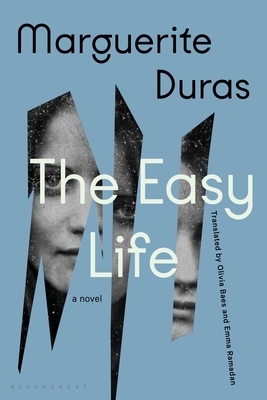
For the first time in English, literary icon Marguerite Duras's foundational masterpiece about a young woman's existential breakdown in the deceptively peaceful French countryside.The Easy Life is the story of Francine Veyrenattes, a twenty-five-year-old woman who already feels like life is passing her by. After witnessing a series of tragedies on her family farm, she alternates between intense grief and staggering boredom as she discovers a curious detachment in herself, an inability to navigate the world as others do. Hoping to be cleansed of whatever ails her, she travels to the coast to visit the sea. But there she finds herself unraveling, uncertain of what is inside her. Lying in the sun with her toes in the sand by day while psychologically dissolving in her hotel room by night, she soon reaches the peak of her inner crisis and must grapple with whether and how she can take hold of her own existence. An extraordinary examination of a young woman's estrangement from the world that only Marguerite Duras could have written, The Easy Life is a work of unsettling beauty and insight, and a bold, spellbinding journey into the depths of the human heart.

A man—the traveler—arrives in the seaside town of S. Thala with the intent to abandon his present, and instead finds himself abruptly reintroduced to his past. Through his subsequent interactions with “her,” the woman to whom he was briefly engaged as a young man over twenty years ago, and “him,” the man who walks and keeps watch over “her,” the traveler is soon drawn back in and acclimated to the strange timelessness and company that is S. Thala. Written in a stark and cinematic narrative style, this sequel to Duras’s 1964 novel The Ravishing of Lol Stein is a curious, yet haunting representation of the human memory: what we choose to recall, what we choose to forget, and how reliable we ultimately decide ourselves to be.

En el principio, ahí, mirando, en la terraza de un café al caer la tarde, hay una mujer que querría escribir un libro pero que no sabe ni cuándo ni cómo podrá escribirlo, y que ve cómo se desarrolla la historia de otra mujer, Emily L., quien a su vez escribe poemas de los que nunca habla. La mujer que quiere escribir un libro queda atrapada al vuelo en la historia de Emily L., que evoca en ella aquel baile con los oficiales de a bordo y el joven guardian de la isla de Wight, con quien pudo, tal vez, vivir un gran amor. La mujer que quiere escribir quizá no sepa que la historia de Emily L. es inventada. «A veces ocurre», dice la Duras, «que, de pronto, pase por ti una historia, sin escritor para escribirla, tan sólo visible. Nítida. (…) Es raro. Pero puede ocurrir. Es maravilloso cuando ocurre.»
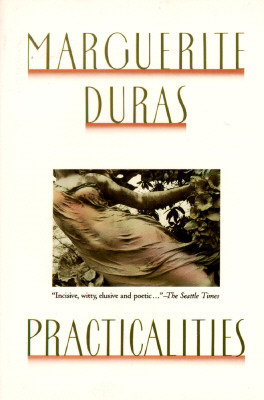
"It's the women who upset the applecart. Between themselves they talk only about the practicalities of life", declares Duras in this collection of her transcribed conversations with friend Jerome Beaujour. Some of her free-ranging meditations are short and deceptively simple, while many are autobiographical and reveal her most intimate thoughts about motherhood, her struggle with alcohol, her love for a younger man, and more.

The Vice-Consul is a bleak, enigmatic novel. Set in the steamy monsoon heat of Calcutta, it brings together three suffering characters. There is Anne-Marie Stretter, beautiful wife of the French ambassador, seeking the love of younger men as if desperate for a carefree youth she never had. One of those men who falls for her is the former Vice-Consul of Lahore, an awkward, solitary man prone to irrational, violent rages. And there is a mysterious Cambodian beggar woman whose presence in India intrigues the Europeans, just as the woman herself seems drawn to them. Excerpted from a review at Amazon.com

In this classic novel by the best-selling author of The Lover, the erotic intrigues among a quartet of two women and two men mask a chillingly deceptive form of madness. Elisabeth Alione is convalescing in a hotel in rural France when she meets two men and another woman. The sophisticated dalliance among the four serves to obscure an underlying violence, which, when the curtain of civilization is drawn aside, reveals in her fellow guests a very contemporary—perhaps even new—form of insanity.Like many of Duras's novels, Destroy, She Said owes much to cinema, displaying a skillful interplay of dialogue and description. There are recurring moods and motifs from the Duras repertory: eroticism, lassitude, stifled desire, a beautiful woman, a mysterious forest, a desolate provincial hotel.Marguerite Duras directed the film made from this novel, which the London Times called "a very extraordinary achievement." The film and the book together are the subject of a probing, in-depth interview with Duras by the well-known director Jacques Rivette and by Jean Narboni included in this volume.

Summer Rain traces the struggle of a large, marginalised, and uneducated immigrant family, as its members, feeling cast off, yet bound together by a powerful intimacy, try to survive in the indifferent society of suburban Paris.

Disaffected, bored with his career at the French Colonial Ministry (where he has copied out birth and death certificates for eight years), and disgusted by a mistress whose vapid optimism arouses his most violent misogyny, the narrator of The Sailor from Gibraltar finds himself at the point of complete breakdown while vacationing in Florence. After leaving his mistress and the Ministry behind forever, he joins the crew of The Gibraltar, a yacht captained by Anna, a beautiful American in perpetual search of her sometime lover, a young man known only as the "Sailor from Gibraltar."First published in 1952, this early novel of Duras's—which was made into a film in 1967—shows those preoccupations which have so deeply concerned her in her later novels and film scripts: loneliness, boredom, the inevitability and intangibility of love. The lambent poetry of the book, and the limning of a woman's mind, her love and sense of the inevitability of that love are singularly Marguerite Duras.

Unseen voices narrate this story of the affair between the haunting Anne-Marie Stretter and the disgraced French vice-consul in Lahore. In the India of 1937, with the smell of laurels and leprosy permeating the air, the characters perform a dance of doomed love to the strains of a dying colonialism.

Dans un petit village d'Italie, situé au pied d'une montagne au bord de la mer, dans la chaleur écrasante du plein été, deux couples passent des vacances comme chaque été: Gina et Ludi, Jacques, Sarah et l'enfant. D'autres amis sont là, dont Diana. Ils se baignent, se parlent, s'ennuient...

"C'étaient des bonnes à tout faire, les milliers de Bretonnes qui débarquaient dans les gares de Paris. C'étaient aussi les colporteurs des petits marchés de campagne, les vendeurs de fils et d'aiguilles, et tous les autres. Ceux - des millions - qui n'avaient rien qu'une identité de mort. Le seul souci de ces gens c'était leur survie : ne pas mourir de faim, essayer chaque soir de dormir sous un toit. C'était aussi de temps en temps, au hasard d'une rencontre, PARLER. Parler du malheur qui leur était commun et de leurs difficultés personnelles. Cela se trouvait arriver dans les squares, l'été, dans les trains, dans ces cafés des places de marché pleins de monde où il y a toujours de la musique. Sans quoi, disaient ces gens, ils n'auraient pas pu survivre à leur solitude." Marguerite Duras.

Un meutre brutal dans une petite ville de la France rurale: le cadavre démembré est jetté d'un viaduc de chemin de fer sur des trains qui y passent. La victime était un sourd-muet, le tueur, sa cousine Claire, peut être ou ne pas être fou. Dans une série d'entretiens avec un écrivain Claire, son mari et un ami révéler peu à peu l'histoire derrière ce crime.

Una mujer dicta unas pocas frases al día a lo largo de su último año de vida. Están dirigidas a su amante, que no sólo las mecanografía, sino que también es el objeto de las pasiones tumultuosas que se desprenden de ellas. Esa mujer es Marguerite Duras, una de las escritoras francesas más importantes de todos los tiempos, quien fallece sólo tres días después de la última entrada de este libro.Si todas sus historias se desarrollan alrededor de una pérdida, en Nada más Duras narra la pérdida definitiva: la pérdida de su propia voz. Nada más es un grito desgarrador, una carta de amor fervorosa y despechada a la vez, una meditación existencial y una confidencia en la que hallamos reminiscencias y destellos de su vida y obra, lo que hacen de él un texto tan hermético como fascinante.A fuerza de pronunciar palabras terminales, Duras consigue que un posible testamento literario se transforme en un testimonio de vida, en una afirmación de que cualquier epílogo supone, también, un canto de bienvenida, que toda posteridad se reconcilia, en el minuto postrero, con las singularidades de una vida.

Dedicated to Duras’ companion with whom she spent her last decade of life, Yann Andréa Steiner is a haunting dance between two parallel stories of love and the love between Duras and the young Yann Andréa and a seaside romance observed – or imagined – by the narrator between a camp counselor and an orphaned camper, a Holocaust survivor who witnessed his sister’s murder at the hands of a German soldier. Memory blurs into desire as the summer of 1980 flows into 1944. An enigmatic elegy of history, creation, and raw emotion.

Four Novels By Marguerite Duras - The Square - Moderato Cantabile - 10:30 on a Saturday Night - The Afternoon of Mr. Andesmas
by Marguerite Duras
Rating: 4.0 ⭐
Four novels by one of the most important literary figures in France.

One of France's leading literary figures, Marguerite Duras casts a brooding, elegant spell over her readers with her acute portrayals of love: its aphrodisiacal powers and its sweet, inevitable pain. This novella is haunting, erotic, and tragic, with the distinctive evocation that is Duras' own."Ms. Duras's 1980 novella, "The Man Sitting in the Corridor," whose superb English translation by Barbara Bray is only now appearing, was [...] an exercise in the author's progressive distillation of her prose. Here it is so spare that at most several sentences (and once a mere 15 words) occupy an entire page. Thus unencumbered, the rare bits of writing gain resonance, like a lone voice echoing through a tunnel. Moreover, by writing less -- and thereby suggesting more -- Ms. Duras invests her information with a power unavailable to more copious, if still evocative, forms of literary expression." - Ginger Danto, The New York Times

A major publishing event: the previously untranslated story of a family’s moral reckoning and a daughter’s fall from grace, from the renowned author of The Lover and The WarMarguerite Duras, the Elena Ferrante of French literature, rose to global stardom with her erotic masterpiece The Lover (L’Amant), which won the prestigious Prix Goncourt, has over a million copies in print in English, has been translated into forty-three languages, and was adapted into a canonical film in 1992. While almost all of Duras’s novels have been translated into English, her debut The Impudent Ones (Les Impudents) has been a glaring exception—until now. Fans of Duras will be thrilled to discover the germ of her bold, vital prose and signature blend of memoir and fiction in this intense and mournful story of the Taneran family, which introduces Duras’s classic themes of familial conflict, illicit romance, and scandal in the sleepy suburbs and southwest provinces of pre-war France.With storytelling that evokes in equal parts beauty and brutality, Duras depicts the scalding effect of seduction and disrepute on the soul of a young French girl. Duras’s great gift was her ability to bring to vivid and passionate life characters with whom society may not have sympathized, but with whom readers certainly do.Through its striking prose and strong feminist themes, The Impudent Ones will delight established Duras fans and a new generation of readers alike.

"No começo do verão, Serge July me perguntou se eu considerava entre as coisas possíveis escrever uma crônica regular para o jornal Liberation. Hesitei, a perspectiva de uma crônica regular me assustava um pouco e depois pensei que sempre podia tentar. Ele me disse que o que desejava era uma crônica que não trataria da atualidade política ou outra, mas de uma espécie de atualidade paralela, de acontecimentos que me tivessem interessado e que não necessariamente tivessem sido ressaltados pelo noticiário corrente. O que ele queria era: durante um ano todos os dias, pouco importava a extensão, mas todos os dias. Eu disse: um ano é impossível, mas três meses sim. Ele perguntou: por que três meses? Respondi: três meses, a duração do verão. Ele me disse então: está certo, três meses, mas então todos os dias. Eu não tinha nada a fazer naquele verão e quase cedi, mas não, tive medo, sempre esse mesmo pânico de não dispor de meus dias inteiros abertossobre nada. Fiz nova proposta: não, uma vez por semana e a atualidade que eu quiser. Ele concordou. Os três meses foram cumpridos, salvo as duas semanas de fim de junho e começo de julho. Hoje, nesta quarta-feira 17 de setembro, entrego os textos às Editions de Minuit. É disto que eu queria falar aqui, desta decisão de publicar estes textos em livro. Hesitei a passar a este estágio de publicação destes textos em livro, era difícil resistir à atração de sua perda, de não deixá-los lá onde estavam publicados, em papel de um dia, espalhados em números de jornais destinados a serem jogados fora. E depois decidi que não, que deixá-los naquele estado de textos desaparecidos teria sublinhado ainda mais — mas aí então com uma ostentação duvidosa — o próprio caráter de O Verão de 80, quer dizer, me pareceu, o de um extravio no real. Ponderei que já bastava com meus filmes, em farrapos, sem contrato, perdidos, que não valia a pena professar a negligência a esse ponto.Era preciso todo um dia para entrar na atualidade dos fatos, era o dia mais difícil, a ponto de desistir com freqüência. Era preciso um segundo dia para esquecer, me tirar da obscuridade desses fatos, de sua promiscuidade, respirar outra vez. Um terceiro dia para apagar o que havia sido escrito, escrever."

Monsieur Andesmas, soixante-dix-huit ans, achète une maison pour sa fille Valérie. Il veut faire construire une terrasse qui domine la plaine, un village, la Méditerranée. Il attend l'entrepreneur qui est en retard. Le livre est la relation des évènements qui se passent entre quatre heures et demie et la tombée du jour, durant tout cet après-midi pendant lequel Monsieur Andesmas attend.