Loading genres...
Explore the best books about Essays genre.
The first book from the legendary New Yorker writer John McPhee, tells about Bill Bradley when he was the best basketball player Princeton had ever seen.When John McPhee met Bill Bradley, both were at the beginning of their careers. In A Sense of Where You Are ,McPhee delineates for the reader the training and techniques that made Bradley the extraordinary athlete he was, and this part of the book is a blueprint of superlative basketball. But athletic prowess alone would not explain Bradley's magnetism, which is in the quality of the man himself―his self-discipline, his rationality, and his sense of responsibility.Here is a portrait of Bradley as he was in college, before his time with the New York Knicks and his election to the U.S. Senate―a story that suggests the abundant beginnings of his professional careers in sport and politics.
By virtue of its casual, off-handedly brilliant wisdom and the easy splendor of its nature writing, Thoreau’s account of his adventure in self-reliance on the shores of a pond in Massachusetts is one of the signposts by which the modern mind has located itself in an increasingly bewildering world. Deeply sane, invigorating in its awareness of humanity’s place in the moral and natural order, Walden represents the progressive spirit of nineteenth-century America at its eloquent best.

"Com uma linguagem leve, lúcida e atraente, neste texto Sêneca ensina como examinar os temas práticos da vida, sobretudo um dos mais cruciais da atualidade: o tempo. Sua atenção concentra-se na velocidade com que a vida humana passa, enfatizando o fato de que o problema não é a falta, mas sim como nosso tempo é empregado. Devemos não só reservar tempo para nós mesmos, mas sobretudo evitar toda dispersão fútil e enganosa da vida, cuidando do tempo presente e vivendo o agora. Ao mesmo tempo, o filósofo destaca a importância da prática do bem e das virtudes, bem como o papel da filosofia, que nos ensina a viver de modo correto e nos fornece os elementos para uma análise crítica do mundo."

Levels of the Game is John McPhee's astonishing account of a tennis match played by Arthur Ashe against Clark Graebner at Forest Hills in 1968.It begins with the ball rising into the air for the initial serve and ends with the final point. McPhee provides a brilliant, stroke-by-stroke description while examining the backgrounds and attitudes which have molded the players' games."This may be the high point of American sports journalism"- Robert Lipsyte, The New York Times

Only once did David Foster Wallace give a public talk on his views on life, during a commencement address given in 2005 at Kenyon College. The speech is reprinted for the first time in book form in THIS IS WATER. How does one keep from going through their comfortable, prosperous adult life unconsciously? How do we get ourselves out of the foreground of our thoughts and achieve compassion? The speech captures Wallace's electric intellect as well as his grace in attention to others. After his death, it became a treasured piece of writing reprinted in The Wall Street Journal and the London Times, commented on endlessly in blogs, and emailed from friend to friend.Writing with his one-of-a-kind blend of causal humor, exacting intellect, and practical philosophy, David Foster Wallace probes the challenges of daily living and offers advice that renews us with every reading.

An alternative cover edition for this ISBN can be found here.An anniversary edition of the bestselling collection of Dear Sugar advice columns written by the author of #1 New York Times bestseller Wild--featuring a new preface and six additional columns. Soon to be a Hulu Original series.For more than a decade, thousands of people have sought advice from Dear Sugar--the pseudonym of bestselling author Cheryl Strayed--first through her online column at The Rumpus, later through her hit podcast, Dear Sugars, and now through her popular Substack newsletter. Tiny Beautiful Things collects the best of Dear Sugar in one volume, bringing her wisdom to many more readers. This tenth-anniversary edition features six new columns and a new preface by Strayed. Rich with humor, insight, compassion--and absolute honesty--this book is a balm for everything life throws our way.

An assemblage of reflections on the nature of writing and the writer from one the greatest American writers of the twentieth century.Throughout Hemingway’s career as a writer, he maintained that it was bad luck to talk about writing—that it takes off “whatever butterflies have on their wings and the arrangement of hawk’s feathers if you show it or talk about it.”Despite this belief, by the end of his life he had done just what he intended not to do. In his novels and stories, in letters to editors, friends, fellow artists, and critics, in interviews and in commissioned articles on the subject, Hemingway wrote often about writing. And he wrote as well and as incisively about the subject as any writer who ever lived…This book contains Hemingway’s reflections on the nature of the writer and on elements of the writer’s life, including specific and helpful advice to writers on the craft of writing, work habits, and discipline. The Hemingway personality comes through in general wisdom, wit, humor, and insight, and in his insistence on the integrity of the writer and of the profession itself.—From the Preface by Larry W. Phillips

“Every adult life could be said to be defined by two great love stories. The first—the story of our quest for sexual love—is well known and well charted. . . . The second—the story of our quest for love from the world—is a more secret and shameful tale. And yet this second love story is no less intense than the first.”This is a book about an almost universal anxiety that rarely gets mentioned an anxiety about what others think of us, about whether we’re judged a success or a failure, a winner or a loser. This is a book about status anxiety.Alain de Botton, best-selling author of The Consolations of Philosophy and The Art of Travel , asks—with lucidity and charm—where our worries about status come from and what, if anything, we can do to surmount them. With the help of philosophers, artists and writers, he examines the origins of status anxiety (ranging from the consequences of the French Revolution to our secret dismay at the success of our friends) before revealing ingenious ways in which people have been able to overcome their worries in the search for happiness. We learn about sandal-less philosophers and topless bohemians, about the benefits of putting skulls on our sideboards, and about looking at ancient ruins.The result is a book that isn’t just highly entertaining and thought-provoking, but that is genuinely wise and helpful, too.

Michel de Montaigne, often called ‘the first modern man’, was one of the most influential figures of the Renaissance, singlehandedly responsible for popularizing the essay as a literary form. In 1571, Montaigne retired from ‘the slavery of the court and of public duties’ to his estates in order to devote himself to reflection, reading and writing. The result was 20 years of observations distilled into what he called ‘essais’, and an instant bestseller. How to get on with people, how to deal with violence, how to bring up children, how to live? These questions obsessed the nobleman and philosopher whose free-roaming explorations of his own thoughts and experiences were unlike anything written before. Wise but questioning, witty and idiosyncratic, and incredibly modern in outlook, Montaigne’s thoughts are still relatable 400 years after his death. An exclusive selection of his best essays chosen by acclaimed Montaigne biographer Sarah Bakewell showing the vast variety and originality of his work. Bakewell has also provided a comprehensive and insightful introduction on the man, his life, his work and his everlasting influence.

“A manifesto of sorts for anyone who makes art [and] cares for it.” —Zadie Smith“The best book I know of for talented but unacknowledged creators. . . . A masterpiece.” —Margaret Atwood“No one who is invested in any kind of art . . . can read The Gift and remain unchanged.” —David Foster WallaceBy now a modern classic, The Gift is a brilliantly orchestrated defense of the value of creativity and of its importance in a culture increasingly governed by money and overrun with commodities. This book is even more necessary today than when it first appeared.An illuminating and transformative book, and completely original in its view of the world, The Gift is cherished by artists, writers, musicians, and thinkers. It is in itself a gift to all who discover the classic wisdom found in its pages.

The Pulitzer Prize-winning view of the continent, across the fortieth parallel and down through 4.6 billion yearsTwenty years ago, when John McPhee began his journeys back and forth across the United States, he planned to describe a cross section of North America at about the fortieth parallel and, in the process, come to an understanding not only of the science but of the style of the geologists he traveled with. The structure of the book never changed, but its breadth caused him to complete it in stages, under the overall title Annals of the Former World.Like the terrain it covers, Annals of the Former World tells a multilayered tale, and the reader may choose one of many paths through it. As clearly and succinctly written as it is profoundly informed, this is our finest popular survey of geology and a masterpiece of modern nonfiction.Annals of the Former World is the winner of the 1999 Pulitzer Prize for Nonfiction.

Like the Meditations of Marcus Aurelius, Seneca’s Letters are a treasure of practical wisdom on how to live and enjoy life. The focus is on living a simple, stress-free life thorough the use of rationalism. The letters provide practical steps for people to deal with the human suffering that comes with life’s problems. Topics featured range from discussions on the shortness of life and anger to immortality and death. The Letters are part of the foundation of Stoic thought making Seneca one of the indispensable thinkers from Ancient Roman philosophy. Although Stoicism is not now as widely practiced as it once was, many people can still find wisdom and inspiration through Seneca's words and letters. “In the last three years, I’ve begun to explore one philosophical system in particular: Stoicism. Through my preferred Stoic writer, Lucius Seneca, I’ve found it to be a simple and immensely practical set of rules for better results with less effort.” Timothy Ferriss, author of Four Hour Workweek. *Includes link to free audio recording of the Letters. *Image gallery. *Special low price.

In this book are the essential beliefs and theories of a great teacher and American artist, Robert Henri. While it embodies the entire system of his teaching, with much technical advice and critical comment for the student, it also contains inspiration for those to whom the happiness to be found through all the arts is important.No other American painter attracted such a large, intensely personal group of followers as Henri, whose death in 1929 brought to an end a life that has been completely devoted to art. He was an inspired artist and teacher who believed that everyone is vitally concerned in the happiness and wisdom to be found through the arts. Many of his paintings have been acquired by museums and private collectors. Among them are the Baltimore Museum of Art, the Metropolitan Museum of Art, the National Gallery of Art, the Whitney Museum of American Art, the Wichita Art Museum, and Yale University Art Gallery.

First published in 1979, Joan Didion's The White Album records indelibly the upheavals and aftermaths of the 1960s. Examining key events, figures, and trends of the era—including Charles Manson, the Black Panthers, and the shopping mall—through the lens of her own spiritual confusion, Joan Didion helped to define mass culture as we now understand it. Written with a commanding sureness of tone and linguistic precision, The White Album is a central text of American reportage and a classic of American autobiography.

In his most extraordinary book, Oliver Sacks recounts the stories of patients lost in the bizarre, apparently inescapable world of neurological disorders. These are case studies of people who have lost their memories and with them the greater part of their pasts; who are no longer able to recognize people or common objects; whose limbs have become alien; who are afflicted and yet are gifted with uncanny artistic or mathematical talents. In Dr Sacks' splendid and sympathetic telling, each tale is a unique and deeply human study of life struggling against incredible adversity.

A fresh perspective on a beloved classic by acclaimed translators Anita Barrows and Joanna Macy.German poet Rainer Maria Rilke’s (1875–1926) Letters to a Young Poet has been treasured by readers for nearly a century. Rilke’s personal reflections on the vocation of writing and the experience of living urge an aspiring poet to look inward, while also offering sage wisdom on further issues including gender, solitude, and romantic love. Barrows and Macy’s translation extends this compilation of timeless advice and wisdom to a fresh generation of readers. With a new introduction and commentary, this edition places the letters in the context of today’s world and the unique challenges we face when seeking authenticity.

As only he can, Aldous Huxley explores the mind's remote frontiers and the unmapped areas of human consciousness. These two astounding essays are among the most profound studies of the effects of mind-expanding drugs written in this century. Contains the complete texts of The Doors of Perception and Heaven and Hell , both of which became essential for the counterculture during the 1960s and influenced a generation's perception of life.

Alternate cover edition of ISBN 9780140432077Published in 1859, John Stuart Mill's On Liberty presented one of the most eloquent defenses of individual freedom in nineteenth-century social and political philosophy and is today perhaps the most widely-read liberal argument in support of the value of liberty. Mill's passionate advocacy of spontaneity, individuality, and diversity, along with his contempt for compulsory uniformity and the despotism of popular opinion, has attracted both admiration and condemnation.

How to get on well with people, how to deal with violence, how to adjust to losing someone you love--such questions arise in most people's lives. They are all versions of a bigger question: how do you live? How do you do the good or honourable thing, while flourishing and feeling happy? This question obsessed Renaissance writers, none more than Michel Eyquem de Montaigne (1533-92), perhaps the first truly modern individual. A nobleman, public official, and wine-grower, he wrote free-roaming explorations of his thought and experience, unlike anything written before. He called them 'essays', meaning 'attempts' or 'tries'. Into them he put whatever was in his head: his tastes in wine and food, his childhood memories, the way his dog's ears twitched when dreaming, as well as the appalling events of the religious civil wars raging around him. The Essays was an instant bestseller, and more than four hundred years later, Montaigne's honesty and charm still draw people to him. Readers come to him in search of companionship, wisdom and entertainment--and in search of themselves. This book, a spirited and singular biography (and the first full life of Montaigne in English for nearly fifty years), relates the story of his life by way of the questions he posed and the answers he explored. It traces his bizarre upbringing (made to speak only Latin), youthful career and sexual adventures, travels, and friendships with the scholar and poet Etienne de La Boétie and with his adopted 'daughter', Marie de Gournay. And as we read, we also meet his readers--who for centuries have found in Montaigne an inexhaustible source of answers to the haunting question, 'how to live?'

Upon becoming a new mother, Eula Biss addresses a chronic condition of fear--fear of the government, the medical establishment, and what is in your child's air, food, mattress, medicine, and vaccines. She finds that you cannot immunize your child, or yourself, from the world.In this bold, fascinating book, Biss investigates the metaphors and myths surrounding our conception of immunity and its implications for the individual and the social body. As she hears more and more fears about vaccines, Biss researches what they mean for her own child, her immediate community, America, and the world, both historically and in the present moment. She extends a conversation with other mothers to meditations on Voltaire's Candide, Bram Stoker's Dracula, Rachel Carson's Silent Spring, Susan Sontag's AIDS and Its Metaphors, and beyond.On Immunity is a moving account of how we are all interconnected-our bodies and our fates.

From the best-selling author of Wild, a collection of quotes--drawn from the wide range of her writings--that capture her wisdom, courage, and outspoken humor, presented in a gift-sized package that's as irresistible to give as it is to receive. Around the world, thousands of people have found inspiration in the words of Cheryl Strayed, who in her three prior books and in her Dear Sugar columns has shared the twists and trials of her remarkable life. Her honesty, spirit, and ample supply of tough love have enabled many of us, even in the darkest hours, to somehow put one foot in front of the other--and be brave enough.This book gathers, each on a single page, more than 100 of Strayed's indelible quotes and thoughts--"mini instruction manuals for the soul" that urge us toward the incredible capacity for love, compassion, forgiveness, and endurance that is within us all.Be brave enough to break your own heart.You can't ride to the fair unless you get on the pony.Keep walking.Acceptance is a small, quiet room.Romantic love is not a competitive sport.Forward is the direction of real life.Ask yourself: "What is the best I can do?" And then do that.

An instant classic of American sportswriting—the tennis essays of David Foster Wallace, “the best mind of his generation” (A. O. Scott) and “the best tennis-writer of all time” ( New York Times ) Gathered for the first time in a deluxe collector's edition, here are David Foster Wallace's legendary writings on tennis, five tour-de-force pieces written with a competitor's insight and a fan's obsessive enthusiasm. Wallace brings his dazzling literary magic to the game he loved as he celebrates the other-worldly genius of Roger Federer; offers a wickedly witty disection of Tracy Austin's memoir; considers the artistry of Michael Joyce, a supremely disciplined athlete on the threshold of fame; resists the crush of commerce at the U.S. Open; and recalls his own career as a "near-great" junior player.Whiting Award-winning writer John Jeremiah Sullivan provides an introduction.

Banni de la communauté juive à 23 ans pour hérésie, Baruch Spinoza décide de consacrer sa vie à la philosophie. Son objectif ? Découvrir un bien véritable qui lui « procurerait pour l’éternité la jouissance d’une joie suprême et incessante. » Au cours des vingt années qui lui restent à vivre, Spinoza édifie une œuvre révolutionnaire. Comment cet homme a-t-il pu, en plein XVIIe siècle, être le précurseur des Lumières et de nos démocraties modernes ? Le pionnier d’une lecture historique et critique de la Bible ? Le fondateur de la psychologie des profondeurs ? L’initiateur de la philologie, de la sociologie, et de l’éthologie ? Et surtout, l’inventeur d’une philosophie fondée sur le désir et la joie, qui bouleverse notre conception de Dieu, de la morale et du bonheur ? A bien des égards, Spinoza est non seulement très en avance sur son temps, mais aussi sur le nôtre. C’est ce que j’appelle le « miracle » Spinoza.F. L.

When the technologies we use every day collapse our experiences into 24/7 availability, platforms for personal branding, and products to be monetized, nothing can be quite so radical as… doing nothing. Here, Jenny Odell sends up a flare from the heart of Silicon Valley, delivering an action plan to resist capitalist narratives of productivity and techno-determinism, and to become more meaningfully connected in the process.

From one of the brightest young chroniclers of US culture comes this dazzling collection of essays on the internet, the self, feminism and politicsWe are living in the era of the self, in an era of malleable truth and widespread personal and political delusion. In these nine interlinked essays, Jia Tolentino, the New Yorker’s brightest young talent, explores her own coming of age in this warped and confusing landscape.From the rise of the internet to her own appearance on an early reality TV show; from her experiences of ecstasy – both religious and chemical – to her uneasy engagement with our culture’s endless drive towards ‘self-optimisation’; from the phenomenon of the successful American scammer to her generation’s obsession with extravagant weddings, Jia Tolentino writes with style, humour and a fierce clarity about these strangest of times.Following in the footsteps of American luminaries such as Susan Sontag, Joan Didion and Rebecca Solnit, yet with a voice and vision all her own, Jia Tolentino writes with a rare gift for elucidating nuance and complexity, coupled with a disarming warmth. This debut collection of her essays announces her as exactly the sort of voice we need to hear from right now – and for many years to come.

One of the most salient features of our culture is that there is so much bullshit. Everyone knows this. Each of us contributes his share. But we tend to take the situation for granted. Most people are rather confident of their ability to recognize bullshit and to avoid being taken in by it. So the phenomenon has not aroused much deliberate concern. We have no clear understanding of what bullshit is, why there is so much of it, or what functions it serves. And we lack a conscientiously developed appreciation of what it means to us. In other words, as Harry Frankfurt writes, "we have no theory."Frankfurt, one of the world's most influential moral philosophers, attempts to build such a theory here. With his characteristic combination of philosophical acuity, psychological insight, and wry humor, Frankfurt proceeds by exploring how bullshit and the related concept of humbug are distinct from lying. He argues that bullshitters misrepresent themselves to their audience not as liars do, that is, by deliberately making false claims about what is true. In fact, bullshit need not be untrue at all.Rather, bullshitters seek to convey a certain impression of themselves without being concerned about whether anything at all is true. They quietly change the rules governing their end of the conversation so that claims about truth and falsity are irrelevant. Frankfurt concludes that although bullshit can take many innocent forms, excessive indulgence in it can eventually undermine the practitioner's capacity to tell the truth in a way that lying does not. Liars at least acknowledge that it matters what is true. By virtue of this, Frankfurt writes, bullshit is a greater enemy of the truth than lies are.

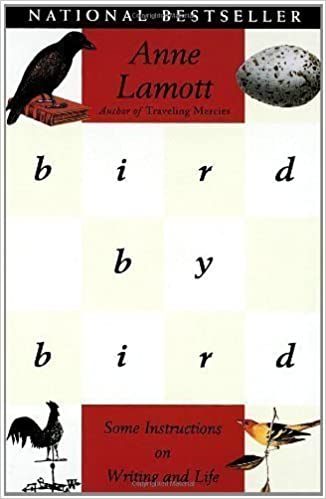
Despite--or because of--her irreverence, faith is a natural subject for Anne Lamott. Since Operating Instructions and Bird by Bird, her fans have been waiting for her to write the book that explained how she came to the big-hearted, grateful, generous faith that she so often alluded to in her two earlier nonfiction books. The people in Anne Lamott's real life are like beloved characters in a favorite series for her readers: Her friend Pammy; her son, Sam; and the many funny and wise folks who attend her church are all familiar. And Traveling Mercies is a welcome return to those lives, as well as an introduction to new companions Lamott treats with the same candor, insight, and tenderness. Lamott's faith isn't about easy answers, which is part of what endears her to believers as well as nonbelievers. Against all odds, she came to believe in God, and then, even more miraculously, in herself. As she puts it, "My coming to faith did not start with a leap but rather a series of staggers." At once tough, personal, affectionate, wise, and very funny, Traveling Mercies tells in exuberant detail how Anne Lamott learned to shine the light of faith on the darkest part of ordinary life, exposing surprising pockets of meaning and hope.

One of the greatest philosophers of the nineteenth century, Schopenhauer believed that human action is determined not by reason but by 'will' - the blind and irrational desire for physical existence. This selection of his writings on religion, ethics, politics, women and many other themes is taken from Schopenhauer's last work, Parerga and Paralipomena, which he published in 1851. He depicts humanity as locked in a struggle beyond good and evil, each individual absolutely free within a Godless world in which art, morality and self-awareness are our only salvation. This innovative and pessimistic view proved powerfully influential upon philosophy and art, affecting the work of Nietzsche and Wittgenstein among others.

Brings together three hilarious pieces by America's comic genius: Without Feathers, a secret journal that addresses life's "big" questions; Getting Even, Woody as psychologist, historian, and philosopher; and Side Effects, Woody's take on UFOs and more.

Conjectures and Refutations is one of Karl Popper's most wide-ranging and popular works, notable not only for its acute insight into the way scientific knowledge grows, but also for applying those insights to politics and to history. It provides one of the clearest and most accessible statements of the fundamental idea that guided his work: not only our knowledge, but our aims and our standards, grow through an unending process of trial and error.

With Hope in the Dark, Rebecca Solnit makes a radical case for hope as a commitment to act in a world whose future remains uncertain and unknowable. Drawing on her decades of activism and a wide reading of environmental, cultural, and political history, Solnit argues that radicals have a long, neglected history of transformative victories, that the positive consequences of our acts are not always immediately seen, directly knowable, or even measurable, and that pessimism and despair rest on an unwarranted confidence about what is going to happen next.Originally published in 2004, now with a new foreword and afterword, Solnit’s influential book shines a light into the darkness of our time in an unforgettable new edition.

The God That Failed is a classic work and crucial document of the Cold War that brings together essays by six of the most important writers of the twentieth century on their conversion to and subsequent disillusionment with communism. In describing their own experiences, the authors illustrate the fate of leftism around the world. André Gide (France), Richard Wright (the United States), Ignazio Silone (Italy), Stephen Spender (England), Arthur Koestler (Germany), and Louis Fischer, an American foreign correspondent, all tell how their search for the betterment of humanity led them to communism, and the personal agony and revulsion which then caused them to reject it. David Engerman's new foreword to this central work of our time recounts the tumultuous events of the era, providing essential background. It also describes the book's origins and impact, the influence of communism in American intellectual life, and how the events described in The God That Failed continue to affect public discourse today.

From Pulitzer Prize-winning Annie Dillard, a collection that illuminates the dedication and daring that characterizes a writer's life.In these short essays, Annie Dillard—the author of Pilgrim at Tinker Creek and An American Childhood—illuminates the dedication, absurdity, and daring that characterize the existence of a writer. A moving account of Dillard’s own experiences while writing her works, The Writing Life offers deep insight into one of the most mysterious professions.

In The Journalist And The Murderer, Janet Malcolm examines the psychopathology of journalism. She delves into the always uneasy, sometimes tragic relationship that exists between journalist and subject.

The Captive Mind begins with a discussion of the novel Insatiability by Stanisław Ignacy Witkiewicz and its plot device of Murti-Bing pills, which are used as a metaphor for dialectical materialism, but also for the deadening of the intellect caused by consumerism in Western society. The second chapter considers the way in which the West was seen at the time by residents of Central and Eastern Europe, while the third outlines the practice of Ketman, the act of paying lip service to authority while concealing personal opposition, describing seven forms applied in the people's democracies of mid-20th century Europe.The four chapters at the heart of the book then follow, each a portrayal of a gifted Polish man who capitulated, in some fashion, to the demands of the Communist state. They are identified only as Alpha, the Moralist; Beta, The Disappointed Lover; Gamma, the Slave of History; and Delta, the Troubadour. However, each of the four portraits were easily identifiable: Alpha is Jerzy Andrzejewski, Beta is Tadeusz Borowski, Gamma is Jerzy Putrament and Delta is Konstanty Ildefons Gałczyński.The book moves toward its climax with an elaboration of "enslavement through consciousness" in the penultimate chapter and closes with a pained and personal assessment of the fate of the Baltic nations in particular.

For more than twenty years Natalie Goldberg has been challenging and cheering on writers with her books and workshops. In her groundbreaking first book, she brings together Zen meditation and writing in a new way. Writing practice, as she calls it, is no different from other forms of Zen practice—"it is backed by two thousand years of studying the mind." This edition includes a new preface and an interview with the author.

The Age of Reason represents the results of years of study and reflection by Thomas Paine on the place of religion in society. Paine wrote: "Of all the tyrannies that affect mankind, tyranny in religion is the worst; every other species of tyranny is limited to the world we live in; but this attempts to stride beyond the grave, and seeks to pursue us into eternity." The cool rationale of Paine's The Age of Reason influenced religious thinking throughout the world; and its pervasive influence continues to the present day.

"First published in 1963, James Baldwin's The fire next time stabbed at the heart of America's so-called "Negro problem." As remarkable for its masterful prose as it is for its frank and personal account of the black experience in the United States, it is considered one of the most passionate and influential explorations of 1960s race relations, weaving thematic threads of love, faith, and family into a candid assault on the hypocrisy of the "land of the free." Now, James Baldwin's rich, raw, and ever relevant prose is reprinted in a letterpress edition with more than 100 photographs from Steve Schapiro, who traveled the American South with Baldwin for Life magazine. The encounter thrust Schapiro into the thick of the movement, allowing for vital, often iconic, images both of civil rights leaders--including Dr. Martin Luther King Jr., Rosa Parks, Fred Shuttlesworth, and Jerome Smith--and such landmark events as the March on Washington and the Selma March. Rounding out the edition are Schapiro's stories from the field, a new introduction by civil rights legend and U.S. Congressman John Lewis, captions by Marcia Davis of The Washington post, and an essay by Gloria Baldwin Karefa-Smart, who was with her brother James in Sierra Leone when he started to work on the story. The result is a remarkable visual and textual record of one of the most important and enduring struggles of the American experience"--Publisher's WWW site

Intolerance and bigotry lie at the heart of all human suffering. So claims Bertrand Russell at the outset of In Praise of Idleness, a collection of essays in which he espouses the virtues of cool reflection and free inquiry; a voice of calm in a world of maddening unreason. From a devastating critique of the ancestry of fascism to a vehement defense of 'useless' knowledge, with consideration given to everything from insect pests to the human soul, this is a tour de force that only Bertrand Russell could perform.

Here is a multidimensional playland of ideas from the world's most eccentric Nobel-Prize winning scientist. Kary Mullis is legendary for his invention of PCR, which redefined the world of DNA, genetics, and forensic science. He is also a surfer, a veteran of Berkeley in the sixties, and perhaps the only Nobel laureate to describe a possible encounter with aliens. A scientist of boundless curiosity, he refuses to accept any proposition based on secondhand or hearsay evidence, and always looks for the "money trail" when scientists make announcements.Mullis writes with passion and humor about a wide range of from global warming to the O. J. Simpson trial, from poisonous spiders to HIV, from scientific method to astrology. Dancing Naked in the Mind Field challenges us to question the authority of scientific dogma even as it reveals the workings of an uncannily original scientific mind.

What if there had been no American War of Independence? What if Hitler had invaded Britain? What if Kennedy had lived? What if Russia had won the Cold War? Niall Ferguson, author of the highly acclaimed The Pity of War, leads the charge in this historically rigorous series of separate voyages into “imaginary time” and provides far-reaching answers to these intriguing questions.Ferguson’s brilliant 90-page introduction doubles as a manifesto on the methodology of counter-factual history. His equally masterful afterword traces the likely historical ripples that would have proceeded from the maintenance of Stuart rule in England. This breathtaking narrative gives us a convincing, detailed “alternative history” of the West—from the accession of “James III” in 1701, to a Nazi-occupied England, to a U.S. Prime Minister Kennedy who lives to complete his term.

Do lobsters feel pain? Did Franz Kafka have a funny bone? What is John Updike's deal, anyway? And what happens when adult video starlets meet their fans in person? David Foster Wallace answers these questions and more in essays that are also enthralling narrative adventures. Whether covering the three-ring circus of a vicious presidential race, plunging into the wars between dictionary writers, or confronting the World's Largest Lobster Cooker at the annual Maine Lobster Festival, Wallace projects a quality of thought that is uniquely his and a voice as powerful and distinct as any in American letters.Contains: "Big Red Son," "Certainly the End of Something or Other, One Would Sort of Have to Think," "Some Remarks on Kafka's Funniness from Which Probably Not Enough Has Been Removed," "Authority and American Usage," "The View from Mrs. Thompson's," "How Tracy Austin Broke My Heart," "Up, Simba," "Consider the Lobster," "Joseph Frank's Dostoevsky" and "Host."

'Liquid life' is the kind of life commonly lived in our contemporary, liquid-modern society. Liquid life cannot stay on course, as liquid-modern society cannot keep its shape for long. Liquid life is a precarious life, lived under conditions of constant uncertainty. The most acute and stubborn worries that haunt this liquid life are the fears of being caught napping, of failing to catch up with fast moving events, of overlooking the 'use by' dates and being saddled with worthless possessions, of missing the moment calling for a change of tack and being left behind. Liquid life is also shot through by a contradiction: it ought to be a (possibly unending) series of new beginnings, yet precisely for that reason it is full of worries about swift and painless endings, without which new beginnings would be unthinkable. Among the arts of liquid-modern living and the skills needed to practice them, getting rid of things takes precedence over their acquisition. This and other challenges of life in a liquid-modern society are traced and unravelled in the successive chapters of this new book by one of the most brilliant and original social thinkers of our time.

Whether she is contemplating the history of walking as a cultural and political experience over the past two hundred years (Wanderlust), or using the life of photographer Eadweard Muybridge as a lens to discuss the transformations of space and time in late nineteenth-century America (River of Shadows), Rebecca Solnit has emerged as an inventive and original writer whose mind is daring in the connections it makes. A Field Guide to Getting Lost draws on emblematic moments and relationships in Solnit's own life to explore the issues of wandering, being lost, and the uses of the unknown. The result is a distinctive, stimulating, and poignant voyage of discovery.

A classic of reportage, Oranges was first conceived as a short magazine article about oranges and orange juice, but the author kept encountering so much irresistible information that he eventually found that he had in fact written a book. It contains sketches of orange growers, orange botanists, orange pickers, orange packers, early settlers on Florida's Indian River, the first orange barons, modern concentrate makers, and a fascinating profile of Ben Hill Griffin of Frostproof, Florida who may be the last of the individual orange barons. McPhee's astonishing book has an almost narrative progression, is immensely readable, and is frequently amusing. Louis XIV hung tapestries of oranges in the halls of Versailles, because oranges and orange trees were the symbols of his nature and his reign. This book, in a sense, is a tapestry of oranges, too—with elements in it that range from the great orangeries of European monarchs to a custom of people in the modern Caribbean who split oranges and clean floors with them, one half in each hand.

Blaise Pascal, the precociously brilliant contemporary of Descartes, was a gifted mathematician and physicist, but it is his unfinished apologia for the Christian religion upon which his reputation now rests. The Penseés is a collection of philosohical fragments, notes and essays in which Pascal explores the contradictions of human nature in pscyhological, social, metaphysical and - above all - theological terms. Mankind emerges from Pascal's analysis as a wretched and desolate creature within an impersonal universe, but who can be transformed through faith in God's grace.

One of the great but often unmentioned causes of both happiness and misery is the quality of our environment: the kinds of walls, chairs, buildings and streets that surround us.And yet a concern for architecture and design is too often described as frivolous, even self-indulgent. The Architecture of Happiness starts from the idea that where we are heavily influences who we can be, and it argues that it is architecture's task to stand as an eloquent reminder of our full potential.Whereas many architects are wary of openly discussing the word beauty, this book has at its center the large and naïve question: What is a beautiful building? It is a tour through the philosophy and psychology of architecture that aims to change the way we think about our homes, our streets and ourselves.

For anyone who ever wondered what Marcel Proust had in mind when he wrote the one-and-a-quarter-million words of In Search of Lost Time (while bedridden, no less), Alain de Botton has the answer. For, in this stylish, erudite and frequently hilarious book, de Botton dips deeply into Proust’s life and work—his fiction, letter, and conversations—and distills from them that rare self-help manual: one that is actually helpful.Here, tendered in prose almost as luminous as it’s subject’s, is advice on cultivating friendships, suffering successfully, recognizing love and understanding why you should never sleep with someone on the first date. And here, too, is a generously perceptive literary biography that suggests that the master is as relevant today as he was in fin de siècle Paris. At once slyly ironic and genuinely wise, How Proust Can Change Your Life is an unqualified delight.

Caitlin Moran puts a new face on feminism, cutting to the heart of women’s issues today with her irreverent, transcendent, and hilarious How to Be a Woman. “Half memoir, half polemic, and entirely necessary,” (Elle UK), Moran’s debut was an instant runaway bestseller in England as well as an Amazon UK Top Ten book of the year; still riding high on bestseller lists months after publication, it is a bona fide cultural phenomenon. Now poised to take American womanhood by storm, here is a book that Vanity Fair calls “the U.K. version of Tina Fey’s Bossypants….You will laugh out loud, wince, and—in my case—feel proud to be the same gender as the author.”

By far the most widely used translation in North American college classrooms, Donald A. Cress's translation from the French of the Adam and Tannery critical edition is prized for its accuracy, elegance, and economy. The translation featured in the Third Edition has been thoroughly revised from the 1979 First Edition and includes page references to the critical edition for ease of comparison.

Belief in free will touches nearly everything that human beings value. It is difficult to think about law, politics, religion, public policy, intimate relationships, morality—as well as feelings of remorse or personal achievement—without first imagining that every person is the true source of his or her thoughts and actions. And yet the facts tell us that free will is an illusion.In this enlightening book, Sam Harris argues that this truth about the human mind does not undermine morality or diminish the importance of social and political freedom, but it can and should change the way we think about some of the most important questions in life.

How Music Works is David Byrne’s remarkable and buoyant celebration of a subject he has spent a lifetime thinking about. In it he explores how profoundly music is shaped by its time and place, and he explains how the advent of recording technology in the twentieth century forever changed our relationship to playing, performing, and listening to music.Acting as historian and anthropologist, raconteur and social scientist, he searches for patterns—and shows how those patterns have affected his own work over the years with Talking Heads and his many collaborators, from Brian Eno to Caetano Veloso. Byrne sees music as part of a larger, almost Darwinian pattern of adaptations and responses to its cultural and physical context. His range is panoptic, taking us from Wagnerian opera houses to African villages, from his earliest high school reel-to-reel recordings to his latest work in a home music studio (and all the big studios in between).Touching on the joy, the physics, and even the business of making music, How Music Works is a brainy, irresistible adventure and an impassioned argument about music’s liberating, life-affirming power.

Praised as a “revelatory” book by The Wall Street Journal , this is the last and most personal work of Pulitzer Prize–winning author and historian Will Durant, discovered thirty-two years after his death.The culmination of Will Durant’s sixty-plus years spent researching the philosophies, religions, arts, sciences, and civilizations from across the world, Fallen Leaves is the distilled wisdom of one of the world’s greatest minds, a man with a renowned talent for rendering the insights of the past accessible. Over the course of Durant’s career he received numerous letters from “curious readers who have challenged me to speak my mind on the timeless questions of human life and fate.” With Fallen Leaves , his final book, he at last accepted their challenge.In twenty-two short chapters, Durant addresses everything from youth and old age to religion, morals, sex, war, politics, and art. Fallen Leaves is “a thought-provoking array of opinions” ( Publishers Weekly ), offering elegant prose, deep insights, and Durant’s revealing conclusions about the perennial problems and greatest joys we face as a species. In Durant’s singular voice, here is a message of insight for everyone who has ever sought meaning in life or the counsel of a learned friend while navigating life’s journey.

From the New York Times bestselling author of Bad Feminist: a searingly honest memoir of food, weight, self-image, and learning how to feed your hunger while taking care of yourself.“I ate and ate and ate in the hopes that if I made myself big, my body would be safe. I buried the girl I was because she ran into all kinds of trouble. I tried to erase every memory of her, but she is still there, somewhere. . . . I was trapped in my body, one that I barely recognized or understood, but at least I was safe.”In her phenomenally popular essays and long-running Tumblr blog, Roxane Gay has written with intimacy and sensitivity about food and body, using her own emotional and psychological struggles as a means of exploring our shared anxieties over pleasure, consumption, appearance, and health. As a woman who describes her own body as “wildly undisciplined,” Roxane understands the tension between desire and denial, between self-comfort and self-care. In Hunger, she explores her past—including the devastating act of violence that acted as a turning point in her young life—and brings readers along on her journey to understand and ultimately save herself.With the bracing candor, vulnerability, and power that have made her one of the most admired writers of her generation, Roxane explores what it means to learn to take care of yourself: how to feed your hungers for delicious and satisfying food, a smaller and safer body, and a body that can love and be loved—in a time when the bigger you are, the smaller your world becomes.

A huge bestseller in Europe, Frederic Lenoir’s Happiness is an exciting journey that examines how history’s greatest philosophers and religious figures have answered life’s most fundamental What is happiness and how do I achieve it?From the ancient Greeks on—from Aristotle, Plato, and Chuang Tzu to the Buddha, Jesus, and Muhammad; from Voltaire, Spinoza, and Schopenhauer to Kant, Freud, and even modern neuroscientists—Lenoir considers the idea that true and lasting happiness is indeed possible.In clear language, Lenoir concisely surveys what the greatest thinkers of all time have had to say on the subject, and, with charming prose, raises provocative · Do we have a duty to be happy?· Is there a connection between individual and collective happiness?· Is happiness contagious?· Is there a difference between pleasure and happiness?· Can unhappiness and happiness coexist?· Does our happiness depend on our luck? Understanding how civilization’s best minds have answered those questions, Lenoir suggests, not only makes for a fascinating reading experience, but also provides a way for us to see us how happiness, that most elusive of feelings, is attainable in our own lives.

Seth Godin has pushed the boundaries again by creating a new book format that reads more like a magazine. The book is in full color and is a collection of short stories and essays that help the reader know "what to do when it's your turn" in life.

With the imagery of a poet and the reflection of a philosopher, David Whyte turns his attention to 52 ordinary words, each its own particular doorway into the underlying currents of human life. Beginning with ALONE and closing with WORK, each chapter is a meditation on meaning and context, an invitation to shift and broaden our perspectives on the inevitable vicissitudes of life: pain and joy, honesty and anger, confession and vulnerability, the experience of feeling besieged and the desire to run away from it all. Through this lens, procrastination may be a necessary ripening; hiding an act of freedom; and shyness the appropriate confusion and helplessness that accompanies the first stage of revelation. CONSOLATIONS invites readers into a poetic and thoughtful consideration of words whose meaning and interpretation influence the paths we choose and the way we traverse them throughout our lives.

InBecoming Wise, Krista Tippett has created a master class in living for a fractured world. Fracture, she says, is not the whole story of our time. The enduring question of what it means to be human has become inextricable from the challenge of who we are to each other. She insists on the possibility of personal depth and common life for this century, nurtured by science and spiritual technologies, with civility and love as muscular public practice. And, accompanied by a cross-disciplinary dream team of a teaching faculty, she shows us how. Krista Tippett [is] a modern-day Simone Weil . . . Becoming Wise is a tremendously vitalizing read in its totality a wellspring of nuance and dimension amid our Flatland of artificial polarities, touching on every significant aspect of human life with great gentleness and a firm grasp of human goodness. Maria Popova, Brain Pickings"

We live in a culture of casual certitude. This has always been the case, no matter how often that certainty has failed. Though no generation believes there’s nothing left to learn, every generation unconsciously assumes that what has already been defined and accepted is (probably) pretty close to how reality will be viewed in perpetuity. And then, of course, time passes. Ideas shift. Opinions invert. What once seemed reasonable eventually becomes absurd, replaced by modern perspectives that feel even more irrefutable and secure—until, of course, they don’t.But What If We’re Wrong? visualizes the contemporary world as it will appear to those who'll perceive it as the distant past. Chuck Klosterman asks questions that are profound in their simplicity: How certain are we about our understanding of gravity? How certain are we about our understanding of time? What will be the defining memory of rock music, five hundred years from today? How seriously should we view the content of our dreams? How seriously should we view the content of television? Are all sports destined for extinction? Is it possible that the greatest artist of our era is currently unknown (or—weirder still—widely known, but entirely disrespected)? Is it possible that we “overrate” democracy? And perhaps most disturbing, is it possible that we’ve reached the end of knowledge?Kinetically slingshotting through a broad spectrum of objective and subjective problems, But What If We’re Wrong? is built on interviews with a variety of creative thinkers—George Saunders, David Byrne, Jonathan Lethem, Kathryn Schulz, Neil deGrasse Tyson, Brian Greene, Junot Díaz, Amanda Petrusich, Ryan Adams, Nick Bostrom, Dan Carlin, and Richard Linklater, among others—interwoven with the type of high-wire humor and nontraditional analysis only Klosterman would dare to attempt. It’s a seemingly impossible achievement: a book about the things we cannot know, explained as if we did. It’s about how we live now, once “now” has become “then.”

Throughout history, some books have changed the world. They have transformed the way we see ourselves—and each other. They have inspired debate, dissent, war and revolution. They have enlightened, outraged, provoked and comforted. They have enriched lives—and destroyed them. Now Penguin brings you the works of the great thinkers, pioneers, radicals and visionaries whose ideas shook civilization and helped make us who we are. Inspired by the myth of a man condemned to ceaselessly push a rock up a mountain and watch it roll back to the valley below, The Myth of Sisyphus transformed twentieth-century philosophy with its impassioned argument for the value of life in a world without religious meaning.

From the Pulitzer Prize–winning critic comes an impassioned critique of America’s retreat from reason.We live in a time when the very idea of objective truth is mocked and discounted by the occupants of the White House. Discredited conspiracy theories and ideologies have resurfaced, proven science is once more up for debate, and Russian propaganda floods our screens. The wisdom of the crowd has usurped research and expertise, and we are each left clinging to the beliefs that best confirm our biases. How did truth become an endangered species in contemporary America? This decline began decades ago, and in The Death of Truth, former New York Times critic Michiko Kakutani takes a penetrating look at the cultural forces that contributed to this gathering storm. In social media and literature, television, academia, and politics, Kakutani identifies the trends—originating on both the right and the left—that have combined to elevate subjectivity over factuality, science, and common values. And she returns us to the words of the great critics of authoritarianism, writers like George Orwell and Hannah Arendt, whose work is newly and eerily relevant. With remarkable erudition and insight, Kakutani offers a provocative diagnosis of our current condition and points toward a new path for our truth-challenged times.

A transformative book urging twenty-first century-women to embrace their anger and harness it as a tool for lasting personal and societal change.Women are angry, and it isn’t hard to figure out why.We are underpaid and overworked. Too sensitive, or not sensitive enough. Too dowdy or too made-up. Too big or too thin. Sluts or prudes. We are harassed, told we are asking for it, and asked if it would kill us to smile. Yes, yes it would.Contrary to the rhetoric of popular “self-help” and an entire lifetime of being told otherwise, our rage is one of the most important resources we have, our sharpest tool against both personal and political oppression. We’ve been told for so long to bottle up our anger, letting it corrode our bodies and minds in ways we don’t even realize. Yet our anger is a vital instrument, our radar for injustice and a catalyst for change. On the flip side, the societal and cultural belittlement of our anger is a cunning way of limiting and controlling our power.We are so often told to resist our rage or punished for justifiably expressing it, yet how many remarkable achievements in this world would never have gotten off the ground without the kernel of anger that fueled them? Rage Becomes Her makes the case that anger is not what gets in our way, it is our way, sparking a new understanding of one of our core emotions that will give women a liberating sense of why their anger matters and connect them to an entire universe of women no longer interested in making nice at all costs.Following in the footsteps of classic feminist manifestos like The Feminine Mystique and Our Bodies, Ourselves, Rage Becomes Her is an eye-opening book for the twenty-first century woman: an engaging, accessible credo offering us the tools to re-understand our anger and harness its power to create lasting positive change.

The winner of the NBCC Award for Poetry offers up a spirited collection of short lyric essays, written daily over a tumultuous year, reminding us of the purpose and pleasure of praising, extolling, and celebrating ordinary wonders. Ross Gay’s The Book of Delights is a genre-defying book of essays—some as short as a paragraph; some as long as five pages—that record the small joys that occurred in one year, from birthday to birthday, and that we often overlook in our busy lives. His is a meditation on delight that takes a clear-eyed view of the complexities, even the terrors, in his life, including living in America as a black man; the ecological and psychic violence of our consumer culture; the loss of those he loves. Among Gay’s funny, poetic, philosophical delights: the way Botan Rice Candy wrappers melt in your mouth, the volunteer crossing guard with a pronounced tremor whom he imagines as a kind of boat-woman escorting pedestrians across the River Styx, a friend’s unabashed use of air quotes, pickup basketball games, the silent nod of acknowledgment between black people. And more than any other subject, Gay celebrates the beauty of the natural world—his garden, the flowers in the sidewalk, the birds, the bees, the mushrooms, the trees. This is not a book of how-to or inspiration, though it could be read that way. Fans of Roxane Gay, Maggie Nelson, and Kiese Laymon will revel in Gay’s voice, and his insights. The Book of Delights is about our connection to the world, to each other, and the rewards that come from a life closely observed. Gay’s pieces serve as a powerful and necessary reminder that we can, and should, stake out a space in our lives for delight.

From the creator of Elle 's "Eric Reads the News," a poignant and hilarious memoir-in-essays about growing up seeing the world differently, finding his joy, and every awkward, extraordinary stumble along the way. R. Eric Thomas didn't know he was different until the world told him so. Everywhere he went—whether it was his rich, mostly white, suburban high school, his conservative black church, or his Ivy League college in a big city—he found himself on the outside looking in.In essays by turns hysterical and heartfelt, Eric redefines what it means to be an "other" through the lens of his own life experience. He explores the two worlds of his childhood: the barren urban landscape where his parents' house was an anomalous bright spot, and the verdant school they sent him to in white suburbia. He writes about struggling to reconcile his Christian identity with his sexuality, about the exhaustion of code-switching in college, accidentally getting famous on the internet (for the wrong reason), and the surreal experience of covering the 2016 election as well as the seismic change that came thereafter.Ultimately, Eric seeks the answer to the ever more relevant question: Is the future worth it? Why do we bother when everything seems to be getting worse? As the world continues to shift in unpredictable ways, Eric finds the answers to these questions by re-envisioning what "normal" means, and in the powerful alchemy that occurs when you at last place yourself at the center of your own story.For fans of Samantha Irby, Michael Arceneaux, and David Sedaris, Here for It will resonate deeply and joyfully with everyone who has ever felt pushed to the margins, struggled with self-acceptance, or wished to shine more brightly in a dark world. Stay here for it—the future may surprise you.

In this exuberantly praised book — a collection of seven pieces on subjects ranging from television to tennis, from the Illinois State Fair to the films of David Lynch, from postmodern literary theory to the supposed fun of traveling aboard a Caribbean luxury cruiseliner — David Foster Wallace brings to nonfiction the same curiosity, hilarity, and exhilarating verbal facility that has delighted readers of his fiction, including the bestselling Infinite Jest.

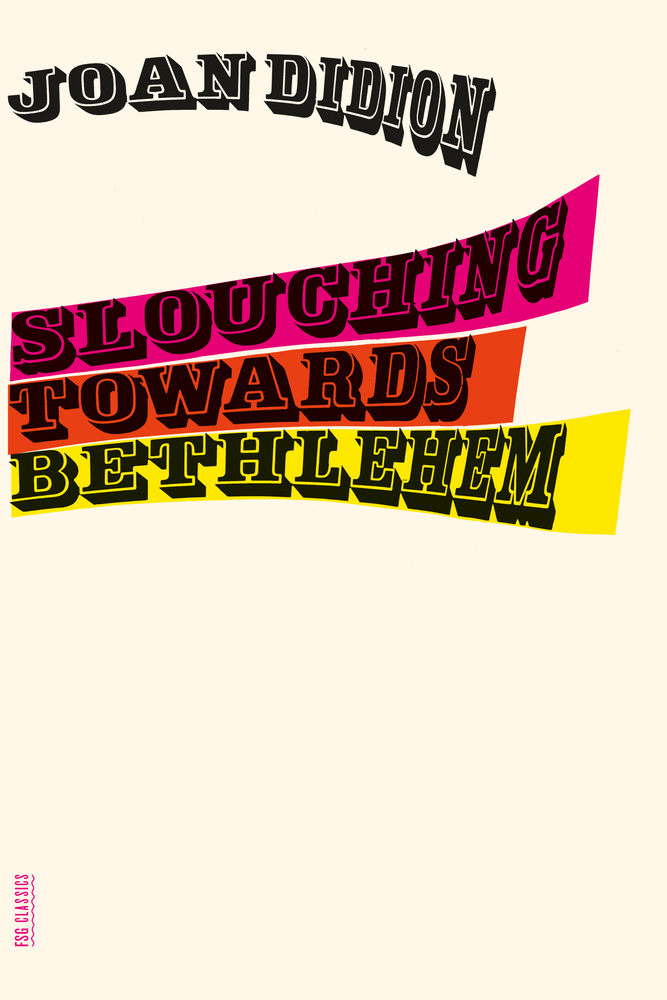
The first nonfiction work by one of the most distinctive prose stylists of our era, Joan Didion's Slouching Towards Bethlehem remains, decades after its first publication, the essential portrait of America—particularly California—in the sixties.It focuses on such subjects as John Wayne and Howard Hughes, growing up a girl in California, ruminating on the nature of good and evil in a Death Valley motel room, and, especially, the essence of San Francisco's Haight-Ashbury, the heart of the counterculture.It contains Didion's famous essay, "Goodbye to All That".

Some of the most rewarding pages in Henry Miller's books concern his self-education as a writer. He tells, as few great writers ever have, how he set his goals, how he discovered the excitement of using words, how the books he read influenced him, and how he learned to draw on his own experience.

"Them" began as a book about different kinds of extremists, but after Jon had got to know some of them - Islamic fundamentalists, neo-Nazis, Ku Klux Klansmen - he found that they had one oddly similar belief: that a tiny, shadowy elite rule the world from a secret room.In "Them," Jon sets out, with the help of the extremists, to locate that room. The journey is as creepy as it is comic and, along the way, Jon is chased by men in dark glasses, unmasked as a Jew in the middle of a Jihad training camp, and witnesses international CEOs and politicians participate in a bizarre pagan ritual in the forests of northern California."Them" is a fascinating and entertaining exploration of extremism, in which Jon learns some alarming things about the looking-glass world of "them" and "us'. Are the extremists on to something? Or has Jon become one of THEM?

In this essay collection, many of which have previously appeared in journals, West, the director of Afro-American studies at Princeton & author of several books, addresses a number of issues of concern to black Americans: the LA riots after the Rodney King verdict; Malcolm X; Clarence Thomas & Anita Hill; & black street life. These topics are all timely yet timeless in that they represent the continuing struggle to include African Americans in mainstream American political, economic & social life without destroying their unique culture. The essays have the feel of a fine sermon, with thought-provoking ideas & new ways of looking at the same old problems. They can be quickly read yet take a long time to digest because of West's unique slant on life. Already well known in scholarly circles, he's increasingly becoming more visible to the general public. This book should make his essays more accessible to a greater number of people.--Library JournalPrefaceIntroduction: Race mattersNihilism in Black America The pitfalls of racial reasoningThe crisis of Black leadership Demystifying the new Black conservatismBeyond affirmative action: equality and identityOn Black-Jewish relations Black sexuality: the taboo subjectMalcolm X and Black rage Epilogue to the Vintage edition

A splendid introduction to the philosophy of existentialism.In Essays in Existentialism, Jean-Paul Sartre (1905-1980), the leading French exponent of existential philosophy, wrote a book that open many doors to the mind. Sartre challenged his readers to think beyond the meaning of their everyday thoughts and beliefs. His essays on nothingness, on the emotions, and on the image—including “The Problem of Nothingness,” “The Role of the Image in Mental Life,” and “Essays in Aesthetics”—contain the essentials of his metaphysical speculations.An introductory essay by Professor Jean Wahl clarifies the origins of Sartre’s humanistic, religious, and aesthetic ideas.Essays in Existentialism challanges and encourages us to alter how we think about the choices that we make: to live “authentically” we must be concious of our freedom to choose and concerned with the effect our choice will have on all others. It is an essential text for any student of philosophy.

Perceptive, funny, and nostalgic, E.B. White's stroll around Manhattan remains the quintessential love letter to the city, written by one of America's foremost literary figures. The New York Times has named Here is New York one of the ten best books ever written about the metropolis, and The New Yorker calls it "the wittiest essay, and one of the most perceptive, ever done on the city.

How do great writers do it? From James M. Cain's hard-nosed observation that "writing a novel is like working on foreign policy. There are problems to be solved. It's not all inspirational," to Joan Didion's account of how she composes a book--"I constantly retype my own sentences. Every day I go back to page one and just retype what I have. It gets me into a rhythm"--The Paris Review has elicited some of the most revelatory and revealing thoughts from the literary masters of our age. For more than half a century, the magazine has spoken with most of our leading novelists, poets, and playwrights, and the interviews themselves have come to be recognized as classic works of literature, an essential and definitive record of the writing life. They have won the coveted George Polk Award and have been a contender for the Pulitzer Prize. Now, Paris Review editor Philip Gourevitch introduces an entirely original selection of sixteen of the most celebrated interviews. Often startling, always engaging, these encounters contain an immense scope of intelligence, personality, experience, and wit from the likes of Elizabeth Bishop, Ernest Hemingway, Truman Capote, Rebecca West, and Billy Wilder. This is an indispensable book for all writers and readers.

From the New York Times bestselling author of Hallelujah Anyway and Help, Thanks, Wow, a spiritual antidote to anxiety and despair in increasingly fraught times.As Anne Lamott knows, the world is a dangerous place. Terrorism and war have become the new normal. Environmental devastation looms even closer. And there are personal demands on her faith as well: getting older; her mother's Alzheimer's; her son's adolescence; and the passing of friends and time.Fortunately for those of us who are anxious about the state of the world, whose parents are also aging and dying, whose children are growing harder to recognize as they become teenagers, Plan B offers hope that we’re not alone in the midst of despair. It shares with us Lamott's ability to comfort and to make us laugh despite the grim realities.Anne Lamott is one of our most beloved writers, and Plan B is a book more necessary now than ever. It is further evidence that, as The New Yorker has written, "Anne Lamott is a cause for celebration."

"Touching the Rock" is a unique exploration of that distant, infinitely strange 'other world' of blindness. John Hull writes of odd sounds and echoes, of people without faces, of a curious new relationship between waking and dreaming, of a changed perception of nature and human personality. He reveals a world in which every human experience - eating and lovemaking, playing with children and buying drinks in the bar - is transformed. 'The incisiveness of Hull's observation, the beauty of his language, make this book poetry; the depth of his reflection turns it into phenomenology or philosophy.' Oliver Sacks, neurologist and bestselling author (1933-2015) 'He lets us see with no trace of self-pity or self-praise how blindness has become for him a genuine acquisition, an unforeseeably rich gift that has made of him what so few of us are: excellent watchers and hearers of the world . . . triumphant in the teeth of ruin.' Reynolds Price, American novelist (1933-2011) "Notes on Blindness," a feature film and virtual reality experience by Peter Middleton & James Spinney based on John's original audio diaries. The project is an Archer's Mark Production in association with Fee Fie Foe Films and 104 Films in co-production with Agat Films & Cie/Ex Nihilo. www.notesonblindness.co.uk

Here in their own words are Frederick Douglass, George Jackson, Chief Joseph, Martin Luther King Jr., Plough Jogger, Sacco and Vanzetti, Patti Smith, Bruce Springsteen, Mark Twain, and Malcolm X, to name just a few of the hundreds of voices that appear in Voices of a People's History of the United States, edited by Howard Zinn and Anthony Arnove.Paralleling the twenty-four chapters of Zinn's A People's History of the United States, Voices of a People’s History is the long-awaited companion volume to the national bestseller. For Voices, Zinn and Arnove have selected testimonies to living history—speeches, letters, poems, songs—left by the people who make history happen but who usually are left out of history books—women, workers, nonwhites. Zinn has written short introductions to the texts, which range in length from letters or poems of less than a page to entire speeches and essays that run several pages. Voices of a People’s History is a symphony of our nation’s original voices, rich in ideas and actions, the embodiment of the power of civil disobedience and dissent wherein lies our nation’s true spirit of defiance and resilience.

James Baldwin was a uniquely prophetic voice in American letters. His brilliant and provocative essays made him the literary voice of the Civil Rights Era, and they continue to speak with powerful urgency to us today, whether in the swirling debate over the Black Lives Matter movement or in the words of Raoul Peck’s documentary “I Am Not Your Negro.” Edited by Nobel laureate Toni Morrison, the Library of America’s Collected Essays is the most comprehensive gathering of Baldwin’s nonfiction ever published.With burning passion and jabbing, epigrammatic wit, Baldwin fearlessly articulated issues of race and democracy and American identity in such famous essays as “The Harlem Ghetto,” “Everybody’s Protest Novel,” “Many Thousands Gone,” and “Stranger in the Village.”Here are the complete texts of his early landmark collections, Notes of a Native Son (1955) and Nobody Knows My Name (1961), which established him as an essential intellectual voice of his time, fusing in unique fashion the personal, the literary, and the political. “One writes,” he stated, “out of one thing only—one’s own experience. Everything depends on how relentlessly one forces from this experience the last drop, sweet or bitter, it can possibly give.” With singular eloquence and unblinking sharpness of observation he lived up to his credo: “I want to be an honest man and a good writer.”The classic The Fire Next Time (1963), perhaps the most influential of his writings, is his most penetrating analysis of America’s racial divide and an impassioned call to “end the racial nightmare…and change the history of the world.” The later volumes No Name in the Street (1972) and The Devil Finds Work (1976) chart his continuing response to the social and political turbulence of his era and include his remarkable works of film criticism. A further 36 essays—nine of them previously uncollected—include some of Baldwin’s earliest published writings, as well as revealing later insights into the language of Shakespeare, the poetry of Langston Hughes, and the music of Earl Hines.

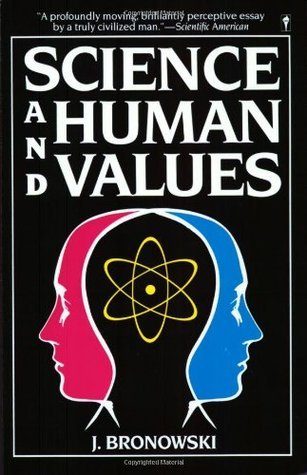
Thought-provoking essays on science as an integral part of the culture of our age from a leader in the scientific humanism movement. "A profoundly moving, brilliantly perceptive essay by a truly civilized man."-- Scientific American

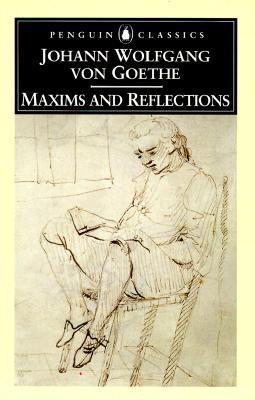
Goethe was probably the last true ‘Renaissance Man’. Although employed as a Privy Councillor at the Duke of Weimar’s court, where he helped oversee major mining, road-building and irrigation projects, he also painted, directed plays, carried out research in anatomy, botany and optics — and still found time to produce masterpieces in every literary genre. His 1,413 maxims and reflections reveal not only some of his deepest thought on art, ethics, literature and natural science, but also his immediate reactions to books, chance encounters or his administrative work. With a freshness and immediacy which vividly conjure up Goethe the man, they make an ideal introduction to one of the greatest of European writers.

Hannah Arendt began her scholarly career with an exploration of Saint Augustine's concept of caritas, or neighborly love, written under the direction of Karl Jaspers and the influence of Martin Heidegger. After her German academic life came to a halt in 1933, Arendt carried her dissertation into exile in France, and years later took the same battered and stained copy to New York. During the late 1950s and early 1960s, as she was completing or reworking her most influential studies of political life, Arendt was simultaneously annotating and revising her dissertation on Augustine, amplifying its argument with terms and concepts she was using in her political works of the same period. The disseration became a bridge over which Arendt traveled back and forth between 1929 Heidelberg and 1960s New York, carrying with her Augustine's question about the possibility of social life in an age of rapid political and moral change.In Love and Saint Augustine, Joanna Vecchiarelli Scott and Judith Chelius Stark make this important early work accessible for the first time. Here is a completely corrected and revised English translation that incorporates Arendt's own substantial revisions and provides additional notes based on letters, contracts, and other documents as well as the recollections of Arendt's friends and colleagues during her later years.

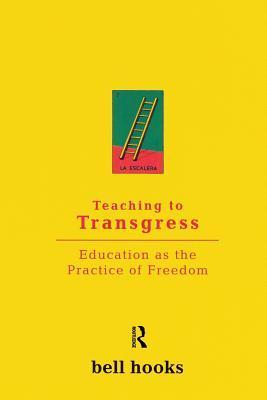
In Teaching to Transgress, bell hooks—writer, teacher, and insurgent black intellectual—writes about a new kind of education, educations as the practice of freedom. Teaching students to "transgress" against racial, sexual, and class boundaries in order to achieve the gift of freedom is, for hooks, the teacher's most important goal.Bell hooks speaks to the heart of education today: how can we rethink teaching practices in the age of multiculturalism? What do we do about teachers who do not want to teach, and students who do not want to learn? How should we deal with racism and sexism in the classroom?Full of passion and politics, Teaching to Transgress combines practical knowledge of the classroom with a deeply felt connection to the world of emotions and feelings. This is the rare book about teachers and students that dares to raise critical questions about eros and rage, grief and reconciliation, and the future of teaching itself."To educate as the practice of freedom," writes bell hooks, "is a way of teaching that any one can learn." Teaching to Transgress is the record of one gifted teacher's struggle to make classrooms work.–from the back of the book

Αυτή η συλλογή αποτελείται από τέσσερα κείμενα που γράφτηκαν το 1936 και το 1937 κι εκδόθηκαν το 1950."Οι γάμοι στην Τιπαζά": Ένας νεαρός, παιδί «ενός λαού γεννημένου από τον ήλιο και τη θάλασσα», τραγουδά τη χαρά του για τη ζωή και την υπερηφάνεια του που μπορεί ν' αγαπά απεριόριστα."Ο άνεμος στην Τζεμιλά": Στον τραγικό διάκοσμο μιας νεκρής πολιτείας που τη σαρώνει ο άνεμος, ο συγγραφέας εκφράζει «τη συνειδητή βεβαιότητά του ενός ανέλπιδου θανάτου». Μα ακόμα κι η φρίκη αυτού του θανάτου δεν θα τον αποσπάσει από τους στοχασμούς του."Το καλοκαίρι στο Αλγέρι": Ψυχολογική περιγραφή μιας πόλης χωρίς παρελθόν, που αγνοεί την έννοια της αρετής, μα που έχει την ηθική της και που οι άνθρωποί της βρίσκουν «καθ’ όλη τη διάρκεια της νιότης τους μια ζωή στα μέτρα της ομορφιάς τους»."Η έρημος": Ο συγγραφέας ανακαλύπτει ότι η συμφωνία που ενώνει έναν άνθρωπο με τη ζωή του, σ' έναν κόσμο που η ομορφιά του θα χαθεί, είναι «η διπλή συνείδηση της επιθυμίας του να διαρκέσει και της μοίρας του να πεθάνει».

A Room Called Remember brings together some of Buechner's finest writings on faith, love, and the power of words in the form of essays, addresses, and sermons. Here Buechner explores autobiography as theology, offers exhilarating reflections on biblical passages, and leads us into the "room called Remember," that "still room within us all where the past lives on as part of the present,...where with patience, with clarity, with quietness of heart, we remember consciously to remember the lives we have lived."

A celebration of Percy Shelley’s assertion that ‘poets are the unacknowledged legislators of the world’, these thirty-plus essays on writers from Oscar Wilde to Salman Rushdie dispel the myth of politics as a stone tied to the neck of literature; Norman Podhoretz’s ‘bloody crossroads’. Instead Hitchens argues that when all parties in the state were agreed on a matter, it was the individual pens that created the space for a true moral argument.

Here is a mini-anthology of poetry and prose for both aficionados and those readers discovering Rainer Maria Rilke for the first time. John J. L. Mood has assembled a collection of Rilke's strongest work, presenting commentary along with the selections. Mood links into an essay passages from letters that show Rilke's profound understanding of men and women and his ardent spirituality, rooted in the senses.Combining passion and sensitivity, the poems on love presented here are often not only sensual but sexual as well. Others pursue perennial themes in his work—death and life, growth and transformation. The book concludes with Rilke's reflections on wisdom and openness to experience, on grasping what is most difficult and turning what is most alien into that which we can most trust.

Martin Buber was one of the most significant religious thinkers of the twentieth century. In this short and remarkable book he presents the essential teachings of Hasidism, the mystical Jewish movement which swept through Eastern Europe in the eighteenth and nineteenth centuries. Told through stories of imagination and spirit, together with Buber's own unique insights, The Way of Man offers us a way of understanding ourselves and our place in a spiritual world. 'There is something', he suggests, 'that can only be found in one place. It is a great treasure, which may be called the fulfilment of existence. The place where this treasure can be found is the place on which one stands.' Challenging us to recognize our own potential and to reach our true goal, The Way of Man is a life-enhancing book.

The narratives in this book are of journeys made in three wildernesses - on a coastal island, in a Western mountain range, and on the Colorado River in the Grand Canyon. The four men portrayed here have different relationships to their environment, and they encounter each other on mountain trails, in forests and rapids, sometimes with reserve, sometimes with friendliness, sometimes fighting hard across a philosophical divide.

After a lifetime of writing and editing prose, Jacques Barzun has set down his view of the best ways to improve one's style. His discussions of diction, syntax, tone, meaning, composition, and revision guide the reader through the technique of making the written word clear and agreeable to read. Exercises, model passages both literary and casual, and hundreds of amusing examples of usage gone wrong show how to choose the right path to self-expression in forceful and distinctive words.

The first English translation of Guérin’s monumental anthology of anarchism, published here in one volume. It details a vast array of unpublished documents, letters, debates, manifestos, reports, impassioned calls-to-arms and reasoned analysis; the history, organization and practice of the movement—its theorists, advocates and activists; the great names and the obscure, towering legends and unsung heroes.This definitive anthology portrays anarchism as a sophisticated ideology whose nuances and complexities highlight the natural desire for freedom in all of us. The classical texts will re-establish anarchism as both an intellectual and practical force to be reckoned with. Includes writings by Emma Goldman, Kropotkin, Berkman, Bakunin, Proudhon, and Malatesta.Daniel Guérin was the author of Anarchism: From Theory to Practice.In Oakland, California on March 24, 2015 a fire destroyed the AK Press warehouse along with several other businesses. Please consider visiting the AK Press website to learn more about the fundraiser to help them and their neighbors.

In this fascinating document, one of Japan's best known-and controversial-writers created what might be termed a new literary form. It is new because it combines elements of many existing types of writing, yet in the end fits into none of them.At one level, it may be read as an account of how a puny, bookish boy discovered the importance of his own physical being; the "sun and steel" of the title are themselves symbols respectively of the cult of the open air and the weights used in bodybuilding. At another level, it is a discussion by a major novelist of the relation between action and art, and his own highly polished art in particular. More personally, it is an account of one individual's search for identity and self-integration. Or again, the work could be seen as a demonstration of how an intensely individual preoccupation can be developed into a profound philosophy of life.All these elements are woven together by Mishima's complex yet polished and supple style. The confession and the self-analysis, the philosophy and the poetry combine in the end to create something that is in itself perfect and self-sufficient. It is a piece of literature that is as carefully fashioned as Mishima's novels, and at the same time provides an indispensable key to the understanding of them as art.The road Mishima took to salvation is a highly personal one. Yet here, ultimately, one detects the unmistakable tones of a self transcending the particular and attaining to a poetic vision of the universal. The book is therefore a moving document, and is highly significant as a pointer to the future development of one of the most interesting novelists of modern times.

Before becoming the basis for two motion pictures, A Message to Garcia was written as an inspirational essay by Elbert Hubbard. This popular work is about a soldier who takes the initiative to accomplish a daunting and difficult task without questions or objections and graciously accomplishes the task. Often used in business and life as a motivational example to readers of applying a positive attitude towards achieving a successful life.

Eve Babitz captured the voluptuous quality of L.A. in the1960s in a wildly original, totally unique voice. These stories are time capsule gems, as poignant and startling today as they were when published in the early 1970s. Eve Babitz is not well known today, but she should be. Her first hand experiences in the L.A. cultural scene, translated into haunting fiction, are an unforgettable glimpse at a lost world and a magical time.

Reissued in a handsome A List edition, the largest collection of critical prose to date from world renowned author and poet Margaret Atwood, featuring an introduction by Lennie Goodings. Originally published in 1982, Second Words brings together fifty of Margaret Atwood’s finest essays and reviews spanning two decades, beginning in 1962, with an introduction and commentary by the author. With her incomparable wit and originality, Atwood discusses the process of writing and the literary life, with insightful looks at the work of such figures as Erica Jong, E. L. Doctorow, Northrop Frye, Roch Carrier, Marie-Claire Blais, Gwendolyn MacEwen, Marge Piercy, Adrienne Rich, Sylvia Plath, and many more. In several pieces, we see the development of her ideas on Canadian identity and the American dream, as well as her controversial attitudes toward feminism, sexism, and the strange mythologies imposed on men and women in contemporary North America. Second Words remains the largest collection of Atwood’s critical prose to date.

To these seven paradoxical tales of neurological disorder and creativity, Oliver Sacks brings the profound compassion and ceaseless curiosity that made "Awakenings" and "The Man Who Mistook His Wife for a Hat" international bestsellers. He transports us into the uncanny worlds of his subjects, including an artist who loses his ability to see (or even imagine) color; a surgeon who performs delicate operations in spite of the compulsive tics and outbursts of Tourette's syndrome; and an autistic professor who holds a Ph.D. in animal science but is so bewildered by the complexity of human emotion that she feels "like an anthropologist on Mars."Through these extraordinary people, Sacks explores what it is to feel, to sense, to remember - to be, ultimately, a coherent self in the world.

Widely recognized as the finest definition of existentialist philosophy ever written, this book introduced existentialism to America in 1958. Barrett speaks eloquently and directly to concerns of the 1990 a period when the irrational and the absurd are no better integrated than before and when humankind is in even greater danger of destroying its existence without ever understanding the meaning of its existence.Irrational Man begins by discussing the roots of existentialism in the art and thinking of Augustine, Aquinas, Pascal, Baudelaire, Blake, Dostoevski, Tolstoy, Hemingway, Picasso, Joyce, and Beckett. The heart of the book explains the views of the foremost existentialists—Kierkegaard, Nietzsche, Heidegger, and Sartre. The result is a marvelously lucid definition of existentialism and a brilliant interpretation of its impact.

Living at the limits of our ordinary perception, mosses are a common but largely unnoticed element of the natural world. Gathering Moss is a beautifully written mix of science and personal reflection that invites readers to explore and learn from the elegantly simple lives of mosses. Robin Wall Kimmerer's book is not an identification guide, nor is it a scientific treatise. Rather, it is a series of linked personal essays that will lead general readers and scientists alike to an understanding of how mosses live and how their lives are intertwined with the lives of countless other beings, from salmon and hummingbirds to redwoods and rednecks. Kimmerer clearly and artfully explains the biology of mosses, while at the same time reflecting on what these fascinating organisms have to teach us.Drawing on her diverse experiences as a scientist, mother, teacher, and writer of Native American heritage, Kimmerer explains the stories of mosses in scientific terms as well as in the framework of indigenous ways of knowing. In her book, the natural history and cultural relationships of mosses become a powerful metaphor for ways of living in the world.Gathering Moss will appeal to a wide range of readers, from bryologists to those interested in natural history and the environment, Native Americans, and contemporary nature and science writing.