
Rebecca Solnit
Writer, historian, and activist Rebecca Solnit is the author of more than twenty books on feminism, western and indigenous history, popular power, social change and insurrection, wandering and walking, hope and disaster, including Call Them By Their True Names (Winner of the 2018 Kirkus Prize for Nonfiction), Cinderella Liberator, Men Explain Things to Me, The Mother of All Questions, and Hope in the Dark, and co-creator of the City of Women map, all published by Haymarket Books; a trilogy of atlases of American cities, The Faraway Nearby, A Paradise Built in Hell: The Extraordinary Communities that Arise in Disaster, A Field Guide to Getting Lost, Wanderlust: A History of Walking, and River of Shadows: Eadweard Muybridge and the Technological Wild West (for which she received a Guggenheim, the National Book Critics Circle Award in criticism, and the Lannan Literary Award). Her forthcoming memoir, Recollections of My Nonexistence, is scheduled to release in March, 2020. A product of the California public education system from kindergarten to graduate school, she is a columnist at the Guardian and a regular contributor to Literary Hub.
29 Books Written
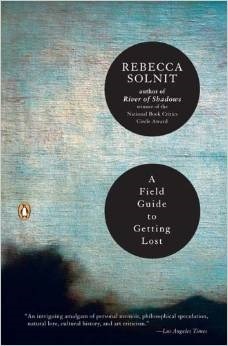
Whether she is contemplating the history of walking as a cultural and political experience over the past two hundred years (Wanderlust), or using the life of photographer Eadweard Muybridge as a lens to discuss the transformations of space and time in late nineteenth-century America (River of Shadows), Rebecca Solnit has emerged as an inventive and original writer whose mind is daring in the connections it makes. A Field Guide to Getting Lost draws on emblematic moments and relationships in Solnit's own life to explore the issues of wandering, being lost, and the uses of the unknown. The result is a distinctive, stimulating, and poignant voyage of discovery.

Hope in the Dark: Untold Histories, Wild Possibilities
by Rebecca Solnit
Rating: 4.0 ⭐
• 4 recommendations ❤️
A book as powerful and influential as Rebecca Solnit's Men Explain Things to Me, her Hope in the Dark was written to counter the despair of radicals at a moment when they were focused on their losses and had turned their back to the victories behind them—and the unimaginable changes soon to come. In it, she makes a radical case for hope as a commitment to act in a world whose future remains uncertain and unknowable. Drawing on her decades of activism and a wide reading of environmental, cultural, and political history, Solnit argued that radicals have a long, neglected history of transformative victories, that the positive consequences of our acts are not always immediately seen, directly knowable, or even measurable, and that pessimism and despair rest on an unwarranted confidence about what is going to happen next. Now, with a moving new introduction explaining how the book came about and a new afterword that helps teach us how to hope and act in our unnerving world, she brings a new illumination to the darkness of 2016 in an unforgettable new edition of this classic book.

A Paradise Built in Hell: The Extraordinary Communities That Arise in Disaster
by Rebecca Solnit
Rating: 4.1 ⭐
• 2 recommendations ❤️
"The freshest, deepest, most optimistic account of human nature I've come across in years."-Bill McKibbenThe most startling thing about disasters, according to award-winning author Rebecca Solnit, is not merely that so many people rise to the occasion, but that they do so with joy. That joy reveals an ordinarily unmet yearning for community, purposefulness, and meaningful work that disaster often provides. A Paradise Built in Hell is an investigation of the moments of altruism, resourcefulness, and generosity that arise amid disaster's grief and disruption and considers their implications for everyday life. It points to a new vision of what society could become-one that is less authoritarian and fearful, more collaborative and local.
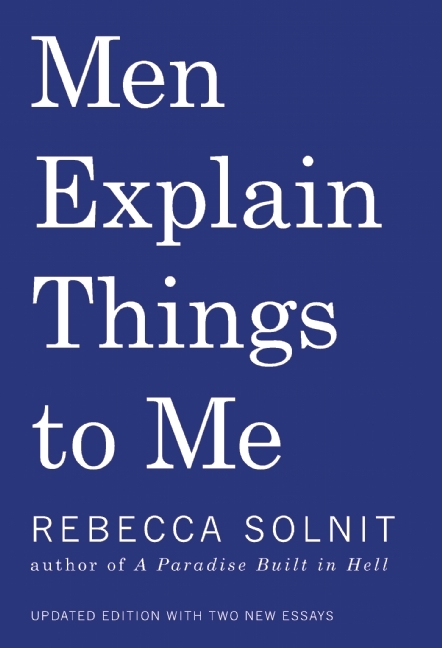
In her comic, scathing essay, "Men Explain Things to Me," Rebecca Solnit took on what often goes wrong in conversations between men and women. She wrote about men who wrongly assume they know things and wrongly assume women don't, about why this arises, and how this aspect of the gender wars works, airing some of her own hilariously awful encounters.She ends on a serious note--because the ultimate problem is the silencing of women who have something to say, including those saying things like, "He's trying to kill me!"This updated edition of the book feature that now-classic essay as well as Solnit's recent essay on the remarkable feminist conversation that arose in the wake of the 2014 Isla Vista killings.
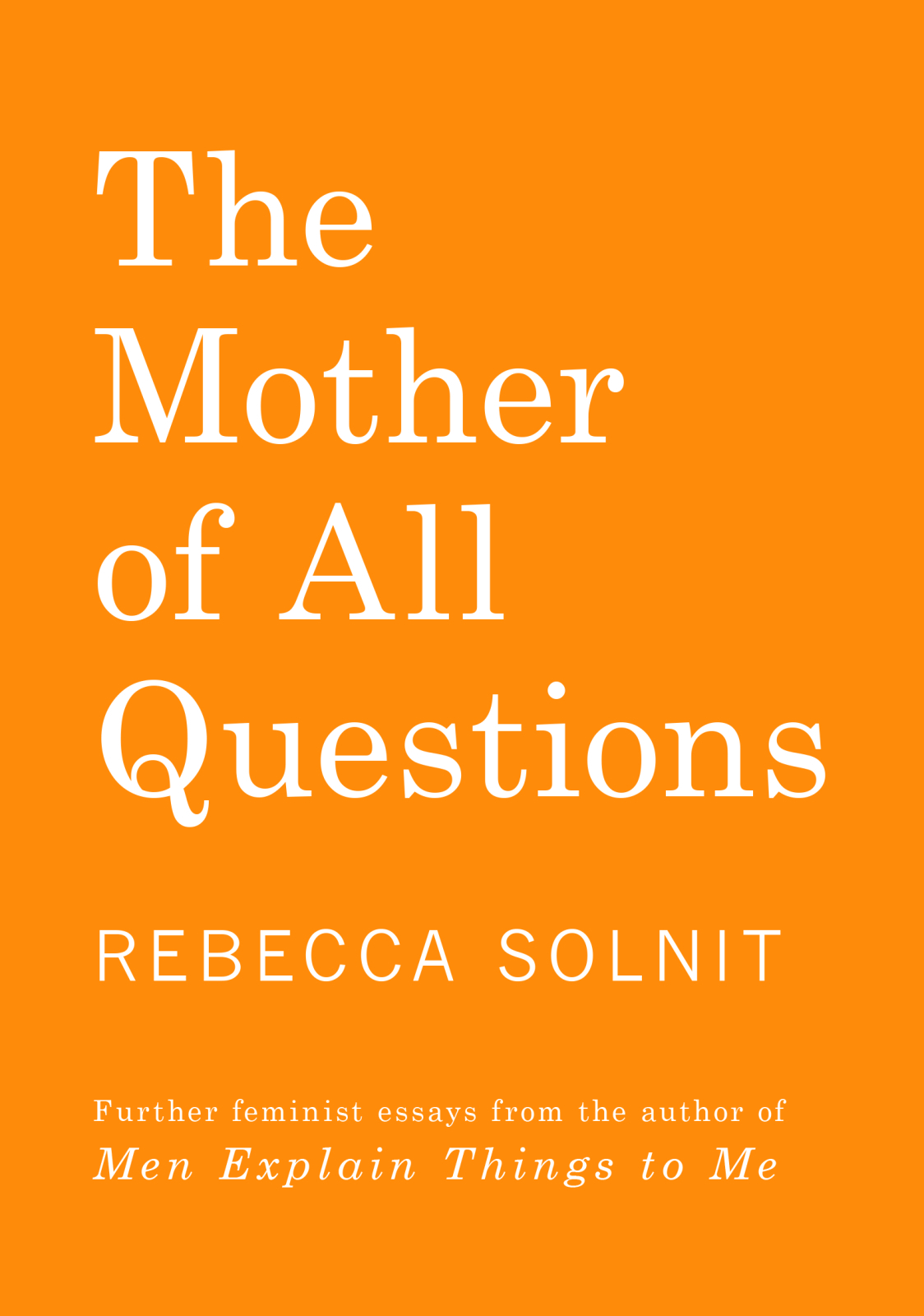
In this follow-up to Men Explain Things to Me, Rebecca Solnit offers commentary on women who refuse to be silenced, misogynistic violence, the fragile masculinity of the literary canon, the gender binary, the recent history of rape jokes, and much more.
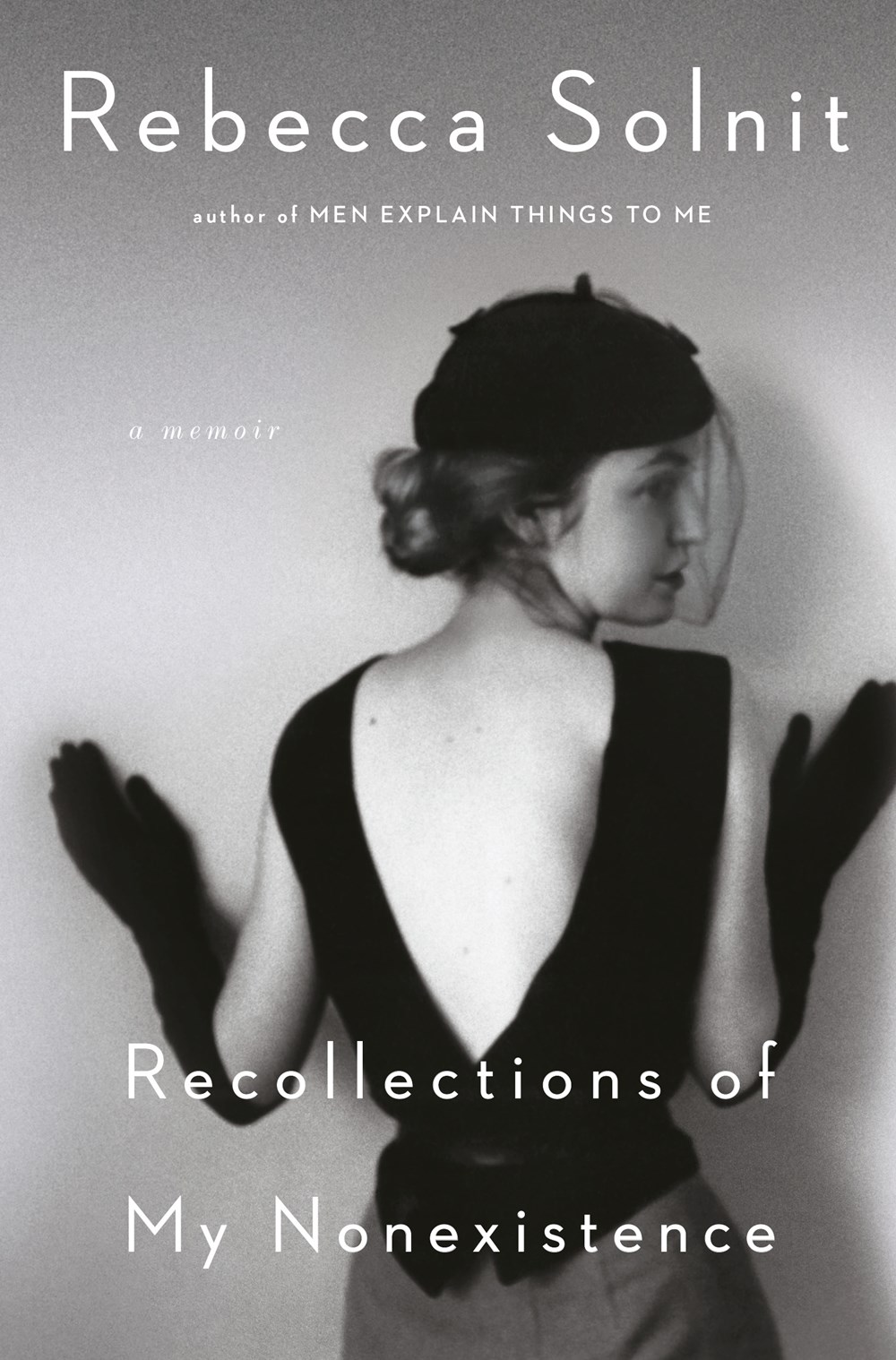
An electric portrait of the artist as a young woman that asks how a writer finds her voice in a society that prefers women to be silentIn Recollections of My Nonexistence, Rebecca Solnit describes her formation as a writer and as a feminist in 1980s San Francisco, in an atmosphere of gender violence on the street and throughout society and the exclusion of women from cultural arenas. She tells of being poor, hopeful, and adrift in the city that became her great teacher; of the small apartment that, when she was nineteen, became the home in which she transformed herself; of how punk rock gave form and voice to her own fury and explosive energy.Solnit recounts how she came to recognize the epidemic of violence against women around her, the street harassment that unsettled her, the trauma that changed her, and the authority figures who routinely disdained and disbelieved girls and women, including her. Looking back, she sees all these as consequences of the voicelessness that was and still is the ordinary condition of women, and how she contended with that while becoming a writer and a public voice for women’s rights.She explores the forces that liberated her as a person and as a writer—books themselves, the gay men around her who offered other visions of what gender, family, and joy could be, and her eventual arrival in the spacious landscapes and overlooked conflicts of the American West. These influences taught her how to write in the way she has ever since, and gave her a voice that has resonated with and empowered many others.

In this new book by the author of A Paradise Built in Hell, Rebecca Solnit explores the ways we make our lives out of stories, and how we are connected by empathy, by narrative, by imagination. In the course of unpacking some of her own stories—of her mother and her decline from memory loss, of a trip to Iceland, of an illness—Solnit revisits fairytales and entertains other stories: about arctic explorers, Che Guevara among the leper colonies, and Mary Shelley’s Dr. Frankenstein, about warmth and coldness, pain and kindness, decay and transformation, making art and making self. Woven together, these stories create a map which charts the boundaries and territories of storytelling, reframing who each of us is and how we might tell our story.

This volume provides a history of walking, exploring the relationship between thinking and walking and between walking and culture. The author argues for the preservation of the time and space in which to walk in an ever more car-dependent and accelerated world.

"In the year 1936 a writer planted roses." So begins Rebecca Solnit's new book, a reflection on George Orwell's passionate gardening and the way that his involvement with plants, particularly flowers, and the natural world illuminates his other commitments as a writer and antifascist, and the intertwined politics of nature and power. Sparked by her unexpected encounter with the surviving roses he planted in 1936, Solnit's account of this understudied aspect of Orwell's life journeys though his writing and his actions—from going deep into the coal mines of England, fighting in the Spanish Civil War, critiquing Stalin when much of the international left still supported him (and then critiquing that left), to his analysis of the relationship between lies and authoritarianism. Through Solnit’s celebrated ability to draw unexpected connections, readers encounter the photographer Tina Modotti’s roses and her Stalinism, Stalin’s obsession with forcing lemons to grow in impossibly cold conditions, Orwell’s slave-owning ancestors in Jamaica, Jamaica Kincaid’s critique of colonialism and imperialism in the flower garden, and the brutal rose industry in Colombia that supplies the American market. The book draws to a close with a rereading of Nineteen Eighty-Four that completes her portrait of a more hopeful Orwell, as well as a reflection on pleasure, beauty, and joy as acts of resistance.
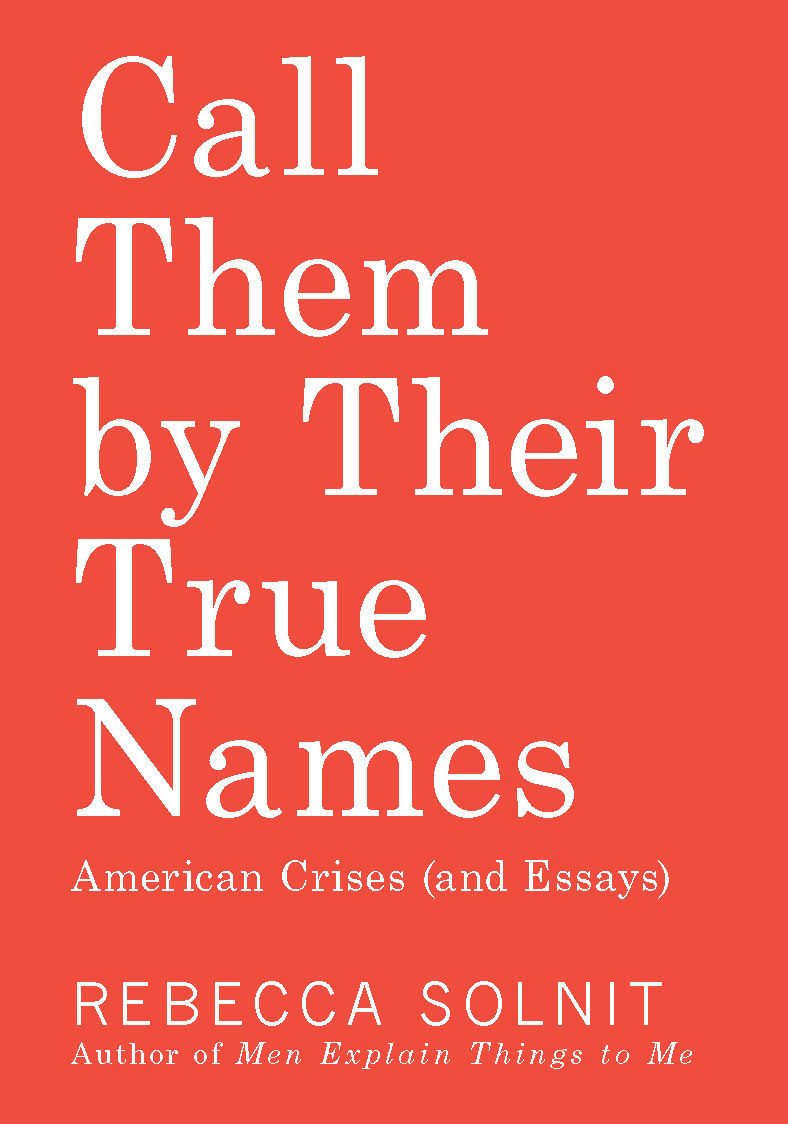
Rebecca Solnit is the author of more than twenty books including the international bestseller Men Explain Things to Me. Called “the voice of the resistance” by the New York Times, she has emerged as an essential guide to our times, through incisive commentary on feminism, violence, ecology, hope, and everything in between.In this powerful and wide-ranging collection of essays, Solnit turns her attention to the war at home. This is a war, she says, “with so many casualties that we should call it by its true name, this war with so many dead by police, by violent ex-husbands and partners and lovers, by people pursuing power and profit at the point of a gun or just shooting first and figuring out who they hit later.” To get to the root of these American crises, she contends that “to acknowledge this state of war is to admit the need for peace,” countering the despair of our age with a dose of solidarity, creativity, and hope.The loneliness of Donald Trump --Coda (July 16, 2018) --Milestones in misogyny --Twenty million missing storytellers --Ideology of isolation --Naïve cynicism --Facing the furies --Preaching to the choir --Climate change is violence --Blood on the foundation --Death by gentrification: the killing of Alex Nieto and the savaging of San Francisco --No way in, no way out --Bird in a cage: visiting Jarvis Masters on death row --Coda: case dismissed --The monument wars --Eight million ways to belong --The light from Standing Rock --Break the story --Hope in grief --In praise of indirect consequences
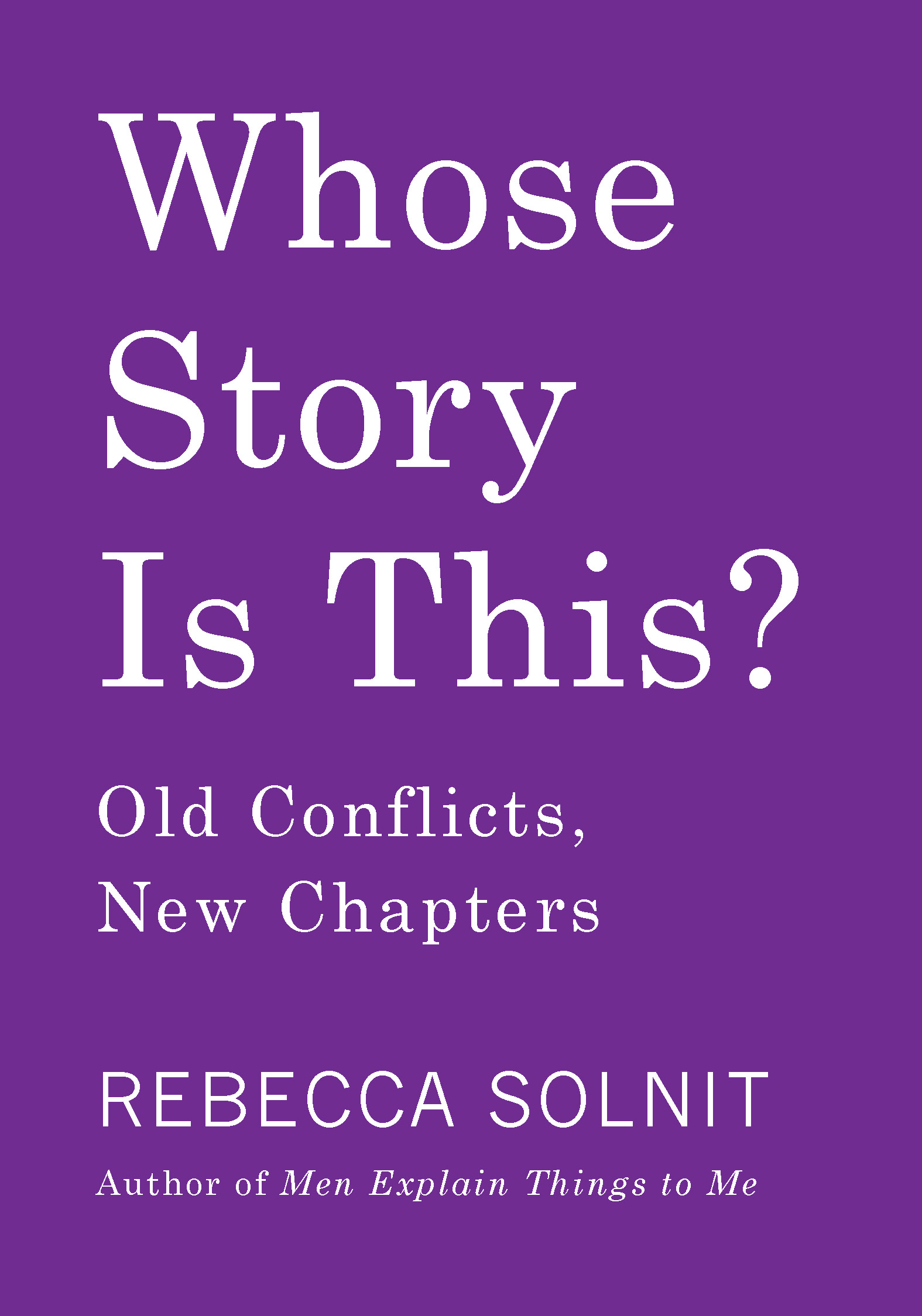
New feminist essays for the #MeToo era from the international best-selling author of Men Explain Things to Me.Who gets to shape the narrative of our times? The current moment is a battle royale over that foundational power, one in which women, people of color, non-straight people are telling other versions, and white people and men and particularly white men are trying to hang onto the old versions and their own centrality. In Whose Story Is This? Rebecca Solnit appraises what's emerging and why it matters and what the obstacles are.

In her debut children’s book, Rebecca Solnit reimagines a classic fairytale with a fresh, feminist Cinderella and new plot twists that will inspire young readers to change the world, featuring gorgeous silhouettes from Arthur Rackham on each page. In this modern twist on the classic story, Cinderella, who would rather just be Ella, meets her fairy godmother, goes to a ball, and makes friends with a prince. But that is where the familiar story ends. Instead of waiting to be rescued, Cinderella learns that she can save herself and those around her by being true to herself and standing up for what she believes.

The world as we know it today began in California in the late 1800s, and Eadweard Muybridge had a lot to do with it. This striking assertion is at the heart of Rebecca Solnit’s new book, which weaves together biography, history, and fascinating insights into art and technology to create a boldly original portrait of America on the threshold of modernity. The story of Muybridge—who in 1872 succeeded in capturing high-speed motion photographically—becomes a lens for a larger story about the acceleration and industrialization of everyday life. Solnit shows how the peculiar freedoms and opportunities of post–Civil War California led directly to the two industries—Hollywood and Silicon Valley—that have most powerfully defined contemporary society.

What makes a place? Infinite City, Rebecca Solnit’s brilliant reinvention of the traditional atlas, searches out the answer by examining the many layers of meaning in one place, the San Francisco Bay Area. Aided by artists, writers, cartographers, and twenty-two gorgeous color maps, each of which illuminates the city and its surroundings as experienced by different inhabitants, Solnit takes us on a tour that will forever change the way we think about place. She explores the area thematically—connecting, for example, Eadweard Muybridge’s foundation of motion-picture technology with Alfred Hitchcock’s filming of Vertigo. Across an urban grid of just seven by seven miles, she finds seemingly unlimited landmarks and treasures—butterfly habitats, queer sites, murders, World War II shipyards, blues clubs, Zen Buddhist centers. She roams the political terrain, both progressive and conservative, and details the cultural geographies of the Mission District, the culture wars of the Fillmore, the South of Market world being devoured by redevelopment, and much, much more. Breathtakingly original, this atlas of the imagination invites us to search out the layers of San Francisco that carry meaning for us—or to discover our own infinite city, be it Cleveland, Toulouse, or Shanghai.CONTRIBUTORS:Cartographers: Ben Pease and Shizue SeigelDesigner: Lia TjandraArtists: Sandow Birk, Mona Caron, Jaime Cortez, Hugh D'Andrade, Robert Dawson, Paz de la Calzada, Jim Herrington, Ira Nowinski, Alison Pebworth, Michael Rauner, Gent Sturgeon, Sunaura TaylorWriters and researchers: Summer Brenner, Adriana Camarena, Chris Carlsson, Lisa Conrad, Guillermo Gómez-Peña, Joshua Jelly-Schapiro, Paul La Farge, Genine Lentine, Stella Lochman, Aaron Shurin, Heather Smith, Richard WalkerAdditional cartography: Darin Jensen; Robin Grossinger and Ruth Askevold, San Francisco Estuary Institute

This book's title, No Straight Road Takes You There, is an evocation and a declaration. Highways tend to be built across the easy routes and flat places, or the landscape is cleared away - logged, graded, levelled, tunnelled through - or the roadway lifted above it to streamline the journey. But to stick to these roads is to miss what else is out there. In her writing and activism, Rebecca Solnit has sought the back roads and the pathless places in order to celebrate indirect and unpredictable consequences, which, she argues are key to understanding power and the possibilities of change.Picking up where Hope in the Dark left off, collected together here are Solnit's best recent essays about the climate crisis, as well as her broader reflections on women's rights, the fight for democracy, the trends in masculinity, and the rise of the far right in the West. Incantatory and poetic, positive and engaging, these essays argue for the long-term view and the power of collective action, making a case for seeding change wherever possible, and offering us all a path out of the wilderness.

Like the bestselling Infinite City: A San Francisco Atlas, this book is a brilliant reinvention of the traditional atlas, one that provides a vivid, complex look at the multi-faceted nature of New Orleans, a city replete with contradictions. More than twenty essays assemble a chorus of vibrant voices, including geographers, scholars of sugar and bananas, the city's remarkable musicians, prison activists, environmentalists, Arab and Native voices, and local experts, as well as the coauthors' compelling contributions. Featuring 22 full-color two-page-spread maps, Unfathomable City plumbs the depths of this major tourist destination, pivotal scene of American history and culture and, most recently, site of monumental disasters such as Hurricane Katrina and the BP oil spill.The innovative maps' precision and specificity shift our notions of the Mississippi, the Caribbean, Mardi Gras, jazz, soils and trees, generational roots, and many other subjects, and expand our ideas of how any city is imagined and experienced. Together with the inspired texts, they show New Orleans as both an imperiled city--by erosion, crime, corruption, and sea level rise--and an ageless city that lives in music as a form of cultural resistance. Compact, lively, and completely original, Unfathomable City takes readers on a tour that will forever change the way they think about place.Read an excerpt here: Unfathomable City: A New Orleans Atlas by Rebecca Solnit and Rebecca Snedeker by University of California PressListen to an interview with the authors here:http://www.ucpress.edu/blog/16097/new...

The incomparable Rebecca Solnit, author of more than a dozen acclaimed books of nonfiction, brings the same dazzling writing to the twenty-nine essays in The Encyclopedia of Trouble and Spaciousness . As the title suggests, the territory of Solnit’s concerns is vast, and in her signature alchemical style she combines commentary on history, justice, war and peace, and explorations of place, art, and community, all while writing with the lyricism of a poet to achieve incandescence and wisdom. Gathered here are celebrated iconic essays along with little-known pieces that create a powerful survey of the world we live in. In its encyclopedic reach and its generous compassion, Solnit’s collection charts a way through the thickets of our complex social and political worlds. Like the women who've pioneered before her—Sontag, Didion, and Dillard—her essays are a beacon.

In 1851, a war began in what would become Yosemite National Park, a war against the indigenous inhabitants that has yet to come to a real conclusion. A century later—1951—and about a hundred and fifty miles away, another war began when the U. S. government started setting off nuclear bombs at the Nevada Test Site, in what was called a nuclear testing program but functioned as a war against the land and people of the Great Basin. Savage Dreams is an exploration of these two landscapes. Together they serve as our national Eden and Armageddon and offer up a lot of the history of the west, not only in terms of Indian and environmental wars, but in terms of the relationship between culture—the generation of beliefs and views—and its implementation as politics.

In this acclaimed exploration of the culture of others, Rebecca Solnit travels through Ireland, the land of her long-forgotten maternal ancestors. A Book of Migrations portrays in microcosm a history made of great human tides of invasion, colonization, emigration, nomadism and tourism. Enriched by cross-cultural comparisons with the history of the American West, A Book of Migrations carves a new route through Ireland’s history, literature and landscape.

Rebecca Solnit has made a vocation of journeying into difficult territory and reporting back, as an environmentalist, antiglobalization activist, and public intellectual. Storming the Gates of Paradise , an anthology of her essential essays from the past ten years, takes the reader from the Pyrenees to the U.S.--Mexican border, from San Francisco to London, from open sky to the deepest mines, and from the antislavery struggles of two hundred years ago to today’s street protests. The nearly forty essays collected here comprise a unique guidebook to the American landscape after the millennium—not just the deserts, skies, gardens, and wilderness areas that have long made up Solnit’s subject matter, but the social landscape of democracy and repression, of borders, ruins, and protests. She ventures into territories as dark as prison and as sublime as a broad vista, revealing beauty in the harshest landscape and political struggle in the most apparently serene view. Her introduction sets the tone and the book’s overarching themes as she describes Thoreau, leaving the jail cell where he had been confined for refusing to pay war taxes and proceeding directly to his favorite huckleberry patch. In this way she links pleasure to politics, brilliantly demonstrating that the path to paradise has often run through prison.These startling insights on current affairs, politics, culture, and history, always expressed in Solnit’s pellucid and graceful prose, constantly revise our views of the otherwise ordinary and familiar. Illustrated throughout, Storming the Gates of Paradise represents recent developments in Solnit’s thinking and offers the reader a panoramic world view enriched by her characteristically provocative, inspiring, and hopeful observations.
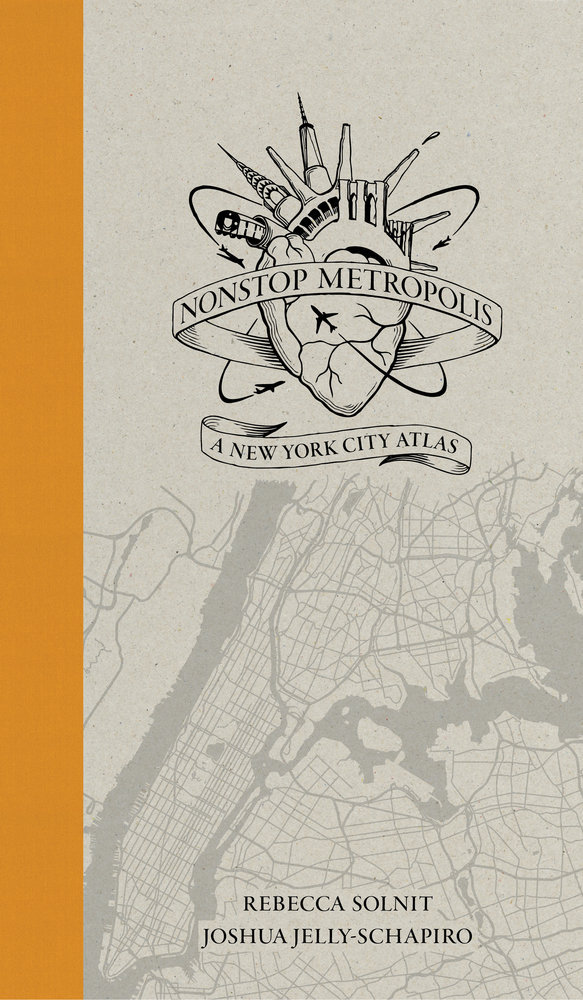
Winner of the 2017 Brendan Gill Prize from the Municipal Arts Society of New York"The maps themselves are things of beauty . . . A document of its time, of our time." —Sadie Stein, New York Times "One is invited to fathom the many New Yorks hidden from history’s eye." —Maria Popova, Brain PickingsNonstop Metropolis, the culminating volume in a trilogy of atlases, conveys innumerable unbound experiences of New York City through twenty-six imaginative maps and informative essays. Bringing together the insights of dozens of experts—from linguists to music historians, ethnographers, urbanists, and environmental journalists—amplified by cartographers, artists, and photographers, it explores all five boroughs of New York City and parts of nearby New Jersey. We are invited to travel through Manhattan’s playgrounds, from polyglot Queens to many-faceted Brooklyn, and from the resilient Bronx to the mystical kung fu hip-hop mecca of Staten Island. The contributors to this exquisitely designed and gorgeously illustrated volume celebrate New York City’s unique vitality, its incubation of the avant-garde, and its literary history, but they also critique its racial and economic inequality, environmental impact, and erasure of its past. Nonstop Metropolis allows us to excavate New York’s buried layers, to scrutinize its political heft, and to discover the unexpected in one of the most iconic cities in the world. It is both a challenge and homage to how New Yorkers think of their city, and how the world sees this capital of capitalism, culture, immigration, and more. Contributors: Sheerly Avni, Gaiutra Bahadur, Marshall Berman, Joe Boyd, Will Butler, Garnette Cadogan, Thomas J. Campanella, Daniel Aldana Cohen, Teju Cole, Joel Dinerstein, Paul La Farge, Francisco Goldman, Margo Jefferson, Lucy R. Lippard, Barry Lopez, Valeria Luiselli, Suketu Mehta, Emily Raboteau, Molly Roy, Sharifa Rhodes-Pitts, Luc Sante, Heather Smith, Jonathan Tarleton, Astra Taylor, Alexandra T. Vazquez, Christina Zanfagna Interviews with: Valerie Capers, Peter Coyote, Grandmaster Caz, Grand Wizzard Theodore, Melle Mel, RZA

Hollow City: The Siege of San Francisco and the Crisis of American Urbanism
by Rebecca Solnit
Rating: 3.8 ⭐
Reporting from the front lines of gentrification in San Francisco, Rebecca Solnit and Susan Schwartzenberg sound a warning bell to all urban residents. Wealth is just as capable of ravaging cities as poverty.

To Rebecca Solnit, the word "landscape" implies not only literal places, but also the ground on which we invent our lives and confront our innermost troubles and desires. The organic world, to Solnit, gives rise to the social, political, and philosophical landscapes we inhabit. As Eve Said to the Serpent skillfully weaves the natural world with the realm of art--its history, techniques, and criticism--to offer a remarkable compendium of Solnit's research and ruminations.The nineteen pieces in this book range from the intellectual formality of traditional art criticism to highly personal, lyrical meditations. All are distinguished by Solnit's vivid, original style that blends imaginative associations with penetrating insights. These thoughts produce quirky, intelligent, and wryly humorous content as Solnit ranges across disciplines to explore nuclear test sites, the meaning of national borders, deserts, clouds, and caves--as well as ideas of the feminine and the sublime as they relate to our physical and psychological terrains.Sixty images throughout the book display the work of the contemporary artists under discussion, including landscape photographers, performance artists, sculptors, and installation artists. Alongside her text, Solnit's gallery of images provides a vivid excursion into new ways of perceiving landscape, bodies, and art. Animals and the human body appear together with space and terra firma as Solnit reconfigures the blurred lines that define nature.

Expanding, transforming, and subverting the magical tale of Sleeping Beauty, Rebecca Solnit revitalizes this classic story with a new perspective: Maya, the sister who stayed awake.Waking Beauty tells of Maya’s great adventures, the inspiring, extraordinary artist and changemaker who “found [beauty] everywhere and gave it to everyone”; Atlas, who guarded the golden apples and was definitely not a prince; and Ida, who slept for a century and woke up in a very different world. The perfect follow-up to Cinderella Liberator, Solnit seamlessly weaves these compelling narratives, crafting a story that is as delightful and enchanting as it is empowering.

Inspired by medieval bestiaries, in which animals were presented in a fashion that favored the fanciful over the factual, Solnit and Caron have partnered to create their own book of magical beasts one in which the truth is stranger than fiction. Deeply aware of how much animal lore feeds the language of human imagination, Solnit uses her unique literary prowess to describe native California animals in such a way that they become as thrilling as any exotic creature of yore. From the bluebelly lizard and the California condor to the elephant seal and tule elk, this wondrous cast of characters reveal the depth of their magic. Enriched by Caron s illustrations, which keenly explore the play between human and animal realms, this collection will feed your dreams. This book was created in partnership with the Oakland Zoo which has just unveiled plans to create an ambitious native California animal exhibit where local species will be rehabilitated and cared for.

“...A fascinating account of what really happened in Seattle.”— Naomi Klein “This book is a great read for any activist.”— The Progressive “If you think it's time we shut down the empire at the heart of the WTO with tactics so effectively used to weaken the WTO, pick up a copy of The Battle of the Story of the Battle of Seattle .”— David Swanson From dawn to dusk on November 30, 1999, tens of thousands of people shut down the World Trade Organization meeting, facing cops firing tear gas and rubber bullets, the National Guard, and the suspension of civil liberties. An unexpected history was launched from the streets of Seattle, one in which popular power would matter as much as corporate power, in which economics assumed center stage, and people began envisioning who else they could be and what else their economies and societies might look like.The Battle of the Story of the Battle of Seattle explores how that history itself has become a battleground and how our perception of it shapes today's movements against corporate capitalism and for a better world. David Solnit recounts activist efforts to intervene in the Hollywood star-studded movie, Battle in Seattle , and pulls lessons from a decade ago for today. Rebecca Solnit writes of challenging mainstream misrepresentation of the Seattle protests and reflects on official history and popular power. Core organizer Chris Dixon tells the real story of what happened during those five days in the streets of Seattle.Profusely illustrated, with a reprint of the original 1999 Direct Action Network's “Call to Action” broadsheet—including key articles by Stephanie Guilloud, Chris Borte, and Chris Dixon—and a powerful introduction from Anuradha Mittal. David Solnit lived and organized in Seattle in 1999 with the Direct Action Network, which the Art and Revolution Collective he was part of co-initiated. He has been a mass direct action organizer since the early '80s, and in the '90s became a puppeteer and arts organizer. He is the editor of Globalize How to Uproot the System and Build a Better World and co-author, with Aimee Allison, of Army of Strategies to Counter Military Recruitment, End War and Build a Better World. He currently works as a carpenter in Oakland, California and organizes with Courage to Resist, supporting GI resisters, and with the Mobilization for Climate Justice West.Rebecca Solnit is an activist, historian and writer who lives in San Francisco. Her twelfth book, A Paradise Built in The Extraordinary Communities that Arise in Disaster , came out this fall. Her previous books include Storming the Gates of Paradise ; A Field Guide to Getting Lost ; Hope in the Untold Histories, Wild Possibilities ; A History of Walking ; As Eve Said to the On Landscape, Gender and Art; and River of Shadows : E adweard Muybridge and the Technological Wild West (for which she received a Guggenheim, the National Book Critics Circle Award in criticism, and the Lannan Literary Award). A contributing editor to Harper's, she frequently writes for the political site Tomdispatch.com. She has worked on antinuclear, antiwar, environmental, indigenous land rights and human rights campaigns and movements over the years.

ON THE CORROSIVE PRIVILEGE OF THE MOST MOCKED MAN IN THE WORLD, an article on lithub, read by the author on slate.

Secret Exhibition chronicles a vital California art movement, focusing on six artists — Wallace Berman, Jess, Bruce Conner, Jay DeFeo, Wally Hedrick, and George Herms — who broke new ground with provocative work, especially in assemblage and mixed-media projects. This important though relatively little-documented 1950s avant-garde flourished on the West Coast, where the artists were free to create art that was as subversive as it was uncommercial. The story of these artists and their close associates — Beat Generation poets, experimental filmmakers, and musicians who were also breaking away from formalism and convention — is told here against the backdrop of the Korean and Vietnam wars, postwar growth, and the rise of a vigorous counterculture. With first-hand accounts by writers and artists, passages from letters, poems, and ephemeral publications, Secret Exhibition brings together a complex picture of an exciting era; and more than a hundred illustrations in black and white and color make it a visual record of an essential chapter in contemporary American art.

Længe før MeToo-kampagnen blev Rebecca Solnit et feministisk ikon, da hun med sit veloplagte essay Mænd forklarer mig ting satte ord på den lettere nedladende og selvsmagende måde, hvorpå visse mænd forklarer kvinder noget, de allerede ved. Essayet gik sin sejrsgang over hele verden, og begrebet mansplaining, der efterfølgende opstod, blev udråbt til et af årets ord af New York Times og er siden gledet ind i dagligsproget. I disse to essaysamlinger ser hun nærmere på kønsroller og magtforhold. Hun ser på den systematiske kvindeundertrykkelse og vold mod kvinder, der ligger i visse former for magtudøvelse, om det så drejer sig om gruppevoldtægter i busser, krænkelser på campus eller en toppolitikers overgreb på en stuepige i New York. Og hun ser på undertrykkelsen og fortielsen, på hvordan kvinder – og mænd – tvinges til tavshed. Blandt andet under Anita Hill-kontroversen fra 1991, hvor højesteretskandidaten Clarence Thomas blev anklaget for sexchikane, men endte med at blive godkendt - i en forbløffende parallel til Brett Kavanaugh-sagen, der aktuelt udspiller sig i USA. Hun inddrager også kunst og kultur og skriver om den skrøbelige maskulinitet i den litterære kanon og om de 80 bøger enhver kvinde bør undgå. Og endelig skriver hun om den nye feminisme, hun ser vokse frem, særligt blandt de unge, som er ved at forandre vores syn på sex, samtykke, magt, rettigheder, køn og repræsentation.Bogen er en samlet udgave af den amerikanske historiker og aktivist Rebecca Solnits ikoniske essaysamlinger Mænd forklarer mig ting og opfølgeren Alle spørgsmåls moder.