
Bertrand Russell
Bertrand Arthur William Russell, 3rd Earl Russell, OM, FRS, was a Welsh philosopher, historian, logician, mathematician, advocate for social reform, pacifist, and prominent rationalist. Although he was usually regarded as English, as he spent the majority of his life in England, he was born in Wales, where he also died. He was awarded the Nobel Prize in Literature in 1950 "in recognition of his varied and significant writings in which he champions humanitarian ideals and freedom of thought."
32 Books Written

Since its first publication in 1945 Lord Russell's A History of Western Philosophy has been universally acclaimed as the outstanding one-volume work on the subject—unparalleled in its comprehensiveness, its clarity, its erudition, its grace and wit. In seventy-six chapters he traces philosophy from the rise of Greek civilization to the emergence of logical analysis in the twentieth century. Among the philosophers considered are: Pythagoras, Heraclitus, Parmenides, Empedocles, Anaxagoras, the Atomists, Protagoras, Socrates, Plato, Aristotle, the Cynics, the Sceptics, the Epicureans, the Stoics, Plotinus, Ambrose, Jerome, Augustine, Benedict, Gregory the Great, John the Scot, Aquinas, Duns Scotus, William of Occam, Machiavelli, Erasmus, More, Bacon, Hobbes, Descartes, Spinoza, Leibniz, Locke, Berkeley, Hume, Rousseau, Kant, Hegel, Schopenhauer, Nietzsche, the Utilitarians, Marx, Bergson, James, Dewey, and lastly the philosophers with whom Lord Russell himself is most closely associated -- Cantor, Frege, and Whitehead, co-author with Russell of the monumental Principia Mathematica.

1st U.S. Edition-2nd printing; Cover is rubbed on the edges and bent at the corners; Small piece torn on the bottom where there used to be a sticker; Rare book with pages intact but needs careful handling as they appear to be fragile. Owner's signature on 1st page with a signature "Russell" on the title page, but don't know if it is authentic

Excerpt from The Conquest of HappinessT ms book is not addressed to the learned, or to those who regard a practical problem merely as something to be talked about. No profoundAbout the PublisherForgotten Books publishes hundreds of thousands of rare and classic books. Find more at www.forgottenbooks.comThis book is a reproduction of an important historical work. Forgotten Books uses state-of-the-art technology to digitally reconstruct the work, preserving the original format whilst repairing imperfections present in the aged copy. In rare cases, an imperfection in the original, such as a blemish or missing page, may be replicated in our edition. We do, however, repair the vast majority of imperfections successfully; any imperfections that remain are intentionally left to preserve the state of such historical works.

Nobel laureate Bertrand Russell was a notable 20th century British philosopher, mathematician, historian, social critic, and political activist. Considered one of the founders of analytical philosophy, Russell was an iconoclast who helped lead the revolt against British idealism, a prominent philosophy in England at the end of the 19th century. First written in 1912, Bertrand Russell’s “The Problems of Philosophy” was an attempt by the author to create a guide that succinctly and comprehensibly outlined the difficulties he saw in the body of philosophical thought up to his time. In trying to do so, he concentrated on knowledge instead of metaphysics, hoping to spark discussion that was both productive and beneficial. This work also explains Russell’s famous distinction between ‘knowledge by acquaintance and knowledge by description’, which he first posited in 1910. Finally, “The Problems of Philosophy” draws upon the important theories of famous philosophers from Plato to Hegel in order to create a foundation for philosophical inquiry, not only for scholars but for the general public as well. While Russell does not necessarily solve the problems he sets forth, his work is still quite relevant in its scope and object for philosophers today. This edition is printed on premium acid-free paper.

The Analysis of Matter is the product of thirty years of thinking by one of the twentieth century's best-known philosophers. An inquiry into the philosophical foundations of physics, it was written against the background of stunning new developments in physics earlier in the century, above all relativity, as well as the excitement around quantum theory, which was just being developed. Concerned to place physics on a stable footing at a time of great theoretical change, Russell argues that the concept of matter itself can be replaced by a logical construction whose basic foundations are events. He is careful to point out that this does not prove that matter does not exist, but it does show that physicists can get on with their work without assuming that matter does exist. Russell argues that fundamental bits of ''matter'', such as electrons and protons, are simply groups of events connected in a certain way and their properties are all that are required for physics. This Routledge Classics edition includes the 1992 Introduction by John G. Slater.

Why I Am Not a Christian and Other Essays on Religion and Related Subjects
by Bertrand Russell
Rating: 3.9 ⭐
• 1 recommendation ❤️
While its tone is playful and frivolous, this book poses tough questions over the nature of religion and belief.Religion provides comfortable responses to the questions that have always beset humankind - why are we here, what is the point of being alive, how ought we to behave? Russell snatches that comfort away, leaving us instead with other, more troublesome alternatives: responsibility, autonomy, self-awareness. He tells us that the time to live is now, the place to live is here, and the way to be happy is to ensure others are happy.

The Russian Revolution is one of the great heroic events of the world's history. It is natural to compare it to the French Revolution, but it is in fact something of even more importance. It does more to change daily life and the structure of society: it also does more to change men's beliefs. The difference is exemplified by the difference between Marx and Rousseau: the latter sentimental and soft, appealing to emotion, obliterating sharp outlines; the former systematic like Hegel, full of hard intellectual content, appealing to historic necessity and the technical development of industry, suggesting a view of human beings as puppets in the grip of omnipotent material forces. Bolshevism combines the characteristics of the French Revolution with those of the rise of Islam; and the result is something radically new, which can only be understood by a patient and passionate effort of imagination...

Along with Why I Am Not a Christian, this essay must rank as the most articulate example of Russell's famed atheism. It is also one of the most notorious. Used as evidence in a 1940 court case in which Russell was declared unfit to teach college-level philosophy, What I Believe was to become one of his most defining works. The ideas contained within were and are controversial, contentious and - to the religious - downright blasphemous. A remarkable work, it remains the best concise introduction to Russell's thought.
In this timely work, Russell, philosopher, agnostic, mathematician, and renowned peace advocate, offers a brief yet insightful study of the conflicts between science and traditional religion during the last four centuries. Examining accounts in which scientific advances clashed with Christian doctrine or biblical interpretations of the day, from Galileo and the Copernican Revolution, to the medical breakthroughs of anesthesia and inoculation, Russell points to the constant upheaval and reevaluation of our systems of belief throughout history. In turn, he identifies where similar debates between modern science and the Church still exist today. This classic is sure to interest all readers of philosophy and religion, as well as those interested in Russell's thought and writings.

Avrupa siyasal düşüncesine bugüne kadarki en açık seçik giriş. -The Times Batı felsefesini bağlamı içinde öyle bir kapsayıcılık ve keskinlikte işliyor ki. Zamanımızın Sokrates'inden entelektüel enerjiyle kotarılmış bir başyapıt. -A.L. RowseZamanımızın en değerli kitaplarından birisi. -G.M. TrevelyanPythagoras, Herakleitos, Parmenides, Empedokles, Anaksagoras Atomcular, Protagoras, Sokrates, Platon, Aristoteles, Stoacılık
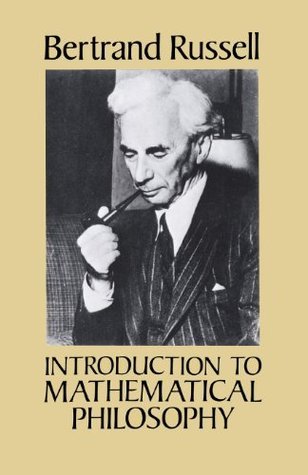
In the words of Bertrand Russell, "Because language is misleading, as well as because it is diffuse and inexact when applied to logic (for which it was never intended), logical symbolism is absolutely necessary to any exact or thorough treatment of mathematical philosophy." That assertion underlies this book, a seminal work in the field for more than 70 years. In it, Russell offers a nontechnical, undogmatic account of his philosophical criticism as it relates to arithmetic and logic. Rather than an exhaustive treatment, however, the influential philosopher and mathematician focuses on certain issues of mathematical logic that, to his mind, invalidated much traditional and contemporary philosophy.In dealing with such topics as number, order, relations, limits and continuity, propositional functions, descriptions, and classes, Russell writes in a clear, accessible manner, requiring neither a knowledge of mathematics nor an aptitude for mathematical symbolism. The result is a thought-provoking excursion into the fascinating realm where mathematics and philosophy meet — a philosophical classic that will be welcomed by any thinking person interested in this crucial area of modern thought.

In this volume of essays Russell is concerned to combat, in one way or another, the growth of dogmatism, whether of the Left or of the Right, which has hitherto characterised our tragic century.

First published in 1985. Marriage and Morals won Bertrand Russell the Nobel Prize for Literature in 1950. With his customary wit and clarity, Russell explores the changing role of marriage, the codes of sexual ethics and the question of population. By what codes should we live our sexual lives? Every aspect, from the origin of marriage to the values of a healthy sex life, from the influence of religion, psychoanalysis and taboos to the possibilities of eugenics, receives the incisive scrutiny of Russell’s intellect. Here is the Passionate Sceptic at his most vigorous.

'These propositions may seem mild, yet, if accepted, they would absolutely revolutionize human life.'With these words Bertrand Russell introduces what is indeed a revolutionary book. Taking as his starting-point the irrationality of the world, he offers by contrast something 'wildly paradoxical and subversive' - a belief that reason should determine human actions. Today, besieged as we are by the numbing onslaught of twenty-first-century capitalism, Russell's defence of scepticism and independence of mind is as timely as ever. In clear, engaging prose, he guides us through the key philosophical issues that affect our daily lives - freedom, happiness, emotions, ethics and beliefs - and offers no-nonsense advice.Content:1 Introduction: On the Value of Scepticism 2 Dreams and Facts 3 Is Science Superstitious? 4 Can Men be Rational? 5 Philosophy in the Twentieth Century 6 Machines and the Emotions 7 Behaviourism and Values 8 Eastern and Western Ideals of Happiness 9 The Harm that Good Men Do 10 The Recrudescence of Puritanism The Need for Political Scepticism Free Thought and Official Propaganda Freedom in Society Freedom Versus Authority in EducationPsychology and Politics The Danger of Creed WarsSome Prospects: Cheerful and Otherwise

Bertrand Russell was born in 1872 and died in 1970. One of the most influential figures of the twentieth century, he transformed philosophy and can lay claim to being one of the greatest philosophers of all time. He was a Nobel Prize winner for Literature and was imprisoned several times as a result of his pacifism. His views on religion, education, sex, politics and many other topics, made him one of the most read and revered writers of the age. This, his autobiography, is one of the most compelling and vivid ever written.This one-volume, compact paperback edition contains an introduction by the politician and scholar, Michael Foot, which explores the status of this classic nearly 30 years after the publication of the final volume.

Ask a dozen people to name a genius and the odds are that 'Einstein' will spring to their lips. Ask them the meaning of 'relativity' and few of them will be able to tell you what it is.The basic principles of relativity have not changed since Russell first published his lucid guide for the general reader. The ABC of Relativity is Bertrand Russell's most brilliant work of scientific popularisation. With marvellous lucidity he steers the reader who has no knowledge of maths or physics through the subtleties of Einstein's thinking. In easy, assimilable steps, he explains the theories of special and general relativity and describes their practical application to, amongst much else, discoveries about gravitation and the invention of the hydrogen bomb.

Bertrand Russell Speaks His Mind, interviewed by Woodrow Wyatt 1959; Transcript of a Television Series/VanCon Productions, Copyright 1960 by The World Publishing Company.
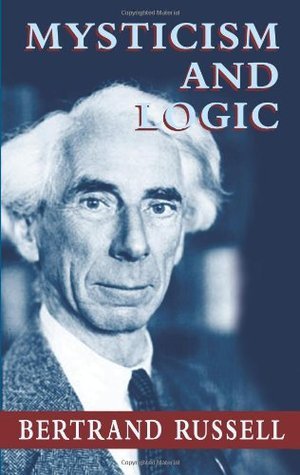
10 brilliant essays by a Nobel Prize-winning philosopher challenge romantic mysticism and promote a scientific view of society and nature. Russell explains his theory of logical atomism in these witty, cogent writings, which include popular treatments of religious and educational issues as well as more technical examinations of problems of logic.

This is a reproduction of a book published before 1923. This book may have occasional imperfections such as missing or blurred pages, poor pictures, errant marks, etc. that were either part of the original artifact, or were introduced by the scanning process. We believe this work is culturally important, and despite the imperfections, have elected to bring it back into print as part of our continuing commitment to the preservation of printed works worldwide. We appreciate your understanding of the imperfections in the preservation process, and hope you enjoy this valuable book.


Political Ideals is a rigorous and important survey of capitalism, socialism and the organisation of society. Political Ideals was written during the upheaval of World War One, but still significant to every reader interested in the nature of man's responsibilities and privileges as a social being. It is in many ways, a statement, of Bertrand Russell's beliefs, a declaration of the ideas that have influenced his thinking on the major events of the twentieth century. In this sense, it is essential reading for every student of this great philosopher. For it defines his principle that the only true aim of politics is to give free play to man's natural creativity, and to deaden, whenever they manifest themselves, the forces of acquisition, power and convention that jeopardise individual responsibility and freedom.

Power: A New Social Analysis is a work in social philosophy written by Bertrand Russell. Power, for Russell, is one's ability to achieve goals. In particular, Russell has in mind social power, that is, power over people. The volume contains a number of arguments. However, four themes have a central role in the overall work. The first theme given treatment in the analysis is that the lust for power is a part of human nature. Second, the work emphasises that there are different forms of social power, and that these forms are substantially interrelated. Third, Power insists that "organisations are usually connected with certain kinds of individuals". Finally, the work ends by arguing that "arbitrary rulership can and should be subdued".Throughout the work, Russell's ambition is to develop a new method of conceiving the social sciences as a whole. For him, all topics in the social sciences are merely examinations of the different forms of power – chiefly the economic, military, cultural, and civil forms. Eventually, he hoped that social science would be robust enough to capture the "laws of social dynamics", which would describe how and when one form of power changes into another. As a secondary goal of the work, Russell is at pains to reject single-cause accounts of social power, such as the economic determinism he attributes to Karl Marx.

Philosopher, mathematician and social critic, Bertrand Russell was awarded the Nobel Prize for Literature in 1950. In The Analysis of Mind, one of his most influential and exciting books, Russell presents an intriguing reconciliation of the materialism of psychology with the antimaterialism of physics.This book established a new conception of the mind and provided one of the most original and interesting externalist accounts of knowledge. Drawing upon the writings of psychologists such as William James and John Watson, Russell offers a comprehensive treatment of such considerations as belief, desire, habit, memory, meaning, and causal law. His reasoning formed the foundation for many subsequent theories of mind, as well as a framework for his own later philosophical writings. It remains one of the most important works on the philosophy of the mind.
This comprehensive anthology of Bertrand Russell's writings brings together his definitive essays from the period 1903 to 1959. It covers the most fertile and the most lasting work on every significant area he published in.

'A scientific opinion is one which there is some reason to believe is true; an unscientific opinion is one which is held for some reason other than its probable truth.' - Bertrand RussellOne of Russell's most important books, this early classic on science illuminates his thinking on the promise and threat of scientific progress. Russell considers three questions fundamental to an understanding of the nature and scope of scientific knowledge, the increased power over nature that science affords, and the changes in the lives of human beings that result from new forms of science. With customary wit and clarity, Russell offers brilliant discussions of many major scientific figures, including Aristotle, Galileo, Newton and Darwin.With a new introduciton by David Papineau, King's College, London.

No online description is currently available. If you would like to receive information about this title, please email Routledge at info@routledge-ny.com

مؤلف هذا الكتاب الفيلسوف الانجليزي الكبير برتراند رسل. وقد اصبح كتابه كلاسيكياً فيما بعد وترجم الى معظم لغات العالم نظراً الى ضخامته وأهميته وصدرت عنه طبعة جديدة مؤخراً. وهي التي نعتمد عليها الآن لعرض أهم محاوره الفكرية. يستعرض المؤلف في هذا الكتاب تاريخ الفلسفة الغربية منذ أقدم العصور وحتى اليوم. وينقسم الكتاب الى ثلاثة اجزاء وكل جزء الى عدة فصول. الجزء الأول مكرس لدراسة الفلسفة القديمة: أي الفلسفة اليونانية في مرحلة ما قبل ارسطو وما بعده حتى ظهور المسيحية وموت افلوطين. يضاف اليها بالطبع الفلسفة في عصر الامبراطورية الرومانية، وهي التي ينتمي اليها أفلوطين بالذات.واما الجزء الثاني فمكرس لدراسة الفلسفة في القرون الوسطى: أي الفلسفة العربية الاسلامية والفلسفة المسيحية اللاتينية. اما الجزء الثالث فمكرس لدراسة الفلسفة الحديثة بدءاً من عصر النهضة وديكارت وحتى اليوم. في الجزء الأول يتحدث المؤلف عن أصل الحضارة الاغريقية وكيف ظهرت الفلسفة فيها لأول مرة. والفلاسفة الذين ظهروا في التاريخ من امثال فيثاغورس، وهيراقليطس وبارمينديس، واخرين. كما ويتحدث عن دور أثينا في ازدهار الثقافة والحضارة

This is a reproduction of a book published before 1923. This book may have occasional imperfections such as missing or blurred pages, poor pictures, errant marks, etc. that were either part of the original artifact, or were introduced by the scanning process. We believe this work is culturally important, and despite the imperfections, have elected to bring it back into print as part of our continuing commitment to the preservation of printed works worldwide. We appreciate your understanding of the imperfections in the preservation process, and hope you enjoy this valuable book.

مؤلف هذا الكتاب الفيلسوف الانجليزي الكبير برتراند رسل. وقد اصبح كتابه كلاسيكياً فيما بعد وترجم الى معظم لغات العالم نظراً الى ضخامته وأهميته وصدرت عنه طبعة جديدة مؤخراً. وهي التي نعتمد عليها الآن لعرض أهم محاوره الفكرية. يستعرض المؤلف في هذا الكتاب تاريخ الفلسفة الغربية منذ أقدم العصور وحتى اليوم. وينقسم الكتاب الى ثلاثة اجزاء وكل جزء الى عدة فصول. الجزء الأول مكرس لدراسة الفلسفة القديمة: أي الفلسفة اليونانية في مرحلة ما قبل ارسطو وما بعده حتى ظهور المسيحية وموت افلوطين. يضاف اليها بالطبع الفلسفة في عصر الامبراطورية الرومانية، وهي التي ينتمي اليها أفلوطين بالذات.واما الجزء الثاني فمكرس لدراسة الفلسفة في القرون الوسطى: أي الفلسفة العربية الاسلامية والفلسفة المسيحية اللاتينية. اما الجزء الثالث فمكرس لدراسة الفلسفة الحديثة بدءاً من عصر النهضة وديكارت وحتى اليوم. في الجزء الأول يتحدث المؤلف عن أصل الحضارة الاغريقية وكيف ظهرت الفلسفة فيها لأول مرة. والفلاسفة الذين ظهروا في التاريخ من امثال فيثاغورس، وهيراقليطس وبارمينديس، واخرين. كما ويتحدث عن دور أثينا في ازدهار الثقافة والحضارة.

First published in 1981. Routledge is an imprint of Taylor & Francis, an informa company.Preface by Bertrand Russell; Preface by the Editor; Introduction; Meaning of Symbols 1. Psychology 2. Religion 3. Sex and Marriage 4. Education 5. Politics 6. Ethics Epilogue Acknowledgements

Russell's classic The Principles of Mathematics sets forth his landmark thesis that mathematics and logic are identical―that what is commonly called mathematics is simply later deductions from logical premises.His ideas have had a profound influence on twentieth-century work on logic and the foundations of mathematics.

يعالج الفيلسوف الكبير "برتراند رسل" فى كتابه "فى التربية" جملة من أخطر المواضيع التى تتصل بحياة الفرد ، وكلها تتعلق بالتربية ، فالتربية التى ننشدها لأطفالنا لابد أن تتوقف على مثلنا العليا للخلق الإنسانى ، وعلى الدور الذى نرجو أن يكون لأطفالنا فى المجتمع إذا كبروا ، وكل إنسان له وجهة نظر مختلفة عن الآخر فى تربية أبنائه ، وهناك اختلافات كثيرة فى طرق التربية ذاتها بين الذين يرون أن التربية وسيلة لتلقين أشياء محددة معينة بذاتها ، وبين الذين يرون أن التربية يجب أن تغرس فى المتعلم القدرة على الاستقلال فى الحكم..