
Thomas Paine
Thomas Paine was an English-American political activist, author, political theorist and revolutionary. As the author of two highly influential pamphlets at the start of the American Revolution, he inspired the Patriots in 1776 to declare independence from Britain. His ideas reflected Enlightenment-era rhetoric of transnational human rights. He has been called "a corset maker by trade, a journalist by profession, and a propagandist by inclination". Born in Thetford, England, in the county of Norfolk, Paine emigrated to the British American colonies in 1774 with the help of Benjamin Franklin, arriving just in time to participate in the American Revolution. His principal contributions were the powerful, widely read pamphlet Common Sense (1776), the all-time best-selling American book that advocated colonial America's independence from the Kingdom of Great Britain, and The American Crisis (1776–83), a pro-revolutionary pamphlet series. Common Sense was so influential that John Adams said, "Without the pen of the author of Common Sense, the sword of Washington would have been raised in vain." Paine lived in France for most of the 1790s, becoming deeply involved in the French Revolution. He wrote the Rights of Man (1791), in part a defence of the French Revolution against its critics. His attacks on British writer Edmund Burke led to a trial and conviction in absentia in 1792 for the crime of seditious libel. In 1792, despite not being able to speak French, he was elected to the French National Convention. The Girondists regarded him as an ally. Consequently, the Montagnards, especially Robespierre, regarded him as an enemy. In December 1793, he was arrested and imprisoned in Paris, then released in 1794. He became notorious because of his pamphlet The Age of Reason (1793–94), in which he advocated deism, promoted reason and freethinking, and argued against institutionalized religion in general and Christian doctrine in particular. He also wrote the pamphlet Agrarian Justice (1795), discussing the origins of property, and introduced the concept of a guaranteed minimum income. In 1802, he returned to America where he died on June 8, 1809. Only six people attended his funeral as he had been ostracized for his ridicule of Christianity.
30 Books Written

This collection chronicles the fiction and non fiction classics by the greatest writers the world has ever known. The inclusion of both popular as well as overlooked pieces is pivotal to providing a broad and representative collection of classic works.

Among the most influential authors and reformers of his age, Thomas Paine (1737–1809) was born in England but went on to play an important role in both the American and French Revolutions. In 1774, he emigrated to America where, for a time, he helped to edit the Pennsylvania Magazine. On January 10, 1776, he published his pamphlet Common Sense, a persuasive argument for the colonies' political and economic separation from Britain.Common Sense cites the evils of monarchy, accuses the British government of inflicting economic and social injustices upon the colonies, and points to the absurdity of an island attempting to rule a continent. Credited by George Washington as having changed the minds of many of his countrymen, the document sold over 500,000 copies within a few months.Today, Common Sense remains a landmark document in the struggle for freedom, distinguished not only by Paine's ideas but also by its clear and passionate presentation. Designed to ignite public opinion against autocratic rule, the pamphlet offered a careful balance between imagination and judgment, and appropriate language and expression to fit the subject. It immediately found a receptive audience, heartened Washington's despondent army, and foreshadowed much of the phrasing and substance of the Declaration of Independence.

Paine's daring prose paved the way for the Declaration of Independence and the Revolutionary War. This volume also includes " The Crisis ," " The Age of Reason ," and " Agrarian Justice ."

Introduction and Notes by Joyce ApplebyThough he didn't emigrate from England to the colonies until 1774, just a few months before the Revolutionary War began, Thomas Paine had an enormous impact on that war & the new nation that emerged from it. Common Sense, the instantly popular pamphlet he published in January 1776, argued that the goal of the struggle against the British should be not simply tax reform, as many were calling for, but complete independence. His rousing, radical voice was balanced by the equally independence-minded but more measured tones of Thomas Jefferson, who wrote the Declaration of Independence later that year. In later works, such as The Rights of Man, The Age of Reason, & other selections included in this volume, he proved himself a visionary moralist centuries ahead of his time. He believed that every human has the natural right to life's necessities & that government's role should be to provide for those in dire need. An impassioned opponent of all forms of slavery, he understood that no one in poverty is truly free--a lesson still to be learned by many of our leaders today.
This book is in English. This book contains 229 pages.

Collected Writings: Common Sense / The Crisis / Rights of Man / The Age of Reason / Pamphlets, Articles, and Letters
by Thomas Paine
Rating: 4.3 ⭐
“I know not whether any man in the world,” wrote John Adams in 1805, “has had more influence on its inhabitants or affairs for the last thirty years than Tom Paine.” The impassioned democratic voice of the Age of Revolution, Paine wrote for his mass audience with vigor, clarity, and “common sense.” This Library of America volume is the first major new edition of his work in 50 years, and the most comprehensive single-volume collection of his writings available. Emphasizing Paine’s American career, it brings together his best-known works—Common Sense, The American Crisis, Rights of Man, The Age of Reason—along with scores of letters, articles, and pamphlets.Paine came to America in 1774 at age 37 after a life of obscurity and failure in England. Within fourteen months he published Common Sense, the most influential pamphlet for the American Revolution, and began a career that would see him prosecuted in England, imprisoned and nearly executed in France, and hailed and reviled in the American nation he helped create. In Common Sense, Paine set forth an inspiring vision of an independent America as an asylum for freedom and an example of popular self-government in a world oppressed by despotism and hereditary privilege. The American Crisis, begun during “the times that try men’s souls” in 1776, is a masterpiece of popular pamphleteering in which Paine vividly reports current developments, taunts and ridicules British adversaries, and enjoins his readers to remember the immense stakes of their struggle. Among the many other items included in the volume are the combative “Forester” letters, written in a reply to a Tory critic of Common Sense, and several pieces concerning the French Revolution, including an incisive argument against executing Louis XVI.Rights of Man (1791–1792), written in response to Edmund Burke’s attacks on the French Revolution, is a bold vision of an egalitarian society founded on natural rights and unbound by tradition. Paine’s detailed proposal for government assistance to the poor inspired generations of subsequent radicals and reformers.The Age of Reason (1794–1795), Paine’s most controversial work, is an unrestrained assault on the authority of the Bible and a fervent defense of the benevolent God of deism.Included in this volume are a detailed chronology of Paine’s life, informative notes, an essay on the complex printing history of Paine’s work, and an index.

In the winter of 1776, the American War of Independence, which had been declared only a few months before, was in trouble. British troops had quickly advanced through New York and New Jersey to crush the rebellion, and the Continental army was in retreat and on the verge of disintegration. At the end of that year, on December 23, Thomas Paine, who had previously inspired the revolutionary cause with his stirring pamphlet Common Sense, published the first of a new series of essays aptly titled The Crisis.Paine had a gift for memorable phrasing and the first words of The Crisis soon became"These are the times that try men's souls. The summer soldier and the sunshine patriot will, in this crisis, shrink from the service of his country; but he that stands it now, deserves the love and thanks of man and woman. Tyranny, like hell, is not easily conquered; yet we have this consolation with us, that the harder the conflict, the more glorious the triumph. What we obtain too cheap, we esteem too 'tis dearness only that gives every thing its value."General Washington found the writing so uplifting that later, during the bleak winter of 1777 at Valley Forge, he ordered Paine's essay to be read by all the troops.Paine continued his writing through the duration of the war with eloquent appeals for justice addressed to British leaders and citizens, and uplifting words to bolster the patriots in their fight for independence.A document that provides many insights into the hardships and precarious uncertainties that threatened the birth of our nation, The Crisis belongs on every American's bookshelf.
Thomas Paine was the first international revolutionary. His Common Sense (1776) was the most widely read pamphlet of the American Revolution and his Rights of Man (1791-2), the most famous defense of the French Revolution, sent out a clarion call for revolution throughout the world. Paine paid the price for his principles: he was outlawed in Britain, narrowly escaped execution in France, and was vilified as an atheist and a Jacobin on his return to America.This new edition contains the complete texts of both Rights of Man and Common Sense, as well as six other powerfully political writings - American Crisis I, American Crisis XIII, Agrarian Justice, Letter to Jefferson, Letter Addressed to the Addressers on the Late Proclamation and Dissertation on the First Principles of Government - all of which illustrate why Paine's ideas still resonate in the modern welfare states of today.
The authorities in power in England during Thomas Paine’s lifetime saw him as an agent provocateur who used his seditious eloquence to support the emancipation of slaves and women, the demands of working people, and the rebels of the French and American Revolutions. History, on the other hand, has come to regard him as the figure who gave political cogency to the liberating ideas of the Enlightenment. His great pamphlets, Rights of Man and Common Sense , are now recognized for what they are–classic arguments in defense of the individual’s right to assert his or her freedom in the face of tyranny.
Agrarian Justice Opposed to Agrarian Law, and to Agrarian Monopoly; Being a Plan for Meliorating the Condition of Man
by Thomas Paine
Rating: 4.1 ⭐
The 18th century was a wealth of knowledge, exploration and rapidly growing technology and expanding record-keeping made possible by advances in the printing press. In its determination to preserve the century of revolution, Gale initiated a revolution of its digitization of epic proportions to preserve these invaluable works in the largest archive of its kind. Now for the first time these high-quality digital copies of original 18th century manuscripts are available in print, making them highly accessible to libraries, undergraduate students, and independent scholars.Delve into what it was like to live during the eighteenth century by reading the first-hand accounts of everyday people, including city dwellers and farmers, businessmen and bankers, artisans and merchants, artists and their patrons, politicians and their constituents. Original texts make the American, French, and Industrial revolutions vividly contemporary.++++The below data was compiled from various identification fields in the bibliographic record of this title. This data is provided as an additional tool in helping to insure edition ++++British LibraryT005799[London] : printed by W. Adlard. re-printed and sold by the booksellers of London and Westminster, [1797?] 24p. ; 8°
![Thomas Paine Complete Works – World’s Best Ultimate Collection – All Works: Common Sense, Age Of Reason, Crisis, Rights Of Man, Agragian Justice, Short Writings Plus Biography & Bonuses [Annotated]](https://m.media-amazon.com/images/S/compressed.photo.goodreads.com/books/1435172139i/18877067.jpg)
Thomas Paine Complete Works – World’s Best Ultimate Collection – All Works: Common Sense, Age Of Reason, Crisis, Rights Of Man, Agragian Justice, Short Writings Plus Biography & Bonuses [Annotated]
by Thomas Paine
Rating: 4.3 ⭐
Exclusive Biography of Thomas Paine's intriguing life written specially for this collection10 Unique Illustrations created specially for this collectionAll Paine's complete works Plus Other BonusesRead on to Learn MoreThomas Paine Complete Works Ultimate CollectionThis is the world’s best Thomas Paine collection, including the most complete set of Paine’s works available plus many free bonus materials.Thomas PaineThomas Paine is known as one of the Fathers of the American Revolution. His landmark work, ‘Common Sense’, is known as the major inspiration for the ‘Declaration of Independence’, and his ‘Crisis’ pamphlet series was a favorite of George Washington to read out loud to inspire his troops at Valley Forge.Paine’s work is passionate, radical, yet accessible; covering his strong beliefs in Independence, Personal Liberty, Politics, Religion and Government. Hugely successful and inspiring strong polarization in their times, they are still must-reads today, still highly debated and reveredThe ‘Must-Have’ Complete CollectionIn this irresistible collection you get a full set of his amazing work, with All of his amazing works, All writings and All his letters, including hard to come by rarities. Plus a Bonus biography of Paine’s unbelievably intriguing lifeWorks Common SenseThe famous work that inspired the American colonists with a demand and call for freedom from British rule. Also notable, that when adjusted for the population size of 1776, ‘Common Sense’ has the largest sales and circulation of any book in American history.The American CrisisA series of pamphlets published from 1776 to 1783 written to motivate the Troops during the revolution, to spur them to victory. The language is powerful and emotional, and reflects Paine’s liberal philosophies.The first lines are the “These are times that try men’s souls.”The Rights Of Man (Part I and Part Ii)A radical set of books that argues that political revolution is required when a government does not safeguard its people.The Age Of Reason (Part I and Part Ii)A deistic work, about institutionalized religion, and Paine’s strong views concerning it.Letters and Miscellaneous WritingsA Full Set of Paine’s must-read letters and assorted short works from Paine, Including his famous ‘Letter To George Washington’ and his last work ‘Agragian Justice’Your Free BonusesThomas Paine, Biography – A fascinating biography, detailing Paine’s unbelievable, often sad, and often controversial life, written specially for this collection.10 unique painted illustrations created specially for this collectionWorks presented as far as possible in original publication date order so you can follow Paine’s growth as a writer and philosopherEasy Table Of Contents so you can easily jump to any book, chapter or letter in the collection.

This major collection demonstrates the extent to which Thomas Paine (1737—1809) was an inspiration to the Americans in their struggle for independence, a passionate supporter of the French Revolution and perhaps the outstanding English radical writer of his age. It contains all of Paine's key works including 'The Rights of Man', his groundbreaking defence of the revolutionary cause in France, 'Common Sense', which won thousands over to the side of the American rebels, and the first part of 'The Age of Reason', a ferocious attack on Christianity. The shorter pieces — on capital punishment, social reform and the abolition of slavery — also confirm the great versatility and power of this master of democratic prose.In their informative introduction, Michael Foot and Isaac Kramnick expore the life, work and influence of Thomas Paine, placing his work in its historical context and illustrating the force and clarity of his literary style.

Book "Common Sense was a pamphlet written by Thomas Paine. It was first published anonymously on January 9, 1776, during the American Revolution. Paine wrote it with editorial feedback from Benjamin Rush, who came up with the title. The document denounced British rule and, through its immense popularity, contributed to fomenting the American Revolution... Paine donated the copyright for Common Sense to the states, and as one biographer noted, Paine made nothing of the estimated 150,000 to 600,000 copies that were eventually printed (various sources disagree on the number of printed copies in Paine's lifetime). In fact, he had to pay for the first printing himself." ( wikipedia.org)"Rights of Man was written by Thomas Paine in 1791 as a reply to Reflections on the Revolution in France by Edmund Burke. It has been interpreted as a work defending the French Revolution, but it is also a seminal work embodying the ideas of liberty and human equality." ( wikipedia.org)"The Age of Being an Investigation of True and Fabulous Theology... critiques institutionalized religion and challenges the inerrancy of the Bible. Published in three parts in 1794, 1795 and 1807, it was a bestseller in America, where it caused a short-lived deistic revival. British audiences, however, fearing increased political radicalism as a result of the French revolution, received it with more hostility." ( wikipedia.org)Essay on Dream was first published in 1807. Mr. Paine attempts to show by what operation of the mind a Dream is produced in sleep, and applying the same to the account of Dreams in the New Testament.Biblical Blasphemy is a short work summarizing Mr. Paine's Deistic beliefs.Examination of the Prophecies was first published by Mr. Paine in 1807, and was the last of his writings edited by himself. It is evidently extracted from his answer to the bishop of Llandaff, or from his third part of the Age of Reason, both of which, it appears by his will, he left in manuscript.Table of Publisher’s Preface; Common Sense; Introduction; Of The Origin And Design Of Government In General, With Concise Remarks On The English Constitution; Of Monarchy And Hereditary Succession; Thoughts On The Present State Of American Affairs; Of The Present Ability Of America, With Some Miscellaneous Reflexions; Appendix; Rights Of Man; Part I.; Editor's Introduction.; Paine's Preface To The English Edition; Paine's Preface To The French Edition; Rights Of Man; Miscellaneous Chapter; Conclusion; Part ii. Second, Combining Principle And Practice.; French Translator's Preface.; Preface; Introduction.; Of Society And Civilisation; Of The Origin Of The Present Old Governments; Of The Old And New Systems Of Government; Of Constitutions; Ways And Means Of Improving The Condition Of Europe Interspersed With Miscellaneous Observations; Appendix; The Age Of Reason; Editor's Introduction With Some Results Of Recent Researches.; Part I.; The Author's Profession Of Faith.; Of Missions And Revelations.; Concerning The Character Of Jesus Christ, And His History.; Of The Bases Of Christianity.; Examination In Detail Of The Preceding Bases.; Of The True Theology.; Examination Of The Old Testament.; Of The New Testament.; In What The True Revelation Consists.; Concerning God, And The Lights Cast On His Existence And Attributes By The Bible.; Of The Theology Of The Christians; And The True Theology.; The Effects Of Christianism On Education; Proposed Reforms.; Comparison Of Christianism With The Religious Ideas Inspired By Nature.; System Of The Universe.; Advantages Of The Existence Of Many Worlds In Each Solar System.; Application Of The Preceding To The System Of The Christians.; Of The Means Employed In All Time, And Almost Universally, To Deceive The Peoples.; Recapitulation.; Part ii.; Preface; The Old Testament; The New Testame

This book was converted from its physical edition to the digital format by a community of volunteers. You may find it for free on the web. Purchase of the Kindle edition includes wireless delivery.

The writings that inspired the American Revolution—in an expanded new edition Thomas Paine’s Common Sense may well be the most influential polemic in all of American history. Published anonymously in 1776, six months before the Declaration of Independence, this incendiary call for Americans to revolt against British rule converted millions to the cause of independence and set out a vision of a just society liberated from the yoke of the crown. Paine’s pamphlet was the first to speak directly to a mass audience—and his assertive and often caustic style embodied the democratic spirit he advocated. This expanded edition also features Paine’s The American Crisis I, the first in a series of pamphlets aimed at bolstering American morale during the Revolution. An introduction by preeminent constitutional expert Richard Beeman traces Paine’s origins and illuminates the significance of these writings.

Thomas Paine is one of history’s most renowned thinkers and was indispensible to both the American and French revolutions. The three works included, Common Sense, The Rights of Man, and The Age of Reason, are among his most famous publications. Paine is probably best known for his hugely popular pamphlet, Common Sense, which swayed public opinion in favor of American independence from England. The Rights of Man and The Age of Reason further advocated for universal human rights, a republican instead of monarchical government, and truth and reason in politics. The works of this moral visionary, whose ideas are as relevant today as ever, are now available as part of the Word Cloud Classics series, providing a stylish and affordable addition to any library.

Thomas Paine was arguably the single most influential political writer during the American and French Revolutions. For this revised and updated edition the distinguished intellectual historian Bruce Kuklick brings together an expanded collection of the classic Paine texts--Common Sense, Rights of Man, and The Age of Reason--as well as the first of Paine's papers on The Crisis of 1776. A brief chronology, updated notes for further reading, and a succinct and lucid introduction to the principal themes of each text give further help to the student reader.
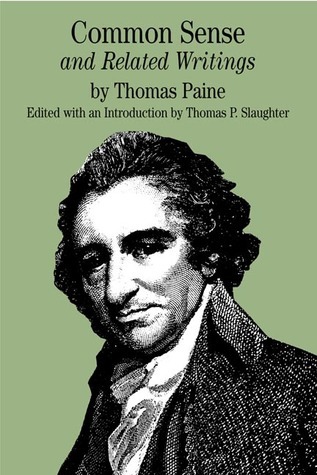
Thomas Paineâ s Common Sense is one of the most important and often assigned primary documents of the Revolutionary era. This edition of the pamphlet is unique in its inclusion of selections from Paineâ s other writings from 1775 and 1776 â additional essays that contextualize Common Sense and provide unusual insight on both the writer and the cause for which he wrote. The volume introduction includes coverage of Paineâ s childhood and early adult years in England, arguing for the significance of personal experience, environment, career, and religion in understanding Paineâ s influential political writings. The volume also includes a glossary, a chronology, 12 illustrations, a selected bibliography, and questions for consideration.

This work has been selected by scholars as being culturally important, and is part of the knowledge base of civilization as we know it. This work was reproduced from the original artifact, and remains as true to the original work as possible. Therefore, you will see the original copyright references, library stamps (as most of these works have been housed in our most important libraries around the world), and other notations in the work.This work is in the public domain in the United States of America, and possibly other nations. Within the United States, you may freely copy and distribute this work, as no entity (individual or corporate) has a copyright on the body of the work.As a reproduction of a historical artifact, this work may contain missing or blurred pages, poor pictures, errant marks, etc. Scholars believe, and we concur, that this work is important enough to be preserved, reproduced, and made generally available to the public. We appreciate your support of the preservation process, and thank you for being an important part of keeping this knowledge alive and relevant.
"On the Origin of Free Masonry" is a work by the famous and popular Thomas Paine. Paine is of course the well-known political activist who played a role in both the French and American revolutions. His most famous works include "Common Sense" and "The American Crisis." This book consists of a short essay intended to introduce the reader to free masonry and the background of the fraternal organization. While there is no evidence that Paine himself was a freemason, he was well known as a religious skeptic, and was particularly critical of Christianity. This version of "On the Origin of Free Masonry" is actually stripped of several passages critiquing Christianity that were included in a later publication of this book. Paine's short essay begins with a brief literature review of other sources that have detailed Freemasonry. From there, the author discusses some of the underlying principles and beliefs of Freemasonry, and goes through a series of questions and answers for the new apprentice. The book concludes with a brief commentary on the need for secrecy amongst the Freemasons. At less than thirty pages, this is a very quick read. Paine is knowledgeable about the subject and has prepared a well-crafted introduction to the society. Indeed, this book does provide a short but detailed synopsis that is appropriate for the layman interested in Freemasonry. Ultimately, "On the Origin of Free Masonry" will be read as much for its historical significance as for its content. The book is both interesting as an introductory guide to Freemasonry and a glimpse into Paine's anti religious beliefs, and is thus recommended reading. About the Publisher Forgotten Books publishes hundreds of thousands of rare and classic books. Find more at www.forgottenbooks.com This book is a reproduction of an important historical work.

This Halcyon Classics ebook edition contains five of political theorist Thomas Paine's works, including his influential 'Common Sense.' Includes an active table of contents.Contents:1.Common Sense2.The American Crisis3.The Rights of Man4.The Age of Reason5.A Letter to Abbe ReynalThis unexpurgated edition contains the complete text, with minor errors and omissions corrected.

We must end debt slaveryThe United States began a depression in 1920 just after the end of World War I. Millions of jobs were lost, thousands of companies went bankrupt while the government provided no support to anyone. That depression lasted eighteen months.Another depression began in 1929. This time the government stepped in and provided assistance to business to give support to the twenty-five per cent of Americans who had lost their jobs and were on hard times. As a result of massive government involvement this depression lasted a dozen years and needed a new World War to get the country back to work.We have entered a greater depression. If we allow the government to try to solve a debt problem by going even deeper into debt, it will probably take fifteen years to get the country back on its feet. Maybe another World War.On the other hand if we restored honest money to our financial system to put the brakes on unnecessary government spending Americans could be back to work again in eighteen months.

Thomas Paine is most famous for writing Common Sense, a pamphlet distributed during the American Revolution advocating for colonial America’s independence from Great Britain. Now, collected here in a beautiful gift book volume are excerpts from this important historical American document, as well as several of his other writings.Paine believed in more than just freedom in the form of revolution and overthrowing governments. He also believed in freedom from oppressive and organized religions and monopolies. Included in this book are passages taken from The Age of Reason and The Rights of Man, as well as letters to George Washington, Benjamin Rush, and Samuel Adams, and pamphlets such as “The American Crisis” and “Agrarian Justice.” Throughout his writings, Paine provides excellent and timeless wisdom on attaining liberty and living a democratic life.

The Essential Thomas Paine Collection: Common Sense | The American Crisis | Rights of Man | The Age of Reason:
by Thomas Paine
Rating: 5.0 ⭐
Included here are the writings that forged the spirit of the American Common SenseThe American CrisisThe Rights of ManThe Age of Reason.Through these writings, Paine proved the pen is mightier than the sword.

The impassioned democratic voice of the Age of Revolution, Thomas Paine fought for American liberty with words and deeds. His Common Sense galvanized the colonists to form the United States and declare independence from Great Britain. The American Crisis —opening with the immortal cry, "These are the times that try men's souls"—rallied the young nation's war-weary troops and citizens. Upon his return to Europe, Paine continued to promote freedom by proclaiming The Rights of Man and decrying religious persecution with The Age of Reason.The brilliant social and political philosopher possessed a gift for stating complex ideas in concise terms, making him one of the first journalists to write in language accessible to anyone who could read. This anthology features highlights from Paine's best-known works, along with selections from his letters, articles, and pamphlets. Editor John Dos Passos—the acclaimed author of Three Soldiers and the epic U.S.A. trilogy—distills the radical intellectual's philosophy into a single cohesive volume that resounds with ever-relevant views on democracy and justice.

The Life and Major Writings of Thomas Paine: Includes Common Sense/The American Crisis/Rights of Man/The Age of Reason/Agrarian Justice
by Thomas Paine
Rating: 4.2 ⭐

Excerpts from 4 of this 18th century firebrand's major works including Rights of Man and The American Crisis

Thomas Paine's book "Common Sense" was the written word that inflamed and drove the people of the colonies to the cause of the American Revolution. It was a clear and passionate document for freedom from the English Crown. Over 500,000 copies were sold in just a few months from when it was written in January 1776/ His book "The Rights of Man" is a clear document for democracy and egalitarianism. It supported all forms of a progressive society and was an inspiration for the patriots of America's early days. It continues to be a basic and essential bedrock of belief for today's patriots. Also, "The Age of Reason" was his last book and almost entirely is centered on religion - Christianity. It puts to the test many questions towards faith in order to make valid answers possible. Many essential beliefs are confronted with rational logic. A Collector's Edition.

Thomas Paine Collection: Common Sense, Rights of Man, Age of Reason, An Essay on Dream, Biblical Blasphemy, Examination Of The Prophecies
by Thomas Paine
Rating: 4.6 ⭐
"Common Sense was a pamphlet written by Thomas Paine. It was first published anonymously on January 9, 1776, during the American Revolution. Paine wrote it with editorial feedback from Benjamin Rush, who came up with the title. The document denounced British rule and, through its immense popularity, contributed to fomenting the American Revolution... Paine donated the copyright for Common Sense to the states, and as one biographer noted, Paine made nothing of the estimated 150,000 to 600,000 copies that were eventually printed (various sources disagree on the number of printed copies in Paine's lifetime). In fact, he had to pay for the first printing himself." (Source: wikipedia.org)"Rights of Man was written by Thomas Paine in 1791 as a reply to Reflections on the Revolution in France by Edmund Burke. It has been interpreted as a work defending the French Revolution, but it is also a seminal work embodying the ideas of liberty and human equality." (Source: wikipedia.org)"The Age of Reason: Being an Investigation of True and Fabulous Theology... critiques institutionalized religion and challenges the inerrancy of the Bible. Published in three parts in 1794, 1795 and 1807, it was a bestseller in America, where it caused a short-lived deistic revival. British audiences, however, fearing increased political radicalism as a result of the French revolution, received it with more hostility." (Source: wikipedia.org)Essay on Dream was first published in 1807. Mr. Paine attempts to show by what operation of the mind a Dream is produced in sleep, and applying the same to the account of Dreams in the New Testament.Biblical Blasphemy is a short work summarizing Mr. Paine's Deistic beliefs.Examination of the Prophecies was first published by Mr. Paine in 1807, and was the last of his writings edited by himself. It is evidently extracted from his answer to the bishop of Llandaff, or from his third part of the Age of Reason, both of which, it appears by his will, he left in manuscript.

subtitle: in which the mistakes in the Abbe's account of the Revolution of America are corrected and cleared up