
Johann Wolfgang von Goethe
A master of poetry, drama, and the novel, German writer and scientist Johann Wolfgang von Goethe spent 50 years on his two-part dramatic poem Faust , published in 1808 and 1832, also conducted scientific research in various fields, notably botany, and held several governmental positions. George Eliot called him "Germany's greatest man of letters... and the last true polymath to walk the earth." Works span the fields of literature, theology, and humanism. People laud this magnum opus as one of the peaks of world literature. Other well-known literary works include his numerous poems, the Bildungsroman Wilhelm Meister's Apprenticeship and the epistolary novel The Sorrows of Young Werther . With this key figure of German literature, the movement of Weimar classicism in the late 18th and early 19th centuries coincided with Enlightenment, sentimentality (Empfindsamkeit), Sturm und Drang, and Romanticism. The author of the scientific text Theory of Colours , he influenced Darwin with his focus on plant morphology. He also long served as the privy councilor ("Geheimrat") of the duchy of Weimar. Goethe took great interest in the literatures of England, France, Italy, classical Greece, Persia, and Arabia and originated the concept of Weltliteratur ("world literature"). Despite his major, virtually immeasurable influence on German philosophy especially on the generation of Georg Wilhelm Friedrich Hegel and Friedrich Wilhelm Joseph von Schelling, he expressly and decidedly refrained from practicing philosophy in the rarefied sense. Influence spread across Europe, and for the next century, his works inspired much music, drama, poetry and philosophy. Many persons consider Goethe the most important writer in the German language and one of the most important thinkers in western culture as well. Early in his career, however, he wondered about painting, perhaps his true vocation; late in his life, he expressed the expectation that people ultimately would remember his work in optics.
32 Books Written

Maxims and Reflections (Penguin Classics) by Johann Wolfgang Von Goethe
by Johann Wolfgang von Goethe
• 2 recommendations ❤️
This work has been selected by scholars as being culturally important and is part of the knowledge base of civilization as we know it.This work is in the public domain in the United States of America, and possibly other nations. Within the United States, you may freely copy and distribute this work, as no entity (individual or corporate) has a copyright on the body of the work.Scholars believe, and we concur, that this work is important enough to be preserved, reproduced, and made generally available to the public. To ensure a quality reading experience, this work has been proofread and republished using a format that seamlessly blends the original graphical elements with text in an easy-to-read typeface.We appreciate your support of the preservation process, and thank you for being an important part of keeping this knowledge alive and relevant.

Translated, with an Introduction and Notes by John R. Williams.Goethe's Faust is a classic of European literature. Based on the fable of the man who traded his soul for superhuman powers and knowledge, it became the life's work of Germany's greatest poet. Beginning with an intriguing wager between God and Satan, it charts the life of a deeply flawed individual, his struggle against the nihilism of his diabolical companion Mephistopheles.Part One presents Faust's pact with the Devil and the harrowing tragedy of his love affair with the young Gretchen. Part Two shows Faust's experience in the world of public affairs, including his encounter with Helen of Troy, the emblem of classical beauty and culture. The whole is a symbolic and panoramic commentary on the human condition and on modern European history and civilisation.This new translation of both parts of Faust preserves the poetic character of the original, its tragic pathos and hilarious comedy. In addition, John Williams has translated the Urfaust, a fascinating glimpse into the young Goethe's imagination, and a selection from the draft scenarios for the Walpurgis Night witches' sabbath - material so ribald and blasphemous that Goethe did not dare publish it.

This is Goethe's first novel, published in 1774. Written in diary form, it tells the tale of an unhappy, passionate young man hopelessly in love with Charlotte, the wife of a friend - a man who he alternately admires and detests. 'The Sorrows of Young Werther' became an important part of the 'Sturm und Drang movement, and greatly influenced later 'Romanticism'. The work is semi-autobiographical - in 1772, two years before the novel was published, Goethe had passed through a similar tempestuous period, when he lost his heart to Charlotte Buff, who was at that time engaged to his friend Johann Christian Kestner.

By the time Goethe's "Theory of Colours" appeared in 1810, the wavelength theory of light and color had been firmly established. To Goethe, the theory was the result of mistaking an incidental result for an elemental principle. Far from pretending to a knowledge of physics, he insisted that such knowledge was an actual hindrance to understanding. He based his conclusions exclusively upon exhaustive personal observation of the phenomena of color.Of his own theory, Goethe was supremely confident: "From the philosopher, we believe we merit thanks for having traced the phenomena of colours to their first sources, to the circumstances under which they appear and are, and beyond which no further explanation respecting them is possible."Goethe's scientific conclusions have, of course, long since been thoroughly demolished, but the intelligent reader of today may enjoy this work on quite different grounds: for the beauty and sweep of his conjectures regarding the connection between color and philosophical ideas; for an insight into early nineteenth-century beliefs and modes of thought; and for the flavor of life in Europe just after the American and French Revolutions.The work may also be read as an accurate guide to the study of color phenomena. Goethe's conclusions have been repudiated, but no one quarrels with his reporting of the facts to be observed. With simple objects -- vessels, prisms, lenses, and the like -- the reader will be led through a demonstration course not only in subjectively produced colors, but also in the observable physical phenomena of color. By closely following Goethe's explanations of the color phenomena, the reader may become so divorced from the wavelength theory -- Goethe never even mentions it -- that he may begin to think about color theory relatively unhampered by prejudice, ancient or modern.

In nur fünf Jahren, von 1952 bis 1962, nahm Klaus Kinski allein dreißig Sprechplatten auf. Rechtzeitig zum 77. Geburtstag des Ausnahmekünstlers ist es nun der Deutschen Grammophon in enger Zusammenarbeit mit Klaus Kinski Productions gelungen, erstmals sein vollständiges Rezitationswerk auf CD zu veröffentlichen. Die Veröffentlichung umfasst 16 Einzelausgaben mit insgesamt 19 CDs, erscheint aber auch als 20-CD-Box "Kinski spricht Werke der Weltliteratur", die mit 48-seitigem Booklet ausgestattet ist und als Bonus die beiden Hörspiele "Sechs Gramm Caratillo" und "Die Nacht allein" beinhaltet. Obschon Klaus Kinski bis heute durch seine berühmte Erdbeermund-Rezitation eng mit Francois Villon verknüpft ist, hatte man bisher keine Gelegenheit, die Vielseitigkeit des Deklamators Kinski zu hören: seine Interpretationen zahlreicher Werke der Weltliteratur, die von Shakespeare, Goethe und Schiller, über Dostojewskij, Strindberg und Hauptmann, bis zu Oscar Wilde, Jack London und der Dichtung afrikanischer Völker reicht.

West-östlicher DiwanDie Leiden des jungen WertherFaust IGedichte U.A
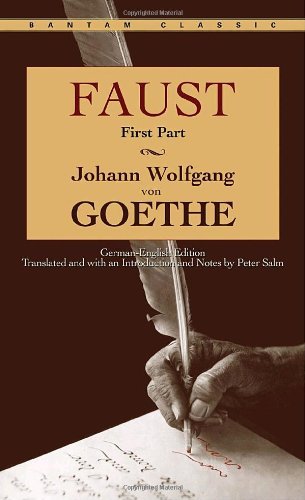
Goethe’s masterpiece and perhaps the greatest work in German literature, Faust has made the legendary German alchemist one of the central myths of the Western world. Here indeed is a monumental Faust, an audacious man boldly wagering with the devil, Mephistopheles, that no magic, sensuality, experience, or knowledge can lead him to a moment he would wish to last forever. Here, in Faust, Part I, the tremendous versatility of Goethe’s genius creates some of the most beautiful passages in literature. Here too we experience Goethe’s characteristic humor, the excitement and eroticism of the witches’ Walpurgis Night, and the moving emotion of Gretchen’s tragic fate.This authoritative edition, which offers Peter Salm’s wonderfully readable translation as well as the original German on facing pages, brings us Faust in a vital, rhythmic American idiom that carefully preserves the grandeur, integrity, and poetic immediacy of Goethe’s words.

Goethe’s Faust reworks the late medieval myth of a brilliant scholar so disillusioned he resolves to make a contract with Mephistopheles. The devil will do all he asks on Earth and seeks to grant him a moment in life so glorious that he will wish it to last forever. But if Faust does bid the moment stay, he falls to Mephistopheles and must serve him after death. In this first part of Goethe’s great work, the embittered thinker and Mephistopheles enter into their agreement, and soon Faust is living a rejuvenated life and winning the love of the beautiful Gretchen. But in this compelling tragedy of arrogance, unfulfilled desire, and self-delusion, Faust heads inexorably toward an infernal destruction.

Elective Affinities was written when Goethe was sixty and long established as Germany's literary giant. This is a new edition of his penetrating study of marriage and passion, bringing together four people in an inexorable manner. The novel asks whether we have free will or not and confronts its characters with the monstrous consequences of repressing what little "real life" they have in themselves, a life so far removed from their natural states that it appears to them as something terrible and destructive.
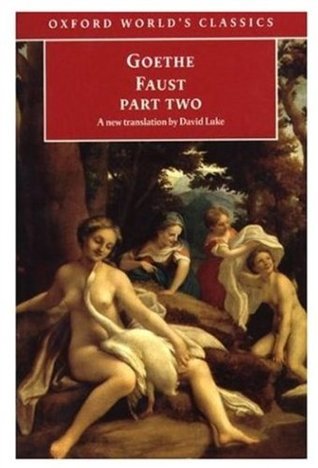
This is a new translation of Faust, Part Two by David Luke, whose translation of Faust, Part I was the winner of the European Poetry Translation Prize. Here, Luke expertly imitates the varied verse-forms of the original, and provides a highly readable and actable translation which includes anintroduction, full notes, and an index of classical mythology.

Da sie Diana ihr Leben verdankt, dient Iphigenie der Göttin auf der Insel Tauris als Priesterin, obwohl sie sich schmerzlich nach ihrer Heimat Griechenland sehnt. Als ihr Bruder Orest auf die Insel kommt und der Göttin geopfert werden soll, muss Iphigenie sich zwischen Pflicht und eigenen Wünschen entscheiden. Goethes Bearbeitung des antiken Stoffs, die er 1786 endgültig abschloss, besticht durch ihre glanzvolle Komposition und psychologische Mit seinem Drama »Iphigenie auf Tauris« schuf er eines der großen Meisterwerke der Weimarer Klassik.

Wilhelm Meister's Apprenticeship, a novel of self-realization greatly admired by the Romantics, has been called the first Bildungsroman and has had a tremendous influence on the history of the German novel. The story centers on Wilhelm, a young man living in the mid-1700s who strives to break free from the restrictive world of economics and seeks fulfillment as an actor and playwright. Along with Eric Blackall's fresh translation of the work, this edition contains notes and an afterword by the translator that aims to put this novel into historical and artistic perspective for twentieth-century readers while showing how it defies categorization.

Goethe es el alemán de fama perpetua, grande entre los grandes de todos los tiempos. Universal por su genio, no se le resistió ningún género literario: fue poeta, novelista, pensador, autor dramático y hombre de ciencia de fecundas instituciones. El libro imperecedero de Goethe es Fausto, obra inconmensurable, a la vez drama, misterio, poema simbólico y filosófico. Más de seis décadas de la vida de Goethe laboraron en la composición de Fausto, tragedia que ha sido denominada "la segunda Biblia de los alemanes". Fausto es la obra capital de Goethe. La idea v la realización palpitaron en el pecho del poeta desde su inquieta infancia hasta los días apacibles y melancólicos de su vejez. Puede decirse que Fausto es Goethe. El genial alemán estuvo siempre obsesionado por la búsqueda de la Verdad y éste es asimismo el gran drama de Fausto. Werther, esa célebre novela romántica de Goethe, tuvo su origen, como tantas poesías del autor, en un asunto amoroso.
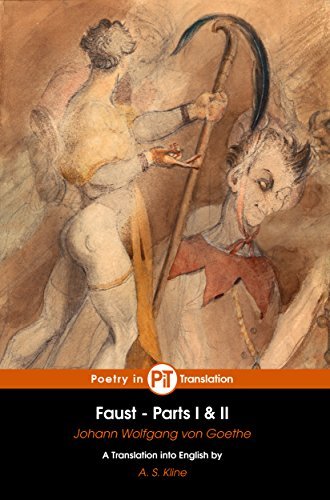
Faust Parts I & II - Goethe. A translation into English by A. S. Kline with illustrations by Eugène Delacroix. Goethe’s two-part dramatic work, Faust, based on a traditional theme, and finally completed in 1831, is an exploration of that restless intellectual and emotional urge which found its fullest expression in the European Romantic movement, to which Goethe was an early and major contributor. Part I of the work outlines a pact Faust makes with the devil, Mephistopheles, and encompasses the tragedy of Gretchen, whom Faust seduces. Part II, developed over a long period of Goethe’s later life, reflects Goethe’s own transition from a predominantly Romantic to a wider world-view and explores more extensive themes, including the values of the Classical past, as it moves towards the work’s resolution. The protagonist, Faust, is presented in a complex manner, and Goethe’s treatment of the subject matter raises ethical and spiritual issues, many of which are not resolved within the drama itself. Goethe’s stress is on Faust’s striving towards the good, and on the nature of human error, rather than on the traditional Christian view of sin and redemption, and the play’s opening sections and its conclusion can be seen as humanist allegory or metaphor rather than an expression of orthodox religious belief. It is left to the reader to draw their own conclusion about Faust’s everyman character, and the extent to which he earns his ultimate spiritual salvation. The play had an enormous influence on later German thought and literature, and together with his lyric poetry has ensured Goethe’s place among the great European writers. Published by Poetry in Translation.

In 1786, when he was already the acknowledged leader of the Sturm und Drang literary movement, Goethe set out on a journey to Italy to fulfil a personal and artistic quest and to find relief from his responsibilities and the agonies of unrequited love. As he travelled to Venice, Rome, Naples and Sicily he wrote many letters, which he later used as the basis for the Italian Journey. A journal full of fascinating observations on art and history, and the plants, landscape and the character of the local people he encountered, this is also a moving account of the psychological crisis from which Goethe emerged newly inspired to write the great works of his mature years.

Johann Wolfgang Goethes 1773 zuerst anonym veröffentlichtem und 1774 uraufgeführtem Schauspiel Götz von Berlichingen mit der eisernen Faust ging der zwei Jahre zuvor entstandene Urgötz voraus (veröffentlicht 1832). Die Hauptquelle für Goethe war die 1731 erschienene Autobiographie des Reichsritters Götz (Gottfried) von Berlichingen (1480–1562). Als Historiendrama spiegelt der "Götz" die Zersplitterung des Deutschen Reiches zu Beginn der Neuzeit wider und verknüpft das private und das öffentliche Schicksal des Protagonisten. Die Wirkung von Goethes Schauspiel beruhte auf der erstmals im Sturm und Drang auftretenden radikalen Aufhebung der klassischen Einheit von Ort, Zeit und Handlung – ständig wechseln im Götz von Berlichingen wechseln die Schauplätze der mehr als fünfzig Einzelszenen. Markant ist auch die Charakterisierung der Repräsentanten verschiedener Schichten und Institutionen und Schichten durch einen jeweils unterschiedlichen sprachlichen Ausdruck.

The Sorrows of Young Werther brings to life an idyllic German village where a youth on vacation meets and falls for lovely Charlotte. The tragedy unfolds in the letters Werther writes to his friend about Charlotte's charms, even after he realizes his love will remain unrequited. "Reflections on Werther" and "Goethe in Sesenheim," collections of excerpts from the author's own memoirs, reveal the genius who, as Nietzsche said, "disciplined himself into wholeness." Next is "The New Melusina,"the delightful story of a pixie princess who assumes the form of a woman as she searches for a human mate. Finally, "The Fairy Tale" is a sophisticated but strange story in which the laws of nature and physics do not apply--mingled among its human characters is a cast of two sentient will-o'-the-wisps, a giant and his shadow, a talking green serpent, and four metal statues.With an Introduction by Marcelle Clementsand a New Afterword

Goethe viewed the writing of poetry as essentially autobiographical, and the works selected in this volume represent more than sixty years in the life of the poet. In early poems such as 'Prometheus,' he rails against religion in an almost ecstatic fervor, while 'To the Moon' is an enigmatic meditation on the end of a love affair. The Roman Elegies show Goethe's use of Classical meters in an homage to ancient Rome and its poets, and 'The Diary,' suppressed for more than a century, is a narrative poem whose eroticism is combined with its morality. In selections from Faust , arguably his greatest and most personal work, Goethe creates an exhilarating depiction of humankind's eternal search for truth. • Dual-language edition • David Luke's exquisite verse translations are arranged chronologically • Includes an introduction and notes that place the poems in the context of the poet's life and times, as well as indexes of German and English titles and first linesFor more than seventy years, Penguin has been the leading publisher of classic literature in the English-speaking world. With more than 1,700 titles, Penguin Classics represents a global bookshelf of the best works throughout history and across genres and disciplines. Readers trust the series to provide authoritative texts enhanced by introductions and notes by distinguished scholars and contemporary authors, as well as up-to-date translations by award-winning translators.

Die Leiden des jungen Werther - Band IJohann Wolfgang von Goethe, deutscher Dichter (1749-1832)«Die Leiden des jungen Werther - Band I», von Johann Wolfgang von Goethe. Ein dynamisches Inhaltsverzeichnis ermöglicht den direkten Zugriff auf die verschiedenen Abschnitte.Inhaltsverzeichnis- Präsentation- Mai 1771- Junnius 1771- Julius 1771- August 1771- September

The story of a young man driven to suicide by an unhappy love affair, "The Sorrows of Young Werther" is the first great tragic novel of Eurpean literature.Includes "Novella".

Presented as a collection of confessional letters written by the eponymous protagonist, The Sorrows of Young Werther charts the emotional journey of a young man who, during a stay in a picturesque German village, falls in love with Lotte, a local woman engaged to another man. As he realises that his passion is doomed to failure and constant pain, Werther contemplates taking the most drastic of measures. Partly autobiographical, and the prototype for many later Romantic works in its depiction of the sensitive, tortured Romantic hero, Goethe's seminal classic is a timeless masterpiece of world literature.
'I can promise to be candid, not, however, to be impartial.' A selection of the most insightful maxims and reflections from one of Germany's greatest ever thinkers. Introducing Little Black Classics: 80 books for Penguin's 80th birthday. Little Black Classics celebrate the huge range and diversity of Penguin Classics, with books from around the world and across many centuries. They take us from a balloon ride over Victorian London to a garden of blossom in Japan, from Tierra del Fuego to 16th-century California and the Russian steppe. Here are stories lyrical and savage; poems epic and intimate; essays satirical and inspirational; and ideas that have shaped the lives of millions. Johann Wolfgang Von Goethe (1749-1832) Goethe's works available in Penguin Classics are Faust, Part I, Faust, Part II, Maxims and Reflections, Elective Affinities, The Sorrows of Young Werther, Selected Poetry and Italian Journey 1786-1788.

Die erst 1887 aufgefundene Abschrift der frühesten Fassung des 'Faust', seitdem 'Faust in ursprünglicher Gestalt' oder kurz 'Urfaust' genannt, brachte Goethe schon aus Frankfurt mit, als er 1775 nach Weimar übersiedelte. Der 'Urfaust' stellt den Anfang einer rund sechzig Jahre dauernden Beschäftigung Goethes mit dem Faust-Thema dar, ist aber innerhalb des Faust-Komplexes auch eine Stufe von hoher konzeptioneller Eigenständigkeit.

This work has been selected by scholars as being culturally important and is part of the knowledge base of civilization as we know it.This work is in the public domain in the United States of America, and possibly other nations. Within the United States, you may freely copy and distribute this work, as no entity (individual or corporate) has a copyright on the body of the work.Scholars believe, and we concur, that this work is important enough to be preserved, reproduced, and made generally available to the public. To ensure a quality reading experience, this work has been proofread and republished using a format that seamlessly blends the original graphical elements with text in an easy-to-read typeface.We appreciate your support of the preservation process, and thank you for being an important part of keeping this knowledge alive and relevant.

Goethes Versepos entstand kurz vor 1800 und handelt von Hermann, dessen Vater ihn mit einer anderen verheiraten will, als er liebt ...

Versão portuguesa por João da Providência Costa.

In dem Versdrama »Torquato Tasso«, einem der literarischen Erträge der Italienreise, schuf Goethe das erste regelrechte Künstlerdrama der Weltliteratur. Dabei trägt der Künstlertypus, der in der Figur des Tasso gezeichnet wird, neben der Genialität auch Züge von Melancholie und Labilität und avanciert so zum Psychogramm eines schon modernen Dichters. (Amazon)

Johann Wolfgang von Goethe (1749-1832) was a German writer. His works span the fields of poetry, drama, literature, theology, humanism, and science. His Magnum Opus, lauded as one of the peaks of world literature, is the two-part dramatic poem A Tragedy. He was one of the key figures of German literature and the movement of Weimar Classicism in the late 18th and early 19th centuries; this movement coincides with Enlightenment, Sentimentality (Empfindsamkeit), Sturm und Drang, and Romanticism. His scientific text Theory of Colours influenced Darwin with its focus on plant morphology. His influence on German philosophy is virtually immeasurable, having major impact especially on the generation of Hegel and Schelling, although Goethe himself expressly and decidedly refrained from practicing philosophy in the rarefied sense. His other well-known literary works include his numerous poems, the Bildungsroman Wilhelm Meister's Apprenticeship and the epistolary novel The Sorrows of Young Werther.

Der persische Dichter Hafis war ein erklärter Liebhaber der Sprache, und diesem Gedanken gab er im 14. Jahrhundert allegorische In seinem Diwan tritt die "Wortbraut" als mystische Verkörperung der Lyrik auf, um Gott, Wein und Liebe zu "Bräuten in der Locken Ranken,/ denen Schleier, leicht und licht, / Halb nur hüllen den Gedanken, / gleicht, o Hafis, dein Gedicht".Berauscht von der Lektüre des Diwans im Juni 1814 übernahm Johann Wolfgang von Goethe das Bild von der "Wortbraut" und stellte es als gleichnishaftes Motto dem Buch Hafis seines West-Östlichen Divans (1819/1827) "Sei das Wort die Braut genannt" -- eine Hommage an den persischen "Zwilling", die der Weimarer Geheime Rat auch als Verpflichtung für das eigene Schreiben verstand. Tatsächlich ist Goethe in seiner Auseinandersetzung mit Hafis ein überaus sinnliches Stück Weltliteratur gelungen, dessen Verfasser das gesamte Spektrum literarischer Möglichkeiten wie ein Bräutigam umgreifen will und in souveräner Beherrschung von alltäglicher und gehobener, euphorischer und ironischer Rede die "Lieb-, Lied- und Weinestrunkenheit" im Harem der Worte zu vermählen sucht.Am deutlichsten wird diese quasi erotische Verbindung von Werk und Schöpfer im Buch Suleika , jenem autobiographisch an die 30jährige Marianne von Willemer gerichteten Meisterstück, das den Austausch mit der Geliebten zum leidenschaftlichen Dialog des 66jährigen Dichters auch mit der Sprache werden läß "Sich liebend aneinander zu laben / Wird Paradieses Wonne sein". Daß Marianne, wie man inzwischen weiß, einige der schönsten Gedichte zum Buch Suleika beisteuerte, hebt das Zwiegespräch zwischen der jungen Suleika und dem greisen Hatem innerhalb der Sammlung auf ein neues, pikant-intimes Niveau."Den berauschendsten Lebensgenuß hat Goethe hier in Verse gebracht", schrieb Heinrich Heine 1836 in der Romantischen Schule , "und diese sind so leicht, so glücklich, so hingehaucht, so ätherisch, daß man sich wundert, wie dergleichen in der deutschen Sprache möglich war". Möglich war dieser unbeschreibliche Zauber des Divans nur als trunkene, raumzeitlich losgelöste Liebeserklärung des Dichters an die unendliche, Orient und Okzident, Geist und Humor, Jugend und Alter, Liebhaber und Geliebte in jeder Strophe neu vereinende Poesie.Der Schwiegertochter Ottilie erläuterte Goethe am 21. Juni 1818 die Absicht seiner "Ihre Bestimmung ist es, uns von der Gegenwart abzulösen und uns für den Augenblick dem Gefühl nach in die grenzenlose Freiheit zu versetzen. Dies ist zu einer jeden Zeit wohltätig, besonders zu der unseren". Wenn dies mit einer derart lyrischen Virtuosität wie im West-Östlichen Divan gelingt, gilt dieser Auspruch bis heute. -- Thomas Köster

Goethe verfasste sie nach seiner Rückkehr von der Italienischen Reise 1788 bis Ende 1790 und veröffentlichte 1795 zunächst zwanzig davon in Schillers Monatsschrift „Die Horen“. Johann Gottfried Herder sah sich aufgrund der erotischen Freizügigkeit der Gedichte zu der bissigen Bemerkung veranlasst, die „Horen“ müssten nun mit einem „u“ gedruckt werden. Vier Elegien (die II., die XVI. sowie die zwei „priapischen“ Elegien) hielt Goethe zurück (was Schiller bei der – ursprünglich – zweiten Elegie bedauerte), da sie besonders „rüstige“ Stellen enthielten. Dabei wurde die ursprünglich vierte Elegie an die zweite Stelle versetzt. Goethe überarbeitete die 20 verbliebenen in metrischer Hinsicht für die Ausgabe des Jahres 1800 mit Hilfe von August Wilhelm Schlegel. Die Elegien erschienen erstmals 1914 ungekürzt in der Weimarer Ausgabe von Goethes Werken (Band 53).

Russian Book. Azbuka. 192. 2017. Paperback.

This classic book on the theory of metamorphosis, written by Goethe, the famous scientist, author, and independent thinker, is one of the early works that describe the dynamic spiritual forces of nature. Introduced with a chapter from Rudolf Steiner’s Goethe the Scientist. This English translation was taken from the British Journal of Botany (1863). Revised by Anne E. Marshall and Heinz Grotzke.