
Cornel West
Cornel Ronald West is an American scholar and public intellectual. Formerly at Harvard University, West is currently a professor of Religion at Princeton. West says his intellectual contributions draw from such diverse traditions as the African American Baptist Church, Marxism, pragmatism, transcendentalism, and Anton Chekhov.
28 Books Written

The twenty-fifth-anniversary edition of the groundbreaking classic, with a new introductionFirst published in 1993, on the one-year anniversary of the Los Angeles riots, Race Matters became a national best seller that has gone on to sell more than half a million copies. This classic treatise on race contains Dr. West's most incisive essays on the issues relevant to black Americans, including the crisis in leadership in the Black community, Black conservatism, Black-Jewish relations, myths about Black sexuality, and the legacy of Malcolm X. The insights Dr. West brings to these complex problems remain relevant, provocative, creative, and compassionate.In a new introduction for the twenty-fifth-anniversary edition, Dr. West argues that we are in the midst of a spiritual blackout characterized by imperial decline, racial animosity, and unchecked brutality and terror as seen in Baltimore, Ferguson, and Charlottesville. Calling for a moral and spiritual awakening, Dr. West finds hope in the collective and visionary resistance exemplified by the Movement for Black Lives, Standing Rock, and the Black freedom tradition.Now more than ever, Race Matters is an essential book for all Americans, helping us to build a genuine multiracial democracy in the new millennium.

Democracy Matters: Winning the Fight Against Imperialism
by Cornel West
Rating: 4.0 ⭐
• 2 recommendations ❤️
In his major bestseller, Race Matters, philosopher Cornel West burst onto the national scene with his searing analysis of the scars of racism in American democracy. In Democracy Matters, West returns to the analysis of the arrested development of democracy, both in America and in the crisis-ridden Middle East.In a strikingly original diagnosis, he argues that if America is to become a better steward of democratization around the world, we must first wake up to the long history of imperialist corruption that has plagued our own democracy. Both our failure to foster peace in the Israeli-Palestinian conflict and the crisis of Islamist anti-Americanism stem largely from hypocrisies in our dealings with the world.Racism and imperial expansionism have gone hand in hand in our country's inexorable drive toward hegemony, and our current militarism is only the latest expression of that drive. Even as we are shocked by Islamic fundamentalism, our own brand of fundamentalism, which West dubs Constantinian Christianity, has joined forces with imperialist corporate and political elites in an unholy alliance, and four decades after the murder of Dr. Martin Luther King, Jr., insidious racism still inflicts debilitating psychic pain on so many of our citizens.But there is a deep democratic tradition in America of impassioned commitment to the fight against imperialist corruptions---the last great expression of which was the civil rights movement led by Dr. King---and West brings forth the powerful voices of that great democratizing tradition in a brilliant and deeply moving call for the revival of our better democratic nature. His impassioned and provocative argument for the revitalization of America's democracy will reshape the terms of the raging national debate about America's role in today's troubled world.

Believing that African American religious studies has reached a crossroads, Cornel West and Eddie Glaude seek, in this landmark anthology, to steer the discipline into the future. Arguing that the complexity of beliefs, choices, and actions of African Americans need not be reduced to expressions of black religion, West and Glaude call for more careful reflection on the complex relationships of African American religious studies to conceptions of class, gender, sexual orientation, race, empire, and other values that continue to challenge our democratic ideals.
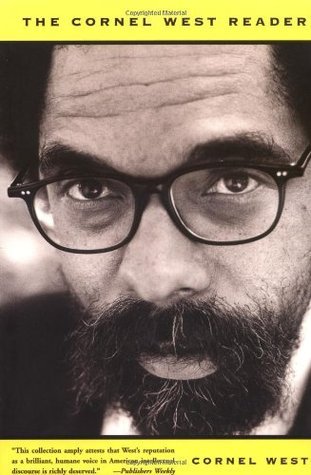
Cornel West is one of the nation's premier public intellectuals and one of the great prophetic voices of our era. Whether he is writing a scholarly book or an article for Newsweek, whether he is speaking of Emerson, Gramsci, or Marvin Gaye, his work radiates a passion that reflects the rich traditions he draws on and weaves together: Baptist preaching, American transcendentalism, jazz, radical politics. This anthology reveals the dazzling range of West's work, from his explorations of ”Prophetic Pragmatism” to his philosophizing on hip-hop.The Cornel West Reader traces the development of West's extraordinary career as academic, public intellectual, and activist. In his essays, articles, books, and interviews, West emerges as America's social conscience, urging attention to complicated issues of racial and economic justice, sexuality and gender, history and politics. This collection represents the best work of an always compelling, often controversial, and absolutely essential philosopher of the modern American experience.

New York Times best-selling author Cornel West is one of America’s most provocative and admired public intellectuals. Whether in the classroom, the streets, the prisons, or the church, Dr. West’s penetrating brilliance has been a bright beacon shining through the darkness for decades. Yet, as he points out in this new memoir, “I’ve never taken the time to focus on the inner dynamics of the dark precincts of my soul.” That is, until now. Brother West is like its author: brilliant, unapologetic, full of passion yet cool. This poignant memoir traces West’s transformation from a schoolyard Robin Hood into a progressive cultural icon. From his youthful investigation of the “death shudder” to why he embraced his calling of teaching over preaching, from his three marriages and his two precious children to his near-fatal bout with prostate cancer, West illuminates what it means to live as “an aspiring bluesman in a world of ideas and a jazzman in the life of the mind.” Woven together with the fibers of his lifelong commitment to the prophetic Christian tradition that began in Sacramento’s Shiloh Baptist Church, Brother West is a tale of a man courageous enough to be fully human, living and loving out loud.

The New York Times best-selling author of Race Matters and Democracy Matters offers open-hearted wisdom for our times in this courageous collection of quotations, speech excerpts, letters, philosophy, and photographs that reflect the profound humanity that fuels the passionate public intellectual. In a world that seesaws between unconditional love and acceptance and blind hatred and exclusion, Hope on a Tightrope will satisfy readers in search of deep wells of inspiration and challenge that marries the mind to the heart.This gift book features an original CD that highlights Dr. West’s outstanding spoken-word artistry. His August 2007 CD release Never Forget: A Journey of Revelations that featured collaborations with best-selling artists Prince, Jill Scott, and Andre 3000 topped the charts as Billboard’s #1 Spoken Word album.

An unflinching look at nineteenth- and twentieth-century African American leaders and their visionary legacies.In an accessible, conversational format, Cornel West, with distinguished scholar Christa Buschendorf, provides a fresh perspective on six revolutionary African American Frederick Douglass, W. E. B. Du Bois, Martin Luther King Jr., Ella Baker, Malcolm X, and Ida B. Wells. In dialogue with Buschendorf, West examines the impact of these men and women on their own eras and across the decades. He not only rediscovers the integrity and commitment within these passionate advocates but also their fault lines. West, in these illuminating conversations with the German scholar and thinker Christa Buschendorf, describes Douglass as a complex man who is both “ the towering Black freedom fighter of the nineteenth century” and a product of his time who lost sight of the fight for civil rights after the emancipation. He calls Du Bois “undeniably the most important Black intellectual of the twentieth century” and explores the more radical aspects of his thinking in order to understand his uncompromising critique of the United States, which has been omitted from the American collective memory. West argues that our selective memory has sanitized and even “Santaclausified” Martin Luther King Jr., rendering him less radical, and has marginalized Ella Baker, who embodies the grassroots organizing of the civil rights movement. The controversial Malcolm X, who is often seen as a proponent of reverse racism, hatred, and violence, has been demonized in a false opposition with King, while the appeal of his rhetoric and sincerity to students has been sidelined. Ida B. Wells, West argues, shares Malcolm X’s radical spirit and fearless speech, but has “often become the victim of public amnesia.” By providing new insights that humanize all of these well-known figures, in the engrossing dialogue with Buschendorf, and in his insightful introduction and powerful closing essay, Cornel West takes an important step in rekindling the Black prophetic fire so essential in the age of Obama.

In this, his premiere work, Cornel West provides readers with a new understanding of the African American experience based largely on his own political and cultural perspectives borne out of his own life's experiences. He challenges African Americans to consider the incorporation of Marxism into their theological perspectives, thereby adopting the mindset that it is class more so than race that renders one powerless in America. Armed with a new introduction by the author, this Twentieth Anniversary Edition of Prophesy Deliverance! is a must have.

Taking Emerson as his starting point, West’s basic task in this enterprise is to chart the emergence, development, decline & recent resurgence of American pragmatism. Dewey is the central figure in this pantheon of pragmatists, but he treats as well such varied mid-century representatives of the tradition as Sidney Hook, C. Wright Mills, DuBois, Niebuhr & Trilling. West’s genealogy is a personal work, for it's imbued throughout with the author’s conviction that a thoro reexamination of American pragmatism may help inspire & instruct contemporary efforts to remake & reform American society & culture. "West...may well be the pre-eminent African American intellectual of our generation."—The Nation "The American Evasion of Philosophy is a highly intelligent & provocative book. Cornel West gives us illuminating readings of the political thought of Emerson & James; provides a penetrating critical assessment of Dewey, his central figure; & offers a brilliant interpretation—appreciative yet far from uncritical—of the contemporary philosopher & neo-pragmatist Richard Rorty...What shines thru, throughout the work, is West's firm commitment to a radical vision of a philosophic discourse as inextricably linked to cultural criticism & political engagement."—Paul S. Boyer, professor emeritus of history, University of Wisconsin–MadisonAcknowledgmentsIntroduction1 The Emersonian prehistory of American pragmatism. Emerson on power & tradition; Emerson on provocation & the market; Emerson on personality & race; Emerson as organic intellectual2 The historic emergence of American pragmatism. Peirce on scientific method, community & Christian love; James on individuality, reconciliation & heroic energies3 The coming-of-age of American pragmatism: John Dewey. Dewey on historical consciousness, critical intelligence & creative democracy4 The dilemma of the mid-century pragmatic intellectual. Sidney Hook: the Deweyan political intellectual; C. Wright Mills: the neo-Deweyan radical social critic; W.E.B. Du Bois: the Jamesian organic intellectual; Reinhold Niebuhr: the Jamesian cultural critic; Lionel Trilling: the pragmatist as Arnoldian literary critic; The decline & resurgence of American pragmatism: Quine & Richard Rorty5 Prophetic pragmatism: cultural criticism & political engagement. Roberto Unger & 3rd-Wave Left romanticism; The challenge of Michel Foucault; Tragedy, tradition & political praxis; Prophetic pragmatism & postmodernityNotesIndex

In this powerful collection by one of today's leading African American intellectuals, Keeping Faith situates the current position of African Americans, tracing the geneology of the "Afro-American Rebellion" from Martin Luther King to the rise of black revolutionary leftists. In Cornel West's hands issues of race and freedom are inextricably tied to questions of philosophy and, above all, to a belief in the power of the human spirit.

'Cornel West is one of the most authentic, brilliant, prophetic, and healing voices in America today' --Marian Wright EdelmanNine of America's most influential artists, scholars, and public figures-Maya Angelou, Bill Bradley, Harry Belafonte, Patricia Williams, Wynton Marsalis, Charlayne Hunter-Gault, James Washington, James Forbes, and Haki Madhubuti-talk with Cornel West about their political awareness, art and politics, and the possibility of hope among African-Americans today.

Esteemed American philosopher, Cornel West tackles the ethics of the Marxism agenda.In this fresh, original analysis of Marxist thought, Cornel West makes a significant contribution to today's debates about the relevance of Marxism by putting the issue of ethics squarely on the Marxist agenda. West, professor of religion and director of the Afro-American studies program at Princeton University, shows that not only was ethics an integral part of the development of Marx's own thinking throughout his career, but that this crucial concern has been obscured by such leading and influential interpreters as Engels, Kautsky, Lukács, and others who diverted Marx's theory into narrow forms of positivism, economism, and Hegelianism.

The Future of American Progressivism: An Initiative for Political and Economic Reform
by Cornel West
Rating: 3.5 ⭐
Unless Americans prove themselves willing to be as open-minded about the institutional arrangements of the country as they have been about almost everything else, they will continue to find their hopes frustrated. It is not enough to rebel against the lack of justice unless we also rebel against the lack of imagination.Roberto Mangabeira Unger and Cornel West argue that the path to progressive reform goes through reorganization of our economic and political instutitions; tax and spending are not enough. Breaking with the conventional ideas of American progressive politics, they show how we can stimulate economic growth and guarantee a minimum of resources for all citizens.
Book by West, Cornel

Prophetic Fragments: Illuminations of the Crisis in American Religion and Culture
by Cornel West
Rating: 4.1 ⭐
"This collection of writings, drawn from a wide variety of sources, reveals the intellectual depth and breadth of the author. The articles include political commentary, cultural critique, literary analysis, extended book reviews, and even a short story by

Prophetic Reflections: Notes on Race and Power in America (Beyond Eurocentrism and Multiculturalism, Vol. Two)
by Cornel West
Rating: 4.0 ⭐
Book by West, Cornel

Two leading public intellectuals and dear friends—one progressive, one conservative—explore What is Truth? and Why Does Truth Matter? In Truth Matters, Cornel West and Robert P. George address a range of social issues on which Americans today are bitterly divided. Their book models robust intellectual engagement and civil discourse as they explore vital questions surrounding the idea of truth and its foundational role in our lives. Along the way, they reflect on social conditions—such as respect for freedom of speech—that must be established and maintained if truth is to be seriously pursued. They also explore the virtues—such as intellectual humility and courage—that must be acquired and practiced if we frail, fallible, fallen human beings are to be determined truth seekers and bold truth speakers.


![Democracy Matters by Cornel West. (Penguin Books,2005) [Paperback]](https://m.media-amazon.com/images/S/compressed.photo.goodreads.com/books/1698036892i/133043319.jpg)


"Cornel West is one of the most authentic, brilliant, prophetic, and healing voices in America today"—Marian Wright EdelmanNine of America's most influential artists, scholars, and public figures—Maya Angelou, Bill Bradley, Harry Belafonte, Patricia Williams, Wynton Marsalis, Charlayne Hunter-Gault, James Washington, James Forbes, and Haki Madhubuti—talk with Cornel West about their political awareness, art and politics, and the possibility of hope among African-Americans today."This book has all the freshness, all the spontaneity of good conversations anywhere, and benefits greatly from the integrity and wisdom of its contributors."—McKay Jenkins, The Star-Ledger, Newark"This is not a book for the faint-hearted. . . . Cornel West, an authentic, brilliant and prophetic black voice, deals squarely and directly with America's problems of race, recommending changes in behavior and attitude among blacks as well as whites, prescribing solutions difficult to attain, but no more difficult than perpetuation of the status quo."—Melvyn Schreiber, County Daily News, Galveston, Texas"West manages to extract something from each [contributor]. His intellectual exuberance flavors the book, and the conversations reveal important truths about our racial impasse."—In These Times
Prophesy Deliverance!: An Afro-american Revolutionary Christianity - Library Edition
by Cornel West
Rating: 5.0 ⭐
In this, his premiere work, Cornel West challenges African Americans to consider the incorporation of Marxism into their theological perspectives, thereby adopting the mindset that it is class more so than race that renders one powerless in America. His work reflects political and cultural perspectives borne out of his own formative life experiences. Decades later, his arguments continue to capture the theological imagination of many and influence the critical engagement of generations of scholars.In this fortieth anniversary edition, West invites six prominent scholars—whose respective work are grounded in various aspects of black political, cultural, and theological thought—into dialogue with this work, each writing one chapter plus a foreword by Jonathan Lee Walton. Continuing and expanding on the revolutionary discourses that West introduced in the first published work, each new essay provides nuanced lens for thinking about movements of liberation in today's African American communities.

In this, his premiere work, Cornel West challenges African Americans to consider the incorporation of Marxism into their theological perspectives, thereby adopting the mindset that it is class more so than race that renders one powerless in America. His work reflects political and cultural perspectives borne out of his own formative life experiences. Decades later, his arguments continue to capture the theological imagination of many and influence the critical engagement of generations of scholars. In this fortieth anniversary edition, West invites six prominent scholars--whose respective work are grounded in various aspects of black political, cultural, and theological thought--into dialogue with this work, each writing one chapter plus a foreword by Jonathan Lee Walton. Continuing and expanding on the revolutionary discourses that West introduced in the first published work, each new essay provides nuanced lens for thinking about movements of liberation in today's African American communities.

Fuego profético negro: Cornel West en conversación con Christa Buschendorf
by Cornel West
Rating: 4.0 ⭐