
Frederick Buechner
Frederick Buechner is a highly influential writer and theologian who has won awards for his poetry, short stories, novels and theological writings. His work pioneered the genre of spiritual memoir, laying the groundwork for writers such as Anne Lamott, Rob Bell and Lauren Winner. His first book, A Long Day's Dying, was published to acclaim just two years after he graduated from Princeton. He entered Union Theological Seminary in 1954 where he studied under renowned theologians that included Reinhold Niebuhr, Paul Tillich, and James Muilenberg. In 1955, his short story "The Tiger" which had been published in the New Yorker won the O. Henry Prize. After seminary he spent nine years at Phillips Exeter Academy, establishing a religion department and teaching courses in both religion and English. Among his students was the future author, John Irving. In 1969 he gave the Noble Lectures at Harvard. He presented a theological autobiography on a day in his life, which was published as The Alphabet of Grace. In the years that followed he began publishing more novels, including the Pulitzer Prize finalist Godric. At the same time, he was also writing a series of spiritual autobiographies. A central theme in his theological writing is looking for God in the everyday, listening and paying attention, to hear God speak to people through their personal lives.
30 Books Written

A Room Called Remember brings together some of Buechner's finest writings on faith, love, and the power of words in the form of essays, addresses, and sermons. Here Buechner explores autobiography as theology, offers exhilarating reflections on biblical passages, and leads us into the "room called Remember," that "still room within us all where the past lives on as part of the present,...where with patience, with clarity, with quietness of heart, we remember consciously to remember the lives we have lived."

A fresh, creative look at the underlying meaning of the Gospels that stresses the many dimensions of God's relationship to humanity.

Frederick Buechner's Godric "retells the life of Godric of Finchale, a twelfth-century English holy man whose projects late in life included that of purifying his moral ambition of pride...Sin, spiritual yearning, rebirth, fierce asceticism--these hagiographic staples aren't easy to revitalize but Frederick Buechner goes at the task with intelligent intensity and a fine readiness to invent what history doesn't supply. He contrives a style of speech for his narrator--Godric himself--that's brisk and tough-sinewed...He avoids metaphysical fiddle, embedding his narrative in domestic reality--familiar affection, responsibilities, disasters...All on his own, Mr. Buechner has managed to reinvent projects of self-purification and of faith as piquant matter for contemporary fiction [in a book] notable for literary finish...Frederick Buechner is a very good writer indeed." — Benjamin DeMott, The New York Times Book Review"From the book's opening sentence...and sensible reader will be caught in Godric's grip...Godric glimmers brightly." — Peter S. Prescott, Newsweek"Godric is a memorable book...a marvelous gem of a book...destined to become a classic of its kind." — Michael Heskett, Houston Chronicle"In the extraordinary figure of Godric, both stubborn outsider and true child of God, both worldly and unworldly, Frederick Buechner has found an ideal means of exploring the nature of spirituality. Godric is a living battleground where God fights it out with the world, the Flesh, and the Devil." — London Times Literary Supplement"With a poet's sensibly and a high reverent fancy, Frederick Buechner paints a memorable portrait." — Edmund Fuller, The Wall Street Journal

Daily meditations taken from the works of an acclaimed novelist, essayist, and preacher who has articulated what he sees with a freshness and clarity and energy that hails our stultified imaginations.

This memoir reflects on key moments of the author's early life, from childhood to his entering seminary, that reveal how God speaks to us in a variety of ways every moment of every day.

With eloquence, candor and simplicity, Frederick Buechner shares his darkest secrets--his father's alcohol abuse and suicide. He traces the influence of these events on his life as a son, father, husband, and minister, and explores the healing, hope and love to be found in revealing what has long been hidden.

Learn to see God's remarkable works in the everyday ordinary of your life. Your remarkable life is happening right here, right now. You may not be able to see it--your life may seem predictable and your work insignificant until you look at your life as Frederick Buechner does. Named "the father of today's spiritual memoir movement" by Christianity Today , Frederick Buechner reveals how to stop, look, and listen to your life. He reflects on how both art and faith teach us how to pay attention to the remarkableness right in front of us, to watch for the greatness in the ordinary, and to use our imaginations to see the greatness in others and love them well. Pay attention, says Buechner. Listen to the call of a bird or the rush of the wind, to the people who flow in and out of your life. The ordinary points you to the extraordinary God who created and loves all of creation, including you. Pay attention to these things as if your life depends upon it. Because, of course, it does. As you learn to pay attention to your life and what God is doing in it, you will uncover the plot of your life's story and the sacred opportunity to connect with the Divine in each moment.

In Wishful Thinking , the first book in his much-loved lexical trilogy, Frederick Buechner puts the language of God, the universe, and the human spirit under his wry linguistic microscope. In his often ironic and always keen-sighted reflections on such terms as agnostic, envy, love, and sin , he invited us to look at theses everyday words in new and enlightening ways. Freshly revised and expanded for this edition, Wishful Thinking is a "beguiling" [ Time ] adventure in language for the restless believer, the doubter, and all who love words.

Frederick Buechner has long been a kindred spirit to those who find elements of doubt as constant companions on their journey of faith. He is a passionate writer and preacher who can alter lives with a simple phrase. Buechner's words, both written and spoken, have the power to revolutionize and revitalize belief and faith. He reveals the presence of God in the midst of daily life. He faces and embraces difficult questions and doubt as essential components of our lives, rather than as enemies that destroy us. "Listen to your life!" is his clarion call. This theme pervades this definitive collection of sermons, delivered throughout Buechner's lifetime. Presented chronologically, they provide a clear picture of the development of his theology and thinking. Reflecting Buechner's exquisite gift for storytelling and his compassionate pastor's heart, Secrets in the Dark will inspire laughter, hope, and bring great solace. Turn the pages and rediscover what it means to be thoughtful about faith. See why this renowned writer has been quoted in countless pulpits and beloved by Americans for generations.

With characteristic eloquence and insight, Buechner presents a three-part series of reflections that probe, through the course of one day, the innermost mysteries of life. Blending an artist's eye for natural beauty, the true meaning of human encounters, and the significance of occurences (momentous or seemly trivial), with a wealth of personal, literacy, biblical, and spiritual insights, he offers a matchless opportunity for readers to discover the hidden wisdom that can be gleaned through a heightened experience of daily life.
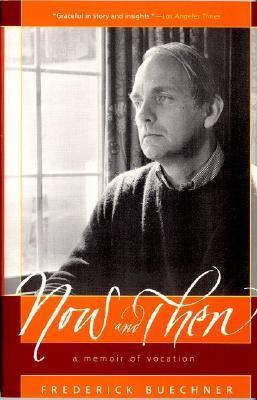
Spiritual and autobiographical reflections on the author's seminary days, early ministry, and writing career.

Rich in family drama, passion, and human affinity, critically acclaimed author Frederick Buechner's contemporary retelling of this captivating and timeless biblical saga revitalizes the ancient story of Jacob, delighted our senses and modern sensibilities and gracing us with his exceptional eloquence and wit.

As a novelist and memoirist, Frederick Buechner brings to these meditations on biblical passages a keen eye for narrative and detail. He brings as well an artist's love for language. As he says of James Weldon Johnson's poetic rendering of the creation story, this "is the language that man always uses when he tries to talk about the real mysteries of existence." So too is it the language Buechner brings to these reflections, which similarly explore the real mysteries. Written simply and directly (their original audience was a group of students at the private school where the author was a minister), Buechner delves into topics ranging from Jacob's wrestling with the angel (this is the "magnificent defeat" of the title) to the annunciation and birth of Jesus and beyond. Whatever the topic, Buechner writes with clarity and honesty. He does not present himself as among the saints so much as among the seekers. He doubts and questions but always comes back to the central place of beauty and of joy: here, he suggests, is where we must place our faith. Here is the true miracle of life, inviting us to "open our arms, our lives, to the deepest miracle of reality itself and call it by its proper name, which is King of kings and Lord of lords, or call it by any name we want, or call it nothing, but live our lives open to the fierce and transforming joy of it." --Doug Thorpe.

An acclaimed author interweaves history and legend to re-create the life of a complex man of faith fifteen hundred years ago. Winner of the 1987 Christianity and Literature Book Award for Belles-Lettres.

When pain is real, why is God silent? Frederick Buechner has grappled with the nature of pain, grief, and grace ever since his father committed suicide when Buechner was a young boy. He continued that search as a father when his daughter struggled with anorexia. In this essential collection of essays, including one never before published, Frederick Buechner finds that the God who might seem so silent is ever near. He writes about what it means to be a steward of our pain, and about this grace from God that seems arbitrary and yet draws us to his holiness and care. Finally he writes about the magic of memory and how it can close up the old wounds with the memories of past goodnesses and graces from God. Here now are the best of Buechner’s writings on pain and loss, covering such topics as the power of hidden secrets, loss of a dearly beloved, letting go, resurrection from the ruins, peace, and listening for the quiet voice of God. And he reveals that pain and sorrow can be a treasure—an amazing grace. Buechner says that loss will come to all of us, but he writes that we are not alone. Crazy and unreal as it may sometimes seem, God’s holy, healing grace is always present and available if we are still enough to receive it.

These powerful reflections on biblical themes by one of today's most popular religious writers point up the truth that the darkness of doubt is often necessary to provoke a hunger for God. The Hungering Dark towers as one of Fredrick Buechner's best statements on contemporary belief challenged by doubt. Drawing on texts from the Old and New Testaments, The Hungering Dark invites us to discover the hidden face of God, the manifestation of his grace, revealed in stillness, in unexpected places, often "through a glass, darkly." It invites us to say yes to "the possibility of God", and to recover "this fantastic hope that the future belongs to God...that holiness will return to our world."

Awry and thought-provoking jaunt through the spiritual terrain of our everyday language -- a lexion of uncommon insight to jar the mind and nourish the soul. "I think of faith as a kind of whistling in the dark, because in much the same way," writes Buechner, "it helps to give us courage and to hold the shadows at bay."

In this second book of his popular lexical trilogy, Frederick Buechner profiles more than 125 of the Bible's most holy and profane people -- and one whale. In his lively and witty prose, Buechner brings to life such moments from scripture as:Adam's pangs of regret for a remembered EdenDelilah's last glimpse of Samson as they dragged him awayLazarus's first impressions upon rising from the deadTo read Peculiar Treasures is to realize that many of these legendary figures are not who we thought they were. But they are -- in their human dreams,ambitions, and imperfections -- very much like us.

From critically acclaimed author and Pulitzer Prize runner-up Frederick Buechner comes another powerfully honest memoir, The Eyes of the Heart. Full of poinant insights into his most personal relationships, this moving account traces how the author was shaped as much by his family's secrets as by its celebrations.Within the innermost chambers of his consciousness, Buechner, in his characteristically self-searching style, explores the mysteries and truths behind his deepest connections to family, friends, and mentors. Extraordinarily moving, this memoir follows not chronology but the converging paths of Buechner's imagination and memory. Buechner invites us into his library-his own Magic Kingdom, Surrounded by his beloved books and treasures, we discover how they serve as the gateway to Buechner's mind and heart. He draws the reader into his recollections, moving seamlessly from reminiscence to contemplation. Buechner recounts events such as the tragic suicide of his father and its continual fallout on his life, intimate and little-known details about his deep friendship with the late poet James Merrill, and his ongoing struggle to understand the complexities of his relationship to his mother. This cast of characters comprised of Buechner's relatives and loved ones is brought to vibrant life by his peerless writing and capacity to probe the depths of his own consciousness. Buechner visits his past with an honest eye and a heart open to the most painful and life-altering of realizations. heartbreaking and enlightening, The Eyes of the Heart is a treasure for any who have ever pondered the meaning and mystery of their own past. As "one of our finest writers," according to author Annie Dillard, Frederick Buechner provides yet another chapter in the tale of his life in this gripping memoir tracing the complicated roots and path of his inner life and family, with their multitude of intersections." The Eyes of the Heart stands as a touching testimonial to the significance of kinship to the author as well as to the legions of readers who have come to regard him as one of their own.

In this deeply moving book of reflection and recollection, Frederick Buechner once again draws us into his deeply textured life and experience to illuminate our own understanding of home as both our place of origin and our ultimate destination. For Frederick Buechner, the meaning of home is the home we remember and the home we dream. As a word, it not only recalls the place that we grew up in and that had much to do with the people we eventually became, but also points ahead to the home that, in faith, we believe awaits us at life's end. Writing at the approach of his seventieth birthday, he describes, both in prose and in a group of poems, the one particular house that was most precious to him as a child, the books he read there, and the people he loved there. He speaks also of the lifelong search we are all engaged in to make a new home for ourselves and for our families, which is at the same time a search to find something like the wholeness and comfort of home with ourselves. As he turns his attention to our dreams of the heavenly home still to come, he sees it as both hallowing and fulfilling the charity and the peach of our original home. Writing with warmth, wisdom, and compelling eloquence, Frederick Buechner once again enables us to see more deeply into the secret places of our hearts. The Longing for Home will help to bring clarity and guidance to anyone who searches for meaning in a world that all too often seems meaningless.

One of the brightest lights in late-twentieth-century literature, Frederick Buechner has published more than twenty-five works of fiction and nonfiction that continue to dazzle critics and readers alike, adding continuously to the ranks of his fiercely loyal following. On the Road with the Archangel is sure to continue this tradition with its powerful blend of humor, artistry, and insight into the nature of the human and the divine. Inspired by events in the apocryphal Book of Tobit, from the second century B.C., this is the magical tale of two families brought together, as no mere coincidence, by the devilishly clever archangel Raphael. One is the family of Tobit, a virtuous man who can no longer support his wife and son because of Raguel, the quiet, devoted father of Sarah whose pact with the demon Asmodeus has left her life in tragic shambles. Assuming human form, Raphael appears before Tabias, Tobit's devoted son, to help him retrieve his father's fortune hidden in a faraway city. Together, they embark on a miraculous journey in search of the answers to both families' prayers--a journey that is made challenging and delightful by Rapheal's artful efficiency. On the Road with the Archangel is a masterful combination of fluid writing, lyrical storytelling, and ancient truth blended with modern wisdom. And beneath it all lies a subtle, glowing meditation on the nature of the Holy. Hailed as "one of our most original storytellers" ( USA Today ), Pulitzer Prize-nominated author Frederick Buechner has written an extraordinary new novel that shines with the mystery and wonder of the divine. Drawn from the ancient apocryphal Book of Tobit, On the Road with the Archangel unravels the tale of a eccentric blind father and his somewhat bumbling song who journeys to seek his family's lost treasure. Narrated by the wry and resourceful archangel Raphael, Buencher's tale is a pure delight, alive with vivid characters, delightful adventures and wondrous revelations.

This haunting novel, enriched by echoes of Shakespeare's The Tempest and the Gospels, interweaves the themes of love, betrayal, and redemption as two estranged brothers confront each other after many years.

Four Unexpected Prophets Who Shine Light into the Darkness

Pulitzer Prize finalist Frederick Buechner's quartet of outrageously witty, inspirational Bebb novels in one volume.

With timeless insight, Frederick Buechner introduces readers to the Jesus of the Gospels. The old, old story begins to ring new as Buechner revisits the ancient stories and shows us different aspects of the faces of Jesus. Award-winning author Frederick Buechner retells the stories of the Gospels and reminds us that to see Jesus afresh is to be changed and challenged and to be put back on our feet. The Faces of Jesus is a distinctive and warm-hearted look at this person, this God, this teacher, this wanderer, this man of suffering.

An eleven-year-old boy describes the joys and sorrows of growing up in a dysfunctional family with a jobless alcoholic father during the hard times of the Depression

Beyond Words n (1.) Terms or names that point to the realm of mystery and depth that lies beyond our ordinary experience. (2.) The reality that is beyond even the power of beyond words to convey, and that can be known only by experiencing it for yourself. "A word a day to keep the demons at bay." This is how Frederick Buechner likes to describe this witty and incisive dictionary. A daily devotional from one of today's greatest spiritual writers, Beyond Words offers 366 entries from Buechner's three alphabet books, Wishful Thinking , Peculiar Treasures , and Whistling in the Dark , including a new Introduction and nineteen new entries. Providing definitions of both sacred and ordinary words, as well as biblical characters, Buechner unabashedly brings his fresh perspective to words, concepts, and characters we thought we understood. This is a great introduction to Buechner's work as well as a library staple for those already well versed in his writing. It is Buechner at his best. Whether readers find themselves tearful from a deeply moving insight or laughing out loud at an unexpected turn of phrase, they will always feel uplifted, illuminated, and enchanted by the wisdom of Frederick Buechner.

These 14 eclectic pieces explore faith and fiction, offer a novelist's view of the Bible, and comment on what Buechner believes the church is called by God to become. Buechner is the author of many works of fiction and nonfiction, including Godric (nominated for a Pulitzer Prize) and Telling Secrets.

Lion Country is a richly entertaining book, sometimes very funny, sometimes very moving, and always deeply suggestive of meaning somewhere beyond itself. Its first-person narrator, Antonio Parr, is a thirty-four-year-old ex-teacher, ex-sculptor in scrap iron, ex-would-be-novelist who on impulse answers the ad of a religious diploma mill. He receives his ordination through the mail, allowing him tax and other advantages, and eventually meets the ebullient and wonderfully ambiguous head of the organization, Leo Bebb. Antonio's twin, Miriam, is dying of a bone disease in Manhattan, but he is so fascinated as well as repelled by Bebb that he seeks him out in Armadillo, Florida - the site of The Church of Holy Love, Inc. - where most of the novel's action takes place. It is here that he meets, among others, Brownie, Bebb's peculiarly seraphic assistant; Hermon Redpath, a septuagenarian satyr whom Bebb hopes to make his patron; and Bebb's twenty-one-year-old Daughter, Sharon, with whom Antonio Parr falls in love. In addition to conferring degrees in almost anything on almost anybody who can meet the fee, Bebb turns out to have been tried earlier on charges of sexual exhibitionism; and as Parr's knowledge of him deepens, together with his knowledge of himself, their destinies grow curiously linked. Although Mr. Buechner writes with the same brilliance of language and imagery as in his earlier novels and is concerned as always with the depth and complexity of human life, Lion Country stands apart from his earlier work. There is a lightness of touch here, a sensuousness, a feeling of celebration, that should make him accessible to a far larger circle of readers. Leo Bebb is perhaps the strongest example of a recurring Buechner the sinner and the saint rolled together into one. As Dale Brown puts "Is it possible that the unlikeliest of vessels, the obvious shyster, that round ball of contradictions and failings, could function as an instrument of grace?"...

In these original essays, short stories, and poems, the beloved Frederick Buechner reflects on the moments of transcendence in the midst of his daily existence. In a myriad of commonplace activities, he finds the presence of the divine, and he elegantly describes these persons, events, and observations, nimbly transporting readers into these realities. With his masterly crafted prose, Buechner edifies, inspires, and offers a timeless model for approaching our human experience.