
The Paris Review
Founded in Paris by Harold L. Humes, Peter Matthiessen, and George Plimpton in 1953, The Paris Review began with a simple editorial mission: “Dear reader,” William Styron wrote in a letter in the inaugural issue, “The Paris Review hopes to emphasize creative work—fiction and poetry—not to the exclusion of criticism, but with the aim in mind of merely removing criticism from the dominating place it holds in most literary magazines and putting it pretty much where it belongs, i.e., somewhere near the back of the book. I think The Paris Review should welcome these people into its pages: the good writers and good poets, the non-drumbeaters and non-axe-grinders. So long as they're good.” Decade after decade, the Review has introduced the important writers of the day. Adrienne Rich was first published in its pages, as were Philip Roth, V. S. Naipaul, T. Coraghessan Boyle, Mona Simpson, Edward P. Jones, and Rick Moody. Selections from Samuel Beckett's novel Molloy appeared in the fifth issue, one of his first publications in English. The magazine was also among the first to recognize the work of Jack Kerouac, with the publication of his short story, “The Mexican Girl,” in 1955. Other milestones of contemporary literature, now widely anthologized, also first made their appearance in The Paris Review: Italo Calvino's Last Comes the Raven, Philip Roth's Goodbye Columbus, Donald Barthelme's Alice, Jim Carroll's Basketball Diaries, Peter Matthiessen's Far Tortuga, Jeffrey Eugenides’s Virgin Suicides, and Jonathan Franzen’s The Corrections. In addition to the focus on original creative work, the founding editors found another alternative to criticism—letting the authors talk about their work themselves. The Review’s Writers at Work interview series offers authors a rare opportunity to discuss their life and art at length; they have responded with some of the most revealing self-portraits in literature. Among the interviewees are William Faulkner, Vladimir Nabokov, Joan Didion, Seamus Heaney, Ian McEwan, and Lorrie Moore. In the words of one critic, it is “one of the single most persistent acts of cultural conservation in the history of the world.”
26 Books Written

How do great writers do it? From James M. Cain's hard-nosed observation that "writing a novel is like working on foreign policy. There are problems to be solved. It's not all inspirational," to Joan Didion's account of how she composes a book--"I constantly retype my own sentences. Every day I go back to page one and just retype what I have. It gets me into a rhythm"--The Paris Review has elicited some of the most revelatory and revealing thoughts from the literary masters of our age. For more than half a century, the magazine has spoken with most of our leading novelists, poets, and playwrights, and the interviews themselves have come to be recognized as classic works of literature, an essential and definitive record of the writing life. They have won the coveted George Polk Award and have been a contender for the Pulitzer Prize. Now, Paris Review editor Philip Gourevitch introduces an entirely original selection of sixteen of the most celebrated interviews. Often startling, always engaging, these encounters contain an immense scope of intelligence, personality, experience, and wit from the likes of Elizabeth Bishop, Ernest Hemingway, Truman Capote, Rebecca West, and Billy Wilder. This is an indispensable book for all writers and readers.

Introduced by editor Emily Nemens and illustrated by Joana Avillez, the twelve interviews in Women at Work Volume II add to the stunning lineup in Women at Work Volume I; from Marianne Moore (1961) to Maxine Groffsky (2017)—by way of Katherine Anne Porter, Marguerite Young, May Sarton, Doris Lessing, Maya Angelou, Alice Munro, Jeanette Winterson, Wendy Wasserstein, Luisa Valenzuela, and Louise Erdrich. Intimate, deep, full of surprises, this second volume of classic interviews will inspire writers, students, and anyone else who cares about the creative process.

The Paris Review Interviews, II: Wisdom from the World's Literary Masters
by The Paris Review
Rating: 4.4 ⭐
Since The Paris Review was founded in 1953, it has given us invaluable conversations with the greatest writers of our age, vivid self-portraits that are themselves works of finely crafted literature. From William Faulkner's determination that a great novel takes ninety-nine percent talent . . . ninety-nine percent discipline . . . ninety-nine percent work, to Gabriel García Márquez's observation that in the first paragraph, you solve most of the problems with your book, The Paris Review has elicited revelatory and revealing thoughts from our most accomplished novelists, poets, and playwrights. With an introduction by Orhan Pamuk, this volume brings together another rich, varied crop of literary voices, including Toni Morrison, Isaac Bashevis Singer, Graham Greene, James Baldwin, Stephen King, Philip Larkin, Eudora Welty, and more. A colossal literary event, as Gary Shteyngart put it, The Paris Review Interviews, II, is an indispensable treasury of wisdom from the world's literary masters.

The Paris Review Book: of Heartbreak, Madness, Sex, Love, Betrayal, Outsiders, Intoxication, War, Whimsy, Horrors, God, Death, Dinner, Baseball, Travels, ... Else in the World Since 1953
by The Paris Review
Rating: 4.2 ⭐
For a half-century, The Paris Review has published writing and interviews from the world's most brilliant authors. To commemorate the anniversary, a breathtakingly diverse and illuminating anthology has been assembled. The greatest writers here write and speak upon the greatest subjects of our *Lorrie Moore and Raymond Carver on "Heartbreak"*Vladimir Nabokov on SEX*Kurt Vonnegut and Susan Sontag on "War"*Jonathan Franzen on "Betrayal"*Jeffrey Eugenides and Norman Mailer on "Death"*Philip Roth on "God"Inspiring a dizzying range of thought and emotion, the collection holds a mirror to the world we live in and to the reader's own hopes, dreams, fears, and joy.

The Paris Review Interviews, III: The Indispensable Collection of Literary Wisdom
by The Paris Review
Rating: 4.4 ⭐
"I have all the copies of The Paris Re view and like the interviews very much. They will make a good book when collected and that will be very good for the Review ."--Ernest HemingwaySince The Paris Review was founded in 1953, it has given us invaluable conversations with the greatest writers of our age, vivid self-portraits that are themselves works of finely crafted literature. From Salman Rushdie's daring rhetorical question "why shouldn't literature provoke?" to Joyce Carol Oates's thrilling comments about her own prolific output, The Paris Review has elicited revelatory and revealing thoughts from our most accomplished novelists, poets, and playwrights. How did Georges Simenon manage to write about six books a year, what was it like for Jan Morris to write as both a man and a woman, what influences moved Ralph Ellison to write Invisible Man ? In the pages of The Paris Review , writers give more than simple answers, they offer uncommon candor, depth, and wit in interviews that have become the gold standard of the literary Q&A.With an introduction by Margaret Atwood, this volume brings together another rich, varied crop of literary voices, including Martin Amis, Norman Mailer, Raymond Carver, John Cheever, Harold Pinter, and more. "A colossal literary event," as Gary Shteyngart put it, The Paris Review Interviews, III , is an indispensable treasure of wisdom from the world's literary masters.
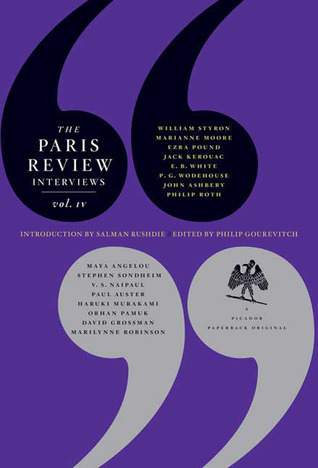
For more than fifty years, The Paris Review has brought us revelatory and revealing interviews with the literary lights of our age.This critically acclaimed series continues with another eclectic lineup, including Philip Roth, Ezra Pound, Haruki Murakami, Marilynne Robinson, Stephen Sondheim, E. B. White, Maya Angelou, William Styron and more. In each of these remarkable extended conversations, the authors touch every corner of the writing life, sharing their ambitions, obsessions, inspirations, disappointments, and the most idiosyncratic details of their writing habits.The collected interviews of The Paris Reviews are, as Gary Shteyngart put it, "a colossal literary event."

An energetic collection celebrating the bold writers at the forefront of today’s literary world—featuring stories, essays, and poems from “America’s greatest literary journal” (Time) For more than half a century, the Paris Review has launched some of the most exciting new literary voices, from Philip Roth to David Foster Wallace. But rather than trading on nostalgia, the storied journal—reconceived in 2010 by editor Lorin Stein—continues to search outside the mainstream for the most exciting emerging writers. Harmonizing a timeless literary feel with impeccable modern taste, its pages are vivid proof that the best of today’s writing more than upholds the lofty standards that built the magazine’s reputation.The Unprofessionals collects pieces from the new iteration of the Paris Review by contemporary writers who treat their art not as a profession, but as a calling. Some, like Zadie Smith, Ben Lerner, and John Jeremiah Sullivan, are already major literary presences, while others, like Emma Cline, Benjamin Nugent, and Ottessa Moshfegh, will soon be household names. A master class in contemporary writing across genres, this collection introduces the must-know voices in the modern literary scene.

The Paris Review Book for Planes, Trains, Elevators, and Waiting Rooms
by The Paris Review
Rating: 3.8 ⭐
From “the biggest little magazine in the world” comes an addictively clever anthology prescribed to fill all the blank moments of your life.The Paris Review Book for Planes, Trains, Elevators, and Waiting Rooms is the ultimate, and perfect, theme-anthology. It's theme is the reader. Everyday we must live through moments of waiting--to get from one place to the next, from one appointment to another, for something to happen. This ingeniously useful compendium offers reading material to fill those gray moments with beauty, wonder, insight, and emotion. Organized by the time that the reader has available at that moment, the anthology provides a poem for that elevator ride to the lawyer's office; a short story for the thirty-minute commute; a novella for the three-hour plane ride. As ever, The Paris Review provides work from only the best writers of the last three generations.Among those to - Mary Robison- Denis Johnson- Michael Chabon- Marilyn Hacker- Robert Pinsky- and many more.

The Paris Review asks: who hasn’t survived a tax audit, a snowstorm, a break-up, or presided over a murder?The next addictively clever Paris Review anthology is not a self-help manual; rather it is a wicked elaboration on the human effort to overcome--and instigate--trouble. Throughout these pages you will find men plagued with guilt, women burdened by history, scientists bound by passion, mothers fogged with delusion, and lovers vexed with jealousy. In the theme that encompasses every life, no protagonist--or reader!--is exempt.Among those to appear: - Annie Proulx- Andre Dubus- Norman Rush- Charles Baxter- Wells Tower- Julie Orringer- Elizabeth Gilbert- Ben Okri- Rick Bass

The Paris Review, jeden z najvýznamnejších literárnych časopisov na svete, publikuje už od päťdesiatych rokov rozsiahle a precízne rozhovory s poprednými autormi a spisovateľkami. Za takmer sedemdesiat rokov svojej existencie ich vyšlo niekoľko stoviek a len veľmi ťažko nájdete významného spisovateľa, ktorý by mu rozhovor neposkytol. V knižnom vydaní sme sa rozhodli postupne predstaviť každú literárnu dekádu zrkadlom jej najdôležitejších spisovateľov a autoriek.V našom výbere trinástich rozhovorov zo šesťdesiatych rokov sa okrem iného dozviete ako vznikal kultový Keroucacov román Na ceste, čo si myslela Simone de Beauvoir o láske, a prečo sa Céline na sklonku života stránil ľudí.V knihe nájdete rozhovory s nasledovnými autormi a autorkou: Saul Bellow, Jorge Luis Borges, William Seward Burroughs, Louis-Ferdinand Céline, Jean Cocteau, Simone De Beauvoir, Aldous Huxley, Jack Kerouac, Henry Miller, Vladimir Nabokov, Boris Pasternak, Ezra Pound, Isaac Bashevis Singer

Prvé číslo časopisu The Paris Review vyšlo v roku 1953 a okrem editoriálu Williama Styrona, poviedok, básni a literárnej kritiky sa v ňom objavil prvý z rozsiahlych rozhovorov, ktorými sa časopis veľmi rýchlo preslávil po celom svete. Odvtedy ich vyšlo niekoľko stoviek a počas tých šesťdesiatich piatich rokov existencie The Paris Review len veľmi ťažko nájdete významného spisovateľa, ktorý by mu rozhovor neposkytol. Na jeho stránkach zazneli najvýraznejšie hlasy svojej generácie, od Célina, Borgesa či Nerudu, cez Vonneguta, Cortázara a Kunderu, až po Houllebecqa alebo Elenu Ferrante. Nechýbajú v nich samozrejme takmer žiadni držitelia Nobelovej ceny za literatúru. Vo výbere vydavateľstva BRaK nájdete desať veľkých mien 50.rokov, medzi nimi napr. Hemingwaya, Capoteho, Eliota či Moraviu.

For more than half a century, The Paris Review has conducted in-depth interviews with our leading novelists, poets, and playwrights. These revealing, revelatory self-portraits have come to be recognized as themselves classic works of literature, and an essential and definitive record of the writing life. This beautiful slipcase edition brings together all four volumes of Picador's selected Paris Review Interviews, including Q&As with Ernest Hemingway, T.S. Eliot, Kurt Vonnegut, Elizabeth Bishop, Richard Price, Joan Didion, Gabriel Garcia Marquez, Philip Larkin, James Baldwin, Toni Morrison, Stephen King, Robert Lowell, Ralph Ellison, Joyce Carol Oates, Raymond Carver, Salman Rushdie, Martin Amis, Maya Angelou, Haruki Murakami, Paul Auster, Marilynne Robinson, and more. The Paris Review Interviews Box Set is an indispensable treasury of wisdom from the world's literary masters.

From the pages of The Paris Review, a collection of interviews with Jack Kerouac, Allen Ginsberg, William Burroughs, Ken Kesey, Lawrence Ferlinghetti, and more Edited by Paris Review co-founder George Plimpton, and with an introduction by Rick Moody, this anthology of “Writers at Work” interviews featuring the great figures of the Beat and Black Mountain movements is an in-depth look into one of the most famous literary tribes of the century. The Beats, with their mix of talent, bravado, and insight into the social and political climes of their time, continue to influence students, writers, and critics today. “Mr. Plimpton and his able cohorts at The Paris Review have cannily chosen this historical moment for the retrieval of this archive, viz., the fortieth anniversary of Kerouac’s masterpiece, and also the recent departures of Ginsberg and Burroughs to celestial addresses, and thus we have a real warts-and-all retrospective, ex post facto, Kerouac in the late sixties, Ginsberg (in one of two pieces here) in the late seventies, Bowles in the eighties, Snyder in the nineties, so that the high period of Beat style is well past at the time of these conversations; Plimpton’s wisdom here amounts to permitting the language and form of these interviews to persist over the years and thereby accrue historical context, in which we are enabled to see how the Beat praxis (or Black Mountain praxis) is reactive when faced with such forces as Vietnam, hippie culture, eighties consumerism, neglect by literary history, and so forth.” —from the introduction by Rick Moody

Playwrights at Work: Interviews with Albee, Beckett, Guare, Hellman, Ionesco, Mamet, Miller, Pinter, Shepard, Simon, Stoppard, Wasserstein, Wilder, Williams, Wilson (Modern Library
by The Paris Review
Rating: 4.4 ⭐
The third installment in the Modern Library's Paris Review "Writers at Work" series, this is an all-new gathering of interviews with the most important and compelling playwrights of our time. Their singular takes on their craft, their influences, their lives, the state of contemporary theater, and the tricks of the trade create an illuminating and unparalleled record of the life of the theater itself."At its best, theater is an antidote to the whiff of barbarity in the millennial air. 'My feeling is that people in a group, en masse, watching something, react differently, and perhaps more profoundly, than they do when they're alone in their living rooms,' Arthur Miller says here. In the dark, facing the stage, surrounded by others, the paying customer can let himself go; he is emboldened. The theatrical encounter allows a member of the public to think against received opinions. He can submerge himself in the extraordinary, admit his darkest, most infantile wishes, feel the pulse of the contemporary, hear the sludge of street talk turned into poetry. This enterprise can be joyous and dangerous; when the theater's game is good and tense, it is both."--from the Introduction by John Lahr

Sztuka powieści. Antologia wywiadów z pisarkami II z „The Paris Review”
by The Paris Review
Rating: 4.2 ⭐
Doris Lessing uważa że „wszystkim rządzi absolutny bajzel” i zdradza, jak łatwo zostaje się guru. Margaret Atwood przekonuje, że nie ma bardziej naturalnego wrażenia, niż poczucie obcości. Toni Morrison mówi o tym, jak ważny jest dobry redaktor, Alice Munro snuje opowieść o bestii, która czyha w szafie, kiedy pisarz się starzeje, Ursula Le Guin - o mackach, które wystają każdemu zaszufladkowanemu twórcy, zaś Herta Muller o niemal szamańskim doświadczaniu przyrody.O różnych sposobach pracy nad tekstem, o łapaniu chwil, wątpliwościach, warsztacie pisarskim, współpracy z redaktorami i braku zaufania do krytyki literackiej opowiadają największe pisarki XX wieku.Sztuka powieści to jednocześnie historia literatury współczesnej w pigułce i erudycyjny, wielogłosowy wykład o tym, czym są pisarstwo i życie.

The Paris Review es hoy, tras más de medio siglo de historia, una revista legendaria por haber convertido las entrevistas a creadores del amplio ámbito de las letras―narradores, poetas, dramaturgos y guionistas de cine―en un notabilísimo género de indudable valor literario y humano. La presente selección, la más exhaustiva jamás publicada en nuestra lengua, reúne cien retratos literarios realizados a lo largo de sesenta años que abarcan la época dorada de la literatura universal del pasado siglo: Forster, Hemingway, Faulkner, Eliot, Pound, Auden, Lowell, Dinesen, Welty, Bishop, Pasternak, Frost, Céline, Simenon, Borges, Kerouac, Wilder, Carver, Cortázar, Kundera, Walcott, Yourcenar, Márquez, Murdoch, Atwood, Gordimer, DeLillo, Sontag, McEwan, Auster, Murakami, Rushdie, Eco o Marías, entre muchísimos otros. Además de un volumen inigualable de clases magistrales de literatura, el lector tiene en las manos lecciones de vida de los más grandes maestros de nuestro tiempo.

Séria vybraných rozhovorov s literárnymi osobnosťami, ktoré boli publikované po dekádach v The Paris Review pokračuje. Jeden z najvýznamnejších literárnych časopisov na svete, publikuje už od päťdesiatych rokov rozsiahle a precízne rozhovory s poprednými autormi a spisovateľkami. Za takmer sedemdesiat rokov svojej existencie ich vyšlo niekoľko stoviek a len veľmi ťažko nájdete významnejšieho spisovateľa, ktorý by mu rozhovor neposkytol. V knižnom vydaní, ktorého tretí diel držíte v rukách, sme sa rozhodli postupne predstaviť každú literárnu dekádu zrkadlom jej najdôležitejších spisovateľov a autoriek. V našom výbere desiatich rozhovorov zo sedemdesiatych rokov sa okrem iného dozviete, ako Anne Sexton ovplyvnil v tvorbe jej terapeut, čo pre Pabla Nerudu znamenal vzťah medzi poéziou a politikou, vzťah Anthony Burgessa k Jamesovi Joyceovi alebo akú úlohu v tvorbe Christophera Isherwooda zohrával hinduizmus.V knihe nájdete rozhovory s nasledovnými autormi a autorkou: Anthony Burgess, Joan Didion, Joseph Heller, Christopher Isherwood, Bernard Malamud, Pablo Neruda, Joyce Carol Oates, Anne Sexton, Gore Vidal, Kurt Vonnegut ml.

رویای نوشتن: نویسندگان معاصر از نوشتن می گویند: جرج پلیمپتن، گابریل گارسیا مارکز، وودی آلن، پی. دی. جیمز، اسماعیل کاداره ...

The Paris Review’s seventieth-anniversary issue, no. 243.Mary Gaitskill on the Art of Fiction: “I don’t think anyone consciously develops a voice.”Rita Dove on the Art of Poetry: “I believe that if you’re a poet and there is something you are passionate about, regardless of what it is, it will nourish the poetry.” Olga Tokarczuk on the Art of Fiction: “To get going, I need a strong cup of tea and a game of solitaire—it’s like running a comb through my brain.”Prose by Rivers Solomon, Elisa Gonzalez, Elaine Feeney, Daniel Mason, and Marie NDiaye.Poetry by Tracy Fuad, Michael Bazzett, Kyra Wilder, D. S. Marriott, Dobby Gibson, Uche Nduka, Joyce Mansour, Nam Le, and Malachi Black. Art by Henry Taylor and Tabboo!.Cover by Peter Doig.

Una brillante serie de entrevistas a autores hechas y compiladas por The Paris Review.

The Paris Review, jeden z najvýznamnejších literárnych časopisov na svete, publikuje už od päťdesiatych rokov rozsiahle a precízne rozhovory s poprednými autormi a autorkami. Za takmer sedemdesiat rokov jeho existencie ich vyšlo niekoľko stoviek a len veľmi ťažko nájdete významného spisovateľa, ktorý by mu rozhovor neposkytol. V knižnom vydaní, ktorého štvrtý diel držíte v rukách, sme sa rozhodli postupne predstaviť každú literárnu dekádu zrkadlom jej najdôležitejších spisovateľov a spisovateliek. V našom prvom výbere desiatich rozhovorov z osemdesiatych rokov sa okrem iného dozviete, prečo Julio Cortázar debutoval až po tridsiatke, čo viedlo Johna Fowlesa k spáleniu jedného z jeho románov a akú pascu pripravila Doris Lessing na literárnu kritiku.V knihe nájdete rozhovory s nasledovnými autormi a autorkou: James Baldwin, Raymond Carver, Julio Cortázar, John Fowles, Carlos Fuentes, Arthur Koestler, Milan Kundera, Doris Lessing, Philip Roth a Derek Walcott

This is a collection of the Paris Review interviews that provides unique and valuable insights into the writer's craft and the writer's mind.

Da quando è stata fondata, nel 1953, The Paris Review ha avuto il merito di restituire all’attenzione dei lettori appassionanti conversazioni dal valore letterario inestimabile, realizzate con le più grandi voci del nostro secolo: brevi scatti folgoranti che le ritraggono nella loro quotidianità, conversazioni a metà tra una lezione filosofica e le chiacchiere da bar su metodo, scrittura e tradizione, piccoli flash su tic e manie che ricorrono durante la stesura di quelle opere che le hanno rese celebri. Questo straordinario quinto volume raccoglie dodici interviste ad altrettante eccezionali scrittrici che ci raccontano il loro modo di vedere la scrittura, il lavoro e la vita. Con l’introduzione di Ottessa Moshfegh, le interviste attraversano la storia della Paris Review partendo da Dorothy Parker (1956) fino ad arrivare a Claudia Rankine (2016), passando per Isak Dinesen, Simone de Beauvoir, Elizabeth Bishop, Marguerite Yourcenar, Margaret Atwood, Grace Paley, Toni Morrison, Jan Morris, Joan Didion e Hilary Mantel. Intime, intense, profonde e piene di sorprese, queste interviste sono una continua fonte di ispirazione per scrittori e scrittrici, studenti e chiunque abbia a cuore il processo creativo e le sue continue sfide.

Son el modelo del reportaje literario moderno. Los entrevistados están bien elegidos, los entrevistadores bien preparados, los resultados bien compaginados. Tomados en conjunto, equivalen a una sabrosa crónica íntima de la vida literaria contemporánea. (...). No es un riesgo apostar a que dentro de 30 y hasta de 300 años estas conversaciones serán invalorables para los estudios de la literatura del siglo XX. Ser entrevistados en estas páginas es pasar a formar parte de una banda de nómades distinguidos, 'figuras' internacionales, los profetas establecidos de una cultura sin raíces. Es ser 'traducido'. Lo que han hecho y siguen haciendo estos reportajes es proporcionar un contexto real a esas personas imaginarias que blanden la pluma sobre el papel, y así (¿por coincidencia?) lucubran las más desafiables suposiciones sobre la cultura en general, no solo atinadas sino extrañamente regocijantes.

N. Scott Momaday on the Art of Poetry: “There are all kinds of things that I remember. I wish I could live them again.”Colm Tóibín on the Art of Fiction: “The thing about writing novels is that it must be a form of self-suppression. You don’t matter. The page is not a mirror.”Prose by Avigayl Sharp, Addie E. Citchens, Lucas Hnath, Mieko Kanai, Sophie Madeline Dess, Kate Riley, Tom Drury and Isabella Hammad. Poetry by Cynthia Cruz, William IX of Aquitaine, Luis Alberto de Cuenca, Peter Mishler, Hannah Emerson, Eliot Weinberger, Timmy Straw, Oksana Maksymchuk, Victoria Chang and C.S. Giscombe. Art by Lily van der Stokker and Mary Manning.Cover by Uman.

Ngũgĩ wa Thiong'o on the Art of Fiction: "Often you can see things that the reader from the colonizing country cannot see. Your perspective is different."Sigrid Nuñez on the Art of Fiction: "I grope my way forward blindly. The less you know about what's going to happen, the more room there is for your imagination."Prose by Esther Yi, Rachel B. Glaser, Leonard Cohen, and Emma Cline. Poetry by Terrance Hayes, Katrina Haddad, Jeet Thayil, and Elisa Gonzalez.Art by Marc Hundley.Cover by Stanley Whitney.