
Yukio Mishima
Yukio Mishima (三島 由紀夫) was born in Tokyo in 1925. He graduated from Tokyo Imperial University’s School of Jurisprudence in 1947. His first published book, The Forest in Full Bloom, appeared in 1944 and he established himself as a major author with Confessions of a Mask (1949). From then until his death he continued to publish novels, short stories, and plays each year. His crowning achievement, the Sea of Fertility tetralogy—which contains the novels Spring Snow (1969), Runaway Horses (1969), The Temple of Dawn (1970), and The Decay of the Angel (1971)—is considered one of the definitive works of twentieth-century Japanese fiction. In 1970, at the age of forty-five and the day after completing the last novel in the Fertility series, Mishima committed seppuku (ritual suicide)—a spectacular death that attracted worldwide attention.
31 Books Written

The Sailor Who Fell from Grace with the Sea tells the tale of a band of savage thirteen-year-old boys who reject the adult world as illusory, hypocritical and sentimental, and train themselves in a brutal callousness they call "objectivity." When the mother of one of them begins an affair with a ship's officer, he and his friends idealize the man at first; but it is not long before they conclude that he is in fact soft and romantic. They regard their disappointment in him as an act of betrayal on his part, and react violently.

Because of the boyhood trauma of seeing his mother make love to another man in the presence of his dying father, Mizoguchi becomes a hopeless stutterer. Taunted by his schoolmates, he feels utterly alone until he becomes an acolyte at a famous temple in Kyoto. He quickly becomes obsessed with the beauty of the temple. Even when tempted by a friend into exploring the geisha district, he cannot escape its image. In the novel's soaring climax, he tries desperately to free himself from his fixation.

A timeless story of first love set in a remote fishing village in Japan. • "A story that is both happy and a work of art.... Altogether a joyous and lovely thing." — The New York TimesA young fisherman is entranced at the sight of the beautiful daughter of the wealthiest man in the village. They fall in love, but must then endure the calumny and gossip of the villagers.

In this fascinating document, one of Japan's best known-and controversial-writers created what might be termed a new literary form. It is new because it combines elements of many existing types of writing, yet in the end fits into none of them.At one level, it may be read as an account of how a puny, bookish boy discovered the importance of his own physical being; the "sun and steel" of the title are themselves symbols respectively of the cult of the open air and the weights used in bodybuilding. At another level, it is a discussion by a major novelist of the relation between action and art, and his own highly polished art in particular. More personally, it is an account of one individual's search for identity and self-integration. Or again, the work could be seen as a demonstration of how an intensely individual preoccupation can be developed into a profound philosophy of life.All these elements are woven together by Mishima's complex yet polished and supple style. The confession and the self-analysis, the philosophy and the poetry combine in the end to create something that is in itself perfect and self-sufficient. It is a piece of literature that is as carefully fashioned as Mishima's novels, and at the same time provides an indispensable key to the understanding of them as art.The road Mishima took to salvation is a highly personal one. Yet here, ultimately, one detects the unmistakable tones of a self transcending the particular and attaining to a poetic vision of the universal. The book is therefore a moving document, and is highly significant as a pointer to the future development of one of the most interesting novelists of modern times.

"A classic of Japanese literature" (Chicago Sun-Times ) and the first novel in the masterful tetralogy, The Sea of Fertility, set in 1912 Tokyo, featuring an aspiring lawyer who believes he has met the successive reincarnations of his childhood friend. It is 1912 in Tokyo, and the hermetic world of the ancient aristocracy is being breached for the first time by outsiders—rich provincial families unburdened by tradition, whose money and vitality make them formidable contenders for social and political power. Shigekuni Honda, an aspiring lawyer and his childhood friend, Kiyoaki Matsugae, are the sons of two such families. As they come of age amidst the growing tensions between old and new, Kiyoaki is plagued by his simultaneous love for and loathing of the spirited young woman Ayakura Satoko. But Kiyoaki’s true feelings only become apparent when her sudden engagement to a royal prince shows him the magnitude of his passion—and leads to a love affair both doomed and inevitable.

Librarian note: An alternative cover for this ISBN can be found here.Yukio Mishima’s Runaway Horses is the second novel in his masterful tetralogy, The Sea of Fertility . Again we encounter Shigekuni Honda, who narrates this epic tale of what he believes are the successive reincarnations of his childhood friend Kiyoaki Matsugae. In 1932, Shigeuki Honda has become a judge in Osaka. Convinced that a young rightist revolutionary, Isao, is the reincarnation of his friend Kiyoaki , Honda commits himself to saving the youth from an untimely death. Isao, driven to patriotic fanaticism by a father who instilled in him the ethos of the ancient samurai, organizes a violent plot against the new industrialists who he believes are usurping the Emperor’s rightful power and threatening the very integrity of the nation. Runaway Horses is the chronicle of a conspiracy — a novel about the roots and nature of Japanese fanaticism in the years that led to war.
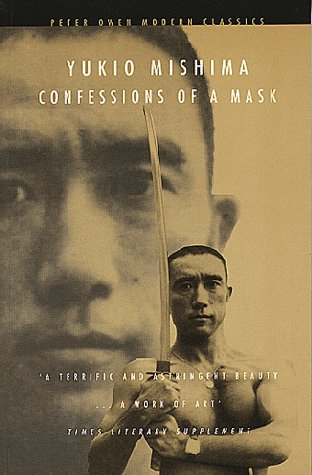
Confessions of a Mask tells the story of Kochan, an adolescent boy tormented by his burgeoning attraction to men: he wants to be “normal.” Kochan is meek-bodied, and unable to participate in the more athletic activities of his classmates. He begins to notice his growing attraction to some of the boys in his class, particularly the pubescent body of his friend Omi. To hide his homosexuality, he courts a woman, Sonoko, but this exacerbates his feelings for men. As news of the War reaches Tokyo, Kochan considers the fate of Japan and his place within its deeply rooted propriety.Confessions of a Mask reflects Mishima’s own coming of age in post-war Japan. Its publication in English―praised by Gore Vidal, James Baldwin, and Christopher Isherwood―propelled the young Yukio Mishima to international fame.

'Life for sale. Use me as you wish. I am a twenty-seven-year-old male. Discretion guaranteed. Will cause no bother at all.'When Hanio Yamada realizes the future holds nothing of worth to him, he puts his life for sale in a Tokyo newspaper, thus unleashing a series of unimaginable exploits.A world of revenge, murderous mobsters, hidden cameras, a vampire woman, poisonous carrots, espionage and code-breaking, a junkie heiress, home-made explosives and decoys reveals itself to the unwitting Hanio. Is there anything he can do to stop it?

In Thirst for Love, Japan's greatest modern writer created a portrait of sexual torment and corrosive jealousy that is as delicately nuanced as Madame Bovary and as remorseless as Justine. Yukio Mishima's protagonist is Etsuko, whose philandering husband has died horribly from typhoid. The young widow moves into the household of her father-in-law, where she numbly submits to the old man's advances. But soon Etsuko falls in love with the young servant, Saburo. Tormented by his indifference yet invigorated by her anguish, she makes one last, catastrophic bid for his attention. Stunningly acute in its perceptions, excruciating in its psychological suspense, Thirst for Love is a triumph of eroticism, terror, and compassion.

Recognized throughout the world for his brilliance as a novelist and playwright, Yukio Mishima is also noted as a master of the short story in his native Japan, where the form is practiced as a major art. Nine of his finest stories were selected by Mishima himself for translation in this book; they represent his extraordinary ability to depict, with deftness and penetration, a wide variety of human beings in moments of significance. Often his characters are sophisticated modern Japanese who turn out to be not so liberated from the past as they had thought.In the title story, "Death in Midsummer," which is set at a beach resort, a triple tragedy becomes a cloud of doom that requires exorcising. In another, "Patriotism," a young army officer and his wife choose a way of vindicating their belief in ancient values that is as violent as it is traditional; it prefigured his own death by seppuku in November 1970. There is a story in which the sad truth of the relationship between a businessman and his former mistress is revealed through a suggestion of the unknown, and another in which a working-class couple, touching in their simple love for each other, pursue financial security by rather shocking means.Also included is one of Mishima's "modern Nō plays," remarkable for the impact which its brevity and uncanny intensity achieve. The English versions have been done by four outstanding translators: Donald Keene, Ivan Morris, Geoffrey Sargent, and Edward Seidensticker.Photograph on back cover by T. Kamiya; cover design by David Ford

The dramatic climax of "The Sea of Fertility" tetraology takes place in the late 1960s. Honda, now an aged and wealthy man, discovers and adopts a sixteen-year-old orphan, Toru, as his heir, identifying him with the tragic protagonists of the three previous novels, each of whom died at the age of twenty. Honda raises and educates the boy, yet watches him, waiting.

Yukio Mishima’s The Temple of Dawn is the third novel in his masterful tetralogy, The Sea of Fertility. Here, Shigekuni Honda continues his pursuit of the successive reincarnations of Kiyoaki Matsugae, his childhood friend. Travelling in Thailand in the early 1940s, Shigekuni Honda, now a brilliant lawyer, is granted an audience with a young Thai princess—an encounter that radically alters the course of his life. In spite of all reason, he is convinced she is the reincarnated spirit of his friend Kiyoaki. As Honda goes to great lengths to discover for certain if his theory is correct, The Temple of Dawn becomes the story of one man’s obsessive pursuit of a beautiful woman and his equally passionate search for enlightenment.

One of the most powerful short stories ever written: Yukio Mishima’s masterpiece about the erotics of patriotism and honor, love and suicide.By now, Yukio Mishima’s (1925-1970) dramatic demise through an act of seppuku after an inflammatory public speech has become the stuff of literary legend. With Patriotism, Mishima was able to give his heartwrenching patriotic idealism an immortal vessel. A lieutenant in the Japanese army comes home to his wife and informs her that his closest friends have become mutineers. He and his beautiful loyal wife decide to end their lives together. In unwavering detail Mishima describes Shinji and Reiko making love for the last time and the couple’s seppuku that follows.
From one of Japan's greatest modern writers comes an exquisitely disturbing novel of sexual combat and concealed passion, a work that distills beauty, longing, and loathing into an intoxicating poisoned cocktail. An aging, embittered novelist sets out to avenge himself on the women who have betrayed him. He finds the perfect instrument in Yuichi, a young man whose beauty makes him irresistible to women but who is just discovering his attraction to other men.As Yuichi's mentor presses him into a loveless marriage and a series of equally loveless philanderings, his protégé enters the gay underworld of postwar Japan. In that hidden society of parks and tearooms, prostitutes and aristocratic blackmailers, Yuichi is as defenseless as any of the women he preys on. Mordantly observed, intellectually provocative, and filled with icy eroticism, Forbidden Colors is a masterpiece.

All eyes are upon Rikio. And he likes it, mostly. His fans cheer from a roped-off section, screaming and yelling to attract his attention—they would kill for a moment alone with him. Finally the director sets up the shot, the camera begins to roll, someone yells “action”; Rikio, for a moment, transforms into another being, a hardened young yakuza, but as soon as the shot is finished, he slumps back into his own anxieties and obsessions.Being a star, constantly performing, being watched and scrutinized as if under a microscope, is often a drag. But so is life. Written shortly after Yukio Mishima himself had acted in the film “Afraid to Die,” this novella is a rich and unflinching psychological portrait of a celebrity coming apart at the seams. With exquisite, vivid prose, Star begs the question: is there any escape from how we are seen by others?

Reissued along side The Sound of the Waves plus three classics works by Junichiro Tanizaki.

Tras dos en prisión, Koji llega en barco a la península de Nishi-Izu donde le espera la bella y enigmática Yuko Kusakado. Dos años antes, cuando todavía era un inocente estudiante universitario, Koji trabajaba a tiempo parcial en una tienda de cerámica occidental en Tokio para ella y su marido. Empujado por las circunstancias, Koji, el protagonista, cae de nuevo en el abismo de la ruina mientras busca un deseo ya perdido, como si solo fuese un títere cuyos hilos manejase otra persona. Yukio Mishima (1925- 1970) es uno de los escritores japoneses más importantes del siglo XX. El tumulto de las bestias, publicada originalmente en 1961, no había sido traducida al castellano hasta ahora. Ambientada en el Japón rural poco después de la Segunda Guerra Mundial, esta fascinante novela narra la historia de un extraño y absorbente triángulo amoroso. Un placer sencillo, sutil e intenso como una taza de té sencha. Un triángulo amoroso en el Japón rural protagoniza esta historia de deseo y culpa. "Una pequeña joya" The Wall Street Journal"Una historia cautivadora de amor y violencia" The Washington Post

Reiko «n'entend plus la musique», autrement dit, elle est incapable d'éprouver du plaisir sexuel. Mishima, en empruntant la docte apparence de son narrateur-psychanalyste le docteur Shiomi, nous conte son histoire et nous entraîne, avec une joie non dissimulée, dans les chausse-trapes de l'univers mental de la jeune mythomane. De mensonges en coups de théâtre, dans une perspective en trompe l'oeil où les situations les plus tragiques sont passées au filtre d'une subtile ironie, l'écrivain nous mène par le bout du nez, comme le fait Reiko avec son trop crédule analyste. Au dénouement, à l'instant où, la vérité s'étant dévoilée, l'on va refermer le livre, on aura aussi découvert un autre masque de Mishima : celui de l'écrivain capable de rire - surtout de ses propres obsessions - et de divertir son lecteur avec des sujets graves, et qui pour ce faire n'hésite pas à recourir à un suspense de roman policier et à un ton parodique jusque-là absent de son oeuvre.

The Osugi family have come to a realisation. Each of them hails from a different planet. Father from Mars, mother from Jupiter, son from Mercury and daughter from Venus. Already seen as oddballs in their small Japanese town in the 1960s, this extra-terrestrial knowledge brings them closer together; they climb mountains to wait for UFOs, study at home together, and regard their human neighbours with a kindly benevolence.But Father, Juichiro, is worried about the bomb. He writes letters to Krushev, trying to warn everyone he can of the terrible threat. After all, humans may be terribly flawed, but aren't they worth saving? He sends out a coded message in the newspaper to find other aliens. But there are other extra-terrestrials out there, ones who do not look so kindly on the flaws and foibles of humans. And a charming young man, who claims to be from Venus too, tempts the daughter Akiko away from the family...

“‘Smettila, Taeko, finirai per sporcare i guanti con il rossetto!’ ‘È più erotico così, non trovi?’”Taeko, elegante e avvenente trentanovenne, conduce una vita agiata e godereccia, destreggiandosi fra l’atelier di cui è proprietaria, le amiche con cui condivide racconti piccanti e gli eventi mondani. Stereotipo della divorziata indipendente dell’alta società nipponica del dopoguerra, dove il desiderio di occidentalizzazione si contrappone ad antiche tradizioni e pregiudizi, Taeko non vuole rinunciare al proprio stile di vita né alla libertà. Poi, una sera, incontra il giovane Senkichi in un gay bar e l’attrazione è fatale. Una magia che scaturisce dalla carne fresca e virile del ragazzo, dai suoi muscoli tesi, dai lineamenti fieri del viso. La vita di Taeko cambia in un batter d’occhio: proprio lei che aveva sempre voluto solo avventure si ritrova irrimediabilmente in balìa di un giovane tanto bello quanto misterioso. Ne scaturisce un gioco perfido e ossessivo. Ma chi è davvero la vittima? Chi il carnefice? Mishima mette in scena il mercato dei sentimenti. Può la passione essere una merce tanto preziosa da annebbiare anche la più lucida delle menti? E quando ci innamoriamo, come facciamo a capire di non essere soltanto caduti nell’ingannevole trappola dei sensi? Non resta che frequentare quella “scuola della carne” che è la vita. Lo scandaloso inedito di Mishima, base del film di Benoît Jacquot del 1998, con Isabelle Huppert nel ruolo della protagonista.

When Mishima committed ritual suicide in November 1970, he was only forty-five. He had written over thirty novels, eighteen plays, and twenty volumes of short stories. During his lifetime, he was nominated for the Nobel Prize three times and had seen almost all of his major novels appear inEnglish. While the flamboyance of his life and the apparent fanaticism of his death have dominated the public's perception of his achievement, Japanese and Western critics alike are in agreement that his literary gifts were prodigious.Mishima is arguably at his best in the shorter forms, and it is the flower of these that appears here for the first time in English. Each story has its own distinctive atmosphere and each is brilliantly organized, yielding deeper layers of meaning with repeated readings. The psychologicalobservation, particularly in what it reveals of the turmoil of adolescence, is meticulous.The style, with its skillful blending of colors and surfaces, shows Mishima in top form, and no further proof is needed to remind us that he was a consummate writer whose work is an irreplaceable part of world literature.
The original Hagakure contains the teachings of the samurai-turned-priest Jōchō Yamamoto (1659-1719), and was for generations preserved as moral and practical instructions for daimyo and samurai of Saga Han, a large domain in northwestern Kyushu. It later became known all over Japan, and during the Second World War Jōchō’s precept ‘I found that the Way of the Samurai is death’, became a slogan to spur on Kamikaze pilots. But the Hagakure is not only about death. In this, his adaptation and interpretation of it, Yukio Mishima deals with its teachings on action, subjectivity, strength of character, passion and love, and delights in giving prolific examples of Jōchō’s practical advice from proper behavior at a drinking party to child rearing. In the Hagakure, the most important influence on his life – and his death – Mishima saw striking similarities between his criticisms of materialistic post-war Japan and Jōchō’s criticisms of the sumptuous decadence of his contemporaries; and it is this emphasis which gives it its immediacy.

Japanese No drama is one of the great art forms that has fascinated people throughout the world. The late Yukio Mishima, one of Japan's outstanding post-war writers, infused new life into the form by using it for plays that preserve the style and inner spirit of No and are at the same time so modern, so direct, and intelligible that they could, as he suggested, be played on a bench in Central Park. Here are five of his No plays, stunning in their contemporary nature and relevance—and finally made available again for readers to enjoy.

A tetralogy containing "Spring Snow", a love story, "Runaway Horses", with a protagonist a right-wing terrorist, "The Temple of Dawn", where a Thai princess is mystically linked with the heroes of the preceding works and, written under the shadow of the author's death, "The Decay of the Angel".

C'est en lisant La Vie du Marquis de Sade de Tatsuhiko Shibusa que pour moi, en tant qu'écrivain, se posa l'énigme de comprendre comment la marquise de Sade, qui avait montré tant de fidélité à son mari pendant ses longs emprisonnements, a pu l'abandonner juste au moment où il retrouvait la liberté. Telle énigme a servi de point de départ à ma pièce, en laquelle on peut voir une tentative de fournir au problème une solution logique. j'ai eu l'impression que quelque chose de fort vrai en même temps que de fort peu intelligible paraissait derrière l’énigme, et j'ai voulu considérer Sade dans ce système de références.Il est peut-être singulier qu'un Japonais ait écrit une pièce de théâtre sur un argument français. La raison en est que je souhaitais employer à rebours les talents que les comédiens de chez nous ont acquis en représentant des pièces traduites de langues étrangères.Yukio Mishima

Yukio Mishima era convinto che la verità può essere raggiunta solo attraverso un processo intuitivo in cui pensiero e azione si trovano uniti. Questa filosofia di vita gli derivava dal pensiero di Wang Yang Ming (1475-1529) e dall'etica dei samurai che a esso si ispirava. L'ideologia dei guerrieri antichi era, per Mishima, l'essenza stessa della "giapponesità", della sua natura più vera. Alla fine degli anni sessanta, egli risolse, o credette di risolvere, i suoi dilemmi esistenziali, che così mirabilmente aveva rappresentato nei suoi romanzi, con una scelta para-militare: contrapponendo il "linguaggio della carne" al linguaggio delle parole. In questo volume vengono raccolti cinque testi che testimoniano questa svolta: Lezioni spirituali per giovani samurai (1968-1969), L'associazione degli scudi (1968), Introduzione alla filosofia dell'azione (1969-1970), I miei ultimi venticinque anni (1970) e il Proclama che Mishima lesse il 25 novembre 1970, pochi istanti prima di suicidarsi.

De l'univers des geishas aux rites sacrificiels des samouraïs, de la cérémonie du thé à la boutique d'un antiquaire, Mishima explore toutes les facettes d'un Japon mythique, entre légende et tradition. D'une nouvelle à l'autre, les situations tendrement ironiques côtoient les drames les plus tragiques : que ce soit la jolie danseuse qui remet du rouge à lèvres après avoir renoncé à se défigurer avec de l'acide en souvenir de son amant, Masako, désespérée, qui voit son rêve le plus cher lui échapper, ou l'épouse qui se saisit du poignard avec lequel son mari vient de se transpercer la gorge... Nouvelles extraites du recueil "La mort en été".

Tras ser movilizado durante la II Guerra Mundial, cuando el país es derrotado y regresa a su hogar, Makoto Kawasaki, un joven de familia pudiente marcado por su ideología nihilista, emprende una trayectoria autodestructiva dentro de una sociedad en la que no cree teniendo como principales referentes la acumulación de dinero y su fascinación por la muerte.

Todo parece ir sobre ruedas durante la luna de miel de la joven Ayako Inagaki. Su marido, Toshio Takigawa, es el hombre ideal: tierno, atractivo, culto, elegante, deportista... Pero hay algo que empieza inquietarle, la extraña relación de Toshio con su madre, una afable y encantadora mujer de porte aristocrático, viuda del embajador japonés en Londres. La señora Takigawa está muy bien relacionada con la alta sociedad de Tokio, incluida la casa real, a la que quiere acceder el padre de Ayako, un ejecutivo ambicioso y esnob. “Vestidos de noche” es una inteligente sátira de la alta sociedad japonesa que conoció Mishima. Un grupo social deseoso de aparentar, entregado a la fascinación por los modos de vida occidentales, pero en el que aún pesan la sobriedad, las rigideces y la estricta jerarquía familiar y social del Japón tradicional. Una sátira feroz con tonos irreverentes de la hipocresía social en la que, a través de personajes casi grotescos, Mishima explora una vez más el lado más oscuro e inconfesable del ser humano.

Acclaimed Japanese novelist Yukio Mishima (1925-1970) was also a prolific playwright, penning more than sixty plays, nearly all of which were produced in his lifetime. Hiroaki Sato is the first to translate these plays into English. For this collection he has selected five major plays and three essays Mishima wrote about drama. The title play is a satire that follows the breakdown of friendship between Adolf Hitler and two Nazi officials who were ultimately assassinated under orders from Hitler.

Les Ailes, la Grenade, les Cheveux blancs et douze autres récits (1945-1960) : Nouvelles japonaises Tome 2
by Yukio Mishima
Rating: 4.5 ⭐
15 août 1945: le Japon capitule.C'est le début d'une intense production littéraire où se bousculent tous les écrivains dans une impressionnante renaissance de la littérature: des auteurs reconnus d'avant-guerre publient aux côtés d'une nouvelle génération d'écrivains. De cette période si fertile depuis 1960, les auteurs retenus dans ce second volume incarnent tous un aspect important de cette littérature.Ils sont tous, aujourd'hui, les grands maîtres de la littérature japonaise.MISHIMA Yukio: Les ailesDAZAI Osamu: Les billets de banqueNAGAI Tatsuo: Le ventISHIKAWA Jun: La légende doréeSHIMAKI Kensaku: La grenouille rousseKAWABATA Yasunari: La grenade - Barques en bambouNOMA Hiroshi: Les deux corpsHAYASHI Fumiko: La ville basseHIRABAYASHI Taiko: Soldats chinois aveuglesSAKAGUCHI Ango: La guerre et une femmeSATA Ineko: L'achat d'un pantalonSHIGA Naoya: Lune griseOOKA Shôhei: You are heavyIBUSE Masuji: Les cheveux blancs