
Arthur Schopenhauer
Arthur Schopenhauer was born in the city of Danzig (then part of the Polish–Lithuanian Commonwealth; present day Gdańsk, Poland) and was a German philosopher best known for his work The World as Will and Representation. Schopenhauer attempted to make his career as an academic by correcting and expanding Immanuel Kant's philosophy concerning the way in which we experience the world. He was the son of author Johanna Schopenhauer and the older brother of Adele Schopenhauer.
30 Books Written

One of the greatest philosophers of the nineteenth century, Schopenhauer (1788-1860) believed that human action is determined not by reason but by 'will' - the blind and irrational desire for physical existence. This selection of his writings on religion, ethics, politics, women, suicide, books and many other themes is taken from Schopenhauer's last work, Parerga and Paralipomena, which he published in 1851. These pieces depict humanity as locked in a struggle beyond good and evil, and each individual absolutely free within a Godless world, in which art, morality and self-awareness are our only salvation. This innovative - and pessimistic - view has proved powerfully influential upon philosophy and art, directly affecting the work of Nietzsche, Wittgenstein and Wagner among others.

This collection brings together two of Schopenhauer's most respected works, wherein the philosopher shares his views on life and what he believes to be follies of human behavior.Writing with incisive poise and a great sense of humor, Schopenhauer introduces the various ideas present in his pessimistic philosophy. Holding the usual goals of life - money, position, material and sexual pleasures - in low regard, he explains how the cultivation of one's individuality and mind are far better pursuits, albeit those that most people neglect.Rather than simply criticize the state of humanity, Schopenhauer uses wit and lively argument to convince the reader of the value in his outlook. The practice of an ordinary life and career is thereby demonstrated as spiritually draining, in contrast to concentration upon a wise mind and strong body, plus a moderated or even ascetic approach to material things.Many of Schopenhauer's most definitive pearls of wisdom are contained within this work, demonstrating the philosophy of life which he was renowned for living by. Scholars generally compare Schopenhauer's outlook to Buddhism, for his rejection of worldly pleasures and reverence of inner development. Although he speaks disparagingly of humanity, the philosopher has enough awareness to do so with entertaining eloquence.First published under the title of Aphorismen zur Lebensweisheit , Schopenhauer's warm and engaging style and profound substance is successfully expressed in the English translations of The Wisdom of Life and Counsels and Maxims , both of which are composed by Thomas Bailey Saunders.

Arthur Schopenhauer's Die Welt als Wille und Vorstellung is one of the most important philosophical works of the nineteenth century, the basic statement of one important stream of post-Kantian thought. It is without question Schopenhauer's greatest work. Conceived and published before the philosopher was 30 and expanded 25 years later, it is the summation of a lifetime of thought.For 70 years, the only unabridged English translation of this work was the Haldane-Kemp collaboration. In 1958, a new translation by E. F. J. Payne appeared that decisively supplanted the older one. Payne's translation is superior because it corrects nearly 1,000 errors and omissions in the Haldane-Kemp translation, and it is based on the definitive 1937 German edition of Schopenhauer's work prepared by Dr. Arthur Hübscher. Payne's edition is the first to translate into English the text's many quotations in half a dozen languages. It is thus the most useful edition for the student or teacher.

A leading German philosopher and metaphysician of the 19th century, Arthur Schopenhauer (1788–1860) exerted an influence far beyond the hermetic world of philosophy, with adherents ranging from Richard Wagner and Friedrich Nietzsche to Leo Tolstoy and Thomas Mann. Among Schopenhauer's chief contributions to the field of philosophy are his rejection of the idealism of his contemporaries and his embrace of a practical variety of materialism. He jettisons the traditional philosophic jargon for a brisk, compelling style that employs direct terms to express the metaphysics of the will.In The Wisdom of Life, an essay from Schopenhauer's final work, Parerga und Paralipomena (1851), the philosopher favors individual strength of will and independent, reasoned deliberation over the tendency to act on irrational impulses.He examines the ways in which life can be arranged to derive the highest degree of pleasure and success, presents guidelines to achieving this full and rich manner of living, and advises that even a life well lived must always aspire to grander heights. Abounding in subjects of enduring relevance, Schopenhauer's highly readable work appears here in an excellent translation.

Which are the logical tricks that will let you slip through the net when faced with awkward questions? How can you yourself use arguments to deflect difficult situations? Do you recognize all flaws in someone else's argument? This the book the BBC, Andrew Gilligan, Lord Hutton, Tony Blair and Alistair Campbell will not be able to ignore. This is an irresistible guide to clear thinking and understanding of the art of debate.

Arthur Schopenhauer's Die Welt als Wille und Vorstellung is one of the most important philosophical works of the 19th century, the basic statement of one important stream of post-Kantian thought. It is without question Schopenhauer's greatest work, and, conceived and published before the philosopher was 30 and expanded 25 years later, it is the summation of a lifetime of thought.For 70 years, the only unabridged English translation of this work was the Haldane-Kemp collaboration. In 1958, a new translation by E. F. J. Payne appeared which decisively supplanted the older one. Payne's translation is superior because it corrects nearly 1,000 errors and omissions in the Haldane-Kemp translation, and it is based on the definitive 1937 German edition of Schopenhauer's work prepared by Dr. Arthur Hübscher. Payne's edition is the first to translate into English the text's many quotatioins in half a dozen languages, and Mr. Payne has provided a comprehensive index of 2,500 items. It is thus the most useful edition for the student or teacher.

A collection of essays by Schopenhauer on the perception of the importance of art, morality and self awareness in a blind struggle against a Godless, meaningless world radically transformed our understanding of the individual and remains a searing vision of the human condition.

Aşkın (Cinsel Sevginin) Metafiziği, insanın, türün bir "bireyi" olarak kendi dışında bir yerde ve geçmiş zamanda yazılmış bir oyunun çaresiz edilgen aktörü olduğunu kanıtlamaya çalışıyor. "Oyunun" senaristi olmasa da amaçlarının farkında olan ödünsüz merci İRADE'dir. İrade, bütün canlı türlerin ideal tipinin korunup hayatta kalmasını sağlama kaygısı taşır. Türün bireyi (insan-hayvan) içine irade tarafından içgüdü halinde yerleştirilmiş dürtülerin doyum taleplerinin edilgen hizmetçisidir. Türün korunup devam etmesi bakımından tayin edici önem taşıyan "cinsel dürtü"nün tamamlayıcısı "cinsel sevgi"nin, dikkatle değerlendirilmesi gereken mutlak ya da nispi özellikleri, uyulması gereken kuralları vardır; bu oyun kurallarını, "türün aleyhine" sonuç almaksızın, kimse ihlal edemez.Aşkın Metafiziğ Kör iradenin tutsaklığı.(Tanıtım Bülteninden)

But all this contributes to increase the measures of suffering in human life out of all proportion to its pleasures; and the pains of life are made much worse for man by the fact that death is something very real to him. The brute flies from death instinctively without really knowing what it is, and therefore without ever contemplating it in the way natural to a man, who has this prospect always before his eyes. So that even if only a few brutes die a natural death, and most of them live only just long enough to transmit their species, and then, if not earlier, become the prey of some other animal.

Ad amici e seguaci Schopenhauer non aveva nascosto l'esistenza di un vademecum gelosamente custodito che era solito chiamare "Eis heauton". Dopo la sua morte molti tentarono di ritrovare quelle preziose carte. L'esecutore testamentario, Wilhelm von Gwinner, dichiarò di averle distrutte per volontà dello stesso Schopenhauer. In realtà, prima di ricorrere al fuoco, le aveva utilizzate per scrivere una biografia del filosofo nella quale gli specialisti non tardarono a riconoscere passi, letteralmente citati, tratti da quelle pagine inedite, tanto che fu possibile ricostruire per congettura il testo originale. Questo libro segreto consisteva probabilmente in una trentina di fogli fitti di annotazioni autobiografiche, ricordi, riflessioni, massime, citazioni.
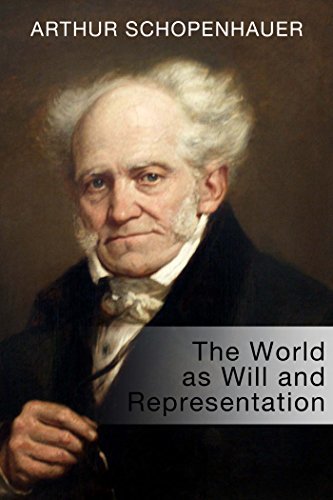
The World as Will and Representation is the central work of the German philosopher Arthur Schopenhauer.One of the most important philosophical works of the nineteenth century, the basic statement of one important stream of post-Kantian thought. It is without question Schopenhauer's greatest work. Conceived and published before the philosopher was 30 and expanded 25 years later, it is the summation of a lifetime of thought."...This book will be of interest to general readers, undergraduates, graduates, and scholars in the field." --George Lăzăroiu, PhD, Institute of Interdisciplinary Studies in Humanities and Social Sciences, New York, Analysis and Metaphysics

Fin dai tempi antichi, come insegna il caso di Socrate e Santippe, il rapporto tra il filosofo e le donne è stato conflittuale. E, se ripercorriamo la lunga storia di questo conflitto, ne ricaviamo l’impressione che la filosofia sia una faccenda prettamente maschile. La necessità di estirpare siffatto pregiudizio si impone con le grandi figure femminili dell’Illuminismo e del Romanticismo, quando prende avvio quella che sarà l’emancipazione della donna. Scottato dall’esperienza patita in casa con la madre, gran dama salottiera, Schopenhauer avverte con lungimirante intuito l’incombente pericolo, e oppone resistenza. Leva quindi la sua voce irriverente per mettere in guardia il sesso maschile dalle suadenti insidie, dai fatali pericoli e dagli snervanti contrasti che inevitabilmente riserva il rapporto con le donne. Le sue riflessioni su questo tema si configurano come un’«Arte di trattare adeguatamente il gentil sesso»: un’arte che, se negli intenti di Schopenhauer mirava soprattutto a tenerne a bada le intemperanze, offre a noi, uomini e donne di oggi, una lettura ricca di inconfutabili intuizioni e di tenaci, e spesso esilaranti, capricci maschili.

Junto a El mundo como voluntad y representación, la obra capital de Arthur Schopenhauer (1788- 1861), de la que contamos con varias ediciones recientes y completas en castellano, el lector hispanohablante asociará el nombre del filósofo alemán con otros títulos pertenecientes a otros tantos escritos de menor extensión, muy divulgados en España y Latinoamérica por diversas editoriales y en traducciones de solvencia dispar. Son ensayos u opúsculos que versan sobre asuntos tales como la historia de la filosofía, los fantasmas, el arte de la felicidad o la filosofía universitaria; también, acerca del amor, las mujeres y la muerte o sobre el estilo literario, los libros y la música. Tal profusión de escritos misceláneos suele despistar a los lectores, desconocedores por lo general de que Schopenhauer nunca los publicó en forma de libros independientes, sino agrupados en dos gruesos volúmenes bajo el endiablado título de Parerga y Paralipómena I y II. Ambos términos griegos, tan poco comerciales y que desesperan a los editores, pueden traducirse como "añadidos y apuntes marginales".

Nesta antologia de ensaios recolhidos de ´Parerga e Paralipomena´, o leitor vai encontrar textos que trazem as mais ferinas, entusiasmadas e cômicas reflexões acerca do ofício do próprio Schopenhauer, isto é, o ato de pensar, a escrita, a leitura, a avaliação de obras de outras pessoas, o mundo erudito como um todo. São "Sobre a erudição e os eruditos", "Pensar por si mesmo", "Sobre a escrita e o estilo", "Sobre a leitura e os livros" e "Sobre a linguagem e as palavras". Embora redigidos na primeira metade do século 19, estes ensaios, ao tratar sobre o mundo das letras, os vícios do pensamento humano, as armadilhas da escrita e da crítica, continuam válidos -hoje talvez mais do que nunca. E, marca personalíssima do autor, são modernos, pulsantes de vida, de inteligência e humor.

A fascinating examination of ethics, religion and psychology, this selection of Schopenhauer's works contains scathing attack on the nature and logic of religion, and an essay on ethics that ranges from the American slavery debate to the vices of Buddhism. Throughout history, some books have changed the world. They have transformed the way we see ourselves - and each other. They have inspired debate, dissent, war and revolution. They have enlightened, outraged, provoked and comforted. They have enriched lives - and destroyed them. Now Penguin brings you the works of the great thinkers, pioneers, radicals and visionaries whose ideas shook civilization and helped make us who we are.

The winning entry in a competition held by the Royal Norwegian Society of Sciences, Schopenhauer's 1839 essay brought its author international recognition. Its brilliant and elegant treatments of free will and determinism elevated it to a classic of Western philosophy, and its penetrating reflections still remain relevant.Schopenhauer makes a distinction between freedom of acting (which he endorses) and the freedom of willing (which he refutes). The philosopher regards human activity as entirely determined, but he also posits that the variety of freedom that cannot be established in the sphere of human activity resides at the level of individuated will — a reality that transcends all dependency on outside factors. Because the essay's clear and rigorous argument reveals many basic features of his thought, it forms a useful introduction to Schopenhauer for students of philosophy or religion.

Après le succès de L’Art d’être heureux (« Points Essais », 2013), Franco Volpi propose cette fois une anthologie thématique de la pratique de l’insulte, dont Schopenhauer le misanthrope était fervent défenseur dans ses écrits, mais aussi pratiquant assidu : « Que de fois m’a étonné l’intelligence de mon chien, mais sa bêtise aussi ; il en a été de même avec le genre humain. »Il en résulte ce petit ouvrage, qu’on pourrait considérer comme « posthume », où l’on voit le pire de Schopenhauer – comme ses idées sur les femmes (« La femme, de par sa nature, est destinée à obéir ») – et plus d’une fois le meilleur, le Schopenhauer dérangeant, en pleine forme, cocasse, fin observateur des mœurs de son temps, sans oublier l’écrivain de talent.

Toda individualidad es para Schopenhauer un error especial, una equivocación y el verdadero objetivo de la vida es librarnos de él. Esta es la Metafísica del amor y la metafísica de la muerte, los dos grandes medios de trascender la individualidad. El amor y la muerte, eros y thanatos, constituyen para nuestro autor dos aspectos de la Voluntad, principio metafísico situado más allá de lo observable y de lo pensable.

Arthur Schopenhauer (1788-1860) was a German philosopher best known for his work The World as Will and Representation. He responded to and expanded upon Immanuel Kant's philosophy concerning the way in which we experience the world. His critique of Kant, his creative solutions to the problems of human experience and his explication of the limits of human knowledge are among his most important achievements. His metaphysical theory is the foundation of his influential writings on psychology, aesthetics, ethics, and politics which influenced Friedrich Nietzsche, Wagner, Ludwig Wittgenstein, Sigmund Freud and others. He said he was influenced by the Upanishads, Immanuel Kant, and Plato. References to Eastern philosophy and religion appear frequently in his writing. He appreciated the teachings of the Buddha and even called himself a Buddhaist. He said that his philosophy could not have been conceived before these teachings were available. He called himself a Kantian. He formulated a pessimistic philosophy that gained importance and support after the failure of the German and Austrian revolutions of 1848.

A new, comprehensive English anthologyWhat is the meaning of life? How should I live? Is there any purpose to the universe? Generations have turned to the great German philosopher Arthur Schopenhauer for answers to such essential questions of existence. His influence has extended not only to later philosophers—Nietzsche, Freud, and Wittgenstein among them—but also to musicians, artists, and important novelists such as Tolstoy, Thomas Mann, and Proust.The Essential Schopenhauer, the most comprehensive English anthology now available of this seminal thinker’s writings, will open English readers to Schopenhauer’s profound ideas. Selected by Wolfgang Schirmacher, president of the International Schopenhauer Association, The Essential Schopenhauer is an invaluable and accessible introduction to Schopenhauer’s powerful body of work."Schopenhauer's beautiful, exceptionally dark philosophy liberates us from the intolerable burden placed upon us by our contemporary optimism. The Essential Schopenhauer is a book to turn to when all others have failed." - Alain de Botton, bestselling author of The Consolations of Philosophy

A disciple of Immanuel Kant, Arthur Schopenhauer took the Kantian concept that all knowledge derives from experience and broadened it to conclude that our experience of the world is necessarily subjective and influenced by our own intellect and biases, and that reality is but an extension of our own will. This is the basis of all of Schopenhauer's thinking, and here, he offers an essential foundation for understanding and appreciating all of his work. First produced as his doctoral dissertation in 1813, these two essays-"On the Fourfold Root of the Principle of Sufficient Reason" and "On the Will in Nature"-were revised and published by the author in 1847; this 1889 edition represents its first translation into the English language. Students of philosophy and of 19th-century culture will find this a demanding but satisfying read. The writings of German philosopher ARTHUR SCHOPENHAUER (1788-1860) were a profound influence on art and aesthetics, music and literature in the 19th century. Among his many writings, The World as Will and Idea (1819) is considered his masterpiece.

This is the only complete English translation of one of the most significant and fascinating works of the great philosopher Arthur Schopenhauer (1788-1860). The Parerga (Volume 1) are six long essays; the Paralipomena (Volume 2) are shorter writings arranged under thirty-one differentsubject-headings. These works won widespread attention with their publication in 1851, helping to secure lasting international fame for Schopenhauer. Indeed, their intellectual vigor, literary power, and rich diversity are still extraordinary even today.

Akıllı adam her şeyden evvel ıstıraptan ve tacizden [harici sıkıntıdan] azâde olmak için çabalayacak, sessizliği ve boş vakti, dolayısıyla mümkün olan en az sayıda beklenmedik ve tehlikeli karşılaşma ile birlikte sakin, mütevazı bir hayatı arayacaktır; ve böylelikle sözüm ona hemcinsleriyle çok az bir ortak tecrübeyi paylaştıktan sonra, münzeviyane bir hayatı tercih edecektir, hatta eğer büyük bir ruha sahipse büsbütün yalnızlığı seçecektir. Çünkü bir insan ne kadar kendi kendisine yeterse, başka insanlara o denli daha az gereksinim duyacaktır—haddizatında başka insanlar da ona o kadar az tahammül edebilecektir. Yüksek bir zihin düzeyinin bir insanı toplum dışına itebilmesinin nedeni budur. Doğrudur, eğer zihnin niteliği nicelikle telafi edilebilseydi, bu insanların büyük dünyasında bile yaşama zahmetine değerdi; fakat şükür ki yüz tane ahmak bir araya gelse bir tane akıllı adam etmez. A. Schopenhauer

The nineteenth-century idealist philosopher and precursor of FreudThe World as Will and Idea (1819) holds that all nature, including man, is the expression of an insatiable will to life; that the truest understanding of the world comes through art and the only lasting good through ascetic renunciation. Unique in western philosophy for his affinity with Eastern thought, Schopenhauer influenced philosophers, writers, and composers including Nietzsche, Wittgenstein, Wagner, Tolstoy, Thomas Mann, and Samuel Beckett.The Work presented here appeals not only to the student of philosophy but everyone interested in psychology, literature and eastern and western religion.This paperback edition is the most comprehensive available and includes an introduction, bibliography, selected criticism, index and chronology of Schopenhauer's life and times.

Obra editada por Ernst Ziegler.En la obra de Arthur Schopenhauer, pensador misántropo y pesimista denostado por sus amargas invectivas, el lector no encontrará cándidos pensamientos con los que acompañar plácidamente el paso de los días. Sin embargo, se equivocará si busca en el autor tan solo una amarga visión de la vida, severos diagnósticos sobre la época que le tocó vivir o incluso, en último término, una exhortación al suicidio. Como muestra la presente selección de textos, a cargo de Ernst Ziegler, lo que brota de su pensamiento es la convicción de que debemos comenzar a vivir de nuevo cada día, pues resulta todo un arte permanecer con vida.«La única forma de existencia es el momento presente, que es también la posesión más segura, aquella que nadie nos podrá arrebatar jamás.»Arthur Schopenhauer

Persuasive and humane towards mankind, if neither towards womankind, this classic of philosophy represents one of the nineteenth century's most significant treatises on ethics. The Basis of Morality offers Schopenhauer's fullest examination of traditional ethical themes, and it articulates a descriptive form of ethics that contradicts the rationally based prescriptive theories.Starting with his polemic against Kant's ethics of duty, Schopenhauer anticipates the latter-day critics of moral philosophy. Arguing that compassion forms the basis of morality, he outlines a perspective on ethics in which passion and desire correspond to different moral characters, behaviors, and worldviews. In conclusion, Schopenhauer defines his metaphysics of morals, employing Kant's transcendental idealism to illustrate both the interconnectiveness of being and the affinity of his ethics to Eastern thought.

La rispettabilità, o l’onore, è uno di quei sentimenti pubblici fondamentali che si ritrovano in ogni tempo e in ogni società, e con il quale presto o tardi anche ciascuno di noi – uomo o donna, amante o marito, privato cittadino o pubblico ufficiale che sia – è costretto dai casi della vita a confrontarsi. Tutti insomma, a meno di non rassegnarci alla fatalistica dottrina degli stoici, che relega la «buona reputazione» tra le cose indifferenti per la felicità umana, dobbiamo trovare il modo di farci rispettare. In questo trattatello celato fra le sue carte postume – e ora riportato alla luce, dopo L’arte di ottenere ragione e L’arte di essere felici – Schopenhauer spiega con la consueta e impareggiabile verve che cosa è l’onore nelle sue diverse specie – onore privato, professionale, commerciale, pubblico, nazionale, sessuale, ecc. – e ci fornisce, in quattordici efficaci massime, i suggerimenti opportuni per conservarlo il più a lungo possibile malgrado le traversie di cui è costellata la nostra esistenza. E non rinuncia ad alcune impertinenti osservazioni sulle differenze che, a suo dire, sussistono in questa materia fra l’uomo e la donna.

Hayatımız öncelikle bakır bozukluklarla yapılmış bir ödemeye benzer; bizim bu ödemeye karşı bir alındı makbuzu vermemiz gerekir; bakır bozukluklar günler, alındı makbuzu ölümdür.Zamanın bizi telaş içerisinde biteviye koşturup durması, bize asla nefes alma imkânı sunmaması, elinde kamçıyla buyurgan bir işveren gibi hepimizin tepesinde beklemesi ile hayatımızın bir azap ve işkenceye dönmesi arasında en küçük bir bağ kurma imkânı yoktur. Zaman yalnızca can sıkıntısının cenderesi içinde kıvrananların başına bela kesilmez ve onları sıkboğaz etmez.Varsayalım insan soyu kaldırılıp her şeyin kendiliğinden gelişip olgunlaştığı, sütlerin balların yerden kaynadığı, yiyeceklerin dallarından koparılmayı beklediği, herkesin gönlünden geçirdiğini hiç vakit kaybetmeksizin önünde bulduğu ve elde etmekte hiç güçlükle karşılaşmadığı Utopia ülkesine götürüldü; o zaman ne yapardı bu insanlar? Ya can sıkıntısından ölürlerdi, ya kendilerini asarlardı ya da olmadı birbirlerine düşerler, kavga dövüş birbirlerini boğup öldürürlerdi.-Schopenhauer-(Tanıtım Bülteninden)

Arthur Schopenhauer (1788-1860) was a German philosopher best known for his work The World as Will and Representation. He responded to and expanded upon Immanuel Kant's philosophy concerning the way in which we experience the world. His critique of Kant, his creative solutions to the problems of human experience and his explication of the limits of human knowledge are among his most important achievements. His metaphysical theory is the foundation of his influential writings on psychology, aesthetics, ethics, and politics which influenced Friedrich Nietzsche, Wagner, Ludwig Wittgenstein, Sigmund Freud and others. He said he was influenced by the Upanishads, Immanuel Kant, and Plato. References to Eastern philosophy and religion appear frequently in his writing. He appreciated the teachings of the Buddha and even called himself a Buddhaist. He said that his philosophy could not have been conceived before these teachings were available. He called himself a Kantian. He formulated a pessimistic philosophy that gained importance and support after the failure of the German and Austrian revolutions of 1848.

These two important essays show Schopenhauer at his most accessible, offering two self-contained and clearly argued contributions to ethical theory, published here in a new translation that preserves Schopenhauer's style in a lucid and engaging way. This is also the only paperback edition to publish both essays together. Schopenhauer argues, in uniquely powerful prose, that self-consciousness gives the illusion of freedom and that human actions are determined, but that we rightly feel guilt because our actions issue from our essential individual character. He locates moral value in the virtues of loving kindness and voluntary justice that spring from the fundamental incentive of compassion. Morality's basis is ultimately metaphysical, resting on an intuitive identification of the self with all other striving and suffering beings. The Introduction by leading Schopenhauer scholar Christopher Janaway gives a clear summary of the argument of the essays in the context ofSchopenhauer's life and works and the history of ethics in the modern period. The volume includes helpful notes, up-to-date bibliography, and a full index.About the For over 100 years Oxford World's Classics has made available the broadest spectrum of literature from around the globe. Each affordable volume reflects Oxford's commitment to scholarship, providing the most accurate text plus a wealth of other valuable features, including expert introductions by leading authorities, voluminous notes to clarify the text, up-to-date bibliographies for further study, and much more.