
James Baldwin
Librarian Note: There is more than one author in the Goodreads database with this name. See this thread for more information. Works of American writer James Arthur Baldwin, outspoken critic of racism, include Go Tell It on the Mountain (1953), a novel, and Notes of a Native Son (1955), a collection of essays. James Arthur Baldwin authored plays and poems in society. He came as the eldest of nine children; his stepfather served as a minister. At 14 years of age in 1938, Baldwin preached at the small fireside Pentecostal church in Harlem. From religion in the early 1940s, he transferred his faith to literature with the still evident impassioned cadences of black churches. From 1948, Baldwin made his home primarily in the south of France but often returned to the United States of America to lecture or to teach. In his Giovanni's Room, a white American expatriate must come to terms with his homosexuality. In 1957, he began spending half of each year in city of New York. James Baldwin offered a vital literary voice during the era of civil rights activism in the 1950s and 1960s. He first partially autobiographically accounted his youth. His influential Nobody Knows My Name and The Fire Next Time informed a large white audience. Another Country talks about gay sexual tensions among intellectuals of New York. Segments of the black nationalist community savaged his gay themes. Eldridge Cleaver of the Black Panthers stated the Baldwin displayed an "agonizing, total hatred of blacks." People produced Blues for Mister Charlie , play of Baldwin, in 1964. Huey Newton, co-founder of the Black Panther Party, defended Baldwin. Going to Meet the Man and Tell Me How Long the Train's Been Gone provided powerful descriptions. He as an openly gay man increasingly in condemned discrimination against lesbian persons. From stomach cancer, Baldwin died in Saint-Paul-de-Vence, France. People buried his body at the Ferncliff cemetery in Hartsdale near city of New York.
33 Books Written

A national bestseller when it first appeared in 1963, The Fire Next Time galvanized the nation and gave passionate voice to the emerging civil rights movement. At once a powerful evocation of James Baldwin’s early life in Harlem and a disturbing examination of the consequences of racial injustice, the book is an intensely personal and provocative document. It consists of two “letters,” written on the occasion of the centennial of the Emancipation Proclamation, that exhort Americans, both black and white, to attack the terrible legacy of racism. Described by The New York Times Book Review as “sermon, ultimatum, confession, deposition, testament, and chronicle…all presented in searing, brilliant prose,” The Fire Next Time stands as a classic of our literature.

The Price of the Ticket: Collected Nonfiction, 1948-1985
by James Baldwin
Rating: 4.7 ⭐
• 2 recommendations ❤️
The works of James Baldwin constitute one of the major contributions to American literature in the twentieth century, and nowhere is this more evident than in The Price of the Ticket, a compendium of nearly fifty years of Baldwin's powerful nonfiction writing. With truth and insight, these personal, prophetic works speak to the heart of the experience of race and identity in the United States. Here are the full texts of Notes of a Native Son, Nobody Knows My Name, The Fire Next Time, No Name in the Street and The Devil Finds Work, along with dozens of other pieces, ranging from a 1948 review of Raintree Country to a magnificent introduction to this book that, as so many of Mr. Baldwin's works do, combines his intensely private experience with the deepest examination of social interaction between the races. In a way, The Price of the Ticket is an intellectual history of the twentieth-century American experience; in another, it is autobiography of the highest order.

In 1970 James Baldwin & Margaret Mead met for an extraordinary seven-&-a-half-hour discussion about race & society. Mead brought her knowledge of racism as practiced in remote societies around the world. Baldwin brought his personal experience with the legacy of black American history. They talked with candor, passion, rage & brilliance, & their discussion became this unique volume. Here is Baldwin's creativity & fire. Here is Mead's scholarship & reason. Here, for all to see, are their prejudices, their pain, & finally, their shared desire to find the thread that binds us all. "This book...traces a curve beginning in formal statements, moving thru wary affection & intellectual intimacy, ending with a raw confrontation."--�Newsweek. "Margaret Mead and James Baldwin are no ordinary people...their conversation...takes us along to places to which we could not otherwise go."--�Times Literary Supplement (London)
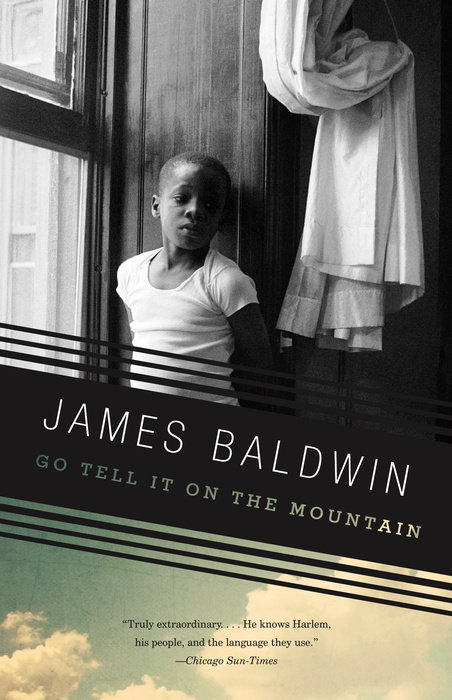
One of the most brilliant and provocative American writers of the twentieth century chronicles a fourteen-year-old boy's spiritual, sexual, and moral struggle of self-invention in this “truly extraordinary” novel ( Chicago Sun-Times ).Baldwin's classic novel opened new possibilities in the American language and in the way Americans understand themselves. With lyrical precision, psychological directness, resonating symbolic power, and a rage that is at once unrelenting and compassionate, Baldwin tells the story of the stepson of the minister of a storefront Pentecostal church in Harlem one Saturday in March of 1935. Originally published in 1953, Baldwin said of his first novel, " Mountain is the book I had to write if I was ever going to write anything else."

Collected Essays: Notes of a Native Son / Nobody Knows My Name / The Fire Next Time / No Name in the Street / The Devil Finds Work / Other Essays
by James Baldwin
Rating: 4.7 ⭐
• 1 recommendation ❤️
James Baldwin was a uniquely prophetic voice in American letters. His brilliant and provocative essays made him the literary voice of the Civil Rights Era, and they continue to speak with powerful urgency to us today, whether in the swirling debate over the Black Lives Matter movement or in the words of Raoul Peck’s documentary “I Am Not Your Negro.” Edited by Nobel laureate Toni Morrison, the Library of America’s Collected Essays is the most comprehensive gathering of Baldwin’s nonfiction ever published.With burning passion and jabbing, epigrammatic wit, Baldwin fearlessly articulated issues of race and democracy and American identity in such famous essays as “The Harlem Ghetto,” “Everybody’s Protest Novel,” “Many Thousands Gone,” and “Stranger in the Village.”Here are the complete texts of his early landmark collections, Notes of a Native Son (1955) and Nobody Knows My Name (1961), which established him as an essential intellectual voice of his time, fusing in unique fashion the personal, the literary, and the political. “One writes,” he stated, “out of one thing only—one’s own experience. Everything depends on how relentlessly one forces from this experience the last drop, sweet or bitter, it can possibly give.” With singular eloquence and unblinking sharpness of observation he lived up to his credo: “I want to be an honest man and a good writer.”The classic The Fire Next Time (1963), perhaps the most influential of his writings, is his most penetrating analysis of America’s racial divide and an impassioned call to “end the racial nightmare…and change the history of the world.” The later volumes No Name in the Street (1972) and The Devil Finds Work (1976) chart his continuing response to the social and political turbulence of his era and include his remarkable works of film criticism. A further 36 essays—nine of them previously uncollected—include some of Baldwin’s earliest published writings, as well as revealing later insights into the language of Shakespeare, the poetry of Langston Hughes, and the music of Earl Hines.

James Baldwin's critique of American society at the height of the civil rights movement brings his prescient thoughts on social isolation, race, and police brutality to a new generation of readers.Available for the first time in a stand-alone edition, Nothing Personal is Baldwin's deep probe into the American condition. Considering the Black Lives Matter protests in the summer of 2020--which were met with tear gas and rubber bullets the same year white supremacists entered the US Capitol with little resistance, openly toting flags of the Confederacy--Baldwin's documentation of his own troubled times cuts to the core of where we find ourselves today.Baldwin's thoughts move through an interconnected range of questions, from America's fixation on eternal youth, to its refusal to recognize the past, its addiction to consumerism, and the lovelessness that fuels it in its cities and popular culture. He recounts his own encounter with police in a scene disturbingly similar to those we see today documented with ever increasing immediacy. This edition also includes a new foreword from interdisciplinary scholar Imani Perry and an afterword from noted Baldwin scholar Eddie S. Glaude Jr. Both explore and situate the essay within the broader context of Baldwin's work, the Movement for Black Lives, the COVID-19 pandemic, and the presidency of Donald Trump.Nothing Personal is both a eulogy and a declaration of will. In bringing this work into the twenty-first century, readers new and old will take away fundamental and recurring truths about life in the US. It is both a call to action, and an appeal to love and to life.
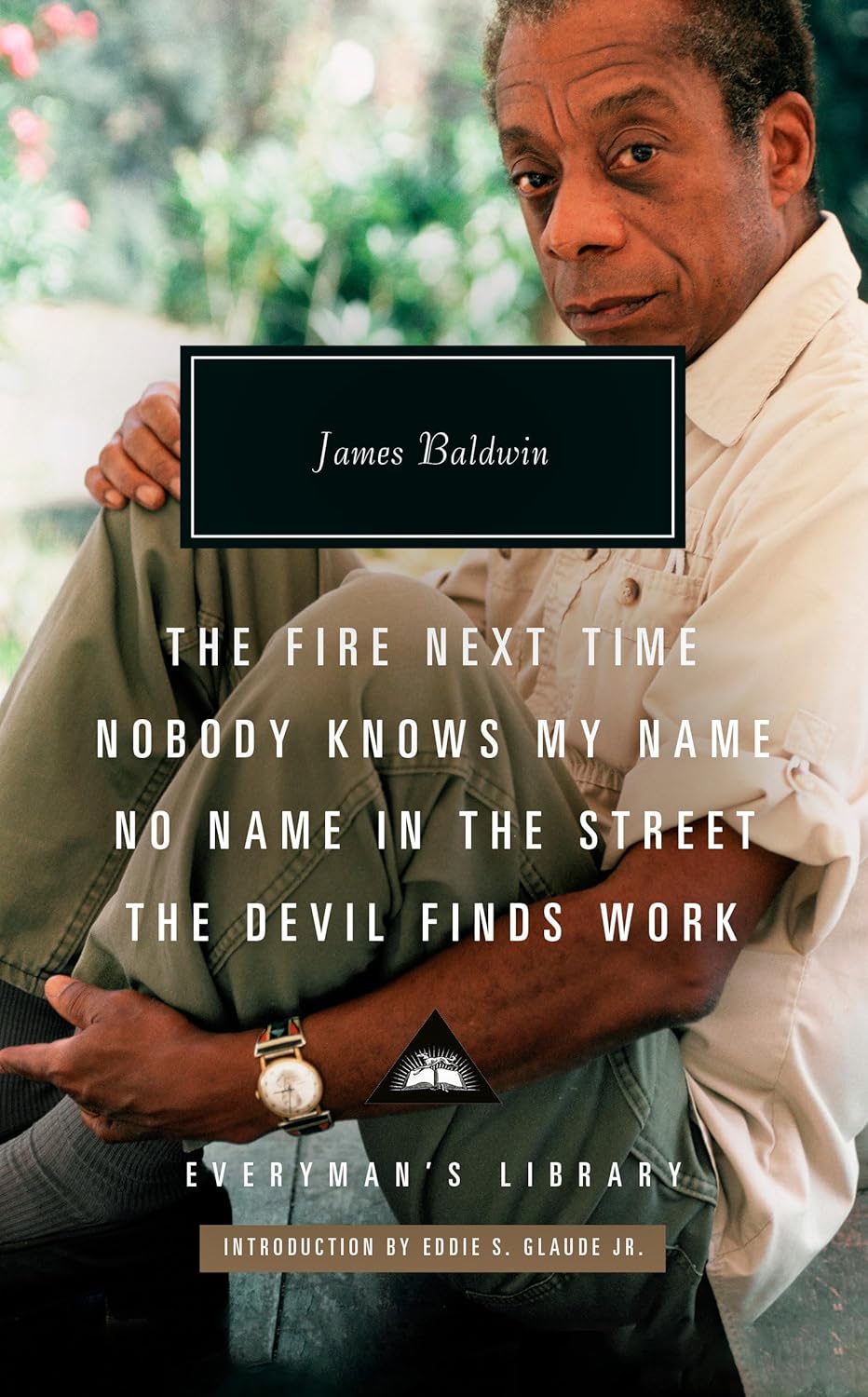
The Fire Next Time; Nobody Knows My Name; No Name in the Street; The Devil FindsWork: Introduction by Eddie S. Glaude Jr.
by James Baldwin
Rating: 4.7 ⭐
A major hardcover compendium of nonfiction by one of America's most brilliant essayists, timed to the celebration of his centenaryNovelist, essayist, and public intellectual James Baldwin is widely regarded as one of the greatest writers of the twentieth century. This Everyman's Library collection includes his bestselling, galvanizing essay The Fire Next Time— which gave voice to the emerging civil rights movement of the 1960s and still lights the way to understanding race in America today—along with three additional brilliant works of nonfiction by this seminal chronicler and analyst of culture. From No Name In the Street 's extraordinary history of the turbulent sixties and early seventies to the "passionate, probing, controversial" ( The Atlantic ) Nobody Knows My Name and the incisive criticism of American movies in The Devil Finds Work , Baldwin's stunning prose over and over proves relevant to our contemporary struggle for equality, justice, and social change.Everyman's Library pursues the highest production standards, printing on acid-free paper, with full-cloth cases with two-color foil stamping, decorative endpapers, silk ribbon markers, European-style half-round spines, and a full-color illustrated jacket. Contemporary Classics include an introduction, a select bibliography, and a chronology of the author's life and times.

In this honest and stunning novel, James Baldwin has given America a moving story of love in the face of injustice. Told through the eyes of Tish, a nineteen-year-old girl, in love with Fonny, a young sculptor who is the father of her child, Baldwin's story mixes the sweet and the sad. Tish and Fonny have pledged to get married, but Fonny is falsely accused of a terrible crime and imprisoned. Their families set out to clear his name, and as they face an uncertain future, the young lovers experience a kaleidoscope of emotions—affection, despair, and hope. In a love story that evokes the blues, where passion and sadness are inevitably intertwined, Baldwin has created two characters so alive and profoundly realized that they are unforgettably ingrained in the American psyche.

From one of the most important American novelists of the twentieth century—a novel of sexual, racial, political, artistic passions, set in Greenwich Village, Harlem, and France.Stunning for its emotional intensity and haunting sensuality, this book depicts men and women, blacks and whites, stripped of their masks of gender and race by love and hatred at the most elemental and sublime.
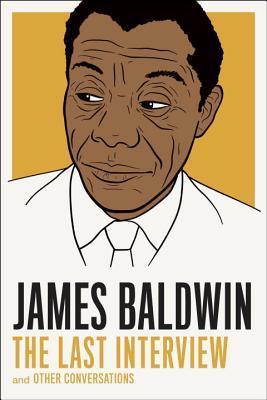
Never before available, the unexpurgated last interview with James Baldwin“I was not born to be what someone said I was. I was not born to be defined by someone else, but by myself, and myself only.” When, in the fall of 1987, the poet Quincy Troupe traveled to the south of France to interview James Baldwin, Baldwin’s brother David told him to ask Baldwin about everything—Baldwin was critically ill and David knew that this might be the writer’s last chance to speak at length about his life and work.The result is one of the most eloquent and revelatory interviews of Baldwin’s career, a conversation that ranges widely over such topics as his childhood in Harlem, his close friendship with Miles Davis, his relationship with writers like Toni Morrison and Richard Wright, his years in France, and his ever-incisive thoughts on the history of race relations and the African-American experience.Also collected here are significant interviews from other moments in Baldwin’s life, including an in-depth interview conducted by Studs Terkel shortly after the publication of Nobody Knows My Name . These interviews showcase, above all, Baldwin’s fearlessness and integrity as a writer, thinker, and individual, as well as the profound struggles he faced along the way.

Set in the contemporary Paris of American expatraites, liasons, and violence, a young man finds himself caught between desire and conventional morality. James Baldwin's brilliant narrative delves into the mystery of loving with a sharp, probing imagination, and he creates a moving, highly controversial story of death and passion that reveals the unspoken complexities of the heart.
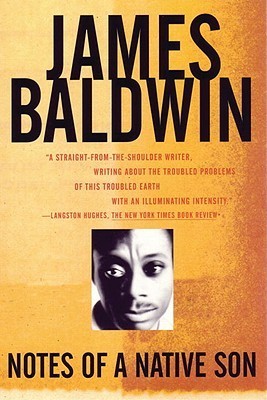
Since its original publication in 1955, this first nonfiction collection of essays by James Baldwin remains an American classic. His impassioned essays on life in Harlem, the protest novel, movies, and African Americans abroad are as powerful today as when they were first written.--back cover

Part of the Penguin 60s series, issued to celebrate 60 years of Penguin books. This collects "Sonny's Blues", "The Rockpile" and "Previous Condition", all taken from Going to Meet the Man (Penguin, 1991).

This is an older edition of ISBN 9780679761792."There's no way not to suffer. But you try all kinds of ways to keep from drowning in it." The men and women in these eight short fictions grasp this truth on an elemental level, and their stories, as told by James Baldwin, detail the ingenious and often desperate ways in which they try to keep their head above water. It may be the heroin that a down-and-out jazz pianist uses to face the terror of pouring his life into an inanimate instrument. It may be the brittle piety of a father who can never forgive his son for his illegitimacy. Or it may be the screen of bigotry that a redneck deputy has raised to blunt the awful childhood memory of the day his parents took him to watch a black man being murdered by a gleeful mob.By turns haunting, heartbreaking, and horrifying--and informed throughout by Baldwin's uncanny knowledge of the wounds racism has left in both its victims and its perpetrators--Going to Meet the Man is a major work by one of our most important writers.

To compose his stunning documentary film I Am Not Your Negro, acclaimed filmmaker Raoul Peck mined James Baldwin s published and unpublished oeuvre, selecting passages from his books, essays, letters, notes, and interviews that are every bit as incisive and pertinent now as they have ever been. Weaving these texts together, Peck brilliantly imagines the book that Baldwin never wrote. In his final years, Baldwin had envisioned a book about his three assassinated friends, Medgar Evers, Malcolm X, and Martin Luther King. His deeply personal notes for the project have never been published before. Peck s film uses them to jump through time, juxtaposing Baldwin s private words with his public statements, in a blazing examination of the tragic history of race in America.

At the height of his theatrical career, the actor Leo Proudhammer is nearly felled by a heart attack. As he hovers between life and death, Baldwin shows the choices that have made him enviably famous and terrifyingly vulnerable. For between Leo's childhood on the streets of Harlem and his arrival into the intoxicating world of the theater lies a wilderness of desire and loss, shame and rage. An adored older brother vanishes into prison. There are love affairs with a white woman and a younger black man, each of whom will make irresistible claims on Leo's loyalty. And everywhere there is the anguish of being black in a society that at times seems poised on the brink of total racial war. Overpowering in its vitality, extravagant in the intensity of its feeling, Tell Me How Long the Train's Been Gone is a major work of American literature.

'So the club rose, the blood came down, and his bitterness and his anguish and his guilt were compounded'Drawing on Baldwin's own experiences of prejudice in an America violently divided by race, these searing essays blend the intensely personal with the political to envisage a better world.Penguin Modern: fifty new books celebrating the pioneering spirit of the iconic Penguin Modern Classics series, with each one offering a concentrated hit of its contemporary, international flavour. Here are authors ranging from Kathy Acker to James Baldwin, Truman Capote to Stanislaw Lem and George Orwell to Shirley Jackson; essays radical and inspiring; poems moving and disturbing; stories surreal and fabulous; taking us from the deep South to modern Japan, New York's underground scene to the farthest reaches of outer space.

From one of the most important American writers of the twentieth century—an extraordinary history of the turbulent sixties and early seventies that powerfully speaks to contemporary conversations around racism.“It contains truth that cannot be denied.” — The Atlantic MonthlyIn this stunningly personal document, James Baldwin remembers in vivid details the Harlem childhood that shaped his early conciousness and the later events that scored his heart with pain—the murders of Martin Luther King and Malcolm X, his sojourns in Europe and in Hollywood, and his retum to the American South to confront a violent America face-to-face.

From one of the most brilliant writers and thinkers of the twentieth century comes a collection of "passionate, probing, controversial" essays ( The Atlantic ) on topics ranging from race relations in the United States to the role of the writer in society.Told with Baldwin's characteristically unflinching honesty, this “splendid book” ( The New York Times ) offers illuminating, deeply felt essays along with personal accounts of Richard Wright, Norman Mailer and other writers. “James Baldwin is a skillful writer, a man of fine intelligence and a true companion in the desire to make life human. To take a cue from his title, we had better learn his name.” — The New York Times

James Baldwin’s final novel is “the work of a born storyteller at the height of his powers” ( The New York Times Book Review ). “Not everything is lost. Responsibility cannot be lost, it can only be abdicated. If one refuses abdication, one begins again.” The stark grief of a brother mourning a brother opens this stunning, unforgettable novel. Here, in a monumental saga of love and rage, James Baldwin goes back to Harlem, to the church of his groundbreaking novel Go Tell It on the Mountain , to the forbidden passion of Giovanni’s Room , and to the political fire that enflames his nonfiction work. Here, too, the story of gospel singer Arthur Hall and his family becomes both a journey into another country of the soul and senses—and a living contemporary history of black struggle in this land.

James Baldwin At The Movies... Provocative, timeless, brilliant.Bette Davis's eyes, Joan Crawford's bitchy elegance, Stepin Fetchit's stereotype, Sidney Poitier's superhuman black man... These are the movie stars and the qualities that influenced James Baldwin... and now become part of his incisive look at racism in American movies.Baldwin challenges the underlying assumptions in such films as In the Heat of the Night, Guess Who's Coming to Dinner, and The Exorcist, offering us a vision of America's self-delusions and deceptions. Here are our loves and hates, biases and cruelties, fears and ignorance reflected by the films that have entertained us and shaped our consciousness. And here, too, is the stunning prose of a writer whose passion never diminished his struggle for equality, justice, and social change.From The Birth of a Nation to The Exorcist --one of America's most important writers turns his critical eye to American film.

In a small Southern town, a white man murders a black man, then throws his body in the weeds. With this act of violence--which is loosely based on the notorious 1955 killing of Emmett Till--James Baldwin launches an unsparing and at times agonizing probe of the wounds of race. For where once a white storekeeper could have shot a boy like Richard Henry with impunity, times have changed. And centuries of brutality and fear, patronage and contempt, are about to erupt in a moment of truth as devastating as a shotgun blast.In his award-winning play, Baldwin turns a murder and its aftermath into an inquest in which even the most well-intentioned whites are implicated--and in which even a killer receives his share of compassion.

Over twenty-two months in 1979 and 1981 nearly two dozen children were unspeakably murdered in Atlanta despite national attention and outcry; they were all Black. James Baldwin investigated these murders, the Black administration in Atlanta, and Wayne Williams, the Black man tried for the crimes. Because there was only evidence to convict Williams for the murders of two men, the children's cases were closed, offering no justice to the families or the country. Baldwin's incisive analysis implicates the failures of integration as the guilt party, arguing, "There could be no more devastating proof of this assault than the slaughter of the children."As Stacey Abrams writes in her foreword, "The humanity of black children, of black men and women, of black lives, has ever been a conundrum for America. Forty years on, Baldwin's writing reminds us that we have never resolved the core Do black lives matter? Unequivocally, the moral answer is yes, but James Baldwin refuses such rhetorical comfort." In this, his last book, by excavating American race relations Baldwin exposes the hard-to-face ingrained issues and demands that we all reckon with them.

All of the published poetry of James Baldwin, including six significant poems previously only available in a limited edition During his lifetime (1924–1987), James Baldwin authored seven novels, as well as several plays and essay collections, which were published to wide-spread praise. These books, among them Notes of a Native Son , The Fire Next Time , Giovanni’s Room , and Go Tell It on the Mountain , brought him well-deserved acclaim as a public intellectual and admiration as a writer. However, Baldwin’s earliest writing was in poetic form, and Baldwin considered himself a poet throughout his lifetime. Nonetheless, his single book of poetry, Jimmy’s Blues , never achieved the popularity of his novels and nonfiction, and is the one and only book to fall out of print.This new collection presents James Baldwin the poet, including all nineteen poems from Jimmy’s Blues , as well as all the poems from a limited-edition volume called Gypsy , of which only 325 copies were ever printed and which was in production at the time of his death. Known for his relentless honesty and startlingly prophetic insights on issues of race, gender, class, and poverty, Baldwin is just as enlightening and bold in his poetry as in his famous novels and essays. The poems range from the extended dramatic narratives of “Staggerlee wonders” and “Gypsy” to the lyrical beauty of “Some days,” which has been set to music and interpreted by such acclaimed artists as Audra McDonald. Nikky Finney’s introductory essay reveals the importance, relevance, and rich rewards of these little-known works. Baldwin’s many devotees will find much to celebrate in these pages.

Only a boy preacher who had grown up to become one of America's most eminent writers could have produced a play like The Amen Corner. For to his first work for the theater James Baldwin brought all the fervor and majestic rhetoric of the storefront churches of his childhood along with an unwavering awareness of the price those churches exacted from their worshipers. For years Sister Margaret Alexander has moved her Harlem congregation with a mixture of personal charisma and ferocious piety. But when Margaret's estranged husband, a scapegrace jazz musician, comes home to die, she is in danger of losing both her standing in the church and the son she has tried to keep on the godly path. The Amen Corner is a play about faith and family, about the gulf between black men and black women and black fathers and black sons. It is a scalding, uplifting, sorrowful and exultant masterpiece of the modern American theater.
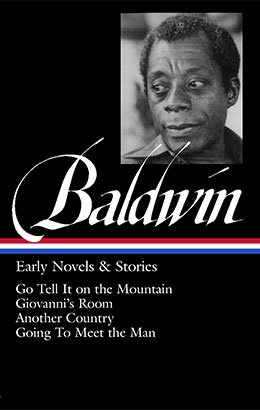
Early Novels & Stories: Go Tell It on the Mountain / Giovanni’s Room / Another Country / Going to Meet the Man
by James Baldwin
Rating: 4.5 ⭐
“The civil rights struggle,” said The New York Times Book Review, “found eloquent expression in [Baldwin’s] novels. His historical importance is indisputable.” Here, in a Library of America volume edited by Nobel laureate Toni Morrison, is the fiction that established James Baldwin’s reputation as a writer who fused unblinking realism and rare verbal eloquence.His first novel, Go Tell It on the Mountain (1953), tells the story, rooted in Baldwin’s own experience, of a preacher’s son coming of age in 1930’s Harlem. Ten years in the writing, its exploration of religious, sexual, and generational conflicts was described by Baldwin as “an attempt to exorcise something, to find out what happened to my father, what happened to all of us.”Giovanni’s Room (1956) is a searching, and in its day controversial, treatment of the tragic self-delusions of a young American expatriate at war with his own homosexuality. Another Country (1962), a wide-ranging exploration of America’s racial and sexual boundaries, depicts the suicide of a gifted jazz musician and its ripple effect on those who knew him. Complex in structure and turbulent in mood, it is in many ways Baldwin’s most ambitious novel.Going to Meet the Man (1965) collects Baldwin’s short fiction, including the masterful “Sonny’s Blues,” the unforgettable portrait of a jazz musician struggling with drug addiction in which Baldwin came closest to defining his goal as a writer: “For, while the tale of how we suffer, and how we are delighted, and how we may triumph is never new, it must be heard. There isn’t any other tale to tell, it’s the only light we’ve got in all this darkness.”

The Cross of Redemption is a revelation by an American literary master: a gathering of essays, articles, polemics, reviews, and interviews that have never before appeared in book form. James Baldwin was one of the most brilliant and provocative literary figures of the past century, renowned for his fierce engagement with issues haunting our common history. In The Cross of Redemption we have Baldwin discoursing on, among other subjects, the possibility of an African-American president and what it might mean; the hypocrisy of American religious fundamentalism; the black church in America; the trials and tribulations of black nationalism; anti-Semitism; the blues and boxing; Russian literary masters; and the role of the writer in our society. Prophetic and bracing, The Cross of Redemption is a welcome and important addition to the works of a cosmopolitan and canonical American writer who still has much to teach us about race, democracy, and personal and national identity. As Michael Ondaatje has remarked, “If van Gogh was our nineteenth-century artist-saint, Baldwin [was] our twentieth-century one.”

Impassioned tales of human experience that reach the soul. James Baldwin's powerful writing expressed the anger and helplessness felt by many black people in America. Born in New York's Harlem in 1924, the controversial novelist, playwright and essayist achieved overnight success with his first book Go To It on the Mountain. He died in 1987. The three stories in this selection are taken from Going to Meet the Man.

Four-year-old TJ spends his days on his lively Harlem block playing with his best friends WT and Blinky and running errands for neighbors. As he comes of age as a “Little Man” with big dreams, TJ faces a world of grown-up adventures and realities. Baldwin’s only children’s book, Little Man, Little Man celebrates and explores the challenges and joys of black childhood. Now available for the first time in forty years, this new edition of Little Man, Little Man—which retains the charming original illustrations by French artist Yoran Cazac—includes a foreword by Baldwin’s nephew Tejan "TJ" Karefa-Smart and an afterword by his niece Aisha Karefa-Smart, with an introduction by two Baldwin scholars. In it we not only see life in 1970s Harlem from a black child’s perspective, but we also gain a fuller appreciation of the genius of one of America’s greatest writers.

James Baldwin's screenplay based on Alex Haley's now classic The Autobiography Of Malcolm X makes immediate and terrfyingly real the stunning events that gave birth to a forceful, determined man . . . and created the atmosphere of hate that ultimately murdered him. Juxtaposing eloquence and violence, the highest of human ideals with the basest of human violence, this rare screenplay recreates Malcolm X as a symbol for his times . . . and as a flesh and blood black man who feels, loves, hates, and forgives through a life torn by pain, healed by faith, and finally ended by the bullets from a black brother's gun.

The best of the best from a powerful voice in the American literary landscape who fearlessly tackled race, sex, politics, and art in his internationally acclaimed novels, short stories, plays, and essays. “[Baldwin] uses words as the sea uses waves, to flow and beat, advance and retreat, rise and take a bow in disappearing...the thought becomes poetry and the poetry illuminates thought.” —Langston HughesJames Baldwin was and remains a powerfully prophetic voice in the American literary landscape. His literary achievement is a lasting legacy about what it means to be American.Vintage Baldwin includes the short story “Sonny’s Blues”; the galvanizing civil rights examination “My Dungeon Letter to My Nephew on the One Hundredth Anniversary of the Emancipation”; the essays “Fifth Avenue, A Letter from Harlem,” “The Discovery of What It Means to Be an American,” and “Nobody Knows My A Letter from the South”; and excerpts from the novel Another Country and the play The Amen Corner.“If Van Gogh was our 19th-century artist-saint, James Baldwin is our 20th-century one.” —Michael Ondaatje

Native Sons: A Friendship that Created One of the Greatest Works of the 20th Century: Notes of a Native Son
by James Baldwin
Rating: 3.8 ⭐
James Baldwin was beginning to be recognized as the most brilliant black writer of his generation when his first book of essays, Notes of a Native Son , established his reputation in 1955. No one was more pleased by the book’s reception than Baldwin’s high school friend Sol Stein. A rising New York editor, novelist, and playwright, Stein had suggested that Baldwin do the book and coaxed his old friend through the long and sometimes agonizing process of putting the volume together and seeing it into print. Now, in this fascinating new book, Sol Stein documents the story of his intense creative partnership with Baldwin through newly uncovered letters, photos, inscriptions, and an illuminating memoir of the friendship that resulted in one of the classics of American literature. Included in this book are the two works they created together–the story “Dark Runner” and the play Equal in Paris , both published here for the first time.Though a world of difference separated them–Baldwin was black and gay, living in self-imposed exile in Europe; Stein was Jewish and married, with a growing family to support–the two men shared the same fundamental passion. Nothing mattered more to either of them than telling and writing the truth, which was not always welcome. As Stein wrote Baldwin in a long, heartfelt letter, “You are the only friend with whom I feel comfortable about all heart, head, and writing.” In this extraordinary book, Stein unfolds how that shared passion played out in the months surrounding the creation and publication of Baldwin’s Notes of a Native Son , in which Baldwin’s main themes are illuminated.A literary event published to honor the eightieth anniversary of James Baldwin’s birth, Native Sons is a celebration of one of the most fruitful and influential friendships in American letters.
![Rare James Baldwin / Native Sons Friendship that Created One of the Greatest 1st 2004 - NY: Ballantine Books, 2004 [Hardcover] James Baldwin and Sol Stein](/placeholder.svg?height=400&width=300)
This rare and vintage book is a perfect addition to any bibliophile's collection