
Hannah Arendt
Hannah Arendt (1906 – 1975) was one of the most influential political philosophers of the twentieth century. Born into a German-Jewish family, she was forced to leave Germany in 1933 and lived in Paris for the next eight years, working for a number of Jewish refugee organisations. In 1941 she immigrated to the United States and soon became part of a lively intellectual circle in New York. She held a number of academic positions at various American universities until her death in 1975. She is best known for two works that had a major impact both within and outside the academic community. The first, The Origins of Totalitarianism, published in 1951, was a study of the Nazi and Stalinist regimes that generated a wide-ranging debate on the nature and historical antecedents of the totalitarian phenomenon. The second, The Human Condition, published in 1958, was an original philosophical study that investigated the fundamental categories of the vita activa (labor, work, action). In addition to these two important works, Arendt published a number of influential essays on topics such as the nature of revolution, freedom, authority, tradition and the modern age. At the time of her death in 1975, she had completed the first two volumes of her last major philosophical work, The Life of the Mind, which examined the three fundamental faculties of the vita contemplativa (thinking, willing, judging).
30 Books Written

Eichmann in Jerusalem: A Report on the Banality of Evil
by Hannah Arendt
Rating: 4.2 ⭐
• 2 recommendations ❤️
Sparking a flurry of heated debate, Hannah Arendt’s authoritative and stunning report on the trial of German Nazi leader Adolf Eichmann first appeared as a series of articles in The New Yorker in 1963. This revised edition includes material that came to light after the trial, as well as Arendt’s postscript directly addressing the controversy that arose over her account. A major journalistic triumph by an intellectual of singular influence, Eichmann in Jerusalem is as shocking as it is informative — an unflinching look at one of the most unsettling (and unsettled) issues of the twentieth century.

Hannah Arendt began her scholarly career with an exploration of Saint Augustine's concept of caritas , or neighborly love, written under the direction of Karl Jaspers and the influence of Martin Heidegger. After her German academic life came to a halt in 1933, Arendt carried her dissertation into exile in France, and years later took the same battered and stained copy to New York. During the late 1950s and early 1960s, as she was completing or reworking her most influential studies of political life, Arendt was simultaneously annotating and revising her dissertation on Augustine, amplifying its argument with terms and concepts she was using in her political works of the same period. The disseration became a bridge over which Arendt traveled back and forth between 1929 Heidelberg and 1960s New York, carrying with her Augustine's question about the possibility of social life in an age of rapid political and moral change.In Love and Saint Augustine , Joanna Vecchiarelli Scott and Judith Chelius Stark make this important early work accessible for the first time. Here is a completely corrected and revised English translation that incorporates Arendt's own substantial revisions and provides additional notes based on letters, contracts, and other documents as well as the recollections of Arendt's friends and colleagues during her later years.

Hannah Arendt's definitive work on totalitarianism and an essential component of any study of twentieth-century political historyThe Origins of Totalitarianism begins with the rise of anti-Semitism in central and western Europe in the 1800s and continues with an examination of European colonial imperialism from 1884 to the outbreak of World War I. Arendt explores the institutions and operations of totalitarian movements, focusing on the two genuine forms of totalitarian government in our time—Nazi Germany and Stalinist Russia—which she adroitly recognizes were two sides of the same coin, rather than opposing philosophies of Right and Left. From this vantage point, she discusses the evolution of classes into masses, the role of propaganda in dealing with the nontotalitarian world, the use of terror, and the nature of isolation and loneliness as preconditions for total domination.

A work of striking originality bursting with unexpected insights, The Human Condition is a in many respects more relevant now than when it first appeared in 1958. In her study of the state of modern humanity, Hannah Arendt considers humankind from the perspective of the actions of which it is capable. The problems Arendt identified then--diminishing human agency and political freedom; the paradox that as human powers increase through technological and humanistic inquiry, we are less equipped to control the consequences of our actions—continue to confront us today.

An analysis of the nature, causes, and significance of violence in the second half of the twentieth century. Arendt also reexamines the relationship between war, politics, violence, and power. “Incisive, deeply probing, written with clarity and grace, it provides an ideal framework for understanding the turbulence of our times.”The Nation

A unique and fascinating look at violent political change by one of the most profound thinkers of the twentieth century and the author of Eichmann in Jerusalem and The Origins of Totalitarianism Hannah Arendt’s penetrating observations on the modern world, based on a profound knowledge of the past, have been fundamental to our understanding of our political landscape. On Revolution is her classic exploration of a phenomenon that has reshaped the globe. From the eighteenth-century rebellions in America and France to the explosive changes of the twentieth century, Arendt traces the changing face of revolution and its relationship to war while underscoring the crucial role such events will play in the future. Illuminating and prescient, this timeless work will fascinate anyone who seeks to decipher the forces that shape our tumultuous age.

»Mein Thema heute, so fürchte ich, ist fast schon beschämend aktuell.«Was ist Freiheit, und was bedeutet sie uns? Begreifen wir sie nur als die Abwesenheit von Furcht und von Zwängen, oder meint Freiheit nicht vielmehr auch, sich an gesellschaftlichen Prozessen zu beteiligen, eine eigene politische Stimme zu haben, um von anderen gehört, erkannt und schließlich erinnert zu werden? Haben wir diese Freiheit einfach, oder wer gibt sie uns, und kann man sie uns auch wieder wegnehmen?In diesem bisher auf Deutsch unveröffentlichten Essay zeichnet Hannah Arendt die historische Entwicklung des Freiheitsbegriffs nach. Dabei berücksichtigt sie insbesondere die Revolutionen in Frankreich und Amerika. Während die eine in eine Katastrophe mündete und zu einem Wendepunkt der Geschichte wurde, war die andere ein triumphaler Erfolg und blieb doch eine lokale Angelegenheit. Aber warum?
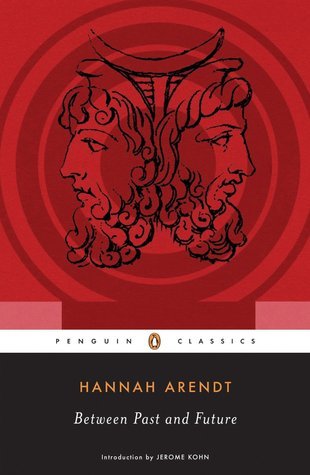
Arendt’s penetrating observations of the modern world, based on a profound knowledge of the past, constitute a major contribution to political philosophy. In this book she describes the perplexing crises which modern society faces as a result of the loss of meaning of the traditional key words of politics: justice, reason, responsibility, virtue, and glory. Through a series of eight exercises, she shows how we can redistill once more the vital essence of these concepts.

The author’s final work, presented in a one-volume edition, is a rich, challenging analysis of man’s mental activity, considered in terms of thinking, willing, and judging.

Inspired by the trial of a bureaucrat who helped cause the Holocaust, this radical work on the banality of evil stunned the world with its exploration of a regime's moral blindness and one man's insistence that he be absolved all guilt because he was 'only following orders'.

Responsibility and Judgment gathers together unpublished writings from the last decade of Arendt’s life, where she addresses fundamental questions and concerns about the nature of evil and the making of moral choices. At the heart of the book is a profound ethical investigation, “Some Questions of Moral Philosophy,” in which Arendt confronts the inadequacy of traditional moral “truths” as standards to judge what we are capable of doing and examines anew our ability to distinguish good from evil and right from wrong. We also see how Arendt comes to understand that alongside the radical evil she had addressed in earlier analyses of totalitarianism, there exists a more pernicious evil, independent of political ideology, whose execution is limitless when the perpetrator feels no remorse and can forget his acts as soon as they are committed.Responsibility and Judgment is an indispensable investigation into some of the most troubling and important issues of our time.

کتاب توتالیتاریسم، بخش سوم معروفترین کار خانم آرنت در جامعهشناسی سیاسی به نام خاستگاههای توتالیتاریسم است. عنوان بخش اول «یهودستیزی»، بخش دوم «امپریالیسم» و بخش سوم (که به صورت تکجلدی به انگلیسی منتشر شده بود و ما بر مبنای آن اما با تطبیق با چاپ 2004 کتاب را ترجمه و ویراست جدیدی از آن ارائه کردهایم) «توتالیتاریسم» است.

Crises of the Republic: Lying in Politics, Civil Disobedience, On Violence, and Thoughts on Politics and Revolution
by Hannah Arendt
Rating: 4.1 ⭐
A collection of studies in which Arendt, from the standpoint of a political philosopher, views the crises of the 1960s and early 1970s as challenges to the american form of government.

Essays on Karl Jaspers, Rosa Luxemburg, Pope John XXIII, Isak Dinesen, Bertolt Brecht, Randall Jarrell, and others whose lives and work illuminated the early part of the century.Table of contents- Preface- On Humanity in Dark Times: Thoughts about Lessing- Rosa Luxemburg 1871-1919- Angelo Giuseppe Roncalli: A Christian on St. Peter's Chair from 1958 to 1963- Karl Jaspers: A Laudation- Karl jaspers: Citizen of the World- Isak Dinesen 1885-1963- Herman Broch 1886-1951- Walter Benjamin 1892-1940- Bertolt Brecht 1898-1956- Waldemar Gurian 1903-1954- Randall Jarrell 1914-1965IndexAbout the AuthorFootnotes

Hannah Arendts 1943 erschienener Essay wurde lange Zeit ignoriert, erst 1986 übersetzt - und zeigt nun heute seine eigentliche Sprengkraft: Die Frage, ob Staaten überhaupt noch in der Lange sind, Flüchtlings-Probleme zu bewältigen, da die Nationalsozialisten die Idee des schützenden Nationalstaats demontiert haben, verneint Arendt mit Nachdruck.Der erläuternde Essay von Thomas Meyer unterstreicht die Relevanz des Textes für heute und uns alle.

Although Hannah Arendt is considered one of the major contributors to social and political thought in the twentieth century, this is the first general anthology of her writings. This volume includes selections from her major works, including The Origins of Totalitarianism, Between Past and Future, Men in Dark Times, The Jew as Pariah, and The Human Condition, as well as many shorter writings and letters. Sections include extracts from her work on fascism, Marxism, and totalitarianism; her treatment of work and labour; her writings on politics and ethics; and a section on truth and the role of the intellectual.

In The Promise of Politics, Hannah Arendt examines the conflict between philosophy and politics. In particular, she shows how the tradition of Western political thought, which extends from Plato and Aristotle to its culmination in Marx, failed to account for human action. The concluding section of the book, “Introduction into Politics,” examines an issue that is as timely today as it was when Arendt first wrote about it fifty years ago–the modern prejudice against politics. When politics is considered as a means to an end that lies outside of itself, argues Arendt, when force is used to create “freedom,” the very existence of political principles is imperiled.

When they first met in 1925, Martin Heidegger was a star of German intellectual life and Hannah Arendt was his earnest young student. What happened between them then will never be known, but both would cherish their brief intimacy for the rest of their lives.The ravages of history would soon take them in quite different directions. After Hitler took power in Germany in 1933, Heidegger became rector of the university in Freiburg, delivering a notorious pro-Nazi address that has been the subject of considerable controversy. Arendt, a Jew, fled Germany the same year, heading first to Paris and then to New York. In the decades to come, Heidegger would be recognized as perhaps the most significant philosopher of the twentieth century, while Arendt would establish herself as a voice of conscience in a century of tyranny and war.Illuminating, revealing, and tender throughout, this correspondence offers a glimpse into the inner lives of two major philosophers.

The first volume of Arendt’s celebrated three-part study of the philosophical origins of the totalitarian mind. This volume focuses on the rise of antisemitism in Europe in the late nineteenth and early twentieth centuries.

“There are no dangerous thoughts for the simple reason that thinking itself is such a dangerous enterprise.” — Hannah ArendtIn these interviews—including her final interview given in October 1973, in the midst of Watergate and the Yom Kippur War—Hannah Arendt discusses politics, war, protest movements, the Eichmann trial, Jewish identity, and language with the incisiveness and courage that always set her apart.

More urgent than ever, two landmark essays by the legendary political theorist on the greatest threat to democracy, gathered with a new introduction by David Bromwich“No one,” Hannah Arendt observed, “has ever counted truthfulness as a political virtue.” But why do politicians lie? What is the relationship between political lies and self-delusion? And how much organized deceit can a democracy endure before it ceases to function?Fifty years ago, the century’s greatest political theorist turned her focus to these essential questions in two seminal essays, brought together here for the first time. Her conclusions, delivered in searching prose that crackles with insight and intelligence, remain powerfully relevant, perhaps more so today than when they were written.In “Truth and Politics,” Arendt explores the affinity between lying and politics, and reminds us that the survival of factual truth depends on the testimony of credible witnesses and on an informed citizenry. She shows how our shared sense of reality—the texture of facts in which we wrap our daily lives—can be torn apart by organized lying, replaced with a fantasy world of airbrushed evidence and doctored documents. In “Lying in Politics,” written in response to the release of the Pentagon Papers, Arendt applies these insights to an analysis of American policy in Southeast Asia, arguing that the real goal of the Vietnam War—and of the official lies used to justify it by successive administrations—was nothing other than the burnishing of America’s image.In his introduction, David Bromwich (American Breakdown: The Trump Years and How They Befell Us) engages with Arendt’s essays in the context of her other writings and underscores their clarion call to take seriously the ever-present threat to democracy posed by lying.
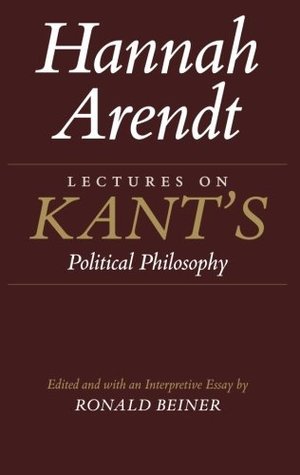
Hannah Arendt's last philosophical work was an intended three-part project entitled The Life of the Mind. Unfortunately, Arendt lived to complete only the first two parts, Thinking and Willing. Of the third, Judging, only the title page, with epigraphs from Cato and Goethe, was found after her death. As the titles suggest, Arendt conceived of her work as roughly parallel to the three Critiques of Immanuel Kant. In fact, while she began work on The Life of the Mind, Arendt lectured on "Kant's Political Philosophy," using the Critique of Judgment as her main text. The present volume brings Arendt's notes for these lectures together with other of her texts on the topic of judging and provides important clues to the likely direction of Arendt's thinking in this area.

Nouvelle édition augmentée. La philosophie et la théologie parlent de l’homme, de l’homme en général. Qu’il y ait un seul homme, ou deux hommes, ou des milliers, ce qu’elles affirment de l’homme reste valide. Il en va de même des approches scientifiques de l’homme : en biologie et en psychologie, on étudie l’homme, de même qu’en zoologie, il n’y a que le lion ou le singe.Il en va autrement en politique. La politique repose sur la multiplicité et la pluralité des hommes. Elle traite de la communauté et de la réciprocité d’êtres différents. En apparence, elle ne parvient jamais à la profondeur de la philosophie et de la théologie. Et pourtant, la politique, cet espace intermédiaire où se joue la liberté, où agissent les hommes libres, peut devenir le lieu même de la profondeur humaine.Traduit de l''allemand par Sylvie Courtine-Denamy et de l''anglais par Sylvie Taussig.

A landmark literary event, What Remains collects Arendt’s complete poetic oeuvre—never before published in English.Internationally renowned as one of the twentieth century’s foremost public intellectuals, Hannah Arendt was also intensely private. Though she often acknowledged that the language of poetry—especially that of Dickinson, Goethe, and Lowell—informed her work, only a few people knew that Arendt herself wrote poems.In fact, between 1923 and 1961, Arendt wrote seventy-four poems, many of them signposts in an otherwise unwritten autobiography. For nearly forty years after her death, these poems remained hidden among the archives of the Library of Congress, until 2011, when they were rediscovered by scholar and translator Samantha Rose Hill. Now, for the first time in English, Hill and Genese Grill present Arendt’s poems in chronological order, taking us from the zenith of the Weimar Republic to the Cold War, and from Marburg, Germany, to New York’s Upper West Side.Throughout, Arendt uses poetry to mark moments of joy, love, loss, and reflection. In “W. B.,” written in 1942, she remembers Walter Benjamin, who died near the French-Spanish border while attempting to flee the Nazis: “Gentle whispering melodies / Sound from the darkness. / We listen so we can let go.” So, too, she reflects on mutability and transience in 1946: “I know that the houses have fallen. / We entered the world in them, wonderfully sure, that they / were more durable than ourselves.” She tries to understand her place in the world: “Ironically foolish, / I’ve forgotten nothing, / I know the emptiness, / I know the burden, / I dance, I dance / In ironic splendor.”A gift to all readers of Arendt, this stunning, dual-language edition provides an unparalleled view into the inner sanctum of one of our most original thinkers.

This middle volume focuses on the curious and cruel epoch of declining European colonial imperialism from 1884 to the outbreak of the First World War in 1914.

Wie handelt man richtig, wenn das moralische "Richtig" dem gesetzlichen "Richtig" widerspricht? Wie reagiert man auf Missachtungen der Menschenrechte durch höchste Regierungsinstanzen? Wie können wir urteilen über die, in deren Haut wir nicht stecken? Mit diesen Fragen, die Hannah Arendt bereits vor über 50 Jahren beschäftigten, werden wir heute wieder verstärkt konfrontiert. Damals wie heute gilt: Persönliche Verantwortung muss sich von politischer Verantwortung unterscheiden. In Arendts klarer und bestechender Sprache gibt dieser wiederentdeckte Aufsatz Antworten auf die häufigsten Fragen unserer Zeit.

Tre motivi per leggerlo: Perché è un libro che non ti aspetti: una meditazione sul dissenso, che parla però molto di consenso e propone una collocazione costituzionale dei gruppi di protesta. Perché Hannah Arendt racconta di Socrate, Thoreau e della rivoluzione americana per tracciare la differenza che corre tra disobbedienza civile e obiezione di coscienza. Perché è un piccolo, prezioso manifesto sulla partecipazione attiva, contro la dittatura dei politici e le prepotenze dei governi.

Between Friends: The Correspondence of Hannah Arendt and Mary McCarthy, 1949-1975
by Hannah Arendt
Rating: 4.1 ⭐
American writer Mary McCarthy and Hannah Arendt, a philosopher who had fled Nazi Germany, met in New York City, and soon became friends. In Between Friends, a complete record of their epistolary dialogue which lasted a remarkable 25 years, the two intellectual celebrities trade ideas about politics, literature, and morality, and share gossip and intimate domestic details.

Essays in Understanding, 1930-1954: Formation, Exile, and Totalitarianism
by Hannah Arendt
Rating: 4.2 ⭐
Few thinkers have tackled the political horrors and complexities of this century with the insight and passionate intellectual integrity of Hannah Arendt. A philosophic champion of human freedom, she was among the first to draw the now-evident parallel between Nazism and Bolshevism and to identify totalitarianism as a threat inherent to the modern world. Jerome Kohn, Arendt's longtime assistant, has compiled, edited, and annotated her manuscripts for publication, beginning with some of her earliest published work and including essays on Augustine, Rilke, Kierkegaard, and figures of the nineteenth-century "Berlin Salon"; the loyalties of immigrant groups within the United States; the unification or "federation" of Europe; "the German problem"; religion, politics, and intellectual life; the dangers of isolation and careerism in American society; the logical consequences of "scientific" theories of Nature and History; the terror that was the organizing principle of both the Nazi and the Communist states. Two seminal essays have never before been published in complete form: On the Nature of Totalitarianism: An Essay in Understanding (1953) and Concern with Politics in Recent European Philosophical Thought (1954).

She was, Hannah Arendt wrote, "my closest friend, though she has been dead for some hundred years." Born in Berlin in 1771 as the daughter of a Jewish merchant, Rahel Varnhagen would come to host one of the most prominent salons of the late eighteenth and early nineteenth centuries. Arendt discovered her writings some time in the mid-1920s, and soon began to reimagine Rahel's inner life and write her biography. Long unavailable and never before published as Arendt intended, Rahel Varnhagen: The Life of a Jewess returns to print in an extraordinary new edition.Arendt draws a lively and complex portrait of a woman during the period of the Napoleonic wars and the early emancipation of the Jews, a figure who met and corresponded with some of the most celebrated authors, artists, and politicians of her time. She documents Rahel's attempts to earn legitimacy as a writer and gain access to the highest aristocratic circles, to assert for herself a position in German culture in spite of her gender and religion.Arendt had almost completed a first draft of her book on Rahel by 1933 when she was forced into exile by the National Socialists. She continued her work on the manuscript in Paris and New York, but would not publish the book until 1958. Rahel Varnhagen became not just a study of a historical Jewish figure, but a poignant reflection on Arendt's own life and times, her first exploration of German-Jewish identity and the possibility of Jewish life in the face of unimaginable adversity.For this first complete critical edition of the book in any language, Liliane Weissberg reconstructs the notes Arendt planned for Rahel Varnhagen but never fully executed. She reveals the extent to which Arendt wove the biography largely from the words of Rahel and her contemporaries. In her extended introduction, Weissberg reflects on Rahel's writings and on the importance of this text in the development of Arendt's political theory. Weissberg also reveals the hidden story of how Arendt manipulated documents relating to Rahel Varnhagen to claim for herself a university position and reparation payments from the postwar German state.