
Jacob Bronowski
Jacob Bronowski was a British mathematician and biologist of Polish-Jewish origin. He is best remembered as the presenter and writer of the 1973 BBC television documentary series, The Ascent of Man. In 1950, Bronowski was given the Taung child's fossilized skull and asked to try, using his statistical skills, to combine a measure of the size of the skull's teeth with their shape in order to discriminate them from the teeth of apes. Work on this turned his interests towards the human biology of humanity's intellectual products. In 1967 Bronowski delivered the six Silliman Memorial Lectures at Yale University and chose as his subject the role of imagination and symbolic language in the progress of scientific knowledge. Transcripts of the lectures were published posthumously in 1978 as The Origins of Knowledge and Imagination and remain in print. He first became familiar to the British public through appearances on the BBC television version of The Brains Trust in the late 1950s. His ability to answer questions on many varied subjects led to an offhand reference in an episode of Monty Python's Flying Circus where one character states that "He knows everything." However Bronowski is best remembered for his thirteen part series The Ascent of Man (1973), a documentary about the history of human beings through scientific endeavour. This project was intended to parallel art historian Kenneth Clark's earlier "personal view" series Civilisation (1969) which had covered cultural history. During the making of The Ascent of Man, Bronowski was interviewed by the popular British chat show host Michael Parkinson. Parkinson later recounted that Bronowski's description of a visit to Auschwitz—Bronowski had lost many family members during the Nazi era—was one of Parkinson's most memorable interviews. Jacob Bronowski married Rita Coblentz in 1941. The couple had four children, all daughters, the eldest being the British academic Lisa Jardine and another being the filmmaker Judith Bronowski. He died in 1974 of a heart attack in East Hampton, New York a year after The Ascent of Man was completed, and was buried in the western side of London's Highgate Cemetery, near the entrance.
28 Books Written

Dr Jacob Bronowksi's The Ascent of Man traces the development of human society through our understanding of science. First published in 1973 to accompany the groundbreaking BBC television series, it is considered one of the first works of 'popular science', illuminating the historical and social context of scientific development for a generation of readers. In his highly accessible style, Dr Bronowski discusses human invention from the flint tool to geometry, agriculture to genetics, and from alchemy to the theory of relativity, showing how they all are expressions of our ability to understand and control nature. In this new paperback edition, The Ascent of Man inspires, influences and informs as profoundly as ever.
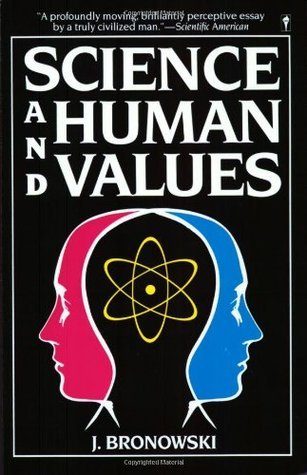
Thought-provoking essays on science as an integral part of the culture of our age from a leader in the scientific humanism movement. "A profoundly moving, brilliantly perceptive essay by a truly civilized man."-- Scientific American
“A gem of enlightenment. . . . One rejoices in Bronowski’s dedication to the identity of acts of creativity and of imagination, whether in Blake or Yeats or Einstein or Heisenberg.”— Kirkus Reviews“A delightful look at the inquiring mind.”— Library JournalIn this eloquent volume Jacob Bronowski, mathematician and scientist, presents a succinct introduction to the state of modern thinking about the role of science in man's intellectual and moral life. Weaving together themes from ethnology, linguistics, philosophy, and physics, he confronts the questions of who we are, what we are, and how we relate to the universe around us.

Traces the development of thought through historical movements and periods from 1500 to 1830.

J. Bronowski was both a distinguished mathematician and a poet, a philosopher of science and a literary critic who wrote a well-known study of William Blake. Dr. Bronowski’s very career was founded on the premise of an intimate connection between science and the humanities, disciplines which are still generally thought to be worlds apart.The Common Sense of Science , a book which remains as topical today as it was when it first appeared twenty-five years ago, articulates and develops Bronowski’s provocative idea that the sciences and the arts fundamentally share the same imaginative vision.

Science has called into question many traditional assumptions about human nature. In the age of the human genome project, this truism is even more obvious than it was in 1965, when scientist and historian of ideas Jacob Bronowski first delivered the lectures upon which this book is based. Has science revealed that we are essentially just complex machines? Or is human identity more than the sum of its parts?With his gift for conveying the excitement of ideas, Bronowski discusses the impact of science on our sense of self and the need to re-evaluate ethics in light of the scientific perspective. As both a practicing scientist and an author of books on poetry, he makes interesting connections between the uses of the imagination in science and in literature. Whereas science creates experiments to test hypotheses about the outside world, literature provides "experiments" in poetry and prose, allowing readers to experience what it means to be fully human and relating the individual's inner life to that of every human being. In the quest for understanding, science discovers the facts about reality while art depicts the truth of human experience. Bronowski argues that a true humanistic philosophy must give equal place to the inner, subjective vision of the arts and the outer, objective perspective of science since they are both products of one self-conscious creative imagination. In the final analysis, he emphasizes that these perspectives converge in revealing a more enlightened, universal ethics, one that fosters tolerance, mutual understanding, an appreciation of differences, and a sense that we all share a common destiny as human participants in nature's cosmic drama.

Jacob Bronowski truly educated an enormous number of members of that diffuse population usually referred to, with a hint of condescension, as educated laymen through his widely shared television series on the concepts of science and through such highly regarded books as The Identity of Man and The Ascent of Man. This volume extends the process to a further level of insight, and it may be more than suggestive that its final essay is entitled The Fulfillment of Man. Bronowski was an extraordinary teacher precisely because he did not condescend to his audience. He did not talk down to them; he knew how to talk them up to something near his own level, however briefly. He felt that if human beings are taken seriously, they can be led to respond to serious and difficult subjects that relate to the deepest aspects of nature, both beyond and within themselves.A Sense of the Future succeeds brilliantly in this respect, in part because it is a collection of essays that can be read independently as self-contained, delimited presentations; and in part because the book is more than the sum of these individual essays--it is a unified whole in which Bronowski's most abiding concerns are interrelated, juxtaposed, and tested for consistency in various intellectual contexts. The major unifying theme of the work is the intensely creative and human nature of the scientific enterprise--its kinship, at the highest levels of individual achievement, with comparable manifestations of the artistic imagination, and its ethical imperatives, evolved within the community of scientists over the centuries, which both embody and forge the values of civilized life at large. Still, the book's diversity of topics is as striking as the unity of its aim. Among the subjects within the realm of Bronowski's mind that are presented here are the limitations of formal logic and experimental methods, the epistemology of science, the distinctive nature of human language and the human mind, and the bases of biological and cultural evolution.Bronowski also contrasts the findings of science as the here and now of man's understanding with the ongoing activity of science as the open-ended search for truth, and he undertakes to demonstrate that the factual, individual is and the ethical, societal ought can be derived each from the other. A mathematician by training, Bronowski published poetry as well as books on literature and intellectual history. In addition to those mentioned above, The Common Sense of Science and Science and Human Values are among the most widely read of his books. Before his death in 1974, he was for many years a Senior Fellow at the Salk Institute for Biological Studies, where his formal area of research was concerned with the questions of human specificity and uniqueness. Clearly, his interests ranged far beyond this area, and in many directions.

Bronowski was fascinated by William Blake for much of his life. His first book about him, A Man Without a Mask, was published in 1944. In 1958 his famous Penguin selection of Blake's poems and letters was published. As further testimony to Bronowski's enthusiasm it should be noted that the final plate in the book of his great TV series The Ascent of Man is Blake's frontispiece to Songs of Experience. William Blake and the Age of Revolution, first published in 1965, is, in some ways, a revised edition of A Man Without a Mask, in others, a new book. In it Bronowski gives a stimulating interpretation of Blake's art and poetry in the context of the revolutionary period in which he was working. Like all of Bronowski's writings it dazzles with wide-ranging erudition, making this work far removed from conventional literary criticism.

Selected by Piero E. Ariotti in collaboration with Rita Bronowski
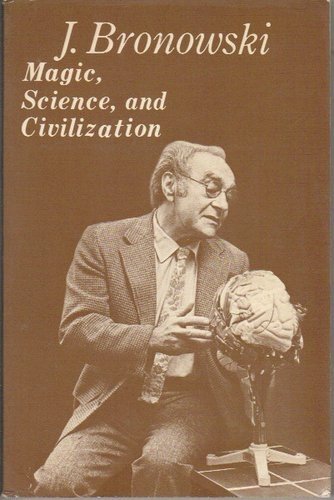
The well-known scientist discusses the place of science in the total field of human knowledge throughout the history of Western civilization and the importance of scientific values in the twentieth century

{ 15.34 x 23.59 cms} Leather Binding on Spine and Corners with Golden Leaf Printing on round Spine (extra customization on request like complete leather, Golden Screen printing in Front, Color Leather, Colored book etc.) Reprinted in 2013 with the help of original edition published long back [1944]. This book is printed in black & white, sewing binding for longer life, printed on high quality Paper, re-sized as per Current standards, professionally processed without changing its contents. As these are old books, we processed each page manually and make them readable but in some cases some pages which are blur or missing or black spots. If it is multi volume set, then it is only single volume, if you wish to order a specific or all the volumes you may contact us. We expect that you will understand our compulsion in these books. We found this book important for the readers who want to know more about our old treasure so we brought it back to the shelves. Hope you will like it and give your comments and suggestions. - English, Pages 165. EXTRA 10 DAYS APART FROM THE NORMAL SHIPPING PERIOD WILL BE REQUIRED FOR LEATHER BOUND BOOKS. COMPLETE LEATHER WILL COST YOU EXTRA US$ 25 APART FROM THE LEATHER BOUND BOOKS. {FOLIO EDITION IS ALSO AVAILABLE.} Complete William Blake, 1757-1827 A Man Without A Mask 1944 Jacob Bronowski

William Blake


The Face of Violence is a thought-provoking book written by J. Bronowski. The book is a combination of an essay and a play that explores the concept of violence and its impact on society. The essay delves into the root causes of violence and how it has evolved over time. It also discusses the psychological and sociological factors that contribute to violent behavior.The play, on the other hand, is a dramatization of the essay's themes, depicting the consequences of violence in a fictional context. The story revolves around a group of individuals who are affected by violence in different ways. The characters include victims, perpetrators, and witnesses of violence, each with their unique perspective on the issue.The book offers a critical analysis of violence and its effects on society, highlighting the need for a deeper understanding of the issue. It also provides insights into how violence can be prevented and how individuals can contribute to creating a more peaceful world.Overall, The Face of Violence is an insightful and thought-provoking book that offers a unique perspective on the complex issue of violence. It is a must-read for anyone interested in understanding the root causes of violence and its impact on society.This scarce antiquarian book is a facsimile reprint of the old original and may contain some imperfections such as library marks and notations. Because we believe this work is culturally important, we have made it available as part of our commitment for protecting, preserving, and promoting the world's literature in affordable, high quality, modern editions, that are true to their original work.

Presents the never-ending life cycle of a carbon atom from its birth in a star billions of years ago to the present time where it perhaps is a part of your body.

Dr. Bronowski's classic history of humankind. Dr. Jacob Bronowski's groundbreaking book The Ascent of Man traces the development of human society through its understanding of science. First published in 1973, it is considered one of the first works of "popular science", illuminating the historical and social context of scientific development for a generation of readers. In his highly accessible style, Dr. Bronowski discusses human invention from the flint tool to geometry, agriculture to genetics, and from alchemy to the theory of relativity, showing how they all are expressions of our ability to understand and control nature. The Ascent of Man inspires, influences and informs as profoundly as ever.
Originally published in 1939, this book examines the critical careers of a number of English poets. Bronowski looks at the reasons why English poets took an interest in criticism and how the role of poets as critics affected English criticism at large by taking Sidney, Dryden, Shelley, Wordsworth, Coleridge, Swinburne, Housman and Yeats as his examples. This book will be of value to anyone with an in English literature and literary criticism.
The Ascent of Man is a full-scale history of science developed from the acclaimed thirteen-part BBC television series written by Jacob Bronowski, mathematician, statistician, poet, historian, teacher, inventor and a leader in the modern movement of Scientific Humanism.
Verden omkring os, Naturens kræfter
by Jacob Bronowski
Den første af en serie bøger, et omfattende og internationalt kompendium om den menneskelige viden. Værket er tilrettelagt i samarbejde med udgivere og lærere i syv forskellige lande.
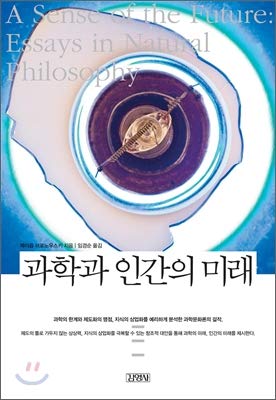
Science and the future of man
by Jacob Bronowski
Science and the future of manb A masterpiece of scientific and cultural theory that delves deeper into Januss essence of science! bIn the fall of 2010, an epidemic of mad cow disease that scared the Korean Peninsula and spring 2011, Japan Massive natural disasters, such as tsunami catastrophes, represent a number of risks associated with the future of science and technology. Francis Bacon expected technology to contribute to human well-being, but technology did not always guarantee us a rosy future. In todays enormous expansion of the social transformation of science and technology, can human beings guarantee a happy future?Studying sciences progress from ancient times to the present, which was written 40 years ago. The message of the centurys topic, Science and Human Future, which deeply dissects the relationship between science, history, art, and society, as well as its impact on humans, is valid today. Message of warning to human being living in modern society made of science and moving by science! With the unrelenting imagination that is not bound by the institutional framework, it presents a new paradigm of the future of science and the future of man, along with the appearance of true science for human beings.
The Identity of Man
by Jacob Bronowski

Science and Human Values
by Jacob Bronowski
Revised Edition with a new dialogue, "THE ABACUS AND THE ROSE". 1965 2nd Harper edition.
The drive for power
by Jacob Bronowski
Nature and Knowledge; The Philosophy of Contemporary Science
by Jacob Bronowski
A man without a mask. William Blake.
by Jacob Bronowski