
Zygmunt Bauman
Zygmunt Bauman was a world-renowned Polish sociologist and philosopher, and Emeritus Professor of Sociology at the University of Leeds. He was one of the world's most eminent social theorists, writing on issues as diverse as modernity and the Holocaust, postmodern consumerism and liquid modernity and one of the creators of the concept of “postmodernism”.
28 Books Written

'Liquid life' is the kind of life commonly lived in our contemporary, liquid-modern society. Liquid life cannot stay on course, as liquid-modern society cannot keep its shape for long. Liquid life is a precarious life, lived under conditions of constant uncertainty. The most acute and stubborn worries that haunt this liquid life are the fears of being caught napping, of failing to catch up with fast moving events, of overlooking the 'use by' dates and being saddled with worthless possessions, of missing the moment calling for a change of tack and being left behind. Liquid life is also shot through by a contradiction: it ought to be a (possibly unending) series of new beginnings, yet precisely for that reason it is full of worries about swift and painless endings, without which new beginnings would be unthinkable. Among the arts of liquid-modern living and the skills needed to practice them, getting rid of things takes precedence over their acquisition. This and other challenges of life in a liquid-modern society are traced and unravelled in the successive chapters of this new book by one of the most brilliant and original social thinkers of our time.

A modernidade líquida – um mundo repleto de sinais confusos, propenso a mudar com rapidez e de forma imprevisível – em que vivemos traz consigo uma misteriosa fragilidade dos laços humanos, um amor líquido. Zygmunt Bauman, um dos mais originais e perspicazes sociólogos em atividade, investiga nesse livro de que forma nossas relações tornam-se cada vez mais "flexíveis", gerando níveis de insegurança sempre maiores. A prioridade a relacionamentos em “redes”, as quais podem ser tecidas ou desmanchadas com igual facilidade – e freqüentemente sem que isso envolva nenhum contato além do virtual –, faz com que não saibamos mais manter laços a longo prazo. Mais que uma mera e triste constatação, esse livro é um alerta: não apenas as relações amorosas e os vínculos familiares são afetados, mas também a nossa capacidade de tratar um estranho com humanidade é prejudicada. Como exemplo, o autor examina a crise na atual política imigratória de diversos países da União Européia e a forma como a sociedade tende a creditar seus medos, sempre crescentes, a estrangeiros e refugiados. Com sua usual percepção fina e apurada, Bauman busca esclarecer, registrar e apreender de que forma o homem sem vínculos — figura central dos tempos modernos — se conecta.

In this new book, Bauman examines how we have moved away from a 'heavy' and 'solid', hardware-focused modernity to a 'light' and 'liquid', software-based modernity. This passage, he argues, has brought profound change to all aspects of the human condition. The new remoteness and un-reachability of global systemic structure coupled with the unstructured and under-defined, fluid state of the immediate setting of life-politics and human togetherness, call for the rethinking of the concepts and cognitive frames used to narrate human individual experience and their joint history.This book is dedicated to this task. Bauman selects five of the basic concepts which have served to make sense of shared human life - emancipation, individuality, time/space, work and community - and traces their successive incarnations and changes of meanaing.Liquid Modernity concludes the analysis undertaken in Bauman's two previous books Globalization: The Human Consequences and In Search of Politics. Together these volumes form a brilliant analysis of the changing conditions of social and political life by one of the most original thinkers writing today.

The passage from ‘solid’ to ‘liquid’ modernity has created a new and unprecedented setting for individual life pursuits, confronting individuals with a series of challenges never before encountered. Social forms and institutions no longer have enough time to solidify and cannot serve as frames of reference for human actions and long-term life plans, so individuals have to find other ways to organise their lives. They have to splice together an unending series of short-term projects and episodes that don’t add up to the kind of sequence to which concepts like ‘career’ and ‘progress’ could meaningfully be applied. Such fragmented lives require individuals to be flexible and adaptable – to be constantly ready and willing to change tactics at short notice, to abandon commitments and loyalties without regret and to pursue opportunities according to their current availability. In liquid modernity the individual must act, plan actions and calculate the likely gains and losses of acting (or failing to act) under conditions of endemic uncertainty. Zygmunt Bauman’s brilliant writings on liquid modernity have altered the way we think about the contemporary world. In this short book he explores the sources of the endemic uncertainty which shapes our lives today and, in so doing, he provides the reader with a brief and accessible introduction to his highly original account, developed at greater length in his previous books, of life in our liquid modern times.

A new afterword to this edition, "The Duty to Remember, But What?" tackles the difficult issues of guilt and innocence on the individual and societal levels. Zygmunt Bauman explores the silences found in debates about the Holocaust, and asks what the historical facts of the Holocaust tell us about the hidden capacities of present-day life. He finds great danger in such phenomena as the seductiveness of martyrdom; going to extremes in the name of safety; the insidious effects of tragic memory; and the efficient, "scientific" implementation of the death penalty. Bauman writes, "Once the problem of the guilt of the Holocaust perpetrators has been by and large settled . . . the one big remaining question is the innocence of all the rest, not the least the innocence of ourselves."Among the conditions that made the mass extermination of the Holocaust possible, according to Bauman, the most decisive factor was modernity itself. Bauman's provocative interpretation counters the tendency to reduce the Holocaust to an episode in Jewish history, or to one that cannot be repeated in the West precisely because of the progressive triumph of modern civilization. He demonstrates, rather, that we must understand the events of the Holocaust as deeply rooted in the very nature of modern society and in the central categories of modern social thought.

With the advent of liquid modernity, the society of producers is transformed into a society of consumers. In this new consumer society, individuals become simultaneously the promoters of commodities and the commodities they promote. They are, at one and the same time, the merchandise and the marketer, the goods and the travelling salespeople. They all inhabit the same social space that is customarily described by the term the market.The test they need to pass in order to acquire the social prizes they covet requires them to recast themselves as products capable of drawing attention to themselves. This subtle and pervasive transformation of consumers into commodities is the most important feature of the society of consumers. It is the hidden truth, the deepest and most closely guarded secret, of the consumer society in which we now live. In this new book Zygmunt Bauman examines the impact of consumerist attitudes and patterns of conduct on various apparently unconnected aspects of social life politics and democracy, social divisions and stratification, communities and partnerships, identity building, the production and use of knowledge, and value preferences.The invasion and colonization of the web of human relations by the worldviews and behavioural patterns inspired and shaped by commodity markets, and the sources of resentment, dissent and occasional resistance to the occupying forces, are the central themes of this brilliant new book by one of the worlds most original and insightful social thinkers.

The word "globalization" is used to convey the hope and determination of order-making on a worldwide scale. It is trumpeted as providing more mobility--of people, capital, and information--and as being equally beneficial for everyone. With recent technological developments--most notably the Internet--globalization seems to be the fate of the world. But no one seems to be in control. As noted sociologist Zygmunt Bauman shows in this detailed history of globalization, while human affairs now take place on a global scale, we are not able to direct events; we can only watch as boundaries, institutions, and loyalties shift in rapid and unpredictable ways. Who benefits from the new globalization? Are people in need assisted more quickly and efficiently? Or are the poor worse off than ever before? Will a globalized economy shift jobs away from traditional areas, destroying time-honored national industries? Who will enjoy access to jobs in the new hierarchy of mobility?From the way the global economy creates a class of absentee landlords to current prison designs for the criminalized underclass, Bauman dissects globalization in all its manifestations: its effects on the economy, politics, social structures, and even our perceptions of time and space. In a chilling analysis, Bauman argues that globalization divides as much as it unites, creating an ever-widening gulf between the haves and the have-nots. Rather than the hybrid culture we had hoped for, globalization is creating a more homogenous world.Drawing on the works of philosophers, social historians, architects, and theoreticians such as Michel Foucault, Claude L?vi-Strauss, Alfred J. Dunlap, and Le Corbusier, "Globalization" presents a historical overview of the methods employed to create and define human spaces and institutions, from rural villages to sprawling urban centers. Bauman shows how the advent of the computer translates into the decline of truly public space. And he explores the dimensions of a world in which--through new technologies--time is accelerated and space is compressed, revealing how we have arrived at our current state of global thinking. Bauman's incisive methods of inquiry make "Globalization" an excellent antidote to the exuberance expressed by those who stand to benefit from the new pace and mobility of the modern life.

In this lucid, stimulating and original book, Zygmunt Bauman and Tim May explore the underlying assumptions and tacit expectations which structure our view of the world. The authors elucidate key concepts in sociology: for example, individualism versus community, and privilege versus deprivation. While charting a course through sociology's main concerns, Bauman and May also examine the applicability of sociology to everyday life.This volume is a completely revised and expanded edition that includes new materials on health and fitness, intimacy, time, space and disorder, risk, globalization, identity, organizations, and new technologies. It was written for the benefit and enjoyment of students, professional sociologists and social scientists, and anyone else interested in the dynamics and issues that structure everyday life.

In our individualized society we are all artists of life – whether we know it or not, will it or not and like it or not, by decree of society if not by our own choice. In this society we are all expected, rightly or wrongly, to give our lives purpose and form by using our own skills and resources, even if we lack the tools and materials with which artists’ studios need to be equipped for the artist’s work to be conceived and executed. And we are praised or censured for the results – for what we have managed or failed to accomplish and for what we have achieved and lost.In our liquid modern society we are also taught to believe that the purpose of the art of life should be and can be happiness – though it’s not clear what happiness is, the images of a happy state keep changing and the state of happiness remains most of the time something yet-to-be-reached. This new book by Zygmunt Bauman – one of the most original and influential social thinkers writing today – is not a book of designs for the art of life nor a ‘how to’ the construction of a design for life and the way it is pursued is and cannot but be an individual responsibility and individual accomplishment. It is instead a brilliant account of conditions under which our designs-for-life are chosen, of the constraints that might be imposed on their choice and of the interplay of design, accident and character that shape their implementation. Last but not least, it is a study of the ways in which our society – the liquid modern, individualized society of consumers – influences (but does not determine) the way we construct and narrate our life trajectories.

قطعت الثقافة الغربية وعوداً كثيرة من بينها الوعد باستئصال الخوف من العالم وإخضاعه الإدارة بشرية وعقلانية وكان ذلك يعني استبعاد لغة القضاء والقدر والبلاء والابتلاء والتحوّل الى لغة الادارة والاستحقاق والمسؤولية والإدارة , وكانت هذه المفردات الجديدة تطمح إلى محاربة المجالات الثلاثة التي يصدر عنها الخوف اولاً :جموح الطبيعة، فقد أعلنت الحداثة عزمها على استئصال الخوف الكوني الصادر عن طبيعة هائجة لا يمكن السيطرة عليها، فأهملت فكرة القضاء والقدر، وحمّلت الإنسان اللمسؤولية عن الشر ودعت إلى الكف عن لوم الإله على ذلك. .ثانياً:هشاشة جسد الإنسان، وخوفه من أمراضه، فحاربت الحداثة الشبح المخيف الذي يطرق الأبواب ليقبض الأرواح وصار للموت أسباب "طبيعية". ثالثاً: العدوان البشري، القائم على مقولة توماس هوبز بأن "الإنسان ذئب لأخيه الإنسان"، فكان الحل بوجود دولة قوية تهذب الرغبات الكامنة في الإنسان، دولة تعتمد "جهنم الدنيوية الواقعية"، بدلاً من "جهنم الأخروية المتخيلة".وعلى الغرم من كل هذه المحاولات والأمل في التخلص من آثار الدولة الشمولية، ونزعاتها المتطرفة، وتأسيس دولة الرعاية الاجتماعية من أجل استئصال الخوف من المستقبل، وتحقيق الأمن الاجتماعي، إلا أننا ما زلنا أمام دولة انسحبت من أدوارها الاقتصادية والاجتماعية والثقافية، وأفسحت الطريق أمام عولمة الاقتصاد وعولمة الجريمة وعولمة الإرهاب، وباتت الدولة نفسها تبرر القتل الجماعي ونزع إنسانية الإنسان.

The production of ‘human waste’ – or more precisely, wasted lives, the ‘superfluous’ populations of migrants, refugees and other outcasts – is an inevitable outcome of modernization. It is an unavoidable side-effect of economic progress and the quest for order which is characteristic of modernity.As long as large parts of the world remained wholly or partly unaffected by modernization, they were treated by modernizing societies as lands that were able to absorb the excess of population in the ‘developed countries’. Global solutions were sought, and temporarily found, to locally produced overpopulation problems. But as modernization has reached the furthest lands of the planet, ‘redundant population’ is produced everywhere and all localities have to bear the consequences of modernity’s global triumph. They are now confronted with the need to seek – in vain, it seems – local solutions to globally produced problems. The global spread of the modernity has given rise to growing quantities of human beings who are deprived of adequate means of survival, but the planet is fast running out of places to put them. Hence the new anxieties about ‘immigrants’ and ‘asylum seekers’ and the growing role played by diffuse ‘security fears’ on the contemporary political agenda.With characteristic brilliance, this new book by Zygmunt Bauman unravels the impact of this transformation on our contemporary culture and politics and shows that the problem of coping with ‘human waste’ provides a key for understanding some otherwise baffling features of our shared life, from the strategies of global domination to the most intimate aspects of human relationships.
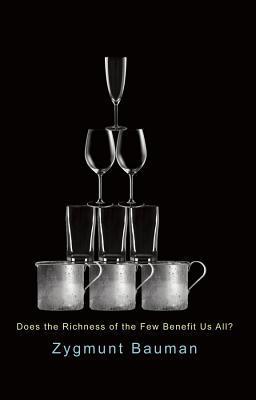
It is commonly assumed that the best way to help the poor out of their misery is to allow the rich to get richer, that if the rich pay less taxes then all the rest of us will be better off, and that in the final analysis the richness of the few benefits us all. And yet these commonly held beliefs are flatly contradicted by our daily experience, an abundance of research findings and, indeed, logic. Such bizarre discrepancy between hard facts and popular opinions makes one pause and why are these opinions so widespread and resistant to accumulated and fast-growing evidence to the contrary?This short book is by one of the world’s leading social thinkers is an attempt to answer this question. Bauman lists and scrutinizes the tacit assumptions and unreflected-upon convictions upon which such opinions are grounded, finding them one by one to be false, deceitful and misleading. Their persistence could be hardly sustainable were it not for the role they play in defending - indeed, promoting and reinforcing - the current, unprecedented, indefensible and still accelerating growth in social inequality and the rapidly widening gap between the elite of the rich and the rest of society.

From one of today's most eminent thinkers--a piercing examination of poverty in the modern age If "being poor" once derived its meaning from the condition of being unemployed, today it draws its meaning primarily from the plight of a flawed consumer. This distinction truly makes a difference in the way poverty is experienced and in the chances to redeem its misery. This absorbing book traces this change, and makes an inventory of its social consequences. It also considers ways of fighting back advancing poverty and mitigating its hardships, and tackles the problems of poverty in its present form. The new edition

دعت الثقافة الصلبة إلى فصل الدين عن الدولة، ووضعت الدولة / الأمة في مركز الوجود، وأكدت مركزية الإنسان في صنع هذا الوجود، وآمنت بأن الحضارة هي نتاج المادة والروح، والفعل والتفكير والإنتاج، وهي دين بديل يؤمن بتضحية الإنسان "في سبيل تقدم العلم وبسط سلطان العقل على عناصر الطبيعة الجامحة".هذا الإيمان الراسخ بمشروع التنوير الثقافي مرَّ بتحولات مهمة خلال العقود الماضية التي شهدت ظهور العولمة، والتمركز حول السوق والنزعة الاستهلاكية، وانتشار النزعة الفردية، وانسحاب الدولة من أدوارها الاقتصادية والاجتماعية والثقافية والسياسية؛ مما مهّد الطريق إلى انتقال الثقافة من مرحلة الصلابة إلى مرحلة السيولة، كما انتقلت إلى عالم السلع الاستهلاكية، فانسحبت الدولة من دعمها للثقافة والإرشاد القومي، وبدلاً من الدعم صارت عائقًا أمام الثقافة الحقيقية، حيث اقتصر اهتمامها على توظيف الثقافة والإعلام في تزييف الوعي وتبرير احتكار وسائل القهر والعنف، وشيطنة الحركات الاحتجاجية، التقدمية والمحافظة على حدٍّ سواء.

Estas son las páginas en las que estaba trabajando Zygmunt Bauman en el momento de su muerte, un diálogo con un joven que tiene exactamente sesenta años menos que él. En la conversación con Thomas Leoncini, Bauman aborda por primera vez el universo de las generaciones nacidas después de los primeros años ochenta, aquellos que en una sociedad líquida y en continuo cambio forman parte de ella en calidad de nativos. Una breve y fulgurante obra pop, capaz de entusiasmar tanto a quienes, por diversas razones, tienen relación con los jóvenes, como a los numerosísimos lectores de Bauman.

We have long since lost our faith in the idea that human beings could achieve human happiness in some future ideal state--a state that Thomas More, writing five centuries ago, tied to a topos , a fixed place, a land, an island, a sovereign state under a wise and benevolent ruler. But while we have lost our faith in utopias of all hues, the human aspiration that made this vision so compelling has not died. Instead it is re-emerging today as a vision focused not on the future but on the past, not on a future-to-be-created but on an abandoned and undead past that we could call retrotopia.The emergence of retrotopia is interwoven with the deepening gulf between power and politics that is a defining feature of our contemporary liquid-modern world--the gulf between the ability to get things done and the capability of deciding what things need to be done, a capability once vested with the territorially sovereign state. This deepening gulf has rendered nation-states unable to deliver on their promises, giving rise to a widespread disenchantment with the idea that the future will improve the human condition and a mistrust in the ability of nation-states to make this happen. True to the utopian spirit, retrotopia derives its stimulus from the urge to rectify the failings of the present human condition--though now by resurrecting the failed and forgotten potentials of the past. Imagined aspects of the past, genuine or putative, serve as the main landmarks today in drawing the road-map to a better world. Having lost all faith in the idea of building an alternative society of the future, many turn instead to the grand ideas of the past, buried but not yet dead. Such is retrotopia, the contours of which are examined by Zygmunt Bauman in this sharp dissection of our contemporary romance with the past.

This liquid modern world of ours, like all liquids, cannot stand still and keep its shape for long. Everything keeps changing - the fashions we follow, the events that intermittently catch our attention, the things we dream of and things we fear. And we, the inhabitants of this world in flux, feel the need to adjust to its tempo by being ‘flexible' and constantly ready to change. We want to know what is going on and what is likely to happen, but what we get is an avalanche of information that threatens to overwhelm us. How are we to sift the information that really matters from the heaps of useless and irrelevant rubbish? How are we to derive meaningful messages from senseless noise?We face the daunting task of trying to distinguish the important from the insubstantial, distil the things that matter from false alarms and flashes in the pan.Nothing escapes scrutiny so stubbornly as the ordinary things of everyday life, hiding in the light of deceptive and misleading familiarity. To turn them into objects of attention and scrutiny, they must first be torn out from that daily the apparently familiar must be made strange. This is precisely what Zygmunt Bauman seeks to do in these 44 each tells a story drawn from ordinary lives, but tells it in order to reveal an extraordinariness that we might otherwise overlook. Arresting, revealing, disconcerting, these snapshots of life by the most brilliant analyst of our liquid modern world will appeal to a wide readership.

This topical new book by Zygmunt Bauman explores the notion of identity in the modern world.As we grapple with the insecurity and uncertainty of liquid modernity, Bauman argues that our socio-political, cultural, professional, religious and sexual identities are undergoing a process of continual transformation. Identities the world over have become more precarious than ever: we live in an era of constant change and disposability - whether it's last season’s outfit, or car, or even partner – and our identities as a result have become transient and deeply elusive. In a world of rapid global change where national borders are increasingly eroded, our identities are in a state of continuous flux.Identity - a notion that by its very nature is elusive and ambivalent – has become a key concept for understanding the changing nature of social life and personal experience in our contemporary, liquid modern age. In this brief book, Zygmunt Bauman explains compellingly why this is so.Zygmunt Bauman is Professor Emeritus at the University of Leeds and the University of Warsaw. Benedetto Vecchi is a journalist and Editor of the Italian newspaper Il Manifesto.

Evil is not confined to war or to circumstances in which people are acting under extreme duress. Today it more frequently reveals itself in the everyday insensitivity to the suffering of others, in the inability or refusal to understand them and in the casual turning away of one’s ethical gaze. Evil and moral blindness lurk in what we take as normality and in the triviality and banality of everyday life, and not just in the abnormal and exceptional cases. The distinctive kind of moral blindness that characterizes our societies is brilliantly analysed by Zygmunt Bauman and Leonidas Donskis through the concept of the placing of certain acts or categories of human beings outside of the universe of moral obligations and evaluations. Adiaphora implies an attitude of indifference to what is happening in the world – a moral numbness. In a life where rhythms are dictated by ratings wars and box-office returns, where people are preoccupied with the latest gadgets and forms of gossip, in our ‘hurried life’ where attention rarely has time to settle on any issue of importance, we are at serious risk of losing our sensitivity to the plight of the other. Only celebrities or media stars can expect to be noticed in a society stuffed with sensational, valueless information. This probing inquiry into the fate of our moral sensibilities will be of great interest to anyone concerned with the most profound changes that are silently shaping the lives of everyone in our contemporary liquid-modern world.

ليس هذا كتاباً في لاهوت الشر ولا في دراسة الشياطين، بل هو كتاب في سوسيولوجيا العمى الأخلاقي، وإن كان يستعين بكل ذلك في رسم معالم هذا العمى. فالشر في الوجدان الإنساني هو عكس الخير، وهو جزء أساس من الخريطة الإدراكية التي ترسم العالم في ثنائيات صلبة متعارضة، مثل النور والظلام، الجمال والقبح، الحق والباطل، الإنسانية والبربرية، الحقيقة والخرافة، العلم والجهل.. وكانت هذه الثنائيات تستمد تماسكها من مركز صلب، إلهي أو بشري، يحدد معالمها وحدودها. ومع اختفاء هذه المراكز الصلبة، تحول الشر من مرحلة الصلابة إلى مرحلة السيولة. الشر السائل كتاب جديد من كتب باومان حول هذا العصر الذي نعيشه والذي تتسم ظواهره بالسيولة. فباومان ودونسكيس في حوارهما الثري في هذا الكتاب يسهمان في استجلاء وبيان طبيعة هذه السيولة للشر التي قد تصل بالبشرية إلى نقطة الشر المحض الذي يخرج من حيِّز الفعل المُدان إلى منطق النظر إلى الكون والحياة. وفي أثناء الحوار، يُثار التساؤل الآتي: "كيف يمكن اجتناب حرب الجميع ضد الجميع إذا كانت الفضيلة مجرد قناع لحب النفس، وإذا كان لا يمكن الوثوق بأي أحد، وإذا كان المرء لا يستطيع أن يعتمد إلا على نفسه؟ هذا هو أول سؤال للحداثة.. تلك الحضارة الغريبة التي شرعت، لأول مرة في التاريخ، في تأسيس تقدّمها على الارتياب المنهجي والخوف من الموت والاعتقاد بأن الحب والعطاء فعلان مستحيلان، وواقع الأمر أن الاتجاه إلى إخفاء النقمة في صورة نعمة هو السمة الأساسية المميزة لتكنولوجيا غسل الدماغ في الوقت الراهن، تلك التكنولوجيا التي ترتدي عباءة "الاهتمام بالأمن"، مع أنها تُستخدم أساساً لأغراض بعيدة إلى حد ما من اهتمامات السلامة والأمان".

If, as Freud postulated, modern society assails man's freedom by repressing his sexual expression, then the postmodern era can be said to be defined by the individual's quest for sublime happiness at the expense of security. Society has held to the concepts of beauty, purity, and order for centuries, and now a new worldview has emerged with the individual at its nucleus.Framed by discussions of such thinkers as Michel Foucault, Emannuel Levinas, Hans Jones and Richard Rorty, Postmodernity and Its Discontents explores this brave new era, tackling head-on such issues as the postmodernization of surveillance and social control; the often tenuous threads binding morality, ethics, and freedom together; contemporary artistic and aesthetic theory; and the complex associations between solidarity, difference and freedom.Arguing that you need most what you lack most, internationally renowned scholar Zygmunt Bauman asserts that freedom without security assures no greater happiness than security without freedom. In this thoughtful, nuanced volume, Bauman searches for a balance between the two, tipping the scales of the postmodern world decidedly in our favor.

La felicità promessa dal progresso moderno è associata a un'esistenza priva di turbamenti, di inciampi, senza sforzo. Ma siamo proprio sicuri che questa sia felicità? Richiamando con emozione pensatori quali Johann Wolfgang von Goethe o Alexis de Tocqueville, Sigmund Freud o Max Scheler, Zygmunt Bauman riflette sulle cause sociali della felicità e dell'infelicità dei nostri giorni. Mentre il mercato consumistico produce clienti insoddisfatti, una strana malinconia pervade gli abitanti delle nostre democrazie. La solitudine, virus dell'era contemporanea, nutre il business dei social network, e intanto l'amicizia, l'amore e la necessità vitale di vivere assieme agli altri all'interno della polis comune tendono a sparire. Bauman disegna il tragitto dell'essere umano che, fra destino e carattere, si muove alla ricerca della felicità. Se la felicità non è uno stato permanente, se è difficile definirne il contenuto – come insegna il pensiero filosofico, da Aristotele a Kant – una cosa è comunque meglio essere felici che infelici. La felicità promessa dal progresso moderno è associata a un'esistenza priva di turbamenti, di inciampi, senza sforzo. Ma siamo proprio sicuri che questa sia felicità? Richiamando con emozione pensatori quali Johann Wolfgang von Goethe o Alexis de Tocqueville, Sigmund Freud o Max Scheler, Zygmunt Bauman riflette sulle cause sociali della felicità e dell'infelicità dei nostri giorni. Mentre il mercato consumistico produce clienti insoddisfatti, una strana malinconia pervade gli abitanti delle nostre democrazie. La solitudine, virus dell'era contemporanea, nutre il business dei social network, e intanto l'amicizia, l'amore e la necessità vitale di vivere assieme agli altri all'interno della polis comune tendono a sparire. Bauman disegna il tragitto dell'essere umano che, fra destino e carattere, si muove alla ricerca della felicità. Se la felicità non è uno stato permanente, se è difficile definirne il contenuto – come insegna il pensiero filosofico, da Aristotele a Kant – una cosa è comunque meglio essere felici che infelici.

'Community' is one of those words that feels it is good 'to have a community', 'to be in a community'. And 'community' feels good because of the meanings which the word conveys, all of them promising pleasures, and more often than not the kind of pleasures which we would like to experience but seem to miss.'Community' conveys the image of a warm and comfortable place, like a fireplace at which we warm our hands on a frosty day. Out there, in the street, all sorts of dangers lie in ambush; in here, in the community, we can relax and feel safe. 'Community' stands for the kind of world which we long to inhabit but which is not, regrettably, available to us. Today 'community' is another name for paradise lost - but for a paradise which we still hope to find, as we feverishly search for the roads that may lead us there.But there is a price to be paid for the privilege of being in a community. Community promises security but seems to deprive us of freedom, of the right to be ourselves. Security and freedom are two equally precious and coveted values which could be balanced to some degree, but hardly ever fully reconciled. The tension between security and freedom, and between community and individuality, is unlikely ever to be resolved. We cannot escape the dilemma but we can take stock of the opportunities and the dangers, and at least try to avoid repeating past errors.In this important new book, Zygmunt Bauman takes stock of these opportunities and dangers and, in his distinctive and brilliant fashion, offers a much-needed reappraisal of a concept that has become central to current debates about the nature and future of our societies.

We are spurred into action by our troubles and fears; but all too often our action fails to address the true causes of our worries. When trying to make sense of our lives, we tend to blame our own failings and weaknesses for our discomforts and defeats. And in doing so, we make things worse rather than better. Reasonable beings that we are, how does this happen and why does it go on happening?These are the questions addressed in this new book by Zygmunt Bauman - one of the most original and perceptive social thinkers writing today. For Bauman, the task of sociology is not to censor or correct the stories we tell of our lives, but to show that there are more ways in which our life stories can be told. By bringing into view the many complex dependencies invisible from the vantage point of private experience, sociology can help us to link our individual decisions and actions to the deeper causes of our troubles and fears - to the ways we live, to the conditions under which we act, to the socially drawn limits of our imagination and ambition. Sociology can help us to understand the processes that have shaped the society in which we live today, a society in which individualization has become our fate. And sociology can also help us to see that if our individual but shared anxieties are to be effectively tackled, they need to be addressed collectively, true to their social, not individual, nature.The Individualized Society will be of great interest to students of sociology, politics and the social sciences and humanities generally. It will also appeal to a broader range of readers who are interested in the changing nature of our social and political life today.

Alle glorie della nuova era globale si contrappone la solitudine dell'uomo comune: la socialità è incerta, confusa, sfocata. Si scarica in esplosioni sporadiche e spettacolari per poi ripiegarsi esaurita su se stessa. Per porre un freno a questo processo occorre ritrovare lo spazio in cui pubblico e privato si connettono: l'antica agorà, in cui la libertà individuale può diventare impegno collettivo.

الأخلاق في عصرالحداثة السائلة» ترجمة لكتاب باومان الصادر باللغة الإنجليزية بعنوان «هل للأخلاق فرصة في عالم استهلاكي؟». صدر الكتاب عام 2008 وتضمن قراءة لعدد من الظواهر الكبرى التي تسم العالم المعاصر بما يسمّيه باومان «الحداثة السائلة». المحور الرئيس لتلك الظواهر هو الشأن الأخلاقي الذي ينظر إليه المفكر البولندي من زاوية تأثّره بسيطرة الاستهلاك في عالم سريع التغير على المستويات كافة. فالأخلاق في عالم الاستهلاك سائلة، أو فاقدة للثبات أو الصلابة التي عرفتها في فترات سابقة آخرها ما يسمّيه باومان عصر الحداثة الصلبة، أي حداثة التنوير. في عالم السيولة تتغير القيم والهويّات وتسيل الحدود السياسية وتفقد الحواجز التقليدية تأثيرها وأهميتها سواء من خلال تدفق رأس المال أو تحرك المهاجرين أو البحث عن الربح السريع في شبكات الاتصال أو غير ذلك من مظاهر السيولة التي يحللها باومان في مقدمة وستة فصول

Hay pocos textos que sinteticen con mayor lucidez la condición del individuo en la sociedad de consumo del siglo XXI que estas páginas escritas por Zygmunt Bauman. En ellas se delimitan con precisión los contornos de un estado de cosas en el que los individuos, convertidos en consumidores, han perdido contacto con todas las referencias ideológicas, sociales y de comportamiento que habían determinado su actuación en siglos anteriores.En este orden nuevo la vida «se acelera» por la necesidad, casi obligación, de aprovechar tantas oportunidades de felicidad como sea posible, cosa que nos permite ser «alguien nuevo» a cada momento. La identidad se construye por medio de accesorios comprados, que aparecen en el mercado en número que se multiplica hasta hacerse incontrolable, al igual que la oferta de información con que nuestro criterio es bombardeado desde todas partes. Ello tiene influencia sobre nuestra manera de relacionarnos con el saber, el trabajo y la vida en general: la educación, en la época de la modernidad líquida, ha abandonado la noción de conocimiento de la verdad útil para toda la vida y la ha sustituido por la del conocimiento «de usar y tirar», válido mientras no se diga lo contrario y de utilidad pasajera.Sin embargo, para Bauman, la formación continuada no debería dedicarse exclusivamente al fomento de las habilidades técnicas y a la educación centrada en el trabajo, sino, sobre todo, a formar ciudadanos que recuperen el espacio público de diálogo y sus derechos democráticos, pues un ciudadano ignorante de las circunstancias políticas y sociales en las que vive será totalmente incapaz de controlar el futuro de éstas y el suyo propio.

Qual è il ruolo dell’educazione in un tempo che ha smarrito una chiara visione del futuro e in cui l’idea di un modello unico e condiviso di umanità sembra essere il residuo di un’era ormai conclusa? Quale ruolo dovrebbero rivestire gli educatori ora che i giovani vivono una profonda incertezza rispetto al loro futuro, i progetti a lungo termine sono diventati più difficili, le norme tradizionali sono meno autorevoli e flussi sempre più cospicui di persone hanno creato comunità variegate in cui culture differenti si ritrovano a vivere fianco a fianco senza più essere unite dalla convinzione che l’altro verrà prima o poi assimilato alla «nostra» cultura?Posti di fronte alle sconcertanti caratteristiche del nostro mondo liquido moderno, molti giovani tendono a ritirarsi – in alcuni casi nella rete, in giochi e relazioni virtuali, in altri casi nell’anoressia, nella depressione, nell’abuso di alcol o droghe – nella speranza di proteggersi così da un universo oscuro e vorticoso. Altri si lanciano in forme di comportamento più violento come le guerre tra bande o i saccheggi perpetrati da chi si sente escluso dai templi del consumo ma è avido di partecipare alla funzione. Tutto questo avviene mentre i nostri politici restano a guardare, distratti e indifferenti. In questo breve libro Zygmunt Bauman – il più grande teorico sociale della nostra contemporaneità, qui in conversazione con Riccardo Mazzeo, un intellettuale suo amico – riflette sulla situazione delle ragazze e dei ragazzi di oggi e sul ruolo dell’educazione e degli educatori in uno scenario dove le certezze dei nostri predecessori non possono più essere date per scontate.