
bell hooks
bell hooks (deliberately in lower-case; born Gloria Jean Watkins) was an African-American author, feminist, and social activist. Her writing focused on the interconnectivity of race, class, and gender and their ability to produce and perpetuate systems of oppression and domination. She published over thirty books and numerous scholarly and mainstream articles, appeared in several documentary films and participated in various public lectures. Primarily through a postmodern female perspective, she addressed race, class, and gender in education, art, history, sexuality, mass media and feminism.
30 Books Written

“The word “love” is most often defined as a noun, yet… we would all love better if we used it as a verb,” writes bell hooks as she comes out fighting and on fire in All About Love. Here, at her most provocative and intensely personal, the renowned scholar, cultural critic, and feminist skewers our view of love as romance. In its place she offers a proactive new ethic for a people and a society bereft with lovelessness.As bell hooks uses her incisive mind and razor-sharp pen to explore the question “What is love?”, her answers strike at both the mind and heart. In thirteen concise chapters, hooks examines her own search for emotional connection and society’s failure to provide a model for learning to love. Razing the cultural paradigm that the ideal love is infused with sex and desire, she provides a new path to love that is sacred, redemptive, and healing for the individuals and for a nation. The Utne Reader declared bell hooks one of the “100 Visionaries Who Can Change Your Life.” All About Love is a powerful affirmation of just how profoundly she can.Librarian note: There is an alternate cover edition of this book here.

A classic work of feminist scholarship, Ain't I a Woman has become a must-read for all those interested in the nature of black womanhood. Examining the impact of sexism on black women during slavery, the devaluation of black womanhood, black male sexism, racism among feminists, and the black woman's involvement with feminism, hooks attempts to move us beyond racist and sexist assumptions. The result is nothing short of groundbreaking, giving this book a critical place on every feminist scholar's bookshelf.

When Feminist Theory: From Margin to Center was first published, it was welcomed and praised by feminist thinkers who wanted a new vision. Even so, individual readers frequently found the theory "unsettling" or "provocative." Today, the blueprint for feminist movement presented in the book remains as provocative and relevant as ever. Written in hooks's characteristic direct style, Feminist Theory embodies the hope that feminists can find a common language to spread the word and create a mass, global feminist movement.

Apprendre à transgresser: L'éducation comme pratique de la liberté
by bell hooks
Rating: 3.0 ⭐
• 1 recommendation ❤️
Si bell hooks est connue pour son engagement féministe, l'articulation de cet engagement avec les pratiques dans le domaine de l'éducation et de la pédagogie a été peu débattue en Europe. Ce livre est un recueil d'essais sur la pédagogie de l'émancipation qui aborde non seulement l'importance du féminisme dans les salles de classe mais aussi l'articulation de la théorie et de la pratique dans la lutte féministe afro-américaine. bell hooks y parle de solidarité et d'économie politique, et de la façon dont la pédagogie des opprimés à laquelle elle a été formée par Paulo Freire peut s'appliquer à l'émancipation des Afro-américaines. Des cas particuliers y sont décrits pour souligner l'importance de l'enseignant·e dans la pratique de la liberté. La traduction de cet ouvrage présente un intérêt bien au-delà du monde universitaire francophone. bell hooks est une enseignante-chercheuse mais son travail trouve une résonance tant dans la théorie que dans les pratiques politiques. Ainsi, Apprendre à transgresser parlera aux lecteurs·rices intéressées par le féminisme, par les pratiques éducatives et par les stratégies antiracistes. C'est d'ailleurs ce qui la distingue de beaucoup d'ouvrages féministes publiés en français : le déploiement de la théorie en pratique de l'enseignement et la transformation de la salle de classe en lieu d'émancipation Les pratiques éducatives françaises et la singularité des élèves dans le contexte scolaire ont été débattues en France ces deux dernières années, et ce livre apporte un regard différent en décrivant des stratégies d'enseignement dans un monde multiculturel. Par ailleurs, l'intérêt du public pour l'intersectionnalité et le féminisme antiraciste s'est développé en France. Le modèle universaliste français étant réinterrogé et la question de l'identité plus que jamais d'actualité, l'ouvrage constitue une contribution importante au débat, que ce soit dans le champ disciplinaire des sciences humaines et politiques et dans le milieu associatif féministe, LGBT et antiraciste.

Everyone needs to love and be loved—even men. But to know love, men must be able to look at the ways that patriarchal culture keeps them from knowing themselves, from being in touch with their feelings, from loving.In The Will to Change, bell hooks gets to the heart of the matter and shows men how to express the emotions that are a fundamental part of who they are—whatever their age, marital status, ethnicity, or sexual orientation. But toxic masculinity punishes those fundamental emotions, and it’s so deeply ingrained in our society that it’s hard for men to not comply—but hooks wants to help change that.With trademark candor and fierce intelligence, hooks addresses the most common concerns of men, such as fear of intimacy and loss of their patriarchal place in society, in new and challenging ways. She believes men can find the way to spiritual unity by getting back in touch with the emotionally open part of themselves—and lay claim to the rich and rewarding inner lives that have historically been the exclusive province of women. A brave and astonishing work, The Will to Change is designed to help men reclaim the best part of themselves.

Acclaimed cultural critic bell hooks offers an open-hearted and welcoming vision of gender, sexuality, and society in this inspiring and accessible volume. In engaging and provocative style, bell hooks introduces a popular theory of feminism rooted in common sense and the wisdom of experience. Hers is a vision of a beloved community that appeals to all those committed to equality, mutual respect, and justice. hooks applies her critical analysis to the most contentious and challenging issues facing feminists today, including reproductive rights, violence, race, class, and work. With her customary insight and unsparing honesty, hooks calls for a feminism free from barriers but rich with rigorous debate. In language both eye-opening and optimistic, hooks encourages us to demand alternatives to patriarchal, racist, and homophobic culture, and to imagine a different future.
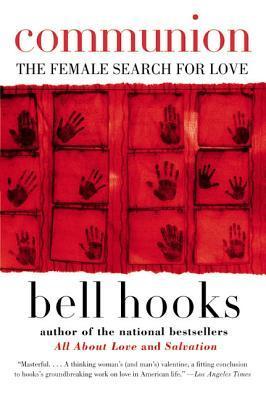
“When truth teller and careful writer bell hooks offers a book, I like to be standing at the bookshop when it opens.” –Maya Angelou Renowned visionary bell hooks explored the meaning of love in American culture with the critically acclaimed bestseller All About New Visions. She continued her national dialogue with the bestselling Black People and Love . Now hooks culminates her triumphant trilogy of love with The Female Search for Love. Intimate, revealing, provocative, Communion challenges every woman to courageously claim the search for love as the heroic journey we must all choose to be truly free. In her trademark commanding and lucid language, hooks explores the ways ideas about women and love were changed by the feminist movement, by women's full participation in the workforce, and by the culture of self-help, and reveals how women of all ages can bring love into every aspect of their lives, for all the years of their lives. Communion is the heart-to-heart talk every woman -- mother, daughter, friend, and lover -- needs to have.

“A canvas of vividly impressionistic splashes of growing up young, gifted, Black, and female.” ― The Philadelphia InquirerIn this memoir of perceptions and ideas, renowned feminist intellectual bell hooks presents a stirringly intimate account of growing up in the South. Stitching together the gossamer threads of her girlhood memories, hooks shows us one strong-spirited child’s journey toward becoming a writer. Along the way, hooks sheds light on the vulnerability of children, the special unfurling of female creativity, and the imbalance of a society that confers marriage’s joys upon men and its silences on women. In a world where daughters and daddies are strangers under the same roof, and crying children are often given something to cry about, hooks uncovers the solace to be found in solitude, the comfort to be had in the good company of books.Bone Black allows us to bear witness to the awakening of a legendary author’s awareness that writing is her most vital breath.“With the emotion of poetry, the narrative of a novel, and the truth of experience, bell hooks weaves a girlhood memoir you won’t be able to put down―or forget. Bone Black takes us into the cave of self-creation.” ―Gloria Steinem

One of our country's premier cultural and social critics, bell hooks has always maintained that eradicating racism and eradicating sexism must go hand in hand. But whereas many women have been recognized for their writing on gender politics, the female voice has been all but locked out of the public discourse on race.Killing Rage speaks to this imbalance. These twenty-three essays are written from a black and feminist perspective, and they tackle the bitter difficulties of racism by envisioning a world without it. They address a spectrum of topics having to do with race and racism in the United States: psychological trauma among African Americans; friendship between black women and white women; anti-Semitism and racism; and internalized racism in movies and the media. And in the title essay, hooks writes about the "killing rage"—the fierce anger of black people stung by repeated instances of everyday racism—finding in that rage a healing source of love and strength and a catalyst for positive change.bell hooks is Distinguished Professor of English at City College of New York. She is the author of the memoir Bone Black as well as eleven other books. She lives in New York City.

Drawing on both her roots in Kentucky and her adventures with Manhattan Coop boards, Where We Stand is a successful black woman's reflection--personal, straight forward, and rigorously honest--on how our dilemmas of class and race are intertwined, and how we can find ways to think beyond them.

bell hooks writes about the meaning of feminist consciousness in daily life and about self-recovery, about overcoming white and male supremacy, and about intimate relationships, exploring the point where the public and private meet.

In these twelve essays, bell hooks digs ever deeper into the personal and political consequences of contemporary representations of race and ethnicity within a white supremacist culture.

“A manual for fixing our culture…In writing that is elegant and penetratingly simple, [hooks] gives voice to some things we may know in our hearts but need an interpreter like her to process.”—Black Issues Book Review Bestselling author, acclaimed visionary and cultural critic bell hooks continues her exploration of the meaning of love in contemporary American society, offering groundbreaking, critical insight about Black people and love.Written from both historical and cultural perspectives, Salvation takes an incisive look at the transformative power of love in the lives of African Americans. Whether talking about the legacy of slavery, relationships and marriage in Black life, the prose and poetry of Martin Luther King, Jr., James Baldwin, and Maya Angelou, the liberation movements of the 1950s, 60s, and 70s, or hip hop and gangsta rap culture, hooks lets us know what love’s got to do with it.Combining the passionate politics of W.E.B. DuBois with fresh, contemporary insights, hooks brilliantly offers new visions that will heal our nation’s wounds from a culture of lovelessness. Her writings on love and its impact on race, class, family, history, and popular culture raise all the relevant issues. This is work that helps us heal. Salvation shows us how to create beloved American communities.

Ten years ago, bell hooks astonished readers with Teaching to Transgress: Education as the Practice of Freedom . Now comes Teaching Community: A Pedagogy of Hope - a powerful, visionary work that will enrich our teaching and our lives. Combining critical thinking about education with autobiographical narratives, hooks invites readers to extend the discourse of race, gender, class and nationality beyond the classroom into everyday situations of learning. bell hooks writes candidly about her own experiences. Teaching, she explains, can happen anywhere, any time - not just in college classrooms but in churches, in bookstores, in homes where people get together to share ideas that affect their daily lives. In Teaching Community bell hooks seeks to theorize from the place of the positive, looking at what works. Writing about struggles to end racism and white supremacy, she makes the useful point that "No one is born a racist. Everyone makes a choice." Teaching Community tells us how we can choose to end racism and create a beloved community. hooks looks at many issues-among them, spirituality in the classroom, white people looking to end racism, and erotic relationships between professors and students. Spirit, struggle, service, love, the ideals of shared knowledge and shared learning - these values motivate progressive social change. Teachers of vision know that democratic education can never be confined to a classroom. Teaching - so often undervalued in our society -- can be a joyous and inclusive activity. bell hooks shows the way. "When teachers teach with love, combining care, commitment, knowledge, responsibility, respect, and trust, we are often able to enter the classroom and go straight to the heart of the matter, which is knowing what to do on any given day to create the best climate for learning."

Author, activist, feminist, teacher, and artist bell hooks is celebrated as one of the nation's leading intellectuals. Born in Hopkinsville, Kentucky, hooks drew her unique pseudonym from the name of her grandmother, an intelligent and strong-willed African American woman who inspired her to stand up against a dominating and repressive society. Her poetry, novels, memoirs, and children's books reflect her Appalachian upbringing and feature her struggles with racially integrated schools and unwelcome authority figures. One of Utne Reader 's "100 Visionaries Who Can Change Your Life," hooks has won wide acclaim from critics and readers alike.In Appalachian Elegy , bell hooks continues her work as an imagist of life's harsh realities in a collection of poems inspired by her childhood in the isolated hills and hidden hollows of Kentucky. At once meditative, confessional, and political, this poignant volume draws the reader deep into the experience of living in Appalachia. Touching on such topics as the marginalization of its people and the environmental degradation it has suffered over the years, hooks's poetry quietly elegizes the slow loss of an identity while also celebrating that which is constant, firmly rooted in a place that is no longer whole.

In Teaching Critical Thinking, renowned cultural critic and progressive educator bell hooks addresses some of the most compelling issues facing teachers in and out of the classroom today.In a series of short, accessible, and enlightening essays, hooks explores the confounding and sometimes controversial topics that teachers and students have urged her to address since the publication of the previous best-selling volumes in her Teaching series, Teaching to Transgress and Teaching Community. The issues are varied and broad, from whether meaningful teaching can take place in a large classroom setting to confronting issues of self-esteem. One professor, for example, asked how black female professors can maintain positive authority in a classroom without being seen through the lens of negative racist, sexist stereotypes. One teacher asked how to handle tears in the classroom, while another wanted to know how to use humor as a tool for learning.Addressing questions of race, gender, and class in this work, hooks discusses the complex balance that allows us to teach, value, and learn from works written by racist and sexist authors. Highlighting the importance of reading, she insists on the primacy of free speech, a democratic education of literacy. Throughout these essays, she celebrates the transformative power of critical thinking. This is provocative, powerful, and joyful intellectual work. It is a must read for anyone who is at all interested in education today.

When Sisters of the Black Women and Self-Recovery was originally released in 1994, it won critical praise and solidified bell hooks’ reputation as one of the leading public intellectuals of her generation. Today, the book is considered a classic in African American and feminist circles. In Sisters of the Yam , hooks examines how the emotional health of black women is wounded by daily assaults of racism and sexism. Exploring such central life issues as work, beauty, trauma, addiction, eroticism and estrangement from nature, hooks shares numerous strategies for self-recovery and healing. She also shows how black women can empower themselves and effectively struggle against racism, sexism and consumer capitalism. As hooks’ first book on psychological concerns, Sisters of the Yam paved the way for her more recent and popular writing on love, relationships and community. This South End Press Classics Edition will include a new introduction. Praise for Sisters of the Black Women and Self-Recovery : “By confronting topics avoided in polite company—including progressive black folks—hooks helps us tackle our deepest fears, those we harbor about our self-worth as African Americans, and get on with the business of becoming.”— Village Voice Literary Supplement “hooks continues to produce some of the most challenging, insightful, and provocative writing on race and gender in the United States today.”— Library Journal “[bell hooks] draws more effectively on her own experiences and sense of identity than . . . most other writers.”— Publishers Weekly

What does it mean to call a place home? Who is allowed to become a member of a community? When can we say that we truly belong? These are some of the questions of place and belonging that renowned cultural critic bell hooks examines in her new book, Belonging: A Culture of Place. Traversing past and present, Belonging charts a cyclical journey in which hooks moves from place to place, from country to city and back again, only to end where she began--her old Kentucky home. hooks has written provocatively about race, gender, and class; and in this book she turns her attention to focus on issues of land and land ownership. Reflecting on the fact that 90% of all black people lived in the agrarian South before mass migration to northern cities in the early 1900s, she writes about black farmers, about black folks who have been committed both in the past and in the present to local food production, to being organic, and to finding solace in nature. Naturally, it would be impossible to contemplate these issues without thinking about the politics of race and class. Reflecting on the racism that continues to find expression in the world of real estate, she writes about segregation in housing and economic racialized zoning. In these critical essays, hooks finds surprising connections that link the environment and sustainability to the politics of race and class that reach far beyond Kentucky.With characteristic insight and honesty, Belonging offers a remarkable vision of a world where all people--wherever they may call home--can live fully and well, where everyone can belong.

According to the Washington Post, no one who cares about contemporary African-American cultures can ignore bell hooks' electrifying feminist explorations. Targeting cultural icons as diverse as Madonna and Spike Lee, Outlaw Culture presents a collection of essays that pulls no punches. As hooks herself notes, interrogations of popular culture can be a 'powerful site for intervention, challenge and change'. And intervene, challenge and change is what hooks does best.

"When women get together and talk about men, the news is almost always bad news," writes bell hooks. "If the topic gets specific and the focus is on black men, the news is even worse."In this powerful new book, bell hooks arrests our attention from the first page. Her title--We Real Cool; her subject--the way in which both white society and weak black leaders are failing black men and youth. Her subject is taboo: "this is a culture that does not love black males: " "they are not loved by white men, white women, black women, girls or boys. And especially, black men do not love themselves. How could they? How could they be expected to love, surrounded by so much envy, desire, and hate?

The groundbreaking picture book by legendary author bell hooks and multi-Caldecott Medalist Chris Raschka that celebrates hair, perfect for fans of Hair Love and I Love My Hair!Happy with hair all short and strong. Happy with locks that twist and curl.Just all girl happy! Happy to be nappy hair!Nominated for an NAACP Image Award, here is a buoyantly fun read aloud brimming with playful -- and powerful -- affirmations.
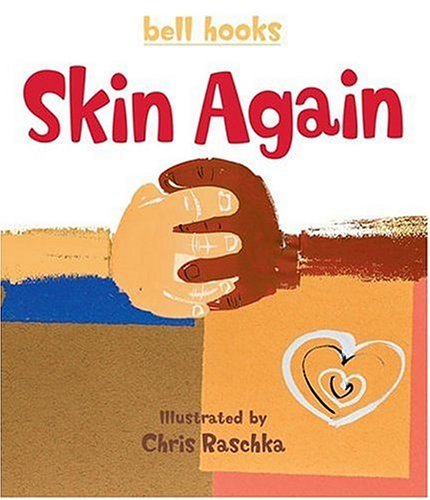
From legendary author and critic bell hooks and multi-Caldecott Medalist Chris Raschka comes a new way to talk about race and identity that will appeal to parents of the youngest readers.The skin I'm in is just a covering. It cannot tell my story. If you want to know who I am, you have got to come inside and open your heart way wide.Race matters, but only so much--what's most important is who we are on the inside. Looking beyond skin, going straight to the heart, we find in each other the treasures stored down deep. Learning to cherish those treasures, to be all we imagine ourselves to be, makes us free.This award-winning book, celebrates all that makes us unique and different and offers a strong, timely and timeless message of loving yourself and others.

“bell hooks’s brave memoir of struggling to find her own work, love, and independence.” ―Gloria SteinemWith her customary boldness and insight, brilliant social critic and public intellectual bell hooks traces her writer’s journey in Wounds of Passion . She shares the difficulties and triumphs, the pleasures and the dangers, of a life devoted to writing. hooks lets readers see the ways one woman writer can find her own voice while forging relationships of love in keeping with her feminist thinking. With unflinching courage and hard-won wisdom, hooks reveals the intimate details and provocative ideas of the life path she carved out of words, lighting the way for all writers who would tread in her wake.This memoir is an illuminating vision of a writer’s life from one of America’s treasured authors.“I love this book. Each offering from bell hooks is a major event, as she has so much to give us.” ―Maya Angelou

The late feminist icon and author of over twenty books, including her classic New York Times bestseller All About Love , bell hooks reminds us of the good and bad moments we spend in love through her inspiring poetry.Written from the heart, When Angels Speak of Love is a book of 50 love poems by the icon of the feminist movement and most famous among public intellectuals. In beautiful, profoundly poetic terms, hooks challenges our views and experiences with love—tracing the link between seduction and surrender, the intensity of desire, and the anguish of death. Whether towards family, friends, or oneself, hooks's creative genius makes love both magical and beautiful.

In Art on My Mind, bell hooks, a leading cultural critic, responds to the ongoing dialogues about producing, exhibiting, and criticizing art and aesthetics in an art world increasingly concerned with identity politics. Always concerned with the liberatory black struggle, hooks positions her writings on visual politics within the ever-present question of how art can be an empowering and revolutionary force within the black community.
bell hook's fourth book crosses disciplinary boundaries in major debates on postmodern theory, cultural criticism, and the politics of race and gender. She values postmodernism's insights while warning that the fashionable infatuation with "discourse" about "difference" is dangerously detachable from the struggle we must all wage against racism, sexism, and cultural imperialism.

In Reel To Real , bell hooks talks back to films as a way to engage the pedagogy of cinema--the way film teaches its audience.bell hooks comes to film as a cultural critic, fascinated by the issues movies raise--the ways cinema depicts race, sex, and class. Reel To Real collects hooks' classic essays on films such as Paris Is Burning or the infamous "Whose Pussy Is It" essay about Spike Lee's She's Gotta Have It , as well as newer work on Pulp Fiction, Crooklyn and Waiting To Exhale . hooks also examines the world of independent cinema. Conversations with filmmakers Charles Burnett, Julie Dash, and Arthur Jaffa are linked with critical essays, including a piece on Larry Clark's Kids , to show that cinema can function subversively as well as maintain the status quo.

From the late feminist icon and New York Times bestselling author of All About Love, an in-depth look at one of the most critical issues facing African a collective wounded self-esteem that has prevailed from slavery to the present day.“Each offering from bell hooks is a major event, as she has so much to give us.” —Maya AngelouWhy do so many African-Americans—whether privileged or poor, urban or suburban, young or old—live in a state of chronic anxiety, fear, and shame? Rock My Black People and Self-Esteem breaks through collective denial and dares to tell this truth—that crippling low self-esteem has reached epidemic proportions in our lives and in our diverse communities. With visionary insight, hooks exposes the underlying reality that it has been difficult—if not impossible—for our nation to create a culture that promotes and sustains healthy self-esteem. Without self-esteem people begin to lose their sense of agency. They feel powerless. They feel they can only be victims. The need for self-esteem never goes away. But it is never too late for any of us to acquire the healthy self-esteem that is needed for a fulfilling life.hooks gets to the heart and soul of the African-American identity crisis, offering critical insight and hard-won wisdom about what it takes to heal the scars of the past, promote and maintain self-esteem, and lay down the roots for a grounded community with a prosperous future. She examines the way historical movements for racial uplift fail to sustain our quest for self-esteem.Moving beyond a discussion of race, she identifies diverse barriers keeping us from the trauma of abandonment, constant shaming, and the loss of personal integrity. In highlighting the role of desegregation, education, the absence of progressive parenting, spiritual crisis, or fundamental breakdowns in communication between black women and men, bell hooks identifies mental health as the new revolutionary frontier—and provides guidance for healing within the black community.

“Even though writing is a solitary act, when I sit with words that I trust will be read by someone, I know that I can never be truly alone.” ―bell hooks, “women who write too much”In this timeless essay collection on the writing life, award-winning author and renowned thinker bell hooks shares the secrets gleaned from years of facing the blank page, pen in hand.At a time when the death of the book has been proclaimed, hooks’s Remembered Rapture beats with a pulsing passion for words, reminding us of literacy’s potency and the vital joys of reading and writing. In contemplative essays infused with her personal experience, hooks reveals her wide-ranging intellectual scope. With insight and vision, hooks untangles the complex personae of women writers, especially those whose work goes against the grain.This inspiring collection from a treasured American author is for everyone who believes in the power of the written word.“For anyone who writes, or seeks to understand the writing process, or wants to know more about the erudite and passionate mind of bell hooks, this is the book to read.” ― The Philadelphia Inquirer

Her Mama calls her Girlpie-a sweet treat, homemade with love. And when Girlpie makes a mistake, the love of her mother and father lets her pick up the pieces and make everything right again. Shane W. Evan's resplendent artwork teems with "homemade love," one of the tender nicknames award-winning author bell hooks gives her young heroine.