
Lewis Hyde
12 Books Written

The gift: Imagination and the erotic life of property
by Lewis Hyde
Rating: 4.3 ⭐
• 4 recommendations ❤️
The Gift has come to be regarded as a modern classic. This inspiring examination of the "gift economy" is even more relevant now than when it originally appeared - a brilliantly argued defence of the place of creativity in our increasingly market-orientated society. The Gift takes as its opening premise the idea that a work of art is a gift and not a commodity. Hyde proceeds to show how "the commerce of the creative spirit" functions in the lives of artists and within culture as a whole, backing up his radical thesis with illuminating examples from economics, literature, anthropology and psychology. Whether discussing the circulations of gifts in tribal societies, the ethics of usury, the woman given in marriage or Whitman's Leaves of Grass, this wide-ranging book is as entertaining as it is ground-breaking, a masterful analysis of the creative act in all its manifestations. It is in itself an extraordinary gift to all who discover it.

In Trickster Makes This World , Lewis Hyde brings to life the playful and disruptive side of human imagination as it is embodied in trickster mythology. He first visits the old stories―Hermes in Greece, Eshu in West Africa, Krishna in India, Coyote in North America, among others―and then holds them up against the lives and work of more recent Picasso, Duchamp, Ginsberg, John Cage, and Frederick Douglass. Twelve years after its first publication, Trickster Makes This World ―authoritative in its scholarship, loose-limbed in its style―has taken its place among the great works of modern cultural criticism.This new edition includes an introduction by Michael Chabon.
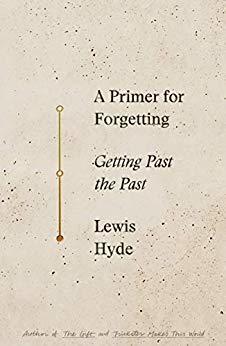
“One of our true superstars of nonfiction” (David Foster Wallace), Lewis Hyde, author of The Gift and Trickster Makes the World, offers a playful and melancholy defense of forgetfulness by exploring the healing effect it can have on the human psyche.We live in a culture that prizes memory—how much we can store, the quality of what’s preserved, how we might better document and retain the moments of our life while fighting off the nightmare of losing all that we have experienced. But what if forgetfulness were seen not as something to fear—be it in the form of illness or simple absentmindedness—but rather as a blessing, a balm, a path to peace and forgiveness?A Primer for Forgetting is a remarkable experiment in scholarship, autobiography, and social criticism by the author of the classics The Gift and Trickster Makes This World. It forges a new “history of forgetfulness” by assembling fragments of art and writing from the ancient world to the modern, weighing the potential boons forgetfulness might offer the present moment as a philosophical and political force. It also turns inward, using the author’s own life and memory as a canvas upon which to extol the virtues of a concept too long taken as an evil.Drawing material from Hesiod to Jorge Luis Borges to Elizabeth Bishop to Archbishop Desmond Tutu, from myths and legends to very real and recent traumas both personal and historical, A Primer for Forgetting is a unique and remarkable synthesis that only Lewis Hyde could have produced.Includes black-and-white illustrations

Common as Air offers a stirring defense of our cultural commons, that vast store of art and ideas we have inherited from the past that continues to enrich our present. Suspicious of the current idea that all creative work is “intellectual property,” Lewis Hyde turns to America’s founding fathers—men like John Adams, James Madison, and Thomas Jefferson—in search of other ways to value the fruits of human wit and imagination. What he discovers is a rich tradition in which knowledge was assumed to be a commonwealth, not a private preserve. For the founding fathers, democratic self-governance itself demanded open and easy access to ideas. So did the growth of creative communities, such as that of eighteenth-century science. And so did the flourishing of public persons, the very actors whose “civic virtue” brought the nation into being. In this lively, carefully argued, and well-documented book, Hyde brings the past to bear on present matters, shedding fresh light on everything from the Human Genome Project to Bob Dylan’s musical roots. Common as Air allows us to stand on the shoulders of America’s revolutionary giants and to see beyond today’s narrow debates over cultural ownership. What it reveals is nothing less than an inspiring vision of how to reclaim the commonwealth of art and ideas that we were meant to inherit.

Hyde, Lewis

Poems deal with love, death, work, nature, grief, pleasure, human frailty, emotion, and experience


Lee Mingwei's simple yet elegant installations provide a stage for interpersonal exchange around ordinary human events or activities -- admiring an object, making conversation, or writing a letter to a friend or family member. His past installations such as "The Dining Project "and "The Letter-Writing Project" are explored along with a recent project developed while an artist in residence at the Isabella Stewart Gardner Museum called "The Living Room." This installation creates a modern-day version of the salon life the museum's founder used to enliven her collection.In his essay, Lewis Hyde asks us to consider Isabella Gardner's intentions in creating a place that was her home as well as a public space for appreciating art. Lee's new installation reflecting his interest in Gardner's interaction with visitors to her museum at the turn of the century and his installations as exchanges between viewer and artist are explored in an essay by Jennifer Gross.

Common as Air: Revolution, Art, and Ownership
by Lewis Hyde
A stirring defense of our cultural commons, that vast store of art and ideas from the past that continues to enrich our present, revealing an inspiring vision of how to reclaim the commonwealth of art and ideas that we were meant to inherit.“Lewis Hyde’s Common As Air [is] an eloquent and erudite plea for protecting our cultural patrimony from appropriation by commercial interests ... ” —The New York Times Book Review
Created commons
by Lewis Hyde
Common As Air: Revolution, Art, and Ownership
by Lewis Hyde
A stirring defense of our cultural commons, that vast store of art and ideas from the past that continues to enrich our present, revealing an inspiring vision of how to reclaim the commonwealth of art and ideas that we were meant to inherit.“Lewis Hyde’s Common As Air [is] an eloquent and erudite plea for protecting our cultural patrimony from appropriation by commercial interests ... ” —The New York Times Book Review
This Era Is The Sign of Love
by Lewis Hyde