Loading genres...
Explore the best books about Writing genre.

This style manual offers practical advice on improving writing skills. Throughout, the emphasis is on promoting a plain English style. This little book can help you communicate more effectively by showing you how to enliven your sentences.

Here’s what started the phenomenon: the best seller, for over 15 years, that’s been used by screenwriters around the world! Blake Snyder tells all in this fast, funny and candid look inside the movie business. “Save the Cat” is just one of many ironclad rules for making your ideas more marketable and your script more satisfying, including: The four elements of every winning logline The seven immutable laws of screenplay physics The 10 genres that every movie ever made can be categorized by ― and why they’re important to your script Why your Hero must serve your Idea Mastering the 15 Beats Creating the “Perfect Beast” by using The Board to map 40 scenes with conflict and emotional change How to get back on track with proven rules for script repair This ultimate insider’s guide reveals the secrets that none dare admit, told by a showbiz veteran who’s proven that you can sell your script if you can save the cat.

The Power Of Myth launched an extraordinary resurgence of interest in Joseph Campbell and his work. A preeminent scholar, writer, and teacher, he has had a profound influence on millions of people. To him, mythology was the "song of the universe, the music of the spheres." With Bill Moyers, one of America's most prominent journalists, as his thoughtful and engaging interviewer, The Power Of Myth touches on subjects from modern marriage to virgin births, from Jesus to John Lennon, offering a brilliant combination of intelligence and wit.

The first popular work to combine the spiritual and psychological insights of modern psychoanalysis with the archetypes of world mythology, the book creates a roadmap for navigating the frustrating path of contemporary life. Examining heroic myths in the light of modern psychology, it considers not only the patterns and stages of mythology but also its relevance to our lives today—and to the life of any person seeking a fully realized existence. Myth, according to Campbell, is the projection of a culture's dreams onto a large screen; Campbell's book, like Star Wars, the film it helped inspire, is an exploration of the big-picture moments from the stage that is our world. It is a must-have resource for both experienced students of mythology and the explorer just beginning to approach myth as a source of knowledge.

On Writing Well has been praised for its sound advice, its clarity and the warmth of its style. It is a book for everybody who wants to learn how to write or who needs to do some writing to get through the day, as almost everybody does in the age of e-mail and the Internet. Whether you want to write about people or places, science and technology, business, sports, the arts or about yourself in the increasingly popular memoir genre, On Writing Well offers you fundamental priciples as well as the insights of a distinguished writer and teacher. With more than a million copies sold, this volume has stood the test of time and remains a valuable resource for writers and would-be writers.

Levels of the Game is John McPhee's astonishing account of a tennis match played by Arthur Ashe against Clark Graebner at Forest Hills in 1968.It begins with the ball rising into the air for the initial serve and ends with the final point. McPhee provides a brilliant, stroke-by-stroke description while examining the backgrounds and attitudes which have molded the players' games."This may be the high point of American sports journalism"- Robert Lipsyte, The New York Times

The now-classic Metaphors We Live By changed our understanding of metaphor and its role in language and the mind. Metaphor, the authors explain, is a fundamental mechanism of mind, one that allows us to use what we know about our physical and social experience to provide understanding of countless other subjects. Because such metaphors structure our most basic understandings of our experience, they are "metaphors we live by", metaphors that can shape our perceptions and actions without our ever noticing them.In this updated edition of Lakoff and Johnson's influential book, the authors supply an afterword surveying how their theory of metaphor has developed within the cognitive sciences to become central to the contemporary understanding of how we think and how we express our thoughts in language.

An assemblage of reflections on the nature of writing and the writer from one the greatest American writers of the twentieth century.Throughout Hemingway’s career as a writer, he maintained that it was bad luck to talk about writing—that it takes off “whatever butterflies have on their wings and the arrangement of hawk’s feathers if you show it or talk about it.”Despite this belief, by the end of his life he had done just what he intended not to do. In his novels and stories, in letters to editors, friends, fellow artists, and critics, in interviews and in commissioned articles on the subject, Hemingway wrote often about writing. And he wrote as well and as incisively about the subject as any writer who ever lived…This book contains Hemingway’s reflections on the nature of the writer and on elements of the writer’s life, including specific and helpful advice to writers on the craft of writing, work habits, and discipline. The Hemingway personality comes through in general wisdom, wit, humor, and insight, and in his insistence on the integrity of the writer and of the profession itself.—From the Preface by Larry W. Phillips

Praised throughout the cartoon industry by such luminaries as Art Spiegelman, Matt Groening, and Will Eisner, this innovative comic book provides a detailed look at the history, meaning, and art of comics and cartooning.

Named One of The Hollywood Reporter’ s “100 Greatest Film Books of All Time”Famed independent screenwriter and director Robert Rodriguez ( Sin City, Once Upon a Time in Mexico, Spy Kids, Machete) discloses all the unique strategies and original techniques he used to make his remarkable debut film El Mariachi on a shoestring budget.This is both one man's remarkable story and an essential guide for anyone who has a celluloid story to tell and the dreams and determination to see it through. Part production diary, part how-to manual, Rodriguez unveils how he was able to make his influential first film on only a $7,000 budget. Also included is the appendix, The Ten Minute Film Course,” a tell-all on how to save thousands of dollars on film school and teach yourself the ropes of film production, directing, and screenwriting.A perfect gift for the aspiring filmmaker.

“A manifesto of sorts for anyone who makes art [and] cares for it.” —Zadie Smith“The best book I know of for talented but unacknowledged creators. . . . A masterpiece.” —Margaret Atwood“No one who is invested in any kind of art . . . can read The Gift and remain unchanged.” —David Foster WallaceBy now a modern classic, The Gift is a brilliantly orchestrated defense of the value of creativity and of its importance in a culture increasingly governed by money and overrun with commodities. This book is even more necessary today than when it first appeared.An illuminating and transformative book, and completely original in its view of the world, The Gift is cherished by artists, writers, musicians, and thinkers. It is in itself a gift to all who discover the classic wisdom found in its pages.

Provides new insights and observations from Vogler's pioneering work in mythic structure for writers.

In this book are the essential beliefs and theories of a great teacher and American artist, Robert Henri. While it embodies the entire system of his teaching, with much technical advice and critical comment for the student, it also contains inspiration for those to whom the happiness to be found through all the arts is important.No other American painter attracted such a large, intensely personal group of followers as Henri, whose death in 1929 brought to an end a life that has been completely devoted to art. He was an inspired artist and teacher who believed that everyone is vitally concerned in the happiness and wisdom to be found through the arts. Many of his paintings have been acquired by museums and private collectors. Among them are the Baltimore Museum of Art, the Metropolitan Museum of Art, the National Gallery of Art, the Whitney Museum of American Art, the Wichita Art Museum, and Yale University Art Gallery.

A fresh perspective on a beloved classic by acclaimed translators Anita Barrows and Joanna Macy.German poet Rainer Maria Rilke’s (1875–1926) Letters to a Young Poet has been treasured by readers for nearly a century. Rilke’s personal reflections on the vocation of writing and the experience of living urge an aspiring poet to look inward, while also offering sage wisdom on further issues including gender, solitude, and romantic love. Barrows and Macy’s translation extends this compilation of timeless advice and wisdom to a fresh generation of readers. With a new introduction and commentary, this edition places the letters in the context of today’s world and the unique challenges we face when seeking authenticity.

How to get on well with people, how to deal with violence, how to adjust to losing someone you love--such questions arise in most people's lives. They are all versions of a bigger question: how do you live? How do you do the good or honourable thing, while flourishing and feeling happy? This question obsessed Renaissance writers, none more than Michel Eyquem de Montaigne (1533-92), perhaps the first truly modern individual. A nobleman, public official, and wine-grower, he wrote free-roaming explorations of his thought and experience, unlike anything written before. He called them 'essays', meaning 'attempts' or 'tries'. Into them he put whatever was in his head: his tastes in wine and food, his childhood memories, the way his dog's ears twitched when dreaming, as well as the appalling events of the religious civil wars raging around him. The Essays was an instant bestseller, and more than four hundred years later, Montaigne's honesty and charm still draw people to him. Readers come to him in search of companionship, wisdom and entertainment--and in search of themselves. This book, a spirited and singular biography (and the first full life of Montaigne in English for nearly fifty years), relates the story of his life by way of the questions he posed and the answers he explored. It traces his bizarre upbringing (made to speak only Latin), youthful career and sexual adventures, travels, and friendships with the scholar and poet Etienne de La Boétie and with his adopted 'daughter', Marie de Gournay. And as we read, we also meet his readers--who for centuries have found in Montaigne an inexhaustible source of answers to the haunting question, 'how to live?'

The follow up to the War of Art. In the War of Art Pressfield identifies the enemy to living an authentic life – resistance. In Turning Pro, Pressfield teaches you how to defeat it.

In his New York Times bestseller Steal Like an Artist, Austin Kleon showed readers how to unlock their creativity by “stealing” from the community of other movers and shakers. Now, in an even more forward-thinking and necessary book, he shows how to take that critical next step on a creative journey—getting known. Show Your Work! is about why generosity trumps genius. It’s about getting findable, about using the network instead of wasting time “networking.” It’s not self-promotion, it’s self-discovery—let others into your process, then let them steal from you. Filled with illustrations, quotes, stories, and examples, Show Your Work! offers ten transformative rules for being open, generous, brave, productive. In chapters such as You Don’t Have to Be a Genius; Share Something Small Every Day; and Stick Around, Kleon creates a user’s manual for embracing the communal nature of creativity— what he calls the “ecology of talent.” From broader life lessons about work (you can’t find your voice if you don’t use it) to the etiquette of sharing—and the dangers of oversharing—to the practicalities of Internet life (build a good domain name; give credit when credit is due), it’s an inspiring manifesto for succeeding as any kind of artist or entrepreneur in the digital age.

Credited with sparking the current memoir explosion, Mary Karr’s The Liars’ Club spent more than a year at the top of the New York Times list. She followed with two other smash bestsellers: Cherry and Lit, which were critical hits as well.For thirty years Karr has also taught the form, winning graduate teaching prizes for her highly selective seminar at Syracuse, where she mentored such future hit authors as Cheryl Strayed, Keith Gessen, and Koren Zailckas. In The Art of Memoir, she synthesizes her expertise as professor and therapy patient, writer and spiritual seeker, recovered alcoholic and “black belt sinner,” providing a unique window into the mechanics and art of the form that is as irreverent, insightful, and entertaining as her own work in the genre.Anchored by excerpts from her favorite memoirs and anecdotes from fellow writers’ experience, The Art of Memoir lays bare Karr’s own process. (Plus all those inside stories about how she dealt with family and friends get told— and the dark spaces in her own skull probed in depth.) As she breaks down the key elements of great literary memoir, she breaks open our concepts of memory and identity, and illuminates the cathartic power of reflecting on the past; anybody with an inner life or complicated history, whether writer or reader, will relate.Joining such classics as Stephen King’s On Writing and Anne Lamott’s Bird by Bird, The Art of Memoir is an elegant and accessible exploration of one of today’s most popular literary forms—a tour de force from an accomplished master pulling back the curtain on her craft.

Big data entrepreneur Allen Gannett overturns the mythology around creative genius, and reveals the science and secrets behind achieving breakout commercial success in any field. We have been spoon-fed the notion that creativity is the province of genius -- of those favored, brilliant few whose moments of insight arrive in unpredictable flashes of divine inspiration. And if we are not a genius, we might as well pack it in and give up. Either we have that gift, or we don’t. But Allen shows that simply isn’t true. Recent research has shown that there is a predictable science behind achieving commercial success in any creative endeavor, from writing a popular novel to starting up a successful company to creating an effective marketing campaign. As the world’s most creative people have discovered, we are enticed by the novel and the familiar. By understanding the mechanics of what Gannett calls “the creative curve” – the point of optimal tension between the novel and the familiar – everyone can better engineer mainstream success. In a thoroughly entertaining book that describes the stories and insights of everyone from the Broadway team behind Dear Evan Hansen , to the founder of Reddit, from the Chief Content Officer of Netflix to Michelin star chefs, Gannett reveals the four laws of creative success and identifies the common patterns behind their achievement.

Trickster Makes This World solidifies Lewis Hyde's reputation as, in Robert Bly's words, "the most subtle, thorough, and brilliant mythologist we now have." In it, Hyde now brings to life the playful and disruptive side of human imagination as it is embodied in trickster mythology. He first revisits the old stories--Hermes in Greece, Eshu in West Africa, Krishna in India, Coyote in North America, among others--and then holds them up against the life and work of more recent Picasso, Duchamp, Ginsberg, John Cage, and Frederick Douglass. Authoritative in its scholarship, loose-limbed in its style, Trickster Makes This World ranks among the great works of modern cultural criticism.

The nation's premier communications expert shares his wisdom on how the words we choose can change the course of business, of politics, and of life in this countryIn Words That Work , Luntz offers a behind-the-scenes look at how the tactical use of words and phrases affects what we buy, who we vote for, and even what we believe in. With chapters like "The Ten Rules of Successful Communication" and "The 21 Words and Phrases for the 21st Century," he examines how choosing the right words is essential.Nobody is in a better position to explain than Frank He has used his knowledge of words to help more than two dozen Fortune 500 companies grow. Hell tell us why Rupert Murdoch's six-billion-dollar decision to buy DirectTV was smart because satellite was more cutting edge than "digital cable," and why pharmaceutical companies transitioned their message from "treatment" to "prevention" and "wellness."If you ever wanted to learn how to talk your way out of a traffic ticket or talk your way into a raise, this book's for you.

A generation of screenwriters has used Syd Field’s bestselling books to ignite successful careers in film. Now the celebrated producer, lecturer, teacher, and bestselling author has updated his classic guide for a new generation of filmmakers, offering a fresh insider’s perspective on the film industry today. From concept to character, from opening scene to finished script, here are easily understood guidelines to help aspiring screenwriters—from novices to practiced writers—hone their craft. Filled with updated material—including all-new personal anecdotes and insights, guidelines on marketing and collaboration, plus analyses of recent films, from American Beauty to Lord of the Rings—Screenplay presents a step-by-step, comprehensive technique for writing the screenplay that will succeed in Hollywood. Discover:•Why the first ten pages of your script are crucially important•How to visually “grab” the reader from page one, word one •Why structure and character are the essential foundation of your screenplay•How to adapt a novel, a play, or an article into a screenplay•Tips on protecting your work—three legal ways to claim ownership of your screenplay•The essentials of writing great dialogue, creating character, building a story line, overcoming writer’s block, getting an agent, and much more.With this newly updated edition of his bestselling classic, Syd Field proves yet again why he is revered as the master of the screenplay—and why his celebrated guide has become the industry’s gold standard for successful screenwriting.

Creativity is not a gift from the gods, says Twyla Tharp, bestowed by some divine and mystical spark. It is the product of preparation and effort, and it's within reach of everyone who wants to achieve it. All it takes is the willingness to make creativity a habit, an integral part of your life: In order to be creative, you have to know how to prepare to be creative. In The Creative Habit, Tharp takes the lessons she has learned in her remarkable thirty-five-year career and shares them with you, whatever creative impulses you follow -- whether you are a painter, composer, writer, director, choreographer, or, for that matter, a businessperson working on a deal, a chef developing a new dish, a mother wanting her child to see the world anew. When Tharp is at a creative dead end, she relies on a lifetime of exercises to help her get out of the rut, and The Creative Habit contains more than thirty of them to ease the fears of anyone facing a blank beginning and to open the mind to new possibilities. Tharp's exercises are practical and immediately doable -- for the novice or expert. In "Where's Your Pencil?" she reminds us to observe the world -- and get it down on paper. In "Coins and Chaos," she provides the simplest of mental games to restore order and peace. In "Do a Verb," she turns your mind and body into coworkers. In "Build a Bridge to the Next Day," she shows how to clean your cluttered mind overnight. To Tharp, sustained creativity begins with rituals, self-knowledge, harnessing your memories, and organizing your materials (so no insight is ever lost). Along the way she leads you by the hand through the painful first steps of scratching for ideas, finding the spine of your work, and getting out of ruts into productive grooves. In her creative realm, optimism rules. An empty room, a bare desk, a blank canvas can be energizing, not demoralizing. And in this inventive, encouraging book, Twyla Tharp shows us how to take a deep breath and begin!

Practical English Usage is a major new reference guide for intermediate and advanced students of English (of all nationalities) and their teachers. It contains short clear articles on all the grammatical problems which regularly cause difficulty to foreign learners. In addition, it deals with selected points of vocabulary, idiom, style, pronunciation and spelling. The main differences between British and American usage are also dealt with. Each entry contains an explanation of a problem, examples of correct usage, and - when this is useful - examples of typical mistakes.Special features of this book include:- simple and practical presentation- alphabetical arrangement of numbered entries- detailed index and cross-reference system- distinction between formal and informal usageA hardback edition is also available.

In this landmark work Keith Johnstone provides a revelatory guide to rediscovering and unlocking the imagination. Admired for its clarity and zest, Impro lays bare the techniques and exercises used to foster spontaneity and narrative skill for actors. These techniques and exercises were evolved in the actors' studio, when he was Associate Director of the Royal Court and then in demonstrations to schools and colleges and ultimately in the founding of a company of performers called The Theatre Machine.Divided into four sections, 'Status', 'Spontaneity', 'Narrative Skills' and 'Masks and Trance', arranged more or less in the order a group might approach them, the book sets out the specific approaches which Johnstone has himself found most useful and most stimulating. The result is a fascinating exploration of the nature of spontaneous creativity.

From Pulitzer Prize-winning Annie Dillard, a collection that illuminates the dedication and daring that characterizes a writer's life.In these short essays, Annie Dillard—the author of Pilgrim at Tinker Creek and An American Childhood—illuminates the dedication, absurdity, and daring that characterize the existence of a writer. A moving account of Dillard’s own experiences while writing her works, The Writing Life offers deep insight into one of the most mysterious professions.

A candid and indispensable primer on all aspects of advertising from the man Time has called "the most sought after wizard in the business."Told with brutal candor and prodigal generosity, David Ogilvy • How to get a job in advertising• How to choose an agency for your product• The secrets behind advertising that works• How to write successful copy—and get people to read it• Eighteen miracles of research• What advertising can do for charitiesAnd much, much more.

In The Journalist And The Murderer, Janet Malcolm examines the psychopathology of journalism. She delves into the always uneasy, sometimes tragic relationship that exists between journalist and subject.

For more than twenty years Natalie Goldberg has been challenging and cheering on writers with her books and workshops. In her groundbreaking first book, she brings together Zen meditation and writing in a new way. Writing practice, as she calls it, is no different from other forms of Zen practice—"it is backed by two thousand years of studying the mind." This edition includes a new preface and an interview with the author.

No one knows the writer's Hollywood more intimately than William Goldman. Two-time Academy Award-winning screenwriter and the bestselling author of Marathon Man, Tinsel, Boys and Girls Together, and other novels, Goldman now takes you into Hollywood's inner sanctums...on and behind the scenes for Butch Cassidy and the Sundance Kid, All the President's Men, and other films...into the plush offices of Hollywood producers...into the working lives of acting greats such as Redford, Olivier, Newman, and Hoffman...and into his own professional experiences and creative thought processes in the crafting of screenplays. You get a firsthand look at why and how films get made and what elements make a good screenplay. Says columnist Liz Smith, "You'll be fascinated.

How to Read a Book, originally published in 1940, has become a rare phenomenon, a living classic. It is the best and most successful guide to reading comprehension for the general reader. And now it has been completely rewritten and updated. You are told about the various levels of reading and how to achieve them—from elementary reading, through systematic skimming and inspectional reading, to speed reading, you learn how to pigeonhole a book, X-ray it, extract the author's message, criticize. You are taught the different reading techniques for reading practical books, imaginative literature, plays, poetry, history, science and mathematics, philosophy and social science. Finally, the authors offer a recommended reading list and supply reading tests whereby you can measure your own progress in reading skills, comprehension and speed. This a previously-published edition of ISBN 9780671212094

"Without The Artist's Way , there would have been no Eat, Pray, Love .” —Elizabeth GilbertA stunning gift edition of the powerful bestselling book on creativity. The Artist’s Way is one of the bestselling gift books of all time. Beautifully packaged with a slipcase and ribbon, this tenth anniversary gift edition is the ideal gift for loved ones engaged in creative lives.

In 1982, having sold his jazz bar to devote himself to writing, Murakami began running to keep fit. A year later, he’d completed a solo course from Athens to Marathon, and now, after dozens of such races, not to mention triathlons and a dozen critically acclaimed books, he reflects upon the influence the sport has had on his life and—even more important—on his writing. Equal parts training log, travelogue, and reminiscence, this revealing memoir covers his four-month preparation for the 2005 New York City Marathon and takes us to places ranging from Tokyo’s Jingu Gaien gardens, where he once shared the course with an Olympian, to the Charles River in Boston among young women who outpace him. Through this marvelous lens of sport emerges a panorama of memories and insights: the eureka moment when he decided to become a writer, his greatest triumphs and disappointments, his passion for vintage LPs, and the experience, after fifty, of seeing his race times improve and then fall back. By turns funny and sobering, playful and philosophical, What I Talk About When I Talk About Running is rich and revelatory, both for fans of this masterful yet guardedly private writer and for the exploding population of athletes who find similar satisfaction in running.

While the study of psychology has offered little in the way of explaining the creative process, Koestler examines the idea that we are at our most creative when rational thought is suspended--for example, in dreams and trancelike states. All who read The Act of Creation will find it a compelling and illuminating book.

Scientific Advertising is an important work on advertising from the early 20th century and is still used today by those learning the basics and more advanced parts of the advertising field. The author of Scientific Advertising, Claude C. Hopkins, is well known as the father of modern advertising techniques, and this book has been widely used by students of advertising and marketing. This book covers many important aspects of advertising including how advertising laws are established, mail order advertising, headlines, psychology, strategy, budgeting, and more advanced subjects like negative advertising and how to test an advertising campaign.

THIS IS AN AUTHENTIC WORK DISTRIBUTED BY THE FAMILY OF ROBERT COLLIER. BE SURE THE NEW TRADEMARK RC LOGO WITH "AUTHENTIC ROBERT COLLIER WORK" APPEARS ON THE COVER. The Robert Collier Letter Book is under copyright with Robert Collier Publications, the family of Robert Collier, the author. Other publishers are distributing similar versions that may not be true and accurate. Robert Collier cared deeply about the quality of content, presentation, artwork, etc. that went into every single book he wrote and published. The Robert Collier Letter Book is for the business man who already knows the theory of letter writing but is looking for more effective says of putting it into practice. It shows successful ways of selling all manner of products through proper advertising.

The New York Times bestseller, now available in paperback—Mary Karr’s sequel to the beloved and bestselling The Liars’ Club and Cherry “lassos you, hogties your emotions and won’t let you go” (Michiko Kakutani, New York Times).Mary Karr’s bestselling, unforgettable sequel to her beloved memoirs The Liars’ Club and Cherry—and one of the most critically acclaimed books of the year—Lit is about getting drunk and getting sober; becoming a mother by letting go of a mother; learning to write by learning to live.The Boston Globe calls Lit a book that “reminds us not only how compelling personal stories can be, but how, in the hands of a master, they can transmute into the highest art." The New York Times Book Review calls it “a master class on the art of the memoir” in its Top 10 Books of 2009 Citation. Michiko Kakutani calls it “a book that lassos you, hogties your emotions and won’t let you go” in her New York Times review. And Susan Cheever states, simply, that Lit is “the best book about being a woman in America I have read in years."In addition to the New York Times, Lit was named a Best Book of 2009 by the New Yorker (Reviewer Favorite), Entertainment Weekly (Top 10), Time (Top 10), the Washington Post, the San Francisco Chronicle, the Chicago Tribune, the Christian Science Monitor, Slate, the St. Louis Post Dispatch, the Cleveland Plain Dealer, and the Seattle Times.

Do the WorkOur enemy is not lack of preparation; it's not the difficulty of the project, or the state of the marketplace or the emptiness of our bank account.The enemy is resistance.The enemy is our chattering brain, which, if we give it so much as a nanosecond, will start producing excuses, alibis, transparent self-justifications and a million reasons why he can't/shouldn't/won't do what we know we need to do.Start before you're ready.

Humans live in landscapes of make-believe. We spin fantasies. We devour novels, films, and plays. Even sporting events and criminal trials unfold as narratives. Yet the world of story has long remained an undiscovered and unmapped country. It’s easy to say that humans are “wired” for story, but why?In this delightful and original book, Jonathan Gottschall offers the first unified theory of storytelling. He argues that stories help us navigate life’s complex social problems—just as flight simulators prepare pilots for difficult situations. Storytelling has evolved, like other behaviors, to ensure our survival.Drawing on the latest research in neuroscience, psychology, and evolutionary biology, Gottschall tells us what it means to be a storytelling animal. Did you know that the more absorbed you are in a story, the more it changes your behavior? That all children act out the same kinds of stories, whether they grow up in a slum or a suburb? That people who read more fiction are more empathetic?Of course, our story instinct has a darker side. It makes us vulnerable to conspiracy theories, advertisements, and narratives about ourselves that are more “truthy” than true. National myths can also be terribly dangerous: Hitler’s ambitions were partly fueled by a story.But as Gottschall shows in this remarkable book, stories can also change the world for the better. Most successful stories are moral—they teach us how to live, whether explicitly or implicitly, and bind us together around common values. We know we are master shapers of story. The Storytelling Animal finally reveals how stories shape us.

More than 150 inspired—and inspiring—novelists, poets, playwrights, painters, philosophers, scientists, and mathematicians on how they subtly maneuver the many (self-inflicted) obstacles and (self-imposed) daily rituals to get done the work they love to do.Franz Kafka, frustrated with his living quarters and day job, wrote in a letter to Felice Bauer in 1912, “time is short, my strength is limited, the office is a horror, the apartment is noisy, and if a pleasant, straightforward life is not possible then one must try to wriggle through by subtle maneuvers.” Kafka is one of 161 minds who describe their daily rituals to get their work done, whether by waking early or staying up late; whether by self-medicating with doughnuts or bathing, drinking vast quantities of coffee, or taking long daily walks. Thomas Wolfe wrote standing up in the kitchen, the top of the refrigerator as his desk, dreamily fondling his “male configurations”.... Jean-Paul Sartre chewed on Corydrane tablets (a mix of amphetamine and aspirin), ingesting ten times the recommended dose each day ... Descartes liked to linger in bed, his mind wandering in sleep through woods, gardens, and enchanted palaces where he experienced “every pleasure imaginable.”Here are: Anthony Trollope, who demanded of himself that each morning he write three thousand words (250 words every fifteen minutes for three hours) before going off to his job at the postal service, which he kept for thirty-three years during the writing of more than two dozen books ... Karl Marx ... Woody Allen ... Agatha Christie ... George Balanchine, who did most of his work while ironing ... Leo Tolstoy ... Charles Dickens ... Pablo Picasso ... George Gershwin, who, said his brother Ira, worked for twelve hours a day from late morning to midnight, composing at the piano in pajamas, bathrobe, and slippers....Here also are the daily rituals of Charles Darwin, Andy Warhol, John Updike, Twyla Tharp, Benjamin Franklin, William Faulkner, Jane Austen, Anne Rice, and Igor Stravinsky (he was never able to compose unless he was sure no one could hear him and, when blocked, stood on his head to “clear the brain”).

With the imagery of a poet and the reflection of a philosopher, David Whyte turns his attention to 52 ordinary words, each its own particular doorway into the underlying currents of human life. Beginning with ALONE and closing with WORK, each chapter is a meditation on meaning and context, an invitation to shift and broaden our perspectives on the inevitable vicissitudes of life: pain and joy, honesty and anger, confession and vulnerability, the experience of feeling besieged and the desire to run away from it all. Through this lens, procrastination may be a necessary ripening; hiding an act of freedom; and shyness the appropriate confusion and helplessness that accompanies the first stage of revelation. CONSOLATIONS invites readers into a poetic and thoughtful consideration of words whose meaning and interpretation influence the paths we choose and the way we traverse them throughout our lives.

There's a mantra that real writers know but wannabe writers don’t. And the secret phrase is this:NOBODY WANTS TO READ YOUR SH*T. Recognizing this painful truth is the first step in the writer's transformation from amateur to professional. From Chapter Four: “When you understand that nobody wants to read your shit, you develop empathy. You acquire the skill that is indispensable to all artists and entrepreneurs—the ability to switch back and forth in your imagination from your own point of view as writer/painter/seller to the point of view of your reader/gallery-goer/customer. You learn to ask yourself with every sentence and every phrase: Is this interesting? Is it fun or challenging or inventive? Am I giving the reader enough? Is she bored? Is she following where I want to lead her?"

Some people collect stamps. Some people collect coins. Some people collect art. And Jerome? Jerome collected words . . . In this extraordinary new tale from Peter H. Reynolds, Jerome discovers the magic of the words all around him—short and sweet words, two-syllable treats, and multisyllable words that sound like little songs. Words that connect, transform, and empower. From the creator of The Dot and Happy Dreamer comes a celebration of finding your own words—and the impact you can have when you share them with the world.

שום דבר בספר הזהאינו אמת ידועה.אלה הרהורים על דברים שהבחנתי בהם —לא עוּבדות, אלא מחשבות.כמה מהרעיונות עשויים לדבר אליכם,אחרים אולי לא.מעטים עשויים לעורר ידיעה פנימיתששכחתם שיש לכם.השתמשו במה שמועיל לכם.עזבו את השאר.כל אחד מהרגעים האלההוא הזמנהלבירור נוסף:הצעה להתבוננות עמוקה יותר,מרחוק, או מקרוב.פתיחת אפשרויותלהוויה חדשה.

Some of the most rewarding pages in Henry Miller's books concern his self-education as a writer. He tells, as few great writers ever have, how he set his goals, how he discovered the excitement of using words, how the books he read influenced him, and how he learned to draw on his own experience.

Writing for science fiction and fantasy audiences can be the most exciting writing you've ever done. Your readers are curious and want you to take them beyond ""The Fields We Know,"" to help them explore the infinite boundaries of the worlds you create.Here, science fiction great Orson Scott Card shares his expertise in these genres. You'll learn:- What is and isn't science fiction and fantasy, and by whose standards -- and where your work fits in.- How to build, populate, and dramatize a credible, inviting world your readers will want to explore.- How to use the MICE quotient -- milieu, idea, character, event -- to structure a successful story.- Where the markets are and how to reach them to get published.The knowledge and skills you gain through this book will help you effectively lead your readers into the strangeness you create -- one tantalizing step at a time.

How do great writers do it? From James M. Cain's hard-nosed observation that "writing a novel is like working on foreign policy. There are problems to be solved. It's not all inspirational," to Joan Didion's account of how she composes a book--"I constantly retype my own sentences. Every day I go back to page one and just retype what I have. It gets me into a rhythm"--The Paris Review has elicited some of the most revelatory and revealing thoughts from the literary masters of our age. For more than half a century, the magazine has spoken with most of our leading novelists, poets, and playwrights, and the interviews themselves have come to be recognized as classic works of literature, an essential and definitive record of the writing life. They have won the coveted George Polk Award and have been a contender for the Pulitzer Prize. Now, Paris Review editor Philip Gourevitch introduces an entirely original selection of sixteen of the most celebrated interviews. Often startling, always engaging, these encounters contain an immense scope of intelligence, personality, experience, and wit from the likes of Elizabeth Bishop, Ernest Hemingway, Truman Capote, Rebecca West, and Billy Wilder. This is an indispensable book for all writers and readers.

Craft an Engaging PlotHow does plot influence story structure? What's the difference between plotting for commercial and literary fiction? How do you revise a plot or structure that's gone off course?With "Write Great Fiction: Plot & Structure," you'll discover the answers to these questions and more. Award-winning author James Scott Bell offers clear, concise information that will help you create a believable and memorable plot, including: Techniques for crafting strong beginnings, middles, and endsEasy-to-understand plotting diagrams and chartsBrainstorming techniques for original plot ideasThought-provoking exercises at the end of each chapterStory structure models and methods for all genresTips and tools for correcting common plot problemsFilled with plot examples from popular novels, comprehensive checklists, and practical hands-on guidance, "Write Great Fiction: Plot & Structure" gives you the skills you need to approach plot and structure like an experienced pro.

A celebration of Percy Shelley’s assertion that ‘poets are the unacknowledged legislators of the world’, these thirty-plus essays on writers from Oscar Wilde to Salman Rushdie dispel the myth of politics as a stone tied to the neck of literature; Norman Podhoretz’s ‘bloody crossroads’. Instead Hitchens argues that when all parties in the state were agreed on a matter, it was the individual pens that created the space for a true moral argument.

David Ogilvy was an advertising genius. At the age of 37, he founded the New York-based agency that later merged to form the international company known as Ogilvy & Mather. Regarded as the father of modern advertising, Ogilvy was responsible for some of the most memorable advertising campaigns ever created. Confessions of an Advertising Man is the distillation of all the Ogilvy concepts, tactics, and techniques that made this international best-seller a blueprint for sound business practice. If you aspire to be a good manager in any business, this seminal work is a must-read.

Story provides insight and inspiration for screen and television writers, novelists, playwrights, journalists - anyone with a story to tell.'In difficult periods of writing, particularly with structure, I often turn to Robert McKee's wonderful book, Story, for guidance.' -- Dominic Dunne, novelist of Another City, Not My Own, The Two Mrs Grenvilles.'...stimulating, innovative, refreshingly practical.' -- Lawrence Kasdan, screenwriter/director of The Accidental Tourist, The Big Chill, Body Heat, The Empire Strikes Back'McKee is the arch defender of story; his book is a revelation.' -- Griffin Dunne, screenwriter/director/producer of After Hours, Addicted To Love, Running On Empty, Chilly Scenes Of Winter'An amazingly important course.' -- John Cleese'Since I first attended Robert McKee's course, I have sold four screenplays and two novels. I could not have done so without the wisdom and inspiration he provided.' -- Tim Willocks, novelist/screenwriter of Bad City Blues, Green River Rising, Swept From The Sea

Here is a mini-anthology of poetry and prose for both aficionados and those readers discovering Rainer Maria Rilke for the first time. John J. L. Mood has assembled a collection of Rilke's strongest work, presenting commentary along with the selections. Mood links into an essay passages from letters that show Rilke's profound understanding of men and women and his ardent spirituality, rooted in the senses.Combining passion and sensitivity, the poems on love presented here are often not only sensual but sexual as well. Others pursue perennial themes in his work—death and life, growth and transformation. The book concludes with Rilke's reflections on wisdom and openness to experience, on grasping what is most difficult and turning what is most alien into that which we can most trust.

One of America's most influential writing teachers offers a toolbox from which writers of all kinds can draw practical inspiration."Writing is a craft you can learn," says Roy Peter Clark. "You need tools, not rules." His book distills decades of experience into 50 tools that will help any writer become more fluent and effective. WRITING TOOLS covers everything from the most basic ("Tool 5: Watch those adverbs") to the more complex ("Tool 34: Turn your notebook into a camera") and provides more than 200 examples from literature and journalism to illustrate the concepts. For students, aspiring novelists, and writers of memos, e-mails, PowerPoint presentations, and love letters, here are 50 indispensable, memorable, and usable tools. "Pull out a favorite novel or short story, and read it with the guidance of Clark's ideas. . . . Readers will find new worlds in familiar places. And writers will be inspired to pick up their pens." -Boston Globe"For all the aspiring writers out there-whether you're writing a novel or a technical report-a respected scholar pulls back the curtain on the art." -Atlanta Journal-Constitution"This is a useful tool for writers at all levels of experience, and it's entertainingly written, with plenty of helpful examples." -Booklist

After a lifetime of writing and editing prose, Jacques Barzun has set down his view of the best ways to improve one's style. His discussions of diction, syntax, tone, meaning, composition, and revision guide the reader through the technique of making the written word clear and agreeable to read. Exercises, model passages both literary and casual, and hundreds of amusing examples of usage gone wrong show how to choose the right path to self-expression in forceful and distinctive words.

Reissued in a handsome A List edition, the largest collection of critical prose to date from world renowned author and poet Margaret Atwood, featuring an introduction by Lennie Goodings. Originally published in 1982, Second Words brings together fifty of Margaret Atwood’s finest essays and reviews spanning two decades, beginning in 1962, with an introduction and commentary by the author. With her incomparable wit and originality, Atwood discusses the process of writing and the literary life, with insightful looks at the work of such figures as Erica Jong, E. L. Doctorow, Northrop Frye, Roch Carrier, Marie-Claire Blais, Gwendolyn MacEwen, Marge Piercy, Adrienne Rich, Sylvia Plath, and many more. In several pieces, we see the development of her ideas on Canadian identity and the American dream, as well as her controversial attitudes toward feminism, sexism, and the strange mythologies imposed on men and women in contemporary North America. Second Words remains the largest collection of Atwood’s critical prose to date.

Turn any presentation into a landmark occasion“I love this book. I’ve followed Humes's lessons for years, and he combines them all into one compact, hard-hitting resource. Get this book on your desk now.”—Chris Matthews, HardballEver wish you could captivate your boardroom with the opening line of your presentation, like Winston Churchill in his most memorable speeches? Or want to command attention by looming larger than life before your audience, much like Abraham Lincoln when, standing erect and wearing a top hat, he towered over seven feet? Now, you can master presentation skills, wow your audience, and shoot up the corporate ladder by unlocking the secrets of history’s greatest speakers.Author, historian, and world-renowned speaker James C. Humes—who wrote speeches for five American presidents—shows you how great leaders through the ages used simple yet incredibly effective tricks to speak, persuade, and win throngs of fans and followers. Inside, you'll discover how Napoleon Bonaparte mastered the use of the pregnant pause to grab attention, how Lady Margaret Thatcher punctuated her most serious speeches with the use of subtle props, how Ronald Reagan could win even the most hostile crowd with carefully timed wit, and much, much more.Whether you're addressing a small nation or a large staff meeting, you'll want to master the tips and tricks in Speak Like Churchill, Stand Like Lincoln.

The 15th edition of The Chicago Manual of Style has been superseded by the 17th edition. In the 1890s, a proofreader at the University of Chicago Press prepared a single sheet of typographic fundamentals intended as a guide for the University community. That sheet grew into a pamphlet, and the pamphlet grew into a book—the first edition of the Manual of Style, published in 1906. Now in its fifteenth edition, The Chicago Manual of Style—the essential reference for authors, editors, proofreaders, indexers, copywriters, designers, and publishers in any field—is more comprehensive and easier to use than ever before.Those who work with words know how dramatically publishing has changed in the past decade, with technology now informing and influencing every stage of the writing and publishing process. In creating the fifteenth edition of the Manual, Chicago's renowned editorial staff drew on direct experience of these changes, as well as on the recommendations of the Manual's first advisory board, composed of a distinguished group of scholars, authors, and professionals from a wide range of publishing and business environments.Every aspect of coverage has been examined and brought up to date—from publishing formats to editorial style and method, from documentation of electronic sources to book design and production, and everything in between. In addition to books, the Manual now also treats journals and electronic publications. All chapters are written for the electronic age, with advice on how to prepare and edit manuscripts online, handle copyright and permissions issues raised by technology, use new methods of preparing mathematical copy, and cite electronic and online sources.A new chapter covers American English grammar and usage, outlining the grammatical structure of English, showing how to put words and phrases together to achieve clarity, and identifying common errors. The two chapters on documentation have been reorganized and updated: the first now describes the two main systems preferred by Chicago, and the second discusses specific elements and subject matter, with examples of both systems. Coverage of design and manufacturing has been streamlined to reflect what writers and editors need to know about current procedures. And, to make it easier to search for information, each numbered paragraph throughout the Manual is now introduced by a descriptive heading.Clear, concise, and replete with commonsense advice, The Chicago Manual of Style, fifteenth edition, offers the wisdom of a hundred years of editorial practice while including a wealth of new topics and updated perspectives. For anyone who works with words, whether on a page or computer screen, this continues to be the one reference book you simply must have.What's new in the Fifteenth Edition:* Updated material throughout to reflect current style, technology, and professional practice* Scope expanded to include journals and electronic publications* Comprehensive new chapter on American English grammar and usage by Bryan A. Garner (author of A Dictionary of Modern American Usage)* Updated and rewritten chapter on preparing mathematical copy* Reorganized and updated chapters on documentation, including guidance on citing electronic sources* Streamlined coverage of current design and production processes, with a glossary of key terms* Descriptive headings on all numbered paragraphs for ease of reference* New diagrams of the editing and production processes for both books and journals, keyed to chapter discussions* New, expanded Web site with special tools and features for Manual users at www.chicagomanualofstyle.org.

Among the many "how-to" playwriting books that have appeared over the years, there have been few that attempt to analyze the mysteries of play construction. Lajos Egri's classic, The Art of Dramatic Writing, does just that, with instruction that can be applied equally well to a short story, novel, or screenplay. Examining a play from the inside out, Egri starts with the heart of any drama: its characters. All good dramatic writing hinges on people and their relationships, which serve to move the story forward and give it life, as well as an understanding of human motives - why people act the way that they do. Using examples from everything from William Shakespeare's Romeo and Juliet to Henrik Ibsen's A Doll's House, Egri shows how it is essential for the author to have a basic premise - a thesis, demonstrated in terms of human behavior - and to develop the dramatic conflict on the basis of that behavior.Using Egri's ABCs of premise, character, and conflict, The Art of Dramatic Writing is a direct, jargon-free approach to the problem of achieving truth in writing.

Professors Fischl and Paul explain law school exams in ways no one has before, all with an eye toward improving the reader's performance. The book begins by describing the difference between educational cultures that praise students for "right answers" and the law school culture that rewards nuanced analysis of ambiguous situations in which more than one approach may be correct. Enormous care is devoted to explaining precisely how and why legal analysis frequently produces such perplexing situations. But the authors don't stop with mere description. Instead, Getting to Maybe teaches how to excel on law school exams by showing the reader how legal analysis can be brought to bear on examination problems. The book contains hints on studying and preparation that go well beyond conventional advice. The authors also illustrate how to argue both sides of a legal issue without appearing wishy-washy or indecisive. Above all, the book explains why exam questions may generate feelings of uncertainty or doubt about correct legal outcomes and how the student can turn these feelings to his or her advantage. In sum, although the authors believe that no exam guide can substitute for a firm grasp of substantive material, readers who devote the necessary time to learning the law will find this book an invaluable guide to translating learning into better exam performance.

Everyone talks about style, but no one explains it. The authors of this book do; and in doing so, they provoke the reader to consider style, not as an elegant accessory of effective prose, but as its very heart.At a time when writing skills have virtually disappeared, what can be done? If only people learned the principles of verbal correctness, the essential rules, wouldn't good prose simply fall into place? Thomas and Turner say no. Attending to rules of grammar, sense, and sentence structure will no more lead to effective prose than knowing the mechanics of a golf swing will lead to a hole-in-one. Furthermore, ten-step programs to better writing exacerbate the problem by failing to recognize, as Thomas and Turner point out, that there are many styles with different standards.In the first half of Clear and Simple, the authors introduce a range of styles--reflexive, practical, plain, contemplative, romantic, prophetic, and others--contrasting them to classic style. Its principles are The writer adopts the pose that the motive is truth, the purpose is presentation, the reader is an intellectual equal, and the occasion is informal. Classic style is at home in everything from business memos to personal letters, from magazine articles to university writing.The second half of the book is a tour of examples--the exquisite and the execrable--showing what has worked and what hasn't. Classic prose is found from Thomas Jefferson to Junichirō Tanizaki, from Mark Twain to the observations of an undergraduate. Here are many fine performances in classic style, each clear and simple as the truth.Originally published in 1994.The Princeton Legacy Library uses the latest print-on-demand technology to again make available previously out-of-print books from the distinguished backlist of Princeton University Press. These editions preserve the original texts of these important books while presenting them in durable paperback and hardcover editions. The goal of the Princeton Legacy Library is to vastly increase access to the rich scholarly heritage found in the thousands of books published by Princeton University Press since its founding in 1905.

In The Artist's Way, Julia Cameron addressed a complex subject in a way that has allowed millions of aspiring and working artists to tap into their own creativity. With her companion book The Artist's Way Morning Pages Journal, Cameron focused readers on one of two primary tools in her programs. Now The Artist's Date Book directs readers toward the second tool. Encompassing a year of creativity, with illustrations by Elizabeth Cameron Evans, 365 provocative tasks, and ample inventory space, it is whimsical, inspiring, entertaining, and wise. The book leads readers to involve themselves in daily meetings with their creative self, guiding them to authentic growth, renewal, and confidence.

How to Write a Good Advertisement is a short course in writing powerful, hard-hitting copy that can help you make your products and services irresistible to potential customers. This remarkable book has turned many novice mail-order entrepreneurs into expert copywriters and many experienced copywriters into masters of their trade

Internationally-renowned directing coach Weston demonstrates what constitutes a good performance, what actors want from a director, what directors do wrong, script analysis and preparation, how actors work, and shares insights into the director/actor relationship.

As its title implies, this book deals with revising, not with original composition. Stressing the importance of the single sentence, The Paramedic Method of revision provides an easily learned method of revision to combat the obscurities of meaning that plague The Official Style, and demonstrates how to revise this stilted, dense prose into plain English. This book has been used with success wherever extensive writing is required, and also at every level of higher education. Addresses the specific stylistic patterns that characterize most bad writing and gives an eight-step revision method called The Paramedic Method to break those patterns and improve writing. Helps with writing tasks in business, government, and the university, where The Official Style is rampant, and provides an indispensable guide to revising in every writing context. For anyone interested in revising, specifically at the sentence level.

This classic work explores the vast differences between oral and literate cultures offering a very clear account of the intellectual, literary and social effects of writing, print and electronic technology. In the course of his study, Walter J. Ong offers fascinating insights into oral genres across the globe and through time, and examines the rise of abstract philosophical and scientific thinking. He considers the impact of orality-literacy studies not only on literary criticism and theory but on our very understanding of what it is to be a human being, conscious of self and other. This is a book no reader, writer or speaker should be without.

A step-by-step technique for sparking breakthrough creativity in advertising--or any fieldSince its publication in 1965, A Technique for Producing Ideas has helped thousands of advertising copywriters smash through internal barriers to unleash their creativity. Professionals from poets and painters to scientists and engineers have also used the techniques in this concise, powerful book to generate exciting ideas on demand, at any time, on any subject. Now let James Webb Young's unique insights help you look inside yourself to find that big, elusive idea--and once and for all lift the veil of mystery from the creative process."James Webb Young is in the tradition of some of our greatest thinkers when he describes the workings of the creative process. The results of many years in advertising have proved to him that the key element in communications success is the production of relevant and dramatic ideas. He not only makes this point vividly for us but shows us the road to that goal."--William Bernbach, Former Chairman and CEO, Doyle Dane Bernbach Inc.

Complete and unabridged paperback edition. An essay containing the most extensive statements of Wilde's aesthetic philosophy.First published in 1891.

Renowned typographer and poet Robert Bringhurst brings clarity to the art of typography with this masterful style guide. Combining practical, theoretical, and historical, this book is a must for graphic artists, editors, or anyone working with the printed page using digital or traditional methods.Having established itself as a standard in its field The Elements of Typographic Style is house manual at most American university presses, a standard university text, and a reference work in studios of designers around the world. It has been translated into italian and greek, and dutch.

People can be interested in language, writing and scripts. They may wonder how, when and where did writing evolve? Do alphabets function better than hieroglyphs? And are we today, in the computer age, moving towards a universal language of signs and symbols?

Drawing from Eastern and Western literatures, Heinrich Zimmer presents a selection of stories linked together by their common concern for the problem of our eternal conflict with the forces of evil. Beginning with a tale from the Arabian Nights, this theme unfolds in legends from Irish paganism, medieval Christianity, the Arthurian cycle, and early Hinduism. In the retelling of these tales, Zimmer discloses the meanings within their seemingly unrelated symbols and suggests the philosophical wholeness of this assortment of myth.

Book annotation not available for this title.

Ways of An Autobiography by Greene, Graham

Stanislavski's simple exercises fire the imagination, and help readers not only discover their own conception of reality but how to reproduce it as well.

The dictionary defines "aphorism" as "a short pithy statement or maxim," but beneath this definition lies a wealth of wit and insight to which neither the word nor any brief description can do justice. This delightful anthology demonstrates just how rewarding the aphorism can be and howbrilliantly the aphorist can illuminate a hidden truth or reveal the ironies of life.Whatever the situation, whatever the mood, the reader will find in this international array of aphorisms just the right words to give his or her feeling pungent expression. The classic aphorists--La Bruyère, Nietzsche, both Samuel Butlers, La Rochefoucault, Emerson--are here in abundance, asare the philosophers from the Greeks of Paul Valéry, the social commentators from Edmund Burke to Walter Benjamin. Statesmen and scientists, Olympians and gadflies, mystics and boulevardiers--this collection brings together the most diverse figures, drawing freely on ancients and moderns, on thewidsom of East and West, juxtaposing viewpoints as different as those of Jean Cocteau and George Orwell, Ambrose Bierce and Marcus Aurelius, Lord Chesterfield and Elias Canetti. Profound, provocative, and vastly entertaining, The Oxford Book of Aphorisms will lure the reader back to its pages timeand again. The book is fully indexed, and wherever possible, sources, dates, and complete names are supplied.

Describes how to use the text-preparation system to create documents, covering such topics as inputting text, symbols, and mathematics; how to include graphics; using LATEX with HTML and XML; and PDF outputing.

A Room of One's Own is considered Virginia Woolf's most powerful feminist essay, justifying the need for women to possess intellectual freedom and financial independence. Based on a lecture given at Girton College, Cambridge, the essay is one of the great feminist polemics, ranging in its themes from Jane Austen and Charlotte Bronte to the silent fate of Shakespeare's gifted (imaginary) sister and the effects of poverty and sexual constraint on female creativity.Virginia Woolf (1882-1941) is regarded as a major twentieth-century author and essayist, a key figure in literary history as a feminist and a modernist, and the centre of 'The Bloomsbury Group'.

Sidney Lumet è stato un protagonista indiscusso della storia del cinema americano del secondo Novecento, con un Oscar alla carriera e oltre quaranta film, alcuni indimenticabili. Il regista di Serpico e Quinto potere accompagna il lettore in un’appassionante analisi di ogni aspetto della preparazione di un film, dalla pre alla postproduzione, passando per la scenografia e i costumi, le riprese e il montaggio, la scelta della colonna sonora, le luci e la distribuzione, fino all’attesissima uscita in sala, raccontando così – con lo stile avvincente che caratterizza anche la sua regia – l’emozionante trasformazione di una semplice idea in un film.Cinquant’anni di esperienza condensati in un libro che è innanzitutto una preziosa lezione di cinema per studiosi e appassionati, ma anche un divertente excursus nella vita sul set, un’occasione per sbirciare dietro le quinte e scoprire tutto ciò che vuol dire, nella teoria come nella pratica, «fare un film».Questa nuova edizione italiana comprende un’esclusiva prefazione di Ethan Hawke, l’attore protagonista di Giovani, carini e disoccupati e Training Day che ha lavorato con Lumet in Onora il padre e la madre.

This acclaimed book is a master teacher's tested program for turning clumsy prose into clear, powerful, and effective writing. A logical, expert, easy-to-use plan for achieving excellence in expression, Style offers neither simplistic rules nor endless lists of dos and don'ts. Rather, Joseph Williams explains how to be concise, how to be focused, how to be organized. Filled with realistic examples of good, bad, and better writing, and step-by-step strategies for crafting a sentence or organizing a paragraph, Style does much more than teach it helps anyone who must write clearly and persuasively transform even the roughest of drafts into a polished work of clarity, coherence, impact, and personality."Buy Williams's book. And dig out from storage your dog-eared old copy of The Elements of Style. Set them side by side on your reference shelf."—Barbara Walraff, Atlantic"Let newcoming writers discover this, and let their teachers and readers rejoice. It is a practical, disciplined text that is also a pleasure to read."— Christian Century"An excellent book....It provides a sensible, well-balanced approach, featuring prescriptions that work."—Donald Karzenski, Journal of Business Communication"Intensive fitness training for the expressive mind."— Booklist(The college textbook version, Ten Lessons in Clarity and Grace , 9th edition, is available from Longman. ISBN 9780321479358.)

The most precious treasure of this collection is that it gives us the rich back-story and diverse range of influences on Margaret Atwood's work. From the aunts who encouraged her nascent writing career to the influence of George Orwell's Nineteen Eighty-Four on The Handmaid's Tale, we trace the movement of Atwood's fertile and curious mind in action over the years.Atwood's controversial political pieces, Napoleon's Two Biggest Mistakes and Letter to America -- both not-so-veiled warnings about the repercussions of the war in Iraq -- also appear, alongside pieces that exhibit her active concern for the environment, the North, and the future of the human race. Atwood also writes about her John Updike, Marina Warner, Italo Calvino, Marian Engel, Toni Morrison, Angela Carter, Gabriel Garcia Marquez, Mordecai Richler, Elmore Leonard, and Ursula Le Guin.This is a landmark volume from a major writer whose worldwide readership is in the millions, and whose work has influenced and entertained generations. Moving Targets is the companion volume to Second Words.

This book is about the inner sources of spontaneous creation. It is about where art in the widest sense comes from. It is about why we create and what we learn when we do. It is about the flow of unhindered creative energy: the joy of making art in all its varied forms. Free Play is directed toward people in any field who want to contact, honor, and strengthen their own creative powers. It integrates material from a wide variety of sources among the arts, sciences, and spiritual traditions of humanity. Filled with unusual quotes, amusing and illuminating anecdotes, and original metaphors, it reveals how inspiration arises within us, how that inspiration may be blocked, derailed or obscured by certain unavoidable facts of life, and how finally it can be liberated - how we can be liberated - to speak or sing, write or paint, dance or play, with our own authentic voice. The whole enterprise of improvisation in life and art, of recovering free play and awakening creativity, is about being true to ourselves and our visions. It brings us into direct, active contact with boundless creative energies that we may not even know we had.

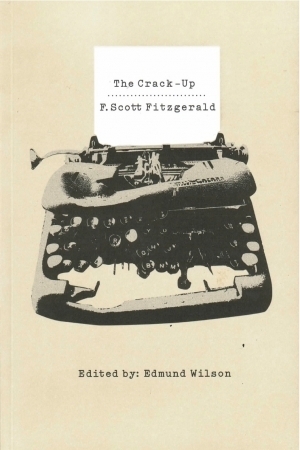
"The Crack-Up" was first published by New Directions in 1945 and is now being rediscovered by a new generation of readers. Compiled and edited by Edmund Wilson shortly after Fitzgerald's death, "The Crack-Up" tells the story of Fitzgerald's sudden descent at age thirty-nine from a life of success and glamor to one of emptiness and despair, and his determined recovery. This vigorous and revealing collection of essays and letters renders the tale of a man whose personality still charms us all and whose reckless gaiety and genious made him a living symbol and the Jazz Age. For those who grew up with "The Great Gatsby" or "Tender is the Night," this extraordinary autobiographical collection provides a unique personal blend of the romance and reality embodied by Fitzgerald's literature and his life.

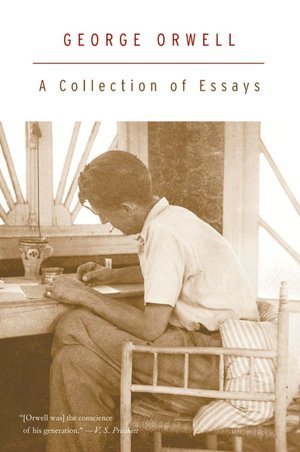
George Orwell's collected nonfiction, written in the clear-eyed and uncompromising style that earned him a critical following One of the most thought-provoking and vivid essayists of the twentieth century, George Orwell fought the injustices of his time with singular vigor through pen and paper. In this selection of essays, he ranges from reflections on his boyhood schooling and the profession of writing to his views on the Spanish Civil War and British imperialism. The pieces collected here include the relatively unfamiliar and the more celebrated, making it an ideal compilation for both new and dedicated readers of Orwell's work.

Gerry Spence is perhaps America's most renowned and successful trial lawyer, a man known for his deep convictions and his powerful courtroom presentations when he argues on behalf of ordinary people. Frequently pitted against teams of lawyers thrown against him by major corporate or government interests, he has never lost a criminal case and has not lost a civil jury trial since l969.In Win Your Case , Spence shares a lifetime of experience teaching you how to win in any arena-the courtroom, the boardroom, the sales call, the salary review, the town council meeting-every venue where a case is to be made against adversaries who oppose the justice you seek. Relying on the successful courtroom methods he has developed over more than half a century, Spence shows both lawyers and laypersons how you can win your cases as he takes you step by step through the elements of a trial-from jury selection, the opening statement, the presentation of witnesses, their cross-examinations, and finally to the closing argument itself.Spence teaches you how to prepare yourselves for these wars. Then he leads you through the new, cutting-edge methods he uses in discovering the story in which you form the evidence into a compelling narrative, discover the point of view of the decision maker, anticipate and answer the counterarguments, and finally conclude the case with a winning final argument.To make a winning presentation, you are taught to prepare the power-person (the jury, the judge, the boss, the customer, the board) to hear your case. You are shown that your emotions, and theirs, are the source of your winning. You learn the power of your own fear, of honesty and caring and, yes, of love. You are instructed on how to role-play through the use of the psychodramatic technique, to both discover and tell the story of the case, and, at last, to pull it all together into the winning final argument.Whether you are presenting your case to a judge, a jury, a boss, a committee, or a customer, Win Your Case is an indispensable guide to success in every walk of life, in and out of the courtroom.

With this guide, writers can learn how to create good fiction and publish profitably, guided by the timeless advice of the man who built the legendary literary agency that still bears his name. Includes information on creating characters, plotting a novel, formatting the manuscript, deciphering a publishing contract, and more.

"When Steiner deals with transactions between languages . . . as in discussion of various English versions of the Bible or Robert Lowell`s translation of Racine, we see a keenly discriminating literary mind at work on what it loves."-Robert Gorham Davis, New York Times Book Review "An extraordinarily sharp, brilliant, and thoughtful discussion of the strange conditions into which modern writing has worked itself. . . . Few, very few writers today have as much that is worthwhile to say on today`s writing as does the author."-Joseph G. Harrison, Christian Science Monitor "Whoever has valued and needed this book for its insights into some one particular matter . . . will upon rereading discover the astounding breadth of attention in [it]: from Homer to Thomas Mann, from Marshall McLuhan to The Warsaw Diary of Chaim Kaplan. In each of these essays, a single sentence, and often more than one, can endlessly provoke and illuminate thought."-John Felstiner How do we evaluate the power and utility of language when it has been made to articulate falsehoods in certain totalitarian regimes or has been charged with vulgarity and imprecision in a mass-consumer democracy? How will language react to the increasingly urgent claims of more exact speech such as mathematics and symbolic notation? These are some of the questions Steiner addresses in this elegantly written book, first published in 1967 to international acclaim.

For Abraham Lincoln, whether he was composing love letters, speeches, or legal arguments, words mattered. In Lincoln, acclaimed biographer Fred Kaplan explores the life of America's sixteenth president through his use of language as a vehicle both to express complex ideas and feelings and as an instrument of persuasion and empowerment. Like the other great canonical writers of American literature—a status he is gradually attaining—Lincoln had a literary career that is inseparable from his life story. An admirer and avid reader of Burns, Byron, Shakespeare, and the Old Testament, Lincoln was the most literary of our presidents. His views on love, liberty, and human nature were shaped by his reading and knowledge of literature.Since Lincoln, no president has written his own words and addressed his audience with equal and enduring effectiveness. Kaplan focuses on the elements that shaped Lincoln's mental and imaginative world; how his writings molded his identity, relationships, and career; and how they simultaneously generated both the distinctive political figure he became and the public discourse of the nation. This unique account of Lincoln's life and career highlights the shortcomings of the modern presidency, reminding us, through Lincoln's legacy and appreciation for language, that the careful and honest use of words is a necessity for successful democracy.Illuminating and engrossing, Lincoln brilliantly chronicles Abraham Lincoln's genius with language.

In the long-awaited sequel to his surprise bestseller, Save the Cat!, author and screenwriter Blake Snyder returns to form in a fast-paced follow-up that proves why his is the most talked-about approach to screenwriting in years. In the perfect companion piece to his first book, Snyder delivers even more insider's information gleaned from a 20-year track record as ?one of Hollywood's most successful spec screenwriters, ? giving you the clues to write your movie. Designed for screenwriters, novelists, and movie fans, this book gives readers the key breakdowns of the 50 most instructional movies from the past 30 years. From M*A*S*H to Crash, from Alien to Saw, from 10 to Eternal Sunshine of the Spotless Mind, Snyder reveals how screenwriters who came before you tackled the same challenges you are facing with the film you want to write ? or the one you are currently working on.

Armed with a red pencil, scissors, tape, and index cards, author Maxwell Nurnberg spent years scouring The New York Times, the The New Yorker, and the New York Review of Books, with the aim of creating a new kind of vocabulary book. The result is a veritable panoply of words -- drawn from the real-life context of written and spoken language.

This is not a book just for copywriters and other advertising experts but a book for every business owner, marketing expert or anyone who needs to increase sales.The reason why is because it deals with how to channel the forces in the marketplace which control sales.Put simply, Gene's book addresses the universal problem of all copywriting: How to write a headline — and an ad that follows it — that will open up a whole new market.

Today everyone--whether they know it or not--is in the emotional transportation business. More and more, success is won by creating compelling stories that have the power to move partners, shareholders, customers, and employees to action. Simply put, if you can’t tell it, you can’t sell it. And this book tells you how to do both.Historically, stories have always been igniters of action, moving people to do things. But only recently has it become clear that purposeful stories--those created with a specific mission in mind--are absolutely essential in persuading others to support a vision, dream or cause.Peter Guber, whose executive and entrepreneurial accomplishments have made him a success in multiple industries, has long relied on purposeful story telling to motivate, win over, shape, engage and sell. Indeed, what began as knack for telling stories as an entertainment industry executive has, through years of perspiration and inspiration, evolved into a set of principles that anyone can use to achieve their goals.In Tell to Win, Guber shows how to move beyond soulless Power Point slides, facts, and figures to create purposeful stories that can serve as powerful calls to action. Among his *Capture your audience’s attention first, fast and foremost*Motivate your listeners by demonstrating authenticity*Build your tell around “what’s in it for them”*Change passive listeners into active participants*Use “state-of-the-heart” technology online and offline to make sure audience commitment remains strongTo validate the power of telling purposeful stories, Guber includes in this book a remarkably diverse number of “voices”--master tellers with whom he’s shared experiences. They include YouTube founder Chad Hurley, NBA champion Pat Riley, clothing designer Normal Kamali, “Mission to Mars” scientist Gentry Lee, Under Armour CEO Kevin Plank, former South African president Nelson Mandela, magician David Copperfield, film director Steven Spielberg, novelist Nora Roberts, rock legend Gene Simmons, and physician and author Deepak Chopra.After listening to this extraordinary mix of voices, you’ll know how to craft, deliver--and own--a story that is truly compelling, one capable of turning others into viral advocates for your goal.

This is the only screenwriting guide by two guys who have actually done it (instead of some schmuck who just gives lectures about screenwriting at the airport Marriott); “These guys are proof that with no training and little education, ANYONE can make it as a screenwriter” (Paul Rudd).Robert Ben Garant and Thomas Lennon’s movies have made over a billion dollars at the box office—and now they show you how to do it yourself! This book is full of secret insider information about how to conquer the Hollywood studio how to write, pitch, structure, and get drunk with the best of them. Well…maybe not the best of them, but certainly the most successful. (If you’re aiming to win an Oscar, this is not the book for you!) But if you can type a little, and can read and speak English—then you too can start turning your words into stacks of money! This is the only screenwriting book you will ever need (because all other ones pretty much suck). In these pages, Garant and Lennon provide the kind of priceless tips you won’t find anywhere else, -The art of pitching -Getting your foot in the door -Taking notes from movie stars -How to get fired and rehired -How to get credit and royalties! And most what to buy with the huge piles of money you’re going to make! Writing Movies for Fun and Profit will take you through the highs and lows of life as a professional screenwriter. From the highs of hugging Gisele Bündchen and getting kung fu punched by Jackie Chan to the soul-crushing lows of Fully Loaded. Read this book and you’ll have everything you need to make your first billion the old-fashioned way—by “selling out” in show business! A portion of the authors’ proceeds from this book are being contributed to the USO of Metropolitan Washington, a private, nonprofit organization dedicated to serving active duty military members and their families in the greater Washington, DC, region.

This perfect gift for readers, writers, and literature majors alike unearths the quirks of the English language. For example, do you know why a mortgage is literally a “death pledge”? Why guns have girls’ names? Why “salt” is related to “soldier”? Discover the answers to all of these etymological questions and more in this fascinating book for fans of of Eats, Shoots & Leaves.The Etymologicon is a completely unauthorized guide to the strange underpinnings of the English language. It explains how you get from “gruntled” to “disgruntled”; why you are absolutely right to believe that your meager salary barely covers “money for salt”; how the biggest chain of coffee shops in the world connects to whaling in Nantucket; and what, precisely, the Rolling Stones have to do with gardening. This witty book will awake the linguist in you and illuminate the hidden meanings behind common words and phrases, tracing their evolution through all of their surprising paths throughout history.

You don’t need to be a genius, you just need to be yourself. That’s the message from Austin Kleon, a young writer and artist who knows that creativity is everywhere, creativity is for everyone. A manifesto for the digital age, Steal Like an Artist is a guide whose positive message, graphic look and illustrations, exercises, and examples will put readers directly in touch with their artistic side.

Most of what you think you know about writing is useless. It’s the harmful debris of your education—a mixture of half-truths, myths, and false assumptions that prevents you from writing well. Drawing on years of experience as a writer and teacher of writing, Verlyn Klinkenborg offers an approach to writing that will change the way you work and think. There is no gospel, no orthodoxy, no dogma in this book. What you’ll find here isn’t the way to write. Instead, you’ll find a way to clear your mind of illusions about writing and discover how you write. Several Short Sentences About Writing is a book of first steps and experiments. They will revolutionize the way you think and perceive, and they will change forever the sense of your own authority as a writer. This is a book full of learning, but it’s also a book full of unlearning—a way to recover the vivid, rhythmic, poetic sense of language you once possessed. An indispensable and unique book that will give you a clear understanding of how to think about what you do when you write and how to improve the quality of your writing.

L’urgence, qui appelle l’impulsion, la fougue, la vitesse — et la patience, qui requiert la lenteur, la constance et l’effort. Mais elles sont pourtant indispensables l’une et l’autre à l’écriture d’un livre, dans des proportions variables, à des dosages distincts, chaque écrivain composant sa propre alchimie, un des deux caractères pouvant être dominant et l’autre récessif, comme les allèles qui déterminent la couleur des yeux.