
Andrew Robinson
(William) Andrew Coulthard Robinson is a British author and former newspaper editor. Andrew Robinson was educated at the Dragon School, Eton College where he was a King's Scholar, University College, Oxford where he read Chemistry and finally the School of Oriental and African Studies in London. He is the son of Neville Robinson, an Oxford physicist. Robinson first visited India in 1975 and has been a devotee of the country's culture ever since, in particular the Bengali poet and philosopher Rabindranath Tagore and the Bengali film director Satyajit Ray. He has authored many books and articles. Until 2006, he was the Literary Editor of the Times Higher Education Supplement<?em>. He has also been a Visiting Fellow at Wolfson College, Cambridge. He is based in London and is now a full-time writer. Librarian Note: There is more than one author by this name in the Goodreads data base.
28 Books Written

The Story of Writing: Alphabets, Hieroglyphs, & Pictograms
by Andrew Robinson
Rating: 4.0 ⭐
• 2 recommendations ❤️
A survey of the world's major scripts, studied through sight, sound and symbol Andrew Robinson explains the interconnection between sound, symbol, and script in a succinct and absorbing text. He discusses each of the major writing systems in turn, from cuneiform and Egyptian and Mayan hieroglyphs to alphabets and the scripts of China and Japan, as well as topics such as the Cherokee “alphabet” and the writing of runes. Full coverage is given to the history of decipherment, and a provocative chapter devoted to undeciphered scripts challenges the can these codes ever be broken? In this revised edition, the author reveals the latest discoveries to have an impact on our knowledge of the history of writing, including the Tabula Cortonensis showing Etruscan symbols and a third millennium BC seal from Turkmenistan that could solve the mystery of how Chinese writing evolved. He also discusses how the digital revolution has not, despite gloomy predictions, spelled doom for the printed book. In addition, the table of Maya glyphs has been revised so that they are up-to-date with current research.

""Andrew Robinson has now followed up his beautifully illustrated The Story of Writing "with a highly appropriate sequel--Lost Languages, "on undeciphered scripts. Many, it seems likely, will never be deciphered ..."--Sir Arthur C. Clarke, C.B.E.A landmark study of the world's most important undeciphered writing systems and the current race to crack themMaybe it's the tantalizing possibility of giving new voice to long-hushed peoples and civilizations. Perhaps it's the puzzle solver's delight in the mental challenges posed by breaking their codes. Whatever the reasons, the public has long been fascinated with undeciphered ancient scripts and the ongoing efforts to crack them. In "Lost Languages, Andrew Robinson reports from the front lines of the global efforts now under way to crack the Meroitic hieroglyphs of ancient Nubia, the Etruscan alphabet, the Indus Valley Sealstones, the Zapotec script--the earliest in the Americas--and five other major "lost languages." An enthralling story of genius, passion, and competition, "Lost Languages provides a revealing look at how decipherment is done. In what is truly an archaeological mystery book, the author examines each script in detail and reviews what is known about the people who created it, while weaving in the intriguing cast of characters currently competing for the glory of cracking these ancient codes.

إنَّ مفهومَ العبقريَّة مفهومٌ شديدُ الذاتيَّة، غير أنه يتمتع بأهمية ثقافية ويخلب الألباب، فهو يثير في الأذهان الكثيرَ من الأسئلة؛ نظرًا لأننا غالبًا ما نعرفه من خلال الأفراد الذين يتمتعون بقدرات فكرية وإبداعية استثنائية. فهل يُولَد العبقري عبقريًّا أم أنه يُصنَع؟ ما الفرق بين الموهبة والعبقرية؟ وما الصفات التي يجب أن يتحلَّى بها الشخص كي نَصِفَه بالعبقري؟يتناول أندرو روبنسون — في خِضَمِّ استكشافه لمفهوم العبقرية في الفنون والعلوم — بعضًا من أبرز العباقرة الذين عرَفهم التاريخُ؛ مثل: ليوناردو دا فينشي، وموتسارت، وشكسبير، وداروين، وأينشتاين، ونيوتن. وكذلك غيرهم من العباقرة الذين لم يحظَوْا بمثل هذه الشهرة الواسعة؛ وذلك لتوضيح دور كلٍّ من الموهبة، والوراثة، والتربية، والتعليم، والذكاء، والمرض العقلي، والحظ، وغيرها من العوامل التي تساهم في تكوين شخصية العبقري.
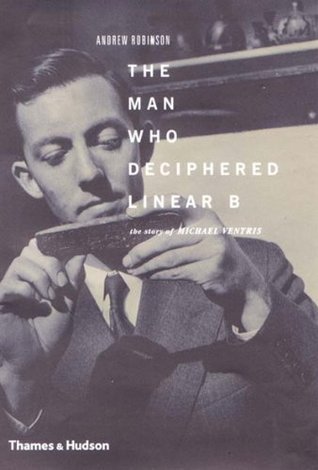
More than a century ago, in 1900, one of the great archaeological finds of all time was made in Crete. Arthur Evans discovered what he believed was the palace of King Minos, with its notorious labyrinth, home of the Minotaur. As a result, Evans became obsessed with one of the epic intellectual stories of the modern era: the search for the meaning of Linear B, the mysterious script found on clay tablets in the ruined palace.Evans died without achieving his objective, and it was left to the enigmatic Michael Ventris to crack the code in 1952. This is the first book to tell not just the story of Linear B but also that of the young man who deciphered it. Based on hundreds of unpublished letters, interviews with survivors, and other primary sources, Andrew Robinson’s riveting account takes the reader through the life of this intriguing and contradictory man. Stage by stage, we see how Ventris finally achieved the breakthrough that revealed Linear B as the earliest comprehensible European writing system.

The Last Man Who Knew Everything: Thomas Young, The Anonymous Polymath Who Proved Newton Wrong, Explained How We See, Cured the Sick, and Deciphered the Rosetta Stone, Among Other Feats of Genius
by Andrew Robinson
Rating: 3.7 ⭐
Physics textbooks identify Thomas Young (1773-1829) as the experimenter who first proved that light is a wave--not a stream of corpuscles as Newton proclaimed. In any book on the eye and vision, Young is the London physician who showed how the eye focuses and proposed the three-color theory of vision confirmed only in 1959. In any book on ancient Egypt, Young is credited for his crucial detective work in deciphering the Rosetta Stone. It is hard to grasp how much he knew.Invited to contribute to a new edition of the Encyclopedia Britannica, Young offered the following Alphabet, Annuities, Attraction, Capillary Action, Cohesion, Colour, Dew, Egypt, Eye, Focus, Friction, Halo, Hieroglyphic, Hydraulics, Motion, Resistance, Ship, Sound, Strength, Tides, Waves, and anything of a medical nature. He asked that all his contributions be kept anonymous. While not yet thirty he gave a course of lectures at the Royal Institution covering virtually all of known science. But polymathy made him unpopular in the academy. An early attack on his wave theory of light was so scathing that English physicists buried it for nearly two decades until it was rediscovered in France. But slowly, after his death, great scientists recognized his genius.Today, in an age of professional specialization unimaginable in 1800, polymathy still disturbs us. Is this kind of curiosity selfish, even irresponsible? Here is the story of a driven yet modest hero, the last man who knew everything.

Satyjit Ray's films include the Apu Trilogy, The Music Room, Charulata, Days and Nights in the Forest, The Chess Players, and The Stranger. He also made comedies, musical fantasies, detective films, and documentaries. He was an exceptionally versatile artist who won almost every major prize in cinema, including a lifetime achievement Oscar in 1992. This is the best-known biography of the film giant, based on extensive interviews with Ray himself, his actors, collaborators, and a deep knowledge of Bengali culture. This second edition contains extensive new material covering Ray's final three films made in 1989-1991, a discussion of his artistic legacy, and the most comprehensive bibliography of Ray's own writings.

India’s unfolding story, from the ancient Hindu dynasties to the coming of Islam, from the Mughal Empire to the present day India has always been a land of great contradictions. To Alexander the Great, the country was a place of clever naked philosophers and massive armies mounted on elephants – which eventually forced his army to retreat. To ancient Rome, it was a source of luxuries, mainly spices and textiles, paid for in gold―hence the enormous numbers of Roman gold coins excavated in India. At the height of the Mughal empire in 1700, India boasted 24 percent of the world economy―a share virtually equal to Europe’s 25 percent. But then its economy declined. Colonial India was known for its extremes of wealth and poverty, epitomized by the Taj Mahal and famines, maharajas and untouchables, and also for its many-armed Hindu gods and Buddhist philosophy, Mahatma Gandhi and Rabindranath Tagore. A Short History places as much emphasis on individuals, ideas and cultures as on the rise and fall of kingdoms, political parties and economies. Anyone curious about a great civilization, and its future, will find this an ideal introduction, at times controversial, written by an author who has been strongly engaged with India for more than three decades. 12 illustrations in black and white

Cracking the Egyptian Code: The Revolutionary Life of Jean-François Champollion
by Andrew Robinson
Rating: 3.9 ⭐
In 1799 Napoleon's army uncovered an ancient stele in the Nile delta. Its inscription, recorded in three distinct scripts - ancient Greek, Coptic, and hieroglyphic--would provide scholars with the first clues to unlocking the secrets of Egyptian hieroglyphs, a language lost for nearly two millennia. More than twenty years later a remarkably gifted Frenchman named Jean-Francois Champollion successfully deciphered the hieroglyphs on the stele, now commonly known as the Rosetta Stone, sparking a revolution in our knowledge of ancient Egypt.Cracking the Egyptian Code is the first biography in English of Champollion, widely regarded as the founder of Egyptology. Andrew Robinson meticulously reconstructs how Champollion cracked the code of the hieroglyphic script, describing how Champollion started with Egyptian obelisks in Rome and papyri in European collections, sailed the Nile for a year, studied the tombs in the Valley of the Kings (a name he first coined), and carefully compared the three scripts on the Rosetta Stone to penetrate the mystery of the hieroglyphic text. Robinson also brings to life the rivalry between Champollion and the English scientist Thomas Young, who claimed credit for launching the decipherment, which Champollion hotly denied. There is much more to Champollion's life than the Rosetta Stone and Robinson gives equal weight to the many roles he played in his tragically brief life, from a teenage professor in Revolutionary France to a supporter of Napoleon (whom he met), an exile, and a curator at the Louvre.Extensively illustrated in color and black-and-white pictures, Cracking the Egyptian Code will appeal to a wide readership interested in Egypt, decipherment and code-breaking, and Napoleon and the French Revolution.
Writing is the defining marker of civilization, without which there could be no records, no history, no books, no accumulation of knowledge. But when did this essential part of our lives begin? Why do we all write differently and how did writing evolve into what we use today? All of these questions are answered in this Very Short Introduction. Andrew Robinson tells the fascinating story of the history of writing, shedding light on its development and examining the enormous variety of writing and scripts we use today. Starting with the origins of writing five thousand years ago, with cuneiform and Egyptian hieroglyphs, Robinson explains how these early forms developed into hundreds of scripts, including the Roman alphabet and Chinese characters. He reveals how the modern writing symbols and abbreviations we take for granted today--including airport signage and text messaging--resemble ancient ones much more closely than we might think. The book also includes a chronology of eventsfrom 3300 BC to AD 2000, a list of titles for further reading, and an index.About the Series : Combining authority with wit, accessibility, and style, Very Short Introductions offer an introduction to some of life's most interesting topics. Written by experts for the newcomer, they demonstrate the finest contemporary thinking about the central problems and issues in hundreds of key topics, from philosophy to Freud, quantum theory to Islam.

The Indus civilization flourished for half a millennium from about 2600 to 1900 BCE, when it mysteriously declined and vanished from view. It remained invisible for almost four thousand years, until its ruins were discovered in the 1920s by British and Indian archaeologists. Today, after almost a century of excavation, it is regarded as the beginning of Indian civilization and possibly the origin of Hinduism. The Lost Civilizations is an accessible introduction to every significant aspect of an extraordinary and tantalizing “lost” civilization, which combined artistic excellence, technological sophistication, and economic vigor with social egalitarianism, political freedom, and religious moderation. The book also discusses the vital legacy of the Indus civilization in India and Pakistan today.
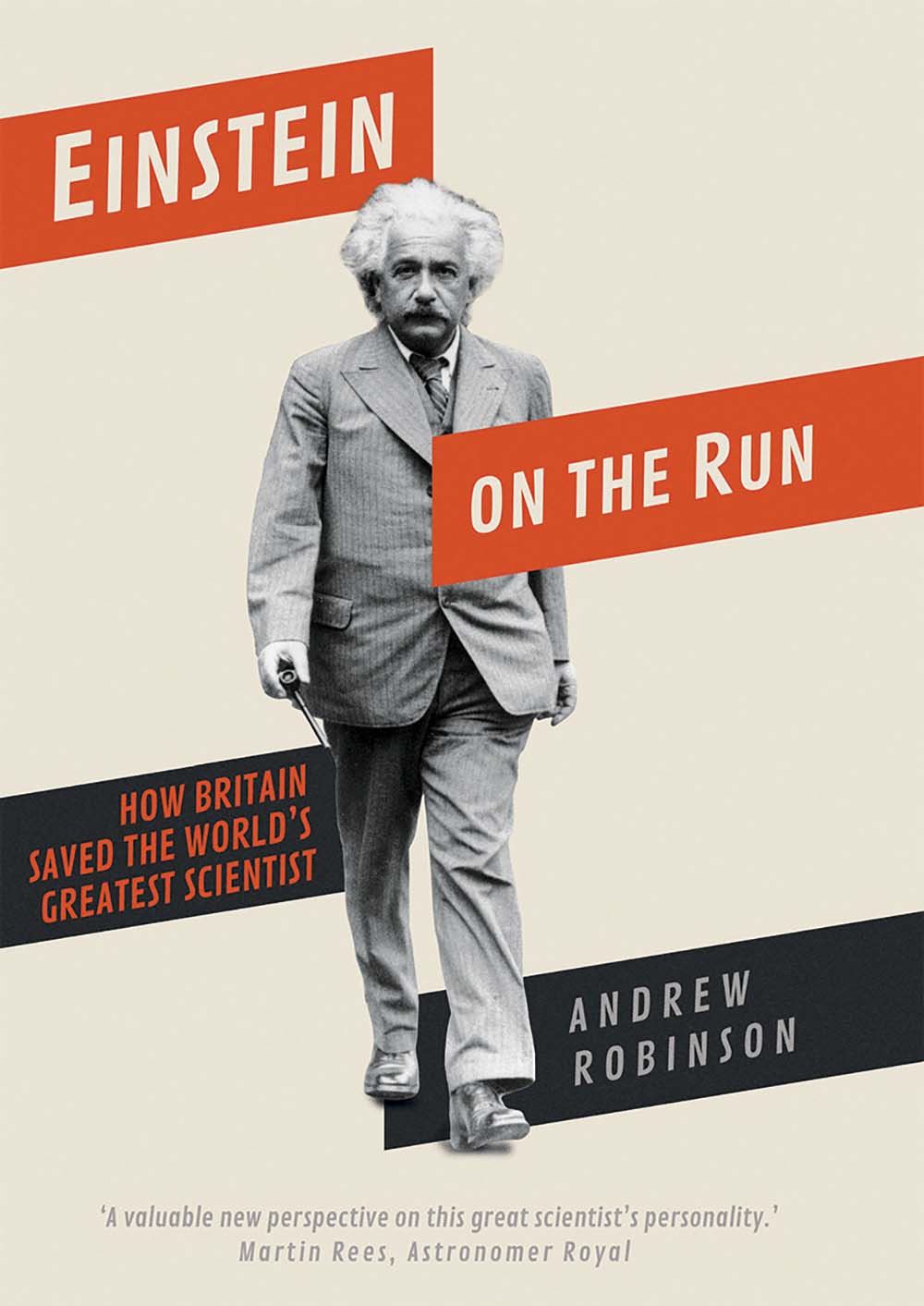
Einstein on the Run: How Britain Saved the World’s Greatest Scientist
by Andrew Robinson
Rating: 3.4 ⭐
The first account of the role Britain played in Einstein's life—first by inspiring his teenage passion for physics, then by providing refuge from the NazisIn autumn 1933, Albert Einstein found himself living alone in an isolated holiday hut in rural England. There, he toiled peacefully at mathematics while occasionally stepping out for walks or to play his violin. But how had Einstein come to abandon his Berlin home and go ‘"on the run"? In this lively account, Andrew Robinson tells the story of the world’s greatest scientist and Britain for the first time, showing why Britain was the perfect refuge for Einstein from rumored assassination by Nazi agents. Young Einstein’s passion for British physics, epitomized by Newton, had sparked his scientific development around 1900. British astronomers had confirmed his general theory of relativity, making him internationally famous in 1919. Welcomed by the British people, who helped him campaign against Nazi anti-Semitism, he even intended to become a British citizen. So why did Einstein then leave Britain, never to return to Europe?

With contributions from Freeman Dyson, Stephen Hawking, João Magueijo, Steven Weinberg, Philip Anderson, Robert Schulmann, Philip Glass, Max Jammer, Sir Joseph Rotblat, I. Bernard Cohen, and Sir Arthur C. ClarkeThis definitive illustrated study of one of the foremost icons of the 20th century commemorates the centenary of Albert Einstein's annus mirabilis of 1905, the same year when Einstein, at age 26, published his groundbreaking Special Theory of Relativity, and when the most famous equation in science, E = mc2, was introduced to the world. Here author Andrew Robinson and 11 essayists, including three Nobel laureates, explore every facet of the life and achievements of the great physicist and humanitarian, honored by Time magazine in its Millennium issue as "Person of the Century."As the book explains clearly, Einstein's dramatic papers of 1905 overthrew the Newtonian worldview and revolutionized our understanding of space, time, energy, matter, and light. His work had impact far beyond the field of physics, playing a leading role in the century's technological advances and influencing modernism in every field. Except for his last interview that was previously published, all the essays here are original works written especially for this book. The photographs draw on an exceptional archive Einstein bequeathed to Hebrew University in Jerusalem.

""I can never forget the excitement in my mind after seeing Pather Panchali "", noted Akira Kurosawa. Satyajit Ray's three films about the boyhood, adolescence and manhood of Apu, Pather Panchali (1955), Aparajito (1956) and The World of Apu (1959) - collectively known as The Apu Trilogy - are established classics of world cinema. The Trilogy was the chief reason for Satyajit Ray's receiving a Hollywood Oscar for lifetime achievement in 1992, just before his death. This book by Ray's biographer and world authority Andrew Robinson is the first full study of the Trilogy. Robinson -- who came to know the director well during the last decade of his career -- covers the literary and cultural background to the films, their production, their music composed by Ravi Shankar, their aesthetic value, and their complex critical reception in the East and the West, from 1955 up to the present day. Extensively and beautifully illustrated and a pleasure to read, The Apu Trilogy will appeal to anyone captivated by the unique world created by Satyajit Ray.

"A truly welcome and refreshing study that puts earthquake impact on history into a proper perspective." --Amos Nur, Emeritus Professor of Geophysics, Stanford University, California, and author of Earthquakes, Archaeology, and the Wrath of God Since antiquity, on every continent, human beings in search of attractive landscapes and economic prosperity have made a Faustian bargain with the risk of devastation by an earthquake. Today, around half of the world’s largest cities – as many as sixty – lie in areas of major seismic activity. Many, such as Lisbon, Naples, San Francisco, Teheran, and Tokyo, have been severely damaged or destroyed by earthquakes in the past. But throughout history, starting with ancient Jericho, Rome, and Sparta, cities have proved to be extraordinarily only one, Port Royal in the Caribbean, was abandoned after an earthquake. Earth-Shattering Events seeks to understand exactly how humans and earthquakes have interacted, not only in the short term but also in the long perspective of history. In some cases, physical devastation has been followed by decline. But in others, the political and economic reverberations of earthquake disasters have presented opportunities for renewal. After its wholesale destruction in 1906, San Francisco went on to flourish, eventually giving birth to the high-tech industrial area on the San Andreas fault known as Silicon Valley. An earthquake in Caracas in 1812 triggered the creation of new nations in the liberation of South America from Spanish rule. Another in Tangshan in 1976 catalysed the transformation of China into the world’s second largest economy. The growth of the scientific study of earthquakes is woven into this far-reaching history. It began with a series of earthquakes in England in 1750. Today, seismologists can monitor the vibration of the planet second by second and the movement of tectonic plates millimeter by millimeter. Yet, even in the 21st century, great earthquakes are still essentially "acts of God," striking with much less warning than volcanoes, floods, hurricanes, and even tornadoes and tsunamis. 13 black-and-white illustrations

The first fully illustrated guide to the human passion for our experiences, our surroundings, and the universe.This lively survey covers an astonishing array of subjects, from the earliest currency to the birth of the meter, from the force of hurricanes to body mass index, from air pressure, earthquakes, and pollen counts to happiness, blood types, and intelligence. Each measuring method is put into its proper historical context and explained in detail.The book follows the same format as Andrew Robinson's popular The Story of Writing . It is organized into three broad sections—The Meaning of Measurement, Measuring Nature, and Measuring Man—which are then broken down into chapters. Each chapter features a series of self-contained spreads that deal with a specific topic. The wide range of illustrations spans the history of the world and its diverse cultures. 250 illustrations, 120 in color.

The extraordinarily inventive Linus Pauling, twice winner of the Nobel Prize, was asked how he came to have so many good ideas. Pauling "Well, I have a lot of ideas and throw away the bad ones." Where do ideas come from? And why do the best ideas sometimes strike in a flash of "suddengenius"? Andrew Robinson here offers a fascinating look at the genesis of creativity in science and art, following ten remarkable individuals who achieved brilliant breakthroughs in their fields. Robinson looks first at the scientific study of creativity, covering talent, genius, intelligence,memory, dreams, the unconscious, and much more. He then tells the stories of ten amazing breakthroughs--five by scientists and five by artists--ranging from Curie's discovery of radium and Einstein's theory of special relativity to Mozart's composing of The Marriage of Figaro and Virginia Woolf'swriting of Mrs. Dalloway . Robinson concludes by highlighting what highly creative people have in common; whether breakthroughs in science and art follow patterns; and whether they always involve great leaps and "sudden genius."

Satyajit Ray's work put India on the map of world cinema and led Akira Kurosawa to say of ""Not to have seen the cinema of Ray means existing in the world without seeing the sun or the moon."" Beginning with Pather Panchali , released fifty years ago this year, Ray won almost every major prize, including an Oscar for lifetime achievement. What makes him unparalleled in cinema is that he was personally responsible for all aspects of his films-from script to music. Published as a lavish album, the hundreds of illustrations in this book include drawings by Ray, film stills and photographs by Nemai Ghosh, who accompanied Ray and observed his work for nearly twenty-five years.

Describes, illustrates, and analyzes the forces of nature responsible for earthquakes, volcanos, hurricanes, floods, glaciers, deserts, and drought; recounts how humans have perceived their relationship with them over history; and explains how Earth's evolution has created present conditions.

The 2011 devastating, tsunami-triggering quake off the coast of Japan and 2010’s horrifying destruction in Haiti reinforce the fact that large cities in every continent are at risk from earthquakes. Quakes threaten Los Angeles, Beijing, Cairo, Delhi, Singapore, and many more cities, and despite advances in earthquake science and engineering and improved disaster preparedness by governments and international aid agencies, they continue to cause immense loss of life and property damage. Earthquake explores the occurrence of major earthquakes around the world, their effects on the societies where they strike, and the other catastrophes they cause, from landslides and fires to floods and tsunamis. Examining the science involved in measuring and explaining earthquakes, Andrew Robinson looks at our attempts to design against their consequences and the possibility of having the ability to predict them one day. Robinson also delves into the ways nations have mythologized earthquakes through religion and the arts—Norse mythology explained earthquakes as the violent struggling of the god Loki as he was punished for murdering another god, the ancient Greeks believed Poseidon caused earthquakes whenever he was in a bad mood or wanted to punish people, and Japanese mythology states that Namazu, a giant catfish, triggers quakes when he thrashes around. He discusses the portrayal of earthquakes in popular culture, where authors and filmmakers often use the memory of cities laid to waste—such as Kobe, Japan, in 1995 or San Francisco in 1906—or imagine the hypothetical “Big One,” the earthquake expected someday out of California’s San Andreas Fault. With tremors happening in seemingly implausible places like Chicago and Washington DC, Earthquake is a timely book that will enrich earthquake scholarship and enlighten anyone interested in these ruinous natural disasters.

In the annals of world history there are few more striking tales than those of Princely India. The Maharajas became bywords for excess, for lifetimes spent in extravagant expenditure and splendour on an almost unparalleled scale. The Princes, their palaces and feudal loyalties live on, and the full gorgeous spectacle of their life-style is captured for perhaps the last time in the pages of this book. This is very much a visual story, full of dazzling a story of throne rooms with gilded and painted ceilings, crystal fountains and peacocks in terraced gardens, gold and silver treasures, of weddings, celebrations and festivals, and of the Maharajas themselves and their families, in public and in private.


Monte Gazlowe, Trade Prince of the Bilgewater Cartel, has been probing working conditions among the goblins, touring factories, mines, and other operations. The process has been slowly eating away at him: Everywhere he tours, he sees a burned-out workforce, cheap machinery, and unhealthy working conditions that consistently drag production and denigrate their people. Worse yet, every boss has the same opinion: “This is the goblin way! Dog eat dog! Only the winner comes out on top!” But is this really the goblin way, or is it just the way Jastor Gallywix wanted them looking?


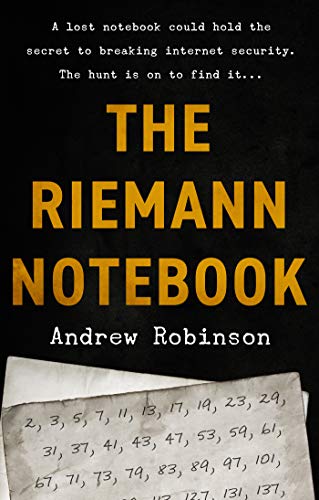
Did the 19th century German mathematician Bernhard Riemann discover more about the intricacies of prime numbers than he published? Did a notebook survive the clear-out of his papers following his sudden death in Italy? Could this notebook enable the breaking of 21st century internet security? Part biography, part thriller, The Riemann Notebook is the story of the search for a lost notebook and the secrets it may contain by two idealistic academics and by international security organisations with conflicting motivations.


![文字の起源と歴史 : ヒエログリフ、アルファベット、漢字 [Zusetsu moji no kigen to rekishi : Hierogurifu arufabetto kanji]](https://m.media-amazon.com/images/S/compressed.photo.goodreads.com/books/1554865595i/3085353.jpg)
文字の起源と歴史 : ヒエログリフ、アルファベット、漢字 [Zusetsu moji no kigen to rekishi : Hierogurifu arufabetto kanji]
by Andrew Robinson
Rating: 4.0 ⭐