
Graham Greene
Henry Graham Greene was an English writer and journalist regarded by many as one of the leading novelists of the 20th century. Combining literary acclaim with widespread popularity, Greene acquired a reputation early in his lifetime as a major writer, both of serious Catholic novels, and of thrillers (or "entertainments" as he termed them). He was shortlisted for the Nobel Prize in Literature several times. Through 67 years of writing, which included over 25 novels, he explored the conflicting moral and political issues of the modern world. The Power and the Glory won the 1941 Hawthornden Prize and The Heart of the Matter won the 1948 James Tait Black Memorial Prize and was shortlisted for the Best of the James Tait Black. Greene was awarded the 1968 Shakespeare Prize and the 1981 Jerusalem Prize. Several of his stories have been filmed, some more than once, and he collaborated with filmmaker Carol Reed on The Fallen Idol (1948) and The Third Man (1949). He converted to Catholicism in 1926 after meeting his future wife, Vivienne Dayrell-Browning. Later in life he took to calling himself a "Catholic agnostic". He died in 1991, aged 86, of leukemia, and was buried in Corseaux cemetery in Switzerland. William Golding called Greene "the ultimate chronicler of twentieth-century man's consciousness and anxiety".
31 Books Written

Ways of An Autobiography by Greene, Graham

MI6’s man in Havana is Wormold, a former vacuum-cleaner salesman turned reluctant secret agent out of economic necessity. To keep his job, he files bogus reports based on Charles Lamb’s Tales from Shakespeare and dreams up military installations from vacuum-cleaner designs. Then his stories start coming disturbingly true… First published in 1959 against the backdrop of the Cold War, Our Man in Havana remains one of Graham Greene’s most widely read novels. It is an espionage thriller, a penetrating character study, and a political satire of government intelligence that still resonates today. This Penguin Classics edition features an introduction by Christopher Hitchens.

Graham Greene's classic exploration of love, innocence, and morality in Vietnam"I never knew a man who had better motives for all the trouble he caused," Graham Greene's narrator Fowler remarks of Alden Pyle, the eponymous "Quiet American" of what is perhaps the most controversial novel of his career. Pyle is the brash young idealist sent out by Washington on a mysterious mission to Saigon, where the French Army struggles against the Vietminh guerrillas. As young Pyle's well-intentioned policies blunder into bloodshed, Fowler, a seasoned and cynical British reporter, finds it impossible to stand safely aside as an observer. But Fowler's motives for intervening are suspect, both to the police and himself, for Pyle has stolen Fowler's beautiful Vietnamese mistress.First published in 1956 and twice adapted to film, The Quiet American remains a terrifiying and prescient portrait of innocence at large. This Graham Greene Centennial Edition includes a new introductory essay by Robert Stone.

"A story has no beginning or end: arbitrarily one chooses a moment of experience from which to look ahead..." "This is a record of hate far more than of love," writes Maurice Bendrix in the opening passages of The End of the Affair, and it is a strange hate indeed that compels him to set down the retrospective account of his adulterous affair with Sarah Miles. Now, a year after Sarah's death, Bendrix seeks to exorcise the persistence of his passion by retracing its course from obsessive love to love-hate. At first, he believes he hates Sarah and her husband, Henry. Yet as he delves deeper into his emotional outlook, Bendrix's hatred shifts to the God he feels has broken his life, but whose existence at last comes to recognize.
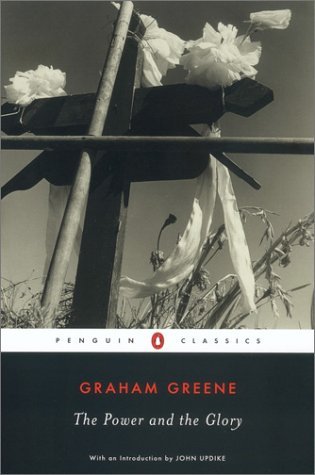
In a poor, remote section of southern Mexico, the paramilitary group, the Red Shirts have taken control. God has been outlawed, and the priests have been systematically hunted down and killed. Now, the last priest is on the run. Too human for heroism, too humble for martyrdom, the nameless little worldly "whiskey priest" is nevertheless impelled toward his squalid Calvary as much by his own compassion for humanity as by the efforts of his pursuers. In his introduction, John Updike calls The Power and the Glory, "Graham Greene's masterpiece…. The energy and grandeur of his finest novel derive from the will toward compassion, an ideal communism even more Christian than Communist."
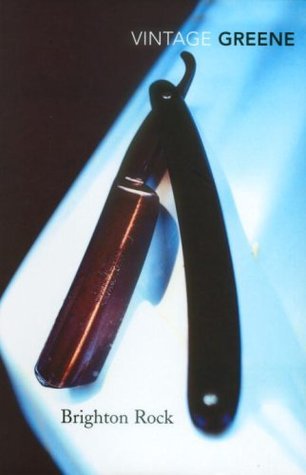
ISBN 9780099478478 moved to this edition.A gang war is raging through the dark underworld of Brighton. Seventeen-year-old Pinkie, malign and ruthless, has killed a man. Believing he can escape retribution, he is unprepared for the courageous, life-embracing Ida Arnold. Greene's gripping thriller, exposes a world of loneliness and fear, of life lived on the 'dangerous edge of things'.WITH AN INTRODUCTION BY J.M. COETZEE

In a British colony in West Africa, Henry Scobie is a pious and righteous man of modest means enlisted with securing borders. But when he’s passed over for a promotion as commissioner of police, the humiliation hits hardest for his wife, Louise. Already oppressed by the appalling climate, frustrated in a loveless marriage, and belittled by the wives of more privileged officers, Louise wants out. Feeling responsible for her unhappiness, Henry decides against his better judgment to accept a loan from a black marketeer to secure Louise’s passage. It’s just a single indiscretion, yet for Henry it precipitates a rapid fall from grace as one moral compromise after another leads him into a web of blackmail, adultery, and murder. And for a devout man like Henry, there may be nothing left but damnation.

“I met Aunt Augusta for the first time at my mother’s funeral…” Described by Graham Greene as “the only book I have written just for the fun of it,” Travels with My Aunt is the story of Hanry Pulling, a retired and complacent bank manager who meets his septuagenarian Aunt Augusta for the first time at what he supposes to be his mother’s funeral. She soon persuades Henry to abandon his dull suburban existence to travel her way—winding through Brighton, Paris, Istanbul, and Paraguay. Through Aunt Augusta, one of Greene’s greatest comic creations, Henry joins a shiftless, twilight society; mixes with hippies, war criminals, and CIA men; smokes pot; and breaks all currency regulations.

Rollo Martins' usual line is the writing of cheap paperback Westerns under the name of Buck Dexter. But when his old friend Harry Lime invites him to Vienna, he jumps at the chance. With exactly five pounds in his pocket, he arrives only just in time to make it to his friend's funeral. The victim of an apparently banal street accident, the late Mr. Lime, it seems, had been the focus of a criminal investigation, suspected of nothing less than being "the worst racketeer who ever made a dirty living in this city." Martins is determined to clear his friend's name, and begins an investigation of his own...

A leak is traced to a small sub-section of SIS, sparking off the inevitable security checks, tensions and suspicions. The sort of atmosphere where mistakes could be made? For Maurice Castle it is the end of the line anyway and time for him to retire with his African wife, Sarah.

Three men meet on a ship bound for Haiti, a world in the grip of the corrupt “Papa Doc” and the Tontons Macoute, his sinister secret police. Brown the hotelier, Smith the innocent American, and Jones the confidence man—these are the “comedians” of Greene’s title. Hiding behind their actors’ masks, they hesitate on the edge of life. They are men afraid of love, afraid of pain, afraid of fear itself...

For Arthur Rowe, the trip to the charity fête was a joyful step back into adolescence, a chance to forget the nightmare of the Blitz and the aching guilt of having mercifully murdered his sick wife. He was surviving alone, outside the war, until he happened to win a cake at the fête. From that moment, he is ruthlessly hunted by Nazi agents and finds himself the prey of malign and shadowy forces. This Penguin Classics edition features an introduction by Alan Furst.
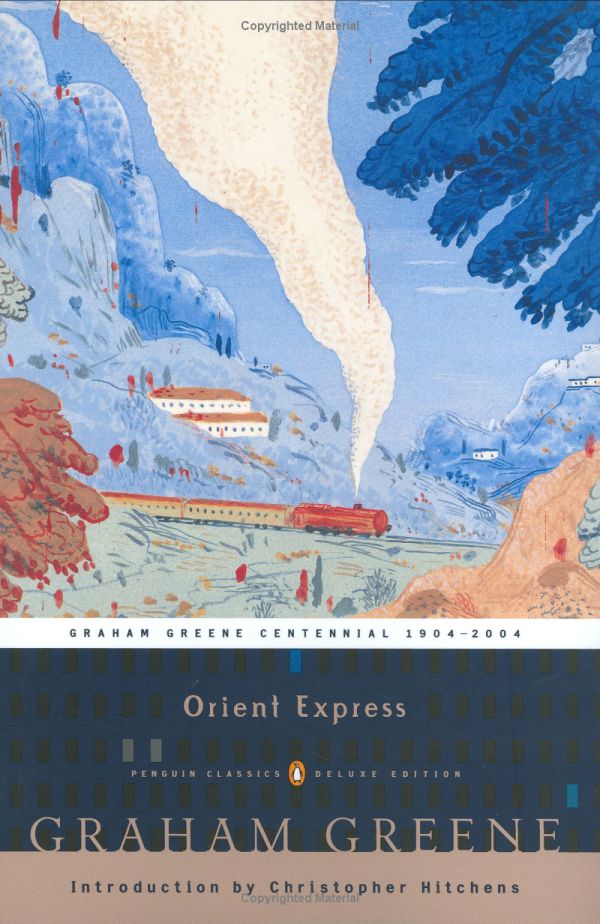
As the Orient Express hurtles across Europe on its three-day journey from Ostend to Constantinople, the driven lives of several of its passengers become bound together in a fateful interlock. The menagerie of characters include Coral Musker, a beautiful chorus girl; Carleton Myatt, a rich Jewish businessman; Richard John, a mysterious and kind doctor returning to his native Belgrade; the spiteful journalist Mabel Warren; and Josef Grunlich, a cunning, murderous burglar.What happens to these strangers as they put on and take off their masks of identity and passion, all the while confessing, prevaricating, and reaching out to one another in the "veracious air" of the onrushing train, makes for one of Graham Greene's most exciting and suspenseful stories. Originally published in 1933, Orient Express was Greene's first major success. This Graham Greene Centennial Edition, originally titled "Stamboul Train," features a new introductory essay by Christopher Hitchens.

The Honorary Consul is a British thriller novel by Graham Greene, published in 1973. It was one of the author's favourite works.The story is set in an unnamed city in northern Argentina, near the border with Paraguay which can be assumed to be the city of Corrientes.
A famous architect struggling with a crisis of faith escapes to a leper colony in the Congo, in Graham Greene’s “greatest novel” ( Time ). Querry is a world-renowned architect noted for his magnificent churches, each designed not for the glory of God, but for the satisfaction of self. Suddenly infected with indifference, he has abandoned his pursuit of pleasure. Now he has reached the end of desire at the end of the world—a colony of lepers in the remote jungles of Africa. Here, under the guidance of Doctor Colin, a fellow atheist, Querry’s consideration of the sick could be something close to a cure for his own suffering. So too, it first seems, could a local plantation owner’s lonely and abused wife—Querry’s unlikely confessor. But when Querry reluctantly agrees to build a hospital and his good intentions brand him a modern-day saint, all the intrusive and dangerous piety of civilization returns. And this time it could be inescapable. From “the ultimate chronicler of twentieth-century man’s consciousness and anxiety” comes Graham Greene’s celebrated novel about the consequences of conviction, the sickness of the soul, and the tenuous endurance of the human spirit (William Golding).

During World War II a group of men is held prisoner by the Germans, who determine that three of them must die. This is the story of how one of those men trades his wealth for his life—and lives to pay for his act in utterly unexpected ways.

A religious novel, it tells the story of a humble priest who is elevated to Monsignor by the Pope himself because of a clerical error. It's modern picaresque, with frequent nods to Cervantes... Quixote and Sancho drink and talk - about Judas and Stalin, the prodigal son, Marx, and belief that wears off like vodka. A book of moral complexity that explores deep theological themes in a light-hearted, accessible way.

Raven is an ugly man dedicated to ugly deeds. His cold-blooded killing of a European Minister of War is an act of violence with chilling repercussions, not just for Raven himself but for the nation as a whole. The money he receives in payment for the murder is made up of stolen notes and when the first of these is traced, Raven becomes a man on the run. As he tracks down the agent who has been double-crossing him and attempts to elude the police, he becomes both hunter and hunted: an unwitting weapon of a strange kind of social justice. In doing so, he sets the stage for Greene’s next novel, Brighton Rock. This Penguin Classics edition features an introduction by Samuel Hynes.

Doctor Fischer despises the human race. When the notorious toothpaste millionaire decides to hold his own deadly version of the Book of Revelations, Greene opens up a powerful vision of the limitless greed of the rich; black comedy and painful satire combine in a totally compelling novel.
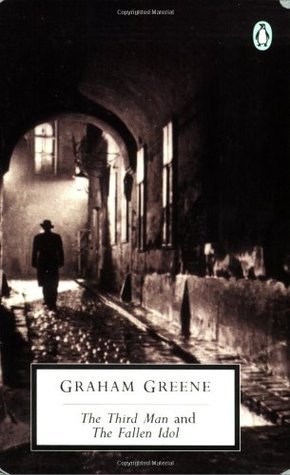
The Third Man is Greene's brilliant recreation of post-war Vienna, a city of desolate poverty occupied by four powers. Rollo Martins, a second-rate novelist, arrives penniless in Vienna to visit his old friend and hero Harry Lime. Harry is dead, but the circumstances surrounding his death are highly suspicious, and his reputation, at the very least, dubious. Graham Greene said of The Third Man that he "wanted to entertain [people], to frighten them a little, to make them laugh" and the result is both a compelling narrative and a haunting thriller. The Fallen Idol is the chilling story of a small boy caught up in the games that adults play. Left in the care of the butler, Baines, and his wife, Philip realizes too late the danger of lies and deceit. But the truth is even deadlier.

In a small continental country civil war is raging. Once a lecturer in medieval French, now a confidential agent, D is a scarred stranger in a seemingly casual England, sent on a mission to buy coal at any price. Initially, this seems to be a matter of straightforward negotiation, but soon, implicated in murder, accused of possessing false documents and theft, held responsible for the death of a young woman, D becomes a hunted man, tormented by allegiances, doubts and the love of others.

Victor Baxter is a young boy when a secretive stranger known simply as “the Captain” takes him from his boarding school to live in London. Victor becomes the surrogate son and companion of a woman named Liza, who renames him “Jim” and depends on him for any news about the world outside their door. Raised in these odd yet touching circumstances, Jim is never quite sure of Liza’s relationship to the Captain, who is often away on mysterious errands. It is not until Jim reaches manhood that he confronts the Captain and learns the shocking truth about the man, his allegiances, and the nature of love. This Penguin Classics edition features an introduction by John Auchard.

Do your students enjoy a good laugh? Do they like to be scared? Or do they just like a book with a happy ending? No matter what their taste, our Creative Short Stories series has the answer.We've taken some of the world's best stories from dark, musty anthologies and brought them into the light, giving them the individual attention they deserve. Each book in the series has been designed with today's young reader in mind. As the words come to life, students will develop a lasting appreciation for great literature.The humor of Mark Twain...the suspense of Edgar Allan Poe...the danger of Jack London...the sensitivity of Katherine Mansfield. Creative Short Stories has it all and will prove to be a welcome addition to any library.

His mind crowded with vivid images of Africa, Graham Greene set off in 1935 to discover Liberia, a remote and unfamiliar republic founded for released slaves. Now with a new introduction by Paul Theroux, Journey Without Maps is the spellbinding record of Greene's journey. Crossing the red-clay terrain from Sierra Leone to the coast of Grand Bassa with a chain of porters, he came to know one of the few areas of Africa untouched by colonization. Western civilization had not yet impinged on either the human psyche or the social structure, and neither poverty, disease, nor hunger seemed able to quell the native spirit.For more than seventy years, Penguin has been the leading publisher of classic literature in the English-speaking world. With more than 1,700 titles, Penguin Classics represents a global bookshelf of the best works throughout history and across genres and disciplines. Readers trust the series to provide authoritative texts enhanced by introductions and notes by distinguished scholars and contemporary authors, as well as up-to-date translations by award-winning translators.

In 'The Basement Room' a small boy witnesses an event that blights his whole life. Like the other stories in this book (written between 1929 and 1954), it hinges on the themes that dominate Graham Greene's novels—fear, pity and violence, pursuit, betrayal and man's restless search for salvation. Some of the stories are comic—poor Mr Maling's stomach mysteriously broadcasts all sorts of sounds; others are wryly sad—a youthful indiscretion catches up with Mr Carter in 'The Blue Film' . They can be deeply shocking: in 'The Destructors' a gang of children systematically destroys a man's house. Yet others are hauntingly tragic—a strange relationship between twins that reaches its climax at a children's party. Whatever the mood, each one is a compelling entertainment and unmistakably the work of one of the finest storytellers of the century.For more than seventy years, Penguin has been the leading publisher of classic literature in the English-speaking world. With more than 1,700 titles, Penguin Classics represents a global bookshelf of the best works throughout history and across genres and disciplines. Readers trust the series to provide authoritative texts enhanced by introductions and notes by distinguished scholars and contemporary authors, as well as up-to-date translations by award-winning translators.

Bertram had no belief in luck. He was not superstitious. A conspicuously unsuccessful assistant accountant, he was planning to get married for the second time. Quite quietly: St Luke's, Maida Hill, and then two weeks in Bournemouth. But Dreuther, a director of Bertram's firm, whimsically switches wedding and honeymoon to Monte Carlo. Inevitably Bertram visits the Casino. Inevitably he loses. Then suddenly his system starts working . . .\

Affairs, obsessions, ardors, fantasy, myth, legends, dreams, fear, pity, and violence—this magnificent collection of stories illuminates all corners of the human experience. Including four previously uncollected stories, this new complete edition reveals Graham Greene in a range of contrasting moods, sometimes cynical and witty, sometimes searching and philosophical. Each of these forty-nine stories confirms V. S. Pritchett’s declaration that Greene is “a master of storytelling.”This Penguin Classics edition features an introduction by Pico Iyer.

From master storyteller Graham Greene comes the tale of Anthony Farrant, who has boasted, lied and cheated his way through jobs all over the world. Then his adoring twin sister, Kate, gets him taken on as the bodyguard of Krogh, her lover and boss, a megalomaniac Swedish financier. All goes well until Krogh gives orders that offend Anthony's innate decency. Outraged and blind to risk, he leaks information to Minty, a shabby journalist and fellow victim of life, a decision that will lead to disastrous consequences.For more than seventy years, Penguin has been the leading publisher of classic literature in the English-speaking world. With more than 1,700 titles, Penguin Classics represents a global bookshelf of the best works throughout history and across genres and disciplines. Readers trust the series to provide authoritative texts enhanced by introductions and notes by distinguished scholars and contemporary authors, as well as up-to-date translations by award-winning translators.

Graham Greene’s first published novel tells the story of Andrews, a young man who has betrayed his fellow smugglers and fears their vengeance. Fleeing from them, with no hope of pity or salvation, he takes refuge in the house of a young woman, also alone in the world. Elizabeth persuades him to give evidence against his accomplices in court, but neither she nor Andrews is aware that to both criminals and authority, treachery is as great a crime as smuggling. The first step in a brilliant career, The Man Within offers a foretaste of Green’s recurring themes of religion, the individual’s struggles against cynicism, and the indifferent forces of a hostile world. This Penguin Classics edition features an introduction by Jonathan Yardley.

Famous author William Harris is spending the fag-end of the season at Antibes finishing his first attempt at historical biography, but he becomes more interested and involved in the antics of two homosexual interior decorators intent on stealing Poopy Travis’s honeymoon husband. Which leaves him free to fall in love with Poopy herself.A widow and a divorcee tipsily discuss the inadequacy of men in general and their husbands in particular, deciding that women have much more to offer each other by way of variety in sexual love.A wife holidays alone in Jamaica’s cheap season idly hoping for excitement but finding the only man she can have an affair with is far too old and frightened of the dark.Affairs, obsessions, grand passions and tiny ardours . . . this collection contains some of Greene’s saddest observations on the hilarity of sex.ISBN 0140030301
