
George Lakoff
George Lakoff is Richard and Rhoda Goldman Distinguished Professor of Cognitive Science and Linguistics at UC Berkeley and is one of the founders of the field of cognitive science. He is author of The New York Times bestseller Don't Think of an Elephant!, as well as Moral Politics: How Liberals and Conservatives Think, Whose Freedom?, and many other books and articles on cognitive science and linguistics.
30 Books Written
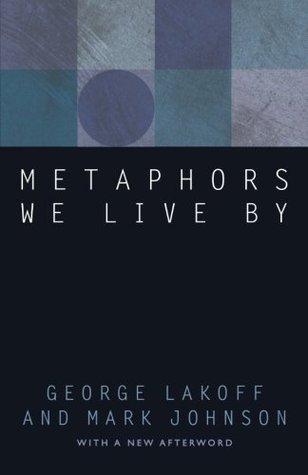
The now-classic Metaphors We Live By changed our understanding of metaphor and its role in language and the mind. Metaphor, the authors explain, is a fundamental mechanism of mind, one that allows us to use what we know about our physical and social experience to provide understanding of countless other subjects. Because such metaphors structure our most basic understandings of our experience, they are "metaphors we live by", metaphors that can shape our perceptions and actions without our ever noticing them.In this updated edition of Lakoff and Johnson's influential book, the authors supply an afterword surveying how their theory of metaphor has developed within the cognitive sciences to become central to the contemporary understanding of how we think and how we express our thoughts in language.

Women, Fire, and Dangerous Things: What Categories Reveal About the Mind
by George Lakoff
Rating: 4.1 ⭐
• 2 recommendations ❤️
"Its publication should be a major event for cognitive linguistics and should pose a major challenge for cognitive science. In addition, it should have repercussions in a variety of disciplines, ranging from anthropology and psychology to epistemology and the philosophy of science. . . . Lakoff asks: What do categories of language and thought reveal about the human mind? Offering both general theory and minute details, Lakoff shows that categories reveal a great deal."—David E. Leary, American Scientist

Where Mathematics Come From: How the Embodied Mind Brings Mathematics into Being
by George Lakoff
Rating: 4.0 ⭐
This book is about mathematical ideas, about what mathematics means-and why. Abstract ideas, for the most part, arise via conceptual metaphor-metaphorical ideas projecting from the way we function in the everyday physical world. Where Mathematics Comes From argues that conceptual metaphor plays a central role in mathematical ideas within the cognitive unconscious-from arithmetic and algebra to sets and logic to infinity in all of its forms.

Don't Think of an Elephant! Know Your Values and Frame the Debate: The Essential Guide for Progressives
by George Lakoff
Rating: 4.0 ⭐
Don't Think of An Elephant! is the antidote to the last forty years of conservative strategizing and the right wing's stranglehold on political dialogue in the United States.Author George Lakoff explains how conservatives think, and how to counter their arguments. He outlines in detail the traditional American values that progressives hold, but are often unable to articulate. Lakoff also breaks down the ways in which conservatives have framed the issues, and provides examples of how progressives can reframe them. Lakoff’s years of research and work with leading activists and policy makers have been distilled into this essential guide, which shows progressives how to think in terms of values instead of programs, and why people support policies which align with their values and identities, but which often run counter to their best interests. Don't Think of an Elephant! is the definitive handbook for understanding and communicating effectively about key issues in the 2004 election, and beyond. Read it, take action—and help take America back.

In this classic text, the first full-scale application of cognitive science to politics, George Lakoff analyzes the unconscious and rhetorical worldviews of liberals and conservatives, discovering radically different but remarkably consistent conceptions of morality on both the left and right. For this new edition, Lakoff adds a preface and an afterword extending his observations to major ideological conflicts since the book's original publication, from the impeachment of Bill Clinton to the 2000 presidential election and its aftermath.

The Political Mind: Why You Can't Understand 21st-Century American Politics with an 18th-Century Brain
by George Lakoff
Rating: 3.8 ⭐
In What's the Matter with Kansas?, Thomas Frank pointed out that a great number of Americans actually vote against their own interests. In The Political Mind, George Lakoff explains why. As it turns out, human beings are not the rational creatures we've so long imagined ourselves to be. Ideas, morals, and values do not exist somewhere outside the body, ready to be examined and put to use. Instead, they exist quite literally inside the brain and they take physical shape there. For example, we form particular kinds of narratives in our minds just like we form specific muscle memories such as typing or dancing, and then we fit new information into those narratives. Getting that information out of one narrative type and into another or building a whole new narrative altogether can be as hard as learning to play the banjo. Changing your mind isn't like changing your body it's the same thing. But as long as progressive politicians and activists persist in believing that people use an objective system of reasoning to decide on their politics, the Democrats will continue to lose elections. They must wrest control of the terms of the debate from their opponents rather than accepting their frame and trying to argue within it. This passionate, erudite, and groundbreaking book will appeal to readers of Steven Pinker and Thomas Frank. It is a fascinating read for anyone interested in how the mind works, how society works, and how they work together.

Philosophy in the Flesh: The Embodied Mind and its Challenge to Western Thought
by George Lakoff
Rating: 4.1 ⭐
What are human beings like? How is knowledge possible? What is truth? Where do moral values come from? Questions like these have stood at the center of Western philosophy for centuries. In addressing them, philosophers have made certain fundamental assumptions-that we can know our own minds by introspection, that most of our thinking about the world is literal, and that reason is disembodied and universal-that are now called into question by well-established results of cognitive science. It has been shown empirically that: Most thought is unconscious. We have no direct conscious access to the mechanisms of thought and language. Our ideas go by too quickly and at too deep a level for us to observe them in any simple way. Abstract concepts are mostly metaphorical. Much of the subject matter of philosophy, such as the nature of time, morality, causation, the mind, and the self, relies heavily on basic metaphors derived from bodily experience. What is literal in our reasoning about such concepts is minimal and conceptually impoverished. All the richness comes from metaphor. For instance, we have two mutually incompatible metaphors for time, both of which represent it as movement through space: in one it is a flow past us and in the other a spatial dimension we move along. Mind is embodied. Thought requires a body-not in the trivial sense that you need a physical brain to think with, but in the profound sense that the very structure of our thoughts comes from the nature of the body. Nearly all of our unconscious metaphors are based on common bodily experiences. Most of the central themes of the Western philosophical tradition are called into question by these findings. The Cartesian person, with a mind wholly separate from the body, does not exist. The Kantian person, capable of moral action according to the dictates of a universal reason, does not exist. The phenomenological person, capable of knowing his or her mind entirely through introspection alone, does not exist. The utilitarian person, the Chomskian person, the poststructuralist person, the computational person, and the person defined by analytic philosophy all do not exist. Then what does? Lakoff and Johnson show that a philosophy responsible to the science of mind offers radically new and detailed understandings of what a person is. After first describing the philosophical stance that must follow from taking cognitive science seriously, they re-examine the basic concepts of the mind, time, causation, morality, and the self: then they rethink a host of philosophical traditions, from the classical Greeks through Kantian morality through modern analytic philosophy. They reveal the metaphorical structure underlying each mode of thought and show how the metaphysics of each theory flows from its metaphors. Finally, they take on two major issues of twentieth-century philosophy: how we conceive rationality, and how we conceive language.

The Little Blue Book: The Essential Guide to Thinking and Talking Democratic
by George Lakoff
Rating: 3.9 ⭐
“The essential handbook for thinking and talking Democratic—must reading not only for every Democrat but for every responsible citizen” (Robert B. Reich, former Secretary of Labor and author of Beyond Outrage ).“The essential handbook for thinking and talking Democratic—must reading not only for every Democrat but for every responsible citizen” (Robert B. Reich, former Secretary of Labor and author of Beyond Outrage ).Voters cast their ballots for what they believe is right, for the things that make moral sense. Yet Democrats have too often failed to use language linking their moral values with their policies. The Little Blue Book demonstrates how to make that connection clearly and forcefully, with hands-on advice for discussing the most pressing issues of our the economy, health care, women’s issues, energy and environmental policy, education, food policy, and more. Dissecting the ways that extreme conservative positions have permeated political discourse, Lakoff and Wehling show how to fight back on moral grounds and in concrete terms. Revelatory, passionate, and deeply practical, The Little Blue Book will forever alter the way Democrats and progressives think and talk about politics.

Since September 11, 2001, the Bush administration has relentlessly invoked the word "freedom." Al-Qaeda attacked us because "they hate our freedom." The U.S. can strike preemptively because "freedom is on the march." Social security should be privatized in order to protect individual freedoms. The 2005 presidential inaugural speech was a kind of the words "freedom," "free," and "liberty," were used forty-nine times in President Bush's twenty-minute speech.In Whose Freedom?, Lakoff surveys the political landscape and offers an essential map of the Republican battle plan that has captured the hearts and minds of Americans--and shows how progressives can fight to reinvigorate this most beloved of American political ideas.

Two years ago George Lakoff published the bestselling Don't Think of an Elephant! Its account of the conservative monopoly on effective framing touched off a national discussion about political language. It also gave rise to a chorus of pleas for * What is the progressive vision of America;* Why progressive values are America's values;* How frames are necessary to serve the truth;* Why sloganeering alone doesn't work;* How progressives trap themselves and how they can escape those traps; and* How political arguments and narratives can be put together to counter the Right.Thinking Points satisfies that call with a bold, concise, and systematic explanation of how conservatives think and use language―and how progressives can fight back . Lakoff and the Rockridge Institute offer a new understanding of the so-called political center and explain why the most effective way to appeal to those who identify themselves as moderates or conservatives is to remain true to progressive values.This book is essential reading for anyone who wants to participate in shaping an America that serves the common good.

"The authors restore metaphor to our lives by showing us that it's never gone away. We've merely been taught to talk as if it as though weather maps were more 'real' than the breath of autumn; as though, for that matter, Reason was really 'cool.' What we're saying whenever we say is a theme this book illumines for anyone attentive." — Hugh Kenner, Johns Hopkins University"In this bold and powerful book, Lakoff and Turner continue their use of metaphor to show how our minds get hold of the world. They have achieved nothing less than a postmodern Understanding Poetry, a new way of reading and teaching that makes poetry again important." — Norman Holland, University of Florida

At first glance, issues like economic inequality, healthcare, climate change, and abortion seem unrelated. However, when thinking and talking about them, people reliably fall into two conservative and liberal. What explains this divide? Why do conservatives and liberals hold the positions they do? And what is the conceptual nature of those who decide elections, commonly called the "political middle"?The answers are profound. They have to do with how our minds and brains work. Political attitudes are the product of what cognitive scientists call Embodied Cognition — the grounding of abstract thought in everyday world experience. Clashing beliefs about how to run nations largely arise from conflicting beliefs about family conservatives endorse a strict father and liberals a nurturant parent model. So-called "middle" voters are not in the middle at all. They are morally biconceptual, divided between both models, and as a result highly susceptible to moral political persuasion.In this brief introduction, Lakoff and Wehling reveal how cognitive science research has advanced our understanding of political thought and language, forcing us to revise common folk theories about the rational voter.

The All New Don't Think of an Elephant!: Know Your Values and Frame the Debate
by George Lakoff
Rating: 3.9 ⭐
“[Lakoff is] the father of framing.”—The New York Times“An indispensable tool for progressives—packed with new thinking on framing issues that are hotly debated right now."—Jennifer M. Granholm, former governor of MichiganTen years after writing the definitive, international bestselling book on political debate and messaging, George Lakoff returns with new strategies about how to frame today’s essential issues.Called the “father of framing” by The New York Times, Lakoff explains how framing is about ideas—ideas that come before policy, ideas that make sense of facts, ideas that are proactive not reactive, positive not negative, ideas that need to be communicated out loud every day in public.The ALL NEW Don’t Think of an Elephant! picks up where the original book left off—delving deeper into how framing works, how framing has evolved in the past decade, how to speak to people who harbor elements of both progressive and conservative worldviews, how to counter propaganda and slogans, and more.In this updated and expanded edition, Lakoff, urges progressives to go beyond the typical laundry list of facts, policies, and programs and present a clear moral vision to the country—one that is traditionally American and can become a guidepost for developing compassionate, effective policy that upholds citizens’ well-being and freedom.

Auf leisen Sohlen ins Gehirn: Politische Sprache und ihre heimliche Macht
by George Lakoff
Rating: 3.9 ⭐
80 Prozent unseres Denkens bleiben unbewusst und werden durch Metaphern und Deutungsrahmen geprägt. Unser vermeintlich freies Denken wird durch diejenigen beeinflusst, die bewusst bestimmte Metaphern in die öffentliche Diskussion einführen. Diesen „heimlichen Macht-Habern“ sind George Lakoff und Eva Elisabeth Wehling auf der Spur: Welcher Sprache bedienen sich Politiker in öffentlichen Debatten, um in den Köpfen der Menschen die gewünschte „Wirklichkeit“ entstehen zu lassen?In lebhaften Gesprächen klären die beiden Wissenschaftler anhand von Sprachschöpfungen wie „Krieg gegen den Terror“ oder „Achse des Bösen“, wie Menschen denken, wie solche Denkstrukturen unser Gehirn auch physisch verändern und wie wir die Welt begreifen. Dabei werfen sie ein völlig neues Licht auf Fragen der politischen Identität, der Moral und religiöser Werte oder der Rolle von Medien und Berichterstattern.Als Leser lernt man so die Mechanismen seines eigenen politischen Denkens, Sprechens und Handelns besser kennen. Man erfährt, wie stark und gleichzeitig subtil die eigenen politischen Einstellungen durch Metaphern bestimmt sind und was nötig ist, um sich davon zu befreien.

إن الخطاب الذي دفعنا إلى الانخراط في حرب الخليج يمثل نظرة استعارية شاملة. فلطالما أشير إلى أننا نفهم الحرب بوصفها لعبة تنافسية، شأنها في ذلك شأن الشطرنج أو رياضة كرة القدم أو الملاكمة. وهي استعارة تحتوي على منتصر ومنهزم واضحين، وعلى نهاية محددة للعبة. وتسلط هذه الاستعارة الضوء على التفكير الاستراتيجي، وعلى فريق العمل، وعلى الاستعدادات، وعلى المتفرجين في الساحة الدولية، وعلى نشوة الانتصار، وعلى صغَار الهزيمة وذلّها. ويحدد النصر بشكل جيد في الحكاية الخرافية في اللعب. فعندما يتحقق النصر تنتهي الحكاية وتنتهي اللعبة. إلا أن الوضع لم يكن كذلك في أزمة الخليج. فالتاريخ يستمر، ولا يتخذ "النصر" معنى إلا في إطار هذا التاريخ.

Offers an expansive, unified theory of thought that brings together the vast resources of neuroscience, computation, and cognitive linguistics. What is an idea, and where does it come from? We experience thought as if it were abstract, but every thought is actually a physical thing, carried out by the neural systems of our brains. Thought does not occur neuron-by-neuron; it happens when neurons come together to form circuits and when simple circuits combine to form complex ones. Thoughts, then, derive their structures from the circuitry we also use for vision, touch, and hearing. This circuitry is what allows simple thoughts to come together into complex concepts, making meaning, creating metaphors, and framing our social and political ideas. With The Neural Mind, George Lakoff, a pioneering cognitive linguist, and computer scientist Srini Narayanan deftly combine insights from cognitive science, computational modeling, and linguistics to show how thoughts arise from the neural circuitry that runs throughout our bodies. They answer key questions about the ways we make How does neural circuitry create the conceptual “frames” through which we understand our social lives? What kind of neural circuitry characterizes metaphorical thought, in which ideas are understood in terms of other ideas with similar structures? Lively and accessible, the book shows convincingly that the “metaphors we live by”—to use Lakoff’s famous phrase—aren’t abstractions but deeply embodied neural constructs. The Neural Mind is the first book of its kind, bringing together the ideas of multiple disciplines to offer a unified, accessible theory of thought. A field-defining work, Lakoff and Narayanan’s book will be of interest not just to linguists and cognitive scientists but also to psychologists, philosophers, anthropologists, journalists, sociologists, and political scientists—and anyone who wants to understand how we really think.

Ten Lectures on Cognitive Linguistics presents ten lectures, in both audio and transcribed text, given by George Lakoff in Beijing in April 2004. Lakoff gives an account of the background of cognitive linguistics, and basic mechanisms of thought, grammar, neural theory of language, metaphor, implications for Philosophy, and political linguistics. He does so in a manner that is accessible for anyone, including undergraduate level students and a general audience. With the massive experience of being a linguist for over 50 years, and being one of the founding fathers of the field, George Lakoff is one of the best possible experts to introduce Cognitive Linguistics to anyone.The lectures for this book were given at The China International Forum on Cognitive Linguistics in April 2004.

"كتاب ليكاف برخى ايدههاىِ جذاب درباره ذهن و معنى را مطرح مىكند كه من تاكنون نخواندهام. كتابى است كه پيامدهاىِ گستردهاى دارد و با اطمينان مىتوان گفت كه تفكر و پژوهش در مبانى علومِ شناختى را تكان مىدهد. اين كتاب يك اثر ارزشمند و يك دستاوردِ فكرى درجه اول است... همه روانشناسان بايد با اين كتاب آشنا شوند." ــ ريموند گيبز، امريكن جورنال آف سايكالوژى "انتشارِ اين كتاب بايد رويدادِ عمدهاى براىِ زبانشناسى شناختى محسوب شود، و چالشِ عمدهاى را در علومِ شناختى برانگيزد. بهعلاوه، بايد پيامدهايى در بسيارى رشتههاىِ ديگر از انسانشناسى و روانشناسى گرفته تا شناختشناسى و فلسفه علم داشته باشد... ليكاف مىپرسد: مقولههاىِ زبان و انديشه چه چيزى را درباره ذهن انسان آشكار مىسازند؟ ليكاف، با ارائه هم نظريه عام و هم جزئياتِ ظريف، نشان مىدهد كه مقولهها بسيارى چيزها را آشكار مىسازند." ــ ديويد ليرى، امريكن ساينتيست "كتابى كه هيچ زبانشناسى نمىتواند آن را ناديده بگيرد: پيامدهايى دارد كه به تمامى حوزههاىِ پژوهشِ زبان و فراتر از آن گسترش مىيابد... دستآوردِ ليكاف چشمگير است." ــ رونالد لانگاكر، زبان "نكاتى كه جورج ليكاف مطرح مىكند بسيار جدى هستند و بسيارى از زبانشناسان، روانشناسان، فيلسوفان و نظريهپردازان ادبى را در سالهاى آينده تحتِ تأثير قرار مىدهند." ــ تِرِنس آدلين، جورنال آف هاير اجوكيشن (متن پشت جلد)
Libro usado en buenas condiciones, por su antiguedad podria contener señales normales de uso

This is the second attempt to compile in one place the results of metaphor research since the publication of Reddy's "The Conduit Metaphor" and Lakoff and Johnson's Metaphors We Live By. This list is a compilation taken from published books and papers, student papers at Berkeley and elsewhere, and research seminars. This represents perhaps 20 percent (a very rough estimate) of the material we have that needs to be compiled.

Jusqu'a une date recente, il etait de regle dans les pays anglo-saxons de ne pas aborder de front le probleme de la signification en linguistique. Le texte de G. Lakoff, Linguistique et logique naturelle (1972) est de ce point de vue exemplaire; il marque en effet un profond changement d'orientation. L'attention est dorenavant portee sur le rapport qui unit la logique, une certaine logique, dite logique naturelle, a la signification. Le postulat est que la structure grammaticale sous-jacente d'une phrase est la forme logique, c'est-a-dire semantique, de cette phrase. Ainsi la tache principale du linguiste-semanticien devient la definition et la description de notions telles que predicat et argument, proposition posee et ensemble presuppose, implication et hierarchie, modalites du discours, etc. C'est a partir de ce texte fondamental et d'autres signes par des linguistes americains partageant les memes preoccupations (Fillmore, Mc Cawley, ...) que s'est constituee lasemantique generative.

La mente neurale: Come pensa il nostro cervello
by George Lakoff
Siamo abituati a pensare all’apprendimento come a qualcosa che arriva dal mondo esterno e che portiamo dentro di noi, ma in tutte le nostre esperienze di percezione e concettualizzazione c’è una fortissima componente attiva, di creazione. La nostra capacità di vedere il mondo che ci circonda, interagire con esso, fare previsioni sulla base dell’esperienza e persino elaborare concetti astratti è il risultato di un sofisticato intreccio tra la base puramente biologica e le nostre strutture concettuali. In questo libro, George Lakoff, uno deipiù brillanti linguisti cognitivi dei nostri tempi, e Srini Narayanan, esperto di neuroscienze computazionali, affrontano l’ambiziosa impresa di proporre una teoria unificata della cognizione umana. Dalla percezione sensoriale alla nascita delle idee, dalle strutture del linguaggio alle metafore che plasmano il pensiero, gli autori intrecciano neuroscienze, linguistica, scienze cognitive e modelli computazionali in un approccio radicalmente interdisciplinare. Un’esplorazione affascinante dellamente, dei suoi meccanismi più profondi, delle sue basi corporee e delle incredibili possibilità che ci offre. Una teoria che mostra come le idee, i significati e i concetti stessi siano costituiti da circuiti neurali incarnati, e che solo comprendendo questi meccanismi possiamo davvero capire cosa significhi pensare.
Pronouns and reference
by George Lakoff
On the nature of syntactic irregularity
by George Lakoff
Deep and surface grammar
by George Lakoff
On generative semantics
by George Lakoff
Pragmatics in natural logic
by George Lakoff
Structural complexity in fairy tales
by George Lakoff
Adverbs and modal operators
by George Lakoff

詩と認知
by George Lakoff