
Verlyn Klinkenborg
Verlyn Klinkenborg is a member of the editorial board of The New York Times. His previous books include Making Hay, The Last Fine Time, and The Rural Life. He lives in upstate New York.
11 Books Written

An indispensable and distinctive book that will help anyone who wants to write, write better, or have a clearer understanding of what it means for them to be writing, from widely admired writer and teacher Verlyn Klinkenborg. Klinkenborg believes that most of our received wisdom about how writing works is not only wrong but an obstacle to our ability to write. In Several Short Sentences About Writing , he sets out to help us unlearn that “wisdom”—about genius, about creativity, about writer’s block, topic sentences, and outline—and understand that writing is just as much about thinking, noticing, and learning what it means to be involved in the act of writing. There is no gospel, no orthodoxy, no dogma in this book. Instead it is a gathering of starting points in a journey toward lively, lucid, satisfying self-expression.

This "luminous, brilliant" meditation on life in the countryside will encourage you to see the natural world -- and our place in it -- anew ( New York Times Book Review ). With an eloquence unmatched by any other living writer, Verlyn Klinkenborg observes the juncture at which our lives and the natural world intersect. His yearlong meditation on the rigors and wonders of country life -- encompassing memories of his family's Iowa homestead, time spent in the wide-open spaces of the American West, and his experiences on the small farm in upstate New York where he lives with his wife -- abounds with vicarious pleasures for the reader as it indelibly records and celebrates the everyday beauty of the world we inhabit. "In a voice reminiscent of E.B. White, Klinkenborg paints a picture of a fading world in colors that are solid and authentic. His joy is evident throughout." -- Los Angeles Times
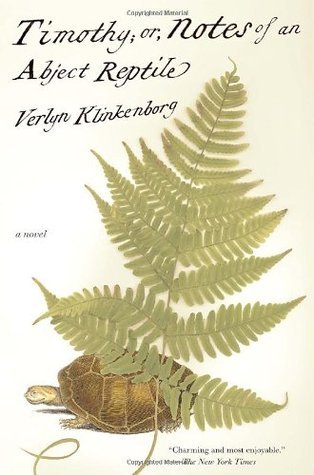
Few writers have attempted to explore the natural history of a particular animal by adopting the animal’s own sensibility. But Verlyn Klinkenborg has done just that in Timothy : an insightful and utterly engaging story of the world’s most famous tortoise, whose real life was observed by the eighteenth-century English curate and naturalist Gilbert White. For thirteen years, Timothy lived in White’s garden. Here Klinkenborg gives the tortoise an unforgettable voice and keen powers of observation on both human and natural affairs. Wry and wise, unexpectedly moving and enchanting at every–careful–turn, Timothy surprises and delights.

By turns, an elegy, a celebration, and a social history, The Last Fine Time is a tour de force of lyrical style. Verlyn Klinkenborg chronicles the life of a family-owned restaurant in Buffalo, New York, from its days as a prewar Polish tavern to its reincarnation as George & Eddie's, a swank nightspot serving highballs and French-fried shrimp to a generation of optimistic and prosperous Americans. In the inevitable dimming of the neon sign outside the restaurant, we see both the passing of an old world way of life and the end to the postwar exuberance that was Eddie Wenzek's "last fine time."

Verlyn Klinkenborg's regular column, The Rural Life , is one of the most read and beloved in the New York Times. Since 1997, he has written eloquently on every aspect, large and small, of life on his upstate New York farm, including his animals, the weather and landscape, and the trials and rewards of physical labor, as well as broader issues about agriculture and land use behind farming today. Klinkenborg's pieces are admired as much for their poetic writing as for their peonies are "the sheepdog of flowers," dry snow "tumbles off the angled end of the plow-blade as if each crystal were completely independent, almost charged with static electricity," and land is most valuable "for its silence, its freedom from language." Klinkenborg writes with a grace and understanding that makes us more aware of the world around us, whether we live on a farm or in the middle of a city. More Scenes from the Rural Life gathers together 150 of his best pieces since his last collection, The Rural Life , was published a decade ago. For anybody with an appreciation of nature, language, or both, this book is certain to delight.

From the wonders of alfalfa, the "miracle plant," to barbed wire, dances at VFW halls, and the myriad difficulties of operating tractors and siderakes, renowned author Verlyn Klinkenborg paints a stunning and memorable portrait of American family farms and the fascinating characters who work them.MAKING HAY gives us an unforgettable glimpse of everyday life on the family farms of northwestern Iowa, southwestern Minnesota, and Montana's Big Hole Valley. In beautiful, deceptively simple prose touched with humor and affection, Klinkenborg evokes a way of life at risk, and weaves an unforgettable story of the richness of rural living.

Straight West: Portraits and Scenes from Ranch Life in the American West
by Verlyn Klinkenborg
Rating: 3.3 ⭐
Straight West is a book of ninety exquisite and moving black and white photographs about the deep interior of the American West, a place whose people are defined by their relations to animals and the land. The country of Straight West is enormous, stretching from the Mexican border to Montana, but it is also intimate, a matter of heart as well as geography. Lindy Smith's moving, powerful photographs capture a world that is too little known, a landscape of ranch-work, self-reliance, and hard-won trust, a place as much defined by dogs, sheep, cattle, and horses as by humans. As Verlyn Klinkenborg writes in the accompanying text, "there is no place in America like the ranching West for enunciating what it means to come from outside - outside the West, outside the ranch-life. And Yet there is no place in America more welcoming when you make it clear that you understand the call of the work at hand, no place where the work itself is more social...because so much ranch-work is solitary by nature, any work that can be done with friends and neighbors, like gathering cattle, becomes not only a neighboring but also a gesture of cultural solidarity. It contains a degree of formality - a sense of how things are done - that is easily lost on outsiders." This is a book that no one who loves the American West, or fine black-and-white photographs, will want to miss. (b&w photographs, 101/4 x 101/4, 120 pages)

The Fly Fisherman's Annual Reference and Desk Diary
by Verlyn Klinkenborg

リクガメの憂鬱―博物学者と暮らしたカメの生活と意見
by Verlyn Klinkenborg

Sir Francis Drake and the Age of Discovery
by Verlyn Klinkenborg
![Timothy; or; Notes of an Abject Reptile [First Vintage Books Edition]](/placeholder.svg?height=400&width=300)
Timothy; or; Notes of an Abject Reptile [First Vintage Books Edition]
by Verlyn Klinkenborg