
William Zinsser
William Knowlton Zinsser is an American writer, editor, literary critic, and teacher. He began his career as a journalist for the New York Herald Tribune, where he worked as a feature writer, drama editor, film critic, and editorial writer. He has been a longtime contributor to leading magazines.
27 Books Written

On Writing Well: The Classic Guide to Writing Nonfiction
by William Zinsser
Rating: 4.2 ⭐
• 10 recommendations ❤️
On Writing Well has been praised for its sound advice, its clarity and the warmth of its style. It is a book for everybody who wants to learn how to write or who needs to do some writing to get through the day, as almost everybody does in the age of e-mail and the Internet. Whether you want to write about people or places, science and technology, business, sports, the arts or about yourself in the increasingly popular memoir genre, On Writing Well offers you fundamental priciples as well as the insights of a distinguished writer and teacher. With more than a million copies sold, this volume has stood the test of time and remains a valuable resource for writers and would-be writers.
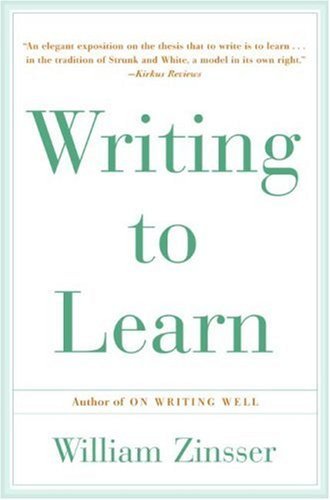
Writing to Learn: How to Write--And Think--Clearly about Any Subject at All
by William Zinsser
Rating: 3.8 ⭐
This is an essential book for everyone who wants to write clearly about any subject and use writing as a means of learning.

An ingeniously constructed teaching memoir from the author of the bestselling On Writing Well -- "You learn without knowing it." (Frank McCourt, author of Angela's Ashes)Written with elegance, warmth, and humor, this highly original "teaching memoir" by William Zinsser--renowned bestselling author of On Writing Well gives you the tools to organize and recover your past, and the confidence to believe in your life narrative. His method is to take you on a memoir of his own: 13 chapters in which he recalls dramatic, amusing, and often surprising moments in his long and varied life as a writer, editor, teacher, and traveler. Along the way, Zinsser pauses to explain the technical decisions he made as he wrote about his life. They are the same decisions you'll have to make as you write about your own life: matters of selection, condensation, focus, attitude, voice, and tone.

Here, six eminent biographers explain the pleasures and problems of their craft of reconstructing other people's lives. The result is a book rich in anecdote and in surprising new information about a variety of famous Americans. David McCullough takes us along on the exhilarating journey to Missouri to find "The Unexpected Harry Truman." Richard B. Sewall describes his twenty-year search for the elusive poet, Emily Dickinson. Paul C. Nagel tells us about "The Adams Women" - four generations of women he came to admire while writing his earlier biography of the Adams family. Ronald Steel, author of a much-honored biography of the nation's greatest journalist, recalls in "Living with Walter Lippman," how the life of the biographer can become entwined with that of his subject. Jean Strouse, on the trail of J. P. Morgan, discusses the fact that "there are two reasons why a man does anything, a good reason and a real reason." Robert A. Caro reveals the frustrations of trying to unearth the true facts about Lyndon Johnson, a man who went to great pains to conceal them. Together, these six biographers take us through a gallery of unique American lives - most of them moving, many of them startling, and all of them extraordinary.

“William Zinsser turns his zest, warmth and curiosity—his sharp but forgiving eye—on his own story. The result is lively, funny and moving, especially for anyone who cares about art and the business of writing well.”—Evan Thomas, Newsweek In Writing Places, William Zinsser—the author of On Writing Well, the bestseller that has inspired two generations of writers, journalists, and students—recalls the many colorful and instructive places where he has worked and taught. Gay Talese, author of A Writer’s Life, calls Writing Places, “Wonderful,” while the Pittsburgh Post-Gazette praises this unique memoir for possessing “all the qualities that Zinsser believes matter most in good writing—clarity, brevity, simplicity and humanity.”
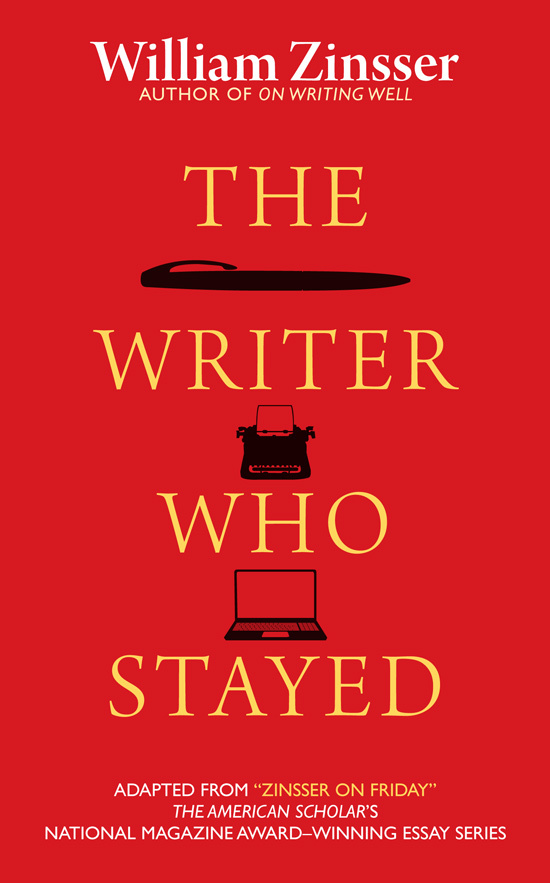
Adapted from "Zinsser on Friday," The American Scholar's National Magazine Award–Winning Essay SeriesFor nineteen months William Zinsser, author of the best-selling On Writing Well and many other books, wrote a weekly column for the website of the American Scholar magazine. This cornucopia was devoted mainly to culture and the arts, the craft of writing, and travels to remote places, along with the movies, American popular song, email, multitasking, baseball, Central Park, Tina Brown, Pauline Kael, Steve Martin, and other complications of modern life. Written with elegance and humor, these pieces are now collected in The Writer Who Stayed."If you value vintage journalism of an old-fashioned vividness and integrity please, please read this book."—Wall Street Journal"Our 'endlessly supple' English language will, Zinsser says, 'do anything you ask it to do, if you treat it well. Try it and see.' Try him and see craftsmanship."—George F. Will"Zinsser—who, with On Writing Well, taught a whole lot of us how to set down a clean English sentence—last year won a National Magazine Award for his Friday web columns in The American Scholar. They're now in a collection that's completely charming, impeccably polished, and Strunk-and-White-ishly brief. He's the youngest 90-year-old you'll read this week."—New York MagazineWilliam Zinsser is a lifelong journalist and nonfiction writer—he began his career on the New York Herald Tribune in 1946—and is also a teacher, best known for his book On Writing Well, a companion held in affection by three generations of writers, reporters, editors, teachers, and students. His 17 other books range from memoir (Writing Places) to travel (American Places), jazz (Mitchell & Ruff), American popular song (Easy to Remember), baseball (Spring Training) and the craft of writing (Writing to Learn). During the 1970s he was at Yale University, where he was master of Branford College and taught the influential nonfiction workshop that would start many writers and editors on their careers. He has taught at the New School, in New York, his hometown, and at the Columbia University Graduate School of Journalism.

Six prominent children's authors, including Maurice Sendak, Rosemary Wells, and Jack Prelutsky, agree that to enter the worlds that children inhabit, you must possess the magic word - honesty.

American Places: A Writer's Pilgrimage to 16 of This Country's Most Visited and Cherished Sites
by William Zinsser
Rating: 3.9 ⭐
"This inspiring guide includes places everyone means to go to some day, all described with the usual clarity of the author of On Writing Well ."— The New York Times "A fascinating take on 'the search for memory' and how certain places have come to symbolize deep American principles."— Kirkus Reviews Join William Zinsser as he visits sixteen of our nation's most treasured historic sites—unlearning cliched assumptions and rediscovering fundamental truths about America. American Places —and the ideals that Zinsser discovers these places represent—will never go out of fashion. "Speaking across the centuries with stone and symbol, narrative and myth, America's iconic places remind us of our anchoring principles and best intentions. 'This is where we started and what we believed and who we hoped to become,' these places say. At least that's what they said to me." "Niagara Falls existed only in the attic of my mind where collective memory is scraps of songs about honeymooning couples, vistas by painters who tried to get the plummeting waters to hold still, film clips of Marilyn Monroe running for her life in Niagara , odds and ends of lore about stuntmen who died going over the falls, and always, somewhere among the scraps, a boat called Maid of the Mist , which took tourists…where? Behind the falls? Under the falls? Death hovered at the edge of the images in my attic, or at least danger. But I had never thought of going to see the place itself. That was for other people. Now I wanted to be one of those other people."—from American Places " American Places paints vivid word pictures that put you in those places and make you feel that you've been there, but it also encourages each of us to take our own trek through history."— Riverside Press-Enterprise "Zinsser's choices and descriptions are refreshing because of the obvious thought that went into the selections. It's also fun to read Zinsser's observations."— Chicago Tribune William Zinsser is a lifelong journalist and nonfiction writer—he began his career on the New York Herald Tribune in 1946—and is also a teacher, best known for his book On Writing Well , a companion held in affection by three generations of writers, reporters, editors, teachers, and students. His 17 other books range from memoir ( Writing Places ) to travel ( American Places ), jazz ( Mitchell & Ruff ), American popular song ( Easy to Remember ), baseball ( Spring Training ) and the craft of writing ( Writing to Learn ). During the 1970s he was at Yale University, where he was master of Branford College and taught the influential nonfiction workshop that would start many writers and editors on their careers. He has taught at the New School, in New York, his hometown, and at the Columbia University Graduate School of Journalism.
Memoir is the hottest literary form in America today, and William Zinsser guides you with his trademark warmth and helpfulness through the problems that confront anyone trying to any kind of personal or family reminiscence: matters of selection, compression, Focus, organization, voice, tone, attitude, and values. Throughout, he demonstrates his points with examples of various well-known authors have solved the same problems in their own memoirs. Specially created for audio, this is a perfect for writers -- a personal seminar with a master teacher.

Spring training, a time when every team is in first place, is an American tradition dating back to the early years of the twentieth century. William Zinsser vividly brings to life the unique, once-a-year relationship between Bradenton, Florida, and its adopted team, the Pittsburgh Pirates. In 1988 the Pirates were an unproven yet promising bunch with high hopes of competing for the National League pennant. Given rare access to players, management, scouts and umpires, Zinsser sought to discover how a team prepares for the longest season in professional sports. As valid today as it was when first published, Spring Training reveals how the fundamentals of baseball are taught and learned. The author has added a new introduction and postscript, which includes a lengthy interview with manager Jim Leyland about the lessons that can be learned from losing.

Easy to Remember: The Great American Songwriters and Their Songs for Broadway Shows and Hollywood Musicals
by William Zinsser
Rating: 4.0 ⭐
In this warm and affectionate book, William Zinsser describes his lifelong love affair with American popular song and the American musical theater.

"Highly recommended"—Library Journal"In this account of the world adventures of two splendid jazz artists, Bill Zinsser has given us one of the most exciting books about America's original art form that I've ever read. It's a revelation."—Studs TerkelSince 1955, Dwike Mitchell and Willie Ruff have been playing, teaching, and sharing jazz around the U.S. and around the world. William Zinsser, one of our finest chroniclers of American life, tells their story as he travels with the duo to China, to Davenport, Iowa, to New York City, and—with Willie Ruff—to St. Mark's Basilica in Venice, where Ruff journeys back to the roots of Western music in order to understand jazz's musical legacy.Zinsser also accompanies Mitchell and Ruff as they visit their hometowns in Florida and Alabama. We listen as the two men tell of growing up in small towns in the American South of the 1930s and 40s; as they tell about the teachers, community leaders, and family members who believed in two young black men with talent but no formal musical training; as they tell of their struggles, their perseverance, and their ultimate success.Jazz is indeed a uniquely American musical tradition, and there are no better guides to this inspiring art than Dwike Mitchell and Willie Ruff."[This is a] thoughtful, adept, and satisfyingly unusual book of reportage…Though its contents are entirely factual, it concerns lives that give the sense of being but fatefully, imaginatively, arranged, and it constantly suggests improvisation—that is, 'something created during the process of delivery,' as Mr. Ruff explains the term to the Chinese…He also tells them improvisation is 'the lifeblood of jazz.' William Zinsser's book reminds us that improvisation is the lifeblood of life, too. [This book is also] about difficult passages that end in victorious arrival. Mitchell & Ruff is a deservedly happy book."—New York Times Book Review"A highly infectious, Studs Terkel-like chronicle about the unorthodox development of two distinguished musicians."—Publishers Weekly"Jazz came to China for the first time on the afternoon of June 2, 1981, when the American bassist and French-horn player Willie Ruff introduced himself and his partner, the pianist Dwike Mitchell, to several hundred students and professors who were crowded into a large room at the Shanghai Conservatory of Music. Probably they were not surprised to find that the two musicians were black…What they undoubtedly didn't expect was that Ruff would talk to them in Chinese."—from Chapter 1, "Shanghai"William Zinsser is a lifelong journalist and nonfiction writer—he began his career on the New York Herald Tribune in 1946—and is also a teacher, best known for his book On Writing Well, a companion held in affection by three generations of writers, reporters, editors, teachers, and students. His 17 other books range from memoir (Writing Places) to travel (American Places), jazz (Mitchell & Ruff), American popular song (Easy to Remember), baseball (Spring Training) and the craft of writing (Writing to Learn). During the 1970s he was at Yale University, where he was master of Branford College and taught the influential nonfiction workshop that would start many writers and editors on their careers. He has taught at the New School, in New York, his hometown, and at the Columbia University Graduate School of Journalism.Albert Murray is a cultural critic, biographer, essayist, and novelist. He has taught at several colleges, including Colgate, Barnard, and Tuskegee. Mr. Murray's works include The Omni-Americans, South to a Very Old Place, Train Whistle Guitar, The Blue Devils of Nada, and The Seven League Boots.

"Most people are scared of computers. Most people are also scared of the act of writing. I didn't know what would happen when the fear of computers got combined with the fear of writing. But I did know that the word processor was here to stay. And I knew this if I could master it, anybody could." .....William Zinsser

Profiles the jazz duo of Willie Ruff and Dwike Mitchell, following their careers from the small Southern towns where they were born, through the years of study with caring teachers, to their ultimate success

Six renowned travel writers describe the creative process involved in this popular form of narrative, drawing on their own works to reveal how to create a sense of place

Five novelists examine the correlation between their writing and their sense of social responsibility, emphasizing how good political fiction deepens the reader's awareness of the urgency of modern society

Each writer describes his or her specialty, which include features, science, politics, sports, and social issues, and shares personal observations on journalism

from dust jacket:One August evening, on a park bench in Manhattan, William K. Zinsser turned to a willowy blonde at his side and suggested that darkest Africa would make a rather challenging spot for a honeymoon.She agreed without a whimper.And so William and Caroline were married. Love and travel were thus joined together, as they are throughout this book, for the Zinssers feel that you can't have one without the other.They sailed for Lisbon on the Bahama, a vessel of ambiguous nationality, which began to deteriorate just outside New York Harbor. First the deck chairs disappeared, followed by the deck steward. Then the ping-pong table was dismantled. When the ship began bypassing ports where it was scheduled to stop, the passengers vented their anguish in petitions denouncing the captain. At last, the Bahama faltered toward land. One man said it looked like Dakar; another said Miami; Mr. Zinsser ventured Melbourne, Australia. To everyone's surprise -especially the captain's - it was Lisbon. The Zinssers fled down the gangplank and set out for their next stop: the Belgian Congo.They traveled through Ruanda-Urundi in a car until, in the middle of nowhere, the muffler and exhaust pipe fell off; in Kenya, they spent a night a mere knife's throw (Mau Mau knife, not Zinsser knife) from a terrorist encampment; they fearlessly tracked a lion until they discovered the lion was tracking them; they crossed the Sudanese desert where Kitchener once fought the Dervishes; and they did a lot of other things not recommended by marriage counselors.But Zinsser brought his bride back alive - and the following year they ventured even farther. They found the long lost ruins of Angkor in the Cambodian jungle, and they flew to rural Siam on a one-horse airline (they saw the very horse). In Hong Kong, they sought out fabled Mr. Cheung, tailor to Kelly Glant, the famous Amelican movie star. Again they lived to tell the tale. In fact, Mr. Zinsser tells it in this book, with an exemplary combination of wit, merriment, and fascinating detail that might have escaped all but his practiced reporter's eye.

For more than seventy years, Roger Tory Peterson painted and photographed the birds of the world. One of the most iconic personas in the birding world, Peterson is recognized as the preeminent ornithologist of the twentieth century, and deeply influenced generations of birders. One need only look to the increasing popularity of birdwatching (there are an estimated fifty million birders in the U.S. alone) and the ongoing demand of such current authorities in the field as David Sibley-who unquestionably wears the mantle that Peterson's work helped to create-to observe the scope of Peterson's contributions and influence. Peterson's The Art and Photography of Roger Tory Peterson presents an extraordinary body of work profiling the artwork of one of America's greatest birders. Originally available as a deluxe hardcover, this condensed edition is affordably accessible to birders of all levels. Peterson's Birds celebrates Dr. Peterson's artistic career in its entirety and in all media-oil painting, acrylics, watercolors, prints, book illustrations, photography, and filmmaking. Peterson's Birds is an essential visual companion for serious and armchair birders alike.

Collection of short pieces about the joys and trials of weekend guests.

Dust jacket blurb: "Today in America the outlandish becomes routine overnight, and after that nobody gives it a second thought," says William Zinsser in his introduction to The Lunacy Boom, and who should know better? Hardly anybody writing in the outlandish America of 1970. The author is a certified expert on the absurdities that face anyone who is simply trying to get through the day, as readers of Life will testify. They turn to a Zinsser column because he usually cloaks his serious point in humor, thereby saving his own sanity (he thinks) -- and theirs (he hopes).Here William Zinsser takes an acute and often hilarious look at such bizarre but daily phenomena as the new profanity in women, the new pornography in the arts, the new pretentiousness in ecology, and much else that is new and unsettling, such as drive-in funeral parlors for busy mourners. Here, too, are lampoons on the zip code and the electronic lawn mower (it cuts the grass while you play golf), the chickenfurter and the atomic test (Gee, it didn't cause an earthquake after all), the annual riot on the campus and the annual report of the corporation.Altogether, a twenty-nine-chapter tour of the new and bewildering America, including three chapters in which the author pays his affectionate respect to people who work has kept him cheered up: circus clowns, S.J. Perelman, and Chic Young, the creator of Blondie.And did you know that Walt Disney was a secret hippie?

Dust jacket blurb: POP. The author knows longer words than this. He also knows that any social critic writing about America today is under an almost sacred obligation to use longer words of a certain type, such as "ambience," "mystique," "continuum," "alienation," and "Marshall McLuhan" -- at least if he wants to be taken seriously.William Zinsser wants to be taken seriously, like every good humorist, but he still thinks that "pop" says it all -- that America has turned into a pop culture and will not be turning back.By "pop" he means more than just pop art. If pop art is the painting of a soup can rather than the soup itself, pop culture is the worship of form rather than substance -- homage to the superficial. And this is the new current that Mr. Zinsser sees running through American life.He sees it in many surprising places -- in the booming sale of men's cosmetics, "gift books" and Barbie dolls; in the worship of a person who doesn't exist (James Bond) and in the proclaiming of "Christianity without God", in the staging of non-events by towns trying to improve their image; in the coming up of Woody Allen and the coming down of Burma-Shave signs; the the Book-of-the-Month Club's discovery that the average (pop) American has almost wholly changed his reading tastes, and even in major league baseball, where some of the grass and many of the values are now synthetic. Only in Mr. Zinsser's portrait of Guy Lombardo is our past securely tied down for inspection as the present goes popping by.Pop Goes America is almost always funny and almost always serious. And if you don't think there can be such a dichotomy, if this is too ambivalent on the one hand or too simplistic on the other, too full of lacunae in describing the author's approach to the human condition, just see for yourself how the book is structured. In other words, take a look.Note: The author's name is given as William K. Zinsser.
A family of readers: An informal portrait of the Book-of-the Month Club and its members on the occasion of its 60th anniversary
by William Zinsser
Rating: 5.0 ⭐
A family of An informal portrait of the Book-of-the Month Club and its members on the occasion of its 60th anniversary [Hardcover] William Knowlton Zinsser (Author) 74 pages Book-of-the Month Club (1986

Schreiben wie ein Schriftsteller.
by William Zinsser

The Paradise Bit
by William Zinsser
This spoof of the Hollywood publicity business takes place on a South Pacific island that is the setting for the film being promoted.