
Richard Michael Fischl
4 Books Written
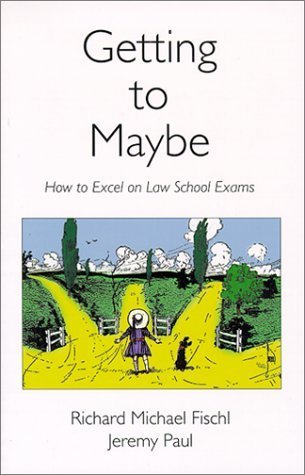
Getting to Maybe: How to Excel on Law School Exams
by Richard Michael Fischl
Rating: 3.8 ⭐
• 2 recommendations ❤️
Professors Fischl and Paul explain law school exams in ways no one has before, all with an eye toward improving the reader's performance. The book begins by describing the difference between educational cultures that praise students for "right answers" and the law school culture that rewards nuanced analysis of ambiguous situations in which more than one approach may be correct. Enormous care is devoted to explaining precisely how and why legal analysis frequently produces such perplexing situations. But the authors don't stop with mere description. Instead, Getting to Maybe teaches how to excel on law school exams by showing the reader how legal analysis can be brought to bear on examination problems. The book contains hints on studying and preparation that go well beyond conventional advice. The authors also illustrate how to argue both sides of a legal issue without appearing wishy-washy or indecisive. Above all, the book explains why exam questions may generate feelings of uncertainty or doubt about correct legal outcomes and how the student can turn these feelings to his or her advantage. In sum, although the authors believe that no exam guide can substitute for a firm grasp of substantive material, readers who devote the necessary time to learning the law will find this book an invaluable guide to translating learning into better exam performance.

Getting to Maybe: How to Excel on Law School Exams, Second Edition
by Richard Michael Fischl
Rating: 4.4 ⭐
Getting to How to Excel on Law School Exams has been the best-selling book on law exams since its original publication in 1999. It appears on summer reading lists at countless law schools, and professors often recommend it in first-year courses. What sets it apart from its competitors is its frank recognition that law exams test legal reasoning and that legal reasoning cannot be reduced to any simple "check the boxes" template. Yet law students give it high marks because it avoids abstruse lectures and instead offers a clear, readable, and often humorous guide to how lawyers and judges deploy legal reasoning in real-world disputes and how law professors test such disputes—and the reasoning required to resolve them—on law exams.It's therefore the best resource available for helping students successfully make the transition from undergraduate studies—where exams frequently call for "right answers"—to law school, where exams reward students for "getting to maybe" and mobilizing persuasive arguments on multiple sides of legal problems. Responding to reader feedback, the authors offer a much-anticipated second edition with new material focusing on exam preparation; drafting successful exam answers while avoiding common mistakes; and tackling multiple-choice questions.

Some realism about critical legal studies
by Richard Michael Fischl
Self, others, and section 7: Mutualism and protected protest activities under the National Labor Relations Act
by Richard Michael Fischl