
Fred Kaplan
24 Books Written

“A fine, invaluable book. . . . Certain to become essential to our understanding of the 16th president. . . . Kaplan meticulously analyzes how Lincoln’s steadily maturing prose style enabled him to come to grips with slavery and, as his own views evolved, to express his deepening opposition to it.” — Jonathan Yardley, The Washington Post Book World For Abraham Lincoln, whether he was composing love letters, speeches, or legal arguments, words mattered. In Lincoln , acclaimed biographer Fred Kaplan explores the life of America's sixteenth president through his use of language both as a vehicle to express complex ideas and feelings and as an instrument of persuasion and empowerment. This unique and engrossing account of Lincoln's life and career highlights the shortcomings of the modern presidency, reminding us, through Lincoln's legacy and appreciation for language, that the careful and honest use of words is a necessity for successful democracy.

This is the untold story of the small group of men who have devised the plans and shaped the policies on how to use the Bomb. The book (first published in 1983) explores the secret world of these strategists of the nuclear age and brings to light a chapter in American political and military history never before revealed.

The Bomb: Presidents, Generals, and the Secret History of Nuclear War
by Fred Kaplan
Rating: 3.9 ⭐
• 2 recommendations ❤️
From the author of the classic The Wizards of Armageddon and Pulitzer Prize finalist comes the definitive history of American policy on nuclear war—and Presidents’ actions in nuclear crises—from Truman to Trump.Fred Kaplan, hailed by The New York Times as “a rare combination of defense intellectual and pugnacious reporter,” takes us into the White House Situation Room, the Joint Chiefs of Staff’s “Tank” in the Pentagon, and the vast chambers of Strategic Command to bring us the untold stories—based on exclusive interviews and previously classified documents—of how America’s presidents and generals have thought about, threatened, broached, and just barely avoided nuclear war from the dawn of the atomic age until today.Kaplan’s historical research and deep reporting will stand as the permanent record of politics. Discussing theories that have dominated nightmare scenarios from Hiroshima and Nagasaki, Kaplan presents the unthinkable in terms of mass destruction and demonstrates how the nuclear war reality will not go away, regardless of the dire consequences.

The never-before-told story of the computer scientists and the NSA, Pentagon, and White House policymakers who invented and employ the wars of the present and future - the cyber wars where every country can be a major power player and every hacker a mass destroyer, as reported by a Pulitzer Prize-winning security and defense journalist.In June 1983, President Reagan watched the movie War Games, in which a kid unwittingly hacks the Pentagon, and asked his top general if the scenario was plausible. The general said it was. This set in motion the first presidential directive on computer security.The first use of cyber techniques in battle occurred in George H.W. Bush's Kuwait invasion in 1991 to disable Saddam's military communications. One year later, the NSA Director watched Sneakers, in which one of the characters says wars will soon be decided not by bullets or bombs but by information. The NSA and the Pentagon have been rowing over control of cyber weapons ever since.From the 1994 (aborted) US invasion of Haiti, when the plan was to neutralize Haitian air-defenses by making all the telephones in Haiti busy at the same time, to Obama's Defense Department 2015 report on cyber policy that spells out the lead role played by our offensive operation, Fred Kaplan tells the story of the NSA and the Pentagon as they explore, exploit, fight, and defend the US. Dark Territory reveals all the details, including the 1998 incident when someone hacked into major US military commands and it wasn't Iraq, but two teenagers from California; how Israeli jets bomb a nuclear reactor in Syria in 2007 by hacking into Syrian air-defense radar system; the time in 2014 when North Korea hacks Sony's networks to pressure the studio to cancel a major Hollywood blockbuster; and many more. Dark Territory is the most urgent and controversial topic in national defense policy.

Fred Kaplan, the acclaimed, award-winning author of Lincoln, returns with John Quincy Adams, an illuminating biography of one of the most overlooked presidents in American history—a leader of sweeping perspective whose progressive values helped shape the course of the nation.In this fresh and lively biography rich in literary analysis and new historical detail, Fred Kaplan brings into focus the dramatic life of John Quincy Adams—the little known and much misunderstood sixth president of the United States and the first son of John and Abigail Adams—and persuasively demonstrates how Adams's inspiring, progressive vision guided his life and helped shape the course of America.Kaplan draws on a trove of unpublished archival material to trace Adams's evolution from his childhood during the Revolutionary War to his brilliant years as Secretary of State to his time in the White House and beyond. He examines Adams's myriad sides: the public and private man, the statesman and writer, the wise thinker and passionate advocate, the leading abolitionist and fervent federalist who believed strongly in both individual liberty and the government's role as an engine of progress and prosperity. In these ways—and in his energy, empathy, sharp intellect, and powerful gift with words both spoken and written—he was a predecessor of Lincoln and, later, FDR and Obama. Indeed, this sweeping biography makes clear how Adams's forward-thinking values, his definition of leadership, and his vision for the nation's future is as much about twenty-first century America as it is about Adams's own time.Meticulously researched and masterfully written, John Quincy Adams paints a rich portrait of this brilliant leader and his significance to the nation and our own lives.

The Insurgents: David Petraeus and the Plot to Change the American Way of War
by Fred Kaplan
Rating: 4.0 ⭐
The Insurgents is the inside story of the small group of soldier-scholars, led by General David Petraeus, who plotted to revolutionize one of the largest, oldest, and most hidebound institutions - the United States military. Their aim was to build a new Army that could fight the new kind of war in the post-Cold War age: not massive wars on vast battlefields, but small wars - in cities and villages, against insurgents and terrorists. These would be wars not only of fighting but of "nation building" -often not of necessity but of choice.Based on secret documents, private emails, and interviews with more than one hundred key characters, including Petraeus, the tale unfolds against the backdrop of the wars against insurgents in Iraq and Afghanistan. But the main insurgency is the one mounted at home by ambitious, self-consciously intellectual officers - Petraeus, John Nagl, H. R. McMaster, and others - many of them classmates or colleagues in West Point's Social Science Department who rose through the ranks, seized with an idea of how to fight these wars better. Amid the crisis, they forged a community (some of them called it a cabal or mafia) and adapted their enemies'techniques to overhaul the culture and institutions of their own Army.Fred Kaplan describes how these men and women maneuvered the idea through the bureaucracy and made it official policy. This is a story of power, politics, ideas, and personalities - ;and how they converged to reshape the twenty-first-century American military. But it is also a cautionary tale about how creative doctrine can harden into dogma, how smart strategists today can win the battles at home but not the wars abroad. Petraeus and his fellow insurgents made the US military more adaptive to the conflicts of the modern era, but they also created the tools, and made it more tempting, for political leaders to wade into wars that they would be wise to avoid.

Acclaimed national security columnist and noted cultural critic Fred Kaplan looks past the 1960s to the year that really changed AmericaWhile conventional accounts focus on the sixties as the era of pivotal change that swept the nation, Fred Kaplan argues that it was 1959 that ushered in the wave of tremendous cultural, political, and scientific shifts that would play out in the decades that followed. Pop culture exploded in upheaval with the rise of artists like Jasper Johns, Norman Mailer, Allen Ginsberg, and Miles Davis. Court rulings unshackled previously banned books. Political power broadened with the onset of Civil Rights laws and protests. The sexual and feminist revolutions took their first steps with the birth control pill. America entered the war in Vietnam, and a new style in superpower diplomacy took hold. The invention of the microchip and the Space Race put a new twist on the frontier myth.Vividly chronicles 1959 as a vital, overlooked year that set the world as we know it in motion, spearheading immense political, scientific, and cultural changeStrong critical acclaim: "Energetic and engaging" (Washington Post); "Immensely enjoyable . . . a first-rate book" (New Yorker); "Lively and filled with often funny anecdotes" (Publishers Weekly)Draws fascinating parallels between the country in 1959 and todayDrawing fascinating parallels between the country in 1959 and today, Kaplan offers a smart, cogent, and deeply researched take on a vital, overlooked period in American history.

Lincoln and the Abolitionists: John Quincy Adams, Slavery, and the Civil War
by Fred Kaplan
Rating: 3.5 ⭐
The acclaimed biographer, with a thought-provoking exploration of how Abraham Lincoln’s and John Quincy Adams’ experiences with slavery and race shaped their differing viewpoints, provides both perceptive insights into these two great presidents and a revealing perspective on race relations in modern America.Lincoln, who in afterlife became mythologized as the Great Emancipator, was shaped by the values of the white America into which he was born. While he viewed slavery as a moral crime abhorrent to American principles, he disapproved of anti-slavery activists. Until the last year of his life, he advocated "voluntary deportation," concerned that free blacks in a white society would result in centuries of conflict. In 1861, he had reluctantly taken the nation to war to save it. While this devastating struggle would preserve the Union, it would also abolish slavery—creating the biracial democracy Lincoln feared. John Quincy Adams, forty years earlier, was convinced that only a civil war would end slavery and preserve the Union. An antislavery activist, he had concluded that a multiracial America was inevitable.Lincoln and the Abolitionists, a frank look at Lincoln, "warts and all," provides an in-depth look at how these two presidents came to see the issues of slavery and race, and how that understanding shaped their perspectives. In a far-reaching historical narrative, Fred Kaplan offers a nuanced appreciation of both these great men and the events that have characterized race relations in America for more than a century—a legacy that continues to haunt us all.The book has a colorful supporting cast from the relatively obscure Dorcas Allen, Moses Parsons, Violet Parsons, Theophilus Parsons, Phoebe Adams, John King, Charles Fenton Mercer, Phillip Doddridge, David Walker, Usher F. Linder, and H. Ford Douglas to Elijah Lovejoy, Francis Scott Key, William Channing, Wendell Phillips, and Rufus King. The cast includes Hannibal Hamlin, Lincoln’s first vice president, and James Buchanan and Andrew Johnson, the two presidents on either side of Lincoln. And it includes Abigail Adams, John Adams, Henry Clay, Stephen A. Douglas, and Frederick Douglass, who hold honored places in the American historical memory.The subject of this book is slavery and racism, the paradox of Lincoln, our greatest president, as an antislavery moralist who believed in an exclusively white America; and Adams, our most brilliant statesman, as an antislavery activist who had no doubt that the United States would become a multiracial nation. It is as much about the present as the past.

America's power is in decline, its allies alienated, its soldiers trapped in a war that even generals regard as unwinnable. What has happened these past few years is well known. Why it happened continues to puzzle. Celebrated Slate columnist Fred Kaplan explains the grave misconceptions that enabled George W. Bush and his aides to get so far off track, and traces the genesis and evolution of these ideas from the era of Nixon through Reagan to the present day.

Novelist, cultural critic, essayist, historian, comic satirist, image maker, provocateur, actor, homosexual, bisexual...controversial, brilliant, confrontational, unflinching, cynical, idealistic...finding words to describe Gore Vidal is never difficult. And yet, an accurate picture of this multifaceted chameleon has eluded us until now. Here, at last, is a vastly entertaining biography of an American icon.From his Washington childhood, a world of high political and social connections and domestic turmoil, to his Exeter education and U.S. Army experiences; from his Hollywood and television career to his literary life as a novelist, playwright, and essayist; from his friendships and feuds with Tennessee Williams, Anaïs Nin, Truman Capote, Norman Mailer, and William Buckley to his exploration of homosexuality and celebration of bisexuality; from his cool satirical analyses of "the rich, the famous and the powerful" to his projection of himself onto the national stage of television talk shows and political ambition, Gore Vidal has been both participant in and spectator at the centers of American power. No other twentieth-century figure has moved so easily and confidently, and had such a profound effect, in the disparate worlds of literature, drama, film, politics, historical debate, and the culture wars.Fred Kaplan enjoyed complete access to Vidal's papers, letters, and private photographs, as well as television and newsreel footage, but was guaranteed a free hand by Vidal to write as he saw fit. The result is a lively, witty, and textured life of a literary colossus.

One of our most distinguished biographers offers a bold, revisionist view of the inimitable Mark Twain.Mark Twain invented American literature. His humor, his fearless evocation of how ordinary people live and speak, his ferocious social criticism, all make him the progenitor of a truly national literature. And his extraordinary books—including The Adventures of Huckleberry Finn, The Adventures of Tom Sawyer, The Gilded Age, Innocents Abroad, Life on the Mississippi —were drawn from his extraordinary life. Based on original research, including access to previously unpublished correspondence, The Singular Mark Twain presents the first fully integrated portrait of this great American icon.Few Americans, let alone American writers, lived such a large and eventful life. From his idyllic Hannibal, Missouri, childhood to his days as a riverboat pilot on the Mississippi, from his wildcat-mining life in the Nevada territory to his reporting job in wide-open Barbary Coast San Francisco, Twain’s early life was one of restless adventure. He traveled the world, and his dispatches to the United States made him famous, and wealthy.With maturity and success, Twain grew tremendously as an artist and as a social critic. Fred Kaplan shows definitively that Twain’s ferociously progressive ideas about race informed all his later works and absolve him from absurd charges of racism laid in recent years. Kaplan also details the darker side of Twain’s story—the illnesses and death that plagued his family and darkened his vision, his almost comically terrible business sense that lost him his great fortune, and his paranoid sensitivity to slights and betrayals.No American writer is more appealing, funnier, or more universally admired than Mark Twain. The Singular Mark Twain brings him to life as never before. Like the bestselling books of H.W. Brands, David McCullough, and Edmund Morris, The Singular Mark Twain is a masterful blend of history and biography, at once erudite, eye-opening, and highly entertaining.

Named a notable book of the year by the New York Times and one of best biographies of 1988 by Publishers Weekly From a bitter childhood mired in poverty and hard work to a career as the most acclaimed and best-loved writer in the English-speaking world, Charles Dickens had a life as tumultuous as any he created in his teeming novels of life in Victorian England. And no one has captured the rich texture of this life as colorfully and persuasively as Fred Kaplan in this acclaimed biography. Drawing on unpublished and long-forgotten sources, Kaplan presents a full-scale portrait of Dickens and his world. From the autobiographical basis of his novels and his extraordinary circle of friends to the course of his unhappy marriage and complicated family relations, Kaplan reveals the restless compulsions, private passions, and professional concerns that drove Dickens to unprecedented literary success. Kaplan details Dickens's often stormy dealings with his publishers and his carefully cultivated relationship with readers, heightened through amateur theatricals and numerous public readings in Britain and North America. Brilliantly written and thoroughly researched, Dickens provides an absorbing and perceptive account of its subject as a singularly complex man and a consummate artist, offering readers new insights into Dickens's―and literature's―greatest works, works such as Bleak House, David Copperfield, Great Expectations, and Oliver Twist.

As he did for Abraham Lincoln and John Quincy Adams, award-winning biographer Fred Kaplan offers a fresh, illuminating look at the life of Thomas Jefferson and his contributions as a writer.In this unique biography, Fred Kaplan emphasizes Thomas Jefferson’s genius with language and his ability to use the power of words to inspire and shape a nation. A man renowned for many talents, writing was one of the major activities of the statemen’s life, though much of his best, most influential writing—with the exception of the letters he wrote up to his death, numbering approximately 100,000—was done by 1789, when Jefferson was just forty-six. All of his works—from his earliest correspondence; his essays and proclamations, including A Summary View of British America, The Declaration of Independence, and Notes on the State of Virginia; his religious and scientific writings; his inaugural addresses; his addresses to Indian nations; and his exchanges with Washington, Madison, Hamilton, John and Abigail Adams, and dear friends such as Maria Cosway—demonstrate his remarkable intelligence, prescient wisdom, and literary flair and reveal the man in all his complex and controversial brilliance.In His Masterly Pen, readers will find a new appreciation of Jefferson as a whole, of his strengths and weaknesses, and particularly of the degree to which his writing skills—which James Madison admired as “the shining traces of his pen”—are key to his personality and public career. Though Jefferson could wield his pen with unrivaled power, he was also a master of using words to both reveal and conceal from others and himself the complications, the inconsistencies, and the contradictions between his principles and his policies, between his head and his heart, and between his optimistic view of human nature and the realities of his personal situation and the world he lived in.

One of the most influential novelists, Henry James led a life that was as rich as his writing. Born into an eccentric and difficult family, he left the United States for Europe, where he quickly became a fixture of the expatriate writing community. Fred Kaplan recreates the world of Henry his friendships with Edith Wharton and Joseph Conrad, his love of all things exquisite—including exquisite writing—and his quest for understanding human nature. As James himself advocated and would have wanted, this is an artful, dramatic biography, placing the chronological narrative of James's life in the historical context of his times. "The twenty-one-year-old Henry James, Jr., preferred to be a writer rather than a soldier. His motives for writing were clear to himself, and they were not he desired fame and fortune. Whatever additional enriching complications that were to make him notorious for the complexity of his style and thought, the initial motivation remained constant. Deeply stubborn and persistently willful, he wanted praise and money, the rewards of recognition of what he believed to be his genius, on terms that he himself wanted to establish. The one battle he thought most worth fighting was that of the imagination for artistic expression. The one empire he most coveted, the land that he wanted for his primary home, was the empire of art."—from Henry The Imagination of Genius
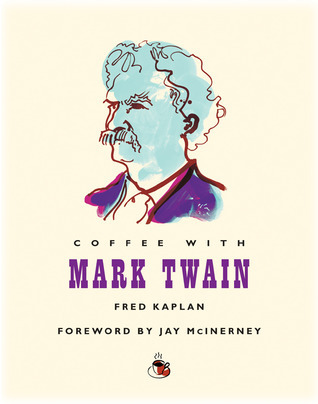
Mark Twain shaped our view of childhood, the frontier spirit, slavery, and humankind’s follies and pretensions. Revel now in his caustic wit, tall tales, and colorfully expressed opinions, all told to a distinguished professor and biographer. This master of repartee regales us with stories about his many different guises, from humorist to riverboat pilot to inventor of the self-pasting photograph album.

In this definitive biography of the great Victorian essayist Thomas Carlyle (1795-1881), Fred Kaplan provides a vivid picture of Victorian life as he gives the reader a sensitive and candid portrait of a complex and difficult man.

An absorbing study of the evolution of sentiment in Victorian life and literatureWhat is sentimentality, and where did it come from? For acclaimed scholar and biographer Fred Kaplan, the seeds were planted by the British moral philosophers of the eighteenth century. The Victorians gained from them a theory of human nature, a belief in the innateness of benevolent moral instincts; sentiment, in turn, emerged as a set of shared moral feelings in opposition to both scientific realism and the more ego-driven energies of Romanticism. Sacred Tears investigates the profound ways in which seminal writers Charles Dickens, William Makepeace Thackeray, and Thomas Carlyle were influenced by the philosophies of David Hume and Adam Smith, and by novelists of the same period. Exploring sentiment in its original context—one often forgotten or overlooked—Kaplan’s study is a stimulating fusion of intellectual history and literary criticism, and holds no small importance for questions of art and morality as they exist today.

Drawing on fresh source material, Fred Kaplan considers the importance From Dickens and Mesmerism of Dickens' involvement with mesmerism for his work and his personality. In so doing he describes a significant intellectual and spiritual movement and provides new and controversial insights into Dickens' fiction.The mesmeric movement in England, particularly its controversial activities during the late 1830s and the 1840s, intensified Dickens' concern with the ways in which people discover and exert their energies and will to control each other. Dickens' own activities as a mesmerist provide the biographical touchstone for his image of himself as a doctor of the mind. Fred Kaplan examines the author's entire oeuvre in a synoptic, thematic fashion, exploring the attitudes shaped by the mesmerists that are reflected in the novels' psychological tensions. The final chapter provides an overview of the Romantic, Victorian, and Modern currents that may be found in Dickens' fascination with mesmeric power.Originally published in 1975.The Princeton Legacy Library uses the latest print-on-demand technology to again make available previously out-of-print books from the distinguished backlist of Princeton University Press. These editions preserve the original texts of these important books while presenting them in durable paperback and hardcover editions. The goal of the Princeton Legacy Library is to vastly increase access to the rich scholarly heritage found in the thousands of books published by Princeton University Press since its founding in 1905.

in-8, broché, couverture illustrée, 519 pp. Traduit de l'anglais par Eric Diacon. Très bon état.

An Interview With Mark Twain
by Fred Kaplan
Presents a fictionalized interview with the famous writer, explaining how his life influenced his work and his views on such subjects as race, society, and religion.

Book by Kaplan, Fred M.
Abraham Lincoln: A New Birth of Freedom
by Fred Kaplan
