
Joseph Campbell
Joseph Campbell was an American author and teacher best known for his work in the field of comparative mythology. He was born in New York City in 1904, and from early childhood he became interested in mythology. He loved to read books about American Indian cultures, and frequently visited the American Museum of Natural History in New York, where he was fascinated by the museum's collection of totem poles. Campbell was educated at Columbia University, where he specialized in medieval literature, and continued his studies at universities in Paris and Munich. While abroad he was influenced by the art of Pablo Picasso and Henri Matisse, the novels of James Joyce and Thomas Mann, and the psychological studies of Sigmund Freud and Carl Jung. These encounters led to Campbell's theory that all myths and epics are linked in the human psyche, and that they are cultural manifestations of the universal need to explain social, cosmological, and spiritual realities. After a period in California, where he encountered John Steinbeck and the biologist Ed Ricketts, he taught at the Canterbury School, and then, in 1934, joined the literature department at Sarah Lawrence College, a post he retained for many years. During the 40s and '50s, he helped Swami Nikhilananda to translate the Upanishads and The Gospel of Sri Ramakrishna. He also edited works by the German scholar Heinrich Zimmer on Indian art, myths, and philosophy. In 1944, with Henry Morton Robinson, Campbell published A Skeleton Key to Finnegans Wake. His first original work, The Hero with a Thousand Faces, came out in 1949 and was immediately well received; in time, it became acclaimed as a classic. In this study of the "myth of the hero," Campbell asserted that there is a single pattern of heroic journey and that all cultures share this essential pattern in their various heroic myths. In his book he also outlined the basic conditions, stages, and results of the archetypal hero's journey. Throughout his life, he traveled extensively and wrote prolifically, authoring many books, including the four-volume series The Masks of God, Myths to Live By, The Inner Reaches of Outer Space and The Historical Atlas of World Mythology. Joseph Campbell died in 1987. In 1988, a series of television interviews with Bill Moyers, The Power of Myth, introduced Campbell's views to millions of people.
31 Books Written

The Power Of Myth launched an extraordinary resurgence of interest in Joseph Campbell and his work. A preeminent scholar, writer, and teacher, he has had a profound influence on millions of people. To him, mythology was the "song of the universe, the music of the spheres." With Bill Moyers, one of America's most prominent journalists, as his thoughtful and engaging interviewer, The Power Of Myth touches on subjects from modern marriage to virgin births, from Jesus to John Lennon, offering a brilliant combination of intelligence and wit.

Historical Atlas of World Mythology 1: The Way of the Animal Powers
by Joseph Campbell
Rating: 4.3 ⭐
• 4 recommendations ❤️
The volume itself is a onsummatje example of the art of bookmaking. Campbell's scholarly and readable text is integrated throughout with a profusion of color plates, specially-commissioned full-color maps, outstanidng black and white photographs, unique drawings, and numerous illuminating charts. Drawing on cultural and art history, as well as on anthropology,ethnology,archaeology,paleontology, and linguistics, THE WAY OF THE ANIMAL POWERS will be indispensable to all those interested in mythology, comparative religion, history , and the study of man.
“A hero ventures forth from the world of common day into a region of supernatural wonder: fabulous forces are there encountered and a decisive victory is won” Since its release in 1949, The Hero with a Thousand Faces has influenced millions of readers by combining the insights of modern psychology with Joseph Campbell’s revolutionary understanding of comparative mythology. In these pages, Campbell outlines the Hero’s Journey, a universal motif of adventure and transformation that runs through virtually all of the world’s mythic traditions. He also explores the Cosmogonic Cycle, the mythic pattern of world creation and destruction.As part of the Joseph Campbell Foundation’s Collected Works of Joseph Campbell, this third edition features expanded illustrations, a comprehensive bibliography, and more accessible sidebars.As relevant today as when it was first published, The Hero with a Thousand Faces continues to find new audiences in fields ranging from religion and anthropology to literature and film studies. The book has also profoundly influenced creative artists — including authors, songwriters, game designers, and filmmakers — and continues to inspire all those interested in the inherent human need to tell stories.

What is a properly functioning mythology and what are its functions? Can we use myths to help relieve our modern anxiety, or do they help foster it? In Myths to Live By, Joseph Campbell explores the enduring power of the universal myths that influence our lives daily and examines the myth-making process from the primitive past to the immediate present, retuning always to the source from which all mythology springs: the creative imagination. Campbell stresses that the borders dividing the Earth have been shattered; that myths and religions have always followed the certain basic archetypes and are no longer exclusive to a single people, region, or religion. He shows how we must recognize their common denominators and allow this knowledge to be of use in fulfilling human potential everywhere.

The author of such acclaimed books as Hero With a Thousand Faces and The Power of Myth discusses the primitive roots of mythology, examining them in light of the most recent discoveries in archaeology, anthropology, and psychology.

Long before medieval knights charged off to slay dragons, tales of heroic adventures were an integral part of all world cultures. Campbell challenges everyone to see the presence of a heroic journey in his or her own life. "There is a typical hero sequence of actions which can be detected in stories from all over the world and from the many, many periods of history. It is essentially the one deed done by many, many different people. The hero or heroine is someone who has given his life to something bigger than himself or other than himself.... Losing yourself, giving yourself to another, that's a trial in itself, is it not? There is a big transformation of consciousness that's concerned. And what all the myths have to deal with is the transformation of consciousness--that you're thinking in this way, and you have now to think in that way." "Well, how is the consciousness transformed?" "By trials." "The tests that the hero undergoes?" "Tests or certain illuminating revelations. Trials and revelations are what it's all about."
Joseph Campbell famously defined myth as “other people's religion.” But he also said that one of the basic functions of myth is to help each individual through the journey of life, providing a sort of travel guide or map to reach fulfillment — or, as he called it, bliss. For Campbell, many of the world's most powerful myths support the individual's heroic path toward bliss.In Pathways to Bliss, Campbell examines this personal, psychological side of myth. Like his classic best-selling books Myths to Live By and The Power of Myth, Pathways to Bliss draws from Campbell's popular lectures and dialogues, which highlight his remarkable storytelling and ability to apply the larger themes of world mythology to personal growth and the quest for transformation. Here he anchors mythology's symbolic wisdom to the individual, applying the most poetic mythical metaphors to the challenges of our daily lives.Campbell dwells on life's important questions. Combining cross-cultural stories with the teachings of modern psychology, he examines the ways in which our myths shape and enrich our lives and shows how myth can help each of us truly identify and follow our bliss.

Celebrated scholar Joseph Campbell shares his intimate and inspiring reflections on the art of living in this beautifully packaged book, part of a new series to be based on his unpublished writings.
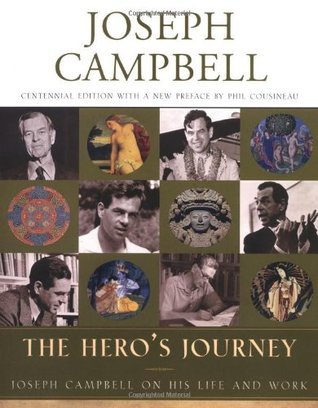
The author of Hero With a Thousand Faces, The Masks of God series, and The Power of Myth here turns his powers of observation and analysis on his own life's journey and conveys the excitement of his life-long exploration of mythic traditions, which he called "the one great story of mankind." In conversations with poets, anthropologists, and philosophers, Campbell reflects on subjects ranging from the origins and functions of myth, the role of the artist and the need for ritual, to the ordeals of love and romance. Illustrated throughout with photographs from Joseph Campbell's family archive and with a new, revised introduction, The Hero's Journey introduces the reader first-hand to Joseph Campbell the man, his discoveries, his terminology, and his thinking.

An exploration of Eastern mythology as it developed into the distinctive religions of Egypt, India, China, and Japan.It is impossible to read this startling and entertaining book without an enlarged sense of total human possibility and an increased receptivity - 'open-endedness' as Thomas Mann called it - to the still living past. - Robert Gorham DavisCover design by Neil Stuart.Cover illustration: Tibetan Wheel of Transmigration.

A systematic and fascinating comparison of the themes that underlie the art, worship, and literature of the Western world.

This volume explores the whole inner story of modern culture since the Dark Ages, treating modern man's unique position as the creator of his own mythology.

The first Joseph Campbell work to focus on the Goddess, edited and introduced by Safron Rossi, PhD, Curator of Collections at Opus Archives and Research Center, home to the archival collections of Joseph Campbell, Marija Gimbutas, James Hillman, and other scholars of mythology, Jungian and archetypal psychology, and the humanities.Joseph Campbell brought mythology to a mass audience. His bestselling books, including The Power of Myth and The Hero with a Thousand Faces, are the rare blockbusters that are also scholarly classics.While Campbell’s work reached wide and deep as he covered the world’s great mythological traditions, he never wrote a book on goddesses in world mythology. He did, however, have much to say on the subject. Between 1972 and 1986 he gave over twenty lectures and workshops on goddesses, exploring the figures, functions, symbols, and themes of the feminine divine, following them through their transformations across cultures and epochs.In this provocative volume, editor Safron Rossi—a goddess studies scholar, professor of mythology, and curator of collections at Opus Archives, which holds the Joseph Campbell archival manuscript collection and personal library—collects these lectures for the first time. In them, Campbell traces the evolution of the feminine divine from one Great Goddess to many, from Neolithic Old Europe to the Renaissance. He sheds new light on classical motifs and reveals how the feminine divine symbolizes the archetypal energies of transformation, initiation, and inspiration.

Thou Art That is a compilation of previously uncollected essays and lectures by Joseph Campbell that focus on the Judeo-Christian tradition. Here Campbell explores common religious symbols, reexamining and reinterpreting them in the context of his remarkable knowledge of world mythology. According to Campbell, society often confuses the literal and metaphorical interpretations of religious stories and symbols. In this collection, he eloquently reestablishes these metaphors as a means to enhance spiritual understanding and mystical revelation. With characteristic verve, he ranges from rich storytelling to insightful comparative scholarship. Included is editor Eugene Kennedy’s classic interview with Campbell in The New York Times Magazine, which brought the scholar to the public’s attention for the first time.

Developed from a memorable series of lectures delivered in San Francisco, which included a legendary symposium at the Palace of Fine Arts with astronaut Rusty Schweickart, Joseph Campbell’s last book explores the space age. Campbell posits that the newly discovered laws of outer space are actually at work within human beings as well and that a new mythology is implicit in this realization. He examines the new mythology and other questions in these essays which he described as "a broadly shared spiritual adventure."

Since its publication in 1939, countless would-be readers of Finnegans Wake — James Joyce's masterwork that consumed a third of his life — have given up after a few pages and dismissed it as a "perverse triumph of the unintelligible." In 1944, a young professor of mythology and literature named Joseph Campbell, working with Henry Morton Robinson, wrote the first "key" or guide to entering the fascinating, disturbing, marvelously rich world of Finnegans Wake. The authors break down Joyce's "unintelligible" book page by page, stripping the text of much of its obscurity and serving up thoughtful interpretations via footnotes and bracketed commentary. A Skeleton Key was Campbell's first book, published five years before he wrote his breakthrough Hero with a Thousand Faces.
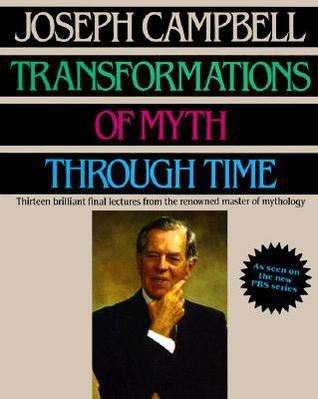
The renowned master of mythology is at his warm, accessible, and brilliant best in this illustrated collection of thirteen lectures covering mythological development around the world.

Following such volumes as Baksheesh and Brahman, The Inner Reaches of Outer Space, and Thou Art That, this previously unpublished title is Volume six in the Collected Works of Joseph Campbell series. It shows Campbell’s remarkable mind engaged with a favorite topic, the myths and metaphors of Asian religions. Myths of Light collects seven lectures and articles on subjects ranging from the ancient Hindu Vedas to Zen koans, Tantric yoga, and the Tibetan Book of the Dead. A worthy companion to Campbell’s Asian journals, this volume conveys complex insights through warm, accessible storytelling, revealing the intricacies and secrets of his subjects with his typical enthusiasm.

A paperback edition of Campbell's major study of the mythology of the world's high civilizations over five millennia. It includes nearly 450 illustrations. The text is the same as that of the 1974 edition.Mythologist Joseph Campbell was a masterful storyteller, able to weave tales from every corner of the world into compelling, even spellbinding, narratives. His interest in comparative mythology began in childhood, when the young Joe Campbell was taken to see Buffalo Bill's Wild West Show at Madison Square Garden. He started writing articles on Native American mythology in high school, and the parallels between age-old myths and the mythic themes in literature and dreams became a lifelong preoccupation. Campbell's best-known work is The Hero with a Thousand Faces (1949), which became a New York Times paperback best-seller for Princeton in 1988 after Campbell's star turn on the Bill Moyers television program The Power of Myth.During his early years as a professor of comparative religion at Sarah Lawrence College, Campbell made the acquaintance of Indologist Heinrich Zimmer, a kindred spirit who introduced him to Paul and Mary Mellon, the founders of Bollingen Series. They chose Campbell's The Mythic Image as the culmination of the series, giving it the closing position--number one hundred. A lavishly illustrated and beautifully produced study of the mythology of the world's high civilizations, The Mythic Image received a front-cover review in the New York Times Book Review upon publication. Through the medium of visual art, the book explores the relation of dreams to myth and demonstrates the important differences between oriental and occidental interpretations of dreams and life.

The Flight of the Wild Gander: Explorations in the Mythological Dimension
by Joseph Campbell
Rating: 4.2 ⭐
In these essays, Joseph Campbell explores the origins of myth and their role in everyday life, from Grimm fairy tales to Native American legends. He explains how the symbolic content of myth is linked to universal human experience and how myths and experiences change over time. Included is his acclaimed essay "Mythogenesis," which examines the rise and fall of a Native American legend. "Campbell has become one of the rarest of intellectuals in American life: a serious thinker who had been embraced by the popular culture."—Newsweek

Over a span of 12 years, Michael Toms recorded conversations between the late Joseph Campbell and himself, during which they developed a close friendship. Here are audio cassettes of which Campbell brings listeners in touch with our mythic heritage.

In the tradition of The Power of Myth , a conversation with Joseph Campbell that distills the mature wisdom and eclectic spiritual thinking of the world-renowned scholar and mythologist.

The first collection of Joseph Campbell’s writings and lectures on the Arthurian romances of the Middle Ages, a central focus of his celebrated scholarship, edited and introduced by Arthurian scholar Evans Lansing Smith, PhD, the chair of Mythological Studies at Pacifica Graduate Institute.Throughout his life, Joseph Campbell was deeply engaged in the study of the Grail Quests and Arthurian legends of the European Middle Ages. In this new volume of the Collected Works of Joseph Campbell, editor Evans Lansing Smith collects Campbell’s writings and lectures on Arthurian legends, including his never-before-published master’s thesis on Arthurian myth, “A Study of the Dolorous Stroke.” Campbell’s writing captures the incredible stories of such figures as Merlin, Gawain, and Guinevere as well as the larger patterns and meanings revealed in these myths. Merlin’s death and Arthur receiving Excalibur from the Lady of the Lake, for example, are not just vibrant stories but also central to the mythologist’s thinking.The Arthurian myths opened the world of comparative mythology to Campbell, turning his attention to the Near and Far Eastern roots of myth. Calling the Arthurian romances the world’s first “secular mythology,” Campbell found metaphors in them for human stages of growth, development, and psychology. The myths exemplify the kind of love Campbell called amor, in which individuals become more fully themselves through connection. Campbell’s infectious delight in his discoveries makes this volume essential for anyone intrigued by the stories we tell—and the stories behind them.

Joseph Campbell taught Mythology to students at Sarah Lawrence College, just north of New York City, for thirty-eight years. Late in his tenure, he made a proposal to use his introductory course as the basis for the then-new field of cross-cultural studies. The proposal gives a wonderful glimpse into Campbell’s pedagogical philosophy, but also into his approach to his chosen field.Included is one of the most-requested downloads from the Joseph Campbell Foundation's the reading list that Campbell used in that Introduction to Mythology course.These pieces, along with nine other essays ranging in subject from the numerology implicit in the Goddess mythologies to the erotic irony of modern novelist Thomas Mann, is included in the collection The Mythic Dimension. This volume was reissued in 2008 by New World Library as part of the Collected Works of Joseph Campbell series; this article is being published in electronic form by the Joseph Campbell Foundation.

Mythic Worlds, Modern Words: Joseph Campbell on the Art of James Joyce
by Joseph Campbell
Rating: 4.3 ⭐
Mythic Worlds, Modern Words provides a representation of Campbell’s published writing, lectures on Joyce, and exchanges with his audiences, from his obituary notice on Joyce in 1941 to lectures delivered a few years before Campbell’s death. Joyce scholar Edmund L. Epstein has arranged this material as running commentary on A Portrait of the Artist As a Young Man, Ulysses, and Finnegans Wake. With a new foreword by Phil Cousineau for this Collected Works edition, Mythic Worlds, Modern Words is both an introduction to the major work of Joyce and a representative portrait of Joseph Campbell as a critic of Joyce. It is also a major contribution to Joyce criticism, the fruit of a lifetime’s meditation on the great Irish writer’s writings.

Campbell talks about romantic love, beginning with the 12th century troubadours, and addresses questions about the image of woman--as goddess, virgin, Mother Earth. Moyers: " "In the middle ages amour was celebrated by wandering minstrels who sang of what the eyes have made welcome to the heart. It helped create a distinctive Western consciousness that exalted the individual experience of men and woman over the authority and traditions of the church and state."" Campbell: " "Virgin birth is the birth of spiritual man out of animal man.... When you are awakened at the level of the heart to compassion and suffering with the other person, that is the beginning of humanity.... It is the suffering that evokes the humanity of the human heart. Love, you might say, is the burning point of life and since all is sorrowful, so is love. And the stronger the love, the more that pain"-"that love bears all things. Love itself is a pain, you might say"-"that is, the pain of being truly alive.""

Campbell discusses the importance of accepting death as rebirth as in myth of the buffalo and the story of Christ, the rite of passage in primitive societies, the role of mystical Shamans, and the decline of ritual in today's society. Campbell: " "The ancient myths were designed to harmonize the mind and the body. The mind can ramble off in strange ways and want things that the body does not want. The myths and the rites were means of putting the mind in accord with the body and the way of life accord with the way nature dictates.""Moyers: " "So these old stories live in us?""Campbell: " "They do indeed. The stages of human development are the same today as they were in the ancient times. As a child, you are brought up in a world of discipline, of obedience, and you are dependent on others. All this has to be transcended when you come to maturity, so that you can live not in dependency but with self-responsible authority.""

Provocative and personal writings on mythology, culture, and modern life by our century's foremost interpreter and teacher of myth.Gathered together here for the first time are twelve eclectic,far-ranging, and brilliant essays exploring myth in all its history; its influence on art, literature, and culture; and its role in everyday life. Written at the height of Joseph Campbell's career -- and showcasing the lively and learned intelligence that made him thepremier writer on mythology of our times -- these essays investigatethe profound links between myth and history, the arts, and modern life.From psychology to the occult, from Thomas Mann to the Grateful Dead, from Goddess spirituality to Freud and Jung, these playful anderudite writings reveal the threads of myth woven deeply into thefabric of our culture and our lives.

Presents key lectures on myth, symbolism, and spiritual awakening.

Campbell discusses the role of sacrifice in myth, which symbolizes the necessity for rebirth. He also talks about the significance of sacrifice--in particular, a mother's sacrifice for her child, and the sacrifice to the relationship in marriage--and stresses the need for every one of us to find our sacred place in the midst of today's fast-paced, technological world. Campbell: " "Going to your sacrifice as the winning stroke of your life was the essence of the early sacrificial idea... when you go to your death that way, as a god, you are going to eternal life, what's sad about that?... The realization of your bliss, your true being, comes when you have put aside what might be called passing moment with its terror and with its temptations and its statement of requirements of life that you should live this way.... I always tell my students to follow their bliss--where the deep sense of being is from, and where your body and soul want to go. When you have that feeling, then stay with it, and don't let anyone throw you off. I say don't be afraid to follow your bliss and doors will open where you didn't know they were going to be.""

Joseph Campbell converses with Bill Moyers about the psychological influence of Myths in our daily motivations, dreams and wishes.