
Constantin Stanislavski
Constantin Sergeyevich Stanislavski (russian:Константин Сергеевич Станиславский) was a Russian actor and theatre director. Stanislavski's innovative contribution to modern European and American realistic acting has remained at the core of mainstream western performance training for much of the last century. Building on the directorially-unified aesthetic and ensemble playing of the Meiningen company and the naturalistic staging of Antoine and the independent theatre movement, Stanislavski organized his realistic techniques into a coherent and usable 'system'. Thanks to its promotion and development by acting teachers who were former students and the many translations of his theoretical writings, Stanislavski's system acquired an unprecedented ability to cross cultural boundaries and developed an international reach, dominating debates about acting in the West. That many of the precepts of his 'system' seem to be common sense and self-evident testifies to its hegemonic success. Actors frequently employ his basic concepts without knowing they do so. Stanislavski treated theatre-making as a serious endeavour, requiring dedication, discipline and integrity, and the work of the actor as an artistic undertaking. Throughout his life, he subjected his own acting to a process of rigorous artistic self-analysis and reflection. His 'system' resulted from a persistent struggle to remove the blocks he encountered. His development of a theorized praxis—in which practice is used as a mode of inquiry and theory as a catalyst for creative development—identifies him as the first great theatre practitioner. Stanislavski believed that after seeing young actors at Aquinas College in Moscow he could see why theatre needed to change to a more disciplined endeavour. Stanislavski's work was as important to the development of socialist realism in the USSR as it was to that of psychological realism in the United States. Many actors routinely identify his 'system' with the American Method, although the latter's exclusively psychological techniques contrast sharply with Stanislavski's multivariant, holistic and psychophysical approach, which explores character and action both from the 'inside out' and the 'outside in'. Stanislavski's work draws on a wide range of influences and ideas, including his study of the modernist and avant-garde developments of his time (naturalism, symbolism and Meyerhold's constructivism), Russian formalism, Yoga, Pavlovian behaviourist psychology, James-Lange (via Ribot) psychophysiology and the aesthetics of Pushkin, Gogol, and Tolstoy. He described his approach as 'spiritual Realism'. Associated Names: Konstantin Stanislavski (Alternative spelling) Константин Станиславский (Russian) 斯坦尼斯拉夫斯基 (Chinese)
29 Books Written

Stanislavski's simple exercises fire the imagination, and help readers not only discover their own conception of reality but how to reproduce it as well.

Building a Character is one of the three volumes that make up Stanislavski’s The Acting Trilogy. An Actor Prepares explores the inner preparation an actor must undergo in order to explore a role to the full. In this volume, Sir John Gielgud said, this great director “found time to explain a thousand things that have always troubled actors and fascinated students.” Building a Character discusses the external techniques of acting: the use of the body, movement, diction, singing, expression, and control. Creating a Role describes the preparation that precedes actual performance, with extensive discussions of Gogol’s The Inspector General and Shakespeare’s Othello. Sir Paul Scofield called Creating a Role “immeasurably important” for the actor. These three volumes belong on any actor’s short shelf of essential books.
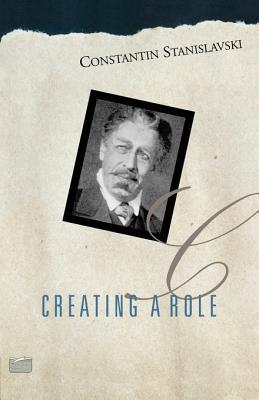
Creating a Role is the culmination of Stanislavski's masterful trilogy on the art of acting. An Actor Prepares focused on the inner training of an actor's imagination. Building a Character detailed how the actor's body and voice could be tuned for the great roles he might fill.This third volume examines the development of a character from the viewpoint of three widely contrasting plays: Griboyedov's Woe from Wit, Shakespeare's Othello, and Gogol's The Inspector General. Building on the first two books, Stanislavski demonstrates how a fully realized character is born in three stages: "studying it; establishing the life of the role; putting it into physical form."Tracing the actor's process from the first reading to production, he explores how to approach roles from inside and outside simultaneously. He shows how to recount the story in actor's terms, how to create an inner life that will give substance to the author's words, and how to search into one's own experiences to connect with the character's situation. Finally, he speaks of the physical expression of the character in gestures, sounds, intonation, and speech. Throughout, a picture of a real artist at work emerges, sometimes failing, but always seeking truthful answers.

In his outstanding autobiography, Konstantin Stanislavsky reveals his own ideas and experience. "The theatre is the finest medium of intercourse between nations. It reveals their most cherished aspirations. If only these aspirations were revealed more often ... the nations would shake hands, and lift their caps, instead of training guns on each other." -- Konstantin Stanislavsky "This wise and delightful book...is packed with sage practical counsel to actors and actresses." -- The Times Literary Supplement "A great figure upon the world scene, one of the greatest men of the theatre that ever lived." -- New York Herald-Tribune "It was a source of great enlightenment to me." --Sir Laurence Olivier

Stanislavski s system has dominated actor-training in the West since his writings were first translated into English in the 1920s and 30s. His systematic attempt to outline a psycho-physical technique for acting single-handedly revolutionized standards of acting in the theatre.Until now, readers and students have had to contend with inaccurate, misleading and difficult-to-read English-language versions. Some of the mistranslations have resulted in profound distortions in the way his system has been interpreted and taught. At last, Jean Benedetti has succeeded in translating Stanislavski s huge manual into a lively, fascinating and accurate text in English. He has remained faithful to the author's original intentions, putting the two books previously known as An Actor Prepares and Building A Character back together into one volume, and in a colloquial and readable style for today's actors.The result is a major contribution to the theatre, and a service to one of the great innovators of the twentieth century."

Collection Set: An Actor Prepares / Building a Character / Creating a Role
by Constantin Stanislavski
Rating: 4.2 ⭐

Transcripts of the Bolshoi lectures delivered in Moscow between 1918 and 1922 provide an important guide to Stanislvasky's theories

L'attore, l'uomo che, senza perdere se stesso, deve creare il personaggio, è il protagonista di questo celebre diario. Le vie inferiori di questa creazione, i modi della sua realizzazione psicologica, gestuale, sonora, scenica: queste le fasi del "metodo Stanislavskij", la grammatica elementare di tutto il teatro del Novecento.

„Oare câte spectacole se joacă zilnic, în întreaga lume, nu după esenţă, ci după principiul «în general»? Zeci de mii. De aceea să nu vă mire dacă vă voi spune că în fiecare zi, în întreaga lume, sute de mii de actori greşesc profund, prelucrând sistematic procedee scenice incorecte şi periculoase. Şi este cu atât mai rău, cu cât, pe de o parte, însuşi teatrul şi condiţiile artei sale îl împing pe actor spre aceste obiceiuri periculoase. Pe de altă parte, însuşi actorul, care caută calea minimei rezistenţe, foloseşte de bunăvoie meşteşugul «în general».“Konstantin Sergheevici Stanislavski„În profesia mea, folosesc această carte în fiecare zi. Ceea ce nu înseamnă că o deschid în fiecare dimineaţă sau că folosesc numai exerciţiile lui Stanislavski. Din nefericire, nici măcar n-am timp s-o citesc foarte des. Dar ea este prezentă în felul în care gândesc teatrul. Îmi aminteşte de profunzimea şi de pasiunea cu care fiecare artist adevărat poate şi trebuie să-şi analizeze propria artă.“Yuri Kordonsky

Имя Константина Станиславского известно всему миру как имя великого реформатора театрального искусства. Многогранный и тонкий актер, непревзойденный режиссер и театральный педагог — воспитатель нескольких артистических поколений, Станиславский был вместе с тем и выдающимся теоретиком театра. Он не только вдохновенно творил, создавал замечательные образцы театрального искусства, но и глубоко осмысливал процесс сценического творчества. В каждой новой постановке он выдвигал и решал большие и смелые задачи, имеющие принципиальное значение для всего театрального искусства. Его эстетические взгляды, режиссерское новаторство, разработанная им система реалистического актерского творчества оказали огромное влияние на развитие мировой театральной культуры XX века. О времени написания Станиславским главы об этике можно предполагать на основании его письма к М. П. Лилиной от 28 августа 1908 г. В письме он пишет "Вечером остался дома и написал, кажется, недурно, главу об этике. Вчера в понедельник, на утренней репетиции прочел ее актерам. Кажется, призадумались, и репетиция была хорошая".

Es una recopilación de Elizabeth Reynolds Hapgood, que reúne de manera concisa y en orden alfabético las teorías y técnicas de Stanislavski. Definiciones, declaraciones categóricas y artículos sobre una gran variedad de temas refrescarán la memoria del lector y facilitan la tarea del estudiante y de la gente experimentada en el teatro."He sentido que no tengo otra cosa que hacer, excepto dedicar mi trabajo y mi energía casi exclusivamente al estudio de la naturaleza creadora... He adquerido un caudal de experiencia en el curso de prolongados años de trabajo y esto es lo que he buscado compartir con ustedes".-Stanislavski

Best known for his fundamental work on acting, Stanislavski was deeply drawn to the challenges of opera. His brilliant chapters here on Russian classics--Boris Gudonov and The Queen of Spades among them--as well as La Boheme will amaze and delight lovers of opera. Also includes 12 musical examples.

Out of the large body of materials -- articles, speeches, notes and memoirs -- left behind by Stanislavski at the time of his death in 1938, Elizabeth Hapgood, his friend and translator, chose items which concentrate on the essence of his work. The result is a volume which supplements the other books he wrote, and re-emphasizes, sometimes in condensed and particulary vivid form, his views about acting, the theatre and life.

FARSI TRANSLATION OF KONSTANTIN STANISLAVSKI'S "AN ACTOR PREPARES" BY MAHIN OSKOO'EI AND NASER HOSSEINI MEHR.
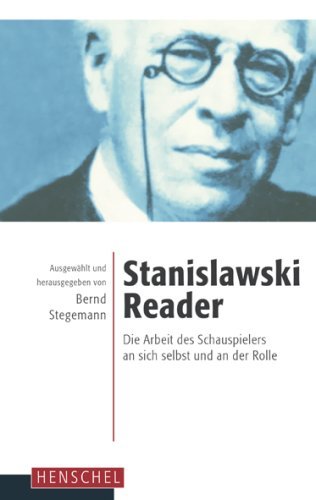
Stanislawski-Reader: Die Arbeit des Schauspielers an sich selbst und an der Rolle
by Constantin Stanislavski
Rating: 4.1 ⭐

Предлагаемые вниманию читателя книги К.С.Станиславского и М.А.Чехова - два самых знаменитых в XX веке "учебника" по актерскому мастерству, без знания которых актер, задумывающийся о своем искусстве, не может считать себя образованным.Издание адресовано всем интересующимся театром.

Constantin Stanislavski: El arte del actor: Principios técnicos para su formación (Catálogo de Libros de Artes Escénicas de Escenología Ediciones)
by Constantin Stanislavski
Rating: 4.4 ⭐
Principios técnicos para la formación del Concentración, memoria de la emoción, acción dramática, caracterización, observación, imaginación, improvisación, atmósfera, composición dramática, el personaje y su caracterización, así como diversos tipos de actuación.

"Bir Aktor Hazirlaniyor", "Bir Karakter Yaratmak" ve "Bir Rol Yaratmak" gibi tiyatronun temeline dair kitaplariyla hem tiyatro ogrencilerine hem de tiyatroseverlere yaraticiligin yollarini gostermis olan Konstantin Stanislavski'nin bu kitabi, yonetmenin tiyatro sanati dedigimiz seyi olusturan fenomenin temel kavramlarini bir sozluk seklinde okurlara sunmaktadir.

O "sistema" de Stanislávski domina a formação do ator no Ocidente desde que seus escritos foram traduzidos para o inglês nas décadas de 1920 e 1930. Sua tentativa sistemática de delinear uma técnica psicofísica revolucionou sozinha os paradigmas da arte dramática. Até hoje, leitores e alunos tinham de se digladiar com versões em inglês imprecisas, enganosas e de leitura difícil. Algumas traduções equivocadas provocaram profundas distorções na maneira como seu sistema foi interpretado e ensinado. Por fim, Jean Benedetti conseguiu traduzir o imenso manual de Stanislávski num texto vivaz, fascinante e preciso em inglês. Manteve-se fiel às intenções originais do autor, voltando a reunir os dois livros anteriormente conhecidos como A Preparação do Ator e A Construção da Personagem num só volume, e num estilo coloquial e de fácil leitura para os atores de hoje. O resultado é uma contribuição importantíssima para o teatro e um belo serviço prestado a um dos grandes inovadores do século XX.

Mitä on näyttelijätaide? Mikä on luova tila ja miten sen voi saavuttaa? Entä maaginen jos, emotionaalinen muisti ja alateksti? Miten saavuttaa inspiraatio tietyllä kellonlyömällä? Miten välttyä rutiinimaisuudelta? Stanislavskin Näyttelijän työ on alansa ohittamaton klassikko.Venäläisen näyttelijän, ohjaajan ja pedagogin Konstantin Stanislavskin teos Näyttelijän työ 1 ja 2, oppilaan päiväkirja on näyttämötaiteen klassikko, näyttelijäntyön ohittamaton perusteos. Stanislavskin (1863 1938) järjestelmä on systemaattinen tapa opettaa näyttelijän ja ohjaajan työtä ja luoda aito vuorovaikutus näyttämön ja katsomon välille.Vaikka Stanislavski loi systeeminsä usean vuosikymmenen aikana 1800-luvun lopulta 1900-luvun alkuvuosikymmenille, hänen oppinsa ovat yhä moderneja ja tänä päivänä korvaamattomia niin teatterissa, elokuvassa, oopperassa ja muissa esittävissä taiteissa. Stanislavskin laaja tutkimustyö on nousemassa uuteen arvostukseen niin Amerikassa, Euroopassa, Venäjällä kuin Pohjoismaissakin. Näyttelijän työ 1 ja 2 on Venäjällä kouluttautuneen teatterintekijä Kristiina Revon useita vuosia valmistelema uusi suomennos, joka päivittää ja tarkentaa lukuisia Stanislavskin keskeisiä termejä ja ajatuksia tähän päivään.Näyttelijän työn kaksi ensimmäistä teosta julkaistaan nyt yhtenä kirjana, joka sisältää paljon Suomessa ennen julkaisematonta materiaalia.'

2014 Reprint of 1963 Edition. Full facsimile of the original edition. Not reproduced with Optical Recognition Software. The notes Stanislavski produced for his 1930's production of "Othello" reveal much of the theory which he had incorporated in his three part "An Actor Prepares," "Building a Character," and "Creating a Role." These production notes remain the fullest statement of Stanislavski's mature approach to directing Shakespearean tragedy. This essentially involved a move away from the earlier overwhelming emphasis on emotion towards a greater exploration of tragic character through physical action.

У вас в руках уникальная книга. В этом сборнике, составленном нами из этюдов и тренингов маэстро, спрессована вся знаменитая система Станиславского! Из огромного творческого наследия гения выбрано самое инструментальное, самое полезное, самое прикладное, систематизировано и упорядочено. Вы найдете здесь разные упражнения, в их числе на развитие памяти и внимания, фантазии и общения, на освобождение мышечных зажимов и на публичное одиночество. Одно лишь перечисление этих составляющих показывает, что данная книга - настоящий учебник, необходимый в работе психологов, педагогов, тренеров, для воспитания и обучения специалистов разнообразнейших специальностей. Ну а о том, насколько она востребована актерами и их педагогами, и говорить не состоит! По этой книге всем нам можно и нужно учить и учиться жить и действовать - на сцене и в жизни!

In 1936 gaf Konstantin Stanislavski (1863-1938) toestemming voor de publicatie van 'An Actor Prepares', het eerste deel van een lesmethode voor acteurs. Het boek werd een succes en had zo'n grote invloed op de Amerikaanse acteerpraktijk, dat Stanislavski's methode binnen enkele jaren tot 'The Method' verheven werd.Stanislavski geeft de toneelspeler alles om zijn integriteit te bewaren, zich bewust zijn van zijn doen en laten, om voor alles waar te zijn. Hij rekende af met valse retoriek, tekstbrullerij en sentimentele diepvoelerij. Hij leerde, en leert nóg, de toneelspeler denken over zijn personages en hun verhouding tegenover hun eigen menszijn op een hoog ethisch niveau en met de nooit aflatende bemerking, dat zijn boek geen bijbel is, geen heilig boek, maar een richting-aanwijzer - en daarmee sanctioneèrde hij eigenlijk op voorhand allen die zijn systeem tot het hunne maakten. En dat zijn er heel veel geweest in de hele wereld.


Raamat ei pretendeeri teaduslikkusele, tema eesmärk on ainuüksi praktiline ja püüab edasi anda seda, mida autorile on õpetanud tema kui näitleja, näitejuhi ja pedagoogi pikaajalised kogemused. Teatrikooli, millest autor raamatus kõneleb, ja inimesi, kes seal tegutsevad, tegelikkuses ei eksisteeri.Näitekunsti uurimisel ei tuginenud Stanislavski ainult oma isiklikele loomingulistele kogemustele. Tema «süsteem» üldistas teatrikunsti parimaid realistlikke traditsioone, mida järgisid Stanislavski suured eelkäijad ja kaasaegsed.Stanislavski «süsteemis» vaadeldakse näitleja vaimse ja füüsilise loomuse mitmesuguseid elemente ning samuti nende vastastikust seost ja mõju praktilise kunstilise tegevuse protsessis. Siin uuritakse ka loomingulise protsessi järjekindlust. See protsess hõlmab järgmisi vajalikke analüüs ja süntees, loomingulise materjalie tajumine ja tunnetamine, loomingulise materjali kunstiline ümbertöötamine, lavakuju läbielamine ja kehastamine.

Brand New. Ship worldwide

This antiquarian book contains a treatise on the subject of realism in acting, by the inventor of method acting, Constantin Sergeievich Stanislavski. A fascinating and detailed text written by one of the founding fathers of modern acting technique, this book is the perfect guide for the aspiring actor or actress, and constitutes a must-read for anyone with an interest in the subject. Konstantin Sergeievich Stanislavski (1863 - 1938) was a Russian actor and theatre director, famous for his development of the 'Stanislavski method'. Chosen for its immense educational and historical value, this book is being republished now in an affordable, modern, high-quality edition - complete with a new prefatory biography of the author.

Antes que nada, el actor debe creer en todo lo que pasa en la escena; pero sobre todo tiene que creer en lo que el mismo esta haciendo; necesita sentir esa verdad todo el tiempo, para reencontrarse con ella constantemente, y para lograr esto es indispensable desarrollar la propia sensibilidad art stica orientada hacia la verdad. Systems and methods of the creative artist
