Loading themes...
Explore the best books about American theme.

How America's high standard of living came to be and why future growth is under threatIn the century after the Civil War, an economic revolution improved the American standard of living in ways previously unimaginable. Electric lighting, indoor plumbing, motor vehicles, air travel, and television transformed households and workplaces. But has that era of unprecedented growth come to an end? Weaving together a vivid narrative, historical anecdotes, and economic analysis, The Rise and Fall of American Growth challenges the view that economic growth will continue unabated, and demonstrates that the life-altering scale of innovations between 1870 and 1970 cannot be repeated. Robert Gordon contends that the nation's productivity growth will be further held back by the headwinds of rising inequality, stagnating education, an aging population, and the rising debt of college students and the federal government, and that we must find new solutions. A critical voice in the most pressing debates of our time, The Rise and Fall of American Growth is at once a tribute to a century of radical change and a harbinger of tougher times to come.
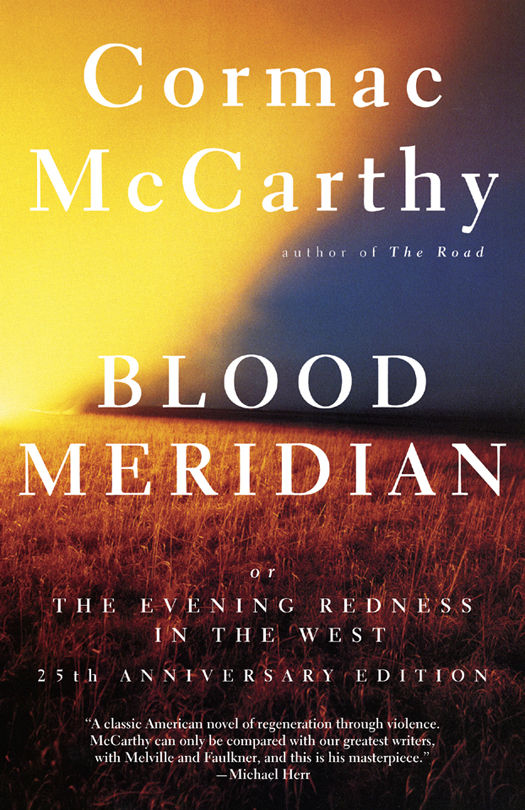
Blood Meridian is an epic novel of the violence and depravity that attended America's westward expansion, brilliantly subverting the conventions of the Western novel and the mythology of the Wild West. Based on historical events that took place on the Texas-Mexico border in the 1850s, it traces the fortunes of the Kid, a fourteen-year-old Tennesseean who stumbles into a nightmarish world where Indians are being murdered and the market for their scalps is thriving.

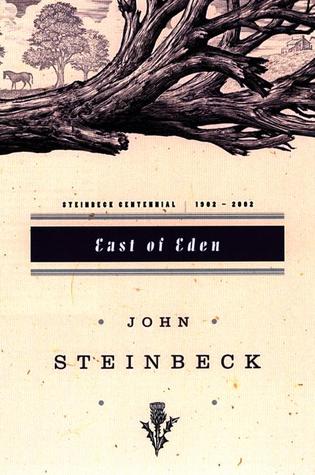
In his journal, Nobel Prize winner John Steinbeck called East of Eden “the first book,” and indeed it has the primordial power and simplicity of myth. Set in the rich farmland of California’s Salinas Valley, this sprawling and often brutal novel follows the intertwined destinies of two families—the Trasks and the Hamiltons—whose generations helplessly reenact the fall of Adam and Eve and the poisonous rivalry of Cain and Abel.Adam Trask came to California from the East to farm and raise his family on the new rich land. But the birth of his twins, Cal and Aaron, brings his wife to the brink of madness, and Adam is left alone to raise his boys to manhood. One boy thrives nurtured by the love of all those around him; the other grows up in loneliness enveloped by a mysterious darkness.First published in 1952, East of Eden is the work in which Steinbeck created his most mesmerizing characters and explored his most enduring themes: the mystery of identity, the inexplicability of love, and the murderous consequences of love's absence. A masterpiece of Steinbeck's later years, East of Eden is a powerful and vastly ambitious novel that is at once a family saga and a modern retelling of the Book of Genesis.

A gargantuan, mind-altering tragi-comedy about the Pursuit of Happiness in America. Set in an addicts' halfway house and a tennis academy, and featuring the most endearingly screwed-up family to come along in recent fiction, Infinite Jest explores essential questions about what entertainment is and why it has come to so dominate our lives; about how our desire for entertainment affects our need to connect with other people; and about what the pleasures we choose say about who we are. Equal parts philosophical quest and screwball comedy, Infinite Jest bends every rule of fiction without sacrificing for a moment its own entertainment value. It is an exuberant, uniquely American exploration of the passions that make us human—and one of those rare books that renew the idea of what a novel can do.

Only once did David Foster Wallace give a public talk on his views on life, during a commencement address given in 2005 at Kenyon College. The speech is reprinted for the first time in book form in THIS IS WATER. How does one keep from going through their comfortable, prosperous adult life unconsciously? How do we get ourselves out of the foreground of our thoughts and achieve compassion? The speech captures Wallace's electric intellect as well as his grace in attention to others. After his death, it became a treasured piece of writing reprinted in The Wall Street Journal and the London Times, commented on endlessly in blogs, and emailed from friend to friend.Writing with his one-of-a-kind blend of causal humor, exacting intellect, and practical philosophy, David Foster Wallace probes the challenges of daily living and offers advice that renews us with every reading.

A collection of quintessentially American poems, the seminal work of one of the most influential writers of the nineteenth century.

First published in 1952 and immediately hailed as a masterpiece, Invisible Man is one of those rare novels that have changed the shape of American literature. For not only does Ralph Ellison's nightmare journey across the racial divide tell unparalleled truths about the nature of bigotry and its effects on the minds of both victims and perpetrators, it gives us an entirely new model of what a novel can be.As he journeys from the Deep South to the streets and basements of Harlem, from a horrifying "battle royal" where black men are reduced to fighting animals, to a Communist rally where they are elevated to the status of trophies, Ralph Ellison's nameless protagonist ushers readers into a parallel universe that throws our own into harsh and even hilarious relief. Suspenseful and sardonic, narrated in a voice that takes in the symphonic range of the American language, black and white, Invisible Man is one of the most audacious and dazzling novels of our century.

A quest across America, from the northernmost tip of Maine to California’s Monterey PeninsulaTo hear the speech of the real America, to smell the grass and the trees, to see the colors and the light—these were John Steinbeck's goals as he set out, at the age of fifty-eight, to rediscover the country he had been writing about for so many years.With Charley, his French poodle, Steinbeck drives the interstates and the country roads, dines with truckers, encounters bears at Yellowstone and old friends in San Francisco. Along the way he reflects on the American character, racial hostility, the particular form of American loneliness he finds almost everywhere, and the unexpected kindness of strangers.

First of a 3-volume social history, Parting the Waters is more than a biography of the Rev. Martin Luther King Jr. during the decade preceding his emergence as a national figure. This 1000-page effort, which won the Pulitzer Prize as well as the National Book Critics Circle Award for General Nonfiction, profiles the key players & events that helped shape the American social landscape following WWII but before the civil-rights movement of the 60s reached its climax. Branch then goes a step further, endeavoring to explain how the struggles evolved as they did by probing the influences of the main actors while discussing the manner in which events conspired to create fertile ground for change. Also analyzing the beginnings of black self-consciousness, this book maps the structure of segregation & bigotry in America between '54 & '63. The author considers the constantly changing behavior of those in Washington with regard to the injustice of offical racism operating in many states at this time.Forerunner: Vernon Johns Rockefeller and Ebenezer Niebuhr and the Pool TablesFirst Trombone The Montgomery Bus BoycottA Taste of the World The Quickening Shades of PoliticsA Pawn of HistoryThe Kennedy TransitionBaptism on Wheels The Summer of Freedom RidesMoses in McComb, King in Kansas City Almost Christmas in Albany Hoover's Triangle and King's MachineThe Fireman's Last Reprieve The Fall of Ole MissTo Birmingham Greenwood and Birmingham JailThe Children's Miracle Firestorm The March on Washington Crossing Over: Nightmares and Dreams

The classic boyhood adventure tale, updated with a new introduction by noted Mark Twain scholar R. Kent Rasmussen In recent years, neither the persistent effort to "clean up" the racial epithets in Mark Twain’s Adventures of Huckleberry Finn nor its consistent use in the classroom have diminished, highlighting the novel’s wide-ranging influence and its continued importance in American society. An incomparable adventure story, it is a vignette of a turbulent, yet hopeful epoch in American history, defining the experience of a nation in voices often satirical, but always authentic.---Taken from back cover:Of all the contenders for the title of The Great American Novel, none has a better claim than Adventures of Huckleberry Finn. Written against the backdrop of the nation's desire to "light out" and expand into the promised future of the West, the novel stands as a reminder of the difficulty of escaping inherited traditions. Huck and Jim's voyage portrays a turbulent yet hopeful epoch in American history, defining the experience of a nation in voices often satirical but always authentic. By turns praised, derided, banned, and celebrated, Adventures of Huckleberry Finn is Mark Twain's enduring masterpiece, an incomparable adventure story, and a classic work of American humor.This edition features a new introduction by noted Mark Twain scholar R. Kent Rasmussen that situates the novel for a contemporary audience, and a forward by Azar Nafisi, author of The Republic of Imagination.Cover illustration: Edward Kinsella III.

"A wonderful, splendid book--a book that should be ready by every American, student or otherwise, who wants to understand his country, its true history, and its hope for the future." --Howard FastWith a new introduction by Anthony Arnove, this edition of the classic national bestseller chronicles American history from the bottom up, throwing out the official narrative taught in schools—with its emphasis on great men in high places—to focus on the street, the home and the workplace.Known for its lively, clear prose as well as its scholarly research, A People's History of the United States is the only volume to tell America's story from the point of view of—and in the words of—America's women, factory workers, African-Americans, Native Americans, the working poor, and immigrant laborers. As historian Howard Zinn shows, many of our country's greatest battles—the fights for a fair wage, an eight-hour workday, child-labor laws, health and safety standards, universal suffrage, women's rights, racial equality—were carried out at the grassroots level, against bloody resistance.Covering Christopher Columbus's arrival through President Clinton's first term, A People's History of the United States features insightful analysis of the most important events in our history.

In 1937 Ernest Hemingway traveled to Spain to cover the civil war there for the North American Newspaper Alliance. Three years later he completed the greatest novel to emerge from "the good fight," For Whom the Bell Tolls. The story of Robert Jordan, a young American in the International Brigades attached to an antifascist guerilla unit in the mountains of Spain, it tells of loyalty and courage, love and defeat, and the tragic death of an ideal. In his portrayal of Jordan's love for the beautiful Maria and his superb account of El Sordo's last stand, in his brilliant travesty of La Pasionaria and his unwillingness to believe in blind faith, Hemingway surpasses his achievement in The Sun Also Rises and A Farewell to Arms to create a work at once rare and beautiful, strong and brutal, compassionate, moving and wise. "If the function of a writer is to reveal reality," Maxwell Perkins wrote to Hemingway after reading the manuscript, "no one ever so completely performed it." Greater in power, broader in scope, and more intensely emotional than any of the author's previous works, it stands as one of the best war novels of all time.

John Steinbeck's Pulitzer Prize-winning epic of the Great Depression follows the western movement of one family & a nation in search of work & human dignity. Perhaps the most American of American classics. The novel focuses on the Joads, a poor family of sharecroppers driven from their Oklahoma home by drought, economic hardship, & changes in financial & agricultural industries. Due to their nearly hopeless situation, & in part because they were trapped in the Dust Bowl, the Joads set out for California. Along with thousands of other "Okies", they sought jobs, land, dignity & a future. When preparing to write the novel, Steinbeck wrote: "I want to put a tag of shame on the greedy bastards who are responsible for this [the Great Depression & its effects]." The book won Steinbeck a large following among the working class, perhaps due to the book's sympathy to the workers' movement & its accessible prose style.This edition is printed by the Folio Society. Set in Palatino with Kabel Heavy display. Bound in full brown cloth (second edition) with a design by the artist.

A book that redefines both family and narrative for the twenty-first century. A Heartbreaking Work of Staggering Genius is the moving memoir of a college senior who, in the space of five weeks, loses both of his parents to cancer and inherits his eight-year-old brother. Here is an exhilarating debut that manages to be simultaneously hilarious and wildly inventive as well as a deeply heartfelt story of the love that holds a family together.A Heartbreaking Work of Staggering Genius is an instant classic that will be read for decades to come.

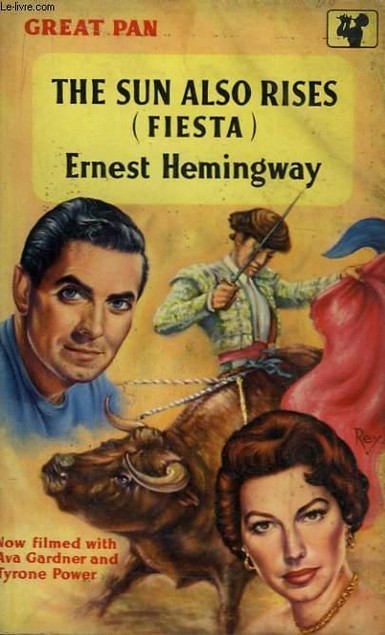
The quintessential novel of the Lost Generation, The Sun Also Rises (Fiesta) is one of Ernest Hemingway's masterpieces and a classic example of his spare but powerful writing style. A poignant look at the disillusionment and angst of the post-World War I generation, the novel introduces two of Hemingway's most unforgettable characters: Jake Barnes and Lady Brett Ashley. The story follows the flamboyant Brett and the hapless Jake as they journey from the wild nightlife of 1920s Paris to the brutal bullfighting rings of Spain with a motley group of expatriates. It is an age of moral bankruptcy, spiritual dissolution, unrealized love, and vanishing illusions. First published in 1926, The Sun Also Rises helped to establish Hemingway as one of the greatest writers of the twentieth century.

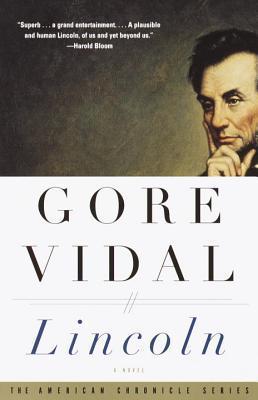
Gore Vidal's Narratives of Empire series spans the history of the United States from the Revolution to the post-World War II years. With their broad canvas and large cast of fictional and historical characters, the novels in this series present a panorama of the American political and imperial experience as interpreted by one of its most worldly, knowing, and ironic observers.To most Americans, Abraham Lincoln is a monolithic figure, the Great Emancipator and Savior of the Union, beloved by all. In Gore Vidal's Lincoln we meet Lincoln the man and Lincoln the political animal, the president who entered a besieged capital where most of the population supported the South and where even those favoring the Union had serious doubts that the man from Illinois could save it. Far from steadfast in his abhorrence of slavery, Lincoln agonizes over the best course of action and comes to his great decision only when all else seems to fail. As the Civil War ravages his nation, Lincoln must face deep personal turmoil, the loss of his dearest son, and the harangues of a wife seen as a traitor for her Southern connections. Brilliantly conceived, masterfully executed, Gore Vidal's Lincoln allows the man to breathe again.

First published in 1979, Joan Didion's The White Album records indelibly the upheavals and aftermaths of the 1960s. Examining key events, figures, and trends of the era—including Charles Manson, the Black Panthers, and the shopping mall—through the lens of her own spiritual confusion, Joan Didion helped to define mass culture as we now understand it. Written with a commanding sureness of tone and linguistic precision, The White Album is a central text of American reportage and a classic of American autobiography.

Two ebullient young men search for Truth the Zen way: from marathon wine-drinking bouts, poetry jam sessions, and "yabyum" in San Francisco's Bohemia to solitude in the high Sierras and a vigil atop Desolation Peak in Washington State. Published just a year after On the Road put the Beat Generation on the map, The Dharma Bums is sparked by Kerouac's expansiveness, humor, and a contagious zest for life. One of the best and most popular of Kerouac's autobiographical novels, The Dharma Bums is based on experiences the writer had during the mid-1950s while living in California, after he'd become interested in Buddhism's spiritual mode of understanding. One of the book's main characters, Japhy Ryder, is based on the real poet Gary Snyder, who was a close friend and whose interest in Buddhism influenced Kerouac.RUNNING TIME ➼ 7hrs. and 16mins.©1958 Jack Kerouac (P)2020 Penguin Audio

Here is Ignatius Reilly: slob extraordinary, a mad Oliver Hardy, a fat Don Quixote, a perverse Thomas Aquinas rolled into one, who is in violent revolt against the entire modern age, lying in his flannel nightshirt in a back bedroom on Constantinople Street in New Orleans, who between gigantic seizures of flatulence and eructations is filling dozens of Big Chief tablets with invective.His mother thinks he needs to go to work. He does, in a succession of jobs. Each job rapidly escalates into a lunatic adventure, a full-blown disaster; yet each has, like Don Quixote's, its own eerie logic.His girlfriend, Myrna Minkoff of the Bronx, thinks he needs sex. Ignatius is an intellectual, ideologue, deadbeat, goof-off, glutton, who should repel the reader with his gargantuan bloats, his thunderous contempt, and one-man war against everybody: Freud, homosexuals, heterosexuals, Protestants, and the assorted excesses of modern times. A tragicomedy, set in New Orleans.

The cult classic that can still change your life...Let the dice decide! This is the philosophy that changes the life of bored psychiatrist Luke Rhinehart - and in some ways changes the world as well. Because once you hand over your life to the dice, anything can happen. Entertaining, humorous, scary, shocking, subversive, The Dice Man is one of the cult bestsellers of our time.

Fear and Loathing in Las Vegas is the best chronicle of drug-soaked, addle-brained, rollicking good times ever committed to the printed page. It is also the tale of a long weekend road trip that has gone down in the annals of American pop culture as one of the strangest journeys ever undertaken.
William Stoner ha una vita che sembra essere assai piatta e desolata. Non si allontana mai per più di centocinquanta chilometri da Booneville, il piccolo paese rurale in cui è nato, mantiene lo stesso lavoro per tutta la vita, per quasi quarantanni è infelicemente sposato alla stessa donna, ha sporadici contatti con l'amata figlia e per i suoi genitori è un estraneo, per sua ammissione ha soltanto due amici, uno dei quali morto in gioventù. Non sembra materia troppo promettente per un romanzo e tuttavia, in qualche modo, quasi miracoloso, John Williams fa della vita di William Stoner una storia appassionante, profonda e straziante. Come riesce l'autore in questo miracolo letterario? A oggi ho letto Stoner tre volte e non sono del tutto certo di averne colto il segreto, ma alcuni aspetti del libro mi sono apparsi chiari. E la verità è che si possono scrivere dei pessimi romanzi su delle vite emozionanti e che la vita più silenziosa, se esaminata con affetto, compassione e grande cura, può fruttare una straordinaria messe letteraria. È il caso che abbiamo davanti. (Dalla postfazione di Peter Cameron)

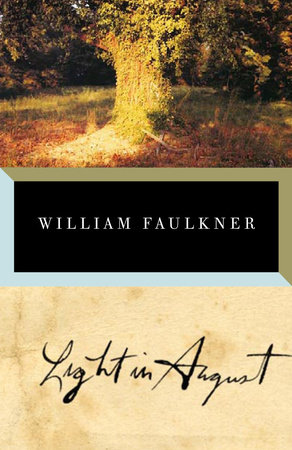
Light in August, a novel that contrasts stark tragedy with hopeful perseverance in the face of mortality, which features some of Faulkner’s most memorable characters: guileless, dauntless Lena Grove, in search of the father of her unborn child; Reverend Gail Hightower, a lonely outcast haunted by visions of Confederate glory; and Joe Christmas, a desperate, enigmatic drifter consumed by his mixed ancestry.

The narrative drive of Stowe's classic novel is often overlooked in the heat of the controversies surrounding its anti-slavery sentiments. In fact, it is a compelling adventure story with richly drawn characters and has earned a place in both literary and American history. Stowe's religious beliefs show up in the novel's final, overarching theme—the exploration of the nature of Christianity and how Christian theology is fundamentally incompatible with slavery.

The author of two critically acclaimed novels, The Russian Debutante’s Handbook and Absurdistan, Gary Shteyngart has risen to the top of the fiction world. Now, in his hilarious and heartfelt new novel, he envisions a deliciously dark tale of America’s dysfunctional coming years—and the timeless and tender feelings that just might bring us back from the brink.In a very near future—oh, let’s say next Tuesday—a functionally illiterate America is about to collapse. But don’t that tell that to poor Lenny Abramov, the thirty-nine-year-old son of an angry Russian immigrant janitor, proud author of what may well be the world’s last diary, and less-proud owner of a bald spot shaped like the great state of Ohio. Despite his job at an outfit called Post-Human Services, which attempts to provide immortality for its super-rich clientele, death is clearly stalking this cholesterol-rich morsel of a man. And why shouldn’t it? Lenny’s from a different century—he totally loves books (or “printed, bound media artifacts,” as they’re now known), even though most of his peers find them smelly and annoying. But even more than books, Lenny loves Eunice Park, an impossibly cute and impossibly cruel twenty-four-year-old Korean American woman who just graduated from Elderbird College with a major in Images and a minor in Assertiveness.After meeting Lenny on an extended Roman holiday, blistering Eunice puts that Assertiveness minor to work, teaching our “ancient dork” effective new ways to brush his teeth and making him buy a cottony nonflammable wardrobe. But America proves less flame-resistant than Lenny’s new threads. The country is crushed by a credit crisis, riots break out in New York’s Central Park, the city’s streets are lined with National Guard tanks on every corner, the dollar is so over, and our patient Chinese creditors may just be ready to foreclose on the whole mess. Undeterred, Lenny vows to love both Eunice and his homeland. He’s going to convince his fickle new love that in a time without standards or stability, in a world where single people can determine a dating prospect’s “hotness” and “sustainability” with the click of a button, in a society where the privileged may live forever but the unfortunate will die all too soon, there is still value in being a real human being.Wildly funny, rich, and humane, Super Sad True Love Story is a knockout novel by a young master, a book in which falling in love just may redeem a planet falling apart.

#1 NEW YORK TIMES BESTSELLERIt was never supposed to be this close. And of course she was supposed to win. How Hillary Clinton lost the 2016 election to Donald Trump is the riveting story of a sure thing gone off the rails. For every Comey revelation or hindsight acknowledgment about the electorate, no explanation of defeat can begin with anything other than the core problem of Hillary's campaign--the candidate herself. Through deep access to insiders from the top to the bottom of the campaign, political writers Jonathan Allen and Amie Parnes have reconstructed the key decisions and unseized opportunities, the well-intentioned misfires and the hidden thorns that turned a winnable contest into a devastating loss. Drawing on the authors' deep knowledge of Hillary from their previous book, the acclaimed biography HRC, Shattered offers an object lesson in how Hillary herself made victory an uphill battle, how her difficulty articulating a vision irreparably hobbled her impact with voters, and how the campaign failed to internalize the lessons of populist fury from the hard-fought primary against Bernie Sanders. Moving blow-by-blow from the campaign's difficult birth through the bewildering terror of election night, Shattered tells an unforgettable story with urgent lessons both political and personal, filled with revelations that will change the way readers understand just what happened to America on November 8, 2016.

When his dream of the perfect marriage, the perfect son, and the perfect life implodes, a Wall Street millionaire takes a cross-country bus trip in search of his college sweetheart and ideals of youth in the long-awaited novel, his first in seven years, from the acclaimed, bestselling author of Super Sad True Love Story. Myopic, narcissistic, hilariously self-deluded and divorced from the real world as most of us know it, hedge fund manager Barry Cohen oversees $2.4 billion in assets. Deeply stressed by an SEC investigation and by his 3 year-old-son’s diagnosis of autism, he flees New York on a Greyhound bus in search of a simpler, more romantic life with his old college sweetheart, whom he hasn't seen or spoken to in years. Meanwhile, reeling from the fight that caused Barry's departure, his super-smart wife Seema—a driven first-generation American who craved a picture-perfect life, with all the accoutrements of a huge bank account—has her own demons to face. How these two imperfect characters navigate the Shteyngartian chaos of their own making is the heart of this biting, brilliant, emotionally resonant novel very much of our times.

In revealing conversations with our greatest historians, cofounder of The Carlyle Group and patriotic philanthropist David M. Rubenstein takes listeners on a sweeping journey across the grand arc of the American story.These lively dialogues present some of the biggest names in American history exploring the subjects they intimately know and understand. You’ll hear live recordings —David McCullough on John Adams —Ron Chernow on Alexander Hamilton —Walter Isaacson on Benjamin Franklin —Cokie Roberts on Founding Mothers —Doris Kearns Goodwin on Abraham Lincoln —A. Scott Berg on Charles Lindbergh —Jay Winik on Franklin D. Roosevelt and 1944 —Jean Edward Smith on Dwight D. Eisenhower —Taylor Branch on Martin Luther King —Bob Woodward on Richard Nixon —H.W. Brands on Ronald Reagan —And a special conversation with Chief Justice John Roberts Through his popular program The David Rubenstein Show, David Rubenstein has established himself as one of today’s most thoughtful interviewers. Now, in The American Story, David shares almost a dozen interviews that capture the brilliance of today’s most esteemed historians, as well as the souls of their subjects. The audiobook presents archival recordings of these interviews and features new introductions by Rubenstein as well as a foreword by Librarian of Congress Carla Hayden, the first woman and the first African American to lead our national library. Through these captivating exchanges, these bestselling and Pulitzer Prize–winning authors offer fresh insight on pivotal moments from the Founding Era to the late 20th century.

From former Chairman and President of the Export-Import Bank of the United States Fred P. Hochberg comes an illuminating and engaging tutorial on the basics of modern trade. Trade—the exchange that powers the world—allows us to sell what we produce at home and purchase what we don’t. In the age of globalization, trade has joined together more people than ever before, providing access to major new markets and countless new products that have revolutionized our lives. However, for millions of people, global trade has become a popular target for blame and the frustrations of modern life. Much of the public only connects trade with unfathomable, high-level deals causing the fundamental principles to often seem inaccessible and confusing. Through the lens of six quintessential American goods, Fred P. Hochberg breaks down colorful and compelling real-world examples to dispel the widespread myths and confusions surrounding trade. By using six widely consumed American goods—the taco salad, the minivan, the banana, the iPhone, the college degree, and the HBO series Game of Thrones—Hochberg highlights the story of America’s most surprising trade relationships while sharing the essentials of trade that everyone should know.

Leading political innovation activist Katherine Gehl and world-renowned business strategist Michael Porter bring fresh perspective, deep scholarship, and a real and actionable solution, Final Five Voting, to the grand challenge of our broken political and democratic system. Final Five Voting has already been adopted in Alaska and is being advanced in states across the country. The truth is, the American political system is working exactly how it is designed to work, and it isn't designed or optimized today to work for us—for ordinary citizens. Most people believe that our political system is a public institution with high-minded principles and impartial rules derived from the Constitution. In reality, it has become a private industry dominated by a textbook duopoly—the Democrats and the Republicans—and plagued and perverted by unhealthy competition between the players. Tragically, it has therefore become incapable of delivering solutions to America's key economic and social challenges. In fact, there's virtually no connection between our political leaders solving problems and getting reelected. In The Politics Industry , business leader and path-breaking political innovator Katherine Gehl and world-renowned business strategist Michael Porter take a radical new approach. They ingeniously apply the tools of business analysis—and Porter's distinctive Five Forces framework—to show how the political system functions just as every other competitive industry does, and how the duopoly has led to the devastating outcomes we see today. Using this competition lens, Gehl and Porter identify the most powerful lever for change—a strategy comprised of a clear set of choices in two key how our elections work and how we make our laws. Their bracing assessment and practical recommendations cut through the endless debate about various proposed fixes, such as term limits and campaign finance reform. The true political innovation. The Politics Industry is an original and completely nonpartisan guide that will open your eyes to the true dynamics and profound challenges of the American political system and provide real solutions for reshaping the system for the benefit of all. THE INSTITUTE FOR POLITICAL INNOVATIONThe authors will donate all royalties from the sale of this book to the Institute for Political Innovation.

Naked Lunch is one of the most important novels of the twentieth century, a book that redefined not just literature but American culture. An unnerving tale of a narcotics addict unmoored in New York, Tangier, and ultimately a nightmarish wasteland known as Interzone, its formal innovation, taboo subject matter, and tour de force execution have exerted a significant influence on authors like Thomas Pynchon, J. G. Ballard, and William Gibson; on the relationship of art and obscenity; and on the shape of music, film, and media generally. Naked Lunch: The Restored Text includes many editorial corrections to errors present in previous editions, and incorporates Burroughs’s notes on the text, several essays he wrote over the years about the book, and an appendix of 20 percent new material and alternate drafts from the original manuscript, which predates the first published version. For the Burroughs enthusiast and the neophyte, this volume is a valuable and fresh experience of this classic of our culture.

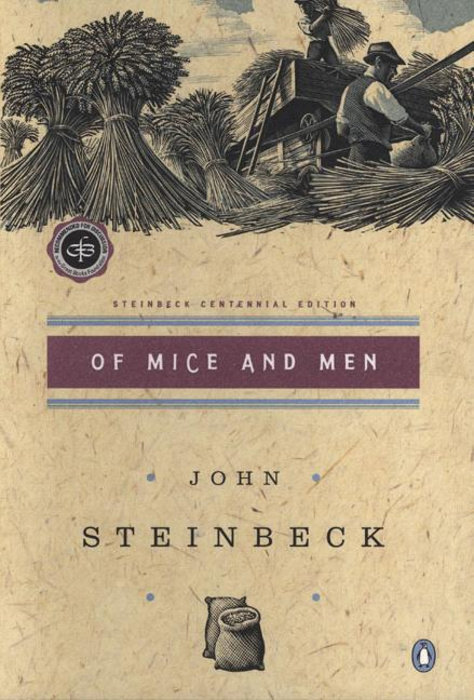
“I got you to look after me, and you got me to look after you, and that's why.” They are an unlikely pair: George is "small and quick and dark of face"; Lennie, a man of tremendous size, has the mind of a young child. Yet they have formed a "family," clinging together in the face of loneliness and alienation. Laborers in California's dusty vegetable fields, they hustle work when they can, living a hand-to-mouth existence. But George and Lennie have a plan: to own an acre of land and a shack they can call their own.While the powerlessness of the laboring class is a recurring theme in Steinbeck's work of the late 1930s, he narrowed his focus when composing Of Mice and Men, creating an intimate portrait of two men facing a world marked by petty tyranny, misunderstanding, jealousy, and callousness. But though the scope is narrow, the theme is universal: a friendship and a shared dream that makes an individual's existence meaningful.A unique perspective on life's hardships, this story has achieved the status of timeless classic due to its remarkable success as a novel, a Broadway play, and three acclaimed films.

Robert Timberg weaves together the lives of Annapolis graduates John McCain, James Webb, Oliver North, Robert McFarlane, and John Poindexter to reveal how the Vietnam War continues to haunt America. Casting all five men as metaphors for a legion of well-meaning if ill-starred warriors, Timberg probes the fault line between those who fought the war and those who used money, wit, and connections to avoid battle. A riveting tale that illuminates the flip side of the fabled Vietnam generation -- those who went.

Brings together three hilarious pieces by America's comic genius: Without Feathers, a secret journal that addresses life's "big" questions; Getting Even, Woody as psychologist, historian, and philosopher; and Side Effects, Woody's take on UFOs and more.

It follows the experiences of an unnamed protagonist struggling with insomnia. Inspired by his doctor's exasperated remark that insomnia is not suffering, the protagonist finds relief by impersonating a seriously ill person in several support groups. Then he meets a mysterious man named Tyler Durden and establishes an underground fighting club as radical psychotherapy.

Challenging conventional history, Amity Shlaes offers a reinterpretation of the Great Depression. She shows how both Presidents Hoover and Roosevelt failed to understand the prosperity of the 1920s and heaped massive burdens on the country that more than offset the benefit of New Deal programs.

Tom Wolfe's genre-defining magical mystery tour through the 1960s published in Vintage Classics for the first time to mark its fiftieth anniversary.WITH AN INTRODUCTION BY JARVIS COCKERIn the summer of 1964, author Ken Kesey and his Merry Band of Pranksters set out on an awesome social experiment like no other. Blazing across America in their day-glo schoolbus, doped up and deep ‘in the pudding’, the Pranksters’ arrival on the scene – anarchic, exuberant and LSD-infused – would turn on an entire counter-culture, and provide Tom Wolfe with the perfect free-wheeling subject for this, his pioneering masterpiece of New Journalism.' The Electric Kool-Aid Acid Test is not simply the best book on the hippies, it is the essential book...the pushing, ballooning heart of the matter' New York Times

As I Lay Dying is Faulkner’s harrowing account of the Bundren family’s odyssey across the Mississippi countryside to bury Addie, their wife and mother. Narrated in turn by each of the family members -- including Addie herself -- as well as others; the novel ranges in mood, from dark comedy to the deepest pathos. Considered one of the most influential novels in American fiction in structure, style, and drama, As I Lay Dying is a true 20th-century classic. This edition reproduces the corrected text of As I Lay Dying as established in 1985 by Noel Polk.

From the bestselling author of The Ascent of Money and The Square and the TowerIs America an empire? Certainly not, according to our government. Despite the conquest of two sovereign states in as many years, despite the presence of more than 750 military installations in two thirds of the world’s countries and despite his stated intention "to extend the benefits of freedom...to every corner of the world," George W. Bush maintains that "America has never been an empire." "We don’t seek empires," insists Defense Secretary Rumsfeld. "We’re not imperialistic." Nonsense, says Niall Ferguson. In Colossus he argues that in both military and economic terms America is nothing less than the most powerful empire the world has ever seen. Just like the British Empire a century ago, the United States aspires to globalize free markets, the rule of law, and representative government. In theory it’s a good project, says Ferguson. Yet Americans shy away from the long-term commitments of manpower and money that are indispensable if rogue regimes and failed states really are to be changed for the better. Ours, he argues, is an empire with an attention deficit disorder, imposing ever more unrealistic timescales on its overseas interventions. Worse, it’s an empire in denial—a hyperpower that simply refuses to admit the scale of its global responsibilities. And the negative consequences will be felt at home as well as abroad. In an alarmingly persuasive final chapter Ferguson warns that this chronic myopia also applies to our domestic responsibilities. When overstretch comes, he warns, it will come from within—and it will reveal that more than just the feet of the American colossus is made of clay.

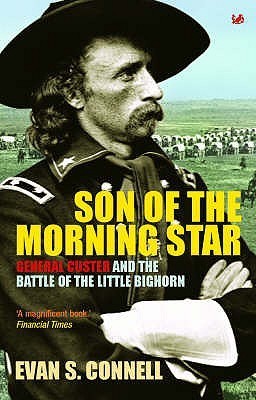
On a scorching June Sunday in 1876, thousands of Indian warriors - Lakota Sioux, Cheyenne and Arapaho - converged on a grassy ridge above the valley of Montana's Little Bighorn River. On the ridge five companies of United States cavalry - 262 soldiers, comprising officers and troopers - fought desperately but hopelessly. When the guns fell silent, no soldier - including their commanding officer, Lt Col. George Armstrong Custer - had survived. Custer's Last Stand is among the most enduring events in American history - 130 years after the fact, books continue to be written and people continue to argue about even the most basic details surrounding the Little Bighorn. Evan S. Connell, whom Joyce Carol Oates has described as 'one of our most interesting and intelligent American writers', wrote what continues to be the most reliable - and compulsively readable - account of the subject. Connell makes good use of his research and novelist's eye for story and detail to re-create the heroism, foolishness and savagery of this crucial chapter in the history of the West.

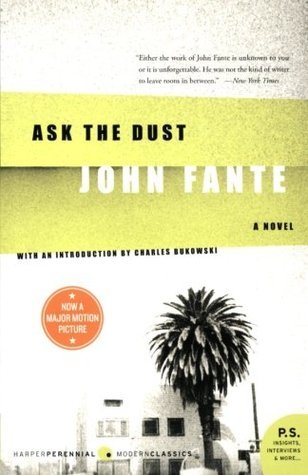
"Fante was my god." —Charles Bukowski, in his introduction to Ask the DustArturo Bandini, a young, struggling Italian-American writer living in a seedy hotel in 1930s Los Angeles, falls hard for the elusive, mocking, unstable Camilla Lopez, a Mexican waitress. The pair embark on a strange and strained love-hate relationship, which slowly, but inexorably, descends into the realm of madness.Ask the Dust is one of the truly great, yet unsung, American novels of the twentieth century. A tough and unsentimental story with a soft and tender heart, it remains as fresh and affecting as the day it was written.

What Makes Sammy Run?Everyone of us knows someone who runs. He is one of the symp-toms of our times—from the little man who shoves you out of the way on the street to the go-getter who shoves you out of a job in the office to the Fuehrer who shoves you out of the world. And all of us have stopped to wonder, at some time or another, what it is that makes these people tick. What makes them run?This is the question Schulberg has asked himself, and the answer is the first novel written with the indignation that only a young writer with talent and ideals could concentrate into a manuscript. It is the story of Sammy Glick, the man with a positive genius for being a heel, who runs through New York’s East Side, through newspaper ranks and finally through Hollywood, leaving in his wake the wrecked careers of his associates; for this is his tragedy and his chief characteristic—his congenital incapacity for friendship.An older and more experienced novelist might have tempered his story and, in so doing, destroyed one of its outstanding qualities. Compromise would mar the portrait of Sammy Glick. Schulberg has etched it in pure vitriol, and dissected his victim with a precision that is almost frightening.When a fragment of this book appeared as a short story in a national magazine, Schulberg was surprised at the number of letters he received from people convinced they knew Sammy Glick’s real name. But speculation as to his real identity would be utterly fruitless, for Sammy is a composite picture of a loud and spectacular minority bitterly resented by the many decent and sincere artists who are trying honestly to realize the measureless potentialities of motion pictures. To this group belongs Schulberg himself, who has not only worked as a screen writer since his graduation from Dartmouth College in 1936, but has spent his life, literally, in the heart of the motion-picture colony. In the course of finding out what makes Sammy run (an operation in which the reader is spared none of the grue-some details) Schulberg has poured out everything he has felt about that place. The result is a book which the publishers not only believe to be the most honest ever written about Hollywood, but a penetrating study of one kind of twentieth-century success that is peculiar to no single race of people or walk of life.

Down-and-out drunk Terry Lennox has a problem: his millionaire wife is dead and he needs to get out of LA fast. So he turns to the only friend he can trust: private investigator Philip Marlowe. Marlowe is willing to help a man down on his luck, but later Lennox commits suicide in Mexico and things start to turn nasty. Marlowe is drawn into a sordid crowd of adulterers and alcoholics in LA's Idle Valley, where the rich are suffering one big suntanned hangover. Marlowe is sure Lennox didn't kill his wife, but how many stiffs will turn up before he gets to the truth?

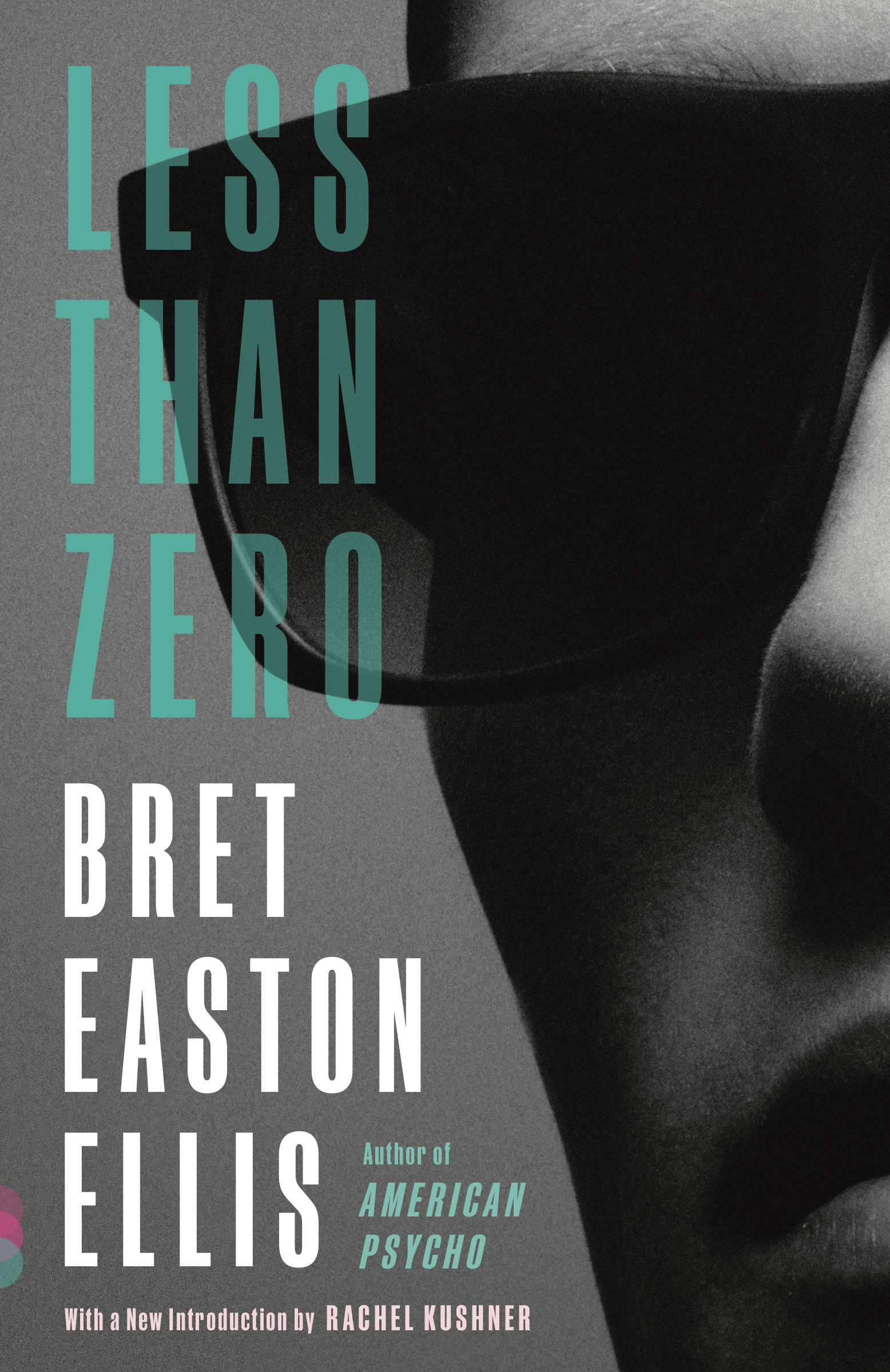
Set in Los Angeles in the early 1980s, this coolly mesmerizing novel is a raw, powerful portrait of a lost generation that experienced sex, drugs, and disaffection at too early an age, growing up in a world shaped by casual nihilism, passivity, and too much money.Clay comes home for Christmas vacation from his Eastern college and re-enters a landscape of limitless privilege and absolute moral entropy, where everyone drives Porches, dines at Spago, and snorts mountains of cocaine. He tries to renew feelings for his girlfriend, Blair, and for his best friend from high school, Julian, who is careering into hustling and heroin. Clay's holiday turns into a dizzying spiral of desperation that takes him through the relentless parties in glitzy mansions, seedy bars, and underground rock clubs, and into the seamy world of L.A. after dark.

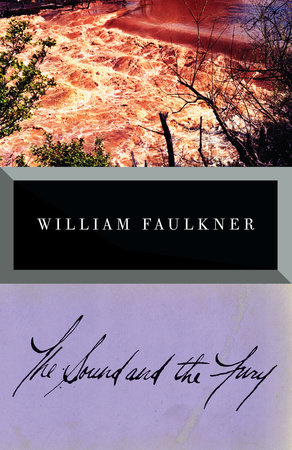
The tragedy of the Compson family features some of the most memorable characters in literature: beautiful, rebellious Caddy; the manchild Benjy; haunted, neurotic Quentin; Jason, the brutal cynic; and Dilsey, their black servant. Their lives fragmented and harrowed by history and legacy, the character’s voices and actions mesh to create what is arguably Faulkner’s masterpiece and one of the greatest novels of the twentieth century.

When "The Moviegoer" was first published in 1961, it won the National Book Award and established Walker Percy as one of the supplest and most deftly modulated new voices in Southern literature. In his portrait of a boyish New Orleans stockbroker wavering between ennui and the longing for redemption, Percy managed to combine Bourbon Street elegance with the spiritual urgency of a Russian novel.On the eve of his thirtieth birthday, Binx Bolling is adrift. He occupies himself dallying with his secretaries and going to movies, which provide him with the "treasurable moments" absent from his real life. But one fateful Mardi Gras, Binx embarks on a quest - a harebrained search for authenticity that outrages his family, endangers his fragile cousin Kate, and sends him reeling through the gaudy chaos of the French Quarter. Wry and wrenching, rich in irony and romance, "The Moviegoer" is a genuine American classic.

From Pulitzer Prize-winning author Taylor Branch, the second part of his epic trilogy on the American Civil Rights Movement.In the second volume of his three-part history, a monumental trilogy that began with Parting the Waters, winner of the Pulitzer Prize and the National Book Critics Circle Award, Taylor Branch portrays the Civil Rights Movement at its zenith, recounting the climactic struggles as they commanded the national stage.

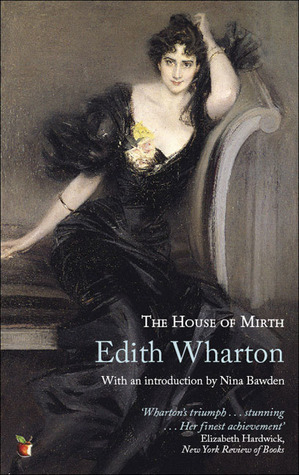
First published in 1905, THE HOUSE OF MIRTH shocked the New York society it so deftly chronicles, portraying the moral, social and economic restraints on a woman who dared to claim the privileges of marriage without assuming the responsibilities.Lily Bart, beautiful, witty and sophisticated, is accepted by ‘old money’ and courted by the growing tribe of nouveaux riches. But as she nears thirty, her foothold becomes precarious; a poor girl with expensive tastes, she needs a husband to preserve her social standing and to maintain her in the luxury she has come to expect. Whilst many have sought her, something – fastidiousness or integrity- prevents her from making a ‘suitable’ match.

Gore Vidal's Narratives of Empire series spans the history of the United States from the Revolution to the post-World War II years. With their broad canvas and large cast of fictional and historical characters, the novels in this series present a panorama of the American political and imperial experience as interpreted by one of its most worldly, knowing, and ironic observers. Burr is a portrait of perhaps the most complex and misunderstood of the Founding Fathers. In 1804, while serving as vice president, Aaron Burr fought a duel with his political nemesis, Alexander Hamilton, and killed him. In 1807, he was arrested, tried, and acquitted of treason. In 1833, Burr is newly married, an aging statesman considered a monster by many. Burr retains much of his political influence if not the respect of all. And he is determined to tell his own story. As his amanuensis, he chooses Charles Schermerhorn Schuyler, a young New York City journalist, and together they explore both Burr's past and the continuing political intrigues of the still young United States.

Now with a new introduction describing the fallout of America’s consumer credit boom, 1994’s wildly acclaimed bestseller A Piece of the Action tells the story of how millions of middle class Americans went from being savers to borrowers and investors through the invention of credit cards, mutual funds, and IRAs—resulting in profound societal change.Tracing the invention of products like credit cards, mutual funds, and individual retirement accounts, A Piece of the Action tells the stories of a handful of men who transformed the way Americans think about and deal with their money: men like Charles Merrill, the flamboyant founder of Merrill Lynch; Peter Lynch, the investing guru who managed the Fidelity Magellan Fund; and Charles Schwab, who transformed his eponymous company into the nation’s biggest discount broker. These innovations produced a genuine revolution—the democratization of money—in which the middle class became financial players.Author Joe Nocera’s 2013 introduction describes where this revolution took those who embraced it, that is, practically all of us. We have gone into debt, made dicey investments, and lived through many bursting bubbles. We used the financial tools we now had at our disposal to act on bets and dares we didn’t yet understand. We bet on the Internet, borrowed on our homes, and compromised our retirements in pursuit of the American dream.A Piece of the Action is an important piece of financial and social history, and Nocera’s 2013 critique of the uses of the revolution is a powerful warning and admonition to understand what is at stake before we act.

The wild rush of action in this classic frontier adventure story has made The Last of the Mohicans the most popular of James Fenimore Cooper’s Leatherstocking Tales. Deep in the forests of upper New York State, the brave woodsman Hawkeye (Natty Bumppo) and his loyal Mohican friends Chingachgook and Uncas become embroiled in the bloody battles of the French and Indian War. The abduction of the beautiful Munro sisters by hostile savages, the treachery of the renegade brave Magua, the ambush of innocent settlers, and the thrilling events that lead to the final tragic confrontation between rival war parties create an unforgettable, spine-tingling picture of life on the frontier. And as the idyllic wilderness gives way to the forces of civilization, the novel presents a moving portrayal of a vanishing race and the end of its way of life in the great American forests.

Do lobsters feel pain? Did Franz Kafka have a funny bone? What is John Updike's deal, anyway? And what happens when adult video starlets meet their fans in person? David Foster Wallace answers these questions and more in essays that are also enthralling narrative adventures. Whether covering the three-ring circus of a vicious presidential race, plunging into the wars between dictionary writers, or confronting the World's Largest Lobster Cooker at the annual Maine Lobster Festival, Wallace projects a quality of thought that is uniquely his and a voice as powerful and distinct as any in American letters.Contains: "Big Red Son," "Certainly the End of Something or Other, One Would Sort of Have to Think," "Some Remarks on Kafka's Funniness from Which Probably Not Enough Has Been Removed," "Authority and American Usage," "The View from Mrs. Thompson's," "How Tracy Austin Broke My Heart," "Up, Simba," "Consider the Lobster," "Joseph Frank's Dostoevsky" and "Host."

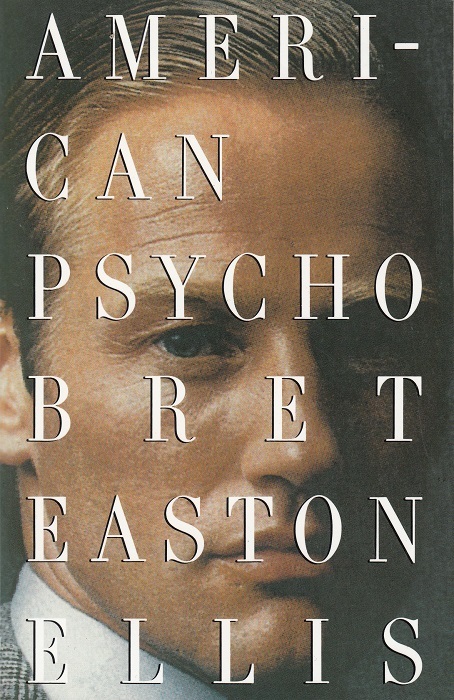
Patrick Bateman is twenty-six and works on Wall Street. He is handsome, sophisticated, charming and intelligent. He is also a psychopath. Taking us to head-on collision with America's greatest dream—and its worst nightmare—American Psycho is a bleak, bitter, black comedy about a world we all recognize but do not wish to confront.

This definitive poetry collection, originally published in 1954 to honor Stevens on his 75th birthday, contains:- "Harmonium"- "Ideas of Order"- "The Man With the Blue Guitar"- "Parts of the World"- "Transport Summer"- "The Auroras of Autumn"- "The Rock"

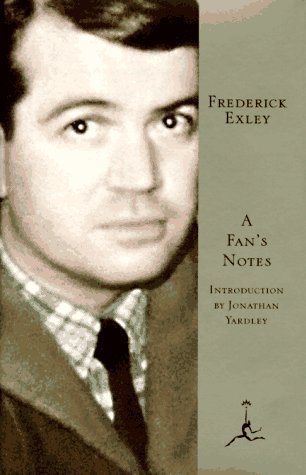
Frederick Exley's inimitable "fictional memoir" A Fan's Notes has assumed the status of a classic since its first publication in 1968. Mordantly and poignantly, Exley describes the profound failures of his life; professional, sexual, and personal. His attempts to find a place for himself in an unaccommodating world take him from the University of Southern California to Chicago, where he meets the dangerously seductive, lovely, Bunny Sue Allorgee, to New York City's Greenwich Village saloons, and back to Watertown, his hometown in upstate New York, where he spends months on his mother's living room davenport watching television before undergoing shock treatment at Avalon Valley hospital. Between bars, women and jobs, Exley exercises his obsession with the New York Giants and their great halfback Frank Gifford, until he at last realizes his life's ambition: writing A Fan's Notes, an Institute of Arts and Letters' Rosenthal Award for "that work which...is a considerable literary achievement." It was described by Robert Penn Warren as "a moving and memorable book," by Michael Crichton as "a devastating novel," and by William Gass as "an instructive, powerful and bruising experience." In Newsweek, Jack Kroll wrote that the novel is "a welcome reminder of what the basic business of literature and of living really is. All fans of life and art should read it." This Modern Library edition includes an Introduction by Frederick Exley's biographer, Washington Post book critic and columnist Jonathan Yardley. A Fan's Notes was nominated for a National Book Award, won the William Faulkner Award for "the year's most notable first novel," and was awarded the National Academy...

Alternate-cover edition can be found here In his second collection, Carver establishes his reputation as one of the most celebrated and beloved short-story writers in American literature—a haunting meditation on love, loss, and companionship, and finding one’s way through the dark.

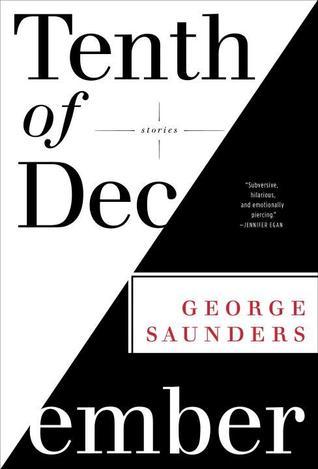
One of the most important and blazingly original writers of his generation, George Saunders is an undisputed master of the short story, and Tenth of December is his most honest, accessible, and moving collection yet.In the taut opening, "Victory Lap," a boy witnesses the attempted abduction of the girl next door and is faced with a harrowing choice: Does he ignore what he sees, or override years of smothering advice from his parents and act? In "Home," a combat-damaged soldier moves back in with his mother and struggles to reconcile the world he left with the one to which he has returned. And in the title story, a stunning meditation on imagination, memory, and loss, a middle-aged cancer patient walks into the woods to commit suicide, only to encounter a troubled young boy who, over the course of a fateful morning, gives the dying man a final chance to recall who he really is. A hapless, deluded owner of an antique store; two mothers struggling to do the right thing; a teenage girl whose idealism is challenged by a brutal brush with reality; a man tormented by a series of pharmaceutical experiments that force him to lust, to love, to kill—the unforgettable characters that populate the pages of Tenth of December are vividly and lovingly infused with Saunders' signature blend of exuberant prose, deep humanity, and stylistic innovation.Writing brilliantly and profoundly about class, sex, love, loss, work, despair, and war, Saunders cuts to the core of the contemporary experience. These stories take on the big questions and explore the fault lines of our own morality, delving into the questions of what makes us good and what makes us human.Unsettling, insightful, and hilarious, the stories in Tenth of December—through their manic energy, their focus on what is redeemable in human beings, and their generosity of spirit—not only entertain and delight; they fulfill Chekhov's dictum that art should "prepare us for tenderness."

“Writing about yourself is a funny business…But in a project like this, the writer has made one promise, to show the reader his mind. In these pages, I’ve tried to do this.” —Bruce Springsteen, from the pages of Born to RunIn 2009, Bruce Springsteen and the E Street Band performed at the Super Bowl’s halftime show. The experience was so exhilarating that Bruce decided to write about it. That’s how this extraordinary autobiography began. Over the past seven years, Bruce Springsteen has privately devoted himself to writing the story of his life, bringing to these pages the same honesty, humor, and originality found in his songs. He describes growing up Catholic in Freehold, New Jersey, amid the poetry, danger, and darkness that fueled his imagination, leading up to the moment he refers to as “The Big Bang”: seeing Elvis Presley’s debut on The Ed Sullivan Show. He vividly recounts his relentless drive to become a musician, his early days as a bar band king in Asbury Park, and the rise of the E Street Band. With disarming candor, he also tells for the first time the story of the personal struggles that inspired his best work, and shows us why the song “Born to Run” reveals more than we previously realized. Born to Run will be revelatory for anyone who has ever enjoyed Bruce Springsteen, but this book is much more than a legendary rock star’s memoir. This is a book for workers and dreamers, parents and children, lovers and loners, artists, freaks, or anyone who has ever wanted to be baptized in the holy river of rock and roll. Rarely has a performer told his own story with such force and sweep. Like many of his songs (“Thunder Road,” “Badlands,” “Darkness on the Edge of Town,” “The River,” “Born in the U.S.A.,” “The Rising,” and “The Ghost of Tom Joad,” to name just a few), Bruce Springsteen’s autobiography is written with the lyricism of a singular songwriter and the wisdom of a man who has thought deeply about his experiences.

An absorbing and original narrative history of American capitalismNAMED A BEST BOOK OF 2017 BY THE ECONOMISTFrom the days of the Mayflower and the Virginia Company, America has been a place for people to dream, invent, build, tinker, and bet the farm in pursuit of a better life. Americana takes us on a four-hundred-year journey of this spirit of innovation and ambition through a series of Next Big Things -- the inventions, techniques, and industries that drove American history from the telegraph, the railroad, guns, radio, and banking to flight, suburbia, and sneakers, culminating with the Internet and mobile technology at the turn of the twenty-first century. The result is a thrilling alternative history of modern America that reframes events, trends, and people we thought we knew through the prism of the value that, for better or for worse, this nation holds capitalism. In a winning, accessible style, Bhu Srinivasan boldly takes on four centuries of American enterprise, revealing the unexpected connections that link them. We learn how Andrew Carnegie's early job as a telegraph messenger boy paved the way for his leadership of the steel empire that would make him one of the nation's richest men; how the gunmaker Remington reinvented itself in the postwar years to sell typewriters; how the inner workings of the Mafia mirrored the trend of consolidation and regulation in more traditional business; and how a 1950s infrastructure bill triggered a series of events that produced one of America's most enduring KFC. Reliving the heady early days of Silicon Valley, we are reminded that the start-up is an idea as old as America itself.Entertaining, eye-opening, and sweeping in its reach, Americana is an exhilarating new work of narrative history.

The defining geopolitical contest of the twenty-first century is between China and the US. But is it avoidable? And if it happens, is the outcome already inevitable?China and America are world powers without serious rivals. They eye each other warily across the Pacific; they communicate poorly; there seems little natural empathy. A massive geopolitical contest has begun.America prizes freedom; China values freedom from chaos.America values strategic decisiveness; China values patience.America is becoming society of lasting inequality; China a meritocracy.America has abandoned multilateralism; China welcomes it.Kishore Mahbubani, a diplomat and scholar with unrivalled access to policymakers in Beijing and Washington, has written the definitive guide to the deep fault lines in the relationship, a clear-eyed assessment of the risk of any confrontation, and a bracingly honest appraisal of the strengths and weaknesses, and superpower eccentricities, of the US and China.

Popular consensus says that the US rose over two centuries to Cold War victory and world domination, and is now in slow decline. But is this right? History’s great civilisations have always lasted much longer, and for all its colossal power, the US was overshadowed by Europe until recently. What if this isn’t the end?Bruno Maçães offers a compelling vision of America’s future, both fascinating and unnerving. From the early American Republic, Maçães takes us to the turbulent present, when, he argues, America is finally forging its own path. We can see the birth pangs of this new civilisation in today’s debates on guns, religion, foreign policy and the significance of Trump. What will its values be, and what will this new America look like?

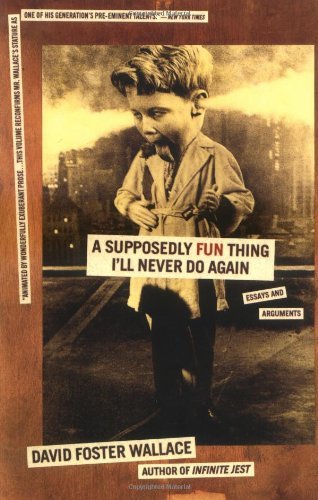
In this exuberantly praised book — a collection of seven pieces on subjects ranging from television to tennis, from the Illinois State Fair to the films of David Lynch, from postmodern literary theory to the supposed fun of traveling aboard a Caribbean luxury cruiseliner — David Foster Wallace brings to nonfiction the same curiosity, hilarity, and exhilarating verbal facility that has delighted readers of his fiction, including the bestselling Infinite Jest.

1893 This is the tragic autobiography of an office dogsbody in Chicago. One day he meets the father who abandoned him as a child. The first graphic novel to win a major British literary award took the Guardian First Book Award 2001.

Novelist, poet, dramatist and author of many of the best American short stories of our time, Joyce Carol Oates shows yet another aspect of her unbounded creativity in these tales of the grotesque. Haunted, a collection of sixteen tales that range from classic ghost stories to portrayals of chilling psychological terror, raises the genre to the level of fine literature - complex, multi-layered, and gripping fiction that is very scary indeed. In the title story, "Haunted, " the pubescent Melissa and her best friend, the sexually precocious Mary Lou, ignore "no trespassing" signs to explore forbidden houses. But the deserted Minton farm is one place where they should not have gone, and years later Melissa is tormented by her memories of its malevolence...and the murder of Mary Lou. In the novella, "The Model, " a sexual threat seems to underlie the interaction between young Sybil Blake and "Mr. Starr, " who asks her to be his model, but the truth about her own identity, and his, shows that the danger is lurking in a different part of the heart. The "Accursed Inhabitants of the House of Bly, " a macabre reworking of Henry James's "The Turn of the Screw, " resurrects the evil of Miss Jessel and Quint, who are up to their old tricks with the children, Miles and Flora, but with new, perverse, and brilliant revelations. The tales in this collection plunge the reader into nightmare worlds where violence slips in unexpectedly, where reality turns into a funhouse mirror, and where American culture goes awry in shocking, provocative ways. Joyce Carol Oates is a master storyteller of the dark side. She writes with skillfully controlled prose, tightly woven plots, and deep psychological insight that m her fictional horror worthy to set alongside the stories of Edgar Allan Poe - and far above all the rest.Haunted --The doll --The bingo master --The white cat --The model --Extenuating circumstances --Don't you trust me --The guilty party --The premonition --Phase change --Poor Bibi --Thanksgiving --Blind --The radio astronomer --Accursed inhabitants of the House of Bly --Martyrdom

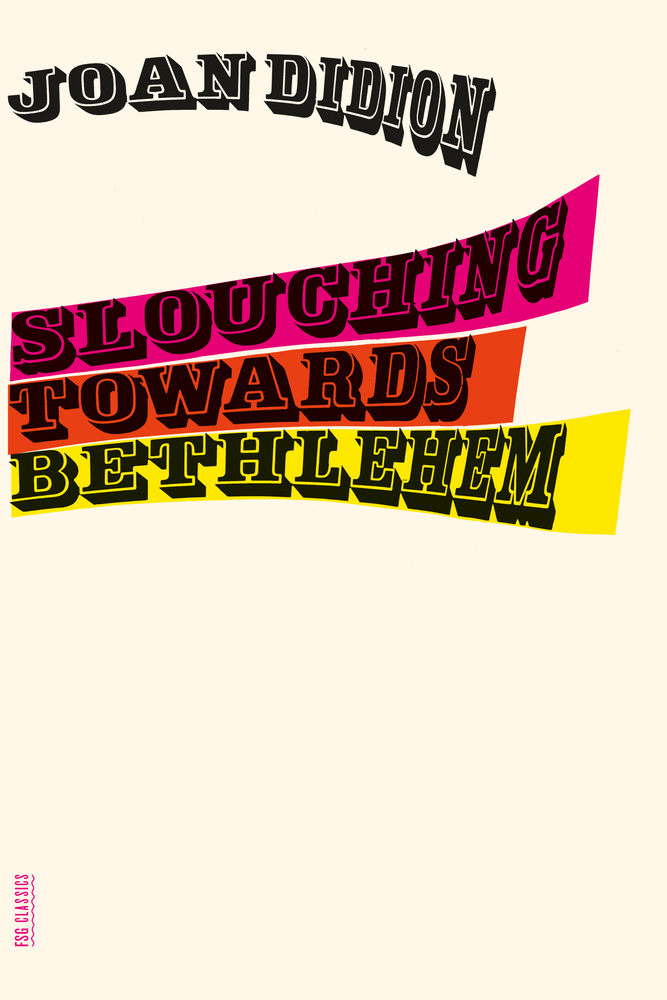
The first nonfiction work by one of the most distinctive prose stylists of our era, Joan Didion's Slouching Towards Bethlehem remains, decades after its first publication, the essential portrait of America—particularly California—in the sixties.It focuses on such subjects as John Wayne and Howard Hughes, growing up a girl in California, ruminating on the nature of good and evil in a Death Valley motel room, and, especially, the essence of San Francisco's Haight-Ashbury, the heart of the counterculture.It contains Didion's famous essay, "Goodbye to All That".

Set against the backdrop of a lush and exotic Greece, The Names is considered the book which began to drive "sharply upward the size of his readership" (Los Angeles Times Book Review). Among the cast of DeLillo's bizarre yet fully realized characters in The Names are Kathryn, the narrator's estranged wife; their son, the six-year-old novelist; Owen, the scientist; and the neurotic narrator obsessed with his own neuroses. A thriller, a mystery, and still a moving examination of family, loss, and the amorphous and magical potential of language itself, The Names stands with any of DeLillo's more recent and highly acclaimed works. "The Names not only accurately reflects a portion of our contemporary world but, more importantly, an original world of its own is created."--Chicago Sun-Times"DeLillo sifts experience through simultaneous grids of science and poetry, analysis and clear sight, to make a high-wire prose that is voluptuously stark."--Village Voice Literary Supplement"DeLillo verbally examines every state of consciousness from eroticism to tourism, from the idea of America as conceived by the rest of the world, to the idea of the rest of the world as conceived by America, from mysticism to fanaticism."--New York Times

Set in post-war Europe, fresh-out-of-law-school Philip Warren takes a year to discover his future. In this classic coming-of-age story, Philip journeys through various affairs, misadventures, and cities full of unforgettable characters that prompt his self-discovery and lessons on taking pleasure in both love and life.

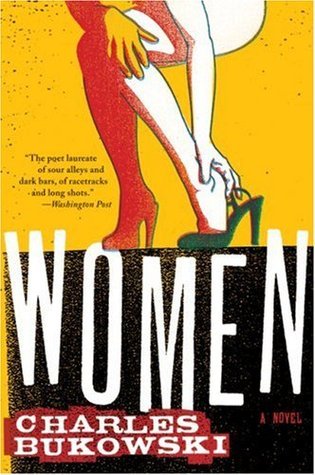
Low-life writer and unrepentant alcoholic Henry Chinaski was born to survive. After decades of slacking off at low-paying dead-end jobs, blowing his cash on booze and women, and scrimping by in flea-bitten apartments, Chinaski sees his poetic star rising at last. Now, at fifty, he is reveling in his sudden rock-star life, running three hundred hangovers a year, and maintaining a sex life that would cripple Casanova.

A ruthless dissection of American life in the late 1960s, Play It as It Lays captures the mood of an entire generation, the ennui of contemporary society reflected in spare prose that blisters and haunts the reader. Set in a place beyond good and evil - literally in Hollywood, Las Vegas, and the barren wastes of the Mojave Desert, but figuratively in the landscape of an arid soul - it remains more than three decades after its original publication a profoundly disturbing novel, riveting in its exploration of a woman and a society in crisis and stunning in the still-startling intensity of its prose.

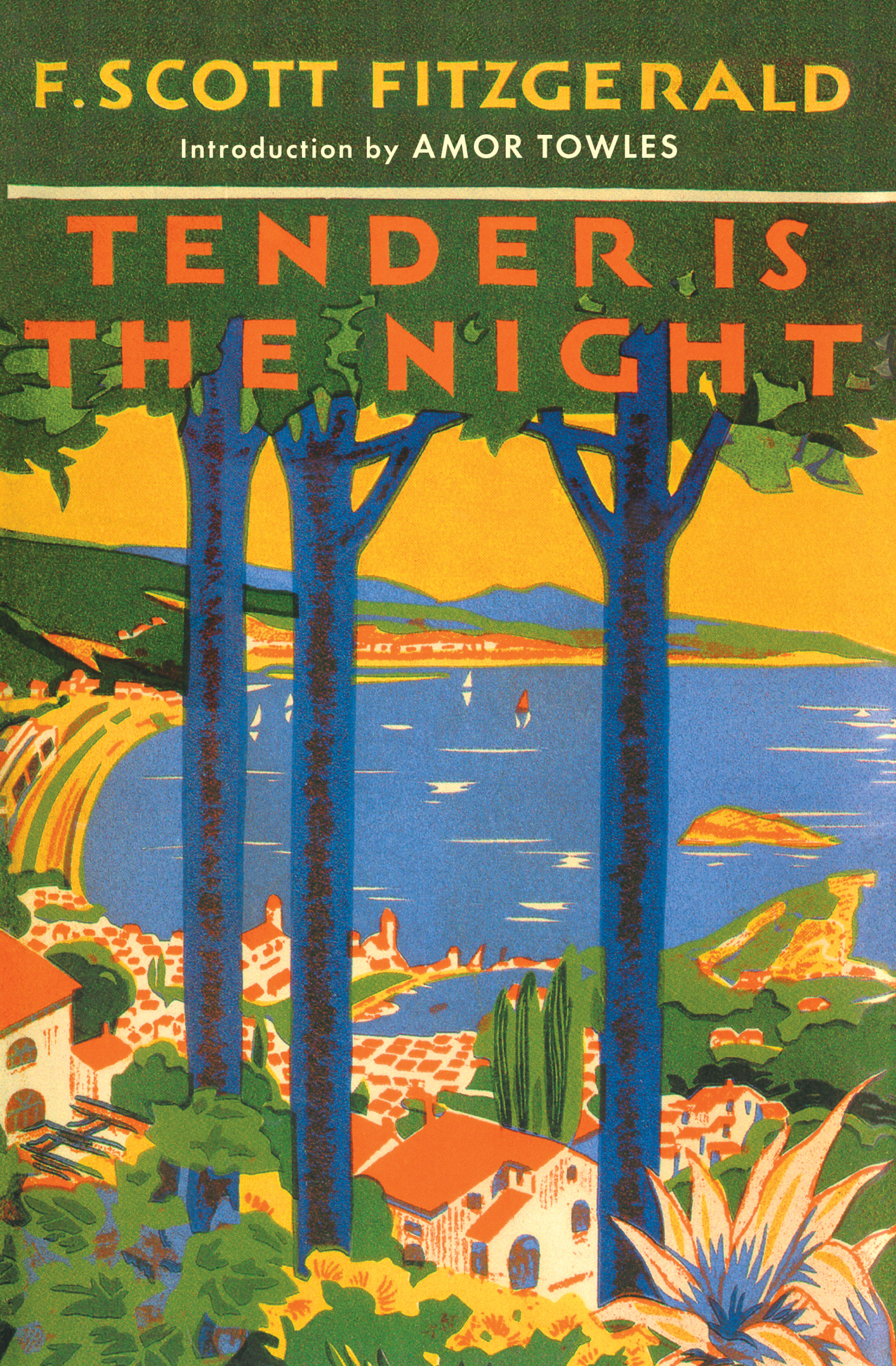
Set on the French Riviera in the late 1920s, Tender Is the Night is the tragic romance of the young actress Rosemary Hoyt and the stylish American couple Dick and Nicole Diver. A brilliant young psychiatrist at the time of his marriage, Dick is both husband and doctor to Nicole, whose wealth goads him into a lifestyle not his own, and whose growing strength highlights Dick's harrowing demise. A profound study of the romantic concept of character, Tender Is the Night is lyrical, expansive, and hauntingly evocative.

For the first time, the full story of what happened when Frank brought his best pals to party in a land called VegasJanuary 1960. Las Vegas is at its smooth, cool peak. The Strip is a jet-age theme park, and the greatest singer in the history of American popular music summons a group of friends there to make a movie. One is an insouciant singer of Italian songs, ex-partner to the most popular film comedian of the day. One is a short, black, Jewish, one-eyed, singing, dancing wonder. One is an upper-crust British pretty boy turned degenerate B-movie star actor, brother-in-law to an ascendant politician. And one is a stiff-shouldered comic with the quintessential Borscht Belt emcee’s knack for needling one-liners. The architectonically sleek marquee of the Sands Hotel announces their presence simply by listing their FRANK SINATRA. DEAN MARTIN. SAMMY DAVIS, JR. PETER LAWFORD. JOEY BISHOP. Around them an entire cast actors, comics, singers, songwriters, gangsters, politicians, and women, as well as thousands of starstruck everyday folks who fork over pocketfuls of money for the privilege of basking in their presence. They call themselves The Clan. But to an awed world, they are known as The Rat Pack.They had it all. Fame. Gorgeous women. A fabulouse playground of a city and all the money in the world. The backing of fearsome crime lords and the blessing of the President of the United States. But the dark side–over the thin line between pleasure and debauchery, between swinging self-confidence and brutal arrogance–took its toll. In four years, their great ride was over, and showbiz was never the same.Acclaimed Jerry Lewis biographer Shawn Levy has written a dazzling portrait of a time when neon brightness cast sordid shadows. It was Frank’s World, and we just lived in it.

Perceptive, funny, and nostalgic, E.B. White's stroll around Manhattan remains the quintessential love letter to the city, written by one of America's foremost literary figures. The New York Times has named Here is New York one of the ten best books ever written about the metropolis, and The New Yorker calls it "the wittiest essay, and one of the most perceptive, ever done on the city.

In Anne Lamott's wise and witty novel, the growing pains of motherhood are portrayed with rare humor and honesty. If Elizabeth Ferguson had her way, she'd spend her days savoring good books, cooking great meals, and waiting for the love of her life to walk in the door. But it's not a man she's waiting for, it's her daughter, Rosie--her wild-haired, smart-mouthed, and wise-beyond-her-years alter ego. With Rosie around, the days aren't quite so long, but Elizabeth can't keep the realities of the world at bay, and try as she might, she can't shield Rosie from its dangers or mysteries. As Rosie grows older and more curious, Elizabeth must find a way to nurture her extraordinary daughter—even if it means growing up herself.

Traces the life and career of the California artist, who currently works with pure light and the subtle modulation of empty space

Who is Ted L. Nancy? He's a superstitious Vegas high-roller who wants to gamble at a casino in his lucky shrimp outfit...He's the genius inventor of "Six Day Underwear"...He's a stage actor who only travels while dressed as a stick of butter...He is, in reality, a twisted prankster—a supremely off-kilter alter ego who sends patently ridiculous letters to corporate honchos, entertainment conglomerates, national publications, politicians, celebrities and heads of state. His innocent requests, queries, complaints, demands, and suggestions are so absurd it is amazing they fool anyone—but often the deadpan responses he receives are even more hilarious: "Dear Mr. Nancy, It is not often that we receive such enthusiastic support for the paper bag." —The Paper Bag Council"On behalf of Greyhound, there should be no problem traveling while in your butter costume." —Greyhound Bus Lines"I look forward to working with you to create a better future for this great nation." —Vice President Al GoreLetters From A Nut is an insanely inspired, truly madcap collection of Nancy correspondence, a wet-yourself-in-a-public place funny aggregation of official—and officially certifiable—requests, complaints, fan mail and questions that could not possibly have been taken seriously...but, amazingly, were.

We are behind, and below, the scenes of JFK's presidential election, the Bay of Pigs, the assassination—in the underworld that connects Miami, Los Angeles, Chicago, D.C....Where the CIA, the Mob, J. Edgar Hoover, Howard Hughes, Jimmy Hoffa, Cuban political exiles, and various loose cannons conspire in a covert anarchy...Where the right drugs, the right amount of cash, the right murder, buys a moment of a man's loyalty...Where three renegade law-enforcement officers—a former L.A. cop and two FBI agents—are shaping events with the virulence of their greed and hatred, riding full-blast shotgun into history....James Ellroy's trademark nothing-spared rendering of reality, blistering language, and relentless narrative pace are here in electrifying abundance, put to work in a novel as shocking and daring as anything he's written: a secret history that zeroes in on a time still shrouded in secrets and blows it wide open.Chosen by Time magazine as one of the ten best books of the year."Hard-bitten ... ingenious ... Ellroy segues into political intrigue without missing a beat." —The New York Times"Vastly entertaining." —Los Angeles Times"One hellishly exciting ride." —Detroit Free Press"A supremely controlled work of art." —The New York Times Book Review

From the early years of fur trading to today's Silicon Valley empires, America has proved to be an extraordinarily fertile land for the creation of enormous fortunes. Each generation has produced one or two phenomenally successful leaders, often in new industries that caught contemporaries by surprise, and each of these new fortunes reconfirmed the power of fanatically single-minded visionaries. John Jacob Astor and Cornelius Vanderbilt were the first American moguls; John D. Rockefeller, Andrew Carnegie, and J. P. Morgan were kingpins of the Gilded Age; David Sarnoff, Walt Disney, Ray Kroc, and Sam Walton were masters of mass culture. Today Oprah Winfrey, Andy Grove, and Bill Gates are giants of the Information Age. America has again and again been the land of dizzying mountains of wealth. Here, in a wittily told and deeply insightful history, is a complete set of portraits of America's greatest generators of wealth. Only such a collective study allows us to appreciate what makes the great entrepreneurs really tick. As H. W. Brands shows, these men and women are driven, they are focused, they deeply identify with the businesses they create, and they possess the charisma necessary to persuade other talented people to join them. They do it partly for the money, but mostly for the thrill of creation.The stories told here -- including how Nike got its start as a business-school project for Phil Knight; how Robert Woodruff almost refused to take control of Coca-Cola to spite his father; how Thomas Watson saved himself from prison by rescuing Dayton, Ohio, from a flood; how Jay Gould nearly cornered the gold market; how H. L. Hunt went from gambling at cards to gambling with oilleases -- make for a narrative that is always lively and revealing and often astonishing. An observer in 1850, studying John Jacob Astor, would not have predicted the rise of Henry Ford and the auto industry. Nor would a student of Ford in 1950 have anticipated the takeoff of direct marketing that made Mary Kay Ash a trusted guide for millions of American women. Full of surprising insights, written with H. W. Brands's trademark flair, the stories in "Masters of Enterprise" are must reading for all students of American business history.

An award-winning poet's testimony of the war in Vietnam.

The prison writings of Kurdish freedom fighter and PKK leader Abdullah Ocalan

Eve Babitz captured the voluptuous quality of L.A. in the1960s in a wildly original, totally unique voice. These stories are time capsule gems, as poignant and startling today as they were when published in the early 1970s. Eve Babitz is not well known today, but she should be. Her first hand experiences in the L.A. cultural scene, translated into haunting fiction, are an unforgettable glimpse at a lost world and a magical time.

The Yage an early epistolary novel by William S. Burroughs, whose 1952 account of himself as Junkie, published under the pseudonym William Lee, ended "Yage may be the final fix." In letters to Allen Ginsberg, an unknown young poet in New York, his journey to the Amazon jungle is recorded, detailing picaresque incidents of search for telepathic-hallucinogenic-mind-expanding drug Yage (Ayahuasca, or Banisteriopsis Caapé) used by Amazon Indian doctors for finding lost objects, mostly bodies and souls. Author and recipient of these letters met again in New York, Xmas 1953, pruned and edited the writings to form a single book. Correspondence contains first seeds of later Burroughsian fantasy in Naked Lunch. Seven years later Ginsberg in Peru writes his old guru an account of his own visions and terrors with the same drug, appealing for further counsel. Burroughs' mysterious reply is sent. The volume concludes with two a short note from Ginsberg on his return from the Orient years later reassuring Self that he is still here on earth, and a final poetic cut-up by Burroughs, "I Am Dying Meester?"

Cholera was the classic epidemic disease of the nineteenth century, as the plague had been for the fourteenth. Its defeat was a reflection not only of progress in medical knowledge but of enduring changes in American social thought. Rosenberg has focused his study on New York City, the most highly developed center of this new society. Carefully documented, full of descriptive detail, yet written with an urgent sense of the drama of the epidemic years, this narrative is as absorbing for general audiences as it is for the medical historian. In a new Afterword, Rosenberg discusses changes in historical method and concerns since the original publication of The Cholera Years ."A major work of interpretation of medical and social thought . . . this volume is also to be commended for its skillful, absorbing presentation of the background and the effects of this dread disease."—I.B. Cohen, New York Times" The Cholera Years is a masterful analysis of the moral and social interest attached to epidemic disease, providing generally applicable insights into how the connections between social change, changes in knowledge and changes in technical practice may be conceived."—Steven Shapin, Times Literary Supplement"In a way that is all too rarely done, Rosenberg has skillfully interwoven medical, social, and intellectual history to show how medicine and society interacted and changed during the 19th century. The history of medicine here takes its rightful place in the tapestry of human history."—John B. Blake, Science

Begun in 1959 by a twenty-two-year-old Hunter S. Thompson, The Rum Diary is a tangled love story of jealousy, treachery, and violent alcoholic lust in the Caribbean boomtown that was San Juan, Puerto Rico, in the late 1950s. The narrator, freelance journalist Paul Kemp, irresistibly drawn to a sexy, mysterious woman, is soon thrust into a world where corruption and get-rich-quick schemes rule and anything (including murder) is permissible.

Master of the Senate, Book Three of The Years of Lyndon Johnson, carries Johnson’s story through one of its most remarkable periods: his twelve years, from 1949 to 1960, in the United States Senate.At the heart of the book is its unprecedented revelation of how legislative power works in America, how the Senate works, and how Johnson, in his ascent to the presidency, mastered the Senate as no political leader before him had ever done. It was during these years that all Johnson’s experience—from his Texas Hill Country boyhood to his passionate representation in Congress of his hardscrabble constituents to his tireless construction of a political machine—came to fruition. Caro introduces the story with a dramatic account of the Senate itself: how Daniel Webster, Henry Clay, and John C. Calhoun had made it the center of governmental energy, the forum in which the great issues of the country were thrashed out. And how, by the time Johnson arrived, it had dwindled into a body that merely responded to executive initiatives, all but impervious to the forces of change. Caro anatomizes the genius for political strategy and tactics by which, in an institution that had made the seniority system all-powerful for a century and more, Johnson became Majority Leader after only a single term-the youngest and greatest Senate Leader in our history; how he manipulated the Senate’s hallowed rules and customs and the weaknesses and strengths of his colleagues to change the “unchangeable” Senate from a loose confederation of sovereign senators to a whirring legislative machine under his own iron-fisted control. Caro demonstrates how Johnson’s political genius enabled him to reconcile the unreconcilable: to retain the support of the southerners who controlled the Senate while earning the trust—or at least the cooperation—of the liberals, led by Paul Douglas and Hubert Humphrey, without whom he could not achieve his goal of winning the presidency. He shows the dark side of Johnson’s ambition: how he proved his loyalty to the great oil barons who had financed his rise to power by ruthlessly destroying the career of the New Dealer who was in charge of regulating them, Federal Power Commission Chairman Leland Olds. And we watch him achieve the impossible: convincing southerners that although he was firmly in their camp as the anointed successor to their leader, Richard Russell, it was essential that they allow him to make some progress toward civil rights. In a breathtaking tour de force, Caro details Johnson’s amazing triumph in maneuvering to passage the first civil rights legislation since 1875. Master of the Senate, told with an abundance of rich detail that could only have come from Caro’s peerless research, is both a galvanizing portrait of the man himself—the titan of Capital Hill, volcanic, mesmerizing—and a definitive and revelatory study of the workings and personal and legislative power.

Originally penned in the mid-eighteenth century by Frenchman Alexis de Tocqueville, Democracy in America remains one of the most penetrating and astute picture of American life, politics, and morals ever written, as relevant today as when it first appeared in print nearly two hundred years ago. This edition, based on the revised and corrected text of the 1961 French edition and meticulously edited by the distinguished de Tocqueville scholar J. P. Mayer, is widely recognized as the preeminent translation.

At Canaan's Edge concludes America in the King Years, a three-volume history that will endure as a masterpiece of storytelling on American race, violence, and democracy. Pulitzer Prize-winner and bestselling author Taylor Branch makes clear in this magisterial account of the civil rights movement that Martin Luther King, Jr., earned a place next to James Madison and Abraham Lincoln in the pantheon of American history.

From the moment that he first shook up the world in the mid 1950s, Elvis Presley has been one of the most vivid and enduring myths of American culture.Last Train to Memphis: The Rise of Elvis Presley is the first biography to go past that myth and present an Elvis beyond the legend. Based on hundreds of interviews and nearly a decade of research, it traces the evolution not just of the man but of the music and of the culture he left utterly transformed, creating a completely fresh portrait of Elvis and his world.This volume tracks the first twenty-four years of Elvis' life, covering his childhood, the stunning first recordings at Sun Records ("That's All Right," "Mystery Train"), and the early RCA hits ("Heartbreak Hotel," "Hound Dog," "Don't Be Cruel"). These were the years of his improbable self-invention and unprecedented triumphs, when it seemed that everything that Elvis tried succeeded wildly. There was scarcely a cloud in sight through this period until, in 1958, he was drafted into the army and his mother died shortly thereafter. The book closes on that somber and poignant note.Last Train to Memphis takes us deep inside Elvis' life, exploring his lifelong passion for music of every sort (from blues and gospel to Bing Crosby and Mario Lanza), his compelling affection for his family, and his intimate relationships with girlfriends, mentors, band members, professional associates, and friends. It shows us the loneliness, the trustfulness, the voracious appetite for experience, and above all the unshakable, almost mystical faith that Elvis had in himself and his music. Drawing frequently on Elvis' own words and on the recollections of those closest to him, the book offers an emotional, complex portrait of young Elvis Presley with a depth and dimension that for the first time allow his extraordinary accomplishments to ring true.Peter Guralnick has given us a previously unseen world, a rich panoply of people and events that illuminate an achievement, a place, and a time as never revealed before. Written with grace, humor, and affection, Last Train to Memphis has been hailed as the definitive biography of Elvis Presley. It is the first to set aside the myths and focus on Elvis' humanity in a way that has yet to be duplicated.

Bitter Fruit is a comprehensive and insightful account of the CIA operation to overthrow the democratically elected government of Jacobo Arbenz of Guatemala in 1954. First published in 1982, this book has become a classic, a textbook case of the relationship between the United States and the Third World. The authors make extensive use of U.S. government documents and interviews with former CIA and other officials. It is a warning of what happens when the United States abuses its power.

'This was much more than a bunch of guys out on an exploring and collecting expedition. This was a military expedition into hostile territory'. In 1803 President Thomas Jefferson selected his personal secretary, Captain Meriwether Lewis, to lead a pioneering voyage across the Great Plains and into the Rockies. It was completely uncharted territory; a wild, vast land ruled by the Indians. Charismatic and brave, Lewis was the perfect choice and he experienced the savage North American continent before any other white man. UNDAUNTED COURAGE is the tale of a hero, but it is also a tragedy. Lewis may have received a hero's welcome on his return to Washington in 1806, but his discoveries did not match the president's fantasies of sweeping, fertile plains ripe for the taking. Feeling the expedition had been a failure, Lewis took to drink and piled up debts. Full of colourful characters - Jefferson, the president obsessed with conquering the west; William Clark, the rugged frontiersman; Sacagawea, the Indian girl who accompanied the expedition; Drouillard, the French-Indian hunter - this is one of the great adventure stories of all time and it shot to the top of the US bestseller charts. Drama, suspense, danger and diplomacy combine with romance and personal tragedy making UNDAUNTED COURAGE an outstanding work of scholarship and a thrilling adventure.

He was a legend before he was of legal age. Stuey Ungar dropped out of high school to become an underground card-table sensation, eventually taking out every top gin-rummy player on the east coast. Bankrolled by the Genovese crime family, Ungar went on to win the World Series of Poker a record three times--then his luck began to run out. Nolan Dalla was commissioned by Ungar in 1998 to pen his story, resulting in hundreds of hours of taped interviews and conversations. Notorious for gambling every single dollar in his pocket, Ungar won an estimated $30 million in his lifetime, but when he was found dead in a Las Vegas motel at the age of forty-five, he had only $800 in cash on his person, with no bank account or home address. One of a Kind is the startling tale of a man who won at his game and lost control of his life.

With the publication of Bright Lights, Big City in 1984, Jay McInerney became a literary sensation, heralded as the voice of a generation. The novel follows a young man, living in Manhattan as if he owned it, through nightclubs, fashion shows, editorial offices, and loft parties as he attempts to outstrip mortality and the recurring approach of dawn. With nothing but goodwill, controlled substances, and wit to sustain him in this anti-quest, he runs until he reaches his reckoning point, where he is forced to acknowledge loss and, possibly, to rediscover his better instincts. This remarkable novel of youth and New York remains one of the most beloved, imitated, and iconic novels in America.

A stunning exposé of official hypocrisy, The Politics of Heroin probes the failure of the U.S. “war on drugs” and meticulously documents CIA complicity in international drug trafficking both during and after the Cold War – in Afghanistan, Southeast Asia, Central America, and Latin America. The consequences of this complicity are evident today in an eruption of heroin trafficking worldwide, just as the legacy of the CIA’s covert wars is manifest in vast regions that have become black holes of global instability.After five U.S. drug wars at a cost of over $150 billion, production and consumption of narcotics are currently at record levels. Drug prosecutions in America have packed our prisons without curtailing drug use. This book confronts the utter failure of U.S. drug policy at home and abroad, and raises disturbing questions about the future role of the Central Intelligence Agency in U.S. foreign policy.

First published in 1962, this wonderfully provocative book introduced the notion of “pseudo-events”—events such as press conferences and presidential debates, which are manufactured solely in order to be reported—and the contemporary definition of celebrity as “a person who is known for his well-knownness.” Since then Daniel J. Boorstin’s prophetic vision of an America inundated by its own illusions has become an essential resource for any reader who wants to distinguish the manifold deceptions of our culture from its few enduring truths.Cover design by Matt Dorfman.

In 19th-century Vienna, a drama of love, fate, and will is played out amid the intellectual ferment that defined the era.Josef Breuer, one of the founding fathers of psychoanalysis, is at the height of his career. Friedrich Nietzsche, Europe's greatest philosopher, is on the brink of suicidal despair, unable to find a cure for the headaches and other ailments that plague him. When he agrees to treat Nietzsche with his experimental "talking cure", Breuer never expects that he, too, will find solace in their sessions. Only through facing his own inner demons can the gifted healer begin to help his patient.In When Nietzsche Wept, Irvin Yalom blends fact and fiction, atmosphere and suspense to unfold an unforgettable story about the redemptive power of friendship.

With his stirring, rapturous first novel--originally published in 1956 --James Salter established himself as the most electrifying prose stylist since Hemingway. Four decades later, it is clear that he also fashioned the most enduring fiction ever about aerial warfare.Captain Cleve Connell arrives in Korea with a single to become an ace, one of that elite fraternity of jet pilots who have downed five MIGs. But as his fellow airmen rack up kill after kill--sometimes under dubious circumstances--Cleve's luck runs bad. Other pilots question his guts. Cleve comes to question himself. And then in one icy instant 40,000 feet above the Yalu River, his luck changes forever. Filled with courage and despair, eerie beauty and corrosive rivalry, The Hunters is a landmark in the literature of war.