
Shawn Levy
Shawn Levy is the author of eleven books of biography, pop culture history, and poetry. The former film critic of The Oregonian and KGW-TV and a former editor of American Film, he has been published in Sight and Sound, Film Comment, The New York Times, The Los Angeles Times, The Guardian, The Hollywood Reporter, and The Black Rock Beacon, among many other outlets. He jumps and claps and sings for victory in Portland, Oregon, where he serves on the board of directors of Operation Pitch Invasion.
13 Books Written

Rat Pack Confidential: Frank, Dean, Sammy, Peter, Joey and the Last Great Show Biz Party
by Shawn Levy
Rating: 3.8 ⭐
• 2 recommendations ❤️
For the first time, the full story of what happened when Frank brought his best pals to party in a land called VegasJanuary 1960. Las Vegas is at its smooth, cool peak. The Strip is a jet-age theme park, and the greatest singer in the history of American popular music summons a group of friends there to make a movie. One is an insouciant singer of Italian songs, ex-partner to the most popular film comedian of the day. One is a short, black, Jewish, one-eyed, singing, dancing wonder. One is an upper-crust British pretty boy turned degenerate B-movie star actor, brother-in-law to an ascendant politician. And one is a stiff-shouldered comic with the quintessential Borscht Belt emcee’s knack for needling one-liners. The architectonically sleek marquee of the Sands Hotel announces their presence simply by listing their FRANK SINATRA. DEAN MARTIN. SAMMY DAVIS, JR. PETER LAWFORD. JOEY BISHOP. Around them an entire cast actors, comics, singers, songwriters, gangsters, politicians, and women, as well as thousands of starstruck everyday folks who fork over pocketfuls of money for the privilege of basking in their presence. They call themselves The Clan. But to an awed world, they are known as The Rat Pack.They had it all. Fame. Gorgeous women. A fabulouse playground of a city and all the money in the world. The backing of fearsome crime lords and the blessing of the President of the United States. But the dark side–over the thin line between pleasure and debauchery, between swinging self-confidence and brutal arrogance–took its toll. In four years, their great ride was over, and showbiz was never the same.Acclaimed Jerry Lewis biographer Shawn Levy has written a dazzling portrait of a time when neon brightness cast sordid shadows. It was Frank’s World, and we just lived in it.

Dolce Vita Confidential: Fellini, Loren, Pucci, Paparazzi, and the Swinging High Life of 1950s Rome
by Shawn Levy
Rating: 4.0 ⭐
• 2 recommendations ❤️
“A brisk, frothy narrative . . . informative and fun.” ―The Wall Street Journal In the dizzying wake of World War II, Rome skyrocketed to prominence as an epicenter of film, fashion, photography, and boldfaced libertinism. Artists, exiles, and a dazzling array of movie talent rushed to Rome for a chance to thrive in this hotbed of excitement. From the photographers who tailed the stars to the legends who secured their place in cinematic fame, Dolce Vita Confidential resurrects the drama that permeated the streets and screens of Rome. 8 pages of photographs

The Castle on Sunset: Life, Death, Love, Art, and Scandal at Hollywood's Chateau Marmont
by Shawn Levy
Rating: 4.0 ⭐
• 2 recommendations ❤️
The definitive--and salacious--history of the iconic hotel that Hollywood stars have called a home away from home for almost a century.Since 1929, Hollywood's brightest stars have flocked to the Chateau Marmont as if it were a second home. Perched above the Sunset Strip like a fairytale castle, the Chateau seems to come from another world entirely. An apartment building-turned-hotel, it has been the backdrop for generations of gossip and folklore: director Nicholas Ray slept with his sixteen-year-old Rebel Without a Cause star Natalie Wood; Jim Morrison swung from the balconies; John Belushi suffered a fatal overdose; and Lindsay Lohan got the boot after racking up nearly $50,000 in charges in less than two months. Much of what's happened inside the Chateau's walls has eluded the public eye--until now. With wit and insight, Shawn Levy recounts the wild revelries and scandalous liaisons, the creative breakthroughs and marital breakdowns, the births and deaths to which the hotel has been a party.

Paul Newman, the Oscar-winning actor with the legendary blue eyes, achieved superstar status by playing charismatic renegades, broken heroes, and winsome antiheroes in such revered films as The Hustler, Cool Hand Luke, Butch Cassidy and the Sundance Kid, The Verdict, The Color of Money , and Nobody’s Fool . But Newman was also an oddity in the rare box-office titan who cared about the craft of acting, the sexy leading man known for the staying power of his marriage, and the humble celebrity who made philanthropy his calling card long before it was cool.The son of a successful entrepreneur, Newman grew up in a prosperous Cleveland suburb. Despite fears that he would fail to live up to his father’s expectations, Newman bypassed the family sporting goods business to pursue an acting career. After struggling as a theater and television actor, Newman saw his star rise in a tragic twist of fate, landing the role of boxer Rocky Graziano in Somebody Up There Likes Me when James Dean was killed in a car accident. Though he would joke about instances of “Newman’s luck” throughout his career, he refused to coast on his stunning boyish looks and impish charm. Part of the original Actors Studio generation, Newman demanded a high level of rigor and clarity from every project. The artistic battles that nearly derailed his early movie career would pay off handsomely at the box office and earn him critical acclaim.He applied that tenacity to every endeavor both on and off the set. The outspoken Newman used his celebrity to call attention to political causes dear to his heart, including civil rights and nuclear proliferation. Taking up auto racing in midlife, Newman became the oldest driver to ever win a major professional auto race. A food enthusiast who would dress his own salads in restaurants, he launched the Newman’s Own brand dedicated to fresh ingredients, a nonprofit juggernaut that has generated more than $250 million for charity.In Paul A Life , film critic and pop culture historian Shawn Levy gives readers the ultimate behind-the-scenes examination of the actor’s life, from his merry pranks on the set to his lasting romance with Joanne Woodward to the devastating impact of his son’s death from a drug overdose. This definitive biography is a fascinating portrait of an extraordinarily gifted man who gave back as much as he got out of life and just happened to be one of the most celebrated movie stars of the twentieth century.

Everyone believes that Robert De Niro is one of the greatest, if not the greatest, actors of all time. His performances, particularly in the first 20 years of his career, are unparalleled. The Godfather, Taxi Driver, Mean Streets, The Deer Hunter, Raging Bull-all dazzled moviegoers-a talent the likes of which we have rarely or never seen. Yet so little is known about De Niro-he is an intensely private man, whose rare public appearances are often marked by inarticulateness and all-around awkwardness. It can be almost painful to watch at times, in such contrast to his on-screen personae. In this elegant and compelling biography, Shawn Levy writes of these many De Niros-of the characters, and of the man, seeking to understand an evolution of an actor who once used roles to hide the nature of his real life, and who now turns down those parts, instead to play characters who possess little challenge to his overwhelming talent. From De Niro's roots as the child of artists (often called Bobby Milk for his pasty complexion) to his marriages and life as a father, restauranteur, and philanthropist, and of course to his current movie career, Levy has written a biography that reads like a novel of a character whose inner turmoil takes him to heights of artistry. Among the many who have been key players in his career are the likes of Martin Scorcese, Francis Ford Coppola, Meryl Streep, John Cazale, and countless others who appear in the book.
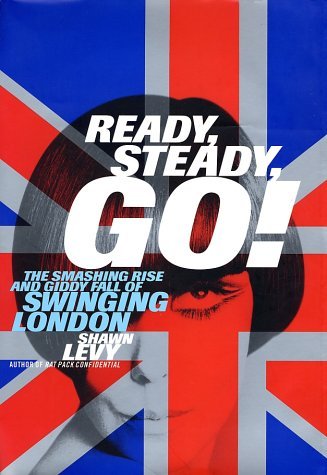
It’s the summer of 1966... The fundamental old chastity, rationality, harmony, sobriety, even blasted to nothing or crumbling under siege. The city glows. It echoes. It pulses. It bleeds pastel and fuzzy, spicy, paisley and soft. This is how it's always going to smashing clothes, brilliant music, easy sex, eternal youth, the eyes of everybody, everyone's first thought, the top of the world, right here, right Swinging London.Shawn Levy has a genius for unearthing the secret history of popular culture. The Los Angeles Times called King of Comedy , his biography of Jerry Lewis, "a model of what a celebrity bio ought to be–smart, knowing, insightful, often funny, full of fascinating insiders' stories," and the Boston Globe declared that Rat Pack Confidential "evokes the time in question with the power of a novel, as well as James Ellroy's American Tabloid and better by far than Don DeLillo's Underworld. "In Ready, Steady, Go! Levy captures the spirit of the sixties in all its exuberance. A portrait of London from roughly 1961 to 1969, it chronicles the explosion of creativity–in art, music and fashion–and the revolutions–sexual, social and political–that reshaped the world. Levy deftly blends the enthusiasm of a fan, the discerning eye of a social critic and a historian's objectivity as he re-creates the hectic pace and daring experimentation of the times–from the utter transformation of rock 'n' roll by the Beatles and the Rolling Stones to the new aesthetics introduced by fashion designers like Mary Quant, haircutters like Vidal Sassoon, photographers like David Bailey, actors like Michael Caine and Terence Stamp and filmmakers like Richard Lester and Nicolas Roeg to the wild clothing shops and cutting-edge clubs that made Carnaby Street and King's Road the hippest thoroughfares in the world.Spiced with the reminiscences of some of the leading icons of that period, their fans and followers, and featuring a photographic gallery of well-known faces and far-out fashions, Ready, Steady, Go! is an irresistible re-creation of a time and place that seemed almost impossibly fun.

From bestselling author Shawn Levy, a hilarious and moving account of the trailblazing women who broke down walls so they could stand before the mic.Today, women are ascendant in stand-up comedy, even preeminent. They make headlines, fill arenas, spawn blockbuster movies. But before Amy Schumer slayed, Tiffany Haddish killed, and Ali Wong drew roars, the very idea of a female comedian seemed, to most of America, like a punch line. And it took a special sort of woman--indeed, a parade of them--to break and remake the mold.In on the Joke is the story of a group of unforgettable women who knocked down the doors of stand-up comedy so other women could get a shot. It spans decades, from Moms Mabley's rise in Black vaudeville between the world wars, to the roadhouse ribaldry of Belle Barth and Rusty Warren in the 1950s and '60s, to Elaine May's co-invention of improv comedy, to Joan Rivers's and Phyllis Diller's ferocious ascent to mainstream stardom. These women refused to be defined by type and tradition, facing down indifference, puzzlement, nay-saying, and unvarnished hostility. They were discouraged by agents, managers, audiences, critics, fellow performers--even their families. And yet they persevered against the tired notion that women couldn't be funny, making space not only for themselves, but for the women who followed them.Meticulously researched and irresistibly drawn, Shawn Levy's group portrait forms a new pantheon of comedy excellence. In on the Joke shows how women broke into the boys' club, offered new ideas of womanhood, and had some laughs along the way.

From the acclaimed film critic and New York Times bestselling biographer of Paul Newman, the definitive biography of Hollywood legend Clint Eastwood, the most prolific and versatile actor-director in the history of the medium, and an indelible fixture of American culture.C-L-I-N-T. In that short, sharp syllable, there is an emblem of American manhood and morality and sheer bloody-minded will, for better and worse, on screen and off, for more than sixty years. Whether he's holding a pistol, an orangutan, or a boxing glove; whether he's facing down bad guys on a western street (Old West or new, no matter); staring through the lens of a camera; or accepting one of his thirteen Oscars (including two for Best Picture); he is as blunt, curt, and solid as his name, a star of the old school stripe and one of the most prolific and accomplished directors of his time, a man of rock and iron and brute Clint. To tell the story of Clint Eastwood is to tell the story of nearly a century of American culture. No Hollywood figure so completely and complexly represents the cultural and political climates of contemporary America. At age ninety-four, he has lived a tumultuous century and embodied much of his time and many of its contradictions. We picture him most immediately as he has appeared to us on squinting through cigarillo smoke in A Fistful of Dollars or The Good, the Bad, and the Ugly; imposing rough justice at the point of a .44 Magnum in Dirty Harry; sowing moral vengeance in The Outlaw Josey Wales or Pale Rider; abandoning farming for murder-for-hire in Unforgiven; grudgingly training a woman boxer in Million Dollar Baby; standing up for his neighbors despite his racism toward them in Gran Torino. But those are roles, however well-cast and convincing, and they are two-dimensional in comparison to the whole life. The reality of Clint Eastwood is far more rich, knotty, and absorbing—a saga of cunning, determination, and conquest, a great American story about a man ascending to the Hollywood pantheon while keeping a gimlet eye on its ways and habits and one foot firmly planted outside its door.

At one gilded moment, his fame was so great that he was recognized all over the world simply by his Rubi . Pop songs were written about him. Women whom he had never met offered to leave their husbands for him. The gigantic peppermills brandished in Parisian restaurants became known, for reasons people at the time could only hint at, as "Rubirosas." Porfirio Rubirosa was the last great the roué par excellence, a symbol of powerful masculinity, ubiquity, and easy-come-easy-go money. "Work?" he shot back at an interviewer, scandalized at being asked what he did with his days. "It's impossible for me to work. I just don't have the time." His natural habitat was the polo field, the nightclub, the Formula One racecourse, the bedroom. He had an eye for beautiful women, particularly when they came with great He managed to marry in turn two of the richest women on the planet. Rumor had him bedding hundreds of famous and infamous women, including Christina Onassis, Eva Perón, and Zsa Zsa Gabor, who gleefully posed for paparazzi after he had blacked her eye in a fit of jealousy on the eve of his marriage to another woman. But he was a man's man, too, a notable polo player and race-car driver with a gift for friendship, chumming around with the likes of Joe Kennedy, Frank Sinatra, Oleg Cassini, Aly Khan, and King Farouk. When above-board, heiress-type income was scarce, he diverted himself with jewel-thievery, shadowy diplomatic errands, and any other illicit scam that came his way. Whatever legitimate power he wielded came to him from the hands of Rafael Trujillo, one of the most bloodthirstily power-mad dictators the New World has ever seen. A nation quivered at Trujillo's name for decades, yet Rubi flouted his strictures without concern, as if Trujillo's iron grip could never crush him. And he was right. When Rubi died at the age of fifty-six, wrapping his sports car around a tree in the Bois de Boulogne, an era went with him -- of white dinner jackets at El Morocco; of celebrity for its own sake when this was still a novelty; of glamour before it was available to the masses. In The Last Playboy , Shawn Levy brings Rubi's giddy, hedonistic story to Technicolor life.

A provocative portrait of one of America's most influential comedians analyzes the complex, sometimes disturbing world of Jerry Lewis, from his rise to fame and philanthropic work to the dark side of his career and personal life. 60,000 first printing. $60,000 ad/promo.

A Year in the Life of Death: Poems Inspired by the Obituary Pages of the New York TImes
by Shawn Levy
Rating: 4.0 ⭐
When Shawn Levy had the notion to write a poem each day for a year, inspired by the obituary pages of The New York Times, he had no way of knowing that the year in question, 2016, would claim so many of the world's most iconic figures. His project became, in effect, a vehicle for surveying the breadth of the twentieth Titans from all fields of endeavor, lives that contained one quirky but insoluble achievement, and people who had special significance in his own life. From Nancy Reagan to Muhammad Ali, David Bowie to Arnold Palmer, Prince to Janet Reno, Antonin Scalia to Mary Tyler Moore, and including a Black Miss America, an obsessive weather reporter, the nurse famously kissed by a sailor on VJ Day, the man who put the “@” in your email address, and the last man to walk on the moon, the lives recollected in these one hundred poems provoke compassion, sorrow, outrage, surprise, nostalgia, even laughter.“This book is a wailing song, with side eye when and where you need it. These poems are a resuscitation of art and heart.” ―Lidia Yuknavitch, author of Verge“… a staggering symphony of lives, with parallels to Michael Lesy's Wisconsin Death Trip and Jim Carroll's 'People Who Died,' …” ―Ed Skoog, author of Run the Red Lights“I'm grateful to Shawn Levy for reminding me what a generous, evocative exchange the newspaper obituary can be.” ―Elena Passarello, author of Animals Strike Curious Poses“With his gimlet eye and big heart, Levy takes us on a backstage tour of our own popular culture.” ―Dobby Gibson, author of Little Glass Planet“… moving and insightful … a striking montage …” ―Juan Delgado, author of Vital Signs

Sinatra Confidential: Showbiz, casinos & mafia
by Shawn Levy
Bien sûr en ce temps-là, il y a John Wayne, Ray Charles, Marlon Brando et -évidemment - Elvis Presley. Mais entre 1957, date de la mort de son mentor Humphrey Bogart, et 1963, date de l'assassinat de son ami J. F. Kennedy, Frank Sinatra est la plus grande star de la scène américaine. Mieux - entouré d'un redoutable gang de vieux amis - le fameux Rat Pack (Dean Martin, Sammy Davis Jr., Peter Lawford, Joey Bishop), « The Voice » incarne l'Amérique de cette époque. Une Amérique complexe, hédoniste et lumineuse, à l'image des néons des casinos et du soleil de Palm Springs. Une Amérique crépusculaire aussi, où «entertainment» tente de faire bon ménage avec politique et mafia, sur fond de racisme et de corruption... Entre New York et Miami, Los Angeles et Las Vegas, entre chefs-d'oeuvre pop et jazzy et films à succès, entre conquêtes féminines, whiskies on the rocks, fêtes avec les Kennedy ou les mafieux de Chicago, ce livre aux allures de roman noir, digne d'«American Tabloïd» de James Ellroy, retrace le bouillonnant âge d'or d'un immense parrain du showbiz et de ses complices, véritables aristocrates du cool.

Universos Paralelos
by Shawn Levy