
Raymond Chandler
Raymond Thornton Chandler was an American-British novelist and screenwriter. In 1932, at the age of forty-four, Chandler became a detective fiction writer after losing his job as an oil company executive during the Great Depression. His first short story, "Blackmailers Don't Shoot", was published in 1933 in Black Mask, a popular pulp magazine. His first novel, The Big Sleep, was published in 1939. In addition to his short stories, Chandler published seven novels during his lifetime (an eighth, in progress at the time of his death, was completed by Robert B. Parker). All but Playback have been made into motion pictures, some more than once. In the year before his death, he was elected president of the Mystery Writers of America. Chandler had an immense stylistic influence on American popular literature. He is a founder of the hardboiled school of detective fiction, along with Dashiell Hammett, James M. Cain and other Black Mask writers. The protagonist of his novels, Philip Marlowe, like Hammett's Sam Spade, is considered by some to be synonymous with "private detective". Both were played in films by Humphrey Bogart, whom many consider to be the quintessential Marlowe. The Big Sleep placed second on the Crime Writers Association poll of the 100 best crime novels; Farewell, My Lovely (1940), The Lady in the Lake (1943) and The Long Goodbye (1953) also made the list. The latter novel was praised in an anthology of American crime stories as "arguably the first book since Hammett's The Glass Key, published more than twenty years earlier, to qualify as a serious and significant mainstream novel that just happened to possess elements of mystery". Chandler was also a perceptive critic of detective fiction; his "The Simple Art of Murder" is the canonical essay in the field. In it he wrote: "Down these mean streets a man must go who is not himself mean, who is neither tarnished nor afraid. The detective must be a complete man and a common man and yet an unusual man. He must be, to use a rather weathered phrase, a man of honor—by instinct, by inevitability, without thought of it, and certainly without saying it. He must be the best man in his world and a good enough man for any world." Parker wrote that, with Marlowe, "Chandler seems to have created the culminating American hero: wised up, hopeful, thoughtful, adventurous, sentimental, cynical and rebellious—an innocent who knows better, a Romantic who is tough enough to sustain Romanticism in a world that has seen the eternal footman hold its coat and snicker. Living at the end of the Far West, where the American dream ran out of room, no hero has ever been more congruent with his landscape. Chandler had the right hero in the right place, and engaged him in the consideration of good and evil at precisely the time when our central certainty of good no longer held."
31 Books Written

Down-and-out drunk Terry Lennox has a problem: his millionaire wife is dead and he needs to get out of LA fast. So he turns to the only friend he can trust: private investigator Philip Marlowe. Marlowe is willing to help a man down on his luck, but later Lennox commits suicide in Mexico and things start to turn nasty. Marlowe is drawn into a sordid crowd of adulterers and alcoholics in LA's Idle Valley, where the rich are suffering one big suntanned hangover. Marlowe is sure Lennox didn't kill his wife, but how many stiffs will turn up before he gets to the truth?
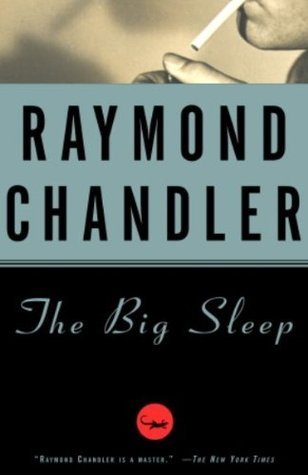
When a dying millionaire hires Philip Marlowe to handle the blackmailer of one of his two troublesome daughters, Marlowe finds himself involved with more than extortion. Kidnapping, pornography, seduction, and murder are just a few of the complications he gets caught up in.Librarian's note: this is an alternate cover edition.

Alternative cover edition of ISBN 9780394758275Marlowe's about to give up on a completely routine case when he finds himself in the wrong place at the right time to get caught up in a murder that leads to a ring of jewel thieves, another murder, a fortune-teller, a couple more murders, and more corruption than your average graveyard.

A couple of missing wives—one a rich man's and one a poor man's—become the objects of Marlowe's investigation. One of them may have gotten a Mexican divorce and married a gigolo and the other may be dead. Marlowe's not sure he cares about either one, but he's not paid to care.

Toby Stephens stars in this BBC Radio 4 full-cast dramatisation of Raymond Chandler’s third Philip Marlowe mystery.Fast-talking, trouble-seeking private eye Philip Marlowe is a different kind of detective: a moral man in an amoral world. California in the ’40s and ’50s is as beautiful as a ripe fruit and rotten to the core, and Marlowe must struggle to retain his integrity amidst the corruption he encounters daily.In The High Window, Marlowe starts out on the trail of a single stolen coin and ends up knee-deep in bodies. His client, a dried-up husk of a woman, wants him to recover a rare gold coin called a Brasher Doubloon, missing from her late husband’s collection. That’s the simple part.But Marlowe finds that everyone who handles the coin suffers a run of very bad luck: they always end up dead. If Marlowe doesn’t wrap this one up fast, he’s going to end up in jail - or worse, in a box in the ground.Starring Toby Stephens, this thrilling dramatisation by Robin Brooks retains all the wry humour of Chandler’s serpentine suspense novel. It was first broadcast on BBC Radio 4 on 8 October 2011.

Raymond Chandler's fifth novel has Philip Marlowe going to Hollywood as he explores the underworld of the glitter capital, trying to find a sweet young thing's missing brother. Along the way he uncovers a little blackmail, a lot of drugs, and more than enough murder.

In the four long stories in this collection, Marlowe is hired to protect a rich old guy from a gold digger, runs afoul of crooked politicos, gets a line on some stolen jewels with a reward attached, and stumbles across a murder victim who may have been an extortionist. Trouble is my business --Finger man --Goldfish --Red wind

Playback is a classic novel by Raymond Chandler, the master of hard-boiled crime.Stalking the tawdry neon wilderness of forties and fifties Los Angeles, Raymond Chandler's hard-drinking, wise-cracking Phillip Marlowe is one of the world's most famous fictional detectives.Playback finds Marlowe mixing business with pleasure - getting paid to follow a mysterious and lovely red-head named Eleanor King. And wherever Miss King goes, trouble seems to follow. But she's easy on the eye and Marlowe's happy to do as he's told, all in the name of chivalry, of course. But one dead body later and what started out as a lazy afternoon's snooping soon becomes a deadly cocktail of blackmail, lies, mistaken identity - and murder . . .'Anything Chandler writes about grips the mind from the first sentence' Daily Telegraph 'One of the greatest crime writers, who set standards others still try to attain' Sunday Times'Chandler is an original stylist, creator of a character as immortal as Sherlock Holmes' Anthony BurgessBest-known as the creator of the original private eye, Philip Marlowe, Raymond Chandler was born in Chicago in 1888 and died in 1959. Many of his books have been adapted for the screen, and he is widely regarded as one of the very greatest writers of detective fiction. His books include The Big Sleep, The Little Sister, Farewell, My Lovely, The Long Good-bye, The Lady in the Lake, Playback, Killer in the Rain, The High Window and Trouble is My Business.

Contains Chandler's essay on the art of detective stories and a collection of 8 classic Chandler mysteries.

When Raymond Chandler died in 1959, he left behind the first four chapters of a new Philip Marlowe thriller. Now three decades later, Robert B. Parker, the bestselling creator of the Spenser detective novels, has completed Poodle Springs in a full-length masterpiece of criminal passion."More than just an impressive homage, this is a first-rate detective novel with all of the suspense, action, and human drama that we have come to expect from the best."--PlayboyPhilip Marlowe is alive and well and living in Poodle Springs, California. He's married to a wealthy heiress now. But living in the lap of luxury hasn't made a dent in Marlowe's cynicism--or his talent for attracting trouble. Soon he's on a trail of greed, lust, and murder as dark and cunning as any he's ever seen. Philip Marlowe is back in business."Raymond Chandler fans, throw away your dog-eared copies of The Big Sleep...Philip Marlowe has returned!"--Milwaukee Journal

Raymond Chandler created the fast talking, trouble seeking Californian private eye Philip Marlowe for his first great novel 'The Big Sleep' in 1939. Marlowe's entanglement with the Sternwood family - and an attendant cast of colourful underworld figures - is the background to a story reflecting all the tarnished glitter of the great American Dream. The detective's iconic image burns just as brightly in 'Farewell My Lovely', on the trail of a missing nightclub crooner. And the inimitable Marlowe is able to prove that trouble really is his business in Raymond Chandler's brilliant epitaph, 'The Long Goodbye'.

Killer in the Rain collects together eight classic short stories by Raymond Chandler.It was in the pulp detective magazines of the 1930s that Raymond Chandler's definitive take on the hard-boiled detective story first appeared. Here then, from the well-thumbed pages of 'Black Mask' and 'Dime Detective Magazine', are eight of his finest stories including 'The Man Who Liked Dogs', 'The Lady in the Lake' and 'Bay City Blues'. Sharper than a hoodlum's switchblade, more exciting than an unexpected red-head and stronger than a double shot of whisky, they are packed full of the punchy poetry and laconic wit that makes Chandler the undisputed master of his genre.'Anything Chandler writes about grips the mind from the first sentence' Daily Telegraph 'One of the greatest crime writers, who set standards others still try to attain' Sunday Times'Chandler is an original stylist, creator of a character as immortal as Sherlock Holmes' Anthony BurgessBest-known as the creator of the original private eye, Philip Marlowe, Raymond Chandler was born in Chicago in 1888 and died in 1959. Many of his books have been adapted for the screen, and he is widely regarded as one of the very greatest writers of detective fiction. His books include The Big Sleep, The Little Sister, Farewell, My Lovely, The Long Good-bye, The Lady in the Lake, Playback, Killer in the Rain, The High Window and Trouble is My Business.

Raymond Chandler’s first three novels, published here in one volume, established his reputation as an unsurpassed master of hard-boiled detective fiction.The Big Sleep , Chandler’s first novel, introduces Philip Marlowe, a private detective inhabiting the seamy side of Los Angeles in the 1930s, as he takes on a case involving a paralyzed California millionaire, two psychotic daughters, blackmail, and murder. In Farewell, My Lovely , Marlowe deals with the gambling circuit, a murder he stumbles upon, and three very beautiful but potentially deadly women. In The High Window , Marlowe searches the California underworld for a priceless gold coin and finds himself deep in the tangled affairs of a dead coin collector.In all three novels, Chandler’s hard-edged prose, colorful characters, vivid vernacular, and, above all, his enigmatic loner of a hero, enduringly establish his claim not only to the heights of his chosen genre but to the pantheon of literary art.Featuring the iconic character that inspired the forthcoming film Marlowe , starring Liam Neeson.

In Raymond Chandler’s hands, the pulp crime story became a haunting mystery of power and corruption, set against a modern cityscape both lyrical and violent. Now Chandler joins the authoritative Library of America series in a comprehensive two-volume set displaying all the facets of his brilliant talent.In his first novel, The Big Sleep (1939), the classic private eye finds his full-fledged form as Philip Marlowe: at once tough, independent, brash, disillusioned, and sensitive—and man of weary honor threading his way (in Chandler’s phrase) “down these mean streets” among blackmailers, pornographers, and murderers for hire.In Farewell, My Lovely (1940), Chandler’s personal favorite among his novels, Marlowe’s search for a missing woman leads him from shanties and honky-tonks to the highest reaches of power, encountering an array of richly drawn characters. The High Window (1942), about a rare coin that becomes a catalyst by which a hushed-up crime comes back to haunt a wealthy family, is partly a humorous burlesque of pulp fiction. All three novels show Chandler at a peak of verbal inventiveness and storytelling driveStories and Early Novels also includes every classic noir story from the 1930s that Chandler did not later incorporate into a novel—thirteen in all, among them such classics as “Red Wind,” “Finger Man,” The King in Yellow," and “Trouble Is My Business.” Drawn from the pages of Black Mask and Dime Detective, these stories show how Chandler adapted the violent conventions of the pulp magazine—with their brisk exposition and rapid-fire dialogue—to his own emerging vision of 20th-century America.

With humor, along with an unerring sense of dialogue and the telling details of dress and behavior, Raymond Chandler created a distinctive fictional universe out of the dark side of sunlit Los Angeles. In the process, he transformed both crime writing and the American language.Written during the war, The Lady in the Lake (1943) takes Philip Marlowe out of the seamy L.A. streets to the deceptive tranquility of the surrounding mountains, as the search for a businessman’s missing wife expands into an elegy of loneliness and loss. The darker tone typical of Chandler’s later fiction is evident in The Little Sister (1949), in which an ambitious starlet, a blackmailer, and a seemingly naïve young woman from Manhattan, Kansas, are the key players in a plot that provides fuel for a bitter indictment of Hollywood and Chandler’s most savage portrayal of his adopted city.The Long Goodbye (1953), his most ambitious and self-revealing novel, uncovers a more anguished resonance in the Marlowe character, in a plot that hinges on the betrayal of friendship and the compromises of middle age. Playback (1958), written originally as a screenplay, is Chandler’s seventh and last novel.A special feature of this volume is Chandler’s long-unavailable screenplay for the film noir classic, Double Indemnity (1944), adapted from James M. Cain’s novel. Written with director Billy Wilder, it is one of the best screenplays in American cinema, masterful in construction and dialogue. Supplementing the volume, and providing a more personal glimpse of Chandler’s personality, is a selection of letters and essays—including “The Simple Art of Murder,” in which Chandler muses on his pulp roots and on the special qualities of his hero and style.

These two classic novels featuring private eye Philip Marlowe made Raymond Chandler's name synonymous with America's hard-boiled school of crime fiction. The Big Sleep was an instant success when first published in 1939. It centers around a paralyzed California millionaire with two psychopathic daughters; he involves Marlowe in a case of blackmail that turns into murder.Farewell My Lovely , which Chandler regarded as his finest work, came out the following year. It has Marlowe dealing with the Los Angeles gambling circuit, a murder he stumbles upon, and three very beautiful but potentially deadly women."Chandler writes like a slumming angel and invests the sun-blinded streets of Los Angeles with a romantic presence," said Ross Macdonald. And George V. Higgins "Chandler is fun to read. He's as bleak as tundra, and his dirtbag characters far outnumber his stellar citizens, but Philip Marlowe is a laconic tour guide through a zoo of truly interesting animals."

The only complete edition of stories by the undisputed master of detective literature, collected here for the first time in one volume, including some stories that have been unavailable for decades.When Raymond Chandler turned to writing at the age of forty-five, he began by publishing stories in pulp magazines such as “Black Mask” before later writing his famous novels. These stories are where Chandler honed his art and developed his uniquely vivid underworld, peopled with good cops and bad cops, informers and extortionists, lethally predatory blondes and redheads, and crime, sex, gambling, and alcohol in abundance. In addition to his classic hard-boiled stories–in which his signature atmosphere of depravity and violence swirls around the cool, intuitive loners whose type culminated in the famous detective Philip Marlowe–Chandler also turned his hand to fantasy and even a gothic romance.This rich treasury of twenty-five stories shows Chandler developing the terse, laconic, understated style that would serve him so well in his later masterpieces, and immerses the reader in the richly realized fictional universe that has become an enduring part of our literary landscape.

Collection of Chandler's short stories previously printed in Dime Detective, Black Mask, and The Saturday Evening Post in the 1930s. Stories are "Red Wind," "Blackmailers Don't Shoot," "I'll Be Waiting," "Goldfish," and "Guns at Cyrano's."

The first fully annotated edition of Raymond Chandler's 1939 classic The Big Sleep features hundreds of illuminating notes and images alongside the full text of the novel and is an essential addition to any crime fiction fan's library. A masterpiece of noir, Raymond Chandler's The Big Sleep helped to define a genre. Today it remains one of the most celebrated and stylish novels of the twentieth century. This comprehensive, annotated edition offers a fascinating look behind the scenes of the novel, bringing the gritty and seductive world of Chandler's iconic private eye Philip Marlowe to life. The Annotated Big Sleep solidifies the novel's position as one of the great works of American fiction and will surprise and enthrall Chandler's biggest fans. Including: -Personal letters and source texts -The historical context of Chandler's Los Angeles, including maps and images -Film stills and art from the early pulps -An analysis of class, gender, sexuality, and ethnicity in the novel

An omnibus comprising Raymond Chandler's three Philip Marlowe novels, THE LADY IN THE LAKE, THE HIGH WINDOW and THE LITTLE SISTER.

Librarian's note: this entry is for the story, "Goldfish." Collections of short stories by the author can be found elsewhere.The Leander pearls were stolen nineteen years ago. The thief was caught, but the pearls were never found, and there is still a $25,000 reward for anyone who finds them. Out of the blue, a woman comes to see private detective Carmady, Philip Marlowe in later editions, with a story about a guy who knows where the pearls are hidden. Our PI agrees to talk to the man but finds him dead in bed. It seems there are quite a lot of people in Los Angeles who have heard the story, and who are out looking for the Leander pearls!

The Lady in the Lake / The Little Sister / The Long Goodbye / Playback
by Raymond Chandler
Rating: 4.4 ⭐
Creator of the famous Philip Marlowe, Raymond Chandler elevated the American hard-boiled detective genre to an art form. Chandler’s last four novels, published here in one volume, offer ample opportunity to savor the unique and utterly compelling fictional world that made his works modern classics.The Lady in the Lake moves Marlowe out of his usual habitat of city streets and into the mountains outside of Los Angeles in his strange search for a missing woman. The Little Sister takes Marlowe to Hollywood, where he tries to find a sweet young thing’s missing brother, uncovering on the way a little blackmail, a lot of drugs, and more than enough murder. In The Long Goodbye, a case involving a war-scarred drunk and his nymphomaniac wife has Marlowe constantly on the move: a psychotic gangster’s on his trail, he’s in trouble with the cops, and more and more corpses keep turning up. Playback features a well-endowed redhead who leads Marlowe to the California coast to solve a tale of big money and, of course, murder.Throughout these masterpieces, Marlowe’s wry humor and existential sense of his job prove yet again why he has become one of the most recognized and imitated characters in fiction.

A Raymond Chandler omnibus containing the first four Philip Marlowe novels. These novels include The Big Sleep, Farewell, My Lovely, The High Window, and The Lady in the Lake.

'"Damn You, Eichelberger!" I said, and hit him with all my strength on the side of the jaw. He shook his head and his eyes seemed annoyed.'Walter Gage is hired by his fiancee to find Mrs Penruddock's stolen pink pearls. His investigations need to be discreet because it would be embarrassing if word gets out that they're fakes...'Pearls are a Nuisance' and two more brilliant short stories, 'Finger Man' and 'The King in Yellow', plus Chandler's essay 'The Simple Art of Murder', make up this volume.

This is one of three collections extracted from The Simple Art of Murder, published by Houghton Mifflin in 1950. The collection contains four stories, all about fifty pages long. Each is set in Los Angeles, centered on a tough-guy protagonist, and told by a third-person narrator who describes actions rather than thoughts. All first appeared in detective magazines. Philip Marlowe, hero of Chandler’s novels, is nowhere to be found. In the title story, originally published as “Noon Street Nemesis” in 1936, undercover narc Pete Anglish accidentally becomes involved in a scheme to extort money from a movie star. “Smart-Aleck Kill” (1934), another tale with a Hollywood angle, tells of P. I. Johnny Dalmas’s attempts to unravel a bogus blackmail plot. In “Guns at Cyrano’s” (1936) Ted Carmady, once a detective, now a hotel owner, gets into trouble when he discovers a pretty dancer unconscious in the hallway. Gambler Johnny De Rose hopes to avoid a vengeful gangster in “Nevada Gas” (1935) but is dragged into deadly violence anyway.
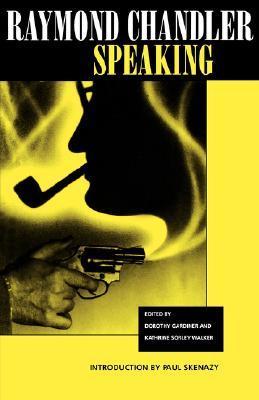
Tough-minded and typically idiosyncratic, here is Chandler on Chandler, the mystery novel, writing, Hollywood, TV, publishing, cats, and famous crimes. This skillfully edited selection of letters, articles, and notes also includes the short story "A Couple of Writers" and the first chapters of Chandler's last Philip Marlowe novel, The Poodle Springs Story , left unfinished at his death. Paul Skenazy has provided a new introduction for this edition as well as a new selected bibliography.

The Raymond Chandler Papers: Selected Letters and Nonfiction 1909-1959
by Raymond Chandler
Rating: 4.1 ⭐
The Raymond Chandler Papers brings together the correspondence and other previously uncollected writing of America's undisputed master of crime fiction and creator of the iconic private eye Phillip Marlowe, revealing all aspects of the great artist's powerful personality and broad intellectual curiosity. Featuring a selection of Chandler's previously unpublished early writings - including a gripping piece about his combat experiences in World War I - and an abandoned profile of the infamous mobster "Lucky" Luciano, The Raymond Chandler Papers is a must-have for all true fans and an important contribution toward understanding the life and work of the enigmatic man Evelyn Waugh called "the greatest living American novelist."

A previously unpublished work by Raymond Chandler. Raymond Chandler’s screenplay for The Blue Dahlia is a valuable addition to the published canon for the writer who has been called “the Shakespeare of hardboiled fiction.” Converted from a never-completed novel, this screenplay is all that survives of the novel Chandler worked on between The Lady in the Lake and The Little Sister. In 1944 Paramount Pictures, where Chandler was under contract, needed a rush script for Alan Ladd. Chandler agreed to cannibalize his novel-in-progress, but—as detailed in producer John Houseman’s memoir—he became stuck and decided that he could only complete his screenplay drunk. The Blue Dahlia was completed on schedule and was well received, earning Chandler his second Academy Award nomination. Although the writer’s screenplay is metamorphosed by other hands in the movie-making process, the screenplay as written has an independent existence, and may be read and judged as a literary work. Indeed, the movie studio archives are a valuable literary resource; and it is inevitable that many screenplays will be published as the study of movies expands. The Blue Dahlia is the story of a war hero who is suspected of having murdered his unfaithful wife. Although it does not involve a private-eye, the work utilizes familiar elements of Chandler’s world: the loner hero, the quest for justice, the sense of a corrupt society, and— above all—the theme of personal honor.

'When in doubt, have a man come through a door with a gun in his hand', wrote Raymond Chandler once. In these four stores of the wild modern west, doors open, guns speak, blood spurts, knees buckle. When the doors won't open, the hood push the muzzle of a chopper through the peep panel and rake the room from end to end. And men take a little time to die.4 short stories.

Philip Marlowe is a fictional private detective created by Raymond Chandler. Marlowe first appeared under that name in The Big Sleep published in 1939. Chandler's early short stories, published in pulp magazines like Black Mask and Dime Detective, featured similar characters with names like "Carmady" and "John Dalmas".Marlowe's character is foremost within the genre of hardboiled crime fiction that originated in the 1920s, notably in Black Mask magazine, in which Dashiell Hammett's The Continental Op and Sam Spade first appeared.Underneath the wisecracking, hard-drinking, tough private eye, Marlowe is quietly contemplative and philosophical and enjoys chess and poetry. While he is not afraid to risk physical harm, he does not dish out violence merely to settle scores. Morally upright, he is not fooled by the genre's usual femmes fatales, such as Carmen Sternwood in The Big Sleep.This collections features all seven novels written by Chandler that feature Philip Marlowe. The following novels are included:- The Big Sleep (1939)- Farewell, My Lovely (1940)- The High Window (1942)- The Lady in the Lake (1943)- The Little Sister (1949)- The Long Goodbye (1953)- Playback (1958)

Strand Magazine Issue 53: Unpublished Raymond Chandler Story
by Raymond Chandler
Strand Magazine Issue 53: Unpublished Raymond Chandler Story Issue 53 includes a short story by Raymond Chandler that has never been published before, titled “It’s All Right—He Only Died.” This little gem is vintage noir and rich in atmosphere and provides a prescient take on a crumbling healthcare industry. Our 53rd issue also featured an exclusive interview with the talented Tana French in which the celebrated author of the Dublin Murder Squad series spoke about the craft of writing, the city of Dublin, and what inspires her to write. We’re also headlining fiction by Craig Johnson, Brad Harper, David Marcum, and Elizabeth Creith. We’re proud to present a short story titled “It’s All Right—He Only Died” by noir master Raymond Chandler. The story revolves around a transient suffering a serious brain injury and his most unusual trip to a hospital reluctant to treat him. This unpublished Raymond Chandler story marks the fourth time we’ve released a lost story by a noir legend in the Strand. In the past, we’ve released works by Dashiell Hammett, Cornell Woolrich, and James M. Cain. In the spirit of the holiday, we offer you Elizabeth Creith’s “The Wer-Wolf of Thorpe”—a tale set in 11th-century England and featuring what seems to be a supernatural murder. Then we fast-forward to modern-day Baltimore, where Brad Harper’s “House Odds” pits a detective against the clock in a cautionary tale about borrowing from the Russian mafia. Craig Johnson of Longmire fame also joins us this issue, with “Eleven/Twenty-Nine,” a story of redemption in northern Wyoming. And David Marcum takes us back to Victorian London where Sherlock Holmes revisits the events that took place in “The Sign of the Four.” Plus an unpublished Raymond Chandler story.