
Noam Chomsky
Avram Noam Chomsky is an American professor and public intellectual known for his work in linguistics, political activism, and social criticism. Sometimes called "the father of modern linguistics", Chomsky is also a major figure in analytic philosophy and one of the founders of the field of cognitive science. He is a laureate professor of linguistics at the University of Arizona and an institute professor emeritus at the Massachusetts Institute of Technology (MIT). Among the most cited living authors, Chomsky has written more than 150 books on topics such as linguistics, war, and politics. In addition to his work in linguistics, since the 1960s Chomsky has been an influential voice on the American left as a consistent critic of U.S. foreign policy, contemporary capitalism, and corporate influence on political institutions and the media. Born to Ashkenazi Jewish immigrants (his father was William Chomsky) in Philadelphia, Chomsky developed an early interest in anarchism from alternative bookstores in New York City. He studied at the University of Pennsylvania. During his postgraduate work in the Harvard Society of Fellows, Chomsky developed the theory of transformational grammar for which he earned his doctorate in 1955. That year he began teaching at MIT, and in 1957 emerged as a significant figure in linguistics with his landmark work Syntactic Structures, which played a major role in remodeling the study of language. From 1958 to 1959 Chomsky was a National Science Foundation fellow at the Institute for Advanced Study. He created or co-created the universal grammar theory, the generative grammar theory, the Chomsky hierarchy, and the minimalist program. Chomsky also played a pivotal role in the decline of linguistic behaviorism, and was particularly critical of the work of B.F. Skinner. An outspoken opponent of U.S. involvement in the Vietnam War, which he saw as an act of American imperialism, in 1967 Chomsky rose to national attention for his anti-war essay "The Responsibility of Intellectuals". Becoming associated with the New Left, he was arrested multiple times for his activism and placed on President Richard M. Nixon's list of political opponents. While expanding his work in linguistics over subsequent decades, he also became involved in the linguistics wars. In collaboration with Edward S. Herman, Chomsky later articulated the propaganda model of media criticism in Manufacturing Consent, and worked to expose the Indonesian occupation of East Timor. His defense of unconditional freedom of speech, including that of Holocaust denial, generated significant controversy in the Faurisson affair of the 1980s. Chomsky's commentary on the Cambodian genocide and the Bosnian genocide also generated controversy. Since retiring from active teaching at MIT, he has continued his vocal political activism, including opposing the 2003 invasion of Iraq and supporting the Occupy movement. An anti-Zionist, Chomsky considers Israel's treatment of Palestinians to be worse than South African–style apartheid, and criticizes U.S. support for Israel. Chomsky is widely recognized as having helped to spark the cognitive revolution in the human sciences, contributing to the development of a new cognitivistic framework for the study of language and the mind. Chomsky remains a leading critic of U.S. foreign policy, contemporary capitalism, U.S. involvement and Israel's role in the Israeli–Palestinian conflict, and mass media. Chomsky and his ideas are highly influential in the anti-capitalist and anti-imperialist movements. Since 2017, he has been Agnese Helms Haury Chair in the Agnese Nelms Haury Program in Environment and Social Justice at the University of Arizona.
38 Books Written

The prison writings of Kurdish freedom fighter and PKK leader Abdullah Ocalan

Die Öko-Katastrophe: Den Planeten zu retten, heißt die herrschenden Eliten zu stürzen
by Noam Chomsky
Rating: 3.3 ⭐
Wie einst die Titanic rast die Menschheit ohne Abbremsen und Kurskorrektur direkt auf die Katastrophe zu. Angesichts der seit Jahrzehnten wachsenden existentiellen Bedrohung durch Umweltzerstörung und globale Erwärmung versagen Politik und Medien, ja, versagt unser Gesellschaftssystem. Die etablierten Medien berichten zwar weitgehend akkurat über wissenschaftliche Tatsachen, unterdrücken jedoch, welchen Anteil unsere Wirtschafts- und Gesellschaftsordnung an der ökologischen Katastrophe hat. Sie verkürzen Zusammenhänge und verschweigen die Hauptverantwortlichen sowie das wahre Ausmaß der Bedrohung. Die Politik hingegen verspricht, die Katastrophe mit weiteren neoliberalen Reformen aufhalten zu können, will den Teufel also mit dem Beelzebub austreiben. Sie setzt auf Mittel, die den kollektiven Wahnsinn nicht etwa infrage stellen, sondern in Stein meißeln, und die am Ende wieder die Armen belasten und Reichen privilegieren werden. Rubikon, das Magazin für die kritische Masse, hat angesichts dieser Verwirrung einige der klügsten Köpfe weltweit aufgefordert, das Thema aus ihrer Sicht zu analysieren, nach bestem Wissen und Gewissen. Ohne die Zwänge der von Kapital und Eliteninteressen gesteuerten etablierten Medien und Politik. Die Autoren beschreiten Wege abseits bekannter medialer Trampelpfade. Viele kommen zu der Ohne Systemwandel werden Umweltzerstörung und Klimawandel nicht aufzuhalten sein. Egal, was Sie bisher zum Thema denken, dieses Buch wird Ihren Horizont erweitern.Mit Beiträgen von Noam Chomsky, Rainer Mausfeld, Chris Hedges, Charles Eisenstein, Franz Ruppert, Ullrich Mies, Nafeez Ahmed, Karin Leukefeld, Florian Kirner, Dirk Pohlmann, Sven Böttcher, Steffen Pichler, Jonathan Cook, Susan Bonath, Wolfgang Pomrehn, Stephan Bartunek, Roland Rottenfußer, Peter H. Grassmann, Murtaza Hussain, Klaus Moegling, Caitlin Johnstone, Medea Benjamín, Anselm Lenz, Felix Feistel, Nicolas Riedl, Jens Bernert, Hermann Ploppa und Jens Wernicke.

The original edition of Letters from Lexington solidified Noam Chomsky's position as American's most distinguished critic of the media. In this new, updated edition, a new chapter, 'What Makes the Mainstream Media Mainstream', offers Chomsky's latest thinking on the role of the media in a rapidly changing world-especially in justifying U.S. government and corporate actions. Throughout the book, Chomsky's analyses of the politics of the Reagan and earlier Bush administrations offer a striking and surprisingly prescient perspective on the events, key players, and policies that shape America's national agenda under the current presidency of George W. Bush and the 'War on Terrorism'. Letters from Lexington has been called 'an indispensable antidote to TV 'news' and the verities found in major daily newspapers such as The New York Times.'

An immediate national bestseller, Hegemony or Survival demonstrates how, for more than half a century the United States has been pursuing a grand imperial strategy with the aim of staking out the globe. Our leaders have shown themselves willing-as in the Cuban missile crisis-to follow the dream of dominance no matter how high the risks. World-renowned intellectual Noam Chomsky investigates how we came to this perilous moment and why our rulers are willing to jeopardize the future of our species.With the striking logic that is his trademark, Chomsky tracks the U.S. government's aggressive pursuit of "full spectrum dominance" and vividly lays out how the most recent manifestations of the politics of global control-from unilateralism to the dismantling of international agreements to state terrorism-cohere in a drive for hegemony that ultimately threatens our existence. Lucidly written, thoroughly documented, and featuring a new afterword by the author, Hegemony or Survival is a definitive statement from one of today's most influential thinkers.

In an incisive, thorough analysis of the current international situation, Noam Chomsky examines the way that the United States, despite the rise of Europe and Asia, still largely sets the terms of global discourse. Drawing on a wide range of examples, from the sordid history of U.S. involvement with Cuba to the sanctions on Iran, he details how America's rhetoric of freedom and human rights so often diverges from its actions. He delves deep into the conflicts in Iraq, Afghanistan, and Israel-Palestine, providing unexpected and nuanced insights into the workings of imperial power on our increasingly chaotic planet. And, in a new afterword, he addresses the election of Donald Trump and what it shows about American society.
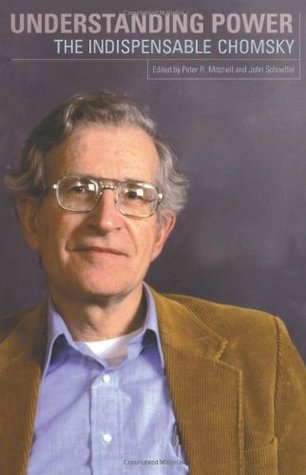
A major new collection from "arguably the most important intellectual alive" (The New York Times). Noam Chomsky is universally accepted as one of the preeminent public intellectuals of the modern era. Over the past thirty years, broadly diverse audiences have gathered to attend his sold-out lectures. Now, in Understanding Power, Peter Mitchell and John Schoeffel have assembled the best of Chomsky's recent talks on the past, present, and future of the politics of power. In a series of enlightening and wide-ranging discussions, all published here for the first time, Chomsky radically reinterprets the events of the past three decades, covering topics from foreign policy during Vietnam to the decline of welfare under the Clinton administration. And as he elucidates the connection between America's imperialistic foreign policy and the decline of domestic social services, Chomsky also discerns the necessary steps to take toward social change. With an eye to political activism and the media's role in popular struggle, as well as U.S. foreign and domestic policy, Understanding Power offers a sweeping critique of the world around us and is definitive Chomsky. Characterized by Chomsky's accessible and informative style, this is the ideal book for those new to his work as well as for those who have been listening for years.

In Profit Over People, Noam Chomsky takes on neoliberalism: the pro-corporate system of economic and political policies presently waging a form of class war worldwide. By examining the contradictions between the democratic and market principles proclaimed by those in power and those actually practiced, Chomsky critiques the tyranny of the few that restricts the public arena and enacts policies that vastly increase private wealth, often with complete disregard for social and ecological consequences. Combining detailed historical examples and uncompromising criticism, Chomsky offers a profound sense of hope that social activism can reclaim people's rights as citizens rather than as consumers, redefining democracy as a global movement, not a global market.

Requiem for the American Dream: The 10 Principles of Concentration of Wealth & Power
by Noam Chomsky
Rating: 4.2 ⭐
A NEW YORK TIMES BESTSELLER!In his first major book on the subject of income inequality, Noam Chomsky skewers the fundamental tenets of neoliberalism and casts a clear, cold, patient eye on the economic facts of life. What are the ten principles of concentration of wealth and power at work in America today? They're simple enough: reduce democracy, shape ideology, redesign the economy, shift the burden onto the poor and middle classes, attack the solidarity of the people, let special interests run the regulators, engineer election results, use fear and the power of the state to keep the rabble in line, manufacture consent, marginalize the population. In Requiem for the American Dream, Chomsky devotes a chapter to each of these ten principles, and adds readings from some of the core texts that have influenced his thinking to bolster his argument.To create Requiem for the American Dream, Chomsky and his editors, the filmmakers Peter Hutchison, Kelly Nyks, and Jared P. Scott, spent countless hours together over the course of five years, from 2011 to 2016. After the release of the film version, Chomsky and the editors returned to the many hours of tape and transcript and created a document that included three times as much text as was used in the film. The book that has resulted is nonetheless arguably the most succinct and tightly woven of Chomsky's long career, a beautiful vessel--including old-fashioned ligatures in the typeface--in which to carry Chomsky's bold and uncompromising vision, his perspective on the economic reality and its impact on our political and moral well-being as a nation."During the Great Depression, which I'm old enough to remember, it was bad–much worse subjectively than today. But there was a sense that we'll get out of this somehow, an expectation that things were going to get better . . ." —from Requiem for the American Dream

In this first collection of interviews since the bestselling 9-11, our foremost intellectual activist examines crucial new questions of U.S. foreign policyTimely, urgent, and powerfully elucidating, this important volume of previously unpublished interviews conducted by award-winning radio journalist David Barsamian features Noam Chomsky discussing America’s policies in an increasingly unstable world. With his famous insight, lucidity, and redoubtable grasp of history, Chomsky offers his views on the invasion and occupation of Iraq, the doctrine of “preemptive” strikes against so-called rogue states, and the prospects of the second Bush administration, warning of the growing threat to international peace posed by the U.S. drive for domination. In his inimitable style, Chomsky also dissects the propaganda system that fabricates a mythic past and airbrushes inconvenient facts out of history.Barsamian, recipient of the ACLU’s Upton Sinclair Award for independent journalism, has conducted more interviews and radio broadcasts with Chomsky than has any other journalist. Enriched by their unique rapport, Imperial Ambitions explores topics Chomsky has never before discussed, among them the 2004 presidential campaign and election, the future of Social Security, and the increasing threat, including devastating weather patterns, of global warming. The result is an illuminating dialogue with one of the leading thinkers of our time—and a startling picture of the turbulent times in which we live.

This is the third edition of Chomsky's outstanding collection of essays on language and mind, first published in 2006. The first six chapters, originally published in the 1960s, made a groundbreaking contribution to linguistic theory. This edition complements them with an additional chapter and a new preface, bringing Chomsky's influential approach into the twenty-first century. Chapters 1-6 present Chomsky's early work on the nature and acquisition of language as a genetically endowed, biological system (Universal Grammar), through the rules and principles of which we acquire an internalized knowledge (I-language). Over the past fifty years, this framework has sparked an explosion of inquiry into a wide range of languages, and has yielded some major theoretical questions. The final chapter revisits the key issues, reviewing the 'biolinguistic' approach that has guided Chomsky's work from its origins to the present day, and raising some novel and exciting challenges for the study of language and mind.


Libro usado en buenas condiciones, por su antiguedad podria contener señales normales de uso

Dissects the aftermath of the war in Southeast Asia, the refugee problem, the Vietnam/Cambodia conflict and the Pol Pot regime.

“Language involves a systematic mapping between forms…and interpretations,” writes Eric Reuland in his introduction to Broadening the Domain of A Batch from Linguistic Inquiry. Bringing together articles spanning over a decade of Linguistic Inquiry, this Batch examines the basic computational mechanisms of the language system. The authors explore such topics as language design, Move and Agree, and expanding the boundaries of grammar. Dig in.About BATCHESThe BATCHES Series from the MIT Press features collections of journal articles on themes identified by and currently resonating with readers. The collections are curated by authoritative voices in the editors, authors, scholars, and practitioners. Each Batch is bundled for immediate download, and the series represents the rapid, responsive innovation that the MIT Press provides to its readership.Contents Three Factors in Language DesignNoam ChomskyReconstruction, Binding Theory, and the Interpretation of ChainsDanny FoxOn the Locality and Motivation of Move and An Even More Minimal TheoryŽeljko BoškovićEllipsis Sites as Definite DescriptionsPaul ElbourneThe Lexicon-Syntax Reflexivization and Other Arity OperationsTanya Reinhart and Tal SiloniBroaden Your Implicatures of Domain Widening and the ‘‘Logicality’’ of LanguageGennaro ChierchiaThe Movement Derivation of Conditional ClausesLiliane HaegemanConditions on Argument DropHalldór Ármann SigurðssonPerson Features and Pronominal AnaphoraDenis Delfitto and Gaetano Fiorin

Book by Chomsky, Noam, Miller, George A.

Operation Protective Edge, Israel's most recent assault on Gaza, left thousands of Palestinians dead and cleared the way for another Israeli land grab. The need to stand in solidarity with Palestinians has never been greater. Ilan Pappé and Noam Chomsky, two leading voices in the struggle to liberate Palestine, discuss the road ahead for Palestinians and how the international community can pressure Israel to end its human rights abuses against the people of Palestine. On Palestine is the sequel to their acclaimed book Gaza in Crisis.

We all know what Noam Chomsky is against. His scathing analysis of everything that’s wrong with our society reaches more and more people every day. His brilliant critiques of—among other things—capitalism, imperialism, domestic repression and government propaganda have become mini-publishing industries unto themselves. But, in this flood of publishing and republishing, very little ever gets said about what exactly Chomsky stands for, his own personal politics, his vision of the future.Not, that is, until Chomsky on Anarchism, a groundbreaking new book that shows a different side of this best-selling author: the anarchist principles that have guided him since he was a teenager. This collection of Chomsky’s essays and inter-views includes numerous pieces that have never been published before, as well as rare material that first saw the light of day in hard-to-find pamphlets and anarchist periodicals. Taken together, they paint a fresh picture of Chomsky, showing his lifelong involvement with the anarchist community, his constant commitment to nonhierarchical models of political organization and his hopes for a future world without rulers.For anyone who’s been touched by Chomsky’s trenchant analysis of our current situation, as well as anyone looking for an intelligent and coherent discussion of anarchism itself, look no further than Chomsky on Anarchism.Noam Chomsky is one of the world’s leading intellectuals, the father of modern linguistics, an outspoken media and foreign policy critic and tireless activist. He lives in Boston, Massachusetts.

Noam Chomsky’s backpocket classic on wartime propaganda and opinion control begins by asserting two models of democracy—one in which the public actively participates, and one in which the public is manipulated and controlled. According to Chomsky, "propaganda is to democracy as the bludgeon is to a totalitarian state," and the mass media is the primary vehicle for delivering propaganda in the United States. From an examination of how Woodrow Wilson’s Creel Commission "succeeded, within six months, in turning a pacifist population into a hysterical, war-mongering population," to Bush Sr.'s war on Iraq, Chomsky examines how the mass media and public relations industries have been used as propaganda to generate public support for going to war. Chomsky further touches on how the modern public relations industry has been influenced by Walter Lippmann’s theory of "spectator democracy," in which the public is seen as a "bewildered herd" that needs to be directed, not empowered; and how the public relations industry in the United States focuses on "controlling the public mind," and not on informing it. Media Control is an invaluable primer on the secret workings of disinformation in democratic societies.From the Audiobook Download edition.

The United States has repeatedly asserted its right to intervene militarily against "failed states" around the globe. In this much-anticipated follow-up to his international bestseller Hegemony or Survival, Noam Chomsky turns the tables, showing how the United States itself shares features with other failed states―suffering from a severe "democratic deficit," eschewing domestic and international law, and adopting policies that increasingly endanger its own citizens and the world. Exploring the latest developments in U.S. foreign and domestic policy, Chomsky reveals Washington's plans to further militarize the planet, greatly increasing the risks of nuclear war. He also assesses the dangerous consequences of the occupation of Iraq; documents Washington's self-exemption from international norms, including the Geneva conventions and the Kyoto Protocol; and examines how the U.S. electoral system is designed to eliminate genuine political alternatives, impeding any meaningful democracy. Forceful, lucid, and meticulously documented, Failed States offers a comprehensive analysis of a global superpower that has long claimed the right to reshape other nations while its own democratic institutions are in severe crisis. Systematically dismantling the United States' pretense of being the world's arbiter of democracy, Failed States is Chomsky's most focused―and urgent―critique to date.

According to The New York Times, Noam Chomsky is “arguably the most important intellectual alive.” But he isn’t easy to read . . . or at least he wasn’t until these books came along. Made up of intensively edited speeches and interviews, they offer something not found anywhere else: pure Chomsky, with every dazzling idea and penetrating insight intact, delivered in clear, accessible, reader-friendly prose.Published as four short books in the famous Real Story series—What Uncle Sam Really Wants; The Prosperous Few and the Restless Many; Secrets, Lies and Democracy; and The Common Good—they’ve collectively sold almost 600,000 copies.And they continue to sell year after year after year because Chomsky’s ideas become, if anything, more relevant as time goes by. For example, twenty years ago he pointed out that “in 1970, about 90% of international capital was used for trade and long-term investment—more or less productive things—and 10% for speculation. By 1990, those figures had reversed.” As we know, speculation continued to increase exponentially. We’re paying the price now for not heeding him them.

Two of the twentieth century's most influential thinkers debate a perennial question. In 1971, at the height of the Vietnam War and at a time of great political and social instability, two of the world's leading intellectuals, Noam Chomsky and Michel Foucault, were invited by Dutch philosopher Fons Edlers to debate an age-old question: is there such a thing as "innate" human nature independent of our experiences and external influences? The resulting dialogue is one of the most original, provocative, and spontaneous exchanges to have occurred between contemporary philosophers, and above all serves as a concise introduction to their basic theories. What begins as a philosophical argument rooted in linguistics (Chomsky) and the theory of knowledge (Foucault), soon evolves into a broader discussion encompassing a wide range of topics, from science, history, and behaviorism to creativity, freedom, and the struggle for justice in the realm of politics. In addition to the debate itself, this volume features a newly written introduction by noted Foucault scholar John Rajchman and includes additional text by Noam Chomsky.

Power Systems: Conversations on Global Democratic Uprisings and the New Challenges to U.S. Empire
by Noam Chomsky
Rating: 4.1 ⭐
A compelling new set of interviews on our changing and turbulent times with Noam Chomsky, one of the world's foremost thinkersIn this new collection of conversations, conducted from 2010 to 2012, Noam Chomsky explores the most immediate and urgent the future of democracy in the Arab world, the implications of the Fukushima nuclear disaster, the European financial crisis, the breakdown of American mainstream political institutions, and the rise of the Occupy movement. As always, Chomsky presents his ideas vividly and accessibly, with uncompromising principle and clarifying insight.The latest volume from a long-established, trusted partnership, Power Systems shows once again that no interlocutor engages with Chomsky more effectively than David Barsamian. These interviews will inspire a new generation of readers, as well as longtime Chomsky fans eager for his latest thinking on the many crises we now confront, both at home and abroad. They confirm that Chomsky is an unparalleled resource for anyone seeking to understand our world today.

A brilliant distillation of the real motivations behind U.S. foreign policy, compiled from talks and interviews completed between 1986 and 1991, with particular attention to Central America.

Dans Occupy, Chomsky souligne que l’un des plus grands succès du mouvement est de mettre les inégalités de la vie quotidienne à l’ordre du jour, influençant la presse, sensibilisant le public et le discours lui-même.

At the centre of practically every major debate over America's role in the world, one finds Noam Chomsky's ideas - sometimes attacked, sometimes studiously ignored, but always a powerful presence.Drawing from his published and unpublished work, The Chomsky Reader reveals the awesome range of this ever-critical mind - from global questions of war and peace to the most intricate questions of human intelligence, IQ and creativity. It reveals the underlying radical coherency of his view of the world - from his enormously influential attacks on America's role in Vietnam to his perspective on Nicaragua and Central America Today. Chomsky's challenge to accepted wisdom about Israel and the Palestinians has caused a furore in America, as have his trenchant essays on the real nature of terrorism in our age. No one has dissected more graphically the character of the cold war consensus and the way it benefits the two superpowers, and argued more thoughtfully for a shared elitist ethos in liberalism and communism. No one has exposed more logically America's acclaimed freedoms as masking irresponsible power and unjustified privilege, or argued quite so insistently that the "free press" is part of a stultifying conformity that pervades all aspects of American intellectual life.

In a compelling new set of interviews, Noam Chomsky identifies the "dry kindling" of discontent around the world that could soon catch fire.In wide-ranging discussions with David Barsamian, his longtime interlocutor, Noam Chomsky asks us to consider "the world we are leaving to our grandchildren" one imperiled by climate change and the growing potential for nuclear war. If the current system is incapable of dealing with these threats, he argues, it's up to us to radically change it.These twelve interviews examine the latest developments around the globe: the rise of ISIS, the reach of state surveillance, growing anger over economic inequality, conflicts in the Middle East, and the presidency of Donald Trump. In personal reflections on his Philadelphia childhood, Chomsky also describes his own intellectual journey and the development of his uncompromising stance as America's premier dissident intellectual.

This volume offers readers a concise and accessible introduction to the ideas of Noam Chomsky, described by the New York Times as “arguably the most important intellectual alive.” In these recent, wide-ranging interviews, conducted for Truthout by C. J. Polychroniou, Chomsky discusses his views on the “war on terror” and the rise of neoliberalism, the refugee crisis and cracks in the European Union, prospects for a just peace in Israel/Palestine, the rise of the Black Lives Matter movement, the dysfunctional US electoral system, the grave danger posed to humanity by the climate crisis, and the hopes, prospects, and challenges of building a movement for radical change. Noam Chomsky is Institute Professor (Emeritus) in the Department of Linguistics and Philosophy at MIT. His work is widely credited with having revolutionized the field of modern linguistics. He is the author of numerous best-selling political works, which have been translated into scores of languages worldwide. C. J. Polychroniou is a regular contributor to Truthout as well as a member of Truthout 's Public Intellectual Project. He has published several books and his articles have appeared in a variety of journals, magazines, newspapers, and popular news websites.

An essential primer on capitalism, politics and how the world works, based on the hugely popular undergraduate lecture series 'What is Politics?'Is there an alternative to capitalism? In this landmark text Chomsky and Waterstone chart a critical map for a more just and sustainable society.'Covid-19 has revealed glaring failures and monstrous brutalities in the current capitalist system. It represents both a crisis and an opportunity. Everything depends on the actions that people take into their own hands.'How does politics shape our world, our lives and our perceptions? How much of 'common sense' is actually driven by the ruling classes' needs and interests? And how are we to challenge the capitalist structures that now threaten all life on the planet?Consequences of Capitalism exposes the deep, often unseen connections between neoliberal 'common sense' and structural power. In making these linkages, we see how the current hegemony keeps social justice movements divided and marginalized. And, most importantly, we see how we can fight to overcome these divisions.

In this urgent new book, Noam Chomsky surveys the dangers and prospects of our early twenty-first century. Exploring challenges such as the growing gap between North and South, American exceptionalism (including under President Barack Obama), the fiascos of Iraq and Afghanistan, the U.S.-Israeli assault on Gaza, and the recent financial bailouts, he also sees hope for the future and a way to move forward—in the democratic wave in Latin America and in the global solidarity movements that suggest "real progress toward freedom and justice."Hopes and Prospects is essential reading for anyone who is concerned about the primary challenges still facing the human race."This is a classic Chomsky work: a bonfire of myths and lies, sophistries and delusions. Noam Chomsky is an enduring inspiration all over the world—to millions, I suspect—for the simple reason that he is a truth-teller on an epic scale. I salute him." —John Pilger"In dissecting the rhetoric and logic of American empire and class domination, at home and abroad, Chomsky continues a longstanding and crucial work of elucidation and activism...the writing remains unswervingly rational and principled throughout, and lends bracing impetus to the real alternatives before us." —Publisher's Weekly "Chomsky’s commentary is razor sharp and offers a compendium of facts that make a well-supported—and undoubtedly controversial—claim of the incongruity between US actions and the democratic ideals it professes....A valuable resource for both academics and everyday concerned citizens." —ForeWord Professor emeritus at the Massachusetts Institute of Technology, Noam Chomsky is widely regarded to be one of the foremost critics of U.S. foreign policy in the world. He has published numerous groundbreaking books, articles, and essays on global politics, history, and linguistics. Among his recent books are The New York Times bestsellers Hegemony or Survival and Failed States.

One of the world's most prominent public intellectuals, Noam Chomsky has, in more than fifty years of writing on politics, philosophy, and language, revolutionized modern linguistics and established himself as one of the most original and wide-ranging political and social critics of our time. The Essential Chomsky brings together selections from his most important writings since 1959-from his groundbreaking critique of B.F. Skinner to his bestselling works Hegermony or Survival and Failed States-concerning subjects ranging from critiques of corporate media and U.S. interventionism to intellectual freedom and the political economy of human rights. With a foreword by Anthony Arnove, The Essential Chomsky is an unprecedented, comprehensive overview of Chomsky's thought.
In his 1988 CBC Massey Lecture, Noam Chomsky inquires into the nature of the media in a political system where the population cannot be disciplined by force and thus must be subjected to more subtle forms of ideological control. Specific cases are illustrated in detail, using the U.S. media primarily but also media in other societies. Chomsky considers how the media might be democratized (as part of the general problem of developing more democratic institutions) in order to offer citizens broader and more meaningful participation in social and political life.

The Myth of American Idealism: How U.S. Foreign Policy Endangers the World
by Noam Chomsky
Rating: 4.5 ⭐
From one of the world’s most prominent thinkers comes an urgent warning of the threat that US power poses to humanity’s futureThe land of the free. The home of the brave. But what has America achieved in the aim of “spreading democracy” — except wreak havoc in country after country and establish a reckless foreign policy that served the interest of few and endangered all too many? Without, ironically, making Americans any safer. In this timely book, Noam Chomsky, one of the most widely known intellectuals of all time, and his fellow political commentator Nathan J. Robinson vividly trace America’s pursuit of global domination, offering an incisive critique of the self-serving myths they continue to push.Offering penetrating accounts of Washington’s relationship with the Global South, its role in the Israeli-Palestinian conflict, and the wars in Iraq and Afghanistan, they argue, they are now driving us closer to wars with Russia and China that imperil humanity’s future. At once thorough and devastating, urgent and provocative, The Myth of American Idealism offers a highly readable entry to the conclusions Noam Chomsky has come to after a lifetime of thought and activism.

"Chomsky is a global phenomenon . . . perhaps the most widely read voice on foreign policy on the planet."—New York Times Book Review"Unwavering political contrarian Noam Chomsky smart-bombs the US military's global Interventions. Shock and awe!"—Vanity FairBecause We Say So presents more than thirty concise, forceful commentaries on US politics and global power. Written between 2011 and 2015, Noam Chomsky's arguments forge a persuasive counter-narrative to official accounts of US politics and policies during global crisis. Find here classic Chomsky on the increasing urgency of climate change, the ongoing impact of Edward Snowden's whistleblowing, nuclear politics, cyberwar, terrorism, Iraq, Afghanistan, Iran, Israel, and the Middle East, security and state power, as well as deeper reflections on the Obama doctrine, political philosophy, the Magna Carta, and the importance of a commons to democracy.Because We Say So is the third in a series of books by Chomsky published by City Lights Publishers that includes Making the Future (2012) and Interventions (2007), a book banned by US military censors. Taken together, the three books present a complete collection of the articles Chomsky writes regularly for the New York Times Syndicate, and are largely ignored by newspapers in the United States. Because We Say So offers fierce, accessible, timely, gloves-off political writing by America's foremost public intellectual and political dissident.Noam Chomsky is one of the world's most well-known critics of US policy. He has published numerous groundbreaking and best-selling books on global politics, history, and linguistics.

The Climate Crisis and the Global Green New Deal: The Political Economy of Saving the Planet
by Noam Chomsky
Rating: 3.9 ⭐
An engaging conversation with our most respected public intellectual around how a global Green New Deal has the potential to save humanity and the planet.The environmental crisis under way is unique in human history. It is a true existential crisis. Those alive today will decide the fate of humanity. Meanwhile, the leaders of the most powerful state in human history are dedicating themselves with passion to destroying the prospects for organized human life. At the same time, there is a solution at hand, which is the Green New Deal. Putting meat on the bones of the Green New Deal starts with a single simple idea: we have to absolutely stop burning fossil fuels to produce energy within the next 30 years at most; and we have to do this in a way that also supports rising living standards and expanding opportunities for working people and the poor throughout the world. This version of a Green New Deal program is, in fact, entirely realistic in terms of its purely economic and technical features. The real question is whether it is politically feasible. Chomsky and Pollin examine how we can build the political force to make a global Green New Deal a reality.
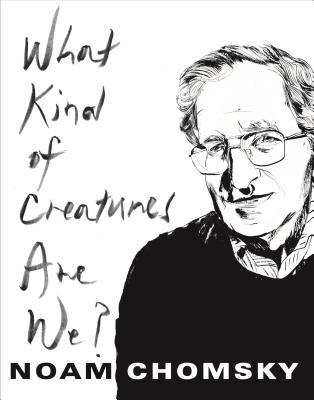
Noam Chomsky is widely known and deeply admired for being the founder of modern linguistics, one of the founders of the field of cognitive science, and perhaps the most avidly read political theorist and commentator of our time. In these lectures, he presents a lifetime of philosophical reflection on all three of these areas of research, to which he has contributed for over half a century.In clear, precise, and nontechnical language, Chomsky elaborates on fifty years of scientific development in the study of language, sketching how his own work has implications for the origins of language, the close relations that language bears to thought, and its eventual biological basis. He expounds and criticizes many alternative theories, such as those that emphasize the social, the communicative, and the referential aspects of language. Chomsky reviews how new discoveries about language overcome what seemed to be highly problematic assumptions in the past. He also investigates the apparent scope and limits of human cognitive capacities and what the human mind can seriously investigate, in the light of history of science and philosophical reflection and current understanding. Moving from language and mind to society and politics, he concludes with a searching exploration and philosophical defense of a position he describes as "libertarian socialism," tracing its links to anarchism and the ideas of John Dewey and even to the ideas of Marx and Mill, demonstrating its conceptual growth out of our historical past and urgent relation to matters of the present.

An indispensable set of interviews on foreign and domestic issues with the bestselling author of Hegemony or Survival , "America's most useful citizen." ( The Boston Globe )In this new collection of conversations, conducted in 2006 and 2007, Noam Chomsky explores the most immediate and urgent Iran's challenge to the United States, the deterioration of the Israel-Palestine conflict, the ongoing occupations of Iraq and Afghanistan, the rise of China, and the growing power of the left in Latin America, as well as the Democratic victory in the 2006 U.S. midterm elections and the upcoming presidential race. As always, Chomsky presents his ideas vividly and accessibly, with uncompromising principle and clarifying insight.The latest volume from a long-established, trusted partnership, What We Say Goes shows once again that no interlocutor engages with Chomsky more effectively than David Barsamian. These interviews will inspire a new generation of readers, as well as longtime Chomsky fans eager for his latest thinking on the many crises we now confront, both at home and abroad. They confirm that Chomsky is an unparalleled resource for anyone seeking to understand our world today.

In his latest interview collection, Noam Chomsky offers insights into the institutions that shape the public mind in the service of power and profit. Whether discussing the recent U.S. military escalation in Colombia, the bipartisan rollback of Social Security, the rise of for-profit HMOs, or growing inequality worldwide, Chomsky shows how ordinary citizens, if they work together, have the power to make meaningful change.Renowned interviewer David Barsamian showcases his unique access to Chomsky's thinking on a number of topics of contemporary and historical import. In an interview conducted after the important November 1999 "Battle in Seattle", Chomsky discusses prospects for building a movement to challenge corporate domination of the media, the environment, and even our private lives. Chomsky also engages in a discussion of his ideas on language and mind, making his important linguistic insights accessible to the lay reader.
The Fateful Triangle: The United States, Israel and the Palestinians is a 1983 book by Noam Chomsky about the relationship among the U.S., Israel and the Arab Palestinians. Chomsky examines the origins of this relationship and its meaningful consequences for the Palestinians and other Arabs. The book mainly concentrates on the 1982 Lebanon War and the "pro-Zionist" bias of most U.S. media and intellectuals, as Chomsky puts it.