
Chris Ware
Franklin Christenson ('Chris') Ware is a cartoonist. His Jimmy Corrigan: The Smartest Kid on Earth won the Guardian First Book Award and was listed as one of the 100 Best Books of the Decade by the London Times in 2009. An irregular contributor to This American Life and The New Yorker (where some of the pages of this book first appeared) his original drawings have been exhibited in the Whitney Biennial, the Museum of Contemporary Art in Chicago and in piles behind his work table in Oak Park, Illinois.
28 Books Written

The first book from the Chicago author of the “stunning” Building Stories ( The New York Times ) is a pleasantly-decorated view at a lonely and emotionally impaired "everyman," who is provided, at age 36, the opportunity to meet his father for the first time. “This haunting and unshakable book will change the way you look at your world.” — Time magazine“There’s no writer alive whose work I love more than Chris Ware.” —Zadie Smith, New York Times bestselling author of Swing Time An improvisatory romance which gingerly deports itself between 1890's Chicago and 1980's small town Michigan, the reader is helped along by thousands of colored illustrations and diagrams, which, when read rapidly in sequence, provide a convincing illusion of life and movement. The bulk of the work is supported by fold-out instructions, an index, paper cut-outs, and a brief apology, all of which concrete to form a rich portrait of a man stunted by a paralyzing fear of being disliked.

After years of sporadic work on other books and projects and following the almost complete loss of his virility, it's here: a new graphic novel by Chris Ware. Building Stories imagines the inhabitants of a three-story Chicago apartment building: a 30-something woman who has yet to find someone with whom to spend the rest of her life; a couple, possibly married, who wonder if they can bear each other's company another minute; and the building's landlady, an elderly woman who has lived alone for decades. Taking advantage of the absolute latest advances in wood pulp technology, Building Stories is a book with no deliberate beginning nor end, the scope, ambition, artistry and emotional prevarication beyond anything yet seen from this artist or in this medium, probably for good reason.
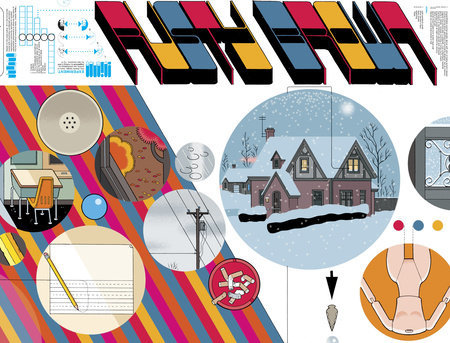
A major graphic novel event more than 16 years in the making: the new epic masterwork from the brilliant and beloved author of Jimmy Corrigan: The Smartest Kid on Earth and Building Stories. Rusty Brown is a fully interactive, full-color articulation of the time-space interrelationships of six complete consciousnesses on a single midwestern American day and the tiny piece of human grit about which they involuntarily orbit. A sprawling, special snowflake accumulation of the biggest themes and the smallest moments of life, Rusty Brown literately and literally aims at nothing less than the coalescence of one half of all of existence into a single museum-quality picture story, expertly arranged to present the most convincingly ineffable and empathetic illusion of experience for both life-curious readers and traditional fans of standard reality. From childhood to old age, no frozen plotline is left unthawed in the entangled stories of a child who awakens without superpowers, a teen who matures into a paternal despot, a father who stores his emotional regrets on the surface of Mars and a late-middle-aged woman who seeks the love of only one other person on planet Earth.

The Acme Novelty Library Final Report to Shareholders and Rainy Day Saturday Afternoon Fun Book
by Chris Ware
Rating: 4.3 ⭐
Utterly eschewing the general bonhomie surrounding the newly-minted contemporary regard for the comic strip medium as a language of complicated personal expression and artistic sophistication, professional colorist and award-winning letterer F. C. Ware returns to the book trade with “The ACME Novelty Library,” a hardcover distillation of all his surviving one-page cartoon jokes with which he tuckpointed the holes of his regular comic book periodical over the past decade.Sometimes claimed to be his “best work” by those who really don’t know any better, this definitive congestion of stories of the future, the old west, and even of modern life nonetheless tries to stay interesting by including a luminescent map of the heavens, a chart of the general structure of the universe, assorted cut-out activitites, and a complete history of The ACME Novelty Company itself, decorated by rare photographs, early business ventures, not to mention the smallest example of a Comic Strip ever before offered to the general public. All in all, it will likely prove a rather mild disappointment, but at least it catches the light in a nice way and may force a smile here and there before being shelved for the next generation’s ultimate disregard and/or disposal.

Jordan Wellington Lint, fifty-one, is chief executive officer of Lint Financial Products, a company he began serving in 1985 as assistant and adviser before working his way up its corporate ladder to record-setting innovation in the fields of finance and high-yield investment. In his seven years as the head of Lint, Jordan has grown the company from a business lender and real estate speculator to a leading provider of network financial infrastructure services, all the while positioning Lint as a model of corporate integrity and high-yield, low-risk product. Lint’s vision has made him one of the most influential and widely sought-after leaders in the complex Omaha securities industry, and his fresh approach to an understanding of local problems, leadership, and determination have enabled Lint to outdistance and outpace its competitors.Lint graduated from UNL in 1981 with a B.A. in business and briefly studied music and recording in Los Angeles before returning to his hometown of Omaha, Nebraska, where he has continued his life journey ever since. In his ongoing role as chief executive officer and his dual roles as public servant and father, Lint continues to put his creative leadership and vision to work in a variety of challenging settings. He is married and the father of two boys. The ACME Novelty Library #20 comprises a contributing chapter to cartoonist ChrisWare’s gradual accretion of the ongoing graphic novel experiment "Rusty Brown".

Cleverly appropriated old-fashioned animation imagery and advertising styles of the 1920s and 1930s are put to use in Quimby the Mouse at the service of modern vignettes of angst and existentialism. As this cartoon silhouette of a mouse ignominiously suffers at every turn, the spaces between the panels create despair and a Beckett-like rhythm of hope deceived and deferred (but never quite extinguished), buoying Quimby from page to page.Like Ware's first book, Jimmy Corrigan, Quimby is saturated with Ware's genius, including consistently amazing graphics, insanely perfectionist production values, cut-out-and-assemble paper projects, and the formal complexity of his narratives that have earned him the reputation as one of the most prodigious artists of his generation.This collection includes issues 2 and 4 of the comic book series with additional material.

The first issue of the Novelty Library focuses on Jimmy Corrigan, the Smartest Kid On Earth, though only two pages of this issue were later collected in the Jimmy Corrigan novel. In the main 24 page color story we see scenes from his life -- as a young boy, as a young man, as middle-aged man, and as on old man. The time line skips back and forth, and it's left up to the reader to piece together a history from these glimpses into Jimmy's life.An eight page inlay printed on news-print in black and white and a blue-grayish color has a six page nonsensical strip about Jimmy as a (for once) smart child. He builds rocket ships, shrinks himself, has an adventure and grows up. The ending of the strip is detailed on a full page of typeset text.Also included is a one page Big Tex strip, a one page funny story about Jimmy fixing a new dad, one page of fake ads, and "A Splendid Toy Model" of Jimmy in his robot man persona on the back cover.

The creator of Jimmy Corrigan begins a new story.This newest edition of The ACME Novelty Library features the first serial installment of "Rusty Brown," Ware's first major lengthy "narrative indulgence" since his Jimmy Corrigan graphic novel. The ACME Novelty Library is Chris Ware's ongoing comic book/art object series, which he has been creating for Fantagraphics since 1993. It is also where Corrigan was serialized to great acclaim and success before going supernova when collected by Pantheon in 2000, selling over 70,000 copies in four hardcover printings. "Rusty Brown" will be serialized in ACME over the course of several issues (and Pantheon will similarly collect the story in hardcover sometime upon completion, several years from now). The first installment begins with young Rusty, an outcast in his suburban Chicago elementary school, befriended solely by his Supergirl action figure until he meets new kid on the block and fellow comic nerd, Chalky White. Rusty's story is an uncomfortably vivid and uncompromising look into the life of a social outcast. Ultimately, Rusty Brown will run longer than Jimmy Corrigan, tracing Brown's life through adulthood, along with every excruciating moment of failure it brings. The ACME Novelty Library series has been the most acclaimed comic book series of the last ten years, as well as one of the bestselling contemporary comics on the racks. This is only the second issue, however, that has been available to the general book trade, enabling booksellers to satisfy demand for Ware's work post-Jimmy Corrigan while Ware builds toward the next collection. The format also allows Ware to indulge us with many surprises as well, from Ware's faux-advertising sections and elaborate three-dimensional cut-out designs. Author Biography: Chris Ware published his first comic strip in The Daily Texan, the student newspaper serving The University of Texas at Austin. He relocated to Chicago to attend the Art Institute in the late 1980s; he continues to reside there with his wife, Marnie. In his spare time, he creates The Ragtime Ephemeralist, a journal devoted to vintage ragtime music.

The penultimate teen issue of the ACME Novelty Library appears this autumn with a new chapter from the electrifying experimental narrative “Rusty Brown,” which examines the life, work, and teaching techniques of one of its central real-life protagonists, W. K. Brown. A previously marginal figure in the world of speculative fiction, Brown’s widely anthologized first story, “The Seeing Eye Dogs of Mars,” garnered him instant acclaim and the coveted White Dwarf Award for Best New Writer when it first appeared in the pages of Nebulous in the late 1950s, but his star was quickly eclipsed by the rise of such talents as Anton Jones, J. Sterling Imbroglio, and others of the so-called psychovisionary movement. (Modern scholarship concedes, however, that they now owe a not inconsequential aesthetic debt to Brown.) New surprises and discoveries concerning the now legendarily reclusive and increasingly influential writer mark this nineteenth number of the ACME Novelty Library, itself a regular award-winning periodical, lauded for its clear lettering and agreeable coloring, which, as any cultured reader knows, are cornerstones of any genuinely serious literary effort. Full color, seventy-eight pages, with hardbound covers, full indicia, and glue, the ACME Novelty Library offers its readers a satisfying, if not thrilling, rocket ride into the world of unkempt imagination and pulse-pounding excitement.

In keeping with his athletic goal of issuing a volume of his occasionally lauded ACME series once every new autumn, volume 18 finds cartoonist Chris Ware abandoning the engaging serialization of his "Rusty Brown" and instead focusing upon his ongoing and more experimentally grim narrative "Building Stories."Collecting pages unseen except in obscure alternative weekly periodicals and sophisticated expensive coffee-table magazines, "ACME Novelty Library #18" reintroduces the characters that "New York Times" readers found "dry" and "deeply depressing" when one chapter of the work (not included here) was presented in its pages during 2005 and 2006. Set in a Chicago apartment building more or less in the year 2000, the stories move from the straightforward to the mnemonically complex, invading characters' memories and personal ambitions with a text point size likely unreadable to human beings over the age of forty-five. Reformatted to accommodate this different material, readers will be pleased by the volume's vertical shape and tasteful design, which, unlike Ware's earlier volumes, should discreetly blend into any stack or shelf of real books.

Undaunted by lukewarm Internet and blogospheric opinion ("flat," "slow," and "always dreary") of his meretricious return last year to the tradition of the American comic book with the sixteenth issue of his ACME Novelty Library, cartoonist and professional sentimentalist Chris Ware returns with the seventeenth issue of this same title, and it is almost certain not to change general public opinion. Continuing with the second half of the introduction to his shamelessly meandering graphic novel Rusty Brown (which began last issue at a private school in the 1970s Midwest), the six-sided crystal suggested by the exegesis of the first installment is slowly turned and examined in midmorning winter sunlight sometime between the bell of first period and the conclusion of lunch for the first through the fourth grades. Also included are more thorough examinations of many of the main characters' cloudy motivations, personal habits, and favorite restaurants, to say nothing of the small dust mote around which they have coalesced and the complications in its life due to the acquisition of superpowers sometime the night before. Like the irritating distant family member you only have to see once a year, the ACME Novelty Library #17 will, as was its predecessor, be published by the author in a single, limited edition only, never to be reprinted until the entire library is collected as a single volume, though it may be promptly remaindered and/or discarded.

Acclaimed cartoonist Chris Ware reveals the outtakes of his genius in these intimate, imaginative, and whimsical sketches collected from the years during which he completed his award-winning graphic novel Jimmy Corrigan: The Smartest Kid on Earth (Pantheon). His novel not only won the Manchester Guardian First Novel prize in 2001 but it has sold over 100,000 copies. This book is as much a companion volume to Jimmy Corrigan --one of the great crossover success stories-- as a tremendous art collection from of one of America's most interesting and popular graphic artist.Chris Ware has a passion for drawing that is surprisingly wide-ranging in style and subject. This book surprises the reader on every page with its sense of spontaneous vision. Architectural drawings from Chicago and interplanetary robot comics collide with cruelly doodled human figures and quietly troubling studies of the still life. A must for people with a passion for modern design and old-fashioned style.

Straggling behind the mild 2003 success of cartoonist Chris Ware's first facsimile collection of his miscellaneous sketches, notes, and adolescent fantasies arrives this second volume, updating weary readers with Ware's clichéd and outmoded insights from the late twentieth century. Working directly in pen and ink, watercolor, and white-out whenever he makes a mistake, Ware has cannily edited out all legally sensitive and personally incriminating material from his private journals, carefully recomposing each page to simulate the appearance of an ordered mind and established aesthetic directive. All phone numbers, references to ex-girlfriends, "false starts," and embarrassing experiments with unfamiliar drawing media have been generously excised to present the reader with the most pleasant and colorful sketchbook reading experience available. Included are Ware's frustrated doodles for his book covers, angry personal assaults on friends, half-finished comic strips, and lengthy and tiresome fulminations of personal disappointments both social and sexual, as well as his now-beloved drawings of the generally miserable inhabitants of the city of Chicago. All in all, a necessary volume for fans of fine art, water-based media, and personal diatribe. This hardcover is attractively designed and easy to resell.
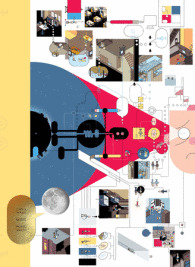
The first and much-anticipated monograph by multi-award-winning cartoonist and graphic novelist Chris Ware, chronicling his influential quarter-century career. While illustrator Chris Ware's singular body of work is often categorized as comics, his trailblazing work defies genre. Whether he is writing graphic novels, making paintings, or building sculptures, Ware explores universal themes of social isolation, emotional torment, and depression with his trademark self-effacing voice. The end result is wry, highly empathetic, and identifiable to all walks of life. Ware, like Charles Schulz, Art Spiegelman, and R. Crumb, has elevated cartooning to an iconic art form. This volume is a personal, massive, never-before-seen look at how the artist's life and work combine, beginning with his newspaper family and the influence of their work; his art-school days in Austin and Chicago; to his career from the early 1990s to the present day. It also delves into how, as a storyteller and builder, his near-compulsion to build in three dimensions feeds into the thinking of his innovative narrative art. The book contains a comprehensive collection of his work, including many previously unpublished examples, and is an intimate window into a comics master sure to appeal to fans of art and storytelling.

"[Chris] Ware is the most versatile and innovative artist the medium has ever known," says Dave Eggers. We suspect that Ware won't be picking up cudgels to defend this title. For one thing, he's too busy creating brilliantly funny and insightfully quirky alternative comic books. In this 15th addition to his Acme Novelty Library, Ware flips out stories of favorites like "Jimmy Corrigan," "Rocket Sam," and, of course, "Quimby the Mouse." Well-twisted Ware fans will enjoy the pull-out bonuses, especially the cut-out three-dimensional motion picture viewer.

Acme #3 presents one of Ware's earliest characters, the potato-shaped little fellow who starred in Ware's first RAW story. This issue reprints selected examples of Ware's college-era "daily" strips starring that character, as well as a longer story and other surprises, printed in an adorably tiny format. A great stand-alone issue to introduce new readers to the most critically acclaimed comic book series of the 1990s.

Acme Novelty Library #2. Featuring Quimby the Mouse. Originally published in 1994.

The Acme Novelty Library, Issue 10, Spring 1998: Mail Order Catalogue, Jimmy Corrigan
by Chris Ware
Rating: 4.4 ⭐
The ACME Novelty Library #10 features an uncollected, sand-alone Jimmy Corrigan tale.

The Acme Novelty Library, Issue 4, Winter 1994–1995: Sparky's Best Comics and Stories
by Chris Ware
Rating: 4.3 ⭐
Acme Novelty Library #4. featuring Sparky's best comics and stories. Book is over sized.

The Acme Novelty Library, Issue 7, Summer 1996: The Acme Novelty Book of Jokes
by Chris Ware
Rating: 4.5 ⭐
Issue 7 of the Acme Novelty Library is tabloid sized and An untitled Big Tex story; Paw and Avery make a deal. A tour of the Acme company. Rocket Sam on the Mysterious Cave Planet Of Zanndor; Rocket Sam lands on a new planet. Text and illustration article redesigning the constellations. Untitled Big Tex story; Paw takes Tex shooting. Untitled Quimby The Mouse story; Quimby's night at home; presented as a cut out and construct miniature book. These Arms Were Made For Hugging; The Marooned Sam constructs a companion. Cut-out and construct miniature library. Scripts and art by Chris Ware.

The first chapters of the "Jimmy Corrigan" graphic novel, in their original serialized form.

Includes chapters from "Jimmy Corrigan".

The Acme Novelty Library, Issue 8, Winter 1996–1997: Jimmy Corrigan, Part 3
by Chris Ware
Rating: 4.5 ⭐
Comics for Adults Jimmy Corrigan continues!

Loyal Acme readers who were disgruntled at the previous two issues, in which THINGS ACTUALLY HAPPENED (time shifts, sex, dream sequences, super-heroes, death, maiming, architecture — my God, it was like Bob Dylan going electric all over again) will be delighted to discover that this chapter of the Jimmy Corrigan saga returns to the mind-numbingly claustrophobic eventlessness that distinguished earlier issues (such as the acclaimed, award-losing "32-pages-all-in-one-room" #9). In this issue Jimmy and his dad have lunch! In a diner! For the whole issue! Except in one sequence they walk outside! To talk to an old guy! Then they go back to his dad's apartment! Trust us, after you read this little gem, My Dinner with Andre will look like The Road Warrior by comparison.2000 Harvey Award Winner, Special Award for Excellence in Presentation2000 Harvey Award Winner, Best Continuing Series2000 Ignatz Award Winner, Outstanding Story

Acme Novelty Library items by Chris Ware in the early 1990s.

Includes chapters from "Jimmy Corrigan".

This extra-length issue reveals the end of Jimmy Corrigan's quest, as he meets his half-sister — Ware's most sensitively delineated character yet — and a terrible tragedy tears apart his newly discovered family. A stunning climax to an amazing work.2001 Eisner Award winner, Best Coloring2001 Harvey Award Winner, Best Continuing Series

Acme Novelty Library #11 continues the Harvey Award-winning Jimmy Corrigan epic, begun in Acme #5. This issue centers around the 1890s Chicago era and the bleak circumstances surrounding the death of Jimmy Senior's grandmother. Other "high points" include: Jimmy eats sugar out of the jar, only to discover a lot of dead flies buried in the treat; a special viewing of an exciting slide show of "The Great Fire" that burned down Chicago; some homeless men yell at Jimmy and scare him away; plus many more fun surprises! The most haunting and bizarre issue yet in the critically-acclaimed series."...a queasy, psychological time trip down the corridors of your guiltier regrets." – Spin1999 Harvey Award Winner, Special Award for Excellence in Presentation