
H.W. Brands
H.W. Brands is an acclaimed American historian and author of over thirty books on U.S. history, including Pulitzer Prize finalists The First American and Traitor to His Class. He holds the Jack S. Blanton Sr. Chair in History at the University of Texas at Austin, where he earned his PhD. Originally trained in mathematics, Brands turned to history as a way to pursue his passion for writing. His biographical works on figures like Franklin, Jackson, Grant, and both Roosevelts have earned critical and popular praise for their readability and depth. Raised in Oregon and educated at Stanford, Reed College, and Portland State, he began his teaching career in high schools before entering academia. He later taught at Texas A&M and Vanderbilt before returning to UT Austin. Brands challenges conventional reverence for the Founding Fathers, advocating for a more progressive and evolving view of American democracy. In addition to academic works, his commentary has featured in major documentaries. His books, published internationally and translated into multiple languages, examine U.S. political, economic, and cultural development with compelling narrative force. Beyond academia, he is a public intellectual contributing to national conversations on history and governance.
30 Books Written

From the early years of fur trading to today's Silicon Valley empires, America has proved to be an extraordinarily fertile land for the creation of enormous fortunes. Each generation has produced one or two phenomenally successful leaders, often in new industries that caught contemporaries by surprise, and each of these new fortunes reconfirmed the power of fanatically single-minded visionaries. John Jacob Astor and Cornelius Vanderbilt were the first American moguls; John D. Rockefeller, Andrew Carnegie, and J. P. Morgan were kingpins of the Gilded Age; David Sarnoff, Walt Disney, Ray Kroc, and Sam Walton were masters of mass culture. Today Oprah Winfrey, Andy Grove, and Bill Gates are giants of the Information Age. America has again and again been the land of dizzying mountains of wealth.Here, in a wittily told and deeply insightful history, is a complete set of portraits of America's greatest generators of wealth. Only such a collective study allows us to appreciate what makes the great entrepreneurs really tick. As H. W. Brands shows, these men and women are driven, they are focused, they deeply identify with the businesses they create, and they possess the charisma necessary to persuade other talented people to join them. They do it partly for the money, but mostly for the thrill of creation.The stories told here -- including how Nike got its start as a business-school project for Phil Knight; how Robert Woodruff almost refused to take control of Coca-Cola to spite his father; how Thomas Watson saved himself from prison by rescuing Dayton, Ohio, from a flood; how Jay Gould nearly cornered the gold market; how H. L. Hunt went from gambling at cards to gambling with oil leases -- make for a narrative that is always lively and revealing and often astonishing. An observer in 1850, studying John Jacob Astor, would not have predicted the rise of Henry Ford and the auto industry. Nor would a student of Ford in 1950 have anticipated the takeoff of direct marketing that made Mary Kay Ash a trusted guide for millions of American women. Full of surprising insights, written with H. W. Brands's trademark flair, the stories in Masters of Enterprise are must reading for all students of American business history.

PULITZER PRIZE FINALIST • Benjamin Franklin, perhaps the pivotal figure in colonial and revolutionary America, comes vividly to life in this “thorough biography of ... America’s first Renaissance man” ( The Washington Post ) by the two-time Pulitzer Prize finalist, bestselling historian, and author of Our First Civil War."The authoritative Franklin biography for our time.” —Joseph J. Ellis, author of the Pulitzer Prize-winning Founding BrothersWit, diplomat, scientist, philosopher, businessman, inventor, and bon vivant, Benjamin Franklin's "life is one every American should know well, and it has not been told better than by Mr. Brands" ( The Dallas Morning News ). From penniless runaway to highly successful printer, from ardently loyal subject of Britain to architect of an alliance with France that ensured America’s independence, Franklin went from obscurity to become one of the world’s most admired figures, whose circle included the likes of Voltaire, Hume, Burke, and Kant.Drawing on previously unpublished letters and a host of other sources, acclaimed historian H. W. Brands has written a thoroughly engaging biography of the eighteenth-century genius. A much needed reminder of Franklin’s greatness and humanity, The First American is a work of meticulous scholarship that provides a magnificent tour of a legendary historical figure, a vital era in American life, and the countless arenas in which the protean Franklin left his legacy.Look for H.W. Brands's other ANDREW JACKSON, THE MAN WHO SAVED THE UNION (Ulysses S. Grant), TRAITOR TO HIS CLASS (Franklin Roosevelt) and REAGAN.

National Bestseller In this, the first major single-volume biography of Andrew Jackson in decades, H.W. Brands reshapes our understanding of this fascinating man, and of the Age of Democracy that he ushered in.An orphan at a young age and without formal education or the family lineage of the Founding Fathers, Jackson showed that the Presidency was not the exclusive province of the wealthy and the well-born but could truly be held by a man of the people. On a majestic, sweeping scale Brands re-creates Jackson’s rise from his hardscrabble roots to his days as frontier lawyer, then on to his heroic victory in the Battle of New Orleans, and finally to the White House. Capturing Jackson’s outsized life and deep impact on American history, Brands also explores his controversial actions, from his unapologetic expansionism to the disgraceful Trail of Tears. This is a thrilling portrait, in full, of the president who defined American democracy.
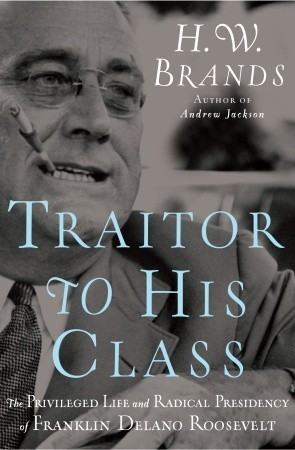
Traitor to His Class: The Privileged Life and Radical Presidency of Franklin Delano Roosevelt
by H.W. Brands
Rating: 4.0 ⭐
A sweeping, magisterial biography of the man generally considered the greatest president of the twentieth century, admired by Democrats and Republicans alike. Traitor to His Class sheds new light on FDR's formative years, his remarkable willingness to champion the concerns of the poor and disenfranchised, his combination of political genius, firm leadership, and matchless diplomacy in saving democracy in America during the Great Depression and the American cause of freedom in World War II. Drawing on archival materials, public speeches, personal correspondence, and accounts by family and close associates, acclaimed bestselling historian and biographer H. W. Brands offers a compelling and intimate portrait of Roosevelt’s life and career.Brands explores the powerful influence of FDR’s dominating mother and the often tense and always unusual partnership between FDR and his wife, Eleanor, and her indispensable contributions to his presidency. Most of all, the book traces in breathtaking detail FDR’s revolutionary efforts with his New Deal legislation to transform the American political economy in order to save it, his forceful—and cagey—leadership before and during World War II, and his lasting legacy in creating the foundations of the postwar international order. Traitor to His Class brilliantly captures the qualities that have made FDR a beloved figure to millions of Americans.

From New York Times bestselling author H. W. Brands, a masterful biography of the Civil War general and two-term president who saved the Union twice, on the battlefield and in the White House, holding the country together at two critical turning points in our history.Ulysses Grant rose from obscurity to discover he had a genius for battle, and he propelled the Union to victory in the Civil War. After Abraham Lincoln's assassination and the disastrous brief presidency of Andrew Johnson, America turned to Grant again to unite the country, this time as president. In Brands's sweeping, majestic full biography, Grant emerges as a heroic figure who was fearlessly on the side of right. He was a beloved commander in the field but willing to make the troop sacrifices necessary to win the war, even in the face of storms of criticism. He worked valiantly to protect the rights of freedmen in the South; Brands calls him the last presidential defender of black civil rights for nearly a century. He played it straight with the American Indians, allowing them to shape their own fate even as the realities of Manifest Destiny meant the end of their way of life. He was an enormously popular president whose memoirs were a huge bestseller; yet within decades of his death his reputation was in tatters, the victim of Southerners who resented his policies on Reconstruction. In this page-turning biography, Brands now reconsiders Grant's legacy and provides a compelling and intimate portrait of a man who saved the Union on the battlefield and consolidated that victory as a resolute and principled political leader.

The General vs. the President: MacArthur and Truman at the Brink of Nuclear War
by H.W. Brands
Rating: 4.1 ⭐
From master storyteller and historian H. W. Brands, twice a finalist for the Pulitzer Prize, comes the riveting story of how President Harry Truman and General Douglas MacArthur squared off to decide America's future in the aftermath of World War II. At the height of the Korean War, President Harry S. Truman committed a gaffe that sent shock waves around the world. When asked by a reporter about the possible use of atomic weapons in response to China's entry into the war, Truman replied testily, "The military commander in the field will have charge of the use of the weapons, as he always has." This suggested that General Douglas MacArthur, the willful, fearless, and highly decorated commander of the American and U.N. forces, had his finger on the nuclear trigger. A correction quickly followed, but the damage was done; two visions for America's path forward were clearly in opposition, and one man would have to make way.Truman was one of the most unpopular presidents in American history. Heir to a struggling economy, a ruined Europe, and increasing tension with the Soviet Union, on no issue was the path ahead clear and easy. General MacArthur, by contrast, was incredibly popular, as untouchable as any officer has ever been in America. The lessons he drew from World War II were absolute: appeasement leads to disaster and a showdown with the communists was inevitable--the sooner the better. In the nuclear era, when the Soviets, too, had the bomb, the specter of a catastrophic third World War lurked menacingly close on the horizon.The contest of wills between these two titanic characters unfolds against the turbulent backdrop of a faraway war and terrors conjured at home by Joseph McCarthy. From the drama of Stalin's blockade of West Berlin to the daring landing of MacArthur's forces at Inchon to the shocking entrance of China into the war, " The General and the President vividly evokes the making of a new American era."
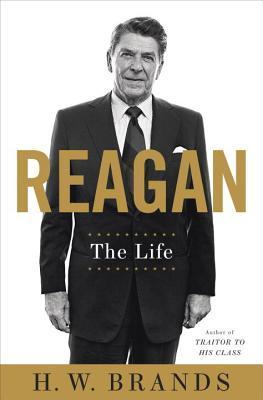
From master storyteller and New York Times bestselling Historian H. W. Brands comes the definitive biography of a visionary and transformative president In his magisterial new biography, H. W. Brands brilliantly establishes Ronald Reagan as one of the two great presidents of the twentieth century, a true peer to Franklin Roosevelt. Reagan conveys with sweep and vigor how the confident force of Reagan’s personality and the unwavering nature of his beliefs enabled him to engineer a conservative revolution in American politics and play a crucial role in ending communism in the Soviet Union. Reagan shut down the age of liberalism, Brands shows, and ushered in the age of Reagan, whose defining principles are still powerfully felt today.Reagan follows young Ronald Reagan as his ambition for ever larger stages compelled him to leave behind small-town Illinois to become first a radio announcer and then that quintessential public figure of modern America, a movie star. When his acting career stalled, his reinvention as the voice of The General Electric Theater on television made him an unlikely spokesman for corporate America. Then began Reagan’s improbable political ascension, starting in the 1960s, when he was first elected governor of California, and culminating in his election in 1980 as president of the United States.Employing archival sources not available to previous biographers and drawing on dozens of interviews with surviving members of Reagan’s administration, Brands has crafted a richly detailed and fascinating narrative of the presidential years. He offers new insights into Reagan’s remote management style and fractious West Wing staff, his deft handling of public sentiment to transform the tax code, and his deeply misunderstood relationship with Soviet leader Mikhail Gorbachev, on which nothing less than the fate of the world turned. Reagan is a storytelling triumph, an irresistible portrait of an underestimated politician whose pragmatic leadership and steadfast vision transformed the nation.

"Epic in its scale, fearless in its scope" (Hampton Sides), this masterfully told account of the American West from a two-time Pulitzer Prize finalist sets a new standard as it sweeps from the California Gold Rush and beyond.In Dreams of El Dorado , H. W. Brands tells the thrilling, panoramic story of the settling of the American West. He takes us from John Jacob Astor's fur trading outpost in Oregon to the Texas Revolution, from the California gold rush to the Oklahoma land rush. He shows how the migrants' dreams drove them to feats of courage and perseverance that put their stay-at-home cousins to shame-and how those same dreams also drove them to outrageous acts of violence against indigenous peoples and one another. The West was where riches would reward the miner's persistence, the cattleman's courage, the railroad man's enterprise; but El Dorado was at least as elusive in the West as it ever was in the East.Balanced, authoritative, and masterfully told, Dreams of El Dorado sets a new standard for histories of the American West.

Heirs of the Founders: The Epic Rivalry of Henry Clay, John Calhoun and Daniel Webster, the Second Generation of American Giants
by H.W. Brands
Rating: 4.1 ⭐
From New York Times bestselling historian H. W. Brands comes the riveting story of how, in nineteenth-century America, a new set of political giants battled to complete the unfinished work of the Founding Fathers and decide the future of our democracyIn the early 1800s, three young men strode onto the national stage, elected to Congress at a moment when the Founding Fathers were beginning to retire to their farms. Daniel Webster of Massachusetts, a champion orator known for his eloquence, spoke for the North and its business class. Henry Clay of Kentucky, as dashing as he was ambitious, embodied the hopes of the rising West. South Carolina's John Calhoun, with piercing eyes and an even more piercing intellect, defended the South and slavery. Together these heirs of Washington, Jefferson and Adams took the country to war, battled one another for the presidency and set themselves the task of finishing the work the Founders had left undone. Their rise was marked by dramatic duels, fierce debates, scandal and political betrayal. Yet each in his own way sought to remedy the two glaring flaws in the Constitution: its refusal to specify where authority ultimately rested, with the states or the nation, and its unwillingness to address the essential incompatibility of republicanism and slavery. They wrestled with these issues for four decades, arguing bitterly and hammering out political compromises that held the Union together, but only just. Then, in 1850, when California moved to join the Union as a free state, "the immortal trio" had one last chance to save the country from the real risk of civil war. But, by that point, they had never been further apart. Thrillingly and authoritatively, H. W. Brands narrates an epic American rivalry and the little-known drama of the dangerous early years of our democracy.

From the New York Times bestselling author, an acclaimed biography of President Teddy RooseveltLauded as "a rip-roaring life" ( Wall Street Journal ), TR is a magisterial biography of Theodore Roosevelt by bestselling author H.W. Brands. In his time, there was no more popular national figure than Roosevelt. It was not just the energy he brought to every political office he held or his unshakable moral convictions that made him so popular, or even his status as a bonafide war hero. Most important, Theodore Roosevelt was loved by the people because this scion of a privileged New York family loved America and Americans.And yet, according to Brands, if we look at the private Roosevelt without blinders, we see a man whose great public strengths hid enormous personal deficiencies; he was uncompromising, self-involved, and a highly imperfect brother, husband, and father.Beautifully written, and powerfully moved by its subject, TR is the classic biography of one of America's greatest and most complex leaders.

American Colossus: The Triumph of Capitalism, 1865-1900

From the two-time Pulitzer Prize finalist, bestselling historian, and author of Our First Civil War —the epic story of the California Gold Rush, “a fine, robust telling of one of the greatest adventure stories in history" (David McCullough, Pulitzer Prize-winning author of John Adams ).The California Gold Rush inspired a new American dream—the “dream of instant wealth, won by audacity and good luck.” The discovery of gold on the American River in 1848 triggered the most astonishing mass movement of peoples since the Crusades. It drew fortune-seekers from the ends of the earth, accelerated America’s imperial expansion, and exacerbated the tensions that exploded in the Civil War. H.W. Brands tells his epic story from multiple of adventurers John and Jessie Fremont, entrepreneur Leland Stanford, and the wry observer Samuel Clemens—side by side with prospectors, soldiers, and scoundrels. He imparts a visceral sense of the distances they traveled, the suffering they endured, and the fortunes they made and lost. Impressive in its scholarship and overflowing with life, The Age of Gold is history in the grand traditions of Stephen Ambrose and David McCullough.

The Zealot and the Emancipator: John Brown, Abraham Lincoln, and the Struggle for American Freedom
by H.W. Brands
Rating: 4.2 ⭐
From New York Times bestselling historian H. W. Brands, the epic struggle over slavery as embodied by John Brown and Abraham Lincoln, two men with radically different views on how moral people must act when their democracy countenances evil.John Brown was a charismatic and deeply religious man who heard the God of the Old Testament speaking to him, telling him to destroy slavery by any means. In 1854, when Congress opened Kansas territory to slavery, Brown raised a band of followers to wage war against the institution--his men tore proslavery settlers from their homes and hacked them to death with broadswords. Three years later Brown and his men assaulted the federal arsenal at Harpers Ferry, Virginia, hoping to arm slaves with weapons for the coming race war that would cleanse the nation of slavery once and for all.Brown's violence pointed ambitious Illinois lawyer and former office-holder Abraham Lincoln toward a different solution to slavery: politics. A member of the moderate wing of the new, antislavery Republican Party, he spoke cautiously and dreamed big, plotting his path to Washington and perhaps the White House. Yet Lincoln's caution couldn't preserve him from the vortex of violence Brown set in motion. Arrested and sentenced to death, Brown's righteous dignity on the way to the gallows led many in the North to see him as a martyr to liberty. Southerners responded in anger and horror that a terrorist was made into a saint. Lincoln shrewdly threaded the needle of the fracturing country and won election as president, still preaching moderation.But the time for moderation had passed, and as the nation careened toward war Lincoln would see his central faith, that democracy can resolve its moral crises peacefully, face the ultimate test. Master storyteller H. W. Brands narrates in thrilling fashion how two men confronted America's gravest scourge in the moments before the nation's darkest hour.

New York Times bestselling historian H. W. Brands offers a fresh and dramatic narrative of the American Revolution that shows it to be more than a fight against the British, but also a violent battle among neighbors forced to choose sides, Loyalist and Patriot.What causes a man to forsake his country and take arms against it? What prompts others, hardly distinguishable in station or success, to defend that country against the rebels? That is the question H. W. Brands answers in his original new narrative history of the American Revolution.George Washington and Benjamin Franklin were the unlikeliest of rebels. Washington in the 1770s stood at the apex of Virginia society. Franklin was more successful still, having risen from humble origins to world fame. John Adams might have seemed a more obvious candidate for rebellion, being of cantankerous temperament. Even so, he revered the law. Yet all three men became rebels against the British Empire that fostered their success. William Franklin might have been expected to join his father, Benjamin, in rebellion but remained loyal to the British. So did Thomas Hutchinson, a royal governor and friend of the Franklins, and Joseph Galloway, an early challenger to the Crown. They soon heard themselves denounced as traitors--for not having betrayed the country where they grew up. Native Americans and the enslaved were also forced to choose sides as civil war broke out around them.After the Revolution, the Patriots were cast as heroes and founding fathers while the Loyalists were relegated to bit parts best forgotten. Our First Civil War reminds us that before America could win its revolution against Britain, the Patriots had to win a bitter civil war against their sons and neighbors.

Lone Star Nation: How a Ragged Army of Volunteers Won the Battle for Texas Independence - and Changed America
by H.W. Brands
Rating: 4.2 ⭐
From bestselling historian and long-time Texan H. W. Brands, a richly textured history of one of the most fascinating and colorful eras in U.S. history--the Texas Revolution and the forging of a new America."For better or for worse, Texas was very much like America. The people ruled, and little could stop them. If they ignored national boundaries, if they trampled the rights of indigenous peoples and of imported bondsmen, if they waged war for motives that started from base self-interest, all this came with the territory of democracy, a realm inhabited by ordinarily imperfect men and women. The one saving grace of democracy—the one that made all the difference in the end—was that sooner or later, sometimes after a terrible strife, democracy corrected its worst mistakes."--from Lone Star NationLone Star Nation is the gripping story of Texas's precarious journey to statehood, from its early colonization in the 1820s to the shocking massacres of Texas loyalists at the Alamo and Goliad by the Mexican army, from its rough-and-tumble years as a land overrun by the Comanches to its day of liberation as an upstart republic. H. W. Brands tells the turbulent story of Texas through the eyes of a colorful cast of characters who have become a permanent fixture in the American Stephen Austin, the state's reluctant founder; Sam Houston, the alcoholic former governor who came to lead the Texas army in its hour of crisis and glory; William Travis, James Bowie, and David Crockett, the unforgettable heroic defenders of the doomed Alamo; Santa Anna, the Mexican generalissimo and dictator whose ruthless tactics galvanized the colonists against him; and the white-haired President Andrew Jackson whose expansionist aspirations loomed large in the background. Beyond these luminaries, Brands unearths the untold stories of the forgotten Texans--the slaves, women, unknown settlers, and children left out of traditional histories--who played crucial roles in Texas’s birth. By turns bloody and heroic, tragic and triumphant, this riveting history of one of our greatest states reads like the most compelling fiction, and further secures H. W. Brands's position as one of the premier American historians.

Bestselling historian and Pulitzer-prize finalist H. W. Brands follows the lives and battles of General William Tecumseh Sherman and Apache warrior Geronimo to tell the story of the Indian Wars and the final fight for control of the American continent.William Tecumseh Sherman and Geronimo were keen strategists and bold soldiers, ruthless with their enemies. Over the course of the 1870s and 1880s these two war chiefs would confront each other in the final battle for what the American West would be: a sparsely settled, wild home where Indian tribes could thrive, or a densely populated extension of the America to the east of the Mississippi. Sherman was a privileged son of Ohio who attended West Point and rose to prominence through his scorched earth campaigns in the Civil War. Geronimo grew up in the Apache tribe, hunting wild game for survival and roaming freely on the land. After the brutal killing of his wife, children, and mother, however, he became a relentless avenger, raiding Mexican settlements across the American border. When Sherman rose to General of the U.S. Army, he was tasked with bringing Geronimo and his tribe into an agreement with the U.S. government pledging that the Apache would live as farmers and ranchers and roam no more. But Geronimo preferred to fight. The Last Campaign is a powerful retelling of a turning point in the making of our nation and a searing elegy for a way of life that is gone.

Though he was a hero of the Revolutionary War, a prominent New York politician, and vice president of the United States, Aaron Burr is today best remembered as the villain who killed Alexander Hamilton in a duel. But as H. W. Brands demonstrates in this fascinating portrait of one of the most compelling politicians in American history, Burr was also a man before his time—a proponent of equality between the sexes well over a century before women were able to vote in the US. Through Burr's extensive, witty correspondence with his daughter Theodosia, Brands traces the arc of a scandalous political career and the early years of American politics. The Heartbreak of Aaron Burr not only dramatizes through their words his eventful life, it also tells a touching story of a father's love for his exceptional daughter, which endured through public shame, bankruptcy, and exile, and outlasted even Theodosia's tragic disappearance at sea.A Paperback Original
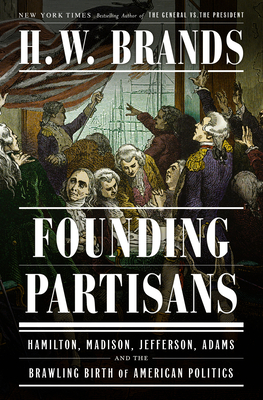
Founding Partisans: Hamilton, Madison, Jefferson, Adams and the Brawling Birth of American Politics
by H.W. Brands
Rating: 4.0 ⭐
From bestselling historian and Pulitzer Prize finalist H.W. Brands, a revelatory history of the shocking emergence of vicious political division at the birth of the United States.To the framers of the Constitution, political parties were a fatal threat to republican virtues. They had suffered the consequences of partisan politics in Britain before the American Revolution, and they wanted nothing similar for America. Yet parties emerged even before the Constitution was ratified, and they took firmer root in the following decade. In Founding Partisans, master historian H. W. Brands has crafted a fresh and lively narrative of the early years of the republic as the Founding Fathers fought one another with competing visions of what our nation would be.The first party, the Federalists, formed around Alexander Hamilton, James Madison and their efforts to overthrow the Articles of Confederation and make the federal government more robust. Their opponents organized as the Antifederalists, who feared the corruption and encroachments on liberty that a strong central government would surely bring. The Antifederalists lost but regrouped under the new Constitution as the Republicans, led by Thomas Jefferson, whose bruising contest against Federalist John Adams marked the climax of this turbulent chapter of American political history. The country’s first years unfolded in a contentious spiral of ugly elections and blatant violations of the Constitution. Still, peaceful transfers of power continued, and the nascent country made its way towards global dominance, against all odds. Founding Partisans is a powerful reminder that fierce partisanship is a problem as old as the republic.

A comprehensive account of the rise and fall of one of the major shapers of American foreign policyOn the eve of his inauguration as President, Woodrow Wilson commented, "It would be the irony of fate if my administration had to deal chiefly with foreign affairs." As America was drawn into the Great War in Europe, Wilson used his scholarship, his principles, and the political savvy of his advisers to overcome his ignorance of world affairs and lead the country out of isolationism. The product of his efforts―his vision of the United States as a nation uniquely suited for moral leadership by virtue of its democratic tradition―is a view of foreign policy that is still in place today.Acclaimed historian and Pulitzer Prize finalist H. W. Brands offers a clear, well-informed, and timely account of Wilson's unusual route to the White House, his campaign against corporate interests, his struggles with rivals at home and allies abroad, and his decline in popularity and health following the rejection by Congress of his League of Nations. Wilson emerges as a fascinating man of great oratorical power, depth of thought, and purity of intention.

Bestselling historian and Pulitzer Prize finalist H. W. Brands narrates the fierce debate over America's role in the world in the runup to World War II through its two most important President Franklin D. Roosevelt, who advocated intervention, and his isolationist nemesis, aviator and popular hero Charles Lindbergh.Hitler's invasion of Poland in September 1939 launched a momentous period of decision-making for the United States. With fascism rampant abroad, should America take responsibility for its defeat?For popular hero Charles Lindbergh, saying no to another world war only twenty years after the first was the obvious answer. Lindbergh had become famous and adored around the world after his historic first flight over the Atlantic in 1927. In the years since, he had emerged as a vocal critic of American involvement overseas, rallying Americans toward isolationism as the nominal head of the America First Committee. As Hitler advanced across Europe and threatened the British Isles, President Franklin Delano Roosevelt struggled to turn the tide of public opinion. With great effort, political shrewdness and outright deception—aided by secret British disinformation efforts in America—FDR readied the country for war. He pushed the US onto the world stage where it has stayed ever since.In this gripping narrative, H.W. Brands sheds light on a crucial tipping point in American history and depicts the making of a legendary president.

The Murder of Jim Fisk for the Love of Josie Mansfield: A Tragedy of the Gilded Age
by H.W. Brands
Rating: 3.3 ⭐
The two-time Pulitzer Prize finalist, bestselling historian, and author of Our First Civil War traces the extraordinary downfall of financier Jubilee Jim, bringing to life New York’s Gilded Age and some of its legendary players, including Boss William Tweed, Cornelius Vanderbilt, and the railroad tycoon Jay Gould.Even before he was shot dead on the stairway of the tony Grand Central Hotel in 1872, financier James “Jubilee Jim” Fisk, Jr., was a notorious New York City figure. From his audacious attempt to corner the gold market in 1869 to his battle for control of the geographically crucial Erie Railroad, Fisk was a flamboyant exemplar of a new financial era marked by volatile fortunes and unprecedented greed and corruption. But it was his scandalously open affair with a showgirl named Josie Mansfield that ultimately led to his demise.

From bestselling historian H. W. Brands, an incisive chronicle of the events and trends that guided-and sometimes misguided-our nation from the A-bomb to the iPhone.For a brief, bright moment in 1945, America stood at its apex, looking back on victory not only against the Axis powers but against the Great Depression, and looking ahead to seemingly limitless power and promise. What we've done with that power and promise over the past six decades is a vitally important and fascinating topic that has rarely been tackled in one volume, and never by a historian of H. W. Brands's stature.As American Dreams opens, Brands shows us a country dramatically different from our own-more unequal in social terms but more equal economically, more religious and rural but also more liberal and more wholeheartedly engaged with the rest of the world. As he traces the changes we have gone through as a nation, he reveals the great themes and dreams that have driven America-the rising focus on individual rights and pleasures, the growing distance between our global goals and those of the rest of the world, and the inexorable dissolution of a shared sense of what it means to be American. In Brands's adroit hands, these trends unfold through a character-driven narrative that sheds brilliant light on the obvious highs and lows-from Watergate to the Berlin Wall, from Apollo 11 to 9/11, from My Lai to shock and awe. But he also chronicles the surprising impact of less celebrated events and trends. Through his eyes, we realize the sweeping significance of the immigration reforms of the 1960s, which gradually transformed American society. We come to grasp the vast impact of abandoning the gold standard in 1971, which enabled both globalization and the current financial crisis. We ponder the unnerving results of CNN's debut in 1979, which sped up the news cycle and permanently changed our foreign policy by putting its effects live on our TV screens.Blending political and cultural history with his keen sense of the spirit of the times, Brands captures the national experience through the last six decades and reveals the still-unfolding legacy of dreams born out of a global cataclysm.

The Money Men: Capitalism, Democracy, and the Hundred Years' War Over the American Dollar
by H.W. Brands
Rating: 3.6 ⭐
An "insightful" ( Publishers Weekly ) history of the development of American capitalism and the men who made it great. Most Americans are familiar with the political history of the United States, but there is another history woven all through it, a largely forgotten history―the story of the money men. Acclaimed historian H. W. Brands brings them back to life: J. P. Morgan, who stabilized a foundering U.S. Treasury in 1907; Alexander Hamilton, who founded the first national bank, and Nicholas Biddle, under whose directorship it failed; Jay Cooke, who helped to finance the Union war effort through his then-innovative strategy of selling bonds to ordinary Americans; and Jay Gould, who tried to corner the market on gold in 1869 and as a result brought about Black Friday and fled for his life.

"Large-scale economic change, job uncertainty, the politics of extremism and paranoia, arguments over America's international role, racial conflicts. Sound familiar?"(Fritz Lanham, Houston Chronicle ) Just as we do today, Americans of the 1890s faced changes in economics, politics, society, and technology that led to wrenching and sometimes violent tensions between rich and poor, capital and labor, white and black, East and West. In The Reckless Decade , H. W. Brands demonstrates that we can learn a lot about the contradictions that lie at the heart of America today by looking at them through the lens of the 1890s.The 1890s saw the closing of the American frontier and a shift toward imperialist ambitions. Populists and muckrakers grappled with robber barons and gold-bugs. Americans addressed the unfinished business of Reconstruction by separating blacks and whites. Booker T. Washington, W. E. B. Du Bois, and other black leaders clashed over the proper response to continuing racial inequality. Those on top of the economic heap—Rockefeller, Carnegie, and Morgan—created vast empires of wealth, while those at the bottom worked for dimes a day. Brands brings all this to life in a vivid narrative filled with larger-than-life characters facing momentous challenges as they worked toward an uncertain future.

In the late 1950s, Washington was driven by its fear of communist subversion: it saw the hand of Kremlin behind developments at home and across the globe. The FBI was obsessed with the threat posed by American communist party--yet party membership had sunk so low, writes H.W. Brands, that it could have fit "inside a high-school gymnasium," and it was so heavily infiltrated that J. Edgar Hoover actually contemplated using his informers as a voting bloc to take over the party. Abroad, the preoccupation with communism drove the White House to help overthrow democratically elected governments in Guatemala and Iran, and replace them with dictatorships. But by then the Cold War had long since blinded Americans to the ironies of their battle against communism.In The Devil We Knew , Brands provides a witty, perceptive history of the American experience of the Cold War, from Truman's creation of the CIA to Ronald Reagan's creation of SDI. Brands has written a number of highly regarded works on America in the twentieth century; here he puts his experience to work in a volume of impeccable scholarship and exceptional verve. He turns a critical eye to the strategic conceptions (and misconceptions) that led a once-isolationist nation to pursue the war against communism to the most remote places on Earth. By the time Eisenhower left office, the United States was fighting communism by backing dictators from Iran to South Vietnam, from Latin America to the Middle East--while engaging in covert operations the world over. Brands offers no apologies for communist behavior, but he deftly illustrates the strained thinking that led Washington to commit gravely disproportionate resources (including tens of thousands of lives in Korea and Vietnam)to questionable causes. He keenly analyzes the changing policies of each administration, from Nixon's juggling (SALT talks with Moscow, new relations with Ccmmunist China, and bombing North Vietnam) to Carter's confusion to Reagan's laserrattling. Equally important is his incisive, often amusing look at how the anti-Soviet struggle was exploited by politicians, industrialists, and government agencies. He weaves in deft sketches of figures like Barry Goldwater and Henry Jackson (who won a Senate seat with the promise, "Many plants will be converting from peace time to all-out defense production"). We see John F. Kennedy deliver an eloquent speech in 1957 defending the rising forces of nationalism in Algeria and Vietnam; we also see him in the White House a few years later, ordering a massive increase in America's troop commitment to Saigon. The book ranges through the economics and psychology of the Cold War, demonstrating how the confrontation created its own constituencies inprivate industry and public life.In the end, Americans claimed victory in the Cold War, but Brands's account gives us reason to tone down the celebrations. "Most perversely," he writes, "the call to arms against communism caused American leaders to subvert the principles that constituted their country's best argument against communism." This far-reaching history makes clear that the Cold War was simultaneously far more, and far less, than we ever imagined at the time.

In this provocative book, H. W. Brands confronts the vital question of why an ever-increasing number of Americans do not trust the federal government to improve their lives and to heal major social ills. How is it that government has come to be seen as the source of many of our problems, rather than the potential means of their solution? How has the word liberal become a term of abuse in American political discourse?From the Revolution on, argues Brands, Americans have been chronically skeptical of their government. This book succinctly traces this skepticism, demonstrating that it is only during periods of war that Americans have set aside their distrust and looked to their government to defend them. The Cold War, Brands shows, created an extended―and historically anomalous―period of dependence, thereby allowing for the massive expansion of the American welfare state. Since the 1970s, and the devastating blow dealt to Cold War ideology by America’s defeat in Vietnam, Americans have returned to their characteristic distrust of government. With the collapse of the Soviet Union in 1991, Brands contends, the fate of American liberalism was sealed―and we continue to live with the consequences of its demise.

Greenback Planet: How the Dollar Conquered the World and Threatened Civilization as We Know It
by H.W. Brands
Rating: 3.9 ⭐
The world runs on the U.S. dollar. From Washington to Beijing, governments, businesses, and individuals rely on the dollar to conduct commerce and invest profitably and safely—even after the global financial meltdown in 2008 revealed the potentially catastrophic cost of the dollar's hegemony. But how did the greenback achieve this planetary dominance a mere century and a half after President Lincoln issued the first currency backed only by the credit—and credibility—of the federal government? In Greenback Planet , acclaimed historian H. W. Brands charts the dollar's astonishing rise to become the world's principal currency. Telling the story with the verve of a novelist, he recounts key episodes in U.S. monetary history, from the Civil War debate over fiat money (greenbacks) to the recent worldwide financial crisis. Brands explores the dollar's changing relations to gold and silver and to other currencies and cogently explains how America's economic might made the dollar the fundamental standard of value in world finance. He vividly describes the 1869 Black Friday attempt to corner the gold market, banker J. P. Morgan's bailout of the U.S. treasury, the creation of the Federal Reserve, and President Franklin Roosevelt's handling of the bank panic of 1933. Brands shows how lessons learned (and not learned) in the Great Depression have influenced subsequent U.S. monetary policy, and how the dollar's dominance helped transform economies in countries ranging from Germany and Japan after World War II to Russia and China today. He concludes with a sobering dissection of the 2008 world financial debacle, which exposed the power—and the enormous risks—of the dollar's worldwide reign.

Based on the idea that you can’t cover (and don't want to) everything in a survey course, H.W. Brands and a team of award-winning historians present the story of American history in a refreshing new way. American A History of the United States concentrates on the topics most commonly taught in an American history survey course, with a focus on the major themes and the connections between them. A unique pedagogical program developed and implemented by instructional designers provides a consistent structure for students as the story of American history unfolds.

For the past nine years, acclaimed historian H. W. Brands has been tweeting the history of the United States. But this has been no ordinary version of the American tale. Instead, Brands gives his 5,000-plus followers a regular dose of history and poetry combined: his tweets are in the form of haiku.Haiku History presents a selection of these smart, shrewd, and always informative short poems. "Shivers and specters / Flit over souls in Salem / As nineteen are hanged; describes the Salem witch trials, and "In angry war paint / Men board three Indiamen / And toss the cargo" depicts the Boston Tea Party. "Then an anarchist / Makes one of the war heroes / The next president" recalls the assassination of William McKinley and the accession of Teddy Roosevelt to the presidency, while "Second invasion: / Iraq, where Saddam is still / In troubling control" returns us to the invasion of Iraq in 2003. As he travels from the thirteen colonies to the 2016 election, Brands brings to life the wars, economic crises, social upheavals, and other events that have shaped our nation. A history book like no other, Haiku History injects both fun and poetry into the story of America--three lines at a time.

American Stories enhances the accessibility of United States history by concentrating on the most commonly taught topics while retaining a strong narrative emphasis and chronological organization. The text goes beyond the major events that have shaped America by using significant incidents to reflect historical dilemmas and the decisions made by the American people and their leaders. The authors stress themes and ideas that continue to affect Americans, as they believe the impact of change on human lives adds an essential layer to understanding history.