
Amity Shlaes
Amity Shlaes graduated from Yale University magna cum laude with a bachelor’s degree in English in 1982. Shlaes writes a column for Forbes, and served as a nationally syndicated columnist for over a decade, first at the Financial Times, then at Bloomberg. Earlier, she worked at the Wall Street Journal, where she was a member of the editorial board. She is the author of "Coolidge," "The Forgotten Man," and "The Greedy Hand, all bestsellers. Her first book, "Germany" was about German reunification. Miss Shlaes chairs the board of the Calvin Coolidge Memorial Foundation, situated at the birthplace of President Calvin Coolidge. Michael Pack of Manifold Productions is making a documentary film of her movie "Coolidge." Her new book is "Forgotten Man/Graphic" with artist Paul Rivoche. This book is for classrooms and thinkers everywhere.
9 Books Written

The Forgotten Man: A New History of the Great Depression
by Amity Shlaes
Rating: 4.1 ⭐
• 4 recommendations ❤️
It's difficult today to imagine how America survived the Great Depression. Only through the stories of the common people who struggled during that era can we really understand how the nation endured. These are the people at the heart of Amity Shlaes's insightful and inspiring history of one of the most crucial events of the twentieth century.In The Forgotten Man, Amity Shlaes, one of the nation's most respected economic commentators, offers a striking reinterpretation of the Great Depression. Rejecting the old emphasis on the New Deal, she turns to the neglected and moving stories of individual Americans, and shows how through brave leadership they helped establish the steadfast character we developed as a nation. Some of those figures were well known, at least in their day—Andrew Mellon, the Greenspan of the era; Sam Insull of Chicago, hounded as a scapegoat. But there were also unknowns: the Schechters, a family of butchers in Brooklyn who dealt a stunning blow to the New Deal; Bill W., who founded Alcoholics Anonymous in the name of showing that small communities could help themselves; and Father Divine, a black charismatic who steered his thousands of followers through the Depression by preaching a Gospel of Plenty.Shlaes also traces the mounting agony of the New Dealers themselves as they discovered their errors. She shows how both Presidents Hoover and Roosevelt failed to understand the prosperity of the 1920s and heaped massive burdens on the country that more than offset the benefit of New Deal programs. The real question about the Depression, she argues, is not whether Roosevelt ended it with World War II. It is why the Depression lasted so long. From 1929 to 1940, federal intervention helped to make the Depression great—in part by forgetting the men and women who sought to help one another.Authoritative, original, and utterly engrossing, The Forgotten Man offers an entirely new look at one of the most important periods in our history. Only when we know this history can we understand the strength of American character today.
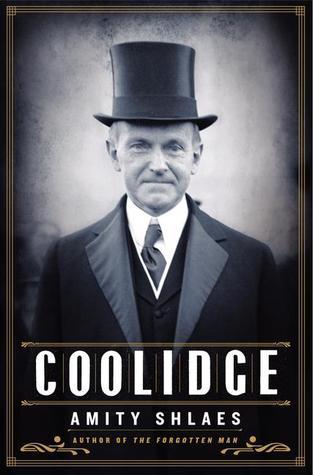
Calvin Coolidge, who served as president from 1923 to 1929, never rated highly in polls. The shy Vermonter, nicknamed "Silent Cal," has long been dismissed as quiet and passive. History has remembered the decade in which he served as a frivolous, extravagant period predating the Great Depression. Now Amity Shlaes, the author known for her riveting, unexpected portrait of the 1930s, provides a similarly fresh look at the 1920s and its elusive president. Shlaes shows that the mid-1920s was, in fact, a triumphant period that established our modern way of life: the nation electrified, Americans drove their first cars, and the federal deficit was replaced with a surplus. Coolidge is an eye-opening biography of the little-known president behind that era of remarkable growth and national optimism.Although Coolidge was sometimes considered old-fashioned, he was the most modern of presidents, advancing not only the automobile trade but also aviation, through his spirited support of Charles Lindbergh. Coolidge's discipline and composure, Shlaes reveals, represented not weakness but strength. First as governor of Massachusetts then as president, Coolidge proved unafraid to take on the divisive issues of this crucial period: reining in public-sector unions, unrelentingly curtailing spending, and rejecting funding for new interest groups.Perhaps more than any other president, Coolidge understood that doing less could yield more. He reduced the federal budget during his time in office even as the economy grew, wages rose, tax rates fell, and unemployment dropped. As a husband, father, and citizen, the thirtieth president made an equally firm commitment to moderation, shunning lavish parties and special presidential treatment; to him the presidency was not a bully pulpit but a place for humble service. Overcoming private tragedy while in office, including the death of a son, Coolidge showed the nation how to persevere by persevering himself. For a nation looking for a steady hand, he was a welcome pilot.In this illuminating, magisterial biography, AmityShlaes finally captures the remarkable story of Calvin Coolidge and the decade of extraordinary prosperity that grew from his leadership.

The New York Times bestselling author of The Forgotten Man and Coolidge offers a stunning revision of our last great period of idealism, the 1960s, with burning relevance for our contemporary challenges.""Great Society is accurate history that reads like a novel, covering the high hopes and catastrophic missteps of our well-meaning leaders."" —Alan GreenspanToday, a battle rages in our country. Many Americans are attracted to socialism and economic redistribution while opponents of those ideas argue for purer capitalism. In the 1960s, Americans sought the same goals many seek an end to poverty, higher standards of living for the middle class, a better environment and more access to health care and education. Then, too, we debated socialism and capitalism, public sector reform versus private sector advancement. Time and again, whether under John F. Kennedy, Lyndon Johnson, or Richard Nixon, the country chose the public sector. Yet the targets of our idealism proved elusive. What’s more, Johnson’s and Nixon’s programs shackled millions of families in permanent government dependence. Ironically, Shlaes argues, the costs of entitlement commitments made a half century ago preclude the very reforms that Americans will need in coming decades.In Great Society, Shlaes offers a powerful companion to her legendary history of the 1930s, The Forgotten Man, and shows that in fact there was scant difference between two presidents we consider Johnson and Nixon. Just as technocratic military planning by “the Best and the Brightest” made failure in Vietnam inevitable, so planning by a team of the domestic best and brightest guaranteed fiasco at home. At once history and biography, Great Society sketches moving portraits of the characters in this transformative period, from U.S. Presidents to the visionary UAW leader Walter Reuther, the founders of Intel, and Federal Reserve chairmen William McChesney Martin and Arthur Burns. Great Society casts new light on other figures too, from Ronald Reagan, then governor of California, to the socialist Michael Harrington and the protest movement leader Tom Hayden. Drawing on her classic economic expertise and deep historical knowledge, Shlaes upends the traditional narrative of the era, providing a damning indictment of the consequences of thoughtless idealism with striking relevance for today. Great Society captures a dramatic contest with lessons both dark and bright for our own time.Supplemental enhancement PDF accompanies the audiobook.

The Forgotten Man: A New History of the Great Depression - Graphic Edition
by Amity Shlaes
Rating: 3.4 ⭐
An illustrated edition of Amity Shlaes’s #1 New York Times bestseller, featuring vivid black-and-white illustrations that capture this dark period in American history and the men and women, from all walks of life, whose character and ideas helped them persevere.This imaginative illustrated edition brings to life one of the most devastating periods in our nation’s history—the Great Depression—through the lives of American people, from politicians and workers to businessmen, farmers, and ordinary citizens. Smart and stylish, black-and-white art from acclaimed illustrator Paul Rivoche provides an utterly original vision of the coexistence of despair and hope that characterized Depression-era America. Shlaes’s narrative and Rivoche’s art illuminate key economic concepts, presenting the thought-provoking case that New Deal regulation prolonged the Depression.The Forgotten Man reveals through striking words and pictures moving personal stories that capture the spirit of this crucial moment in American history and the steadfast character and ingenuity of those that lived it.

The Greedy Hand: How Taxes Drive Americans Crazy and What to Do About It
by Amity Shlaes
Rating: 4.0 ⭐
The Greedy Hand is an illuminating examination of the culture of tax and a persuasive call for reform, written by one of the nation's leading policy makers, Amity Shlaes of The Wall Street Journal . The father of the modern American state was an obscure Macy's department store executive named Beardsley Ruml. During World War II, he devised the plan for withholding taxes from your paycheck, thereby laying in place a system that allows the hand of government to reach into your wallet and take what it wants. Today, taxes make up more than a third of our economy, the highest level in history outside war. We live in the nation revolutionary father Thomas Paine foresaw when he wrote of "the Greedy Hand of government thrusting itself into every corner of industry." This book is a cultural examination of the way taxes influence our behavior, how they force us into an arbitrary system that punishes families and individual enterprise. Amity Shlaes unveils the hidden perversities of our lifelong tax how family tax breaks do little to help the family, and can even hurt it. She demonstrates how married women pay a special women's tax rate, higher than anybody else's. She shows how problems that engage and enrage us--Social Security problems, or the things we don't like about schools--are, at heart, tax problems. And she explains why the solutions Washington offers merely accelerate a vicious cycle. Finally, Amity Shlaes shows us a way out of this madness, endorsing a number of common-sense reforms that will give all Americans a fairer and simpler tax system. Written with eloquent compassion for working Americans and their families, The Greedy Hand makes the best case yet for rethinking our tax code. It is a book no tax-paying citizen can afford to ignore.

The strength of German nationalism and personal hopes for the soon-to-be reunited country are reflected in a variety of groups--Sudeten Germans, German Jews, Bavarian extravagants, military officers and members of the old nobility

In 1929, the stock market crashed. Joblessness only mounted, reaching a disconcerting 25%. In 1932, a presidential candidate from the other party proposed to restore the "Our greatest primary task is to put people to work."In this "greatest primary task," the New Deal failed. One in ten Americans remained jobless.Yet if the New Deal failed, then so did its critics. Voters elected the New Deal president four times.Bestselling author Amity Shlaes gives voice to the sidelined New Deal critics. In their own words, but with contextualization from Shlaes, the critics lay out their arguments against the numerous New Deal programs. This book supplies the public with what has been sorely lacking for so the story of American opposition to the New Deal.Praise for New Deal Rebels :“This anthology couldn’t be more timely. As in the 1930s, we today face powerful forces bent on radically changing the character of the country. Critics of the New Deal—a diverse, disorganized and sometimes crabby lot ignored or disparaged by historians—seemed impotent then. Yet through their work and insight, those critics set the stage for a better future. Their words provide both comfort and courage for those battling today.” — Steve Forbes , chairman and editor-in-chief of Forbes Media "AIER and Amity Shlaes have assembled a remarkable historical anthology. By focusing on the writings of contemporary critics (both Left and Right) of President Franklin Roosevelt and his policies, New Deal Rebels enhances our understanding of a highly controversial and oft-mythologized period in our past. It also invites a reappraisal of New Deal-style governance at present. The documents in New Deal Rebels (and Shlaes's bold and illuminating Introduction) should be read by every college class on the 1930s and its aftermath, and by all who would fully understand the debates about centralized government that are agitating American politics today." — George H. Nash , biographer of Herbert Hoover and author of The Conservative Intellectual Movement in America Since 1945"Amity Shlaes shows in this comprehensive overview that the critics of Roosevelt's New Deal policies represented a broad cross section of American society. Their ranks ranged from African American journalists and editorial cartoonists, who accused the National Recovery Administration of destroying job opportunities to FDR's cousin, Alice Roosevelt Longworth, who attacked federal snooping into the private telegrams of political opponents. New Deal Rebels is an essential resource for anyone interested in this critical period in American history." — David T. Beito , historian and author of From Mutual Aid to the Welfare Fraternal Societies and Social Services, 1890-1967 "Too often histories of the 1930s present the New Deal as having had the virtually unanimous support of the American people. When critics are mentioned, they are frequently portrayed either as selfish misanthropes or cranks. In fact, there was plenty of trenchant, reasoned criticism of New Deal programs, from all points on the ideological spectrum, and this collection is to be welcomed for placing so much of it in a single volume." — John E. Moser , historian and author of The Global Great Depression and the Coming of World War II About AIER The American Institute for Economic Research was founded in 1933 as the first independent voice for sound economics in the United States. Today it publishes ongoing research, sponsors interns and scholars, and is home to the Bastiat Society. The American Institute for Economic Research is a 501c3 public charity.

Leo Baeck Institute: 1955-1995
by Amity Shlaes
The Great Society
by Amity Shlaes