Loading themes...
Explore the best books about Education theme.

Psychologist Mihaly Csikszentmihalyi's investigations of "optimal experience" have revealed that what makes an experience genuinely satisfying is a state of consciousness called flow. During flow, people typically experience deep enjoyment, creativity, and a total involvement with life. Csikszentmihalyi demonstrates the ways this positive state can be controlled, not just left to chance. Flow: The Psychology of Optimal Experience teaches how, by ordering the information that enters our consciousness, we can discover true happiness, unlock our potential, and greatly improve the quality of our lives.

Television has conditioned us to tolerate visually entertaining material measured out in spoonfuls of time, to the detriment of rational public discourse and reasoned public affairs. In this eloquent, persuasive book, Neil Postman alerts us to the real and present dangers of this state of affairs, and offers compelling suggestions as to how to withstand the media onslaught. Before we hand over politics, education, religion, and journalism to the show business demands of the television age, we must recognize the ways in which the media shape our lives and the ways we can, in turn, shape them to serve out highest goals.

In this eye-opening account, Cal Newport debunks the long-held belief that "follow your passion" is good advice. Not only is the cliché flawed—preexisting passions are rare and have little to do with how most people end up loving their work—but it can also be dangerous, leading to anxiety and chronic job hopping.After making his case against passion, Newport sets out on a quest to discover the reality of how people end up loving what they do. Spending time with organic farmers, venture capitalists, screenwriters, freelance computer programmers, and others who admitted to deriving great satisfaction from their work, Newport uncovers the strategies they used and the pitfalls they avoided in developing their compelling careers.Matching your job to a preexisting passion does not matter, he reveals. Passion comes after you put in the hard work to become excellent at something valuable, not before. In other words, what you do for a living is much less important than how you do it.With a title taken from the comedian Steve Martin, who once said his advice for aspiring entertainers was to "be so good they can't ignore you," Cal Newport's clearly written manifesto is mandatory reading for anyone fretting about what to do with their life, or frustrated by their current job situation and eager to find a fresh new way to take control of their livelihood. He provides an evidence-based blueprint for creating work you love.So Good They Can't Ignore You will change the way we think about our careers, happiness, and the crafting of a remarkable life.

Karen Pryor’s clear and entertaining explanation of behavioral training methods made Don’t Shoot the Dog a bestselling classic with revolutionary insights into animal—and human—behavior.In her groundbreaking approach to improving behavior, behavioral biologist Karen Pryor says, “Whatever the task, whether keeping a four-year-old quiet in public, housebreaking a puppy, coaching a team, or memorizing a poem, it will go fast, and better, and be more fun, if you know how to use reinforcement.”Now Pryor clearly explains the underlying principles of behavioral training and reveals how this art can be applied to virtually any common situation. And best of all, she tells how to do it without yelling threats, force, punishment, guilt trips—or shooting the dog. From the eight methods for putting an end to all kinds of undesirable behavior to the ten laws of “shaping” behavior, Pryor helps you combat your own addictions and deal with such difficult problems as a moody spouse, an impossible teen, or an aged parent. Plus, there’s also incredibly helpful information on house training the dog, improving your tennis game, keeping the cat off the table, and much more!“In the course of becoming a renowned dolphin trainer, Karen Pryor learned that positive reinforcement…is even more potent that prior scientific work had suggested…Don’t Shoot the Dog looks like the very best on the subject—a full-scale mind-changer” (The Coevolution Quarterly). Learn why pet owners rave, “This book changed our lives!” and how these pioneering techniques can work for you, too.Karen Pryor is a behavioral biologist with an international reputation in marine mammal biology and behavioral psychology. She is a founder and leading proponent of “clicker training,” a training system based on operant conditioning (isolate wanted behaviors and ignore the unwanted) and the all-positive methods developed by marine mammal trainers. Pryor is the CEO of KCPT/Sunshine Books, Inc., a publishing, training product, and online company. In addition to her bestselling Don’t Shoot the Dog, Pryor wrote Nursing Your Baby (more than 2 million copies in print) along with several other books and many scientific papers and popular articles on learning and behavior. She has three grown children and lives in Boston with two clicker-trained dogs and a clicker-trained cat.

This style manual offers practical advice on improving writing skills. Throughout, the emphasis is on promoting a plain English style. This little book can help you communicate more effectively by showing you how to enliven your sentences.

An eight-time national chess champion and world champion martial artist shares the lessons he has learned from two very different competitive arenas, identifying key principles about learning and performance that readers can apply to their life goals. 50,000 first printing.

On Writing Well has been praised for its sound advice, its clarity and the warmth of its style. It is a book for everybody who wants to learn how to write or who needs to do some writing to get through the day, as almost everybody does in the age of e-mail and the Internet. Whether you want to write about people or places, science and technology, business, sports, the arts or about yourself in the increasingly popular memoir genre, On Writing Well offers you fundamental priciples as well as the insights of a distinguished writer and teacher. With more than a million copies sold, this volume has stood the test of time and remains a valuable resource for writers and would-be writers.

As today's preeminent doomsday investor Mark Spitznagel describes his Daoist and roundabout investment approach, "one gains by losing and loses by gaining." This is Austrian Investing, an archetypal, counterintuitive, and proven approach, gleaned from the 150-year-old Austrian School of economics, that is both timeless and exceedingly timely.In The Dao of Capital, hedge fund manager and tail-hedging pioneer Mark Spitznagel--with one of the top returns on capital of the financial crisis, as well as over a career--takes us on a gripping, circuitous journey from the Chicago trading pits, over the coniferous boreal forests and canonical strategists from Warring States China to Napoleonic Europe to burgeoning industrial America, to the great economic thinkers of late 19th century Austria. We arrive at his central investment methodology of Austrian Investing, where victory comes not from waging the immediate decisive battle, but rather from the roundabout approach of seeking the intermediate positional advantage (what he calls shi), of aiming at the indirect means rather than directly at the ends. The monumental challenge is in seeing time differently, in a whole new intertemporal dimension, one that is so contrary to our wiring.Spitznagel is the first to condense the theories of Ludwig von Mises and his Austrian School of economics into a cohesive and--as Spitznagel has shown--highly effective investment methodology. From identifying the monetary distortions and non-randomness of stock market routs (Spitznagel's bread and butter) to scorned highly-productive assets, in Ron Paul's words from the foreword, Spitznagel "brings Austrian economics from the ivory tower to the investment portfolio."The Dao of Capital provides a rare and accessible look through the lens of one of today's great investors to discover a profound harmony with the market process--a harmony that is so essential today.

"The pracitcal wisdom in George Leonard's book will have a great influence for many years to come." —Michael Murphy, author of Golf in the Kingdom and The Future of the BodyDrawing on Zen philosophy and his expertise in the martial art of aikido, bestselling author Gorge Leonard shows how the process of mastery can help us attain a higher level of excellence and a deeper sense of satisfaction and fulfillment in our daily lives. Whether you're seeking to improve your career or your intimate relationships, increase self-esteem or create harmony within yourself, this inspiring prescriptive guide will help you master anything you choose and achive success in all areas of your life.In Mastery, you'll discover:The 5 Essential Keys to MasteryTools for MasteryHow to Master Your Athletic PotentialThe 3 Personality Types That Are Obstacles to MasteryHow to Avoid Pitfalls Along the Path. . . and more

#1 BESTSELLER • The groundbreaking book that redefines what it means to be smart, with a new introduction by the author“A thoughtfully written, persuasive account explaining emotional intelligence and why it can be crucial.”— USA TodayEveryone knows that high IQ is no guarantee of success, happiness, or virtue, but until Emotional Intelligence, we could only guess why. Daniel Goleman's brilliant report from the frontiers of psychology and neuroscience offers startling new insight into our “two minds”—the rational and the emotional—and how they together shape our destiny.Drawing on groundbreaking brain and behavioral research, Goleman shows the factors at work when people of high IQ flounder and those of modest IQ do surprisingly well. These factors, which include self-awareness, self-discipline, and empathy, add up to a different way of being smart—and they aren’t fixed at birth. Although shaped by childhood experiences, emotional intelligence can be nurtured and strengthened throughout our adulthood—with immediate benefits to our health, our relationships, and our work. The twenty-fifth-anniversary edition of Emotional Intelligence could not come at a better time—we spend so much of our time online, more and more jobs are becoming automated and digitized, and our children are picking up new technology faster than we ever imagined. With a new introduction from the author, the twenty-fifth-anniversary edition prepares readers, now more than ever, to reach their fullest potential and stand out from the pack with the help of EI.

The multi million-copy bestseller Six Thinking Hats by Edward de Bono, author of Lateral Thinking and I Am Right You Are Wrong, teaches you how to run better meetings and make better decisions. Meetings are a crucial part of all our lives, but too often they go nowhere and waste valuable time. In Six Thinking Hats, Edward de Bono shows how meetings can be transformed to produce quick, decisive results every time. The Six Hats method is a devastatingly simple technique based on the brain's different modes of thinking. The intelligence, experience and information of everyone is harnessed to reach the right conclusions quickly. These principles fundamentally change the way you work and interact. They have been adopted by businesses and governments around the world to end conflict and confusion in favour of harmony and productivity. 'An inspiring man with brilliant ideas. De Bono never ceases to amaze with his clarity of thought' Richard Branson.Edward de Bono invented the concept of lateral thinking. A world-renowned writer and philosopher, he is the leading authority in the field of creative thinking and the direct teaching of thinking as a skill. Dr de Bono has written more than 60 books, in 40 languages, with people now teaching his methods worldwide. He has chaired a special summit of Nobel Prize laureates, and been hailed as one of the 250 people who have contributed most to mankind

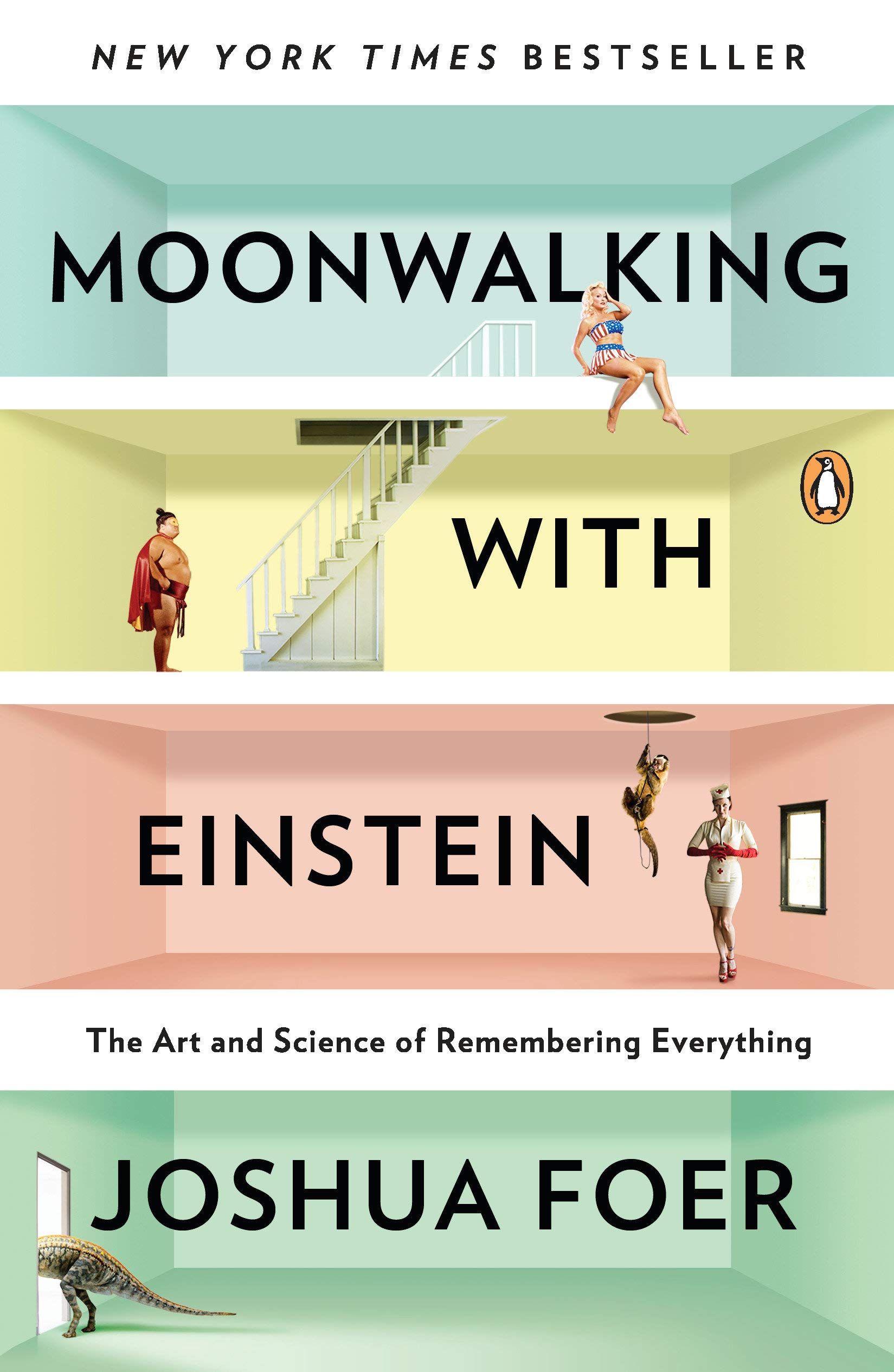
The blockbuster phenomenon that charts an amazing journey of the mind while revolutionizing our concept of memoryAn instant bestseller that is poised to become a classic, Moonwalking with Einstein recounts Joshua Foer's yearlong quest to improve his memory under the tutelage of top "mental athletes." He draws on cutting-edge research, a surprising cultural history of remembering, and venerable tricks of the mentalist's trade to transform our understanding of human memory. From the United States Memory Championship to deep within the author's own mind, this is an electrifying work of journalism that reminds us that, in every way that matters, we are the sum of our memories.


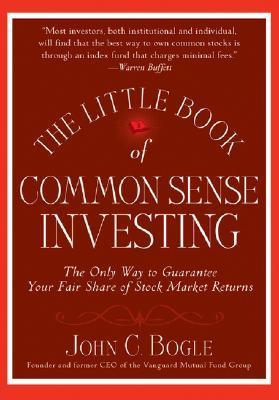
“There are a few investment managers, of course, who are very good – though in the short run, it’s difficult to determine whether a great record is due to luck or talent. Most advisors, however, are far better at generating high fees than they are at generating high returns. In truth, their core competence is salesmanship. Rather than listen to their siren songs, investors – large and small – should instead read Jack Bogle’s The Little Book of Common Sense Investing .” – Warren Buffett, Chairman of Berkshire Hathaway, 2014 Annual Shareholder Letter. Investing is all about common sense. Owning a diversified portfolio of stocks and holding it for the long term is a winner’s game. Trying to beat the stock market is theoretically a zero-sum game (for every winner, there must be a loser), but after the substantial costs of investing are deducted, it becomes a loser’s game. Common sense tells us—and history confirms—that the simplest and most efficient investment strategy is to buy and hold all of the nation’s publicly held businesses at very low cost. The classic index fund that owns this market portfolio is the only investment that guarantees you with your fair share of stock market returns. To learn how to make index investing work for you, there’s no better mentor than legendary mutual fund industry veteran John C. Bogle. Over the course of his long career, Bogle—founder of the Vanguard Group and creator of the world’s first index mutual fund—has relied primarily on index investing to help Vanguard’s clients build substantial wealth. Now, with The Little Book of Common Sense Investing, he wants to help you do the same. Filled with in-depth insights and practical advice, The Little Book of Common Sense Investing will show you how to incorporate this proven investment strategy into your portfolio. It will also change the very way you think about investing. Successful investing is not easy. (It requires discipline and patience.) But it is simple. For it’s all about common sense. With The Little Book of Common Sense Investing as your guide, you’ll discover how to make investing a winner’s game: You’ll also find warnings about investment fads and fashions, including the recent stampede into exchange traded funds and the rise of indexing gimmickry. The real formula for investment success is to own the entire market, while significantly minimizing the costs of financial intermediation. That’s what index investing is all about. And that’s what this book is all about.

Jean Liedloff, an American writer, spent two and a half years in the South American jungle living with Stone Age Indians. The experience demolished her Western preconceptions of how we should live and led her to a radically different view of what human nature really is. She offers a new understanding of how we have lost much of our natural well-being and shows us practical ways to regain it for our children and for ourselves.

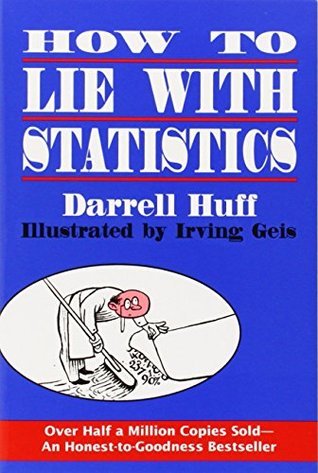
Darrell Huff runs the gamut of every popularly used type of statistic, probes such things as the sample study, the tabulation method, the interview technique, or the way the results are derived from the figures, and points up the countless number of dodges which are used to fool rather than to inform.

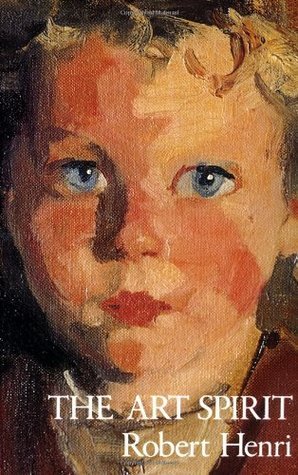
In this book are the essential beliefs and theories of a great teacher and American artist, Robert Henri. While it embodies the entire system of his teaching, with much technical advice and critical comment for the student, it also contains inspiration for those to whom the happiness to be found through all the arts is important.No other American painter attracted such a large, intensely personal group of followers as Henri, whose death in 1929 brought to an end a life that has been completely devoted to art. He was an inspired artist and teacher who believed that everyone is vitally concerned in the happiness and wisdom to be found through the arts. Many of his paintings have been acquired by museums and private collectors. Among them are the Baltimore Museum of Art, the Metropolitan Museum of Art, the National Gallery of Art, the Whitney Museum of American Art, the Wichita Art Museum, and Yale University Art Gallery.

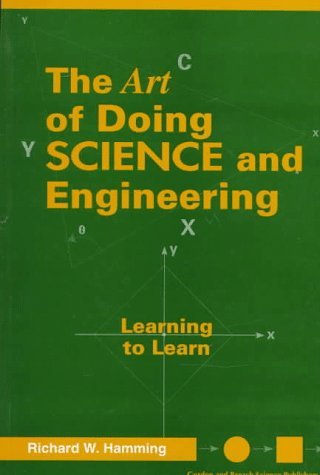
Highly effective thinking is an art that engineers and scientists can be taught to develop. By presenting actual experiences and analyzing them as they are described, the author conveys the developmental thought processes employed and shows a style of thinking that leads to successful results is something that can be learned. Along with spectacular successes, the author also conveys how failures contributed to shaping the thought processes.Provides the reader with a style of thinking that will enhance a person's ability to function as a problem-solver of complex technical issues. Consists of a collection of stories about the author's participation in significant discoveries, relating how those discoveries came about and, most importantly, provides analysis about the thought processes and reasoning that took place as the author and his associates progressed through engineering problems.

The New One Minute Manager offers a way for you to succeed sooner with less stress in changing times—both at work and at home.Based on the original book The One Minute Manager that helped millions of people around the world in organizations large and small, The New One Minute Manager is a concise, easily read story that reveals three very practical secrets: One Minute Goals, One Minute Praisings, and One Minute Re-Directs, the new third secret. The story is based on studies in the behavioral sciences and medicine that support why these apparently simple methods work so well with so many people. And by the book's end, you will know how to apply what you discover to your own situation and enjoy the benefits.

THE classic work about improving creativity from world-renowned writer and philosopher Edward de Bono.In schools we are taught to meet problems head-on: what Edward de Bono calls 'vertical thinking'. This works well in simple situations - but we are at a loss when this approach fails. What then?Lateral thinking is all about freeing up your imagination. Through a series of special techniques, in groups or working alone, Edward de Bono shows how to stimulate the mind in new and exciting ways.Soon you will be looking at problems from a variety of angles and offering up solutions that are as ingenious as they are effective. You will become much more productive and a formidable thinker in your own right.

Why are many of the most successful people plagued by feelings of emptiness and alienation? This wise and profound book has provided thousands of readers with an answer—and has helped them to apply it to their own lives.Far too many of us had to learn as children to hide our own feelings, needs, and memories skillfully in order to meet our parents’ expectations and win their ”love.” Alice Miller writes, ”When I used the word ’gifted’ in the title, I had in mind neither children who receive high grades in school nor children talented in a special way. I simply meant all of us who have survived an abusive childhood thanks to an ability to adapt even to unspeakable cruelty by becoming numb… Without this ’gift’ offered us by nature, we would not have survived.” But merely surviving is not enough. The Drama of the Gifted Child helps us to reclaim our life by discovering our own crucial needs and our own truth.Miller’s wide and profound book about childhood trauma has provided thousands of readers with guidance and hope, and is essential reading for those interested in psychology, psychotherapy, and more.

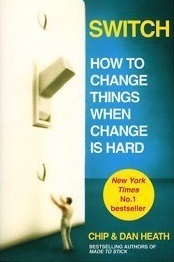
Why is it so hard to make lasting changes in our companies, in our communities, and in our own lives?The primary obstacle is a conflict that's built into our brains, say Chip and Dan Heath, authors of the critically acclaimed bestseller Made to Stick. Psychologists have discovered that our minds are ruled by two different systems - the rational mind and the emotional mind - that compete for control. The rational mind wants a great beach body; the emotional mind wants that Oreo cookie. The rational mind wants to change something at work; the emotional mind loves the comfort of the existing routine. This tension can doom a change effort - but if it is overcome, change can come quickly.In Switch, the Heaths show how everyday people - employees and managers, parents and nurses - have united both minds and, as a result, achieved dramatic results:- The lowly medical interns who managed to defeat an entrenched, decades-old medical practice that was endangering patients (see page 242)- The home-organizing guru who developed a simple technique for overcoming the dread of housekeeping (see page 130)- The manager who transformed a lackadaisical customer-support team into service zealots by removing a standard tool of customer service (see page 199)In a compelling, story-driven narrative, the Heaths bring together decades of counterintuitive research in psychology, sociology, and other fields to shed new light on how we can effect transformative change. Switch shows that successful changes follow a pattern, a pattern you can use to make the changes that matter to you, whether your interest is in changing the world or changing your waistline.

“Is Google making us stupid?” When Nicholas Carr posed that question, in a celebrated Atlantic Monthly cover story, he tapped into a well of anxiety about how the Internet is changing us. He also crystallized one of the most important debates of our time: As we enjoy the Net’s bounties, are we sacrificing our ability to read and think deeply?Now, Carr expands his argument into the most compelling exploration of the Internet’s intellectual and cultural consequences yet published. As he describes how human thought has been shaped through the centuries by “tools of the mind”—from the alphabet to maps, to the printing press, the clock, and the computer—Carr interweaves a fascinating account of recent discoveries in neuroscience by such pioneers as Michael Merzenich and Eric Kandel. Our brains, the historical and scientific evidence reveals, change in response to our experiences. The technologies we use to find, store, and share information can literally reroute our neural pathways.Building on the insights of thinkers from Plato to McLuhan, Carr makes a convincing case that every information technology carries an intellectual ethic—a set of assumptions about the nature of knowledge and intelligence. He explains how the printed book served to focus our attention, promoting deep and creative thought. In stark contrast, the Internet encourages the rapid, distracted sampling of small bits of information from many sources. Its ethic is that of the industrialist, an ethic of speed and efficiency, of optimized production and consumption—and now the Net is remaking us in its own image. We are becoming ever more adept at scanning and skimming, but what we are losing is our capacity for concentration, contemplation, and reflection.Part intellectual history, part popular science, and part cultural criticism, The Shallows sparkles with memorable vignettes—Friedrich Nietzsche wrestling with a typewriter, Sigmund Freud dissecting the brains of sea creatures, Nathaniel Hawthorne contemplating the thunderous approach of a steam locomotive—even as it plumbs profound questions about the state of our modern psyche. This is a book that will forever alter the way we think about media and our minds.

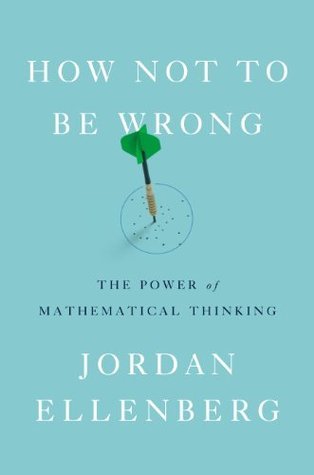
The Freakonomics of math—a math-world superstar unveils the hidden beauty and logic of the world and puts its power in our handsThe math we learn in school can seem like a dull set of rules, laid down by the ancients and not to be questioned. In How Not to Be Wrong, Jordan Ellenberg shows us how terribly limiting this view is: Math isn’t confined to abstract incidents that never occur in real life, but rather touches everything we do—the whole world is shot through with it.Math allows us to see the hidden structures underneath the messy and chaotic surface of our world. It’s a science of not being wrong, hammered out by centuries of hard work and argument. Armed with the tools of mathematics, we can see through to the true meaning of information we take for granted: How early should you get to the airport? What does “public opinion” really represent? Why do tall parents have shorter children? Who really won Florida in 2000? And how likely are you, really, to develop cancer?How Not to Be Wrong presents the surprising revelations behind all of these questions and many more, using the mathematician’s method of analyzing life and exposing the hard-won insights of the academic community to the layman—minus the jargon. Ellenberg chases mathematical threads through a vast range of time and space, from the everyday to the cosmic, encountering, among other things, baseball, Reaganomics, daring lottery schemes, Voltaire, the replicability crisis in psychology, Italian Renaissance painting, artificial languages, the development of non-Euclidean geometry, the coming obesity apocalypse, Antonin Scalia’s views on crime and punishment, the psychology of slime molds, what Facebook can and can’t figure out about you, and the existence of God.Ellenberg pulls from history as well as from the latest theoretical developments to provide those not trained in math with the knowledge they need. Math, as Ellenberg says, is “an atomic-powered prosthesis that you attach to your common sense, vastly multiplying its reach and strength.” With the tools of mathematics in hand, you can understand the world in a deeper, more meaningful way. How Not to Be Wrong will show you how.

Endless terror. Refugee waves. An unfixable global economy. Surprising election results. New billion-dollar fortunes. Miracle medical advances. What if they were all connected? What if you could understand why?The Seventh Sense is the story of what all of today's successful figures see and the forces that are invisible to most of us but explain everything from explosive technological change to uneasy political ripples. The secret to power now is understanding our new age of networks. Not merely the Internet, but also webs of trade, finance, and even DNA. Based on his years of advising generals, CEOs, and politicians, Ramo takes us into the opaque heart of our world's rapidly connected systems and teaches us what the losers are not yet seeing -- and what the victors of this age already know.

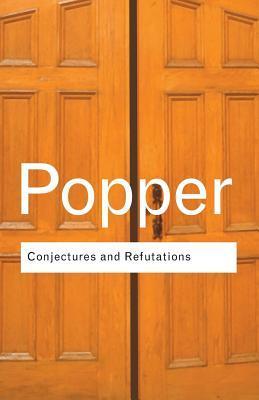
Conjectures and Refutations is one of Karl Popper's most wide-ranging and popular works, notable not only for its acute insight into the way scientific knowledge grows, but also for applying those insights to politics and to history. It provides one of the clearest and most accessible statements of the fundamental idea that guided his work: not only our knowledge, but our aims and our standards, grow through an unending process of trial and error.

Creativity is about capturing those moments that make life worth living. The author's objective is to offer an understanding of what leads to these moments, be it the excitement of the artist at the easel or the scientist in the lab, so that knowledge can be used to enrich people's lives. Drawing on 100 interviews with exceptional people, from biologists and physicists to politicians and business leaders, poets and artists, as well as his 30 years of research on the subject, Csikszentmihalyi uses his famous theory to explore the creative process. He discusses such ideas as why creative individuals are often seen as selfish and arrogant, and why the tortured genius is largely a myth. Most important, he clearly explains why creativity needs to be cultivated and is necessary for the future of our country, if not the world.

A wise and witty compendium of the greatest thoughts, greatest minds, and greatest books of all time—listed in accessible and succinct form—by one of the world's greatest scholars.From the “Hundred Best Books” to the “Ten Greatest Thinkers” to the “Ten Greatest Poets,” here is a concise collection of the world’s most significant knowledge. For the better part of a century, Will Durant dwelled upon—and wrote about—the most significant eras, individuals, and achievements of human history. His selections have finally been brought together in a single, compact volume. Durant eloquently defends his choices of the greatest minds and ideas, but he also stimulates readers into forming their own opinions, encouraging them to shed their surroundings and biases and enter “The Country of the Mind,” a timeless realm where the heroes of our species dwell.From a thinker who always chose to exalt the positive in the human species, The Greatest Minds and Ideas of All Time stays true to Durant's optimism. This is a book containing the absolute best of our heritage, passed on for the benefit of future generations. Filled with Durant's renowned wit, knowledge, and unique ability to explain events and ideas in simple and exciting terms, this is a pocket-size liberal arts and humanist curriculum in one volume.

Secrets of lightning calculation and how to perform mind-boggling mental feats.

A generation of screenwriters has used Syd Field’s bestselling books to ignite successful careers in film. Now the celebrated producer, lecturer, teacher, and bestselling author has updated his classic guide for a new generation of filmmakers, offering a fresh insider’s perspective on the film industry today. From concept to character, from opening scene to finished script, here are easily understood guidelines to help aspiring screenwriters—from novices to practiced writers—hone their craft. Filled with updated material—including all-new personal anecdotes and insights, guidelines on marketing and collaboration, plus analyses of recent films, from American Beauty to Lord of the Rings—Screenplay presents a step-by-step, comprehensive technique for writing the screenplay that will succeed in Hollywood. Discover:•Why the first ten pages of your script are crucially important•How to visually “grab” the reader from page one, word one •Why structure and character are the essential foundation of your screenplay•How to adapt a novel, a play, or an article into a screenplay•Tips on protecting your work—three legal ways to claim ownership of your screenplay•The essentials of writing great dialogue, creating character, building a story line, overcoming writer’s block, getting an agent, and much more.With this newly updated edition of his bestselling classic, Syd Field proves yet again why he is revered as the master of the screenplay—and why his celebrated guide has become the industry’s gold standard for successful screenwriting.

To lead is to live dangerously. It's romantic and exciting to think of leadership as all inspiration, decisive action, and rich rewards, but leading requires taking risks that can jeopardize your career and your personal life. It requires putting yourself on the line, disrupting the status quo, and surfacing hidden conflict. And when people resist and push back, there's a strong temptation to play it safe. Those who choose to lead plunge in, take the risks, and sometimes get burned. But it doesn't have to be that way say renowned leadership experts Ronald Heifetz and Marty Linsky. In Leadership on the Line, they show how it's possible to make a difference without getting "taken out" or pushed aside. They present everyday tools that give equal weight to the dangerous work of leading change and the critical importance of personal survival. Through vivid stories from all walks of life, the authors present straightforward strategies for navigating the perilous straits of leadership. Whether you’re a parent or a politician, a CEO or a community activist, this practical book shows how you can exercise leadership and survive and thrive to enjoy the fruits of your labor.

Practical English Usage is a major new reference guide for intermediate and advanced students of English (of all nationalities) and their teachers. It contains short clear articles on all the grammatical problems which regularly cause difficulty to foreign learners. In addition, it deals with selected points of vocabulary, idiom, style, pronunciation and spelling. The main differences between British and American usage are also dealt with. Each entry contains an explanation of a problem, examples of correct usage, and - when this is useful - examples of typical mistakes.Special features of this book include:- simple and practical presentation- alphabetical arrangement of numbered entries- detailed index and cross-reference system- distinction between formal and informal usageA hardback edition is also available.

A study of twenty-six canonical writers details the qualities that make them literary essentials, and includes Shakespeare, Chaucer, Milton, Beckett, Tolstoy, Freud, Molie+a6re, and others. By the author of The Book of J. 100,000 first printing. National ad/promo.

How much credit do parents deserve when their children turn out well? How much blame when they turn out badly? Judith Rich Harris has a message that will change parents' lives: The "nurture assumption"-- the belief that what makes children turn out the way they do, aside from their genes, is the way their parents raise them--is nothing more than a cultural myth. This electrifying book explodes some of our unquestioned beliefs about children and parents and gives us a radically new view of childhood.Harris examines with a fresh eye the lives of real children to show that it is what they experience outside the home, in the company of their peers, that matters most. Parents don't socialize children; children socialize children. With eloquence and humor, Judith Harris explains why parents have little power to determine the sort of people their children will become. The Nurture Assumption brings together insights from psychology, sociology, anthropology, primatology, and evolutionary biology to offer a startling new view of who we are and how we got that way.

"A display of scientific courage and imagination." ―William Saletan, New York Times Book Review Why do people―even identical twins reared in the same home―differ so much in personality? Armed with an inquiring mind and insights from evolutionary psychology, Judith Rich Harris sets out to solve the mystery of human individuality. 12 illustrations

This is a one-of-a-kind reference for anyone with a serious interest in mathematics. Edited by Timothy Gowers, a recipient of the Fields Medal, it presents nearly two hundred entries, written especially for this book by some of the world's leading mathematicians, that introduce basic mathematical tools and vocabulary; trace the development of modern mathematics; explain essential terms and concepts; examine core ideas in major areas of mathematics; describe the achievements of scores of famous mathematicians; explore the impact of mathematics on other disciplines such as biology, finance, and musi—and much, much more.Unparalleled in its depth of coverage, The Princeton Companion to Mathematics surveys the most active and exciting branches of pure mathematics. Accessible in style, this is an indispensable resource for undergraduate and graduate students in mathematics as well as for researchers and scholars seeking to understand areas outside their specialties.- Features nearly 200 entries, organized thematically and written by an international team of distinguished contributors- Presents major ideas and branches of pure mathematics in a clear, accessible style- Defines and explains important mathematical concepts, methods, theorems, and open problems- Introduces the language of mathematics and the goals of mathematical research- Covers number theory, algebra, analysis, geometry, logic, probability, and more- Traces the history and development of modern mathematics- Profiles more than ninety-five mathematicians who influenced those working today- Explores the influence of mathematics on other disciplines- Includes bibliographies, cross-references, and a comprehensive indexContributors include:Graham Allan, Noga Alon, George Andrews, Tom Archibald, Sir Michael Atiyah, David Aubin, Joan Bagaria, Keith Ball, June Barrow-Green, Alan Beardon, David D. Ben-Zvi, Vitaly Bergelson, Nicholas Bingham, Béla Bollobás, Henk Bos, Bodil Branner, Martin R. Bridson, John P. Burgess, Kevin Buzzard, Peter J. Cameron, Jean-Luc Chabert, Eugenia Cheng, Clifford C. Cocks, Alain Connes, Leo Corry, Wolfgang Coy, Tony Crilly, Serafina Cuomo, Mihalis Dafermos, Partha Dasgupta, Ingrid Daubechies, Joseph W. Dauben, John W. Dawson Jr., Francois de Gandt, Persi Diaconis, Jordan S. Ellenberg, Lawrence C. Evans, Florence Fasanelli, Anita Burdman Feferman, Solomon Feferman, Charles Fefferman, Della Fenster, José Ferreirós, David Fisher, Terry Gannon, A. Gardiner, Charles C. Gillispie, Oded Goldreich, Catherine Goldstein, Fernando Q. Gouvêa, Timothy Gowers, Andrew Granville, Ivor Grattan-Guinness, Jeremy Gray, Ben Green, Ian Grojnowski, Niccolò Guicciardini, Michael Harris, Ulf Hashagen, Nigel Higson, Andrew Hodges, F. E. A. Johnson, Mark Joshi, Kiran S. Kedlaya, Frank Kelly, Sergiu Klainerman, Jon Kleinberg, Israel Kleiner, Jacek Klinowski, Eberhard Knobloch, János Kollár, T. W. Körner, Michael Krivelevich, Peter D. Lax, Imre Leader, Jean-François Le Gall, W. B. R. Lickorish, Martin W. Liebeck, Jesper Lützen, Des MacHale, Alan L. Mackay, Shahn Majid, Lech Maligranda, David Marker, Jean Mawhin, Barry Mazur, Dusa McDuff, Colin McLarty, Bojan Mohar, Peter M. Neumann, Catherine Nolan, James Norris, Brian Osserman, Richard S. Palais, Marco Panza, Karen Hunger Parshall, Gabriel P. Paternain, Jeanne Peiffer, Carl Pomerance, Helmut Pulte, Bruce Reed, Michael C. Reed, Adrian Rice, Eleanor Robson, Igor Rodnianski, John Roe, Mark Ronan, Edward Sandifer, Tilman Sauer, Norbert Schappacher, Andrzej Schinzel, Erhard Scholz, Reinhard Siegmund-Schultze, Gordon Slade, David J. Spiegelhalter, Jacqueline Stedall, Arild Stubhaug, Madhu Sudan, Terence Tao, Jamie Tappenden, C. H. Taubes, Rüdiger Thiele, Burt Totaro, Lloyd N. Trefethen, Dirk van Dalen, Richard Weber, Dominic Welsh, Avi Wigderson, Herbert Wilf, David Wilkins, B. Yandell, Eric Zaslow, Doron Zeilberger

How to Read a Book, originally published in 1940, has become a rare phenomenon, a living classic. It is the best and most successful guide to reading comprehension for the general reader. And now it has been completely rewritten and updated. You are told about the various levels of reading and how to achieve them—from elementary reading, through systematic skimming and inspectional reading, to speed reading, you learn how to pigeonhole a book, X-ray it, extract the author's message, criticize. You are taught the different reading techniques for reading practical books, imaginative literature, plays, poetry, history, science and mathematics, philosophy and social science. Finally, the authors offer a recommended reading list and supply reading tests whereby you can measure your own progress in reading skills, comprehension and speed. This a previously-published edition of ISBN 9780671212094

Most of us have no idea what’s really going on inside our heads. Yet brain scientists have uncovered details every business leader, parent, and teacher should know—like the need for physical activity to get your brain working its best.How do we learn? What exactly do sleep and stress do to our brains? Why is multi-tasking a myth? Why is it so easy to forget—and so important to repeat new knowledge? Is it true that men and women have different brains?In Brain Rules , Dr. John Medina, a molecular biologist, shares his lifelong interest in how the brain sciences might influence the way we teach our children and the way we work. In each chapter, he describes a brain rule—what scientists know for sure about how our brains work—and then offers transformative ideas for our daily lives.Medina’s fascinating stories and infectious sense of humor breathe life into brain science. You’ll learn why Michael Jordan was no good at baseball. You’ll peer over a surgeon’s shoulder as he proves that most of us have a Jennifer Aniston neuron. You’ll meet a boy who has an amazing memory for music but can’t tie his own shoes.You will discover Every brain is wired differentlyExercise improves cognitionWe are designed to never stop learning and exploringMemories are volatileSleep is powerfully linked with the ability to learnVision trumps all of the other sensesStress changes the way we learnIn the end, you’ll understand how your brain really works—and how to get the most out of it.

FREE RANGE KIDS has become a national movement, sparked by the incredible response to Lenore Skenazy?s piece about allowing her 9-year-old ride the subway alone in NYC. Parent groups argued about it, bloggers, blogged, spouses became uncivil with each other, and the media jumped all over it. A lot of parents today, Skenazy says, see no difference between letting their kids walk to school and letting them walk through a firing range. Any risk is seen as too much risk. But if you try to prevent every possible danger or difficult in your child?s everyday life, that child never gets a chance to grow up. We parents have to realize that the greatest risk of all just might be trying to raise a child who never encounters choice or independence.

Joy is not for just the lucky few–it’s a choice anyone can make. In this groundbreaking book, based on his popular course, James Baraz helps you discover a path to the happiness that’s right in front of you, offering a step-by-step program that will reorient your mind away from dissatisfaction and distraction and toward the contentment and delight that is abundantly available in our everyday lives.You can decide to be happy. For years, James Baraz’s online Awakening Joy course has offered participants from around the world the benefits of this simple but profoundly radical proposition. Grounded in simple Buddhist principles but accessible to people of all faiths–or no faith at all–this concept provides the jumping-off point for a transformational journey toward a richer, more meaningful, more positive outlook on life. Now readers everywhere can follow the same ten steps Baraz teaches to his program participants. In this practical down-to-earth guide, you will learn how to• make happiness a habit by inclining your mind toward states that lead to well-being• find joy even during difficult times and avoid the pitfalls that prevent you from achieving the contentment you seek• cultivate effective practices for sustaining joyfulness, such as reclaiming your natural sense of wonder and finding joy in the midst of everyday experiencesEach chapter of Awakening Joy consists of one step in Baraz’s ten-step program and includes engaging exercises and practical advice to make happiness your natural default setting. For everyone from the cynic despondent over life’s many sorrows to the harried commuter raging at freeway traffic, this book offers up a simple yet powerful message of hope grounded in the realization that joy already exists inside every one of us. Like a precious child, it only needs to be recognized, embraced, and nurtured in order to grow to its full potential.Praise"I've personally taken the Awakening Joy program and can say this It's fabulous and it works! This book, filled with moving stories and rich teachings, will give you wonderful tools to experience true happiness and well-being. It's a gem!"— Marci Shimoff, New York Times bestselling author of Happy for No Reason"Opening to joy takes courage and intention. This book will inspire you to discover genuine happiness, and show you how. Drawing on perennial wisdom and accessible meditative practices, James and Shoshana offer teachings that can awaken your love of life."— Tara Brach, author of Radical Acceptance" Awakening Joy is an important guide to transforming our everyday experience into genuine happiness. James and Shoshana's insight, kindness, and clear and practical language make this a direct, pragmatic and valuable manual for a better life."—Sharon Salzberg, author of The Revolutionary Art of Happiness"In this beautiful and heartwarming book, James Baraz and Shoshana Alexander take us on a journey that truly awakens joy. There are stories that bring tears to our eyes and practices that transform our lives. This is a loving, wise, and compassionate testament to what is possible for each one of us. Highly recommended."—Joseph Goldstein, author of A Heart Full of Peace "I'm so happy that James Baraz's Awakening Joy class is now available in book form. His class has been helpful to thousands of people. I plan to give it to all my clients who are struggling with creating a life of meaning and happiness. Joyfulness is our birthright. This book shows you how to reclaim it."—M.J. Ryan, author of AdaptAbility"This is a life-changing book that not only teaches practical, useful strategies for increasing your awareness, but also illuminates choices about how you can lead your emotional life." —Paul Ekman, Ph.D., Professor Emeritus, University of California, San Francisco, co-author of Emotional Awareness and author of Emotions Revealed "To awaken joy in oneself and others is one of life's great skills, a skill taught by sages across the centuries, and now distilled in this book."—Roger Walsh M.D., Ph.D., University of California Medical School, author of Essential The Seven Central Practices"This book is an inspiring gift that will open your heart to the presence of love and joy in everyday life."—Frances Vaughan, Ph.D., psychologist, author of Shadows of the Sacred "Every page of this wonderful book has something that inspires faith or a new story, a memorable quote, an exercise that invites participation....From beginning to end, it is a joy to read."—Sylvia Boorstein, author of Happiness Is An Inside Practicing for a Joyful Life "This book should be read by every person who cares about making this a better world. It can enhance the joys of working to develop a wiser and more compassionate society, and help make us both happier and more effective in challenging times."—Daniel Ellsberg, author of A Memoir of Vietnam and the Pentagon Papers "This is an important book—and a great read! With its...

In 2010, French mathematician Cédric Villani received the Fields Medal, the most coveted prize in mathematics, in recognition of a proof which he devised with his close collaborator Clément Mouhot to explain one of the most surprising theories in classical physics. Birth of a Theorem is Villani’s own account of the years leading up to the award. It invites readers inside the mind of a great mathematician as he wrestles with the most important work of his career.But you don’t have to understand nonlinear Landau damping to love Birth of a Theorem. It doesn’t simplify or overexplain; rather, it invites readers into collaboration. Villani’s diaries, emails, and musings enmesh you in the process of discovery. You join him in unproductive lulls and late-night breakthroughs. You’re privy to the dining-hall conversations at the world’s greatest research institutions. Villani shares his favorite songs, his love of manga, and the imaginative stories he tells his children. In mathematics, as in any creative work, it is the thinker’s whole life that propels discovery—and with Birth of a Theorem, Cédric Villani welcomes you into his.

The riveting story of how a young man turned $25 into more than 200 schools around the world and the guiding steps anyone can take to lead a successful and significant life.Adam Braun began working summers at hedge funds when he was just sixteen years old, sprinting down the path to a successful Wall Street career. But while traveling he met a young boy begging on the streets of India, who after being asked what he wanted most in the world, simply answered, “A pencil.” This small request led to a staggering series of events that took Braun backpacking through dozens of countries before eventually leaving one of the world’s most prestigious jobs to found Pencils of Promise, the organization he started with just $25 that has since built more than 200 schools around the world.The Promise of a Pencil chronicles Braun’s journey to find his calling, as each chapter explains one clear step that every person can take to turn your biggest ambitions into reality, even if you start with as little as $25. His story takes readers behind the scenes with business moguls and village chiefs, world-famous celebrities and hometown heroes. Driven by compelling stories and shareable insights, this is a vivid and inspiring book that will give you the tools to make your own life a story worth telling.*All proceeds from this book will support Pencils of Promise.

Praised as a “revelatory” book by The Wall Street Journal , this is the last and most personal work of Pulitzer Prize–winning author and historian Will Durant, discovered thirty-two years after his death.The culmination of Will Durant’s sixty-plus years spent researching the philosophies, religions, arts, sciences, and civilizations from across the world, Fallen Leaves is the distilled wisdom of one of the world’s greatest minds, a man with a renowned talent for rendering the insights of the past accessible. Over the course of Durant’s career he received numerous letters from “curious readers who have challenged me to speak my mind on the timeless questions of human life and fate.” With Fallen Leaves , his final book, he at last accepted their challenge.In twenty-two short chapters, Durant addresses everything from youth and old age to religion, morals, sex, war, politics, and art. Fallen Leaves is “a thought-provoking array of opinions” ( Publishers Weekly ), offering elegant prose, deep insights, and Durant’s revealing conclusions about the perennial problems and greatest joys we face as a species. In Durant’s singular voice, here is a message of insight for everyone who has ever sought meaning in life or the counsel of a learned friend while navigating life’s journey.

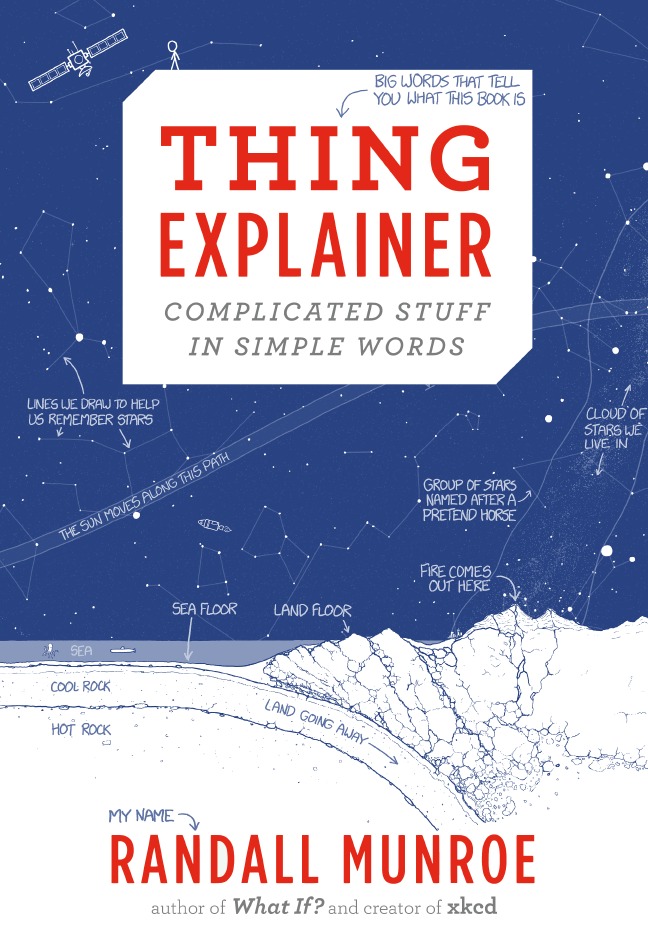
Fans of the xkcd comic ask Munroe a lot of strange questions: What if you tried to hit a baseball pitched at 90 percent the speed of light? How fast can you hit a speed bump while driving and live? If there was a robot apocalypse, how long would humanity last? What if everyone only had one soulmate? What would happen if the moon went away?In pursuit of answers, Munroe runs computer simulations, pores over stacks of declassified military research memos, solves differential equations, and consults with nuclear reactor operators. His responses are masterpieces of clarity and hilarity, complemented by his signature xkcd comics. (They often predict the complete annihilation of humankind, or at least a really big explosion.)In celebration of 10 years of unusual insight, Randall Munroe has revised his classic blockbuster to ask what if? x 10. The result is 10x the adventure of scientific inquiry. Featuring brand-new 2-color annotations and illustrations, this special anniversary edition is far more than a book for geeks, What If? explains the laws of science in operation in a way that every intelligent reader will enjoy and feel much smarter for having read.

A huge bestseller in Europe, Frederic Lenoir’s Happiness is an exciting journey that examines how history’s greatest philosophers and religious figures have answered life’s most fundamental What is happiness and how do I achieve it?From the ancient Greeks on—from Aristotle, Plato, and Chuang Tzu to the Buddha, Jesus, and Muhammad; from Voltaire, Spinoza, and Schopenhauer to Kant, Freud, and even modern neuroscientists—Lenoir considers the idea that true and lasting happiness is indeed possible.In clear language, Lenoir concisely surveys what the greatest thinkers of all time have had to say on the subject, and, with charming prose, raises provocative · Do we have a duty to be happy?· Is there a connection between individual and collective happiness?· Is happiness contagious?· Is there a difference between pleasure and happiness?· Can unhappiness and happiness coexist?· Does our happiness depend on our luck? Understanding how civilization’s best minds have answered those questions, Lenoir suggests, not only makes for a fascinating reading experience, but also provides a way for us to see us how happiness, that most elusive of feelings, is attainable in our own lives.

Seth Godin has pushed the boundaries again by creating a new book format that reads more like a magazine. The book is in full color and is a collection of short stories and essays that help the reader know "what to do when it's your turn" in life.

In Thing Explainer: Complicated Stuff in Simple Words, things are explained in the style of Up Goer Five, using only drawings and a vocabulary of the 1,000 (or "ten hundred") most common words. Explore computer buildings (datacenters), the flat rocks we live on (tectonic plates), the things you use to steer a plane (airliner cockpit controls), and the little bags of water you're made of (cells).

A New York Times Bestseller For anyone who has ever been inspired by a TED talk… ...this is an insider’s guide to creating talks that are unforgettable. Since taking over TED in the early 2000s, Chris Anderson has shown how carefully crafted short talks can be the key to unlocking empathy, stirring excitement, spreading knowledge, and promoting a shared dream. Done right, a talk can electrify a room and transform an audience’s worldview. Done right, a talk is more powerful than anything in written form. This book explains how the miracle of powerful public speaking is achieved, and equips you to give it your best shot. There is no set formula; no two talks should be the same. The goal is for you to give the talk that only you can give. But don’t be intimidated. You may find it more natural than you think. Chris Anderson has worked behind the scenes with all the TED speakers who have inspired us the most, and here he shares insights from such favorites as Sir Ken Robinson, Amy Cuddy, Bill Gates, Elizabeth Gilbert, Salman Khan, Dan Gilbert, Mary Roach, Matt Ridley, and dozens more — everything from how to craft your talk’s content to how you can be most effective on stage. This is the 21st-century’s new manual for truly effective communication and it is a must-read for anyone who is ready to create impact with their ideas.

"This book is a breakthrough, a lyrical, powerful, science-based narrative that actually shows us how to get better (much better) at the things we care about."--Seth Godin, author of Linchpin "Anyone who wants to get better at anything should read [ Peak ]. Rest assured that the book is not mere theory. Ericsson's research focuses on the real world, and he explains in detail, with examples, how all of us can apply the principles of great performance in our work or in any other part of our lives."-- Fortune Anders Ericsson has made a career studying chess champions, violin virtuosos, star athletes, and memory mavens. Peak distills three decades of myth-shattering research into a powerful learning strategy that is fundamentally different from the way people traditionally think about acquiring new abilities. Whether you want to stand out at work, improve your athletic or musical performance, or help your child achieve academic goals, Ericsson's revolutionary methods will show you how to improve at almost any skill that matters to you."The science of excellence can be divided into two eras: before Ericsson and after Ericsson. His groundbreaking work, captured in this brilliantly useful book, provides us with a blueprint for achieving the most important and life-changing work possible: to become a little bit better each day."--Dan Coyle, author of The Talent Code "Ericsson's research has revolutionized how we think about human achievement. If everyone would take the lessons of this book to heart, it could truly change the world."--Joshua Foer, author of Moonwalking with Einstein

This "brilliant and provocative" (Walter Isaacson) guide shares nine principles to adapt and survive the technological changes shaping our future from the director of the MIT Media Lab and a veteran Wired journalist.The world is more complex and volatile today than at any other time in our history. The tools of our modern existence are getting faster, cheaper, and smaller at an exponential rate, transforming every aspect of society, from business to culture and from the public sphere to our most private moments. The people who succeed will be the ones who learn to think differently.In Whiplash , Joi Ito and Jeff Howe distill that logic into nine organizing principles for navigating and surviving this tumultuous Filled with incredible case studies and cutting-edge research and philosophies from the MIT Media Lab and beyond, Whiplash will help you adapt and succeed in this unpredictable world.

What is the nature of space and time? How do we fit within the universe? How does the universe fit within us? There’s no better guide through these mind-expanding questions than acclaimed astrophysicist and best-selling author Neil deGrasse Tyson.But today, few of us have time to contemplate the cosmos. So Tyson brings the universe down to Earth succinctly and clearly, with sparkling wit, in tasty chapters consumable anytime and anywhere in your busy day.

Has liberalism failed because it has succeeded? Of the three dominant ideologies of the twentieth century—fascism, communism, and liberalism—only the last remains. This has created a peculiar situation in which liberalism’s proponents tend to forget that it is an ideology and not the natural end-state of human political evolution. As Patrick Deneen argues in this provocative book, liberalism is built on a foundation of contradictions: it trumpets equal rights while fostering incomparable material inequality; its legitimacy rests on consent, yet it discourages civic commitments in favor of privatism; and in its pursuit of individual autonomy, it has given rise to the most far-reaching, comprehensive state system in human history. Here, Deneen offers an astringent warning that the centripetal forces now at work on our political culture are not superficial flaws but inherent features of a system whose success is generating its own failure.

In 2005, Joel Greenblatt published a book that is already considered one of the classics of finance literature. In The Little Book that Beats the Market—a New York Times bestseller with 300,000 copies in print—Greenblatt explained how investors can outperform the popular market averages by simply and systematically applying a formula that seeks out good businesses when they are available at bargain prices. Now, with a new Introduction and Afterword for 2010, The Little Book that Still Beats the Market updates and expands upon the research findings from the original book. Included are data and analysis covering the recent financial crisis and model performance through the end of 2009. In a straightforward and accessible style, the book explores the basic principles of successful stock market investing and then reveals the author’s time-tested formula that makes buying above average companies at below average prices automatic. Though the formula has been extensively tested and is a breakthrough in the academic and professional world, Greenblatt explains it using 6th grade math, plain language and humor. He shows how to use his method to beat both the market and professional managers by a wide margin. You’ll also learn why success eludes almost all individual and professional investors, and why the formula will continue to work even after everyone “knows” it. While the formula may be simple, understanding why the formula works is the true key to success for investors. The book will take readers on a step-by-step journey so that they can learn the principles of value investing in a way that will provide them with a long term strategy that they can understand and stick with through both good and bad periods for the stock market. As the Wall Street Journal stated about the original edition, “Mr. Greenblatt…says his goal was to provide advice that, while sophisticated, could be understood and followed by his five children, ages 6 to 15. They are in luck. His ‘Little Book’ is one of the best, clearest guides to value investing out there.”

In her #1 NYT bestsellers, Brené Brown taught us what it means to dare greatly, rise strong and brave the wilderness. Now, based on new research conducted with leaders, change makers and culture shifters, she’s showing us how to put those ideas into practice so we can step up and lead. Leadership is not about titles, status and power over people. Leaders are people who hold themselves accountable for recognising the potential in people and ideas, and developing that potential. This is a book for everyone who is ready to choose courage over comfort, make a difference and lead.When we dare to lead, we don't pretend to have the right answers; we stay curious and ask the right questions. We don't see power as finite and hoard it; we know that power becomes infinite when we share it and work to align authority and accountability. We don't avoid difficult conversations and situations; we lean into the vulnerability that’s necessary to do good work.But daring leadership in a culture that's defined by scarcity, fear and uncertainty requires building courage skills, which are uniquely human. The irony is that we're choosing not to invest in developing the hearts and minds of leaders at the same time we're scrambling to figure out what we have to offer that machines can't do better and faster. What can we do better? Empathy, connection and courage to start.Brené Brown spent the past two decades researching the emotions that give meaning to our lives. Over the past seven years, she found that leaders in organisations ranging from small entrepreneurial start-ups and family-owned businesses to non-profits, civic organisations and Fortune 50 companies, are asking the same questions:How do you cultivate braver, more daring leaders? And, how do you embed the value of courage in your culture?Dare to Lead answers these questions and gives us actionable strategies and real examples from her new research-based, courage-building programme.Brené writes, ‘One of the most important findings of my career is that courage can be taught, developed and measured. Courage is a collection of four skill sets supported by twenty-eight behaviours. All it requires is a commitment to doing bold work, having tough conversations and showing up with our whole hearts. Easy? No. Choosing courage over comfort is not easy. Worth it? Always. We want to be brave with our lives and work. It's why we're here.’

A bold new book that proves our bodies and surroundings know more than our brains doFor centuries, we've believed that our thoughts happen entirely inside our brains. But in the last decade, new research has revealed that our bodies, our gestures, and our surroundings dramatically impact our intelligence and mental health. For example, did you know that closing your eyes makes you smarter, that half an hour among trees is as effective as a dose of Ritalin at controlling ADHD, that certain hand gestures aid memory, and that negotiators win an average of 80 percent more value when on their own turf? Indeed, as Annie Murphy Paul shows, we are constantly thinking outside our brains.Like Howard Gardner's Multiple Intelligences or Daniel Goleman's Emotional Intelligence, Thinking Outside the Brain offers a dramatic new view of how our minds work, full of practical advice on how to think--and feel--better.

What's the most effective path to success in any domain? It's not what you think. Plenty of experts argue that anyone who wants to develop a skill, play an instrument, or lead their field should start early, focus intensely, and rack up as many hours of deliberate practice as possible. If you dabble or delay, you'll never catch up to the people who got a head start. But a closer look at research on the world's top performers, from professional athletes to Nobel laureates, shows that early specialization is the exception, not the rule.David Epstein examined the world's most successful athletes, artists, musicians, inventors, forecasters and scientists. He discovered that in most fields--especially those that are complex and unpredictable--generalists, not specialists, are primed to excel. Generalists often find their path late, and they juggle many interests rather than focusing on one. They're also more creative, more agile, and able to make connections their more specialized peers can't see.Provocative, rigorous, and engrossing, Range makes a compelling case for actively cultivating inefficiency. Failing a test is the best way to learn. Frequent quitters end up with the most fulfilling careers. The most impactful inventors cross domains rather than deepening their knowledge in a single area. As experts silo themselves further while computers master more of the skills once reserved for highly focused humans, people who think broadly and embrace diverse experiences and perspectives will increasingly thrive.

A gorgeously illustrated deep dive into the immune system that will forever change how you think about your body, from the creator of the popular science YouTube channel Kurzgesagt—In a NutshellYou wake up and feel a tickle in your throat. Your head hurts. You're mildly annoyed as you get the kids ready for school and dress for work yourself. Meanwhile, an epic war is being fought, just below your skin. Millions are fighting and dying for you to be able to complain as you head out the door.So what, exactly, is your immune system?Second only to the human brain in its complexity, it is one of the oldest and most critical facets of life on Earth. Without it, you would die within days. In Immune, Philipp Dettmer, the brains behind the most popular science channel on YouTube, takes readers on a journey through the fortress of the human body and its defenses. There is a constant battle of staggering scale raging within us, full of stories of invasion, strategy, defeat, and noble self-sacrifice. In fact, in the time you've been reading this, your immune system has probably identified and eradicated a cancer cell that started to grow in your body.Each chapter delves into an element of the immune system, including defenses like antibodies and inflammation as well as threats like bacteria, allergies, and cancer, as Dettmer reveals why boosting your immune system is actually nonsense, how parasites sneak their way past your body's defenses, how viruses work, and what goes on in your wounds when you cut yourself.Enlivened by engaging graphics and immersive descriptions, Immune turns one of the most intricate, interconnected, and confusing subjects—immunology—into a gripping adventure through an astonishing alien landscape. Immune is a vital and remarkably fun crash course in what is arguably, and increasingly, the most important system in the body.

THE INSTANT #1 NEW YORK TIMES BESTSELLER • A Wall Street Journal Top 10 Book of 2024 • A Washington Post Notable Book • A New York Times Notable Book • The Goodreads Choice Award Nonfiction Book of the YearA must-read for all parents: the generation-defining investigation into the collapse of youth mental health in the era of smartphones, social media, and big tech—and a plan for a healthier, freer childhood.“With tenacity and candor, Haidt lays out the consequences that have come with allowing kids to drift further into the virtual world . . . While also offering suggestions and solutions that could help protect a new generation of kids.” —Shannon Carlin, ,i>TIME, 100 Must-Read Books of 2024After more than a decade of stability or improvement, the mental health of adolescents plunged in the early 2010s. Rates of depression, anxiety, self-harm, and suicide rose sharply, more than doubling on many measures. Why?In The Anxious Generation, social psychologist Jonathan Haidt lays out the facts about the epidemic of teen mental illness that hit many countries at the same time. He then investigates the nature of childhood, including why children need play and independent exploration to mature into competent, thriving adults. Haidt shows how the “play-based childhood” began to decline in the 1980s, and how it was finally wiped out by the arrival of the “phone-based childhood” in the early 2010s. He presents more than a dozen mechanisms by which this “great rewiring of childhood” has interfered with children’s social and neurological development, covering everything from sleep deprivation to attention fragmentation, addiction, loneliness, social contagion, social comparison, and perfectionism. He explains why social media damages girls more than boys and why boys have been withdrawing from the real world into the virtual world, with disastrous consequences for themselves, their families, and their societies.Most important, Haidt issues a clear call to action. He diagnoses the “collective action problems” that trap us, and then proposes four simple rules that might set us free. He describes steps that parents, teachers, schools, tech companies, and governments can take to end the epidemic of mental illness and restore a more humane childhood.Haidt has spent his career speaking truth backed by data in the most difficult landscapes—communities polarized by politics and religion, campuses battling culture wars, and now the public health emergency faced by Gen Z. We cannot afford to ignore his findings about protecting our children—and ourselves—from the psychological damage of a phone-based life.

Creativity and innovation are widely recognized as essential to success in business, and so many aspects of our lives. For over two decades, Cirque du Soleil has been a world-renowned laboratory of creativity, enthralling audiences around the world by fusing dazzling acrobatics, staging and choreography, and music, along with beautiful costumes and technical effects to inspire and create magical, almost otherworldly theatrical experiences. In The Spark , Cirque's former president of creative content, Lyn Heward, invites readers inside the world and ideas of Cirque du Soleil through the story of an ordinary man searching for meaning in his work and life.Like so many other people in their careers, sports agent Frank Castle has lost the passion he once had for his job. But a chance encounter with an inspiring Cirque du Soleil director takes him inside Cirque du Soleil to meet the artists, directors, designers, and technicians who create, shape, and perform in their acclaimed shows. As the story unfolds, the artists reveal surprising secrets about the sparks that ignite their creativity — from the pressure of deadlines and the exhilaration that comes from risking it all, to the chance encounters and everyday occurrences that have changed the way they live and work. As Frank comes to discover, every one of us is creative — wherever we work or whatever our job title is — but it’s up to us to tap into that powerful force.As The Spark makes clear, there is no single formula for creative success–each of us must unlock the power of our imagination in our own way. An inspiring tale that draws on behind-the-scenes stories from the most creative people in entertainment as well as some out-of-this-world Cirque du Soleil magic, The Spark is an unparalleled guide on how to make creativity a part of everything you do.Lyn Heward is the former President and COO of Cirque du Soleil’s Creative Content Division and is currently acting as executive producer for a variety of special projects. John U. Bacon, a veteran journalist and public speaker, has won numerous national writing awards and is the author of three books.

This national best-seller is an entertaining, informative, and sometimes shocking expose of the way history is taught to American students. Lies My Teacher Told Me won the American Book Award and the Oliver Cromwell Cox Award for Distinguished Anti-Racist Scholarship.James W. Loewen, a sociology professor and distinguished critic of history education, puts 12 popular textbooks under the microscope-and what he discovers will surprise you. In his opinion, every one of these texts fails to make its subject interesting or memorable. Worse still is the proliferation of blind patriotism, mindless optimism and misinformation filling the pages.From the truth about Christopher Columbus to the harsh reality of the Vietnam War, Loewen picks apart the lies we've been told. This audiobook, narrated by Brian Keeler (The Hurricane, "All My Children") will forever change your view of the past.

Here in their own words are Frederick Douglass, George Jackson, Chief Joseph, Martin Luther King Jr., Plough Jogger, Sacco and Vanzetti, Patti Smith, Bruce Springsteen, Mark Twain, and Malcolm X, to name just a few of the hundreds of voices that appear in Voices of a People's History of the United States, edited by Howard Zinn and Anthony Arnove.Paralleling the twenty-four chapters of Zinn's A People's History of the United States, Voices of a People’s History is the long-awaited companion volume to the national bestseller. For Voices, Zinn and Arnove have selected testimonies to living history—speeches, letters, poems, songs—left by the people who make history happen but who usually are left out of history books—women, workers, nonwhites. Zinn has written short introductions to the texts, which range in length from letters or poems of less than a page to entire speeches and essays that run several pages. Voices of a People’s History is a symphony of our nation’s original voices, rich in ideas and actions, the embodiment of the power of civil disobedience and dissent wherein lies our nation’s true spirit of defiance and resilience.

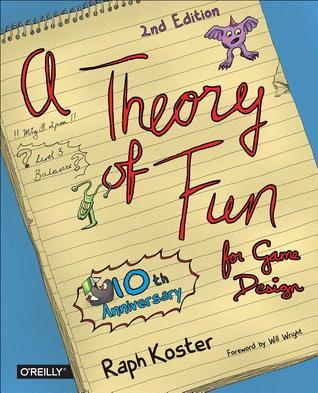
Now in full color, the 10th anniversary edition of this classic book packs more insight into what it means to design games for fun. Theory of Fun for Game Design challenges and inspires game designers as well as game enthusiasts looking for products and experiences that are truly fun and entertaining.The book discusses the impact of designing in a multidimensional landscape, where computer science, environmental design, and storytelling all play a role in creating an interactive game design. For the professional game developer to the interested young gamer, this updated edition takes you on an illustrated ride in fun and games.Learn why some games are fun and others are boringDiscover how playing a game and learning are connectedUnderstand why making a game too hard--or too easy--is a mistakeFind out why games have to balance deprivation and overload, order and chaos, silence and noiseExplore why you need to balance challenges of task mastery, pattern recognition, discovery, and time attacks

In Teaching to Transgress, bell hooks—writer, teacher, and insurgent black intellectual—writes about a new kind of education, educations as the practice of freedom. Teaching students to "transgress" against racial, sexual, and class boundaries in order to achieve the gift of freedom is, for hooks, the teacher's most important goal.Bell hooks speaks to the heart of education today: how can we rethink teaching practices in the age of multiculturalism? What do we do about teachers who do not want to teach, and students who do not want to learn? How should we deal with racism and sexism in the classroom?Full of passion and politics, Teaching to Transgress combines practical knowledge of the classroom with a deeply felt connection to the world of emotions and feelings. This is the rare book about teachers and students that dares to raise critical questions about eros and rage, grief and reconciliation, and the future of teaching itself."To educate as the practice of freedom," writes bell hooks, "is a way of teaching that any one can learn." Teaching to Transgress is the record of one gifted teacher's struggle to make classrooms work.–from the back of the book

One of Wall Street's most creative and influential minds offers provocative new ways of thinking about the stock market, investing, and how we make decisions.

On its initial publication, Forgive and Remember emerged as the definitive study of the training and lives of young surgeons. Now with an extensive new preface, epilogue, and appendix by the author, reflecting on the changes that have taken place since the book's original publication, this updated second edition of Charles L. Bosk's classic study is as timely as ever.

Asimov tells the stories behind the science: the men and women who made the important discoveries and how they did it. Ranging from Galilei, Achimedes, Newton and Einstein, he takes the most complex concepts and explains it in such a way that a first-time reader on the subject feels confident on his/her understanding.

The shortage of qualified teachers in our nation’s classrooms is critical, and it is getting worse. This thought-provoking book reveals the reasons for the crisis and offers concrete, affordable solutions.“A practical vision of how our children can get the high-quality teaching they deserve—a vision worth pondering and even implementing.”—Ted Fiske, former Education Editor of the New York Times and coauthor of When Schools Compete: A Cautionary Tale“This book should be read not just by teachers and teacher educators but also by parents, citizens, and policy makers—by all those who need to speak out for children.”—Deborah Meier, Educational Leadership“Why do so few people go into teaching, or once they have begun a career in public school teaching, abandon it? Kitty Boles and Vivian Troen, teachers both, investigate that question and then propose considerable and thoughtful changes that would bring great benefit to our beloved profession.”—Theodore Sizer and Nancy Faust Sizer, authors of The Students Are Watching: Schools and the Moral Contract

How did you feel after your last interaction with another person?Did that person -- your spouse, best friend, coworker, or even a stranger -- "fill your bucket" by making you feel more positive? Or did that person "dip from your bucket," leaving you more negative than before?The #1 New York Times and #1 BusinessWeek bestseller, How Full Is Your Bucket? reveals how even the briefest interactions affect your relationships, productivity, health, and longevity. Organized around a simple metaphor of a dipper and a bucket, and grounded in 50 years of research, this book will show you how to greatly increase the positive moments in your work and your life -- while reducing the negative.Filled with discoveries, powerful strategies, and engaging stories, How Full Is Your Bucket? is sure to inspire lasting changes and has all the makings of a timeless classic.

One of America's most influential writing teachers offers a toolbox from which writers of all kinds can draw practical inspiration."Writing is a craft you can learn," says Roy Peter Clark. "You need tools, not rules." His book distills decades of experience into 50 tools that will help any writer become more fluent and effective. WRITING TOOLS covers everything from the most basic ("Tool 5: Watch those adverbs") to the more complex ("Tool 34: Turn your notebook into a camera") and provides more than 200 examples from literature and journalism to illustrate the concepts. For students, aspiring novelists, and writers of memos, e-mails, PowerPoint presentations, and love letters, here are 50 indispensable, memorable, and usable tools. "Pull out a favorite novel or short story, and read it with the guidance of Clark's ideas. . . . Readers will find new worlds in familiar places. And writers will be inspired to pick up their pens." -Boston Globe"For all the aspiring writers out there-whether you're writing a novel or a technical report-a respected scholar pulls back the curtain on the art." -Atlanta Journal-Constitution"This is a useful tool for writers at all levels of experience, and it's entertainingly written, with plenty of helpful examples." -Booklist

This book is essentially a teaching machine. The way a teaching machine works is: It asks you a question. If you give the right answer, it goes on to the next question. If you give the wrong answer, it tells you why the answer is wrong and tells you to go back and try again. This is called "programmed learning". The real authors were experts and authorities in the field of programmed learning. Bobby Fischer lent his name to the project. Stuart Margulies is a chess master and also a recognized authority on programmed learning. He is a widely published author of more than 40 books, all in the field of programmed learning, especially in learning how to read. For example, one of his books is "Critical reading for proficiency 1 : introductory level". Donn Mosenfelder is not a known or recognized chess player, but he was the owner of the company that developed and designed this book. He has written more than 25 books, almost all on basic reading, writing and math.

After a lifetime of writing and editing prose, Jacques Barzun has set down his view of the best ways to improve one's style. His discussions of diction, syntax, tone, meaning, composition, and revision guide the reader through the technique of making the written word clear and agreeable to read. Exercises, model passages both literary and casual, and hundreds of amusing examples of usage gone wrong show how to choose the right path to self-expression in forceful and distinctive words.

At last, this is your story. You'll recognize yourself, your friends, and your loves. You'll see how to use each life crisis as an opportunity for creative change -- to grow to your full potential. Gail Sheehy's brilliant road map of adult life shows the inevitable personality and sexual changes we go through in our 20s, 30s, 40s, and beyond. The Trying 20s -- The safety of home left behind, we begin trying on life's uniforms and possible partners in search of the perfect fit. The Catch 30s -- illusions shaken, it's time to make, break, or deepen life commitments. The Forlorn 40s -- Dangerous years when the dreams of youth demand reassessment, men and women switch characteristics, sexual panic is common, but the greatest opportunity for self-discovery awaits. The Refreshed (or Resigned) 50s -- Best of life for those who let go old roles and find a renewal of purpose.

The 15th edition of The Chicago Manual of Style has been superseded by the 17th edition. In the 1890s, a proofreader at the University of Chicago Press prepared a single sheet of typographic fundamentals intended as a guide for the University community. That sheet grew into a pamphlet, and the pamphlet grew into a book—the first edition of the Manual of Style, published in 1906. Now in its fifteenth edition, The Chicago Manual of Style—the essential reference for authors, editors, proofreaders, indexers, copywriters, designers, and publishers in any field—is more comprehensive and easier to use than ever before.Those who work with words know how dramatically publishing has changed in the past decade, with technology now informing and influencing every stage of the writing and publishing process. In creating the fifteenth edition of the Manual, Chicago's renowned editorial staff drew on direct experience of these changes, as well as on the recommendations of the Manual's first advisory board, composed of a distinguished group of scholars, authors, and professionals from a wide range of publishing and business environments.Every aspect of coverage has been examined and brought up to date—from publishing formats to editorial style and method, from documentation of electronic sources to book design and production, and everything in between. In addition to books, the Manual now also treats journals and electronic publications. All chapters are written for the electronic age, with advice on how to prepare and edit manuscripts online, handle copyright and permissions issues raised by technology, use new methods of preparing mathematical copy, and cite electronic and online sources.A new chapter covers American English grammar and usage, outlining the grammatical structure of English, showing how to put words and phrases together to achieve clarity, and identifying common errors. The two chapters on documentation have been reorganized and updated: the first now describes the two main systems preferred by Chicago, and the second discusses specific elements and subject matter, with examples of both systems. Coverage of design and manufacturing has been streamlined to reflect what writers and editors need to know about current procedures. And, to make it easier to search for information, each numbered paragraph throughout the Manual is now introduced by a descriptive heading.Clear, concise, and replete with commonsense advice, The Chicago Manual of Style, fifteenth edition, offers the wisdom of a hundred years of editorial practice while including a wealth of new topics and updated perspectives. For anyone who works with words, whether on a page or computer screen, this continues to be the one reference book you simply must have.What's new in the Fifteenth Edition:* Updated material throughout to reflect current style, technology, and professional practice* Scope expanded to include journals and electronic publications* Comprehensive new chapter on American English grammar and usage by Bryan A. Garner (author of A Dictionary of Modern American Usage)* Updated and rewritten chapter on preparing mathematical copy* Reorganized and updated chapters on documentation, including guidance on citing electronic sources* Streamlined coverage of current design and production processes, with a glossary of key terms* Descriptive headings on all numbered paragraphs for ease of reference* New diagrams of the editing and production processes for both books and journals, keyed to chapter discussions* New, expanded Web site with special tools and features for Manual users at www.chicagomanualofstyle.org.

Professors Fischl and Paul explain law school exams in ways no one has before, all with an eye toward improving the reader's performance. The book begins by describing the difference between educational cultures that praise students for "right answers" and the law school culture that rewards nuanced analysis of ambiguous situations in which more than one approach may be correct. Enormous care is devoted to explaining precisely how and why legal analysis frequently produces such perplexing situations. But the authors don't stop with mere description. Instead, Getting to Maybe teaches how to excel on law school exams by showing the reader how legal analysis can be brought to bear on examination problems. The book contains hints on studying and preparation that go well beyond conventional advice. The authors also illustrate how to argue both sides of a legal issue without appearing wishy-washy or indecisive. Above all, the book explains why exam questions may generate feelings of uncertainty or doubt about correct legal outcomes and how the student can turn these feelings to his or her advantage. In sum, although the authors believe that no exam guide can substitute for a firm grasp of substantive material, readers who devote the necessary time to learning the law will find this book an invaluable guide to translating learning into better exam performance.

This new collection of essays bears the unmistakable stamp of Theodore Dalrymple's bracingly clearsighted view of the human condition. In these twenty-six pieces, Dr. Dalrymple ranges over literature and ideas, from Shakespeare to Marx, from the break-down of Islam to the legalization of drugs. The book includes "When Islam Breaks Down," named by David Brooks of the New York Times as the best journal article of 2004.Informed by years of medical practice in a wide variety of settings, Dr. Dalrymple's acquaintance with the outer limits of human experience allows him to discover the universal in the local and the particular, and makes him impatient with the humbug and obscurantism that have too long marred our social and political discourse.His essays are incisive yet undogmatic, beautifully composed and devoid of disfiguring jargon. Our Culture, What's Left of It is a book that restores our faith in the central importance of literature and criticism to our civilization.

Everyone talks about style, but no one explains it. The authors of this book do; and in doing so, they provoke the reader to consider style, not as an elegant accessory of effective prose, but as its very heart.At a time when writing skills have virtually disappeared, what can be done? If only people learned the principles of verbal correctness, the essential rules, wouldn't good prose simply fall into place? Thomas and Turner say no. Attending to rules of grammar, sense, and sentence structure will no more lead to effective prose than knowing the mechanics of a golf swing will lead to a hole-in-one. Furthermore, ten-step programs to better writing exacerbate the problem by failing to recognize, as Thomas and Turner point out, that there are many styles with different standards.In the first half of Clear and Simple, the authors introduce a range of styles--reflexive, practical, plain, contemplative, romantic, prophetic, and others--contrasting them to classic style. Its principles are The writer adopts the pose that the motive is truth, the purpose is presentation, the reader is an intellectual equal, and the occasion is informal. Classic style is at home in everything from business memos to personal letters, from magazine articles to university writing.The second half of the book is a tour of examples--the exquisite and the execrable--showing what has worked and what hasn't. Classic prose is found from Thomas Jefferson to Junichirō Tanizaki, from Mark Twain to the observations of an undergraduate. Here are many fine performances in classic style, each clear and simple as the truth.Originally published in 1994.The Princeton Legacy Library uses the latest print-on-demand technology to again make available previously out-of-print books from the distinguished backlist of Princeton University Press. These editions preserve the original texts of these important books while presenting them in durable paperback and hardcover editions. The goal of the Princeton Legacy Library is to vastly increase access to the rich scholarly heritage found in the thousands of books published by Princeton University Press since its founding in 1905.

"This fascinating and detailed book about acting is Miss Hagen's credo, the accumulated wisdom of her years spent in intimate communion with her art. It is at once the voicing of her exacting standards for herself and those she teaches, and an explanation of the means to the end. For those unable to avail themselves of her personal tutelage, her book is the best substitute."— Publishers Weekly "Uta Hagen's Respect for Acting is not only pitched on a high artistic level but it is full of homely, practical information by a superb craftswoman. crafts-woman. An illuminating discussion of the standards and techniques of enlightened stage acting."— Brooks Atkinson "Hagen adds to the large corpus of titles on acting with vivid dicta drawn from experience, skill, and a sense of personal and professional worth. Her principal asset in this treatment is her truly significant imagination. Her ‘object exercises’ display a wealth of detail with which to stimulate the student preparing a scene for presentation."— Library Journal "Respect for Acting is a simple, lucid and sympathetic statement of actors' problems in the theatre and basic tenets for their training wrought from the personal experience of a fine actress and teacher of acting."— Harold Clurman "Uta Hagen's Respect for Acting…is a relatively small book. But within it Miss Hagen tells the young actor about as much as can be conveyed in print of his craft."— Los Angeles Times "Uta Hagen is our greatest living actor; she is, moreover, interested and mystified by the presence of talent and its workings; her third gift is a passion to communicate the mysteries of the craft to which she has given her life. There are almost no American actors uninfluenced by her."— Fritz Weaver "This is a textbook for aspiring actors, but working thespians can profit much by it. Anyone with just a casual interest in the theater should also enjoy its behind-the-scenes flavor. Respect for Acting is certainly a special book, perhaps for a limited readership, but of its "How-To" kind I'd give it four curtain calls, and two hollers of "Author, Author— King Features Syndicate

يقدم هذا الكتاب المبادئ والمفاهيم الأساسية التى يتم تدريسها فى افضل كليات التجارة وإدارة الأعمال اليوم , وذلك من أجل المتخصصين والمهنيين الذين يركزون على التحديات اليومية الخاصة بإدارة مؤسسة ناجحة او تشغيل مشروع صغير , او البدء فى استثمار جديد بمجال التجارة والأعمال .سوف تجد فى داخل هذا الكتاب نصائح على مسنوى ماجستير إدارة الأعمال نفسه بخصوص هذه الموضوعات والكثير غيرها :- * الموارد البشرية والتفاعلات الشخصية . * أخلاقيات العمل ومهارات القيادة . * أساليب التفاوض الواضحة النظيفة . * الممارسات المحاسبية الأساسية فى مجال الأعمال . * أساسيات الاقتصاد . * استراتيجيات التسويق . * الإعلان والترويج . * التواصل الفعال والعروض التقديمية . * إدارة المشروعات . * تكنولوجيا المعلومات . * استخدام الإنترنت فى مجال الأعمال . * معايير التحكم فى الجودة .

This comprehensive record of Krishnamurti’s teachings is an excellent, wide-ranging introduction to the great philosopher’s thought. With among others, Jacob Needleman, Alain Naude, and Swami Venkatasananda, Krishnamurti examines such issues as the role of the teacher and tradition; the need for awareness of ‘cosmic consciousness; the problem of good and evil; and traditional Vedanta methods of help for different levels of seekers.

Number is an eloquent, accessible tour de force that reveals how the concept of number evolved from prehistoric times through the twentieth century. Tobias Dantzig shows that the development of math—from the invention of counting to the discovery of infinity—is a profoundly human story that progressed by “trying and erring, by groping and stumbling.” He shows how commerce, war, and religion led to advances in math, and he recounts the stories of individuals whose breakthroughs expanded the concept of number and created the mathematics that we know today.

Some people appear more gifted than others. NLP, one of the fastest growing developments in applied psychology, describes in simple terms what they do differently, and enables you to learn these patterns of excellence. This approach gives the practical skills used by outstanding communicators. Excellent communication is the basis of creating excellent results. NLP skills are proving invaluable for personal development and professional excellence in counselling, education and business. Introducing NLP includes:- How to create rapport with others- Influencing skills- Understanding and using body language- How to think about and achieve the results you want- Effective meetings, negotiations and selling

Bring compassion, generosity, and kindness into your home with this essential interfaith parenting guide to raising kids in a virtuous and spiritual household, with week-by-week strategies for living your best lives. The most important job parents have is to pass basic virtues on to their children, and this invaluable book is designed to help make that job a little easier. Compiled by The Virtues Project, an international organization dedicated to inspiring spiritual growth in young and old alike, this multicultural, interfaith handbook shows parents and teachers how to turn words into actions and ideals into realities.Drawn from the world’s religions, the 52 virtues included here—one for each week of the year—nurture togetherness in family life. The simple strategies, which explain what a virtue is, how to practice it, and signs of success, will engage children of all ages in an exciting process of growth and discovery. This important book shows you how • Learn the language of integrity and self-esteem• Understand the five roles parents play• Discover ways to introduce sacred time into family life• Help children make moral choices The Family Virtues Guide gives adults and children the tools for spiritual and moral growth. Join the thousands of families discovering simple practices for bringing out the best in each other by sharing The Family Virtues Guide.

Take your real estate career to the highest level "Whether you are just getting started or a veteran in the business, "The Millionaire Real Estate Agent" is the step-by-step handbook for seeking excellence in your profession and in your life." --Mark Victor Hansen, cocreator, #1" New York Times" bestselling series "Chicken Soup for the Soul""This book presents a new paradigm for real estate and should be required reading for real estate professionals everywhere."--Robert T. Kiyosaki, "New York Times" bestselling author of "Rich Dad, Poor Dad""The Millionaire Real Estate Agent "explains: Three concepts that drive production Economic, organizational, and lead generation models that are the foundations of any high-achiever's business How to "Earn a Million," "Net a Million," and "Receive a Million" in annual income

UPDATED 2019 EDITION • The pioneering book that’s guided millions of parents to more effectively resolve conflicts, communicate, and create loving relationships with their children—from Nobel Peace Prize nominee Dr. Thomas Gordon P.E.T., or Parent Effectiveness Training, began in 1962 as the first national parent-training program to teach parents how to communicate more effectively with kids and offer step-by-step advice to resolve family conflicts so everybody wins. This beloved classic is the most studied, highly praised, and proven parenting program in the world—and it will work for you. Now revised and updated, this groundbreaking guide will show • How to avoid being a permissive parent• How to listen so kids will talk to you and talk so kids will listen to you• How to teach your children to “own” their problems and to solve them• How to apply the “No Lose” method to resolve conflicts Using the timeless methods of P.E.T. will have immediate less fighting, fewer tantrums and lies, no need for punishment. Whether you have a toddler striking out for independence or a teenager who has already started rebelling, you’ll find P.E.T. a compassionate, effective way to instill responsibility and create a nurturing family environment in which your child will thrive.

With a new introduction by the authorWarren Bennis's formative years, in the 1930s and '40s, were characterized by severe economic hardship and a world war that showcased the extreme depths and heights to which leaders could drive their followers. Today's environment is similarly chaotic, turbulent, and uncertain. On Becoming a Leader has served for nearly fifteen years as a beacon of insight, delving into the qualities that define leadership, the people who exemplify it, and the strategies that anyone can apply to become an effective leader. This new edition features a provocative introduction on the challenges and opportunities facing leaders today, with additional updates and current references throughout.

Translation of: La formation du symbole chez l'enfant.

Hailed by national leaders as politically diverse as former Vice President Al Gore and former House Speaker Newt Gingrich, Generations has been heralded by reviewers as a brilliant, if somewhat unsettling, reassessment of where America is heading.William Strauss and Neil Howe posit the history of America as a succession of generational biographies, beginning in 1584 and encompassing everyone through the children of today. Their bold theory is that each generation belongs to one of four types, and that these types repeat sequentially in a fixed pattern. The vision of Generations allows us to plot a recurring cycle in American history—a cycle of spiritual awakenings and secular crises—from the founding colonists through the present day and well into this millenium.Generations is at once a refreshing historical narrative and a thrilling intuitive leap that reorders not only our history books but also our expectations for the twenty-first century.

How to Write a Good Advertisement is a short course in writing powerful, hard-hitting copy that can help you make your products and services irresistible to potential customers. This remarkable book has turned many novice mail-order entrepreneurs into expert copywriters and many experienced copywriters into masters of their trade

Chronicles the efforts of an NPR contributor to read the Encyclopedia Britannica from A to Z, sharing the humorous and unexpected mishaps that occurred as a result of the endeavor, from changed dynamics in his family relationships to his efforts to join Mensa and win a spot on Jeopardy! By the author of Fractured Fairy Tales. 100,000 first printing.

The only guide to getting ahead once you’ve gotten in—proven strategies for making the most of your college years, based on winning secrets from the country's most successful students What does it take to be a standout student? How can you make the most of your college years—graduate with honors, choose exciting activities, build a head-turning resume, and gain access to the best post-college opportunities? Based on interviews with star students at universities nationwide, from Harvard to the University of Arizona, How to Win at College presents seventy-five simple rules that will rocket you to the top of the class. These college-tested—and often surprising—strategies include:• Don’t do all your reading• Drop classes every term• Become a club president• Care about your grades, Ignore your GPA• Never pull an all-nighter• Take three days to write a paper• Always be working on a “grand project”• Do one thing better than anyone else you knowProving that success has little to do with being a genius workaholic, and everything to do with playing the game, How to Win at College is the must-have guide for making the most of these four important years—and getting an edge on life after graduation.

Looking to jumpstart your GPA? Most college students believe that straight A's can be achieved only through cramming and painful all-nighters at the library. But Cal Newport knows that real straight-A students don't study harder--they study smarter. A breakthrough approach to acing academic assignments, from quizzes and exams to essays and papers, "How to Become a Straight-A Student" reveals for the first time the proven study secrets of real straight-A students across the country and weaves them into a simple, practical system that anyone can master. You will learn how to: Streamline and maximize your study time Conquer procrastinationAbsorb the material quickly and effectivelyKnow which reading assignments are critical--and which are notTarget the paper topics that wow professorsProvide A+ answers on examsWrite stellar prose without the agony A strategic blueprint for success that promises more free time, more fun, and top-tier results, "How to Become a Straight-A Student" is the only study guide written by students for students--with the insider knowledge and real-world methods to help you master the college system and rise to the top of the class.

Lewis Carroll Epstein explains deep ideas in physics in an easy-to-understand way. Thinking Physics is a perfect beginner’s guide to an amazingly wide range of physics-related questions. The book targets topics that science teachers and students spend time wondering about, like wing lift. Epstein elucidates the familiar but misunderstood — such as how tides work — along with more obscure but fascinating phenomena like the “Bernoulli sub” and the “artificial aurora” created by hydrogen bombs. Broken into many short sections and peppered with Epstein’s own playful hand-drawn illustrations, the book does not simply give the right answer: It also goes into the answers that seem right but are wrong and shows why they are wrong — a rarity in science books. Thinking Physics is a rigorously correct, lighthearted, and cleverly designed Q and A book for physicists of all ages.

As its title implies, this book deals with revising, not with original composition. Stressing the importance of the single sentence, The Paramedic Method of revision provides an easily learned method of revision to combat the obscurities of meaning that plague The Official Style, and demonstrates how to revise this stilted, dense prose into plain English. This book has been used with success wherever extensive writing is required, and also at every level of higher education. Addresses the specific stylistic patterns that characterize most bad writing and gives an eight-step revision method called The Paramedic Method to break those patterns and improve writing. Helps with writing tasks in business, government, and the university, where The Official Style is rampant, and provides an indispensable guide to revising in every writing context. For anyone interested in revising, specifically at the sentence level.

This study, first published in 1958, offers Michael Polanyis' epistemological insights. Polanyi, originally a chemist and chemical physicist, is widely acclaimed for his epistemology which opposes the prevailing positivist approaches. His discussion of tacit knowledge has proved to be influential in many fields from theology to artificial intelligence. This text represnts a contribution to 20th-century thought, and continues to make valuable insights to our understanding of how knowledge functions.

Respected author, scholar, and columnist Charles Murray has long challenged accepted notions of public and social policy issues. In this volume, originally published in 1988, Murray presents a persuasive and practical argument that reconsiders commonly held beliefs of what constitutes success in social policy by examining the scope of government and its role in people’s pursuit of happiness. In Of Happiness and Good Government begins by examining James Madison’s “A good government implies two things; first, fidelity to the object of government, which is the happiness of the people; secondly, a knowledge of the means by which that object can best be attained.” Murray exhibits a thoughtful, accessible writing style as he considers such basic, important questions as whether individual efforts or government reform should be responsible for dealing with society’s problems. Drawing from his minimalist-government viewpoint, Murray proposes that government not try to force happiness on the people with federal policies or programs but, rather, that it provide conditions that enable people to pursue happiness on their own. Murray also proposes that the pursuit of happiness be used as a framework for analyzing the efficacy of public policy, and he comes to the conclusion that Jeffersonian democracy is still the best way to run society, even today’s complex society. Charles Murray is the W. H. Brady Scholar at the American Enterprise Institute for Public Policy Research. He has written numerous books, including Coming Apart, Losing Ground, Real Education , and Human Accomplishment . He is perhaps best known for coauthoring the 1994 New York Times bestseller The Bell Curve with the late Richard J. Herrnstein.