
Warren Bennis
Warren Gamaliel Bennis is an American scholar, organizational consultant and author, widely regarded as a pioneer of the contemporary field of Leadership Studies. Bennis is University Professor and Distinguished Professor of Business Administration and Founding Chairman of The Leadership Institute at the University of Southern California. “His work at MIT in the 1960s on group behavior foreshadowed -- and helped bring about -- today's headlong plunge into less hierarchical, more democratic and adaptive institutions, private and public,” management expert Tom Peters wrote in 1993 in the foreword to Bennis’ An Invented Life: Reflections on Leadership and Change. Management expert James O’Toole, in a 2005 issue of Compass, published by Harvard University’s John F. Kennedy School of Government, claimed that Bennis developed “an interest in a then-nonexistent field that he would ultimately make his own -- leadership -- with the publication of his ‘Revisionist Theory of Leadership’ in Harvard Business Review in 1961.” O’Toole observed that Bennis challenged the prevailing wisdom by showing that humanistic, democratic-style leaders better suited to dealing with the complexity and change that characterize the leadership environment.
28 Books Written

Organizing Genius: The Secrets of Creative Collaboration
by Warren Bennis
Rating: 3.7 ⭐
• 2 recommendations ❤️
Uncovers the elements of creative collaboration by examining six of the century's most extraordinary groups and distill their successful practices into lessons that virtually any organization can learn and commit to in order to transform its own management into a collaborative and successful group of leaders. Paper. DLC: Organizational effectiveness - Case studies.

Deemed “the dean of leadership gurus” by Forbes magazine, Warren Bennis has for years persuasively argued that leaders are not born—they are made. Delving into the qualities that define leadership, the people who exemplify it, and the strategies that anyone can apply to achieve it, his classic work On Becoming a Leader has served as a source of essential insight for countless readers. In a world increasingly defined by turbulence and uncertainty, the call to leadership is more urgent than ever.Featuring a provocative new introduction, this new edition will inspire a fresh generation of potential leaders to excellence.

Libro usado en buenas condiciones, por su antiguedad podria contener señales normales de uso
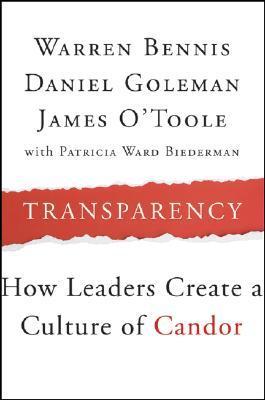
In Transparency , the authors–a powerhouse trio in the field of leadership–look at what conspires against "a culture of candor" in organizations to create disastrous results, and suggest ways that leaders can achieve healthy and honest openness. They explore the lightning-rod concept of "transparency"–which has fast become the buzzword not only in business and corporate settings but in government and the social sector as well. Together Bennis, Goleman, and O'Toole explore why the containment of truth is the dearest held value of far too many organizations and suggest practical ways that organizations, their leaders, their members, and their boards can achieve openness. After years of dedicating themselves to research and theory, at first separately, and now jointly, these three leadership giants reveal the multifaceted importance of candor and show what promotes transparency and what hinders it. They describe how leaders often stymie the flow of information and the structural impediments that keep information from getting where it needs to go. This vital resource is written for any organization–business, government, and nonprofit–that must achieve a culture of candor, truth, and transparency.
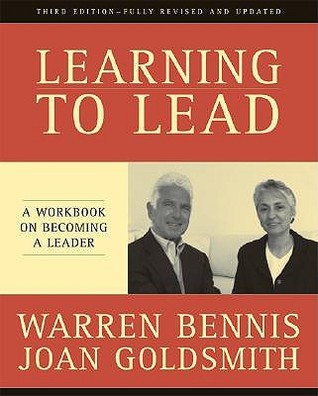
Over their distinguished careers, Warren Bennis and Joan Goldsmith have demonstrated how leaders are made, not born. In today's environment of crisis and uncertainty, the ability to develop leaders is arguably the most pressing concern, whether the arena is business, politics, education, health care, the environment, or the arts. Integrating wisdom from the world's most insightful and accomplished leaders, self-assessments, and dozens of interactive skill-building exercises, Learning to Lead reveals the underpinnings of true leadership. It shows you how to see beyond leadership myths, translate failures into springboards for renewed creativity, and communicate your vision for yourself, your team, or your organization.This new edition has been updated throughout, including bibliography and references, and contains substantive new material that reflects the authors' ongoing research on collaborative leadership, ethics, integrity, and personal development.

"Our youngest leaders matured in the glow of computer screens; our oldest in the shadow of the Depression and World War II. In a groundbreaking study of these two disparate groups - affectionately labeled "geeks" and "geezers" - leadership experts Warren G. Bennis and Robert J. Thomas set out to find how era and values shape those who lead. What they discovered was something even more profound: the powerful process through which leaders of any era emerge." Geeks and Geezers will forever change how we view leadership, but also how we reflect on our own formative experiences. Illustrated by compelling interviews with extraordinary individuals under thirty-five and over seventy years of age, the authors present a new model that predicts who is likely to become and remain a leader - and explains why others fail to rise to the challenge. At its heart are what the authors call "crucibles" - utterly transformational experiences from which one can emerge either hopelessly broken or powerfully emboldened to learn and to lead.

A Selection of the Executive Program and Fortune Book ClubsLeaders beware. There's an unconscious conspiracy afoot, aiming to sabotage your plans and undermine your vision. Entrenched bureaucracy, ominous social trends, and mind-numbing routine are among its members?and their proliferation is an unfortunate sign of our times. But take heart. In this highly acclaimed work, legendary management consultant Warren Bennis unmasks the culprits, analyzes their tactics, and offers new insights for change agents struggling to take charge in an era that conspires against effective leadership.The best book on how leaders can lead.--Peter DruckerBennis teaches leaders to maximize their virtues, correct their faults, face change successfully, and love their work. Leaders will win, but so will their organizations: Bennis advocates a collaborative leadership that empowers employees and enhances organizational effectiveness.A priceless gift to those seeking to be accountable leaders.--Max De Pree, author of Leading Without PowerSo learn why leaders can't lead. Then learn how they can lead. This book--alive with warmth and wisdom--is essential reading both for leaders and for the human resource professionals who teach them.

An intimate look at the founding father of the modern leadership movement Warren Bennis is an acclaimed American scholar, successful organizational consultant and author, and an expert in the field of leadership. His much awaited memoir is filled with insights about the successes and failures from his long and storied life and career. Bennis' life and career have traversed eight decades of first-hand experience with tumultuous episodes of recent history-from Jewish child in a gentile town in the 30's, a young army recruit in the Battle of the Bulge to a college student in the one of the first progressive precursors to the civil rights movement to a patient undergoing daily psychoanalysis for five years, and later a university provost during the Vietnam protests. Reveals the triumphs and struggles of the man who is considered the pioneer in the contemporary field of leadership studies Bennis is the author of 27 books including the bestseller On Becoming a LeaderThis is first book to examine the extraordinary life of Warren Bennis by the man himself.

Cats, of course, won't be herded. And the most successful organizations in the 21st century won't be managed—they'll be led! The answer to America's current leadership crisis is leaders (not managers) who recognize that "the only capital that really counts is human capital." And whether readers are looking for a leader or looking to be a better one, Warren Bennis knows what it takes. Herding Cats spells out the dilemma facing our leaderless society, details the qualities that successful leaders must have, and explores the challenges that today's leaders must face as they move toward change. The 21st century will require leaders who can inspire and orchestrate change rather than impose or simply react to it.
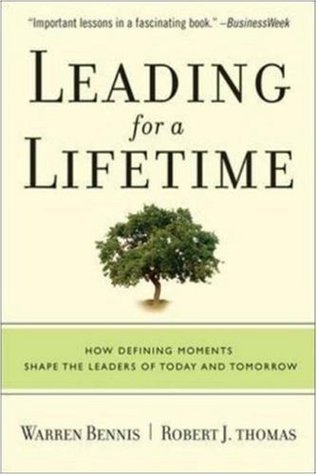
Leading for a Lifetime: How Defining Moments Shape Leaders of Today and Tomorrow
by Warren Bennis
Rating: 3.9 ⭐
Today's young leaders grew up in the glow of television and computers; the leaders of their grandparents' generation in the shadow of the Depression and World War II. In "Leading for a Lifetime", Warren Bennis and Robert Thomas set to find out how era and values shape those who lead. At the heart of this model are what the authors call "crucibles" - utterly transforming periods of testing from which one can emerge either hopelessly broken or powerfully emboldened to learn and to lead. Whether losing an election or burying a child, learning from a mentor or mastering a martial art, crucibles force us to decide who we are and what we are capable of.
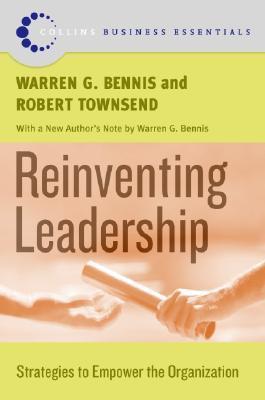
Leadership for the 21st CenturyThe demands of today's workplace call for stronger and more inspiring leadership in order to motivate employees and to achieve the quality results for which successful organizations constantly strive.In Reinventing Leadership, Warren G. Bennis and Robert Townsend show leaders how to empower their organizations and bring the best out of each employee.Inside you will find useful leadership strategies that include:Moving away from conventional standards of business practice Building trust How to find a mentor Rewarding accomplishmentThese strategies will help transform leadership visions into reality and lead organizations into a future that includes increased employee satisfaction and continued economic growth.

The Art and Adventure of Leadership: Understanding Failure, Resilience and Success
by Warren Bennis
Rating: 4.0 ⭐
For the first time, a top leadership scholar and a top leadership practitioner explore the true duties, demands, and privileges of leadership. I ntellectual sparks flew when Warren Bennis, the “father” of modern leadership studies and Steven B. Sample, one of the most accomplished university presidents in recent history, came together for candid explorations of the forces that shape successful leaders and unsuccessful ones. The Art and Adventure of Leadership , their final collaboration, reveals the profound insights that the authors gained together over the 16 years in which they co-taught one of the most popular leadership courses in America. Here, each brings his own distinct vantage point as they address the mechanics and mysteries of leadership. The result is a unique examination of the journey of great leaders from momentary setbacks to ultimate success. It offers profound lessons on what determines the difference between failure and redemption for leaders. And it illuminates important and overlooked dimensions of great leaders ranging from Winston Churchill to Steve Jobs. Together, they explore With incredible insight, this book examines why George Washington, Abraham Lincoln, and other giants were able to recover from failures, learn resilience, and prepare themselves for their moments of destiny. In so doing, it demonstrates and helps cultivate the leadership skills that you need to create your own most meaningful legacy. The Art and Adventure of Leadership is a unique look at leadership, and a critical resource for the leaders of tomorrow.

"Looking over a lifetime of work, I see that certain themes have always fascinated me. Early on, I felt that bureaucracy was doomed and that something flatter and more collegial would triumph. The need for candor and transparency has been a frequent cry, because I saw how warped organizations become without them. I've long known that organizational decisions inevitably have a moral dimension. The vital role that great followers play in successful leadership has grown ever more obvious. I am increasingly aware how crucial rhetoric and other performing arts are in making a compelling leader—good or bad. That leaders are inevitably shaped by personal crucibles has been confirmed by hundreds of interviews. And it is clear to me now that the process of becoming a leader and the process of becoming a fully integrated human being are one and the same, both grounded in self-discovery." —from the Introduction by Warren Bennis

This collection brings together the best of Warren Bennis--essays spanning three decades and covering such revolutions as the information explosion, Watergate, the emergence of Japan, and the collapse of the Soviet Union. A retrospective on the life and work of one of America's most respected authorities on business leadership.

Warren Bennis has become synonymous with leadership, exploring all its dimensions as both practitioner and scholar for over four decades. Managing the Dream is an intimate portrait of leadership, comprising over a dozen essays that represent the author's most incisive and creative thinking. It features many of Bennis's most recent works, including "The End of Leadership," and a new preface reflecting on the challenge of leadership in the new millennium.

In today's dog-eat-dog world of competition and ongoing change, people in every position, especially the "old dogs," must learn to work as great groups and creative coalitions rather than as "lone wolves." They must learn the relatively "new tricks" of collaboration and innovation. Through creative collaboration, these leaders position their companies to be more adaptive and more profitable, continually reinventing themselves to address new markets and capitalize on new technologies.

The Temporary Society: What is Happening to Business and Family Life in America Under the Impact of Accelerating Change
by Warren Bennis
Rating: 3.4 ⭐
30th ANNIVERSARY EDITION! "Truly a classic reborn. What a pleasure to read this great combination of old and newpredictions and valuable insights by Bennis and Slater."--Edward E. Lawler III, author of From the Ground Up "The world has always been more wild than those who don't really read history admit. If[Warren Bennis and Philip Slater] choose to regard the present era as unusually torn bychange, they've got a good point. What's more, they advance cogent ideas on how tolive in a time of tumult..."-- The New York Times In these six essays--including Democracy Is Inevitable , originally published in the Harvard Business Review --renowned business pundit Warren Bennis and Brandeis sociologist Philip Slater presented a take on the future that struck most of their contemporaries as being too far-fetched. But in the years since, their predictions have materialized with uncanny accuracyand Bennis has gone on to become one of today's most widely respected business thinkers. Now, in this thirtieth anniversary edition of their seminal work, Bennis and Slater team up again to reflect on the events of the last three decades and to look forward to the changes ahead. Featuring a new preface by the authors and contemporary introductions to each chapter, The Temporary Society is as relevant as ever, with fresh predictions for the networked organizations and flattened hierarchies of the future. A welcome antidote to the hype surrounding new movements and business fads, the classic book that prophetically heralded the current state of our world--newly revised and updated---contains much-needed wisdom for the century to come.

As agents of planned change, it's imperative that Extension professionals develop a working philosophy for implementing change efforts in human systems. The Planning of Change may well be considered a cornerstone resource in helping to build such a working philosophy for thought and action. The main authors paradoxically proclaim that "the only constant of today's society is change." However, by planning change, we work toward specified goals in a comprehensive and organized manner. The book is comprised of essays, readings, and assorted works by a broad array of individuals, each making a contribution to achieving the book's central goal of "helping the reader in the application of valid and appropriate knowledge in human affairs for the purpose of creating intelligent action necessary to bring about planned change." In the book, planned change is described as a "conscious, deliberate, and collaborative effort to improve the operation of a human system." Greatest emphasis is placed on the processes of planning change, on how it is created, implemented, evaluated, maintained, and resisted. Other topics discussed include the social and psychological consequences of planned change, conditions necessary for change, strategies for bringing about change, plus the role of training, consulting, and applied research in creating and maintaining change. The book is relevant to both effecting change in the internal structure and function of Extension organization as well as in the clientele systems we serve. In short, The Planning of Change is a valuable book to use in developing a personal philosophy about the ethics and intervention strategies necessary to bring about change.

Beyond Counterfeit Leadership: How You Can Become a More Authentic Leader
by Warren Bennis
Rating: 3.6 ⭐
In the history of the modern company, would-be leaders have often been seduced by the quick-fix, counterfeit side of management in an effort to save face or make short-term gains. Even more often, world-weary "plantation" managers are often seen sipping lemonade on the verandah of their palatial offices while the workers in the field live on slave wages. In this insightful social and business commentary, Shelton applies the artful background of classic literature to contrast ideal leadership with contemporary hucksters who are seduced by their own public relations campaigns and who wade through fraud and deception to manipulate their followers. He invites readers to see beyond the shams and become authentic leaders themselves.

Beyond Leadership has been written to enable practitioners and students of leadership to manage uncertainty, diversity, conflict, and complexity. Its lead authors are American, Asian and Afro-European, and this range of perspective is reflected in the individual chapters.The unique appeal of this book is its global approach to management as the next evolutionary step beyond the major western (American) and eastern (Japanese) perspectives.



Read it in just 2 hours! A Warren Bennis Executive Briefing Series Book With this book, two distinguished experts present a proven five-phase process for making an organization leaner, more responsive, and more aware of it's customers' needs. Drawing on real-life change iniatives undertaken at Motorola, General Electric, Hewlett-Packard and other industry leaders, Bennis and Mische demystify the process of reinventing a company and address many questions critical to the success of comprehensive change efforts. Through trAnd analysis, case study examples, and facts lists--all presented in an easy-to-absorb SuperReading format-- The 21st Century Organization examines the economic, quality control, and productivity issues associated with organizational restructuring and demonstrates how each will impact a company's ability to compete in the growing global marketplace.

Like it or not, contemporary man is man-in-bureaucracy. He spends the majority of his waking hours in a bureaucracy; establishes an identity and status in a bureaucracy; garners most of his satisfactions and disappointments in a bureaucracy; and, increasingly, he is what he does. Aside from the importance of understanding those institutions that shape our values, behavior, and experience, bureaucracy is a vital area for study because it reveals a wide range of social behavior in a compact and comprehensible way. The abstract and ephemeral problems of society at large are brought down to earth ―made measurable, comprehensible and visible in the bureaucratic microcosm. Problems of power and influence, change and innovation, intergroup conflict, ambition and aspiration, self-realization versus participative democracy, technology versus all can be observed and analyzed in human organizations. This volume pinpoints the dilemma of present bureaucratic the conflict between the need to sustain innovation and bureaucratic drives toward rationality and stability. The essays it contains discuss specific human needs that bureaucracy must meet if it is to continue to attract talented people and takes a step into the future to analyze the kinds of organizations that may be expected to evolve as institutions seek more flexible use of human resources.