
Jean Piaget
Jean Piaget (1896 - 1980) was a Swiss philosopher, natural scientist and developmental theorist, well known for his work studying children, his theory of cognitive development, and his epistemological view called "genetic epistemology." In 1955, he created the International Centre for Genetic Epistemology in Geneva and directed it until his death in 1980. According to Ernst von Glasersfeld, Jean Piaget was "the great pioneer of the constructivist theory of knowing."
31 Books Written

Translation of: La formation du symbole chez l'enfant.

The seminal book by this century's most important developmental psychologist chronicles the evolution of children's moral thinking.The Moral Judgement of the Child traces children's moral thinking from preschool to adolescence, tracing their concepts of lying, cheating, adult authority, punishment, and responsibility and offering important insights into how they learn -- or fail to learn -- the difference between right and wrong.

Theories du langage, Theories de l'apprentissage: Le debat entre Jean Piaget et Noam Chomsky
by Jean Piaget
Rating: 4.5 ⭐
Rayon : Philosophie Editeur : Seuil Date de parution : 1979 Description : In-8, 502 pages, relié entoilé avec jaquette parfaite, occasion, très bon état. Envois quotidiens du mardi au samedi. Les commandes sont adressées sous enveloppes bulles. Photos supplémentaires de l'ouvrage sur simple demande. Réponses aux questions dans les 12h00. ATTENTION : Les expéditions de plus de 2 kilos se voient appliquer un supplément de port. Un envoi en Mondial Relay est possible en France et en Europe. IMPORTANT : Le service économique d'envoi de livres à l'international "livres et brochures" prendra fin au 1er juillet 2025. Clients internationaux, profitez des derniers mois de ce tarif très avantageux. N'hésitez pas à vous renseigner avant de passer commande. Librairie Le Piano-Livre. Merci. Référence catalogue X12985. Please let us know if you have any questions. Thanks

ΣTIΣ ΣHMANTIKEΣ MEΛETEΣ TOY ΠIAZE "H ΨYXOΛOΓIA THΣ NOHMOΣYNHΣ" KATEXEI EΞEXOYΣA ΘEΣH. TO EPΓO ΓPAΦTHKE TO 1947 KAI AΠOTEΛEI TOMH ΓIA TA BAΣIKA ΘEMATA ΠOY O ΠPΩTEPΓATHΣ KAI ΘEMEΛIΩTHΣ THΣ ΠAIΔIKHΣ ΨYXOΛOΓIAΣ EΠEΞEPΓAΣTHKE.O ZAN ΠIAZE ΓENNHΘHKE TO 1896 ΣTO NEUCHATEL THΣ EΛBETIAΣ. H ΣYMBOΛH TOY ΣTH BIOΛOΓIA, ΣTHN EΠIΣTHMOΛOΓIA, ΣTH ΦIΛOΣOΦIA KAI IΔIAITEPA ΣTHN ΨYXOΛOΓIA TOY ΠAIΔIOY TOY 20OY AIΩNA EINAI TEPAΣTIA. EΓINE ΔIΔAKTOPAΣ EΠIΣTHMΩN (ES SCIENCES) ΣTO ΠANEΠIΣTHMIO TOY NEUCHATEL TO 1918, KAΘHΓHTHΣ THΣ IΣTOPIAΣ THΣ EΠIΣTHMONIKHΣ ΣKEΨHΣ ΣTO ΠANEΠIΣTHMIO THΣ ΓENEYHΣ TO 1929, ΔIEYΘYNTHΣ TOY ΠANEΠIΣTHMIAKOY KENTPOY ΠAIΔAΓΩΓIKΩN EΠIΣTHMΩN TO 1933, KAΘHΓHTHΣ THΣ ΨYXOΛOΓIAΣ TOY ΠAIΔIOY ΣTH ΣOPBONH TO 1952 KAI IΔPYTHΣ TOY ΔIEΘNOYΣ KENTPOY ΓENETIKHΣ EΠIΣTHMOΛOΓIAΣ ΣTH ΓENEYH TO 1955.

The definitive account of renowned psychologist Jean Piaget’s work on children’s cognitive development.Jean Piaget’s influence on child psychology is unmatched. His pathbreaking investigations and theories of cognitive development sent psychological research in new directions, and his influence has an ever-growing impact on the culture at large.In The Psychology of the Child , Jean Piaget and his long-time collaborator Bärbel Inhelder offer a definitive presentation of Piaget’s research and theories of how cognitive processes develop. Through intensive interviews and observations, Piaget realized that cognition develops over time, in response to one’s environment, and with exposure to new information. Through his exemplary descriptions of a child’s cognitive development from infancy to adolescence, this classic book gives readers a broad and nuanced understanding of how intelligence unfolds.
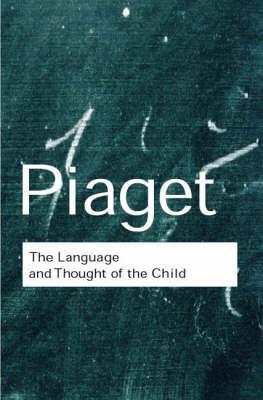
This book is for anyone who has ever wondered how a child develops language, thought, and knowledge. Before this classic appeared, little was known of the way children think. In 1923, however, Jean Piaget, the most important developmental psychologist of the twentieth century, took the psychological world by storm with The Language and Thought of the Child . Applying for the first time the insights of social psychology and psychoanalysis to the observation of children, he uncovered the ways in which a child actively constructs his or her understanding of the world through language. The book has since been a source of inspiration and guidance to generations of parents and teachers. While its conclusions remain contentious to this very day, few can deny the huge debt we owe to this pioneering work in our continuing attempts to understand the minds of the child.

This volume presents six essays—collected in English for the first time—that are an incisive summary and a useful introduction to the work of the eminent psychologist. The development of behavior and thought, the creation of logic, perception and emotion—these are the central themes that jean Piaget deals with in Six Psychological Studies . The first part of the book retraces the stages in the mental development of the child, from birth to adolescence. The second section is devoted to more theoretical matters. The work of Jean Piaget represents a major breakthrough in the development of a comprehensive understanding of the process of cognitive growth. His pioneering methods and theories have paved the way for a new approach to the investigation of when and how children are able to grasp and assimilate new ideas and information. This present volume makes available to a large audience the seminal ideas of the most important thinker of the 20th century in the field of cognition.

This classic examines the child's notions of reality and causality.

Find out where intelligence in children comes from!

On structuralism, positivism, Sartre, Levi-Strauss, Godelier, Marxism, negation, et al.

هذا الكتاب يعد تلخيصاً مركزاً لكتب بياجيه الأساسية حول الإبستمولوجيا التكوينية والمنطق والمعرفة العلمية عامة. والواقع أن الإبستمولوجيا التكوينية عند بياجيه تمثل تقدماً وتطويراً خاصاً للإبستمولوجيا العلمية التي منذ القرن التاسع عشر, وكان أهم وجوهها الكبيرة جاستون باشلار وزملاءه لاسيما تعرضه الواضح والسابق على بياجيه بما يسمى بعلم تاريخ للأفكار, كما أن مفهوم البنية عند بياجيه جاء أكثر اكتمالاً وخاضعاً للتطور في اتجاه التكامل مما عند جاستون باشلار. فالبنية عند بياجيه تستند الى ركائز ثلاث: فلسفية, وسيكولوجية, واجتماعية. وهي فضلاً عن ذلك تكتسب طابع الكمال وقابلية التحويل والتنظيم الذاتي. وهذا يعني أن بياجيه كان واعياً تماماً للاتجاهات العلمية في عصره. (less)

Translated to English from the original French by Derek Coltman. A clear understandable translation of this important book by the preeminant author of books on children; Jean Piaget. An important book about a critical subject; education is even more needed today than when originally printed! Still relavent too!

Studies the development of sensorimotor intelligence in the child between birth and two years

"What is most impressive about this book is its intelligence, its sophistication, and its charm. . . . This book presents Piaget's work and his person better than anything else that I know about."—David Elkind, Tufts University"The tone is one of constant movement from the most ordinary to the most abstruse. There are 14 conversations with 'le Patron,' some in 1969, some in 1975, and several more with co-workers in various fields. . . . In Mr. Bringuier's book, in a pleasant informal way, we see a sophisticated non-scientist exploring Piaget's domain with the master. Some of Piaget's best-known findings about children as explained along the way, but Mr. Bringuier has ways of bringing out the relation of this psychological work to the whole of Piaget's enterprise, and we get a good sense of the man and his work."—Howard E. Gruber, New York Times Book Review

English, French (translation)

“A massive and most important study. . . . All teachers of young children should know the general outline of the work.” ―Evelyn Lawrence, British Journal of Educational Studies The nature of space, whether an innate idea, the outcome of experience in the external world, or an operational construction has long been a source of philosophical and speculative psychological discussion. This book deals with the development of the child’s notions about space.

Jean Piaget is unquestionably one of the world's most renowned psychologists. This book encompasses his latest research and recasts his previous conclusions in the light of his recent work. His central idea is that knowledge proceeds neither from intuitive or logical internal processes, but that it develops from a series of cognitive structures, built one above the other, requiring continuous adjustment and leading to further constructions. -- Publisher description.


Jean Piaget was one of the most salient & inspirational figures in psychological & educational research in the 20th century. He was prolific, authoring or editing over eighty books & numerous journal papers which have spawned a huge, fertile continuation of his research over the decades. A major component of any course on children's psychological development & a research tradition that is expanding, scholars need access to the original texts rather than relying on secondhand accounts. "Jean Piaget: Selected Works" is a chance to acquire key original texts, most of which have been previously unavailable for years.

First published in 1997. This is Volume XI of selected works of Jean Piaget which gives insights and illuminates illusions in the field of Philosophy. Piaget examines his own philosophical position and compares it with present-day continental philosophical thought.

English, French (translation)

First published in 1997. Volume 6 in the series titled Jean Selected Works. The authors of this title, having studied all aspects of the development of intellectual operations, and having attempted to analyse some of the characteristics of perceptual development, felt it was necessary to tackle the question of the evolution of mental images. These ten chapters provide digestible commentary and discussion on the classification, reproduction, and transformation of mental images - with focus on kinetic images, anticipatory images and the spatial image.

Biology and Knowledge: An Essay on the Relations between Organic Regulations and Cognitive Processes
by Jean Piaget
Rating: 4.1 ⭐
English, French (translation)

Ce ne sont pas les matières qu'on leur enseigne que les enfants ne comprennent pas, mais les leçons qu'on leur donne. Là est la cause de la plupart des échecs scolaires. Toute réforme sérieuse de l'enseignement doit donc commencer par l'information des maîtres qui assurent cet enseignement. Ainsi les méthodes dites actives, l'éducation préscolaire, la recherche interdisciplinaire deviendront autre chose que des mythes. En particulier, ce que préconise, ici, Jean Piaget c'est, avant tout, la fin du professeur conférencier. Pour que l'école devienne plus efficace, car comprendre, c'est inventer.
Equilibration of Cognitive Structures: The Central Problem of Intellectual Development
by Jean Piaget
Rating: 4.0 ⭐
English, French (translation)

Our encounters with the physical world are filled with miraculous puzzles-wind appears from somewhere, heavy objects (like oil tankers) float on oceans, yet smaller objects go to the bottom of our water-filled buckets. As adults, instead of confronting a whole world, we are reduced to driving from one parking garage to another. The Child's Conception of Physical Causality, part of the very beginning of the ground-breaking work of the Swiss naturalist Jean Piaget, is filled with creative experimental ideas for probing the most sophisticated ways of thinking in children. The strength of Piaget's research is evident in this collection of empirical data, systematically organized by tasks that illuminate how things work. Piaget's data are remarkably rich. In his new introduction, Jaan Valsiner observes that Piaget had no grand theoretical aims, yet the book's simple power cannot be ignored. Piaget's great contribution to developmental psychology was his "clinical method"-a tactic that integrated relevant aspects of naturalistic experiment, interview, and observation. Through this systematic inquiry, we gain insight into children's thinking. Reading Piaget will encourage the contemporary reader to think about the unity of psychological phenomena and their theoretical underpinnings. His wealth of creative experimental ideas probes into the most sophisticated ways of thinking in children. Technologies change, yet the creative curiosity of children remains basically unhindered by the consumer society. Piaget's data preserve the reality of the original phenomena. As such, this work will provide a wealth of information for developmental psychologists and those involved in the field of experimental science.

The Child’s Conception of Geometry examines the development of geometric concepts in young children. This volume from Piaget’s laboratory in Geneva deals primarily with the development of notions of measurement and geometrical concepts like coordinates, angles, and areas. It is a companion piece to The Child’s Conception of Space .

México. 22 cm. 305 p. Encuadernación en tapa blanda de editorial ilustrada.. Este libro es de segunda mano y tiene o puede tener marcas y señales de su anterior propietario.

Originally published in English in 1976, the book draws on and extends our knowledge of the process of learning. The subject of the study is the general stage in a child's development that comes between his successful performance of an activity without knowing how he did it - that is, what he had to do in order to succeed - and the times when he becomes aware of what went into that action. The book reports the results of experiments conducted at the Centre of Genetic Epistemology. Children, ranging in age between four and adolescence, were asked to perform such tasks as walking on all fours, playing tiddlywinks, building a ramp for a toy car. They were then asked to explain how they had performed the task, and in some cases, to instruct the interviewer. Their answers show a number of surprising inaccuracies in the child's ability to grasp the nature of what he has done.Taking a broad view of his results, Piaget shows that they reveal several stages in the gradual development of the child's conceptualization of his actions. In analysing each stage, Piaget argues that the child's concept of his own action cannot be considered a simple matter of 'enlightenment', but must actively be reconstructed from his experience. This view has always been at the core of Piaget's work, and a new area of the child's mental world is here given definitive treatment.