
K. Anders Ericsson
K. Anders Ericsson (born 1947) is a Swedish psychologist and Conradi Eminent Scholar and Professor of Psychology at Florida State University who is internationally recognized as a researcher in the psychological nature of expertise and human performance. Currently, Ericsson studies expert performance in domains such as medicine, music, chess, and sports, focusing exclusively on extended deliberate practice (e.g., high concentration practice beyond one's comfort zone) as a means of how expert performers acquire their superior performance. Critically, Ericsson's program of research serves as a direct complement to other research that addresses cognitive ability, personality, interests, and other factors that help researchers understand and predict deliberate practice and expert performance
20 Books Written

Peak: Secrets from the New Science of Expertise
by K. Anders Ericsson
Rating: 4.3 ⭐
• 4 recommendations ❤️
“This book is a breakthrough, a lyrical, powerful, science-based narrative that actually shows us how to get better (much better) at the things we care about.”—Seth Godin, author of Linchpin“Anyone who wants to get better at anything should read [ Peak ]. Rest assured that the book is not mere theory. Ericsson’s research focuses on the real world, and he explains in detail, with examples, how all of us can apply the principles of great performance in our work or in any other part of our lives.”— FortuneAnders Ericsson has made a career studying chess champions, violin virtuosos, star athletes, and memory mavens. Peak distills three decades of myth-shattering research into a powerful learning strategy that is fundamentally different from the way people traditionally think about acquiring new abilities. Whether you want to stand out at work, improve your athletic or musical performance, or help your child achieve academic goals, Ericsson’s revolutionary methods will show you how to improve at almost any skill that matters to you. “The science of excellence can be divided into two before Ericsson and after Ericsson. His groundbreaking work, captured in this brilliantly useful book, provides us with a blueprint for achieving the most important and life-changing work to become a little bit better each day.”—Dan Coyle, author of The Talent Code “Ericsson’s research has revolutionized how we think about human achievement. If everyone would take the lessons of this book to heart, it could truly change the world.”—Joshua Foer, author of Moonwalking with Einstein

This book was the first handbook where the world's foremost 'experts on expertise' reviewed our scientific knowledge on expertise and expert performance and how experts may differ from non-experts in terms of their development, training, reasoning, knowledge, social support, and innate talent. Methods are described for the study of experts' knowledge and their performance of representative tasks from their domain of expertise. The development of expertise is also studied by retrospective interviews and the daily lives of experts are studied with diaries. In 15 major domains of expertise, the leading researchers summarize our knowledge on the structure and acquisition of expert skill and knowledge and discuss future prospects. General issues that cut across most domains are reviewed in chapters on various aspects of expertise such as general and practical intelligence, differences in brain activity, self-regulated learning, deliberate practice, aging, knowledge management, and creativity.

Muitos livros te ensinam a se tornar um expert, mas só este te leva direto ao ponto. Você já desistiu de algum sonho ou de algum objetivo porque achava que não tinha talento? Já desistiu de algum curso ou de alguma carreira porque alguém te disse que você não levava jeito? Então é hora de deixar essa mentalidade para trás e virar o jogo a seu favor! Esqueça tudo o que você já ouviu sobre talento, dom, predisposição genética, habilidades às vezes inatingíveis que dividem as pessoas entre "capazes" e "incapazes". O segredo para o sucesso é muito mais simples e alcançável do que você imagina, e pode ser resumido em uma PRÁTICA. Direto ao Ponto traz os resultados de mais de 30 anos de pesquisa para desvendar os mitos da expertise e da excelência e vai te ajudar a identificar padrões que podem retardar seu processo de desenvolvimento. Transforme-se no melhor no que faz e se destaque na vida e na carreira.
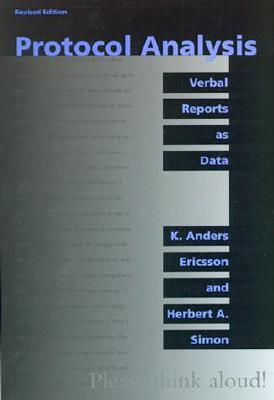
Since the publication of Ericsson and Simon's ground-breaking work in the early 1980s, verbal data has been used increasingly to study cognitive processes in many areas of psychology, and concurrent and retrospective verbal reports are now generally accepted as important sources of data on subjects' cognitive processes in specific tasks. In this revised edition of the book that first put protocol analysis on firm theoretical ground, the authors review major advances in verbal reports over the past decade, including new evidence on how giving verbal reports affects subjects' cognitive processes, and on the validity and completeness of such reports. In a substantial new preface Ericsson and Simon summarize the central issues covered in the book and provide an updated version of their information-processing model, which explains verbalization and verbal reports. They describe new studies on the effects of verbalization, interpreting the results of these studies and showing how their theory can be extended to account for them. Next, they address the issue of completeness of verbally reported information, reviewing the new evidence in three particularly active task domains. They conclude by citing recent contributions to the techniques for encoding protocols, raising general issues, and proposing directions for future research. All references and indexes have been updated.

Numero 1 si diventa: Sviluppa il tuo potenziale segreto per migliorare in quasi tutto quello che vuoi
by K. Anders Ericsson
Rating: 3.7 ⭐
Anders Ericsson ha passato trent'anni a studiare i geni, le stelle dello sport e i prodigi della musica. E in questo libro racconta la sua sorprendente il «dono innato» del talento non è altro che un mito, perché ogni abilità, per quanto speciale e unica, viene appresa grazie all'allenamento. La sola caratteristica che contraddistingue i campioni infatti è il saper sviluppare mente e corpo grazie allo sforzo e alla forza di volontà. Caratteristica insita in ognuno di noi. Ciò che fa la differenza non è solo la quantità di tempo che dedichiamo a un'attività, ma soprattutto la qualità. E, se tutti abbiamo in noi i semi dell'eccellenza, bisogna imparare a farli crescere, allenando prima il cervello, poi i muscoli. Dallo sport alla musica, allo studio, un metodo per migliorare le proprie prestazioni in ogni ambito, che sfata luoghi comuni e suggerisce nuove, innovative tecniche. Lasciatevi quindi guidare da Ericsson e rimarrete stupiti da ciò che si può arrivare a fare, perché le sorprendenti storie raccontate in questo libro sono la prova che ognuno di noi è l'artefice del proprio talento.


The Role of Deliberate Practice in the Acquisition of Expert Performance
by K. Anders Ericsson
Rating: 4.5 ⭐
The theoretical framework presented in this article explains expert performance as the end result of individuals' prolonged efforts to improve performance while negotiating motivational and external constraints. In most domains of expertise, individuals begin in their childhood a regimen of effortful activities (deliberate practice) designed to optimize improvement. Individual differences, even among elite performers, are closely related to assessed amounts of deliberate practice. Many characteristics once believed to reflect innate talent are actually the result of intense practice extended for a minimum of 10 yrs. Analysis of expert performance provides unique evidence on the potential and limits of extreme environmental adaptation and learning. (PsycINFO Database Record (c) 2012 APA, all rights reserved)
Deliberate Practice and Acquisition of Expert Performance: A General Overview
by K. Anders Ericsson
Rating: 4.5 ⭐
AbstractTraditionally, professional expertise has been judged by length of experience, reputation, and perceivedmastery of knowledge and skill. Unfortunately, recent research demonstrates only a weak relationshipbetween these indicators of expertise and actual, observed performance. In fact, observed performancedoes not necessarily correlate with greater professional experience. Expert performance can, however,be traced to active engagement in deliberate practice (DP), where training (often designed and arrangedby their teachers and coaches) is focused on improving particular tasks. DP also involves the provisionof immediate feedback, time for problem-solving and evaluation, and opportunities for repeated performance to refine behavior. In this article, we draw upon the principles of DP established in otherdomains, such as chess, music, typing, and sports to provide insight into developing expert performancein medicine

Cultural Ergonomics. Advances in Human Performance and Cognitive Engineering Research, Volume 4.
by K. Anders Ericsson
Rating: 4.0 ⭐
In work environments world-wide, whether simple or complex, the ways in which people think, do their jobs, and interface with other human beings grow out of their experiences in the groups of which they are or have been a part. How these influences affect their performance and human interfacing in work environments throughout the world is the subject of cultural ergonomics. In this volume, distinguished scientists explore these cultural influences in relation to significant current concerns of ergonomics and human factors. These include scientific-philosophical considerations, aircraft safety, maritime safety, cross-national training, effective use of the world-wide web, multinational decision making, third- world industrial development, implementation of technology transfer, and the functioning of multicultural teams.

Några minnesblad från kyrkan och grafven
by K. Anders Ericsson
Nagra minnesblad fran kyrkan och grafven, samlade under aren 1870-76 af A.E. This book, "Nagra minnesblad fran kyrkan och grafven," by Anders Ericsson, is a replication of a book originally published before 1877. It has been restored by human beings, page by page, so that you may enjoy it in a form as close to the original as possible.

Camden Market 1 Workbook plus Topics.
by K. Anders Ericsson

Netzwerk Biologie 6. Schülerbuch. Sachsen
by K. Anders Ericsson

Netzwerk Biologie 5. Klasse. Arbeitsheft. Sachsen
by K. Anders Ericsson
Pend zu den neuen Lehrplänen das komplette Angebot für die Klen 5-10. Methoden-Seiten stellen grundlegende biologische und fachübergreifende Arbeitstechniken vor. Erschließungsfelder spiegeln die Gemeinsamkeiten von Lebewesen wider. besonders gekennzeichnete Wahlpflichtbereiche . Hier werden Themen angeboten, die besonders handlungsorientiert sind und sich für Gruppenarbeit eignen.

Netzwerk Biologie 6. Klasse. Arbeitsheft. Sachsen
by K. Anders Ericsson

Netzwerk Biologie 5. Schülerbuch. Sachsen
by K. Anders Ericsson
Zahlenbilder. Grundbegriffe der Wirtschaft
by K. Anders Ericsson
Problem-solving behavior with the 8-puzzle
by K. Anders Ericsson
Instruction to verbalize as a means to study problem solving process with the 8-puzzle: A preliminary study
by K. Anders Ericsson
Long-term working memory
by K. Anders Ericsson
Development of Professional Expertise: Toward Measurement of Expert Performance and Design of Optimal Learning Environments
by K. Anders Ericsson