
Neil deGrasse Tyson
Neil deGrasse Tyson was born and raised in New York City where he was educated in the public schools clear through his graduation from the Bronx High School of Science. Tyson went on to earn his BA in Physics from Harvard and his PhD in Astrophysics from Columbia. In 2001, Tyson was appointed by President Bush to serve on a twelve-member commission that studied the Future of the U.S. Aerospace Industry. The final report was published in 2002 and contained recommendations (for Congress and for the major agencies of the government) that would promote a thriving future of transportation, space exploration, and national security. In 2004, Tyson was once again appointed by President Bush to serve on a nine-member commission on the Implementation of the United States Space Exploration Policy, dubbed the “Moon, Mars, and Beyond” commission. This group navigated a path by which the new space vision can become a successful part of the American agenda. And in 2006, the head of NASA appointed Tyson to serve on its prestigious Advisory Council, which guides NASA through its perennial need to fit ambitious visions into restricted budgets. In addition to dozens of professional publications, Dr. Tyson has written, and continues to write for the public. From 1995 to 2005, Tyson was a monthly essayist for Natural History magazine under the title Universe. And among Tyson’s fifteen books is his memoir The Sky is Not the Limit: Adventures of an Urban Astrophysicist; and Origins: Fourteen Billion Years of Cosmic Evolution, co-written with Donald Goldsmith. Origins is the companion book to the PBS NOVA four-part mini-series Origins, in which Tyson served as on-camera host. The program premiered in September 2004. Two of Tyson’s other books are the playful and informative Death By Black Hole and Other Cosmic Quandaries, which was a New York Times bestseller, and The Pluto Files: The Rise and Fall of America’s Favorite Planet, chronicling his experience at the center of the controversy over Pluto’s planetary status. The PBS NOVA documentary The Pluto Files, based on the book, premiered in March 2010. In February 2012, Tyson released his tenth book, containing every thought he has ever had on the past, present, and future of space exploration: Space Chronicles: Facing the Ultimate Frontier. For five seasons, beginning in the fall of 2006, Tyson appeared as the on-camera host of PBS NOVA’s spinoff program NOVA ScienceNOW, which is an accessible look at the frontier of all the science that shapes the understanding of our place in the universe. During the summer of 2009 Tyson identified a cadre of professional standup comedians to assist his effort in bringing science to commercial radio with the NSF-funded pilot program StarTalk. Now also a popular Podcast, for three years it enjoyed a limited-run Television Series on the National Geographic Channel. StarTalk combines celebrity guests with informative yet playful banter. The target audience is all those people who never thought they would, or could, like science. In its first year on television and in three successive seasons, it was nominated for a Best Informational Programming Emmy. Tyson is the recipient of twenty-one honorary doctorates and the NASA Distinguished Public Service Medal, the highest award given by NASA to a non-government citizen. His contributions to the public appreciation of the cosmos have been recognized by the International Astronomical Union in their official naming of asteroid “13123 Tyson.” And by zoologists, with the naming of Indirani Tysoni, a native species of leaping frog in India. On the lighter side, Tyson was voted “Sexiest Astrophysicist Alive” by People Magazine in 2000. More recently, Tyson published Astrophysics for People In A Hurry in 2017, which was a domestic and international bestseller. This adorably readable book is an introduction to all that you’ve read and heard about that’s making news in the universe—consummated, in one plac
30 Books Written

What is the nature of space and time? How do we fit within the universe? How does the universe fit within us? There’s no better guide through these mind-expanding questions than acclaimed astrophysicist and best-selling author Neil deGrasse Tyson.But today, few of us have time to contemplate the cosmos. So Tyson brings the universe down to Earth succinctly and clearly, with sparkling wit, in tasty chapters consumable anytime and anywhere in your busy day.

A vibrant collection of essays on the cosmos from the nation's best-known astrophysicist. "One of today's best popularizers of science." —Kirkus Reviews.Loyal readers of the monthly "Universe" essays in Natural History magazine have long recognized Neil deGrasse Tyson's talent for guiding them through the mysteries of the cosmos with stunning clarity and almost childlike enthusiasm. Here, Tyson compiles his favorite essays across a myriad of cosmic topics. The title essay introduces readers to the physics of black holes by explaining the gory details of what would happen to your body if you fell into one. "Holy Wars" examines the needless friction between science and religion in the context of historical conflicts. "The Search for Life in the Universe" explores astral life from the frontiers of astrobiology. And "Hollywood Nights" assails the movie industry's feeble efforts to get its night skies right. Known for his ability to blend content, accessibility, and humor, Tyson is a natural teacher who simplifies some of the most complex concepts in astrophysics while simultaneously sharing his infectious excitement about our universe.

The New York Times “You gotta read this. It is the most exciting book about Pluto you will ever read in your life.”—Jon Stewart When the Rose Center for Earth and Space at the American Museum of Natural History reclassified Pluto as an icy comet, the New York Times proclaimed on page one, “Pluto Not a Planet? Only in New York.” Immediately, the public, professionals, and press were choosing sides over Pluto’s planethood. Pluto is entrenched in our cultural and emotional view of the cosmos, and Neil deGrasse Tyson, director of the Rose Center, is on a quest to discover why. He stood at the heart of the controversy over Pluto’s demotion, and, consequently, plutophiles have freely shared their opinions with him, including endless hate mail from third-graders. color throughout
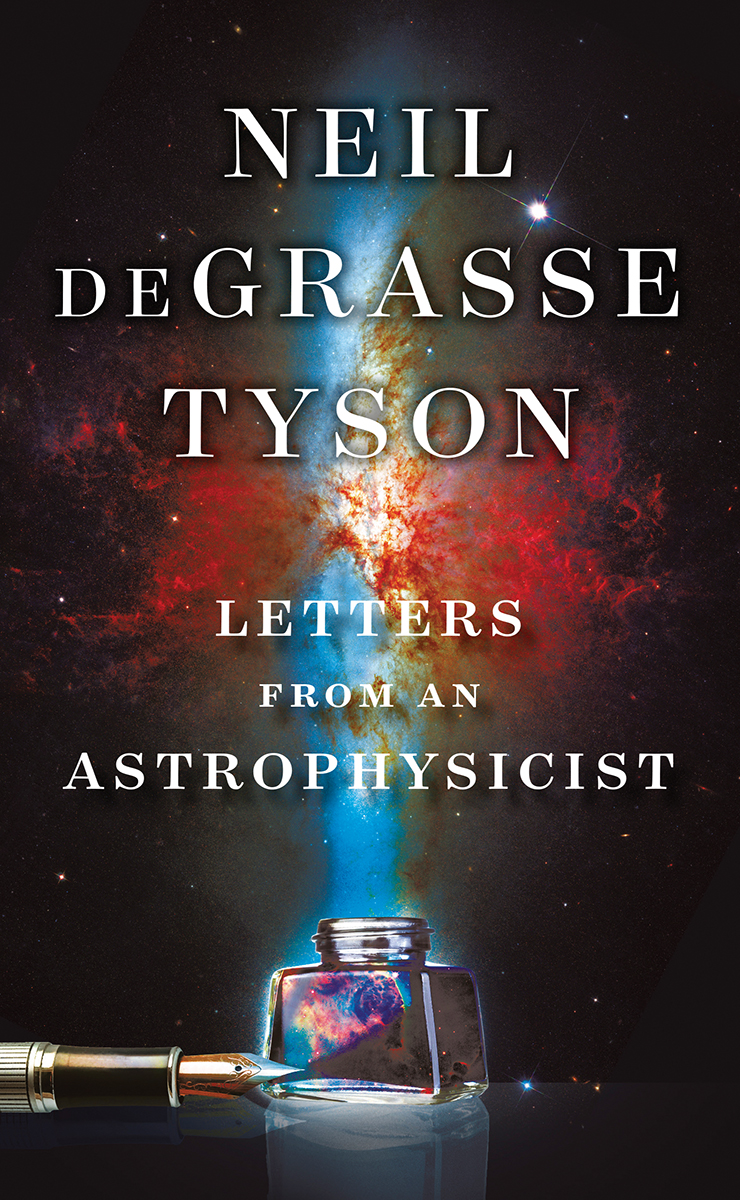
The natural follow-up to the phenomenal bestseller Astrophysics for People in a Hurry.Astrophysicist Neil deGrasse Tyson has attracted one of the world’s largest online followings with his fascinating, widely accessible insights into science and our universe. Now, Tyson invites us to go behind the scenes of his public fame by unveiling his candid correspondence with people across the globe who have sought him out in search of answers. In this hand-picked collection of one hundred letters, Tyson draws upon cosmic perspectives to address a vast array of questions about science, faith, philosophy, life, and of course, Pluto. His succinct, opinionated, passionate, and often funny responses reflect his popularity and standing as a leading educator.Tyson’s 2017 bestseller Astrophysics for People in a Hurry offered more than one million readers an insightful and accessible understanding of the universe. Now, revealing Tyson’s most candid and heartfelt writing yet, Letters from an Astrophysicist introduces us to a newly personal dimension of Tyson’s quest to understand our place in the cosmos.

Just Visiting This Planet: Merlin Answers More Questions about Everything Under the Sun, Moon, and Stars
by Neil deGrasse Tyson
Rating: 4.2 ⭐
In a companion volume to Merlin's Tour of the Universe, here is a completely new collection of questions and answers about the cosmos for stargazers of all ages. Whether waxing about Earth and its environs, the Sun and its stellar siblings, the world of light, physical laws, or galaxies near and far, Merlin--a fictional visitor from Planet Omniscia--is easy to understand, often humorous, and always entertaining.Merlin fields a wide range of questions from many curious mortals, and in so doing draws on his own vast knowledge as well as the expertise of many close friends, including Archimedes, Galileo, Einstein, and Santa.So far, Merlin has not been stumped, responding to questions on mysteries such as:If aliens exploded our moon, what effect would it have on us? What are your thoughts on the theory that a star named Nemesis is circling our solar system and was responsible for killing off the dinosaurs? Is it true that if I leave a container on my roof for a period of time, I can actually collect space particles from outer space?Delightfully illustrated throughout, Just Visiting This Planet is a skywatcher's book for lovers of the universe by one of its brightest lights.

Bringing his cosmic perspective to civilization on Earth, Neil deGrasse Tyson shines new light on the crucial fault lines of our time—war, politics, religion, truth, beauty, gender, and race—in a way that stimulates a deeper sense of unity for us all.In a time when our political and cultural views feel more polarized than ever, Tyson provides a much-needed antidote to so much of what divides us, while making a passionate case for the twin chariots of enlightenment—a cosmic perspective and the rationality of science.After thinking deeply about how science sees the world and about Earth as a planet, the human brain has the capacity to reset and recalibrates life’s priorities, shaping the actions we might take in response. No outlook on culture, society, or civilization remains untouched.With crystalline prose, Starry Messenger walks us through the scientific palette that sees and paints the world differently. From insights on resolving global conflict to reminders of how precious it is to be alive, Tyson reveals, with warmth and eloquence, an array of brilliant and beautiful truths that apply to us all, informed and enlightened by knowledge of our place in the universe.

Cosmic Queries: StarTalk's Guide to Who We Are, How We Got Here, and Where We're Going
by Neil deGrasse Tyson
Rating: 4.1 ⭐
In this thought-provoking follow-up to his acclaimed StarTalk book, uber astrophysicist Neil deGrasse Tyson tackles the world's most important philosophical questions about the universe with wit, wisdom, and cutting-edge science.For science geeks, space and physics nerds, and all who want to understand their place in the universe, this enlightening new book from Neil deGrasse Tyson offers a unique take on the mysteries and curiosities of the cosmos, building on rich material from his beloved StarTalk podcast.In these illuminating pages, illustrated with dazzling photos and revealing graphics, Tyson and co-author James Trefil, a renowned physicist and science popularizer, take on the big questions that humanity has been posing for millennia--How did life begin? What is our place in the universe? Are we alone?--and provide answers based on the most current data, observations, and theories.Populated with paradigm-shifting discoveries that help explain the building blocks of astrophysics, this relatable and entertaining book will engage and inspire readers of all ages, bring sophisticated concepts within reach, and offer a window into the complexities of the cosmos.

Accessory to War: The Unspoken Alliance Between Astrophysics and the Military
by Neil deGrasse Tyson
Rating: 3.5 ⭐
In this fascinating foray into the centuries-old relationship between science and military power, acclaimed astrophysicist Neil deGrasse Tyson and writer-researcher Avis Lang examine how the methods and tools of astrophysics have been enlisted in the service of war. "The overlap is strong, and the knowledge flows in both directions," say the authors, because astrophysicists and military planners care about many of the same things: multi-spectral detection, ranging, tracking, imaging, high ground, nuclear fusion, and access to space. Tyson and Lang call it a "curiously complicit" alliance. "The universe is both the ultimate frontier and the highest of high grounds," they write. "Shared by both space scientists and space warriors, it’s a laboratory for one and a battlefield for the other. The explorer wants to understand it; the soldier wants to dominate it. But without the right technology—which is more or less the same technology for both parties—nobody can get to it, operate in it, scrutinize it, dominate it, or use it to their advantage and someone else’s disadvantage."Spanning early celestial navigation to satellite-enabled warfare, Accessory to War is a richly researched and provocative examination of the intersection of science, technology, industry, and power that will introduce Tyson’s millions of fans to yet another dimension of how the universe has shaped our lives and our world.

Our true origins are not just human, or even terrestrial, but in fact cosmic. Drawing on recent scientific breakthroughs and the current cross-pollination among geology, biology, astrophysics, and cosmology, Origins explains the soul-stirring leaps in our understanding of the cosmos. From the first image of a galaxy birth to Spirit Rover's exploration of Mars, to the discovery of water on one of Jupiter's moons, coauthors Neil deGrasse Tyson and Donald Goldsmith conduct a galvanizing tour of the cosmos with clarity and exuberance.

From the basics of physics to big questions about the nature of space and time, celebrated astrophysicist and science communicator Neil deGrasse Tyson breaks down the mysteries of the cosmos into bite-sized pieces. Astrophysics for Young People in a Hurry describes the fundamental rules and unknowns of our universe clearly—and with Tyson’s characteristic wit, there’s a lot of fun thrown in, too.This adaptation by Gregory Mone includes full-color photos, infographics, and extra explanations to make even the trickiest concepts accessible. Building on the wonder inspired by outer space, Astrophysics for Young People in a Hurry introduces an exciting field and the principles of scientific inquiry to young readers.

This is the absorbing story of Neil deGrasse Tyson’s lifelong fascination with the night sky, a restless wonder that began some thirty years ago on the roof of his Bronx apartment building and eventually led him to become the director of the Hayden Planetarium. A unique chronicle of a young man who at one time was both nerd and jock, Tyson’s memoir could well inspire other similarly curious youngsters to pursue their dreams.Like many athletic kids he played baseball, won medals in track and swimming, and was captain of his high school wrestling team. But at the same time he was setting up a telescope on winter nights, taking an advanced astronomy course at the Hayden Planetarium, and spending a summer vacation at an astronomy camp in the Mojave Desert.Eventually, his scientific curiosity prevailed, and he went on to graduate in physics from Harvard and to earn a Ph.D. in astrophysics from Columbia. There followed postdoctoral research at Princeton. In 1996, he became the director of the Hayden Planetarium, where some twenty-five years earlier he had been awed by the spectacular vista in the sky theater.Tyson pays tribute to the key teachers and mentors who recognized his precocious interests and abilities, and helped him succeed. He intersperses personal reminiscences with thoughts on scientific literacy, careful science vs. media hype, the possibility that a meteor could someday hit the Earth, dealing with society’s racial stereotypes, what science can and cannot say about the existence of God, and many other interesting insights about science, society, and the nature of the universe.Now available in paperback with a new preface and other additions, this engaging memoir will enlighten and inspire an appreciation of astronomy and the wonders of our universe.

This witty, often amusing exploration of the physical universe explains fundamental concepts in a language that is clear even to those with little or no science background. Tyson transforms everyday experiences into venues of cosmic enlightenment as he probes the philosophy, methods, and discoveries of science, including stellar evolution, the conservation of energy, the electromagnetic spectrum, gravity, and thermodynamics. Beginning with the history of counting, Tyson takes us up and down the number line from picometers to light-years as he demonstrates the universality of mathematics. We then learn about the scientific method and its importance not only to cutting-edge researchers but also to laypeople like television advertisers, who use it in commercials to prove the worth of products that lift stains, eradicate "ring-around-the-collar, " and absorb "excess stomach acid." Tyson deftly demystifies astronomical terms and concepts such as the Big Bang, black holes, redshifts, syzygy, and Kirkwood Gaps; traces the life of the stars from birth to death; presents the Periodic Table of Elements, highlighting noteworthy elements such as titanium, iron, and hydrogen; gives an unorthodox yet entertaining tour of famous constellations; and tackles modern-day astrology. Universe Down to Earth makes vivid analogies between scientific laws and household items such as oven-baked pies, tossed tomatoes, and lightbulbs, as well as amusement park rides, Hollywood films, and junk food. Consequently, each idea presented etches delightful impressions on the reader's mind. Bringing demonstrations of the principles of nature into the living room, Tyson writes in a lucid, easygoing style that finally makesscientific literacy possible for enthusiasts and those with math and science phobias alike.

America’s space program is at a turning point. After decades of global primacy, NASA has ended the space-shuttle program, cutting off its access to space. No astronauts will be launched in an American craft, from American soil, until the 2020s, and NASA may soon find itself eclipsed by other countries’ space programs.With his signature wit and thought-provoking insights, Neil deGrasse Tyson—one of our foremost thinkers on all things space—illuminates the past, present, and future of space exploration and brilliantly reminds us why NASA matters now as much as ever. As Tyson reveals, exploring the space frontier can profoundly enrich many aspects of our daily lives, from education systems and the economy to national security and morale. For America to maintain its status as a global leader and a technological innovator, he explains, we must regain our enthusiasm and curiosity about what lies beyond our world.Provocative, humorous, and wonderfully readable, Space Chronicles represents the best of Tyson’s recent commentary, including a must-read prologue on NASA and partisan politics. Reflecting on topics that range from scientific literacy to space-travel missteps, Tyson gives us an urgent, clear-eyed, and ultimately inspiring vision for the future.

A NEW YORK TIMES BESTSELLERWelcome to the Universe is a personal guided tour of the cosmos by three of today's leading astrophysicists. Inspired by the enormously popular introductory astronomy course that Neil deGrasse Tyson, Michael A. Strauss, and J. Richard Gott taught together at Princeton, this book covers it all--from planets, stars, and galaxies to black holes, wormholes, and time travel.Describing the latest discoveries in astrophysics, the informative and entertaining narrative propels you from our home solar system to the outermost frontiers of space. How do stars live and die? Why did Pluto lose its planetary status? What are the prospects of intelligent life elsewhere in the universe? How did the universe begin? Why is it expanding and why is its expansion accelerating? Is our universe alone or part of an infinite multiverse? Answering these and many other questions, the authors open your eyes to the wonders of the cosmos, sharing their knowledge of how the universe works.Breathtaking in scope and stunningly illustrated throughout, Welcome to the Universe is for those who hunger for insights into our evolving universe that only world-class astrophysicists can provide.

Merlin's Tour of the Universe: A Traveler's Guide to Blue Moons and Black Holes, Mars, Stars, and Everything Far
by Neil deGrasse Tyson
Rating: 3.9 ⭐
The #1 New York Times bestselling author of Astrophysics for People in a Hurry takes readers on an entertaining and edifying tour of the universe.In Neil deGrasse Tyson's delightful journey through the cosmos, his fictional character Merlin responds to popular questions asked by adults and children alike. Merlin, a timeless visitor from Planet Omniscia in the Andromeda Galaxy, has observed first-hand many of the major scientific events of Earth's history. Merlin's friends include the most important scientific figures and explorers of all time--da Vinci, Magellan, Newton, Einstein, and Hubble. While Merlin occasionally recounts playful conversations with these luminaries, all questions are answered with authentic science, infused with wit, wisdom, and an occasional rhyme. With the help of intermittent humorous cartoons, Merlin clarifies the details of familiar phenomena like gravity, light, space, and time, and travels to distant stars and galaxies to describe what makes them tick, rotate, explode, and collapse.Merlin's Tour of the Universe is perfect for anyone who harbors burning questions on how the cosmos works.
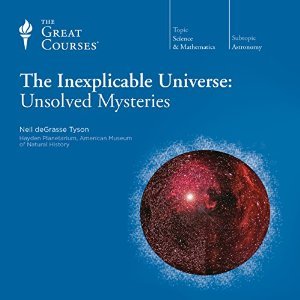
Everything we now know about the universe-from the behavior of quarks to the birth of entire galaxies-has stemmed from scientists who've been willing to ponder the unanswerable. And with the advent of modern science, great minds have turned to testing and experimentation rather than mere thought as a way of approaching and grappling with some of the universe's most pressing and vexing dilemmas. So what is our latest picture of some of the most inexplicable features of the universe? What still remains to be uncovered? What are some of the next avenues of exploration for today's chemists, physicists, biologists, and astronomers? Pondering the answers to these and other questions is a great way to appreciate the grandeur and complexity of the world around you, better understand and discuss news and developments in science, and spark further interest in some of science's many exciting areas of study. "We know a lot about the universe. But there's even more that we don't know,"says astrophysicist and Professor Neil deGrasse Tyson, director of the Hayden Planetarium, an award-winning lecturer, and one of the world's foremost experts on the secrets of the universe. And his course The Inexplicable Universe: Unsolved Mysteries is the perfect gateway into this mind-bending and eye-opening subject. Each of these six self-contained lectures is a marvelous journey to the frontiers of the known (and unknown) universe and introduces you to tantalizing questions being addressed by the world's top scientists. Undeniably engaging and fascinating, this lecture series is a wonderful entrée to scientific pursuits that lie at the very heart of the history and nature of our universe. An Informed Scientific Conversation Central to The Inexplicable Universe is the way it takes you deep into hidden layers of the universe in a manner that is extremely accessible. Rather than a stern lecture given before a podium complete with confusing mathematics, Professor Tyson's lectures have the feel of an informed conversation that manages to be both thorough and easy to grasp. With each of the inexplicable mysteries he lays bare for you, Professor Tyson introduces you to the history behind it, lays out the science that has helped us grasp it, explains what researchers have discovered to date, and reveals what we have yet to discover. And while the topics explore subjects in everything from quantum mechanics to cosmology to string theory, you'll never feel overwhelmed by what you're learning. In fact, you're more likely to find yourself intrigued by just how much we know-and curious about what the near future will possibly reveal. Explore Fascinating Territory So what territory will you chart in this course? Here are some of the inexplicable ideas you'll investigate in these lectures. Neutrinos: Discovered in 1956, these fast-moving, ghostlike particles are made in abundance in the sun's core. They hardly interact with matter; it takes a light-year's worth of lead (5.8 trillion miles) to stop a neutrino. Not only that, but 65 billion neutrinos pass through every centimeter of your body that's facing the sun every second of every day. String theory: This astounding theory offers the hope of unifying all the particles and forces of physics. In the past several decades since the dawn of string theory, it's been imagined that all the fundamental particles we see and measure are just the manifestation in our dimension of strings vibrating in higher dimensions and at different frequencies. Quantum foam: This idea posits that when the fabric of space and time is so tightly curved on itself, space-time is less a smooth curve and more like the froth on a latte. In this state of matter and energy, quantum fluctuations can spawn entire universes, each with slightly different laws of physics within them! In addition, you'll also get a peek at what it would be like to travel through a black hole, ponder the possibility that life on Earth originated in debris from Mars, probe the supposed existence of multiple universes, and even imagine the possible end of the universe itself. A One-on-One Chat with a Renowned Science Educator Professor Tyson is renowned throughout the scientific community and the media for his vast knowledge, his penetrating insights, and his amazing ability to make even the most intimidating areas of science accessible, engaging, and-most of all-enjoyable. He brings the same inviting tone and sharp intellect to The Inexplicable Universe as he does to his range of media appearances on popular television programs. Due to its unique subject matter The Inexplicable Universe takes a highly visual approach. Many of the fascinating subjects in the course, such as black holes, string theory, and multiple universes are best demonstrated visually and Professor Tyson's lectures feature expertly crafted computer animations, explanatory diagrams, high resolution photographs, and other instructive visual elements. In order to...

Linked to a special mini season of the award-winning StarTalk podcast, this enlightening illustrated narrative by the world’s most celebrated astrophysicist explains the universe from the solar system to the farthest reaches of space with authority and humor.No one can make the mysteries of the universe more comprehensible and fun than Neil deGrasse Tyson. Drawing on mythology, history, and literature—alongside his trademark wit and charm—Tyson and StarTalk senior producer Lindsey Nyx Walker bring planetary science down to Earth and principles of astrophysics within reach. In this entertaining book, illustrated with vivid photographs and art, readers travel with him through space and time, starting with the Big Bang and voyaging to the far reaches of the universe and beyond. Along the way, science greets pop culture as Tyson explains the triumphs—and bloopers—in Hollywood’s all part of an entertaining ride through the cosmos.The book begins as we leave Earth, encountering new truths about our planet’s atmosphere, the nature of sunlight, and the many missions that have demystified our galactic neighbors. But the farther out we travel, the weirder things get. What’s a void and what’s a vacuum? How can light be a wave and a particle at the same time? When we finally arrive in the blackness of outer space, Tyson takes on the spookiest phenomena of the parallel worlds, black holes, time travel, and more.For science junkies and fans of the conundrums that astrophysicists often ponder, To Infinity and Beyond is an enlightening adventure into the farthest reaches of the cosmos.

In My Favorite Universe, the astrophysicist who directs the nation's most famous planetarium takes you on a spirited and intellectually engaging journey through the cosmos and all its history, from before the Big Bang to the most likely ways in which Earth, and perhaps the entire universe, might end. Clear Science Teaching to Set the Stage for an Awe-Inspiring Course Created for a lay audience and readily accessible, in this course science always takes precedence over drama. The lectures are certainly entertaining, often funny, even awe-inspiring at times, as befits the subject matter. Even though you will be entertained, you will be learning good science. Clear introductions to essential principles of physics support these lectures, including density, quantum theory, gravity, and the General Theory of Relativity. Professor Neil deGrasse Tyson also includes forays into disciplines such as chemistry and biology as needed to explain events in astronomy. For example, Dr. Tyson begins one lecture at a point 13 billion years ago, when all space, matter, and energy in the known universe were contained in a volume less than one-trillionth the size of a pinpoint-about the size of a single atom. By the time he finishes, the cosmos has been stretched, the planets and our Earth formed, and 70 percent of existing Earth species have been wiped out by a gigantic asteroidclearing the way for the evolution of humanity. Along the way he has touched on Einstein's famous equation, E=mc2; on the four forces that were once unified in the early cosmos in a way physicists are still trying to explain; and on the chemical enrichment of the universe by exploding supernovae, which give the universe its necessary supply of heavier elements including oxygen, nitrogen, iron and, most important, carbon. Carbon, we learn, is a "sticky" atom, capable of making more kinds of molecules than all other elements combined. It's the ideal element with which to experiment in the building of life forms and is, of course, the element responsible for the remarkable diversity of life, including us. As Dr. Tyson notes, we are made of stardust, just as the planets are. And he has created a course that explains exactly how that came to be, beginning with a grounding in the basic "machinery" of matter, forces, and energy that has been discovered on Earth and which also reveals itself throughout the universe. The Stark and Violent Beauty of the Universe With this basic foundation in place, explanations of cosmic events fall logically into place, and the realities of the universe-including its eventual demise-are revealed in stark and often violent beauty. You learn: how Saturn's rings were formed, and why they will eventually be lost why low-density conditions are necessary to produce the drama of the northern and southern auroras why even the most jagged and wild of the Earth's mountain ranges are, from a cosmic standpoint, really part of a perfectly smooth sphere how black holes are formed and the extraordinary way in which they can wreak havoc in the universe how asteroids moving through space represent threats of extraordinary consequence to Earth, no matter how long those threats may take to be realized why the seemingly infinite panorama of celestial bodies revealed by the Hubble Space Telescope's famous "Deep Field" so intrigued astronomers how astronomers actually look for new planets, why the odds seem overwhelmingly in favor of some kind of life out there, whether we ever make contact or not. Most important, none of these ideas are presented as isolated "space factoids" that serve no purpose but to entertain. They are there to illustrate and reinforce the key principles of physics and astrophysics that are continually being presented in this course. But the inclusion of real science doesn't prevent Dr. Tyson from having some fun, either. When it's time to show how a black hole might remove one from the universe, he leads you right up to the "event horizon" and slips you in-feet first. Since the event horizon represents the point within which nothing, not even light, can escape, you might think this is a bad idea. And you would be right. But as you plummet toward the "singularity" at the heart of the black hole, you will learn firsthand about the interesting effects of gravity truly unleashed, including what physicists refer to, with a straight face, as "spaghettification." (Actually, Professor Tyson recommends that you be sucked in to a large black hole rather than a small one. You'll still be spaghettified, but it won't happen as quickly.) But make no mistake: Dr. Tyson does not consider the cosmos a laughing matter, this kind of whimsical touch notwithstanding. In spite of his training, he remains, admittedly, still in awe of his subject. And he has created a course that might well produce the same feeling in you.

StarTalk: Everything You Ever Need to Know About Space Travel, Sci-Fi, the Human Race, theUniverse, and Beyond
by Neil deGrasse Tyson
Rating: 4.0 ⭐
This beautifully illustrated companion to celebrated scientist Neil deGrasse Tyson’s popular podcast and National Geographic Channel TV show is an eye-opening journey for anyone curious about the complexities of our universe. For decades, beloved astrophysicist Neil deGrasse Tyson has interpreted science with a combination of brainpower and charm that resonates with fans everywhere. In 2009, he founded StarTalk, the wildly popular podcast that became an Emmy-nominated talk show on the National Geographic Channel this year. Tyson’s pioneering, provocative book will take the greatest hits from the airwaves to the page in one smart, richly illustrated compendium. Featuring vivid photography, thought-provoking sidebars, enlightening facts, and fun quotes from science and entertainment luminaries like Bill Nye and Dan Aykroyd, StarTalk reimagines science’s most challenging topics—from how the brain works to the physics of comic book superheroes—in a relatable, humorous way that will delight fans and new readers alike.

Edycja polska książki Death by Black Hole została podzielona na dwa tomy: Kosmiczne zachwyty i Kosmiczne rozterki. Czy można badać kosmos zwykłym kijem? Jaki kolor ma wszechświat? Czy stojąc na szczycie Mount Everestu, jesteśmy najdalej od środka Ziemi? Dlaczego wydostanie się z wnętrza Słońca zajmuje światłu aż 5000 lat? Czy w pasie asteroid faktycznie tak łatwo zaliczyć pozaziemską stłuczkę?Na te i wiele innych rozpalających wyobraźnię kosmicznych pytań odpowiada w swojej książce słynny amerykański astrofizyk i znakomity popularyzator nauki Neil deGrasse Tyson.Entuzjazm i pasja, z jaką Tyson opisuje wszechświat – ten bliski i ten odległy – udziela się milionom jego widzów i czytelników. Nawet najbardziej skomplikowane kosmiczne zjawiska stają się w jego ujęciu zrozumiałe i, co najważniejsze, fascynujące! Lektura Kosmicznych zachwytów – napisanej lekkim piórem książki pełnej zdumiewających faktów i wciągających opowieści – sprawi, że nocne wpatrywanie się w rozgwieżdżone niebo już nigdy nie będzie takie samo.

A pocket-style edition based on the New York Times bestsellerA Brief Welcome to the Universe offers a breathtaking tour of the cosmos, from planets, stars, and galaxies to black holes and time loops. Bestselling authors and acclaimed astrophysicists Neil deGrasse Tyson, Michael A. Strauss, and J. Richard Gott take readers on an unforgettable journey of exploration to reveal how our universe actually works.Propelling you from our home solar system to the outermost frontiers of space, this book builds your cosmic insight and perspective through a marvelously entertaining narrative. How do stars live and die? What are the prospects of intelligent life elsewhere in the universe? How did the universe begin? Why is it expanding and accelerating? Is our universe alone or part of an infinite multiverse? Exploring these and many other questions, this pocket-friendly book is your passport into the wonders of our evolving cosmos.

Edycja polska książki Death by Black Hole została podzielona na dwa tomy: Kosmiczne zachwyty i Kosmiczne rozterki. Jak będzie wyglądał kosmiczny koniec świata? Czy obce formy życia są takie, jak wyobraża je sobie Hollywood? I czy w ogóle istnieją?Co wspólnego z astrofizyką ma Złotowłosa z bajki o trzech niedźwiadkach? Woda w kosmosie, chaos w Układzie Słonecznym, niesamowite silniki galaktyk, spektakularna śmierć w czarnej dziurze… Oto próbka Kosmicznych rozterek, z którymi przyjdzie się nam zmierzyć w nowej, przystępnej i napisanej barwnym językiem książce Tysona.Kosmiczne rozterki to także inspirująca lektura o znaczeniu życia i o wpływie nauki na naszą kulturę (oraz vice versa).Pełne pasji, porównań, obrazowych zestawień i intrygujących anegdot opowieści o wszechświecie, a także o historii jego odkrywania, rozpalają wyobraźnię. Dzięki nim za każdym razem, gdy spojrzymy w migoczące milionami gwiazd nocne niebo, poczujemy dreszcz emocji oraz zachwyt pięknem i bezmiarem kosmosu.

Now abridged for YA audiences, this beautifully illustrated companion to celebrated scientist Neil deGrasse Tyson's popular podcast and National Geographic Channel TV show is an eye-opening journey for anyone curious about the complexities of our universe.For decades, beloved astrophysicist Neil deGrasse Tyson has interpreted science with a combination of brainpower and charm that resonates with fans everywhere. In 2009, he founded StarTalk, the wildly popular podcast that became an Emmy-nominated talk show on the National Geographic Channel in 2015. Tyson's pioneering book takes the greatest hits from the airwaves to the page in one smart, richly illustrated compendium for young adult readers. Featuring vivid photography, thought-provoking sidebars, enlightening facts, and fun quotes from science and entertainment luminaries like Bill Nye and Josh Groban, StarTalk reimagines science's most challenging topics--from how the brain works to the physics of comic book superheroes--in a relatable, humorous way that will attract curious young readers.



An essential companion to the New York Times bestseller Welcome to the UniverseHere is the essential companion to Welcome to the Universe, a New York Times bestseller that was inspired by the enormously popular introductory astronomy course for non science majors that Neil deGrasse Tyson, Michael A. Strauss, and J. Richard Gott taught together at Princeton. This problem book features more than one hundred problems and exercises used in the original course―ideal for anyone who wants to deepen their understanding of the original material and to learn to think like an astrophysicist.Whether you’re a student or teacher, citizen scientist or science enthusiast, your guided tour of the cosmos just got even more hands-on with Welcome to the The Problem Book .

To gaze at the stars is one thing; to capture that gaze in photographs is something else, a tantalizing scientific art that many attempt and few master. That rare mastery is on full display in this beautiful volume of space photography from thirty of the most accomplished astrophotographers in the world, both professional and amateur. Galaxies, star clusters, nebulae, and other deep-sky treasures fill the pages. Along with the marvels of the night sky--the Andromeda and Whirlpool galaxies, the Pleiades and the Praesepe, the Orion and Crab nebulae, and many more--each section features a profile of the photographer's work, techniques, philosophy, and experiences. Compiled by the world's leading amateur astrophotographer, with an introduction to the history of space photography, this spectacular volume is an essential for every stargazer's bookshelf.

With a hit talk show and bestselling books, Neil deGrasse Tyson is one of the most popular figures in modern science. Now the influential astrophysicist teaches you how his mind works and how he connects with audiences. Learn to think like a skeptic, open your own mind through scientific literacy, distill data, and navigate bias to discover objective truths—and deliver your ideas in ways that engage, excite, and inspire.
Lecture Transcript and Course Guidebook for My Favorite Universe Part 1 of 1
by Neil deGrasse Tyson
Rating: 3.8 ⭐
good book