
Daniel Goleman
Author of Emotional Intelligence and psychologist Daniel Goleman has transformed the way the world educates children, relates to family and friends, and conducts business. The Wall Street Journal ranked him one of the 10 most influential business thinkers. Goleman’s Emotional Intelligence was on The New York Times best sellers list for a year-and-a-half. Named one of the 25 "Most Influential Business Management Books" by TIME, it has been translated into 40 languages. The Harvard Business Review called emotional intelligence (EI) “a revolutionary, paradigm-shattering idea.” Goleman’s new book, Focus: The Hidden Driver of Excellence, argues that attention — a fundamental mental ability for success — has come under siege. Leadership that gets results demands a triple focus: on our inner world so we can manage ourselves; on others, for our relationships; and on the outer forces that shape our organizations and society itself. His more recent books include The Brain and Emotional Intelligence, and Leadership: The Power of Emotional Intelligence - Selected Writings.
34 Books Written

Emotional Intelligence: Why It Can Matter More Than IQ
by Daniel Goleman
Rating: 4.1 ⭐
• 10 recommendations ❤️
#1 BESTSELLER • The groundbreaking book that redefines what it means to be smart, with a new introduction by the author“A thoughtfully written, persuasive account explaining emotional intelligence and why it can be crucial.”— USA TodayEveryone knows that high IQ is no guarantee of success, happiness, or virtue, but until Emotional Intelligence, we could only guess why. Daniel Goleman's brilliant report from the frontiers of psychology and neuroscience offers startling new insight into our “two minds”—the rational and the emotional—and how they together shape our destiny.Drawing on groundbreaking brain and behavioral research, Goleman shows the factors at work when people of high IQ flounder and those of modest IQ do surprisingly well. These factors, which include self-awareness, self-discipline, and empathy, add up to a different way of being smart—and they aren’t fixed at birth. Although shaped by childhood experiences, emotional intelligence can be nurtured and strengthened throughout our adulthood—with immediate benefits to our health, our relationships, and our work. The twenty-fifth-anniversary edition of Emotional Intelligence could not come at a better time—we spend so much of our time online, more and more jobs are becoming automated and digitized, and our children are picking up new technology faster than we ever imagined. With a new introduction from the author, the twenty-fifth-anniversary edition prepares readers, now more than ever, to reach their fullest potential and stand out from the pack with the help of EI.

Altered Traits: Science Reveals How Meditation Changes Your Mind, Brain, and Body
by Daniel Goleman
Rating: 3.9 ⭐
• 2 recommendations ❤️
Two New York Times-bestselling authors unveil new research showing what meditation can really do for the brain.In the last twenty years, meditation and mindfulness have gone from being kind of cool to becoming an omnipresent Band-Aid for fixing everything from your weight to your relationship to your achievement level. Unveiling here the kind of cutting-edge research that has made them giants in their fields, Daniel Goleman and Richard Davidson show us the truth about what meditation can really do for us, as well as exactly how to get the most out of it.Sweeping away common misconceptions and neuromythology to open readers' eyes to the ways data has been distorted to sell mind-training methods, the authors demonstrate that beyond the pleasant states mental exercises can produce, the real payoffs are the lasting personality traits that can result. But short daily doses will not get us to the highest level of lasting positive change--even if we continue for years--without specific additions. More than sheer hours, we need smart practice, including crucial ingredients such as targeted feedback from a master teacher and a more spacious, less attached view of the self, all of which are missing in widespread versions of mind training. The authors also reveal the latest data from Davidson's own lab that point to a new methodology for developing a broader array of mind-training methods with larger implications for how we can derive the greatest benefits from the practice.Exciting, compelling, and grounded in new research, this is one of those rare books that has the power to change us at the deepest level.

For more than half a century, in such books as The Art of Happiness and The Dalai Lama’s Little Book of Inner Peace, the Dalai Lama has guided us along the path to compassion and taught us how to improve our inner lives. In A Force for Good, with the help of his longtime friend Daniel Goleman, the New York Times bestselling author of Emotional Intelligence, the Dalai Lama explains how to turn our compassionate energy outward. This revelatory and inspiring work provides a singular vision for transforming the world in practical and positive ways. Much more than just the most prominent exponent of Tibetan Buddhism, the Fourteenth Dalai Lama is also a futurist who possesses a profound understanding of current events and a remarkable canniness for modern social issues. When he takes the stage worldwide, people listen. A Force for Good combines the central concepts of the Dalai Lama, empirical evidence that supports them, and true stories of people who are putting his ideas into action—showing how harnessing positive energies and directing them outward has lasting and meaningful effects. Goleman details the science of compassion and how this singular guiding motivation has the power to • break such destructive social forces as corruption, collusion, and bias • heal the planet by refocusing our concerns toward our impact on the systems that support all life • reverse the tendency toward systemic inequity through transparency and accountability • replace violence with dialogue • counter us-and-them thinking by recognizing human oneness • create new economic systems that work for everyone, not just the powerful and rich • design schooling that teaches empathy, self-mastery, and ethics Millions of people have turned to the Dalai Lama for his unparalleled insight into living happier, more purposeful lives. Now, when the world needs his guidance more than ever, he shows how every compassion-driven human act—no matter how small—is integral for a more peaceful, harmonious world, building a force for a better future. Revelatory, motivating, and highly persuasive, A Force for Good is arguably the most important work from one of the world’s most influential spiritual and political figures.

Emotional Intelligence was an international phenomenon, appearing on the New York Times bestseller list for over a year and selling more than five million copies worldwide. Now, once again, Daniel Goleman has written a groundbreaking synthesis of the latest findings in biology and brain science, revealing that we are “wired to connect” and the surprisingly deep impact of our relationships on every aspect of our lives.Far more than we are consciously aware, our daily encounters with parents, spouses, bosses, and even strangers shape our brains and affect cells throughout our bodies—down to the level of our genes—for good or ill. In Social Intelligence, Daniel Goleman explores an emerging new science with startling implications for our interpersonal world. Its most fundamental discovery: we are designed for sociability, constantly engaged in a “neural ballet” that connects us brain to brain with those around us.Our reactions to others, and theirs to us, have a far-reaching biological impact, sending out cascades of hormones that regulate everything from our hearts to our immune systems, making good relationships act like vitamins—and bad relationships like poisons. We can “catch” other people’s emotions the way we catch a cold, and the consequences of isolation or relentless social stress can be life-shortening. Goleman explains the surprising accuracy of first impressions, the basis of charisma and emotional power, the complexity of sexual attraction, and how we detect lies. He describes the “dark side” of social intelligence, from narcissism to Machiavellianism and psychopathy. He also reveals our astonishing capacity for “mindsight,” as well as the tragedy of those, like autistic children, whose mindsight is impaired.Is there a way to raise our children to be happy? What is the basis of a nourishing marriage? How can business leaders and teachers inspire the best in those they lead and teach? How can groups divided by prejudice and hatred come to live together in peace? The answers to these questions may not be as elusive as we once thought. And Goleman delivers his most heartening news with powerful conviction: we humans have a built-in bias toward empathy, cooperation, and altruism–provided we develop the social intelligence to nurture these capacities in ourselves and others.From the Trade Paperback edition.

Bestselling author Daniel Goleman returns with a groundbreaking look at today's scarcest resource and the secret to high performance and fulfillment: attentionFor more than two decades, psychologist and journalist Daniel Goleman has been scouting the leading edge of the human sciences for what's new, surprising, and important. In Focus, he delves into the science of attention in all its varieties, presenting a long overdue discussion of this little-noticed and under-rated mental asset that matters enormously for how we navigate life. Attention works much like a muscle: use it poorly and it can wither; work it well and it grows. In an era of unstoppable distractions, Goleman persuasively argues that now more than ever we must learn to sharpen focus if we are to contend with, let alone thrive, in a complex world.Goleman boils down attention research into a threesome: inner, other, and outer focus. A well-lived life demands we be nimble at each. Goleman shows why high-achievers need all three kinds of focus, as demonstrated by rich case studies from fields as diverse as competitive sports, education, the arts, and business. Those who excel rely on what he calls Smart Practices such as mindfulness meditation, focused preparation and recovery, positive emotions and connections, and mental "prosthetics" that help them improve habits, add new skills, and sustain excellence. Combining cutting-edge research with practical findings, Focus reveals what distinguishes experts from amateurs and stars from average performers. Ultimately, Focus calls upon readers not only to pay attention to what matters most to them personally, but also to turn their attention to the pressing problems of the wider world, to the powerless and the poor, and to the future, not just to the seductively simple demands of here-and-now.

Looks at the role of emotional intelligence in leadership, discussing the characteristics of a good leader and leadership styles, and outlines the steps to becoming an effective leader.
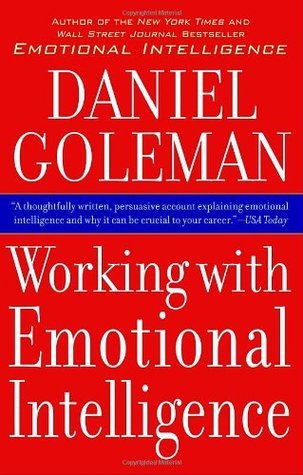
Goleman reveals the skills that distinguish star performers in every field, from entry-level jobs to top executive positions.Daniel Goleman's bestselling Emotional Intelligence revolutionized the way we think about personal excellence. Now he brings his insight into the workplace, in a book sure to change the shape of business for decades to come.In Working with Emotional Intelligence, Goleman reveals the skills that distinguish star performers in every field, from entry-level jobs to top executive positions. He shows that the single most important factor is not IQ, advanced degrees, or technical expertise, but the quality Goleman calls emotional intelligence. Self-awareness, self-confidence, and self-control; commitment and integrity; the ability to communicate and influence, to initiate and accept change--these competencies are at a premium in today's job market. The higher up the leadership ladder you go, the more vital these skills become, often influencing who is hired or fired, passed over or promoted. As Goleman shows, we all possess the potential to improve our emotional intelligence--at any stage in our career. He provides guidelines for cultivating these capabilities--and also explains why corporate training must change if it is to be effective.

*Why do seemingly rational, intelligent people commit acts of cruelty and violence?*What are the root causes of destructive behavior?*How can we control the emotions that drive these impulses?*Can we learn to live at peace with ourselves and others?Imagine sitting with the Dalai Lama in his private meeting room with a small group of world-class scientists and philosophers. The talk is lively and fascinating as these leading minds grapple with age-old questions of compelling contemporary urgency. Daniel Goleman, the internationally bestselling author of Emotional Intelligence , provides the illuminating commentary—and reports on the breakthrough research this historic gathering inspired.Destructive EmotionsBuddhist philosophy tells us that all personal unhappiness and interpersonal conflict lie in the “three poisons”: craving, anger, and delusion. It also provides antidotes of astonishing psychological sophistication--which are now being confirmed by modern neuroscience. With new high-tech devices, scientists can peer inside the brain centers that calm the inner storms of rage and fear. They also can demonstrate that awareness-training strategies such as meditation strengthen emotional stability—and greatly enhance our positive moods.The distinguished panel members report these recent findings and debate an exhilarating range of other What role do destructive emotions play in human evolution? Are they “hardwired” in our bodies? Are they universal, or does culture determine how we feel? How can we nurture the compassion that is also our birthright? We learn how practices that reduce negativity have also been shown to bolster the immune system. Here, too, is an enlightened proposal for a school-based program of social and emotional learning that can help our children increase self-awareness, manage their anger, and become more empathetic.Throughout, these provocative ideas are brought to life by the play of personalities, by the Dalai Lama’s probing questions, and by his surprising sense of humor. Although there are no easy answers, the dialogues, which are part of a series sponsored by the Mind and Life Institute, chart an ultimately hopeful course. They are sure to spark discussion among educators, religious and political leaders, parents—and all people who seek peace for themselves and the world.The Mind and Life Institute sponsors cross-cultural dialogues that bring together the Dalai Lama and other Buddhist scholars with Western scientists and philosophers. Mind and Life VIII , on which this book is based, took place in Dharamsala, India, in March 2000.

Over the last decade and a half there has been a steady stream of new insights that further illuminate the dynamics of emotional intelligence. In this eBook, Daniel Goleman explains what we now know about the brain basis of emotional intelligence, in clear and simple terms. This eBook will deepen your understanding of emotional intelligence and enhance your ability for its application. You will learn the most recent brain findings that • The Big Question being asked, particularly in academic “Is there such an entity as ‘emotional intelligence’ that differs from IQ?”• The brain’s ethical radar• The neural dynamics of creativity• The brain circuitry for drive, persistence, and motivation• The brain states underlying optimal performance, and how to enhance them• The social rapport, resonance, and interpersonal chemistry• Brain 2.0: our brain on the web• The varieties of empathy and key gender differences• The dark sociopathy at work• Neural lessons for coaching and enhancing emotional intelligence abilities

How do some people bounce back with vigor from daily setbacks, professional crises, or even intense personal trauma?This book reveals the key traits of those who emerge stronger from challenges, helps you train your brain to withstand the stresses of daily life, and presents an approach to an effective career reboot.This volume includes the work of:Daniel GolemanJeffrey A. SonnenfeldShawn AchorThis collection of articles includes "How Resilience Works," by Diane Coutu; "Resilience for the Rest of Us," by Daniel Goleman; "How to Evaluate, Manage, and Strengthen Your Resilience," by David Kopans; "Find the Coaching in Criticism," by Sheila Heen and Douglas Stone; "Firing Back: How Great Leaders Rebound After Career Disasters," by Jeffrey A. Sonnenfeld and Andrew J. Ward; and "Resilience Is About How You Recharge, Not How You Endure," by Shawn Achor and Michelle Gielan.How to be human at work. The HBR Emotional Intelligence Series features smart, essential reading on the human side of professional life from the pages of Harvard Business Review. Each book in the series offers proven research showing how our emotions impact our work lives, practical advice for managing difficult people and situations, and inspiring essays on what it means to tend to our emotional well-being at work. Uplifting and practical, these books describe the social skills that are critical for ambitious professionals to master.

Ecological Intelligence: How Knowing the Hidden Impacts of What We Buy Can Change Everything
by Daniel Goleman
Rating: 3.6 ⭐
The bestselling author of Emotional Intelligence and Primal Leadership now brings us Ecological Intelligence —revealing the hidden environmental consequences of what we make and buy, and how with that knowledge we can drive the essential changes we all must make to save our planet and ourselves.We buy “herbal” shampoos that contain industrial chemicals that can threaten our health or contaminate the environment. We dive down to see coral reefs, not realizing that an ingredient in our sunscreen feeds a virus that kills the reef. We wear organic cotton t-shirts, but don’t know that its dyes may put factory workers at risk for leukemia. In Ecological Intelligence , Daniel Goleman reveals why so many of the products that are labeled green are a “mirage,” and illuminates our wild inconsistencies in response to the ecological crisis.Drawing on cutting-edge research, Goleman explains why we as shoppers are in the dark over the hidden impacts of the goods and services we make and consume, victims of a blackout of information about the detrimental effects of producing, shipping, packaging, distributing, and discarding the goods we buy.But the balance of power is about to shift from seller to buyer, as a new generation of technologies informs us of the ecological facts about products at the point of purchase. This “radical transparency” will enable consumers to make smarter purchasing decisions, and will drive companies to rethink and reform their businesses, ushering in, Goleman claims, a new age of competitive advantage.

A practical and soul-stirring guide to meditation that offers a much-needed antidote to the forces of stress that overwhelm so many of us—from the New York Times bestselling author of the “thoughtfully written, persuasive” ( USA TODAY ) Emotional Intelligence and renowned meditation teacher, Tsoknyi Rinpoche.We all experience negative emotions from time to time. But in a world with as much frenzy and pressure as ours, it’s incredibly easy for these same emotions to become destructive. Now, by blending Eastern tradition with Western science, Why We Meditate effortlessly helps you embrace and understand meditation as never before.With accessible and eye-opening advice based on groundbreaking neuroscience, this guidebook helps you not only break free from negative patterns of thought and behavior but radically embrace your very being. Revolutionize your health, relationships, and soul with this book that is perfect for both serious meditators and those new to the practice.

Develop the mindset and presence to successfully manage others for the first time. If you read nothing else on becoming a new manager, read these 10 articles. We've combed through hundreds of Harvard Business Review articles and selected the most important ones to help you transition from being an outstanding individual contributor to becoming a great manager of others. This book will inspire you to: - Develop your emotional intelligence- Influence your colleagues through the science of persuasion- Assess your team and enhance its performance- Network effectively to achieve business goals and for personal advancement- Navigate relationships with employees, bosses, and peers- Get support from above- View the big picture in your decision making- Balance your team's work and personal life in a high-intensity workplace. This collection of articles includes "Becoming the Boss," by Linda A. Hill; "Leading the Team You Inherit," by Michael D. Watkins; "Saving Your Rookie Managers from Themselves," by Carol A. Walker; "Managing the High-Intensity Workplace," by Erin Reid and Lakshmi Ramarajan; "Harnessing the Science of Persuasion," Robert B. Cialdini; "What Makes a Leader?" by Daniel Goleman; "The Authenticity Paradox," by Herminia Ibarra; "Managing Your Boss," by John J. Gabarro and John P. Kotter; "How Leaders Create and Use Networks," by Herminia Ibarra and Mark Lee Hunter; "Management Time: Who's Got the Monkey?" by William Oncken, Jr., and Donald L. Wass; and BONUS ARTICLE: "How Managers Become Leaders," by Michael D. Watkins.

Empathy is credited as a factor in improved relationships and even better product development. But while it's easy to say "just put yourself in someone else's shoes," the reality is that understanding the motivations and emotions of others often proves elusive.This book helps you understand what empathy is, why it's important, how to surmount the hurdles that make you less empathetic-and when too much empathy is just too much.This volume includes the work Daniel GolemanAnnie McKeeAdam WaytzThis collection of articles includes "What Is Empathy?" by Daniel Goleman; "Why Compassion Is a Better Managerial Tactic Than Toughness" by Emma Seppala; "What Great Listeners Actually Do" by Jack Zenger and Joseph Folkman; "Empathy Is Key to a Great Meeting" by Annie McKee; "It's Harder to Empathize with People If You've Been in Their Shoes" by Rachel Rutton, Mary-Hunter McDonnell, and Loran Nordgren; "Being Powerful Makes You Less Empathetic" by Lou Solomon; "A Process for Empathetic Product Design" by Jon Kolko; "How Facebook Uses Empathy to Keep User Data Safe" by Melissa Luu-Van; "The Limits of Empathy" by Adam Waytz; and "What the Dalai Lama Taught Daniel Goleman About Emotional Intelligence" an interview with Daniel Goleman by Andrea Ovans.How to be human at work. The HBR Emotional Intelligence Series features smart, essential reading on the human side of professional life from the pages of Harvard Business Review. Each book in the series offers proven research showing how our emotions impact our work lives, practical advice for managing difficult people and situations, and inspiring essays on what it means to tend to our emotional well-being at work. Uplifting and practical, these books describe the social skills that are critical for ambitious professionals to master.

What Makes a Leader: Why Emotional Intelligence Matters is a compilation of Daniel Goleman’s groundbreaking, highly sought-after Harvard Business Review articles and other business journal writings in one volume. This often-cited, proven-effective material has become essential reading for leaders, coaches and educators committed to fostering stellar management practices, performance and innovation.The collection reflects the evolution of Dr. Goleman’s thinking about emotional intelligence, especially in relation to the latest neuroscience research on the dynamics of relationships, and examining data on the real impact emotional intelligence has on an organization’s bottom-line.

From the bestselling author of Emotional Intelligence comes a penetrating analysis of the many ways we deceive ourselves.Daniel Goleman draws on evidence of all kinds—from brain function to social dynamics—to reveal how we skew our most intimate relationships, our day-to-day lives, and our common reality by burying painful insights and memories. This self-deception is our means of psychic self-preservation, the currency of survival in which an entire society colludes. But although self-deception is sometimes benign, it can also be dangerous and life-diminishing. This important book both illuminates and raises challenging questions about a subject that is central to our psychological existence.

Become a Better Leader by Improving Your Emotional Intelligence Bestselling author DANIEL GOLEMAN first brought the concept of emotional intelligence (EI) to the forefront of business through his articles in Harvard Business Review , establishing EI as an indispensable trait for leaders. The Emotionally Intelligent Leader brings together three of Goleman's bestselling HBR articles. In "What Makes a Leader?" Goleman explores research that found that truly effective leaders are distinguished by high levels of self-awareness and sharp social skills. In "The Focused Leader," Goleman explains neuroscience research that proves that "being focused" is more than filtering out distractions while concentrating on one thing. In "Leadership That Gets Results," Goleman draws on research to outline six distinct leadership styles, each one springing from different components of emotional intelligence. Together, these three articles guide leaders to recognize the direct ties between EI and measurable business results.

Optimal: How to Sustain Personal and Organizational Excellence Every Day
by Daniel Goleman
Rating: 3.3 ⭐
In his groundbreaking #1 bestseller Emotional Intelligence , Daniel Goleman revolutionized how we think about intelligence. Now, he reveals practical methods for using these inner resources to more readily enter an optimal state of high performance and satisfaction while avoiding burnout. There are moments when we achieve peak An athlete plays a perfect game; a business has a quarter with once-in-a-lifetime profits. But these moments are often elusive, and for every amazing day, we may have a hundred ordinary and even unsatisfying days. Fulfillment doesn’t come from isolated peak experiences, but rather from many consistent good days. So how do we sustain performance, while avoiding burnout and maintaining balance? In Optimal , Daniel Goleman and Cary Cherniss reveal how emotional intelligence can help us have a great day, any day. They explain how to set a realistic, attainable goal of feeling satisfied that you’ve had a productive day — to consistently work at your ‘optimal’ level. Based on research of how hundreds of people build the inner architecture of having a good day, they sketch what an optimal state feels like, and show how emotional intelligence holds the key to our best performance. Optimal is the culmination of decades of scientific discoveries bearing on emotional intelligence. Enhanced emotional intelligence pays off in improved engagement, productivity, and more satisfying days. In this book, you’ll find the keys to competence in emotional intelligence, and practical methods for applying this skill set more readily. It will equip you to become a highly effective leader and enable you to build an organizational culture that empowers workers to sustain high performance.

Healing Emotions: Conversations with the Dalai Lama on Mindfulness, Emotions, and Health
by Daniel Goleman
Rating: 4.1 ⭐
Can the mind heal the body? The Buddhist tradition says yes—and now many Western scientists are beginning to agree. Healing Emotions is the record of an extraordinary series of encounters between the Dalai Lama and prominent Western psychologists, physicians, and meditation teachers that sheds new light on the mind-body connection. Topics include: compassion as medicine; the nature of consciousness; self-esteem; and the meeting points of mind, body, and spirit. This edition contains a new foreword by the editor.

An exploration of creativity illustrates its nature, discusses such issues as flow states, cutting-edge thinkers, creativity enhancement, the human potential for creativity, and more

Emotional Intelligence Does IQ define our destiny? Daniel Goleman argues that our view of human intelligence is far too narrow, and that our emotions play a major role in thought, decision making and individual success. Self-awareness, impulse control, persistence, motivation, empathy and social deftness are all qualities that mark people who whose relationships flourish, who are stars in the workplace. With new insights into the brain architecture underlying emotion and rationality, Goleman shows precisely how emotional intelligence can be nurtured and strengthened in all of us. Working with Emotional Intelligence Do you want to be more successful at work? Do you want to improve your chances of promotion? Do you want to get on better with your colleagues? Daniel Goleman draws on unparalleled access to business leaders around the world and the thorough research that is his trademark. He demonstrates that emotional intelligence at work matters twice as much as cognitive abilities such as IQ or technical expertise in this inspiring sequel.

From the New York Times Bestselling author, a classic interpretation of all varieties of meditation."Goleman's wide-ranging meditative experience imbues the volume with an authority and authenticity . . . and continues to make his writings some of the liveliest available on meditation."--Publisher's WeeklyThe Meditative Mind is an essential traveler's guide to the topography of the spirit for every spiritual seeker.For the beginning meditator, the book provides a comprehensive, accessible overview of the different kinds of meditation, from Hindu, Buddhist, Sufi, Jewish, and Christian to Transcendental, Tantric, Kundalini, Tibeta Buddhist, Zen, and those developed by Gurdjeff and Krishnamurti, and introduces the reader to the basic elements of their practice.For the experienced meditator, Goleman explores the distinct levels of consciousness developed as a result of long-term application.

Daniel Goleman and Peter Senge provide educators with a rationale for incorporating three core skill sets in the classroom-understanding self, other, and the larger systems within which we operate-and show why these competencies are needed to help students navigate a fast-paced world of increasing distraction and growing interconnectedness. The book also offers examples of model educational programs that include these competencies in their curriculum, and shares best practices for introducing them in schools.

De ce unii oameni isi revin imediat dupa o situatie neplacuta, iar altii au nevoie de ani intregi sa treaca peste un necaz? De ce unii par sa rezoneze mereu cu cei din jur, in timp ce altii raman insensibili la emotiile celorlalti? De ce exista optimisti incurabili si pesimisti care nu se pot schimba?Asa cum ne nastem cu un ADN unic, tot astfel fiecare dintre noi are propriul Stil Emotional, ce are, in conceptia autorilor, sase dimensiuni: Atentia, Perspectiva, Rezilienta, Constiinta de Sine, Sensibilitatea la Context si Intuitia Sociala. impreuna, ele determina ceea ce numim inteligenta emotionala, iar combinarea lor in proportii diferite explica de ce fiecare dintre noi raspunde intr-un mod propriu la evenimentele din viata sa.Dupa 30 de ani de studiu al chimiei creierului, Davidson ne dezvaluie modul in care tiparele noastre cerebrale ne pot schimba viata si ce putem face pentru a ne imbunatati raspunsurile emotionale, folosind in acest scop inclusiv meditatia.

The New Leaders: Transforming the Art of Leadership into the Science of Results
by Daniel Goleman
Rating: 3.8 ⭐
As business reinvents itself at broadband speed, what makes leaders effective has inevitably been transformed. Old assumptions and old modes no longer hold; a new style of leadership that works has emerged amidst the chaos of change. This new leader excels in the art of relationship, the singular expertise which the changing business climate renders indispensable. Excellence is being defined in interpersonal terms as companies have stripped out layers of managers, as corporations merge across national boundaries, and as customers and suppliers redefine the web of connection. Bestselling author Daniel Goleman argues that emotionally intelligent leaders are now 'must-haves' for business today. But many readers have been left with, So now what do I do? The New Leaders answers that question by laying out the map for transforming leadership in individuals, in teams and organizations.

The Art of Meditation: Four Classic Meditative Techniques Adapted for Modern Life
by Daniel Goleman
Rating: 3.5 ⭐
In The Art of Meditation, learn to quiet your mind and calm your body, ease physical discomfort and strengthen your immune system, and discover new powers of concentration. Acclaimed author Dr. Daniel Goleman teaches you how to attain these benefits in four distinctly different ways.The Breath One of the simplest and most widespread of meditative methods, found in almost every ancient spiritual traditionThe Body Scan A powerful way to become deeply relaxed by moving your mind throughout your body to soothe and ease your muscles.The Walking An ancient method particularly useful for people who find it difficult to sit still while meditating, or who have trouble maintaining concentration.The Mindfulness A technique to enrich perception and gain direct insight into the inner workings of your mind.Learn all the proven, life-enhancing benefits of meditation with this practical, accessible, comprehensive audio guide to this ancient discipline.

Product Description: HBR OnPoint Articles save you time by enhancing an original Harvard Business Review article with an overview that draws out the main points and an annotated bibliography that points you to related resources. This enables you to scan, absorb, and share the management insights with others. A leader's singular job is to get results. But even with all the leadership training programs and "expert" advice available, effective leadership still eludes many people and organizations. One reason, says Daniel Goleman, is that such experts offer advice based on inference, experience, and instinct, not on quantitative data. Now, drawing on research of more than 3,000 executives, Goleman explores which precise leadership behaviors yield positive results. He outlines six distinct leadership styles, each one springing from different components of emotional intelligence. Each style has a distinct effect on the working atmosphere of a company, division, or team, and, in turn, on its financial performance. The styles, by name and brief description alone, will resonate with anyone who leads, is led, or, as is the case with most of us, does both. Coercive leaders demand immediate compliance. Authoritative leaders mobilize people toward a vision. Affiliative leaders create emotional bonds and harmony. Democratic leaders build consensus through participation. Pacesetting leaders expect excellence and self-direction. And coaching leaders develop people for the future. The research indicates that leaders who get the best results don't rely on just one leadership style; they use most of the styles in any given week. Goleman details the types of business situations each style is best suitedfor, and he explains how leaders who lack one or more of these styles can expand their repertories. He maintains that with practice leaders can switch among leadership styles to produce powerful results, thus turning the art of leadership into a science.

Ecoliterate: How Educators Are Cultivating Emotional, Social, and Ecological Intelligence
by Daniel Goleman
Rating: 3.8 ⭐
A new integration of Goleman's emotional, social, and ecological intelligence Hopeful, eloquent, and bold, Ecoliterate offers inspiring stories, practical guidance, and an exciting new model of education that builds - in vitally important ways - on the success of social and emotional learning by addressing today's most important ecological issues. This book shares stories of pioneering educators, students, and activists engaged in issues related to food, water, oil, and coal in communities from the mountains of Appalachia to a small village in the Arctic; the deserts of New Mexico to the coast of New Orleans; and the streets of Oakland, California to the hills of South Carolina. Ecoliterate marks a rich collaboration between Daniel Goleman and the Center for Ecoliteracy, an organization best known for its pioneering work with school gardens, school lunches, and integrating ecological principles and sustainability into school curricula. For nearly twenty years the Center has worked with schools and organizations in more than 400 communities across the United States and numerous other countries. Ecoliterate also presents five core practices of emotionally and socially engaged ecoliteracy and a professional development guide.

The Harvard Business Review Paperback Series is designed to bring today's managers and professionals the fundamental information they need to stay competitive in a fast-moving world. From the preeminent thinkers whose work has defined an entire field to the rising stars who will redefine the way we think about business, here are the leading minds and landmark ideas that have established the Harvard Business Review as required reading for ambitious businesspeople in organizations around the globe.The latest thinking in the field of leadership is collected in this volume. With all-new articles published in the last three years and two articles from leadership guru, Daniel Goleman, this collection is a must have for CEOs and top level managers. The volume also pays special attention to leadership succession issues.

Training the Brain: Cultivating Emotional Skills (Wired to Connect: Dialogues on Social Intelligence
by Daniel Goleman
Rating: 3.5 ⭐
Neuroscientist Richard Davidson explains how the brain's social and emotional circuitry becomes shaped to give each of us a unique "brain style" in reacting to hair trigger or slow to react, feeling strongly or weakly, recovering quickly or slowly. Davidson's research on meditators suggests we can take a more active role in reshaping our brains, and our emotional response, for the better.

Emotional Intelligence, How Emotions Are Made The Secret Life of the Brain, No Alzheimer's Smarter Brain Keto Solution 3 Books Collection Set
by Daniel Goleman
Rating: 5.0 ⭐
Please Note That The Following Individual Books As Per Original ISBN and Cover Image In this Listing shall be Dispatched Emotional Intelligence, How Emotions Are Made The Secret Life of the Brain, No Alzheimer's Smarter Brain Keto Solution 3 Books Collection Emotional The groundbreaking bestseller that redefines intelligence and success Does IQ define our destiny? Daniel Goleman argues that our view of human intelligence is far too narrow, and that our emotions play major role in thought, decision making and individual success. Self-awareness, impulse control, persistence, motivation, empathy and social deftness are all qualities that mark people who whose relationships flourish, who are stars in the workplace. How Emotions Are The Secret Life of the When you feel anxious, angry, happy, or surprised, what's really going on inside of you?Many scientists believe that emotions come from a specific part of the brain, triggered by the world around us. The thrill of seeing an old friend, the fear of losing someone we love - each of these sensations seems to arise automatically and uncontrollably from within us, finding expression on our faces and in our behaviour, carrying us away with the experience.This understanding of emotion has been around since Plato. But what if it is wrong? No Alzheimer's Smarter Brain Keto If you are concerned about Alzheimer's its time to take control of your diet. Studies suggest there's a possibility of reversing some of the side effects of Alzheimer's by changing what you eat! Step forward the case for KETO; a low-carb, high-fat diet which will change your relationship with food forever. By significantly reducing carbohydrate intake and replacing this with fat, the body goes into ketosis.

The Wired to Connect Series of dialogues between Daniel Goleman and thought-leaders Daniel Siegel, Richard Davidson, Howard Gardner, Clay Shirky, Naomi Wolf, and George Lucas.All six titles include: Better Parents, Better Spouses, Better People - with Daniel J. Siegel Training the Brain: Cultivating Emotional Skills - with Richard Davidson The Inner Compass for Ethics and Excellence - with Naomi Wolf Socially Intelligent Computing - with Clay Shirky Rethinking Education - with George Lucas Good Work: Aligning Skills and Values - with Howard Gardner

SOCIALLY INTELLIGENT COMPUTING is a conversation between Shirky and Daniel Goleman, renowned author of Emotional Intelligence and Social Intelligence. Shirky and Goleman explain how high performance in groups correlates with collective Social IntelligenceShirky breaks down how online business and social networks have been plagued by flaming (unregulated emotional outbursts), major misunderstandings, lack of cohesion, poor decision making, and loss of functionality because emotional connection is vital for effective communication. Shirky describes how online groups function best - and how the internet can be utilized to improve our society using social intelligence.

El arte de liderar
by Daniel Goleman
Desde la aparición de la Harvard Business Review en 1922, aspectos como liderazgo, motivación de los empleados y el equilibrio entre la vida laboral y personal empezaron a ser vitales para lograr una organización saludable.Cien años después, se sigue poniendo énfasis en estos aspectos además de destacar otros como la estrategia, los modelos de negocio, la gestión del cambio, el futuro del trabajo, el cambio climático y las nuevas tecnologías.Esta obra contiene una selección de los mejores autores que publican en la Harvard Business Review donde encontrarás un nuevo enfoque en la importancia de la autogestión, la inteligencia emocional, la importancia de las carreras profesionales, aprender el arte de la persuasión y, en definitiva, lo que conforma a un auténtico líder.