
Harold Bloom
Harold Bloom was an American literary critic and the Sterling Professor of Humanities at Yale University. In 2017, Bloom was called "probably the most famous literary critic in the English-speaking world." After publishing his first book in 1959, Bloom wrote more than 50 books, including over 40 books of literary criticism, several books discussing religion, and one novel. He edited hundreds of anthologies concerning numerous literary and philosophical figures for the Chelsea House publishing firm. Bloom's books have been translated into more than 40 languages. He was elected to the American Philosophical Society in 1995. Bloom was a defender of the traditional Western canon at a time when literature departments were focusing on what he derided as the "school of resentment" (multiculturalists, feminists, Marxists, and others). He was educated at Yale University, the University of Cambridge, and Cornell University.
19 Books Written

The Western Canon: The Books and School of the Ages
by Harold Bloom
Rating: 3.8 ⭐
• 2 recommendations ❤️
A study of twenty-six canonical writers details the qualities that make them literary essentials, and includes Shakespeare, Chaucer, Milton, Beckett, Tolstoy, Freud, Molie+a6re, and others. By the author of The Book of J. 100,000 first printing. National ad/promo.

In "The Kite Runner," history and personal responsibility come together in the story of Amir, an Afghan boy who is haunted by the guilt of betraying his childhood friend Hassan, the son of his father's servant. In the background loom the many tumultuous changes that have gripped Afghanistan in the years since Amir's carefree kite-flying childhood. From the fall of the monarchy through the Soviet invasion to the mass exodus of refugees to Pakistan and the United States to the rise of the Taliban regime, the story of Amir and Hassan emerges as the story of Afghanistan itself. The engaging new guide to this modern-day classic features an annotated bibliography, a listing of other works by the author, and an introduction by noted literary scholar Harold Bloom.

"The indispensable critic on the indispensable writer." -Geoffrey O'Brien, New York Review of Books. A landmark achievement as expansive, erudite, and passionate as its renowned author, Shakespeare: The Invention of the Human is the culmination of a lifetime of reading, writing about, and teaching Shakespeare. Preeminent literary critic-and ultimate authority on the western literary tradition-Harold Bloom leads us through a comprehensive reading of every one of the dramatist's plays, brilliantly illuminating each work with unrivaled warmth, wit and insight. At the same time, Bloom presents one of the boldest theses of Shakespearean scholarships: that Shakespeare not only invented the English language, but also created human nature as we know it today.
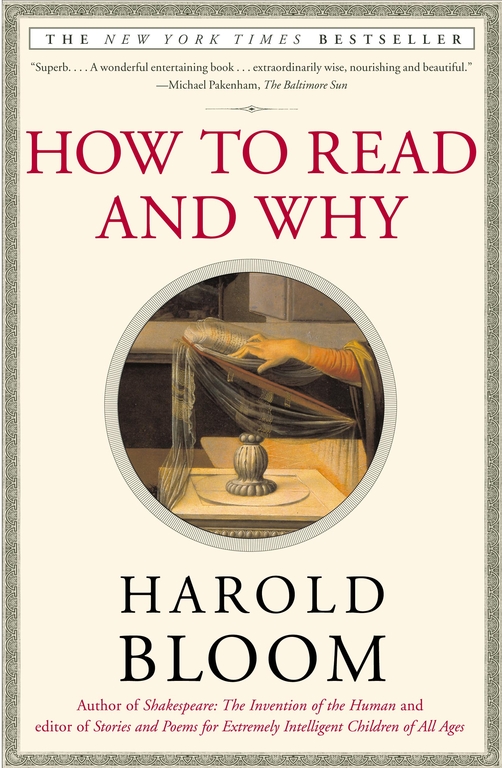
Information is endlessly available to us; where shall wisdom be found?" is the crucial question with which renowned literary critic Harold Bloom begins this impassioned book on the pleasures and benefits of reading well. For more than forty years, Bloom has transformed college students into lifelong readers with his unrivaled love for literature. Now, at a time when faster and easier electronic media threatens to eclipse the practice of reading, Bloom draws on his experience as critic, teacher, and prolific reader to plumb the great books for their sustaining wisdom. Shedding all polemic, Bloom addresses the solitary reader, who, he urges, should read for the purest of all reasons: to discover and augment the self. His ultimate faith in the restorative power of literature resonates on every page of this infinitely rewarding and important book.

- Comprehensive reading and study guides for the world's most important literary masterpieces- A selection of critical excerpts provide a scholarly overview of each work- "The Story Behind the Story" places the work in a historical perspective and discusses it legacy- Each book includes a biographical sketch of the author, a descriptive list of characters, an extensive summary and analysis, and an annotated bibliography

Alice’s Adventures in Wonderland began as a tale told by Reverend Charles Lutwidge Dodgson to three young girls (Lorina, Alice, and Edith Liddell) as the group took a rowing expedition up the Thames River. Enthralled by the story, Alice Liddell asked Dodgson to write it down for her, and he eventually did. In 1865, three years after their initial boat trip, Dodgson published Alice’s Adventures in Wonderland under the pen name Lewis Carroll. Like its sequel, Through the Looking Glass, Alice is a story filled with imagery, symbolism, and unforgettable characters. As the critics in this volume attest, Alice’s Adventures in Wonderland has sparked the imagination of countless children and adults alike, and has served as an influence to storytellers the world over. The critical essays in this volume reflect a variety of schools of criticism accompanied by notes on the contributing critics. Lewis Carroll’s Alice’s Adventures in Wonderland is an essential resource for those interested in the interpretations of top scholars in the literary field.

Harold Bloom's The Anxiety of Influence has cast its long shadow of influence since it was first published in 1973. Through an insightful study of Romantic poets, Bloom puts forth his central vision of the relations between precursors and the individual artist. His argument that all literary texts are a strong misreading of those that precede them had an enormous impact on the practice of criticism and post-structuralist literary theory. The book remains a central work of criticism for all students of literature.Written in a moving personal style, anchored by concrete examples, and memorable quotations, this second edition of Bloom's classic work maintains that the anxiety of influence cannot be evaded - neither by poets nor by responsible readers and critics. A new introduction, centering upon Shakespeare and Marlowe explains the genesis of Bloom's thinking, and the subsequent influence of the book on literary criticism of the past quarter of a century.

Bloom’s stand-alone introduction to The Best Poems of the English Language A notable feature of Harold Bloom’s poetry anthology The Best Poems English Language is his lengthy introductory essay, here reprinted as a separate book. For the first time Bloom gives his readers an elegant guide to reading poetry--a master critic’s distillation of a lifetime of teaching and criticism. He tackles such subjects as poetic voice, the nature of metaphor and allusion, and the nature of poetic value itself. Blooms writes “the work of great poetry is to aid us to become free artists of ourselves.” This essay is an invaluable guide to poetry. This edition will also include a recommended reading list of poems.

From the Bible to Ralph Ellison, America's most prominent and bestselling literary critic takes an enlightening look at the concept of genius through the ages in a celebration of the greatest creative writers of all time.With The Western Canon, Yale-based critical eminence Bloom tapped into a strain of the cultural zeitgeist looking for authoritative takes on what to read. Bloom here follows up with 6–10 pages each on 100 "geniuses" of literature (all deceased)—pointing to the major works, outlining the major achievements therein, showing us how to recognize them for ourselves. Despite the book's length, Bloom's mostly male geniuses are, as he notes "certainly not 'the top one hundred' in anyone's judgement, my own included. I wanted to write about these." Bloom backs up his choices with such effortless and engaging erudition that their idiosyncrasy and casualness become strengths. While organized under the rubric of the 10 Kabalistic Sefirot, "attributes at once of God and of Adam Kadmon or Divine Man, God's Image," Bloom's chosen figures are associated by his own brilliant (and sometimes jabbingly provocative) forms of attention, from a linkage of Dr. Johnson, Goethe and Freud to one of Dickens, Celan and Ellison (with a few others in between them). A pleasant surprise is the plethora of lesser-known Latin American authors, from Luz Vaz de Camões to José Maria Eça de Queiroz and Alejo Carpentier. Many familiar greats are here, too, as is a definition of genius. "This book is not a work of analysis or of close reading, but of surmise and juxtaposition," Bloom writes, and as such readers will find it appropriately enthusiastic and wild.

Since its publication in 1967, ""One Hundred Years of Solitude"" has sold more than 20 million copies and earned its author, Gabriel Garcia Marquez, a host of awards, including the Nobel Prize for Literature in 1982. The novel has prompted comparisons to Miguel de Cervantes, William Faulkner, Virginia Woolf, and even the Bible. The new edition of this critical volume brings together full-length essays that explore the nuances of Marquez's captivating fictive world. This study guide comes complete with an introductory essay by master scholar Harold Bloom, notes on the contributors, and reference features such as a chronology, bibliography, and index.

In Harold Bloom's New York Times bestselling The Invention of the Human , the world's foremost literary critic theorized on the authorship of the historic play Hamlet . In this engaging new stand-alone work, he offers a full and warmly personal account of the play itself, explores its extraordinary impact throughout the history of western literature, and seeks to uncover the mystery at its heart.
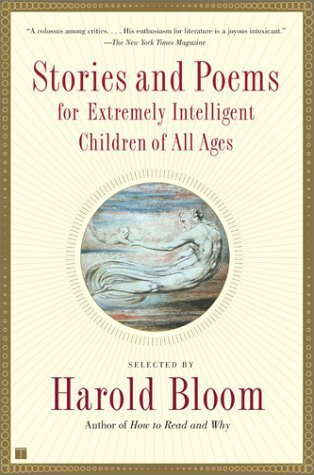
If readers are to come to Shakespeare and to Chekhov, to Henry James and to Jane Austen, then they are best prepared if they have read Lewis Carroll and Edward Lear, Robert Louis Stevenson and Rudyard Kipling, writes Harold Bloom in his introduction to this enchanting and much-needed anthology of exceptional stories and poems selected to inspire a lifelong love of reading. As television, video games, and the Internet threaten to distract young people from the solitary pleasures of reading, Bloom presents a volume that will amuse, challenge, and beguile readers with its myriad voices and subjects.Here are old favorites by beloved writers of children's literature, as well as exciting rediscoveries and wonderful works penned by writers better known for their adult classics, such as Herman Melville, Leo Tolstoy, Edith Wharton, and Walt Whitman. Encompassing the natural world and the supernatural; childhood, romance, and death; pets, wild animals, and goblins; mystery, adventure, and humor; the selections reflect the passion and erudition of our most revered literary critic. Arranged by season, Stories and Poems for Extremely Intelligent Children of All Ages is a must-have anthology, sure to delight readers young and old for years to come.

In one of his most inspiring books yet, Harold Bloom, our preeminent literary critic, takes the reader from the Bible through the twentieth century, searching for the ways literature can inform lives. Through comparisons of the Book of Job and Ecclesiastes, Plato and Homer, Johnson and Goethe, Cervantes and Shakespeare, Montaigne and Bacon, Emerson and Nietzsche, Freud and Proust, and finally discussions of the Gospel of Thomas and St. Augustine, Bloom distills the various—and even contrary—forms of wisdom that have shaped our thinking.

"Literary criticism, as I attempt to practice it," writes Harold Bloom in The Anatomy of Influence, "is in the first place literary, that is to say, personal and passionate."For more than half a century, Bloom has shared his profound knowledge of the written word with students and readers. In this, his most comprehensive and accessible study of influence, Bloom leads us through the labyrinthine paths which link the writers and critics who have informed and inspired him for so many years. The result is "a critical self-portrait," a sustained meditation on a life lived with and through the great works of the Western canon: Why has influence been my lifelong obsessive concern? Why have certain writers found me and not others? What is the end of a literary life?Featuring extended analyses of Bloom's most cherished poets—Shakespeare, Whitman, and Crane—as well as inspired appreciations of Emerson, Tennyson, Browning, Yeats, Ashbery, and others, The Anatomy of Influence adapts Bloom's classic work The Anxiety of Influence to show us what great literature is, how it comes to be, and why it matters. Each chapter maps startling new literary connections that suddenly seem inevitable once Bloom has shown us how to listen and to read. A fierce and intimate appreciation of the art of literature on a scale that the author will not again attempt, The Anatomy of Influence follows the sublime works it studies, inspiring the reader with a sense of something ever more about to be.

In this fascinating work of religious criticism, Harold Bloom examines a number of American-born faiths: Pentecostalism, Mormonism, Seventh-day Adventism, Christian Science, Jehovah's Witnesses, Southern Baptism and Fundamentalism, and African-American spirituality. He traces the distinctive features of American religion while asking provocative questions about the role religion plays in American culture and in each American's concept of his or her relationship to God. Bloom finds that our spiritual beliefs provide an exact portrait of our national character.
-- The only major collection of criticism on widely studied fictional figures from world literature-- Brings together a diverse array of the finest critical writing from around the world-- Includes Harold Bloom's essay "The Analysis of Character" and introductory essays on title characters

Cormac McCarthy's All the Pretty Horses, part of Chelsea House Publishers' Bloom's Guides collection, presents concise critical excerpts from All the Pretty Horses to provide a scholarly overview of the work. This comprehensive study guide also features "The Story Behind the Story" which details the conditions under which All the Pretty Horses was written. This title also includes a short biography on Cormac McCarthy and a descriptive list of characters.

All Quiet on the Western Front served as Remarque's attempt to confront and ultimately rid himself of the graphic and haunting memories of his time serving in World War I. This title features a selection of essays, in addition to a bibliography, a chronology of Remarque's life, and an introduction.

Features critical essays reflecting a variety of schools of criticism; notes on the contributing critics, a chronology of the author's life, and an index; and, an introductory essay by Harold Bloom.